3 people, 7 days, 10 languages, payback achievable in as fast as 60 days — the industrial standards for short drama going global are being rewritten
Since the start of this year, the average ROI of China's domestic short drama market has dropped to 1.03, with only about 3% of the book profit remaining. Involution is forcing production capacity to shift overseas, and going global is evolving from an optional choice to a mandatory task.
But mandatory does not mean easy to accomplish. Over the past year, discussions around going global have largely centered on two directions: how big the market is, and how to reduce costs. Few people have asked a more essential question — when AI short dramas go global, what exactly do we need to "replicate"?
Translating subtitles? That's far from enough. When the audience sees Asian faces telling a story set in New York in English, the physical sense of incongruity will constantly interfere with their viewing experience. Remaking with real actors? That's too expensive. A budget of 100,000 to 200,000 US dollars is only the entry ticket for a single self-produced short drama in North America.
The real difficulty of this task lies in: how to make a story that originally belongs to Culture A look as if it was produced for Culture B. This is not translation, but cultural decoupling and reconstruction.
$4 Billion Market, Maximum ROI of 1.3 — Why Can Some People Fail to Get a Slice of the Pie?
(1) Overseas AI Dramas / Motion Comics Are in a Clear Dividend Period
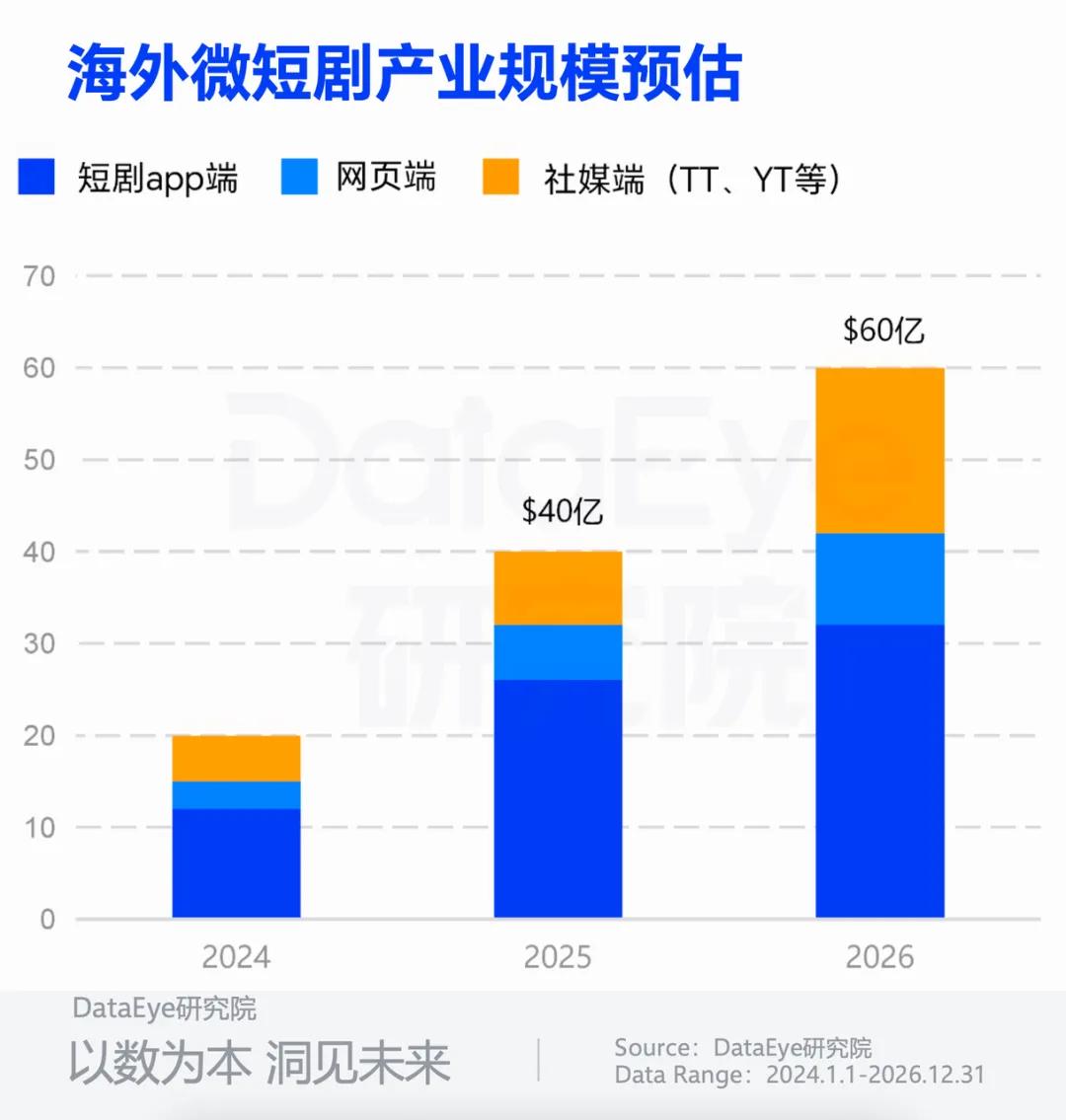
According to estimates from the DataEye Research Institute, the annual overseas market size of AI dramas and motion comics is expected to exceed 4 billion US dollars, accounting for nearly 70% of the total overseas micro-short drama market size (6 billion US dollars).
At the just-concluded One Google AIDC Shenzhen Ecological Summit, Wang Xiangbin, President of the Shenzhen Short Drama Industry Association, Founder and CEO of Shenzhen Huidong Chuangxiang Technology Co., Ltd. (DataEye Drama Check), described the current situation with data: The average ROI of China's domestic short drama market has dropped to 1.03, with only about 3% of the book profit remaining, and involution is forcing production capacity to shift overseas. Ren Shiwu, Deputy General Manager of Future TV, judged that overseas AI short dramas are currently in a dividend period. Especially with the development of AI technology, overseas AI local dramas represent a huge blue ocean market.
In terms of market profitability, Zou Jianfeng, Chairman of Changdu Technology, stated that most overseas AI short dramas are profitable due to cost advantages, with a payback period of around 60 days, which is relatively fast. Lv Shaolong, Deputy General Manager of Lingju Animation, also confirmed that the extreme ROI of their overseas AI dramas can sometimes reach 1.2 to 1.3, showing an overall positive trend.
(2) Cost Trap: Traditional Translation and Dubbing Lock Small and Medium Teams in Low-Profit Zones
A local vertical-screen short drama in North America has a basic cost of 100,000 to 200,000 US dollars. Casting, set building, dubbing, and post-production are all heavy asset investments. What is more hidden is the trial and error cost: it is impossible to predict which theme will succeed in Latin America but fail in Southeast Asia, and every test consumes a full amount of capital.
This is also the structural dilemma of short drama globalization. High costs lock small and medium teams in the low-profit zone of translation and simple replication. When the cost of one localization test is enough to bring down a small team, most people do not even have the qualification to participate in the market.
(3) The Real Pain Point Is the Systematic Reconstruction of Cultural Context
The difference in content preferences between overseas and domestic audiences is far deeper than the language barrier. What works in the North American market are "werewolf lord" themed stories, not Chinese-style "overbearing son-in-law" stories; Chinese-style mother-in-law and daughter-in-law conflicts need to be transformed into family boundary conflicts in Europe and America; Southeast Asian audiences' resonance for "family glory" is completely different from that of the East Asian market. This is by no means an adjustment at the level of lines and language, but an equivalent replacement of worldviews, character relationships, social systems, and visual symbols.
Traditional translation and dubbing can only solve language problems, but cannot solve cultural context problems. The misalignment of cultural context will be directly reflected in data — when overseas audiences see Asian faces performing mother-in-law and daughter-in-law conflicts in a standard dubbed accent, they will immediately feel "I am not the target audience of this show", then swipe away, resulting in a sharp drop in completion rate and interaction rate.
At present, AI tools are becoming increasingly abundant. So, can tools turn cultural decoupling and reconstruction from a vague practice into an engineering process? Can we truly reduce the cost of non-translation-based globalized AI dramas? With these questions, we conducted actual tests on relevant tools.
Seko Global Drama Transfer Painting Actual Test: From Translating Images to Replicating Rhythm
(1) Visual Level Replacement: Actual Test of Global Drama Transfer Painting Skill
The DataEye Research Institute selected a segment with themes of wealthy families, revenge, and plot twists as the source material, converted it into an English version, and set the characters as Caucasian.
The Seko global drama transfer painting process consists of seven complete steps: source material overview analysis, storyboard analysis, overseas localization, visual subject design, visual asset reference generation, transfer painting storyboard table replication, and final film replication.
After selecting the "Global Drama Transfer Painting" Skill on the homepage and uploading the source video, the system first automatically completes the overview analysis of the plot, script and other elements of the source video.
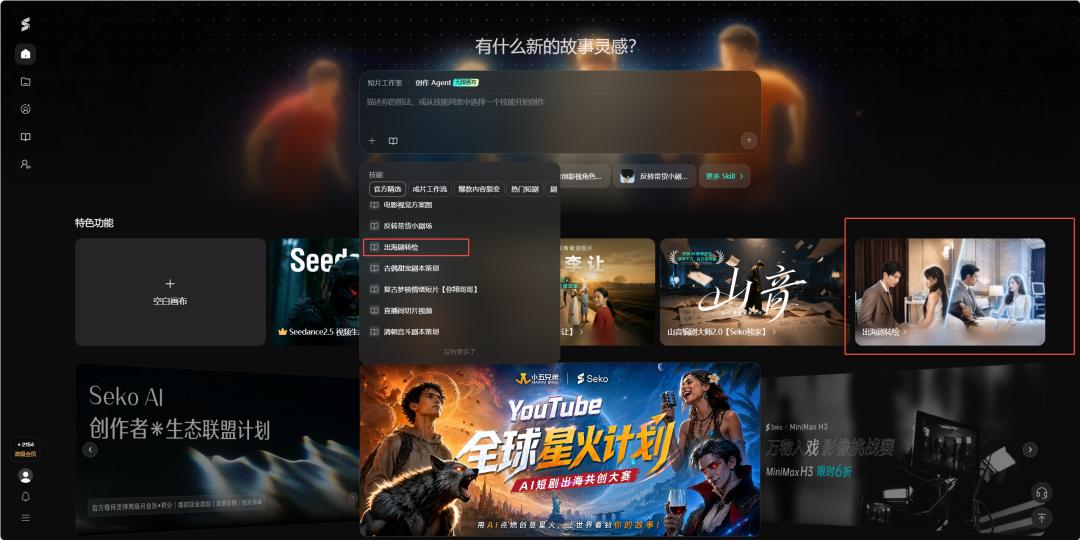
This step is equivalent to letting the AI fully understand the video first — not simply recognizing the image content, but understanding the narrative structure, character relationships, and emotional trend. After the creator confirms that the overview analysis is correct, the system proceeds to in-depth storyboard analysis and overseas localization analysis.
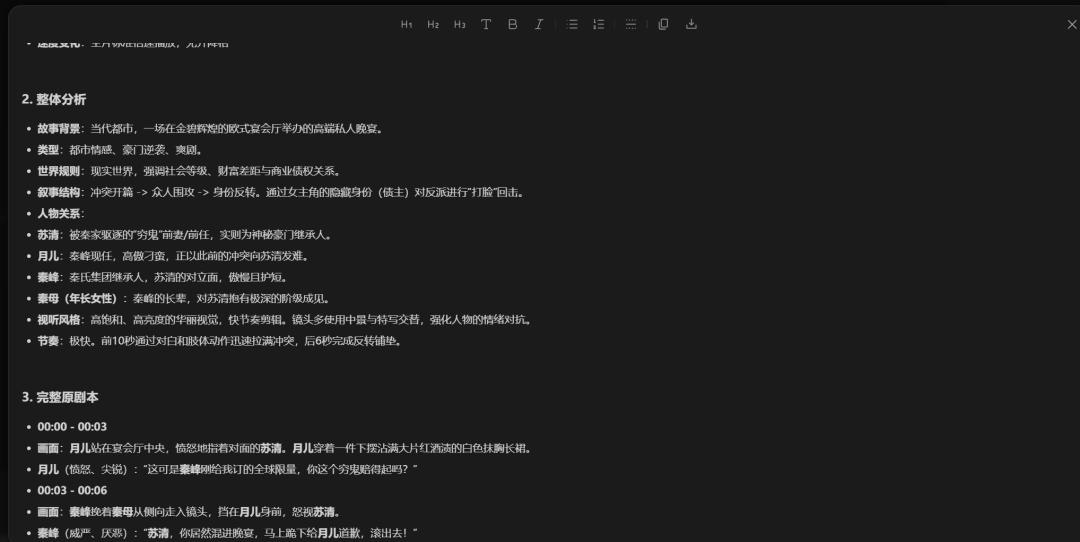
Storyboard Analysis Stage: Seko disassembles the source video to the level of each individual shot, locking the composition, camera position, camera movement trajectory, editing boundary, and micro-expression rhythm.
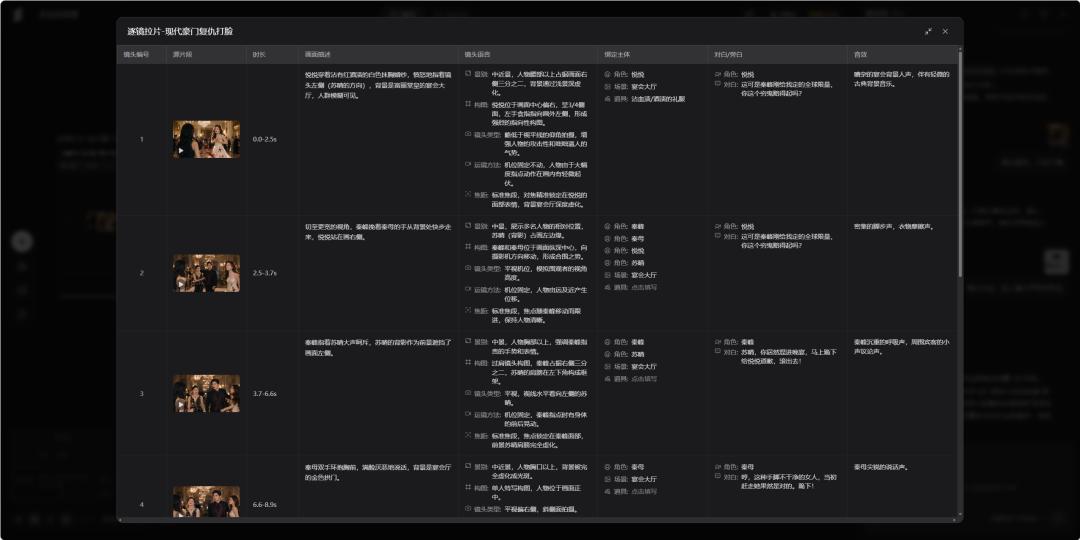
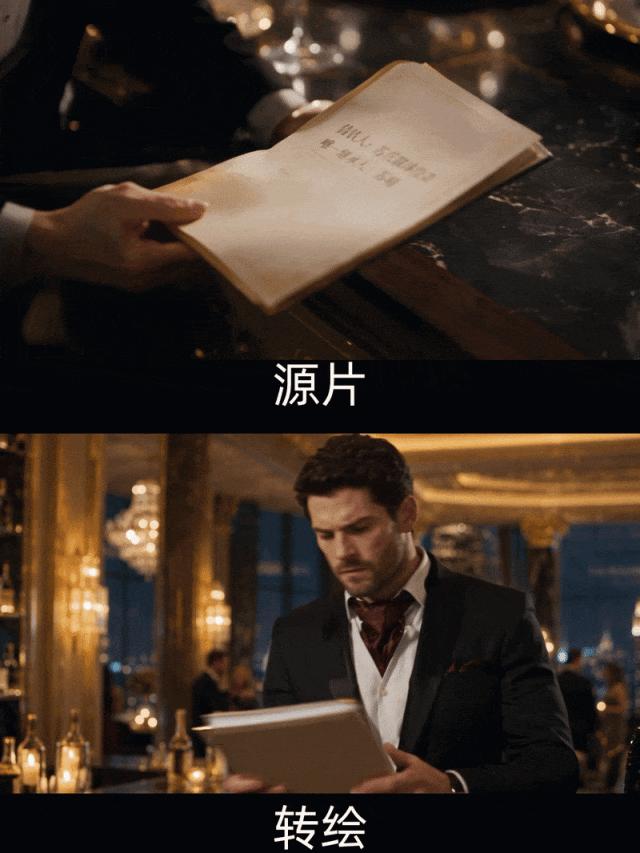
(Key Frame Comparison)
Overseas Localization and Visual Subject Design Stage: The system reconstructs the worldview for the target market: all scenes, props, and on-screen text are fully localized for the target language. Creators can set the character images and scene styles after transfer painting in a targeted manner, and the system generates visual asset reference images for creators to confirm the art style.
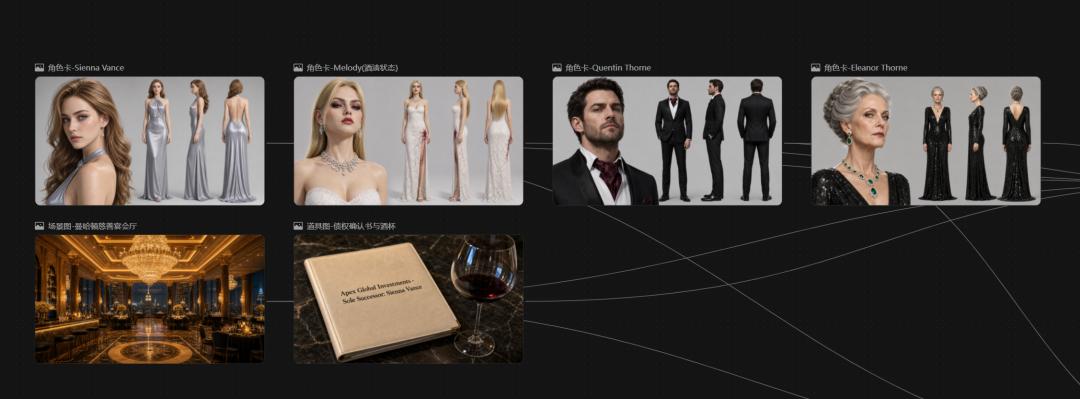
Transfer Painting Storyboard Table Replication and Final Film Generation Stage: The system generates a complete transfer painting storyboard table based on all the previous analysis, and creators can check each shot one by one before entering the final generation process.
In terms of cost, the pre-preparation of transfer painting does not consume credits, and credits are only consumed in the asset generation and video generation stages. Taking the video generated by the DataEye Research Institute as an example, 6 asset images are generated in batches during the asset generation stage, 4 credits per image, totaling 24 credits; the latest Seedance 2.5 large model is used in the video generation stage, a 25-second video consumes 360 credits, totaling 384 credits, equivalent to about 24 RMB. Calculated based on 50 episodes of 60 seconds each, it only costs about 3000 RMB to transfer paint a complete short drama, which is fully affordable for small and medium teams.
In general, this function is suitable for small and medium teams that have IP and drama resources and hope to carry out low-cost transfer painting. The transfer painting process is relatively stable and highly controllable, but Seko does not eliminate the review cost, but transfers the cost from heavy asset investment to lightweight review. The pre-analysis does not consume credits, and the workflow that allows preview and modification at each step enables creators to complete multiple rounds of deliberation before costs are incurred. For small and medium teams, this means that they can test multiple target markets at lower costs — shifting from being unable to afford mistakes to being able to afford mistakes.
(2) Sound Level Replacement: Actual Test of Dubbing Audio Translation
In addition, the DataEye Research Institute also conducted an actual test on Seko's audio remaking Skill. The operation is relatively simple: select the video node, click audio separation, submit the task to generate an independent audio node. After separating the audio, there are two nodes: silent video and AI-generated audio. After the audio is translated, it can be directly synthesized in the canvas. The SeedAudio 1.0 large model can ensure that the original sound style foundation is retained.
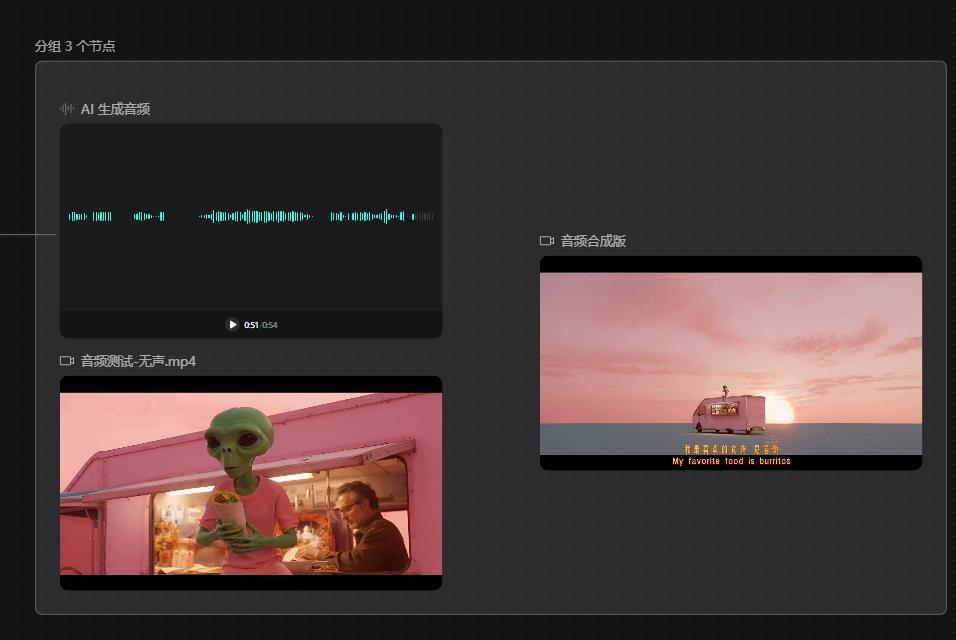
However, there are also boundaries for sound localization — English and Chinese have different expression habits, the audio duration may not completely match the original video, and manual fine-tuning is still required.
(3) Growth Path After Work Completion: Ecological Alliance and OPC Support
The functions of AI video tools are rapidly converging. The real differentiation lies in who can provide a complete closed loop from creation to monetization, and who can help creators solve the problems after the work is completed.
From Tools to Ecosystem, AI Empowerment + Resource Empowerment Are Becoming Increasingly Important
The functions of AI video tools are rapidly converging. When "whether it can be done" is no longer a barrier, what determines who can stand out is another set of capabilities: the judgment of cultural translation, and the integration of ecological resources.
(1) Small Teams + AI, The Winning Point Lies in Cultural Translation
Tools can complete the visual replacement of Chinese-style overbearing president to werewolf lord, but they cannot tell you why North American audiences are willing to pay for werewolf themes but do not accept Chinese-style overbearing president stories, and why Southeast Asian and Latin American audiences have completely different pleasure thresholds for family revenge stories. The answer does not lie in tools, but in the in-depth understanding of the cultural psychology of the target market.
(2) The Value of Judgment Is Amplified in the AI Era
When everyone can go global with one click, choosing the right story is more valuable than making the story. In the actual test, the script fission maintains a good density of pleasure points, but the mapping involving region-specific social systems (such as the power structure of Chinese family enterprises) still requires manual adjustment by screenwriters.
Judgment is becoming the most scarce creative asset in the AI era. Tools reduce the execution cost to nearly zero, but the decision-making costs of choosing themes, setting tones, and targeting audiences are infinitely magnified. The core competitiveness of future global teams is not being able to use AI, but knowing what to let AI do.
(3) Tools Are Only Entry Tickets, The Ecosystem Is The Real Competition Arena
When the production gap is eliminated, the distribution right of traffic resources is always in the hands of platforms and top distributors. The real differentiation lies in who can provide a complete closed loop from creation to monetization, and who can solve the problems after the work is completed.
For creators, choosing a tool only obtains the qualification to participate in the competition. Whether they can integrate into an industrial network that connects creation, distribution and monetization is the key to determining how far they can go. At present, head platforms are deploying ecological alliances and industrial bases one after another, trying to upgrade single-point tools into industrial supporting facilities, which means that global participants are expanding from individual creators to institutional players, and the industry threshold is shifting from technical threshold to resource integration threshold.
Conclusion
The $4 billion market will not be evenly distributed to every user. It will only flow to those who use tools to amplify their own cultural insight.
Translation is only the entry ticket, cultural reconstruction and ecological positioning are the real core advantages. When everyone can generate 10 overseas versions with one click, the threshold of going global has irreversibly shifted from production capability to cross-cultural narrative capability and distribution resource connection capability.
This is a watershed for the industry — the globalization of AI short dramas is moving from the barbaric growth in its first year to structural competition in its mature year. And structural competition always rewards those who can understand the rules clearly.