WorkBuddy is one step ahead, who will pay for the Token bill?
When AI starts to "build an ecosystem", the scissors gap between Token consumption and commercial revenue has become an unavoidable operational proposition for all Agent platforms.
On the 178th day after its launch, WorkBuddy opened itself to the public.
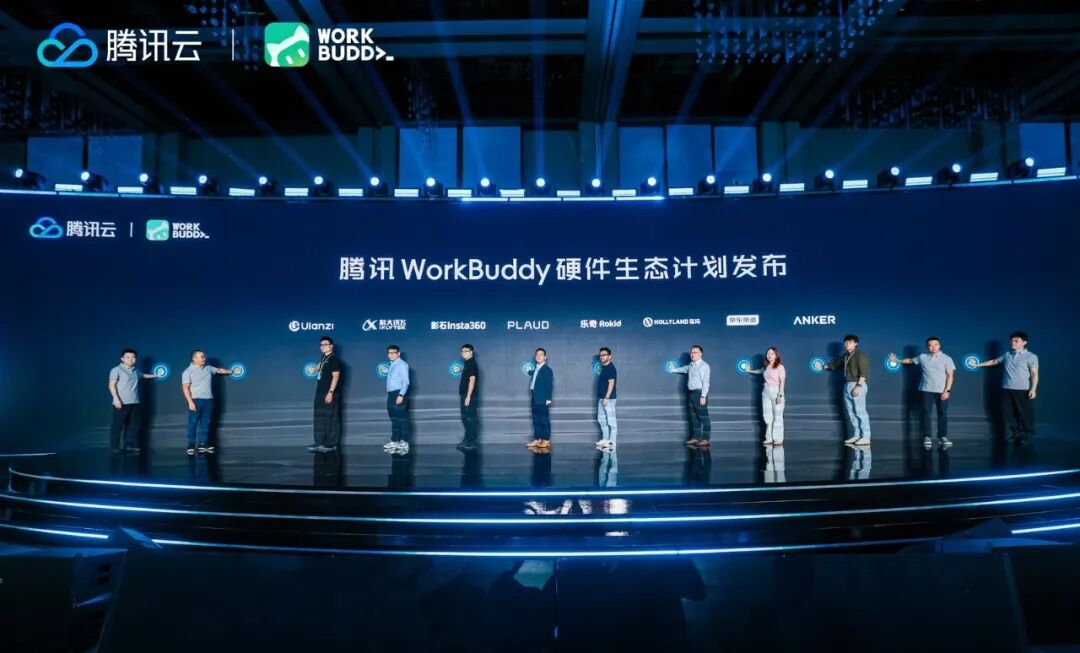
On September 2, Tencent WorkBuddy Open Platform was officially launched, introducing more than 100 ecological partners in the first batch, and fully opening its underlying Agent capabilities to smart hardware, industry applications and developers. Liu Yi, Vice President of Tencent Cloud and Head of Tencent CodeBuddy & WorkBuddy, said at the launch event, "We are not building a more powerful tool, but a platform that can carry all tools."
This sounds like the standard opening line for every platform's ambition, but different from traditional software ecosystems, the larger the Agent ecosystem, the longer the Token bill will be, because every run of each Agent is backed by burning computing power.
The bill is here, and the question arises: who exactly will pay for these continuously consumed Tokens? When AI starts to "build an ecosystem", can the value created by these Agents cover the costs they consume?
WorkBuddy's Partner Circle Expands, Agent Starts to Grow Its Own Ecosystem
WorkBuddy's partner circle is expanding.
On the hardware side, more than 30 brands covering over 10 categories such as smart glasses, voice recording cards, and microphones have been connected. On the Buddy application side, more than 30 partners including Tongdaxin, GF Securities, Weimob, Beisen, and Fanruan have been accessed.
These partners enter WorkBuddy roughly along two paths. Software and professional service providers bring capabilities in vertical fields. Enterprise service vendors such as SalesForce and Fanruan integrate their professional capabilities and business data accumulated over years in fields like CRM, data analysis, and operation management into WorkBuddy, and then deliver them to users in the form of Buddy.
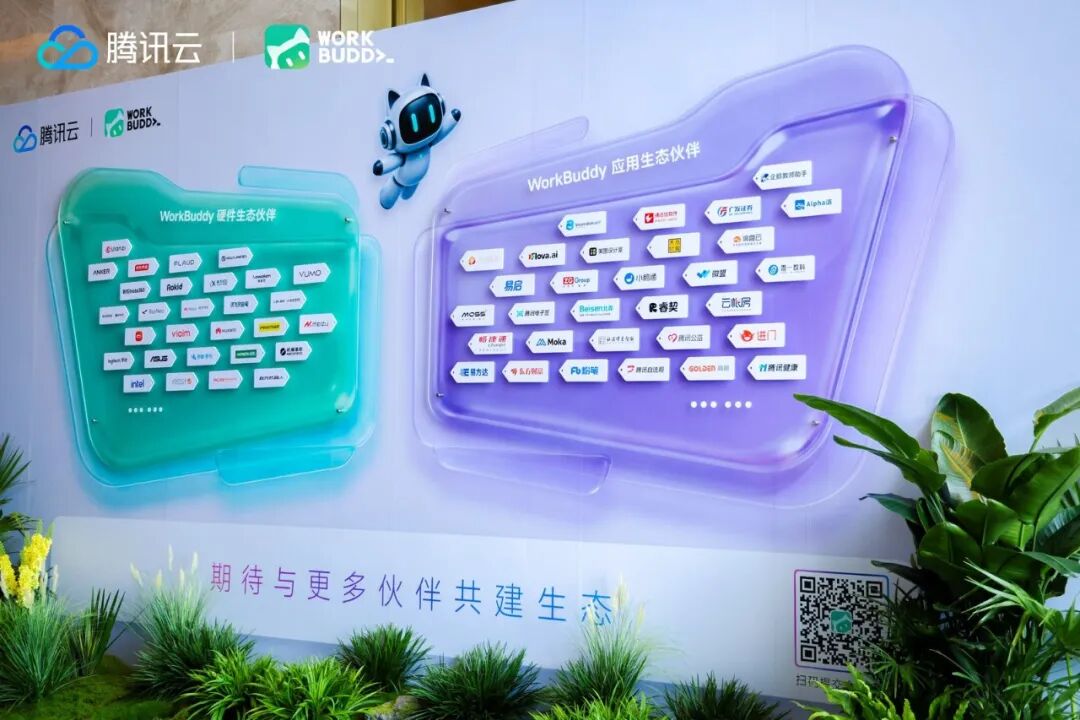
Hardware manufacturers are responsible for bringing AI out of the computer screen. Devices such as smart glasses, voice recording cards, and microphones enable WorkBuddy to obtain visual, audio and environmental information, giving AI the opportunity to enter more real work scenarios.
The former increases the capability density of Agents, allowing AI to do more professional work, while the latter increases the entry density, allowing AI to see, hear and remember more real-world information. The two together form the foundation of the WorkBuddy ecosystem.
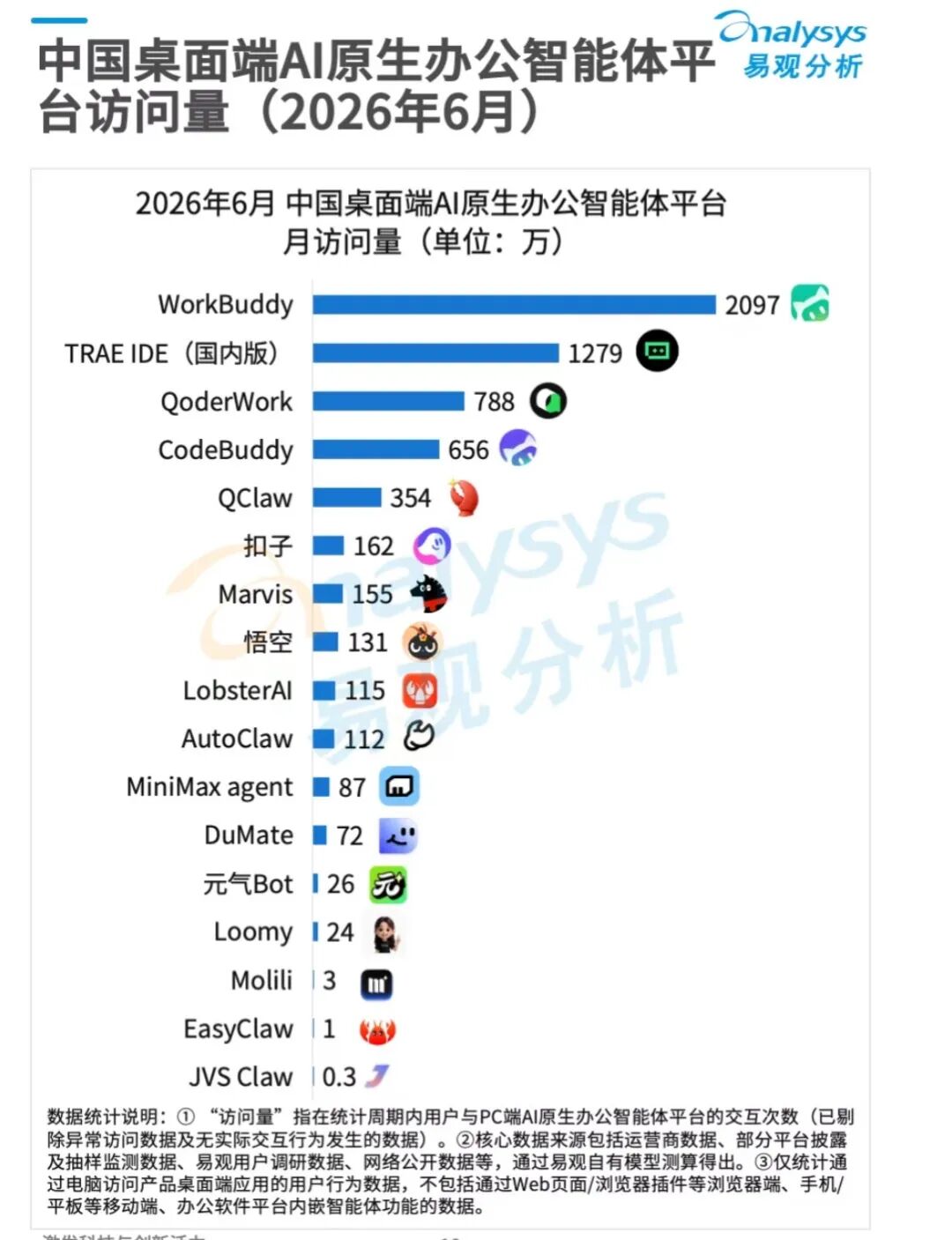
WorkBuddy chose to open up its ecosystem at this moment based on solid existing user base. According to the "2026 Q2 China Office Agent Platform Market Insight Report" released by Analysys, Tencent WorkBuddy's monthly visits in June in China's PC-side AI-native office agent market exceeded 20 million, ranking first in the market, surpassing the sum of the second and third places.
According to Tencent's official statement, since its launch in early March 2026, WorkBuddy has been implemented in more than 50 industries including government affairs, education, retail, finance, media, and mobility.
Users and scenarios have begun to accumulate, and the capabilities required by the platform have become increasingly complex accordingly.
"We started thinking about the open ecosystem of WorkBuddy back in May and June this year," Lin Zuolu, Head of WorkBuddy Open Ecosystem, mentioned in an interview with the media, "During this process, we are gradually opening up ourselves, trying to enable ecological partners of different types and with different needs to access the platform."
The first step is to open up the underlying capabilities of Agents. WorkBuddy opens the Agent Harness module to ecological partners. Links that originally required enterprises to build and debug on their own, including model calling, context management, task planning, tool calling, and execution feedback, are all encapsulated into the platform. What enterprises need to do has changed from "building a complete set of Agents" to "connecting business capabilities to Agents".
The second step is to prepare different entry points for different types of partners. SaaS enterprises and service providers access business systems and professional capabilities through connectors, MCP and other methods; institutions with complete knowledge and context accumulation in professional fields precipitate professional capabilities in the form of experts or multi-Agents; professional practitioners and developers precipitate experience into Skills and inspirations through prompts and cases, which are then entered into the WorkBuddy public market.
Many software and hardware manufacturers are trying to develop AI products, but building Agents requires crossing a long list of technical and product thresholds: model selection, context acquisition, task planning, tool calling, execution feedback, every link needs debugging; the original interactions built around menus, pages and functions also need to be re-adapted for Agents.
R&D investment has become very heavy. With WorkBuddy taking over part of the basic work, enterprises can focus their energy on what they are best at, that is, integrating industry know-how and data into the platform.
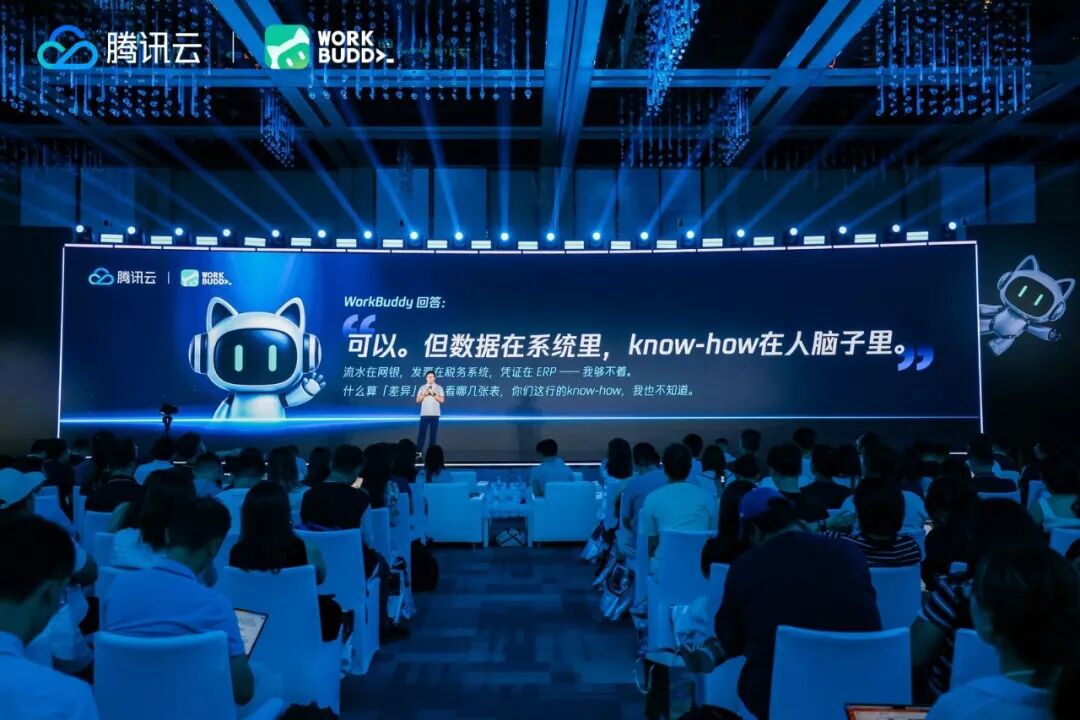
According to WorkBuddy, a 3-person team at SalesForce completed the development of the relevant Agent in just two months. While the development time is shortened, the threshold for enterprises to make decisions is also lowered, so that the ecosystem can achieve "self-growth".
At present, WorkBuddy has co-built industry Buddies with partners including Tongdaxin, GF Securities, Tencent SSV, Tencent Health, Pkulaw, Weimob, Beisen, Fanruan, and Meitu Studio, covering more than 20 fields such as finance, SaaS, law, healthcare, education, public welfare, and design.
The call volume of Fanruan MOSS exceeded 10,000 in the first week after its launch. After professional software is integrated into Agents, new usage scenarios emerge faster than expected.
The hardware development pace is slightly slower. Devices need to be developed, produced, and distributed through channels, which cannot be replicated as quickly as software. However, products such as smart glasses, voice recording devices, and microphones are expanding WorkBuddy's touchpoints from computers to real scenarios such as meetings, field visits, and mobile office.
Around the five types of touchpoints of "listening, viewing, recording, chatting, and collaborating", hardware brands including Plaud, Rokid, Insta360, iFlytek, Anker, MOMA, and JD Zao have also entered the WorkBuddy ecosystem.
The platform provides underlying capabilities, partners provide professional capabilities, and what WorkBuddy wants to build is an application ecosystem belonging to the Agent era.
At the same time, the operation habits that were once deeply engraved in muscle memory, such as writing documents in Feishu, calculating data in Excel, and finding customers in CRM, are also being rewritten by Agents.
Users only need to put forward their demands, and the Agent will handle everything: who to call, what data to use, and which tools to invoke. Software has changed from "tools that users actively look for" to "capabilities that Agents can call".
Similar changes are taking place overseas. Salesforce cooperates with Claude to enable AI to call enterprise software; SalesForce accesses the unified AI entry through WorkBuddy to bring its own capabilities in, the two reach the same goal by different routes. Today, the number of partners connected by the Agent OS is only dozens, but as connectors, experts, Skills and hardware continue to pour in, what users face is a capability network that can be scheduled by Agents in real time.
WorkBuddy is weaving this network. The larger the network is, the more content it needs to remember: what each partner is good at, which data is callable, and which task should be assigned to whom. Users only put forward demands, and whoever undertakes the task will hold the primary scheduling right for the work.
With the scheduling right in hand, the bill is also on the shoulder. Who will pay for these bills?
The More Prosperous the Agent Ecosystem, the Longer the Bill
The marginal cost of the traditional software ecosystem approaches zero, while in the Agent ecosystem, every additional run brings an additional reasoning cost. The more prosperous the ecosystem, the greater the Token consumption.
Harness solves the problem of "how to build an Agent", but fails to solve "who pays for the continuous operation of Agents".
Before the business model is proven feasible, WorkBuddy is actually using its own investment to advance the underlying Token bills for hundreds of ecological partners, in exchange for ecosystem density and context data.
This is a typical platform subsidy logic. In the short term, it is a generous infrastructure investment; in the long run, if secondary monetization - enterprise version payment, call charging, partner revenue sharing - cannot keep up with the Token consumption curve, the so-called "whether the underlying foundation is stable" will jump out of the technical category and become an operational proposition.
Interestingly, users are almost unaware of all this.
Earlier, Li Yanhong proposed DAA, a new measurement standard for the AI era, arguing that users should not care how many Tokens the Agent burns, but only care about whether it has helped them get the work done. This statement is correct at the experience level, users really should not be required to understand what a context window is.
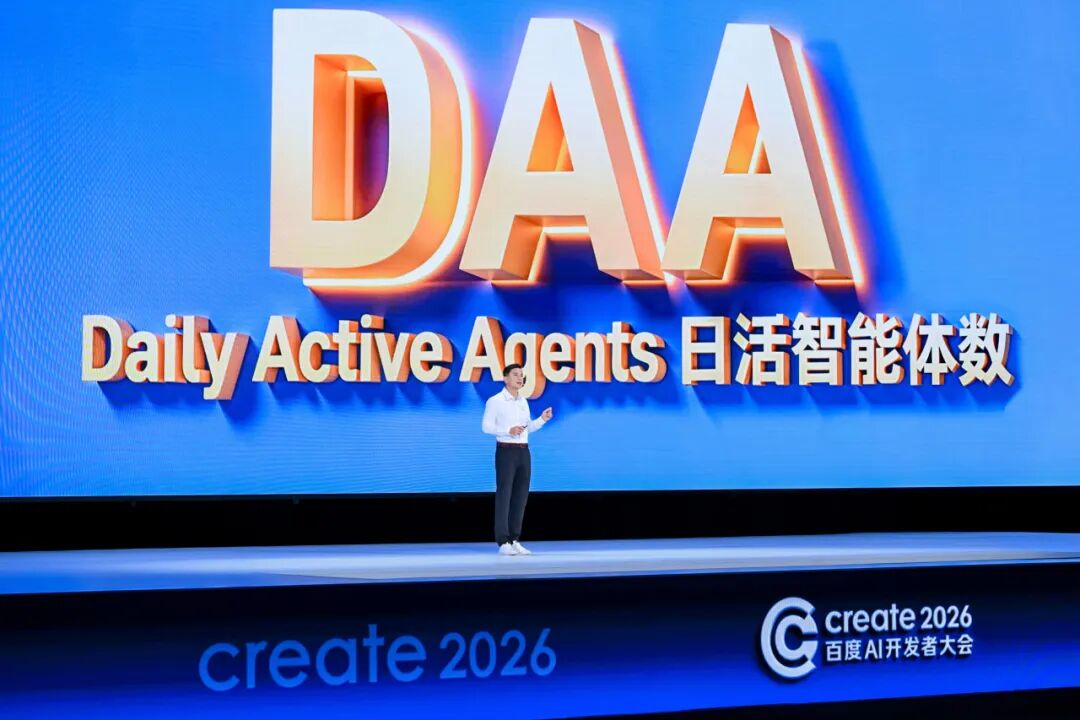
But it avoids a problem, that is, who should be responsible for the cost of Tokens consumed behind Harness calls?
Users don't need to know, which doesn't mean the platform can ignore the cost.
This is also why "Token consumption" has begun to change from a technical indicator of the model team to a cost item that platform operators must keep a close eye on. Li Qiang, Vice President of Tencent Cloud, once publicly stated that "Token is indeed a very important management indicator" and compared it to fuel consumption. Only focusing on fuel consumption without building a good engine will eventually make customers vote with their feet; lower fuel consumption and stronger performance are the fundamental solution.
In the mobile Internet era, platforms are happy to see DAU rising, because it usually means more advertising, transactions and value-added services. In the AI era, platforms have to keep an eye on two directions at the same time: the higher the DAA (Daily Active Agents), the better, but the Token cost cannot expand infinitely.
A new business question thus emerges: Should the scale of the Agent ecosystem be measured by "how many Agents are running" or by "how much revenue these Agents have generated"?
This also makes the question of "why partners are willing to join" carry different weight.
Putting WorkBuddy in the industry coordinate system, the success or failure of this competition depends on three variables.
The first is users: how many real demands Agents can reach; the second is capability: how many types of tasks can be covered by Buddy applications and ecological partners combined; the third is Token: how many Agents are awakened every day, and how much computing power they consume.
The three variables are mutually reinforcing: the expansion of the user base forces the expansion of capability types; the thicker the capability pool, the higher the frequency of Agents being invoked; when the invocation frequency rises, the number of Tokens burned every day also increases accordingly; and the more Tokens are burned, the larger the value volume that the platform can theoretically leverage.
In short, the number of Agents determines how large the ecosystem is, Token consumption determines how expensive the ecosystem is, and revenue determines how far the ecosystem can go.
How Does the Agent Ecosystem Make Money? Major Tech Companies Have Their Own Answers
WorkBuddy is certainly not the only one facing this bill, Doubao Work, Qianwen Office, and Baidu Dazi are in the same situation. Only the four have different "ecosystem" backgrounds, so their answers to "who pays for the Tokens" are also different.
The business chain of WorkBuddy is to let ecological partners make money first. Partners such as SalesForce, Fanruan, and Beisen connect their professional capabilities into WorkBuddy, and users complete CRM management, data analysis, human resources and other work through Agents.
If such invocations continue, WorkBuddy will have several possible revenue methods: enterprise version subscription, Agent or Token invocation charging, and revenue sharing with ecological partners.
There is a key change here. In the past, SalesForce's revenue came from users purchasing CRM; after entering WorkBuddy, users may first purchase a service of "completing customer analysis", and then call the CRM capability of SalesForce in the background. Software has changed from an independent product to a capability that Agents can call.
What WorkBuddy wants to do is to turn this invocation into a divisible business. A healthy Agent ecosystem should be that the platform provides entry and Agent infrastructure, partners provide professional capabilities, users initiate invocations, partners get business opportunities, and the platform participates in revenue sharing. Once this chain is fully operational, every Token consumption will be backed by revenue.
The recent organizational changes of Doubao Work have gradually concentrated capabilities such as Feishu, TRAE, and Kouzi to the Doubao system. After users enter Doubao Work, they can call documents, knowledge bases, meeting contents, code development and more enterprise work capabilities.
It is forming its own Agent matrix, which leaves ByteDance more space to bear Token costs.
When a user asks Doubao Work to complete an analysis report, the background may call the enterprise knowledge base, documents, data tools, and go through multiple rounds of model reasoning.
Token consumption has increased. But this work may also take place within the boundaries of enterprise software, cloud services and AI services at the same time.
Thus the question Doubao Work needs to answer becomes: How much are enterprises willing to pay for "completing a task"? If enterprises purchase AI seats, enterprise services or cloud resources, Token costs can be included in the overall service revenue; if Agents further drive businesses such as Feishu and Volcano Engine, the commercial value can be extended further.
This is also a major difference between Doubao Work and WorkBuddy. WorkBuddy needs to rely on more and more ecological partners to integrate professional capabilities into the platform; while ByteDance is gathering its existing office, development and enterprise service capabilities into the same AI entry.
One wants to get ecological partners running