Home appliance MCU, is there really a need for such intense involution?
Entering August, the new round of application for the third batch of national subsidies continues, further driving the rapid development of the home appliance industry. In response to the industry trend, home appliance MCUs have once again entered a stage of intense competition. Recently, new home appliance MCU products have been launched in significantly denser frequency.
Here comes the question: what are the characteristics of these MCUs? Is there still a necessity for home appliance MCUs to keep competing at such a high intensity?
A large wave of new home appliance MCU products
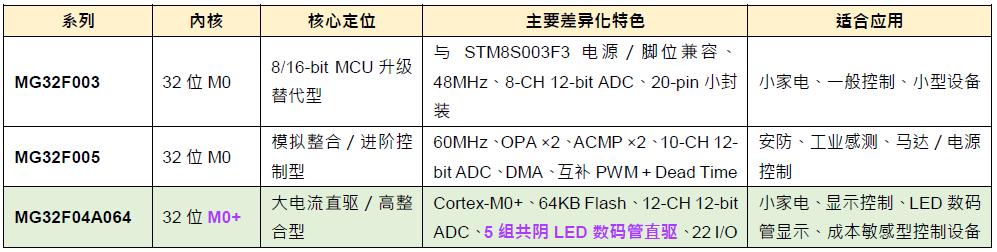
Megawin Technology launched the MG32F04A064 high-current direct-drive MCU on August 27, targeting applications such as digital tube display, home appliance control, and scenarios requiring high I/O driving capability. It adopts a 48MHz M0+ core, equipped with 64KB Flash and 4KB SRAM, supports a wide operating voltage of 2.0V~5.5V, and integrates a 12-bit ADC. Its feature is the enhanced high-current direct drive capability, which can directly drive 5 groups of common cathode digital tubes, and provides 4 levels of drive current adjustment, reducing the use of external transistors or drive ICs, helping to simplify PCB design and lower BOM cost.
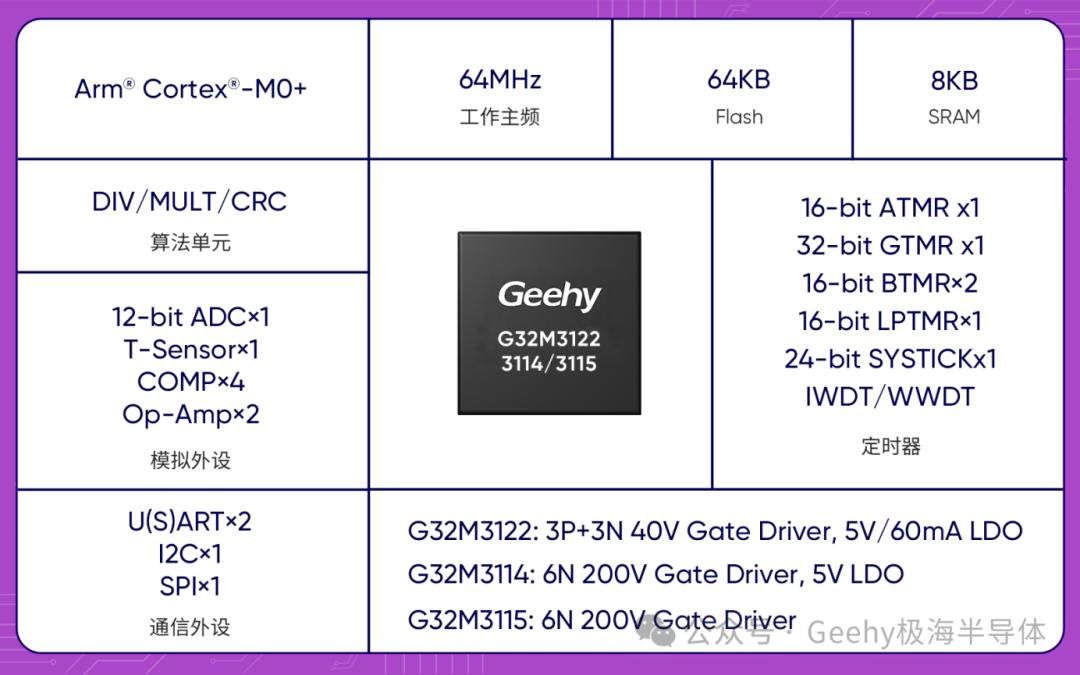
Geehy launched the G32M3122/3114/3115 series highly integrated motor control SoC in August, targeting applications such as fans, electric and garden tools, vacuum cleaners, robots, and drone ESC. It adopts a 64MHz Cortex-M0+ core, equipped with 64KB Flash and 8KB SRAM, and integrates algorithm acceleration units such as DIV, MULT, and CRC, supporting both sensored and sensorless FOC motor control. This series integrates 40V or 200V gate drivers and LDO according to different models, and has built-in 12-bit ADC, operational amplifier, analog comparator and temperature sensor, which can reduce external sampling and driving devices and lower BOM cost. It is also equipped with advanced PWM timers, general-purpose timers and multiple watchdog protection mechanisms.
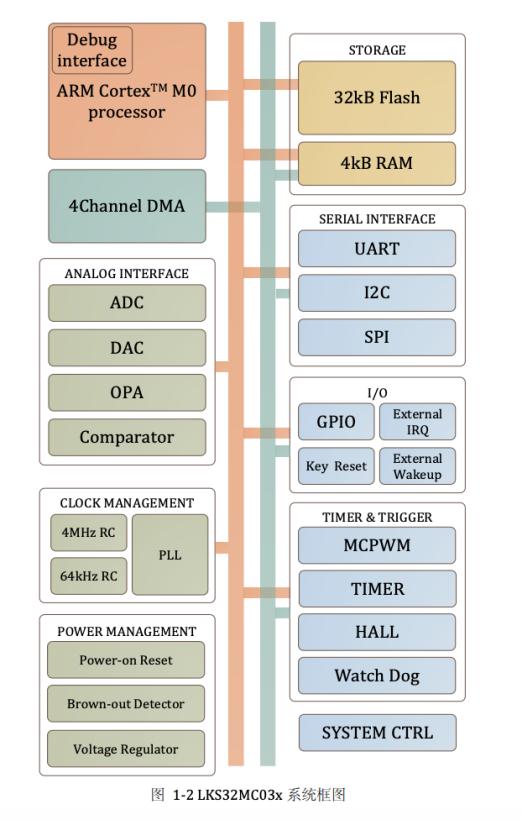
Lingou Core, a subsidiary of BPS, launched the highly integrated motor control MCU LKS32MC034F2LF6Q8C in August, targeting electric tools such as electric drills, electric wrenches, and angle grinders, and can also be used for cleaning appliances such as vacuum cleaners and floor scrubbers. By integrating functions such as low-power management, back EMF sampling, bus voltage detection, 12V charge pump and three sets of bootstrap circuits, it can reduce more than 30 peripheral components, lower BOM cost and simplify PCB design. It supports two control modes of sensorless square wave and FOC, which can take into account high-load startup, low noise and smooth operation. It integrates protection functions such as overvoltage, undervoltage, overcurrent, over temperature, phase loss, locked rotor and MOS short circuit, and supports software adjustment of pre-drive output current.
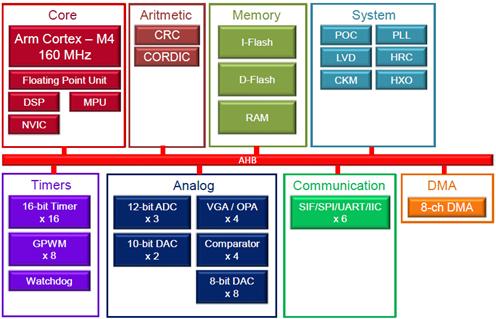
Nuvoton launched the KM1M4BF2X series variable frequency control MCU on August 24, mainly targeting applications such as household air conditioners and heat pumps. Based on years of experience in home appliance variable frequency control, this series further improves control performance and integration for the trend of embedded home appliances and fluorine-free products, enabling single MCU to control dual motors and high-frequency PFC. With M4 core, the maximum main frequency reaches 160MHz, it integrates 4 sets of OPA/VGA (optional) and 3 sets of 12-bit high-speed ADC, and adopts 5V process, which has stronger anti-interference ability and is suitable for complex home appliance variable frequency control scenarios.
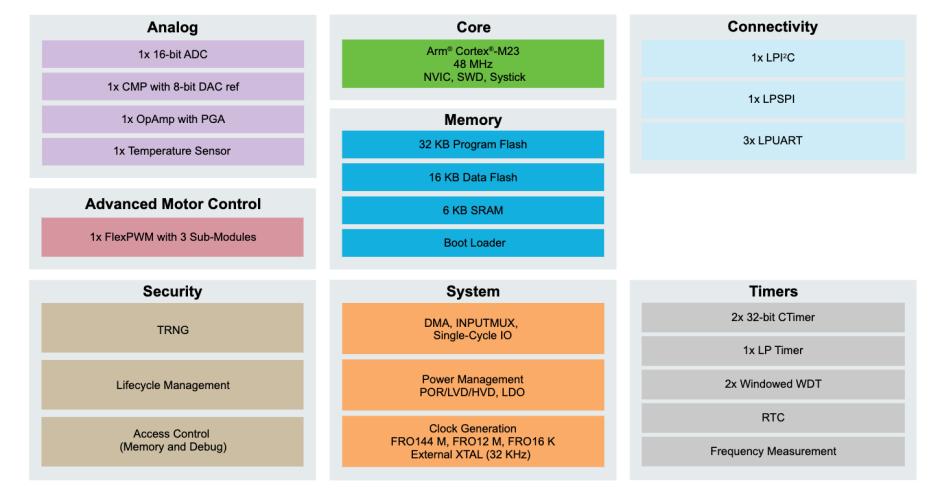
NXP launched the entry-level MCX C1 series MCUs in August, with newly added MCX C15 and MCX C16, targeting cost-sensitive industrial, IoT, smart lighting, simple motor control and energy management applications. It adopts M23 core, with a maximum of 64KB Flash, which will be expanded to 512KB in the future. MCX C15 and C16 include 18-channel 16-bit SAR ADC, high-speed comparator with integrated 8-bit DAC, internal operational amplifier and FlexPWM module suitable for motor control. Through the unified MCUXpresso software ecosystem, MCX C1 can also be extended to the higher-performance MCX A series, which is suitable for applications that need to upgrade from traditional 8-bit and 16-bit MCUs to 32-bit platforms.
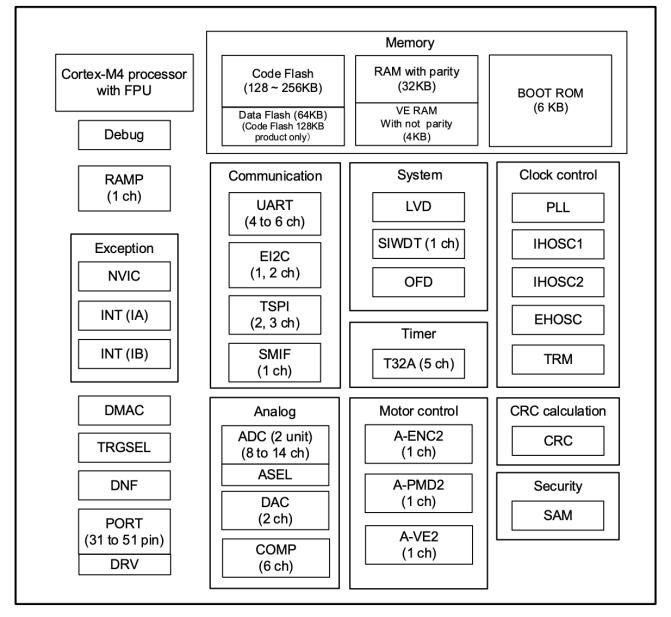
Toshiba began mass production of the entry-level M4L group small microcontrollers of the TXZ+ family in July, targeting next-generation home appliances, consumer electronics and industrial equipment applications. It adopts FPU-equipped M4 core, with a maximum operating frequency of 80MHz, supports a wide power supply range of 2.7V~5.5V, is compatible with 3V and 5V systems, and integrates a high-speed internal oscillator with an accuracy of ±1%, as well as an overcurrent detection comparator for emergency motor shutdown. It provides two code Flash capacities of 128KB and 256KB, and is equipped with 32KB RAM and 4KB VE RAM.
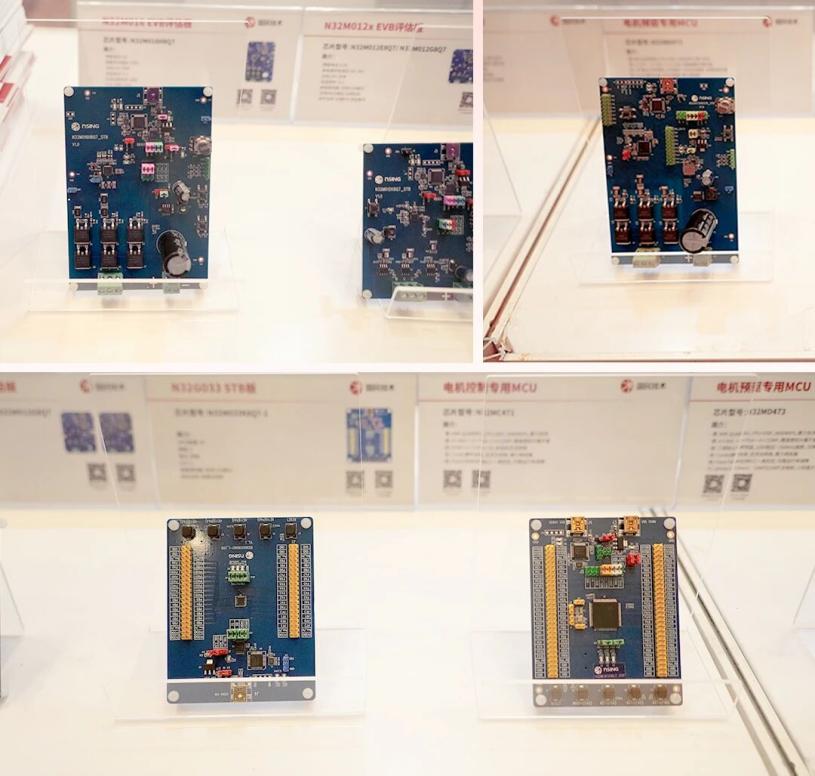
Nation recently introduced the "Motor Control +" motor control solutions with N32G033/N32M0xx and N32MD473 as the core. By improving chip integration, reducing peripheral devices and PCB design complexity, it targets applications such as electric tools, home appliances, servos and robots. N32G033/N32M0xx adopts 64MHz M0 core, equipped with 64KB Flash and 6KB SRAM; for high-end servos, N32MD473 adopts 240MHz M4F core, integrates FPU, DSP, CORDIC and 220V three-phase pre-driver, and is equipped with high-speed ADC, PGA, comparator and other analog resources.
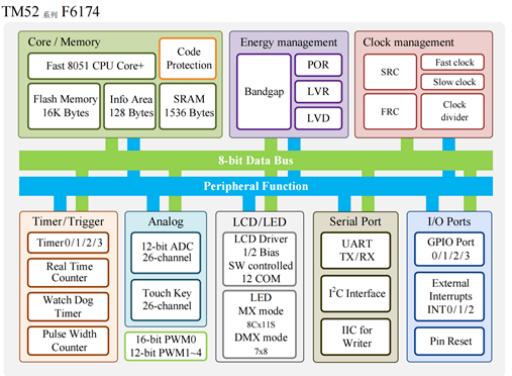
Hai Speed Core launched the TM52F6174 touch 8051 MCU in August, mainly targeting small home appliance applications such as electric ovens, air fryers, induction cookers, electric kettles, and electric fans. It adopts an enhanced 8051 core, with a maximum main frequency of 18.432MHz, equipped with 16KB Flash and 1536-byte SRAM, and integrates peripherals such as LED driver, PWM, 12-bit ADC, I²C, UART and watchdog. It provides 26 touch input channels, supports up to 16 touch keys, and supports automatic and manual calibration.
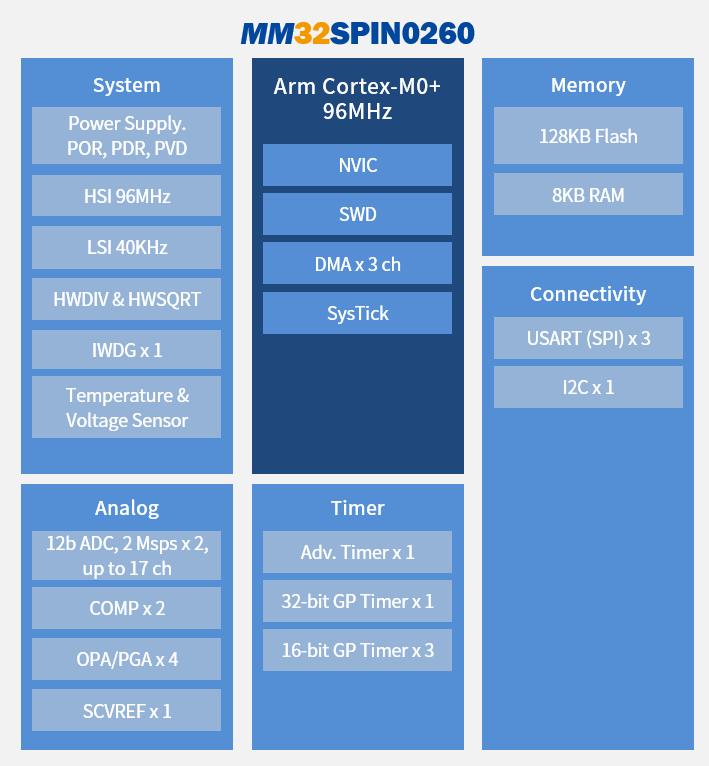
MindMotion launched the MindSPIN MM32SPIN0260 series motor control MCU on July 31, targeting applications such as quadruped robot joint motors, air conditioners, refrigerators, washing machines, electric bicycles, water pumps and garden tools. It adopts 96MHz M0+ core, equipped with 128KB Flash, 8KB SRAM, two sets of 12-bit ADC, and integrates advanced PWM timers for motor control, as well as 32-bit and 16-bit general-purpose timers, independent watchdog and other peripherals.
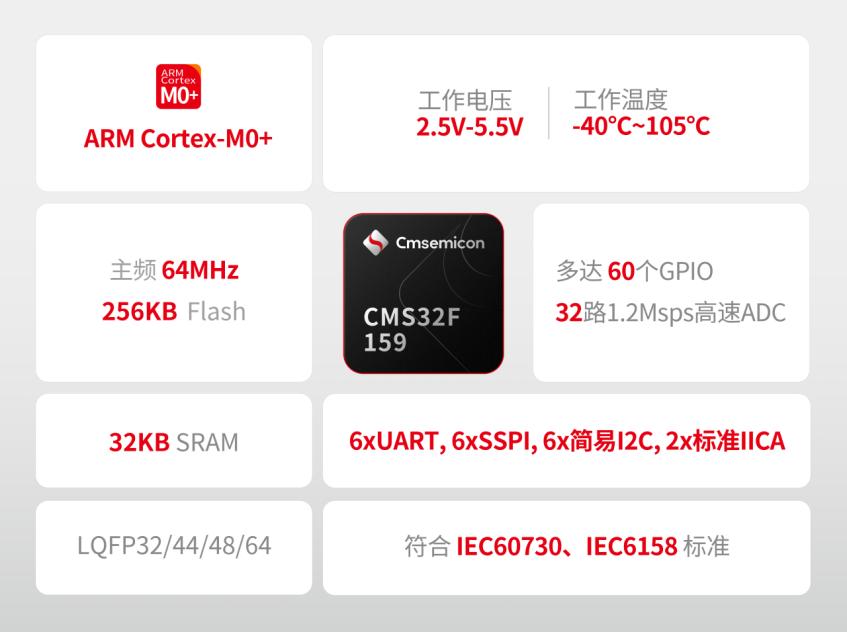
China Micro Semiconductor launched the ultra-low power CMS32F159 series for white goods, kitchen appliances, industrial and mobile devices on May 28. It adopts M0+ core, with a maximum main frequency of 64MHz, equipped with 256KB Flash, 32KB SRAM and 1.2Msps 12-bit ADC, and integrates functions such as DMA and event linkage controller. Its timer provides 8 channels, supports up to 6 channels of synchronous reset PWM or complementary PWM output, and can be used for motor control such as BLDC and PMSM.
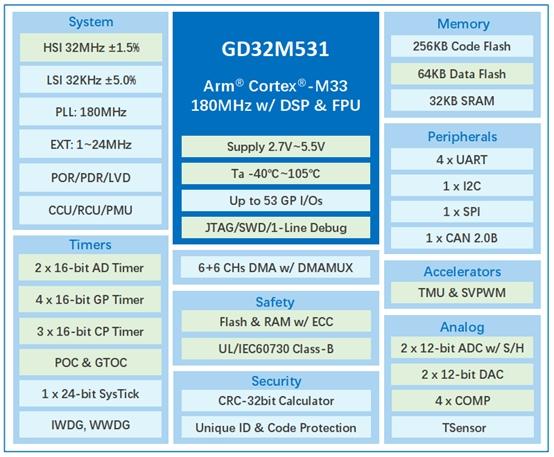
GigaDevice stated at this year's AWE that the mass production of GD32M531 is imminent. This product is optimized for home appliance motor control scenarios, and its applications include home appliance products such as outdoor air conditioner units, air source heat pumps, washing machines/dryers, dishwashers, and multi-head induction cookers. Equipped with M33 core, the maximum main frequency is 180MHz, the CoreMark reaches 705, and the DMIPS reaches 267. It is understood that if GD32M531 successfully completes mass production and large-scale deployment, it will also become one of the important domestic high-performance 5V motor control MCUs that enter the core supply chain of white goods.
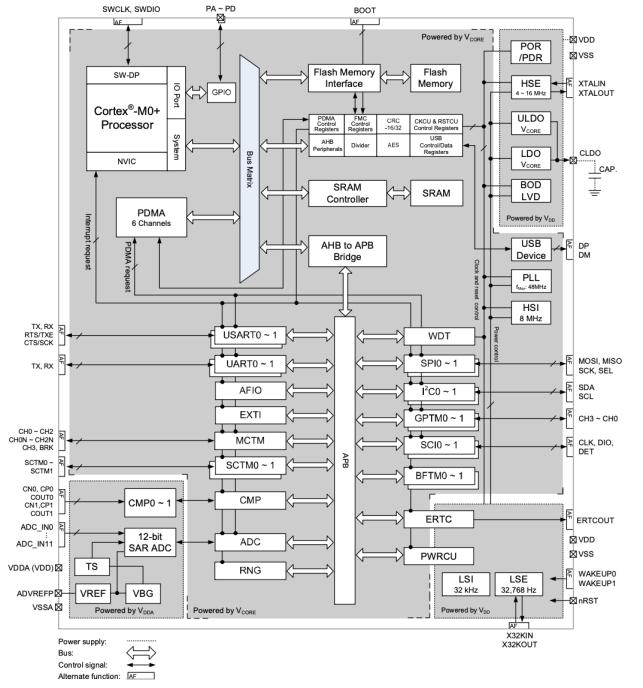
HOLTEK launched the HT32L52343/HT32L52353 ultra-low power USB MCU on February 6, targeting applications such as white goods, power monitoring, home automation, and industrial sensors. This series adopts 48MHz Cortex-M0+ core, equipped with up to 128KB Flash, 24KB SRAM and 6-channel PDMA, and integrates 12-bit 1Msps ADC. The operating power consumption of HT32L52343/53 is about 55% lower than that of the previous generation products, the deep sleep power consumption is as low as about 0.71μA, and it is further reduced to 0.125μA in deep pause mode.
Jinghua Smart Core recently launched the CB78xx 32-bit home appliance MCU integrating touch, display and motor control, in response to the demand for high integration, low power consumption and high reliability of refrigerators, air conditioners, washing machines and various small home appliances. With M0+ core, the maximum main frequency is 48MHz, it is configured with 256KB Flash and 32KB SRAM, and provides 8KB independent BOOT area and 4KB user data area, supporting BOOT and AB dual-zone backup OTA upgrade. The power consumption in Stop mode is as low as 10μA, and up to 60 GPIOs are provided.
The SiWx917 launched by Silicon Labs is targeted at Matter over Wi-Fi applications. It supports Matter 1.4.1, has 8MB on-chip flash memory, and can be expanded to 16MB through external flash memory to meet the storage space requirements of Matter applications. Wi-Fi 6 supports functions such as TWT, MU-MIMO and OFDMA, and also provides WPA3 security mechanism, which can be used in scenarios such as high-speed network connection, OTA firmware upgrade and real-time data transmission.
