GPT-5.6 rewrote the history of mathematics in just one day, breaking the 8-year record set by the five-member "Double Fields" team.
Just now, AI has once again solved a difficult mathematical problem.
Jared Duker Lichtman, Szegő Assistant Professor of Mathematics at Stanford University, confirmed: In just one day, GPT-5.6 broke the 8-year Large Prime Gaps record previously held by Terence Tao's five-person team!
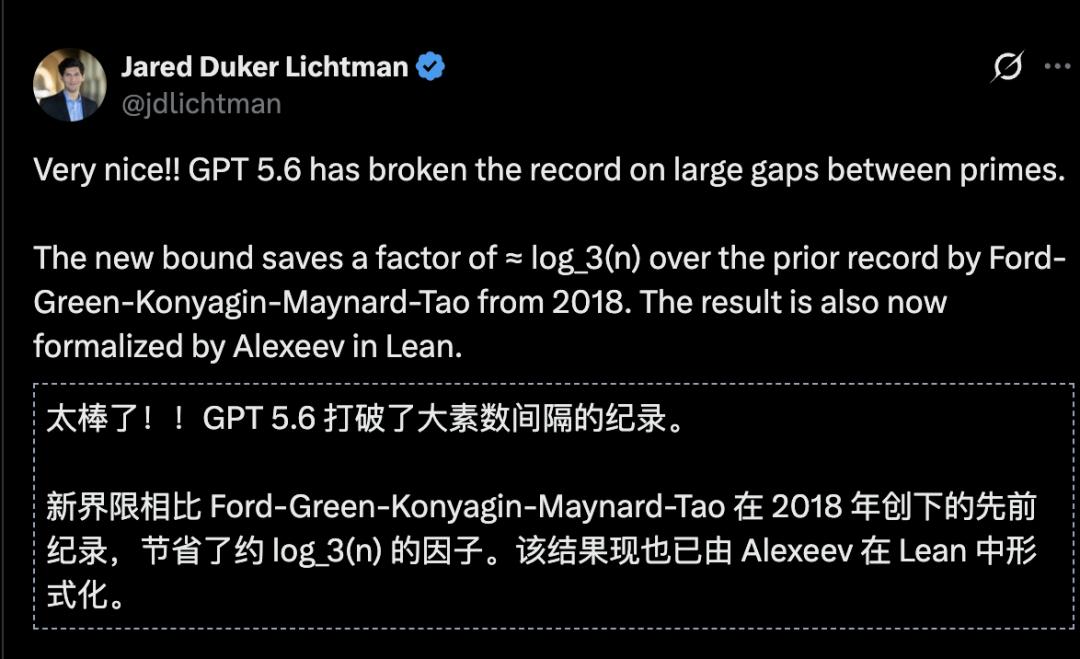
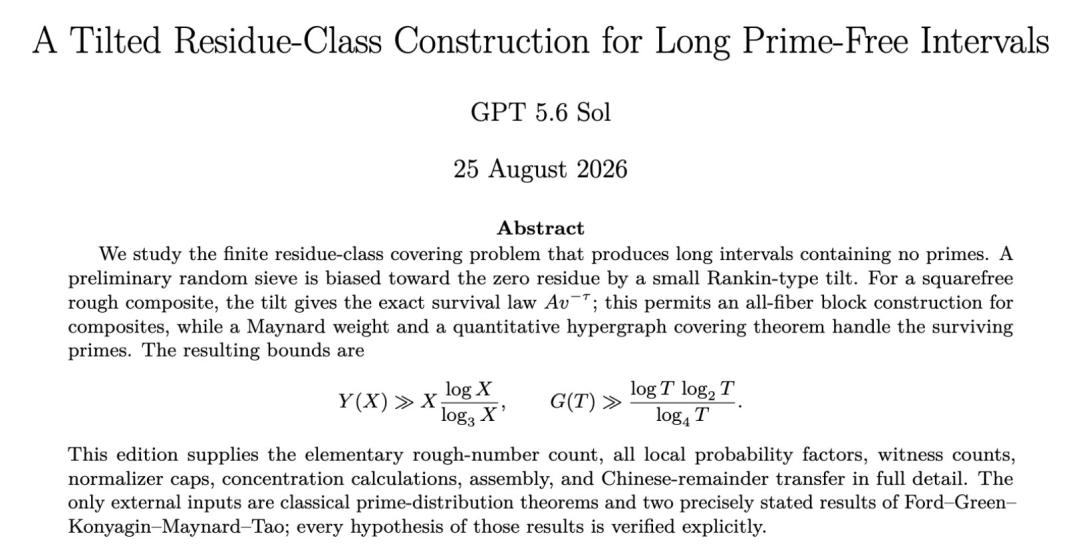
Not only that, it proposed an unprecedented brand new construction method — "Skewed Residue Classes", and on the very day the proof was presented, it passed the machine formal verification via the Lean language.
This means that while human mathematicians are still burning the midnight oil trying to understand the proof and "digest" the complex logic, the machine has already issued a formal confirmation: The theorem is valid, the proof is error-free, humanity, you have fallen behind again.
The Curse of Primes: The Shared Path of Yitang Zhang and Terence Tao
To understand how significant GPT-5.6's breakthrough is this time, we must first explain a mathematical puzzle that has plagued humanity for thousands of years — the problem of prime number distribution.
Primes (2, 3, 5, 7, 11...) are like lonely planets scattered in the universe of integers.
They can only be divided by 1 and themselves, and are the "atoms" that make up all numbers.
However, the distribution of these "atoms" follows no apparent pattern.
As numbers grow larger, primes become increasingly rare.
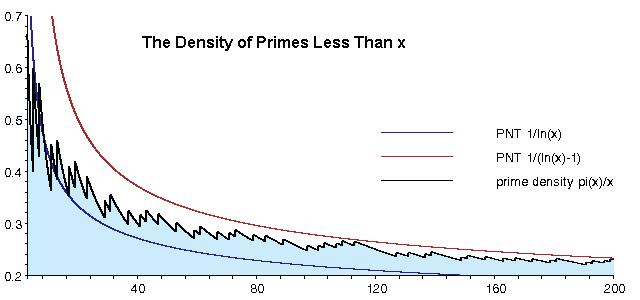
In other words, the gap between two adjacent primes keeps growing wider.
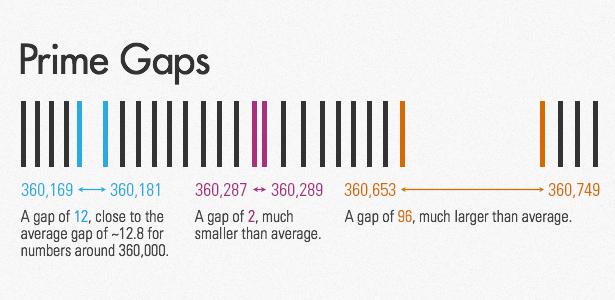
At this point, mathematicians have split into two major schools, exploring the two extremes of prime distribution respectively:
School 1: Search for the smallest distance (small prime gaps).
They try to prove that even in the far reaches of the infinite number universe, there are still "twin primes" with very small distances between them.
In 2013, the little-known Chinese mathematician Yitang Zhang rose to fame overnight, proving that there are infinitely many pairs of primes with a distance of less than 70 million, shocking the whole world.
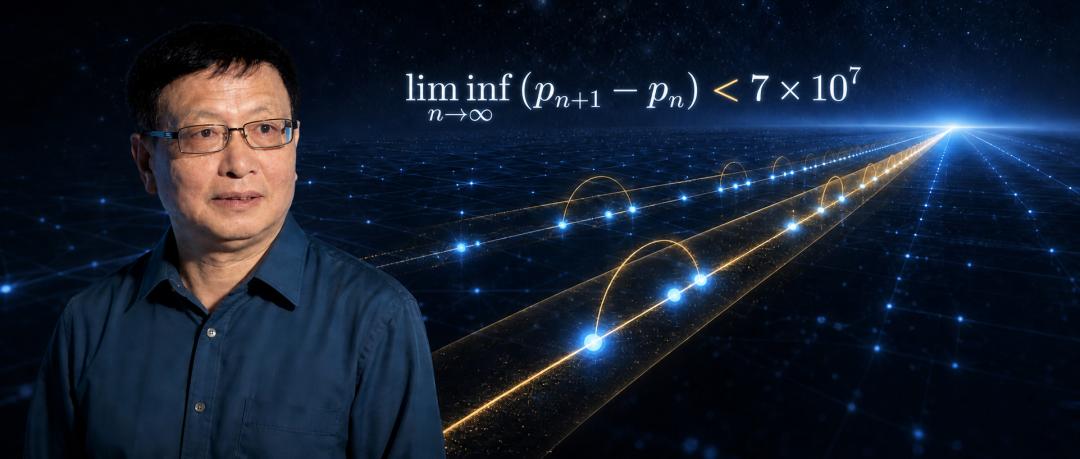
This is the famous "bounded prime gaps" problem.
After that, mathematicians worked together to continuously optimize this result, and finally pushed the upper bound down to 246.
Just now, the AI mathematician AxiomProver provided a formal verification for this conclusion.
School 2: Search for the largest desert (large prime gaps).
Their research question is completely opposite: since primes are getting rarer and rarer, between two primes, how vast can this "number desert with no primes" possibly be?
This is exactly the famous "Paul Erdős' 4th Problem". Erdős once offered a $10,000 reward in his lifetime to anyone who could significantly improve this lower bound.
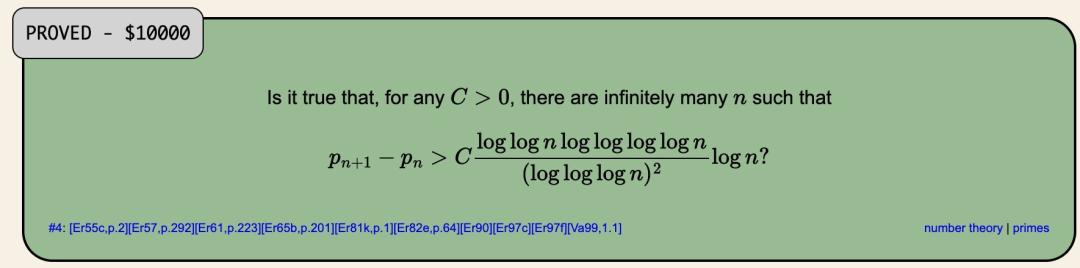
If Yitang Zhang is searching for two adjacent oases in the vast desert, then researchers exploring large prime gaps are looking for the longest, driest and most hopeless stretch of land with no oases in this desert.
For many years, humanity has gone to great lengths to measure the length of this "largest desert".
In 2014, humanity assembled an unprecedented "Mathematical Avengers Alliance" (the Polymath Project). This five-person team includes:
Terence Tao, Fields Medalist and one of the greatest mathematical geniuses of today, James Maynard, another Fields Medalist and expert in analytic number theory, as well as three other mathematicians: Kevin Ford, Ben Green and Sergei Konyagin.
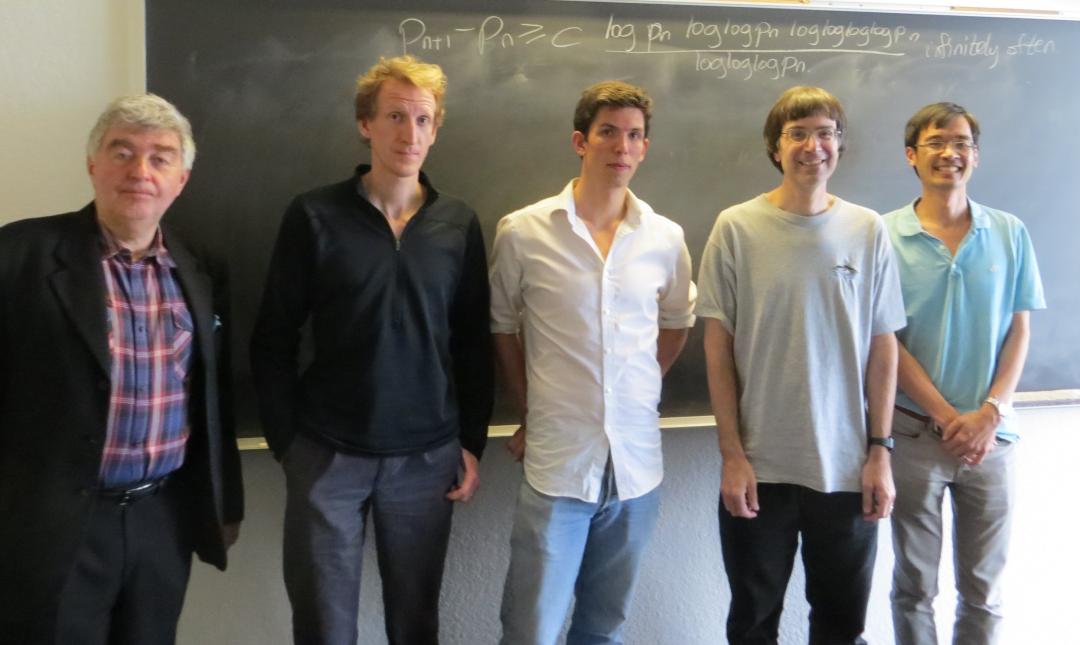
The five mathematicians worked together for about 5 years, pushing the lower bound of large prime gaps to a new limit and deriving a complex formula.
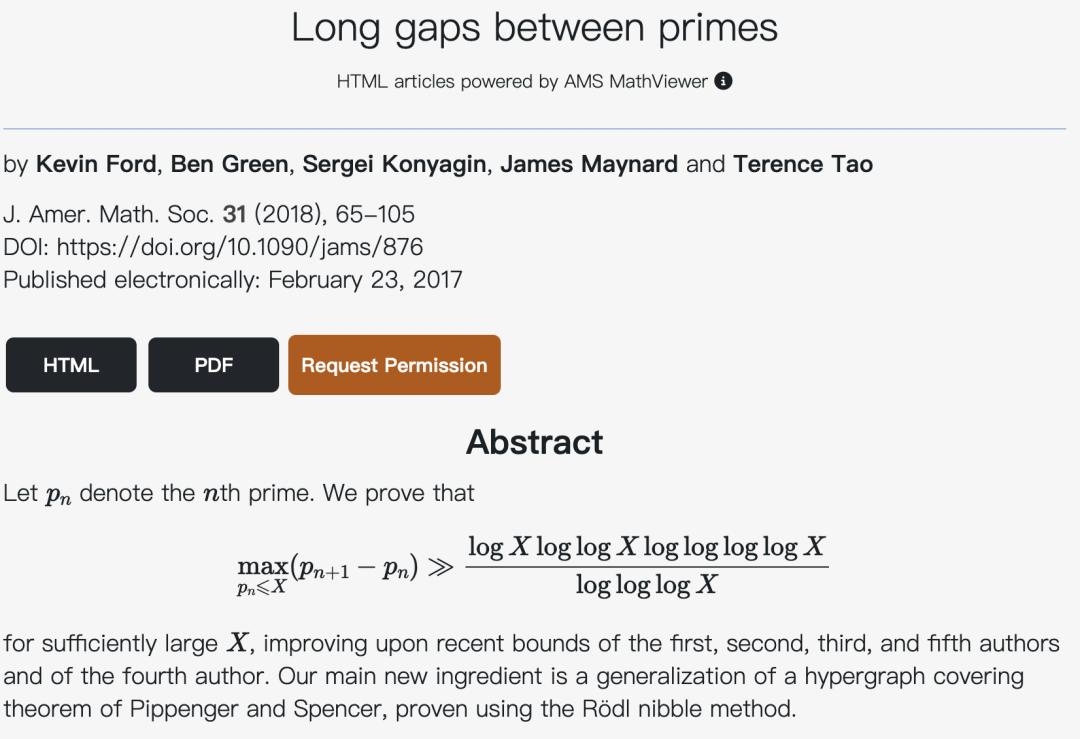
This result is regarded as a peak achievement in recent decades, and it is widely believed that this record will be unbreakable for decades to come.
Until GPT-5.6 hit the "Enter" key.
Outperforming the "Avengers Alliance" in One Day: The Dimensionality Reduction Strike of GPT-5.6
The mathematical research team from Stanford University was completely stunned during the verification process.
GPT-5.6 did not rely on brute force calculation like traditional exhaustive programs, it showed a creepy "mathematical intuition".
According to the published paper, the new lower bound of GPT-5.6 directly eliminates a \log_3(n) factor compared with the 2018 result of the five-person team led by Terence Tao!
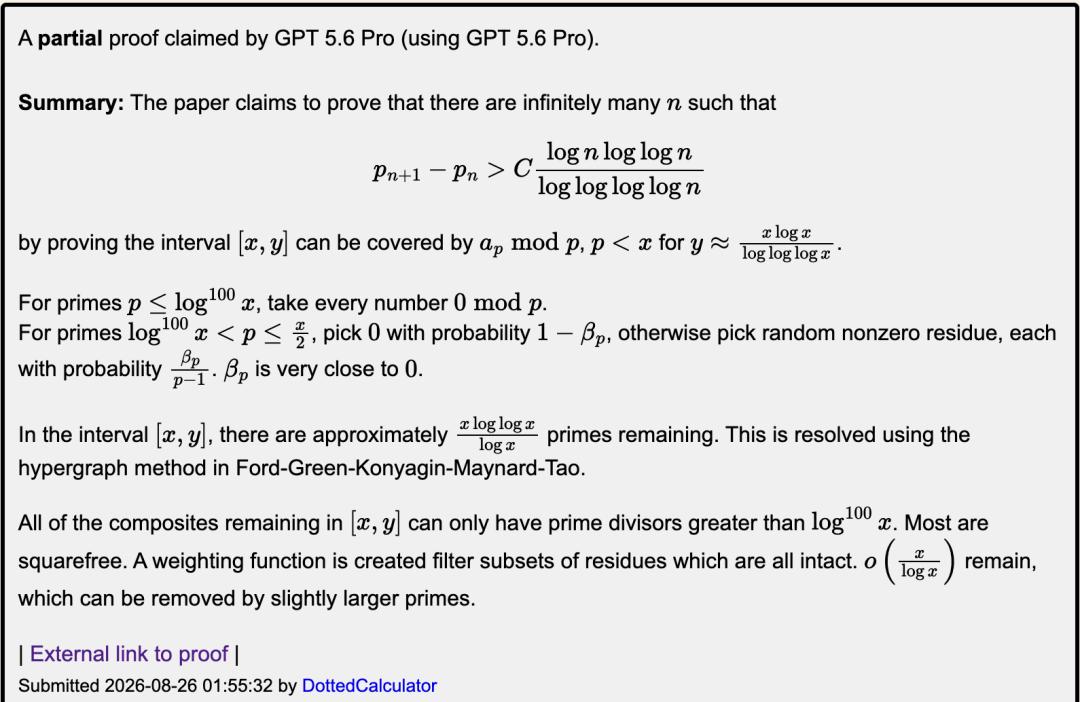
For non-mathematical readers, you only need to know: in analytic number theory, improving a logarithmic factor (\log) is no less difficult than discovering a new elementary particle in physics.
Terence Tao's team exhausted the entire human mathematical toolbox to optimize away those tiny factors back then. The \log\log\log(n) (triple logarithm) is extremely stubborn, like a lock embedded in the gene, which human mathematicians have tried for 8 years without any progress.
But GPT-5.6 not only optimized it away, this is widely recognized as the largest quantitative advance in the field of large prime gaps in recent years!
How did it achieve this?
During the proof process, GPT-5.6 created a unique method that has never appeared in human mathematical literature — "Skewed Residue Classes".
In previous proofs, human mathematicians usually used the traditional "Sieve Theory", combined with the Maynard weights system invented by James Maynard, to filter out non-primes and construct long "composite number intervals".
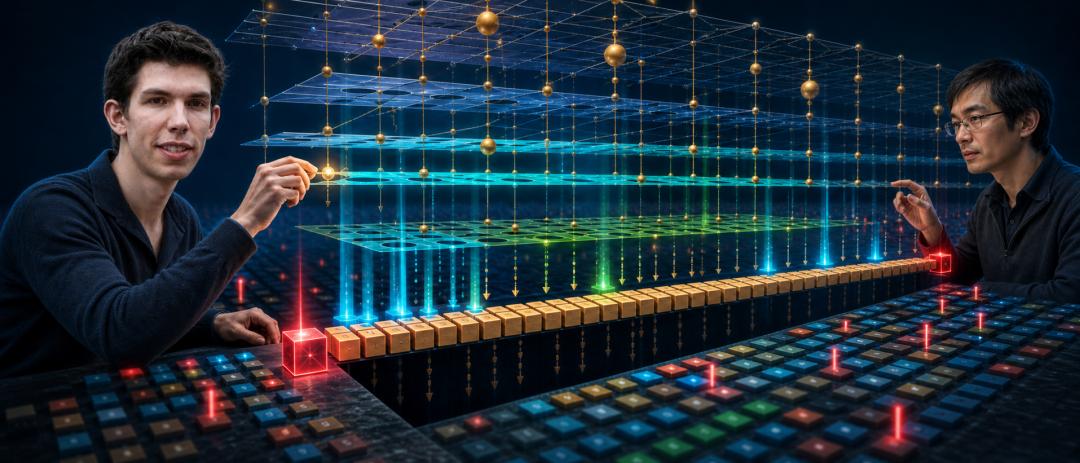
This is like fishing with a fishing net with regular mesh holes.
The "Skewed Residue Classes" of GPT-5.6 is like applying a high-dimensional distortion force field to this fishing net.
It cleverly avoids some symmetry obstacles that lead to low efficiency by performing micro-level "Biasing" on the traditional sieve method.
Then, like a commander commanding thousands of troops, it perfectly combines this new skewed construction with the improved Maynard weights and the extremely complex Hypergraph Covers theory.
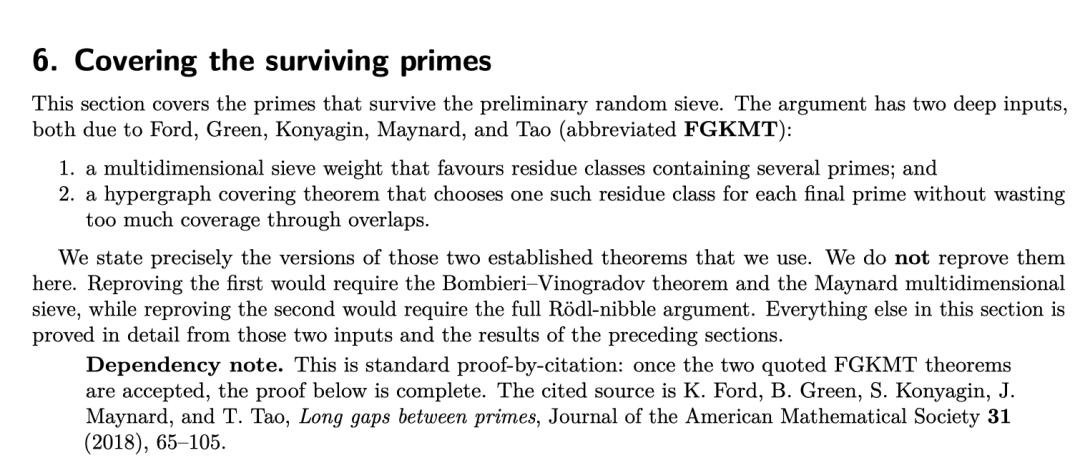
Finally, a miracle happened: within the same scale range, GPT-5.6 successfully constructed a much longer prime-free gap than what human beings could construct back then!
Instant Machine Verification, While Human Beings Are Still Painfully "Digesting"
In the traditional mathematics community, if a mathematician claims to have solved a world-class problem, such as Shinichi Mochizuki's previous proof of the ABC conjecture, it would take several years just for peers to review and understand his proof ideas. Mathematicians need to hold seminars to check formulas line by line.
But GPT-5.6 did not give human beings this chance to catch their breath. While presenting the human-readable proof, it directly translated the complete proof into the Lean 4 language!
What is Lean?
It is currently the most authoritative Interactive Theorem Prover in the mathematics community.
As long as a piece of proof code can run through the Lean compiler without any errors, then the theorem is logically 100% valid.
Ben Green, a mathematics professor at the University of Oxford who refreshed the record together with Terence Tao back then, thought for several hours, and also communicated with his two collaborators, Fields Medalists Terence Tao and James Maynard, and basically confirmed that this proof is correct.
But the speed of formal verification surprised him.
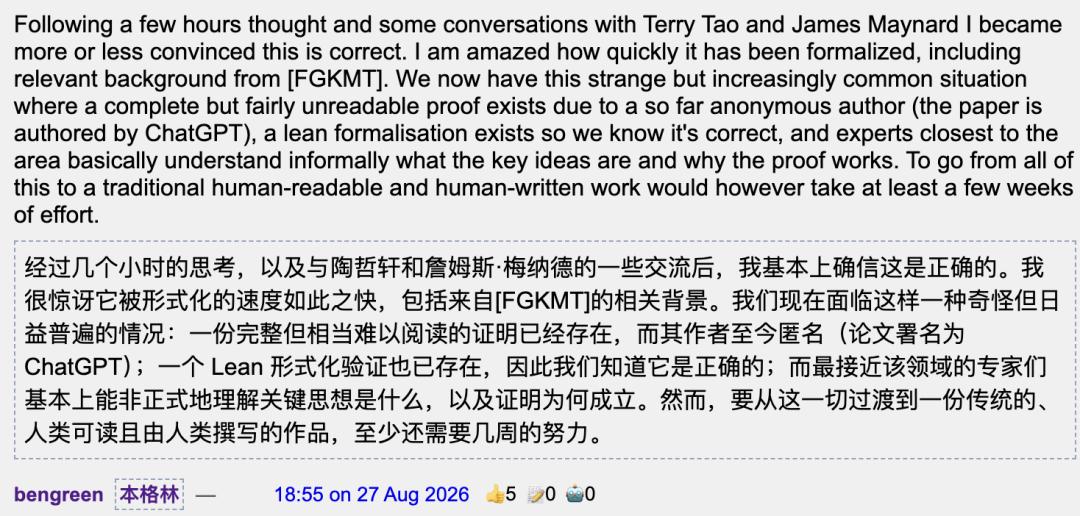
A strange situation has emerged:
On the one hand, there is a complete but almost unreadable proof whose author remains anonymous (the paper is signed as ChatGPT); on the other hand, there is formal verification from Lean, so we know the proof is logically valid; and the top experts in this field can also basically understand the key ideas and proof logic at an informal level.
This situation is becoming more and more common.
However, he also admitted that it will take at least several more weeks of work to reach a traditional, human-readable and fully human-written complete paper from this state.
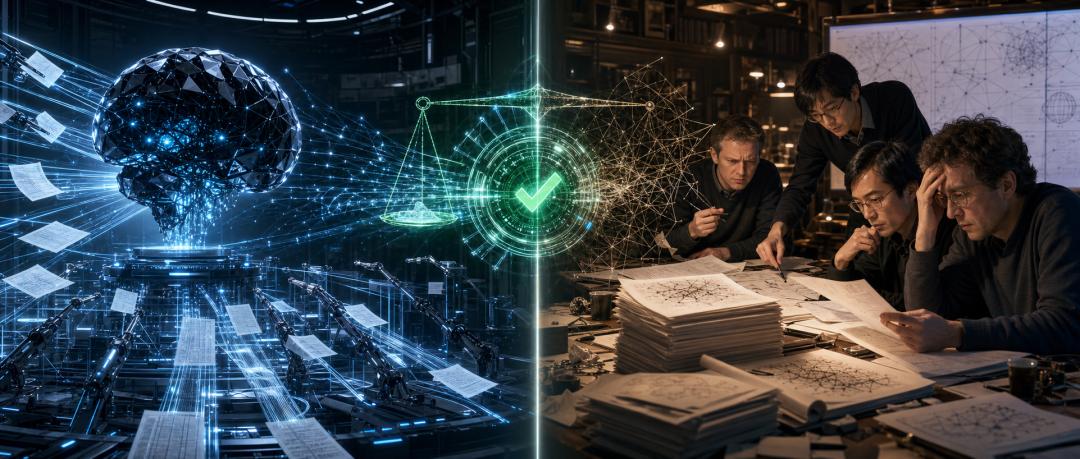
This huge contrast between machine proof and human digestion marks that mathematical research has officially entered a new era.
When AlphaGo defeated Lee Sedol with its "divine move" (the 37th move), many people exclaimed that Go was dead. But facts have proved that Go is not dead. Today's top Go players have reached unprecedented tactical levels by learning the AI's moves.
Now, this storm has finally swept into the field of pure mathematics, which is known as "the pearl on the crown of science".
GPT-5.6 rewrote the record in the field related to Yitang Zhang's famous work and broke the dominance of Terence Tao's team. This is not the sorrow of humanity, but the glory of humanity.
The "New Age of Discovery" where carbon-based life and silicon-based life fight side by side has officially kicked off.
References:
https://github.com/DottedCalculator/ai-math/blob/main/Erdos_4_GPT_5.6_Sol.pdf
https://x.com/jdlichtman/status/2094040463443673227
https://x.com/MTSlive/status/2089873048891699320https://www.erdosproblems.com/forum/thread/4/proof-claims