When AI becomes a daily necessity, Tmall has become the first shelf.
Domestic large AI model vendors are competing for something that used to be irrelevant to them: consumers' shopping carts.
On September 2, Zhipu settled in Tmall to open an official flagship store, officially selling subscription packages such as Coding Plan.
On the first day Zhipu opened its store, the search volume skyrocketed 40 times compared with the previous day.
On September 3, Tmall officially launched the "AI Space Station" page, namely the Token Recharge Center. Users can directly purchase subscription products from a number of leading large model vendors.
At present, some services are still provided by agents. According to insiders of *NoNoise*, in addition to Alibaba Cloud which has operated on Tmall before and the newly settled Zhipu, the official store opening processes of brands including Kimi and MiniMax are also underway.
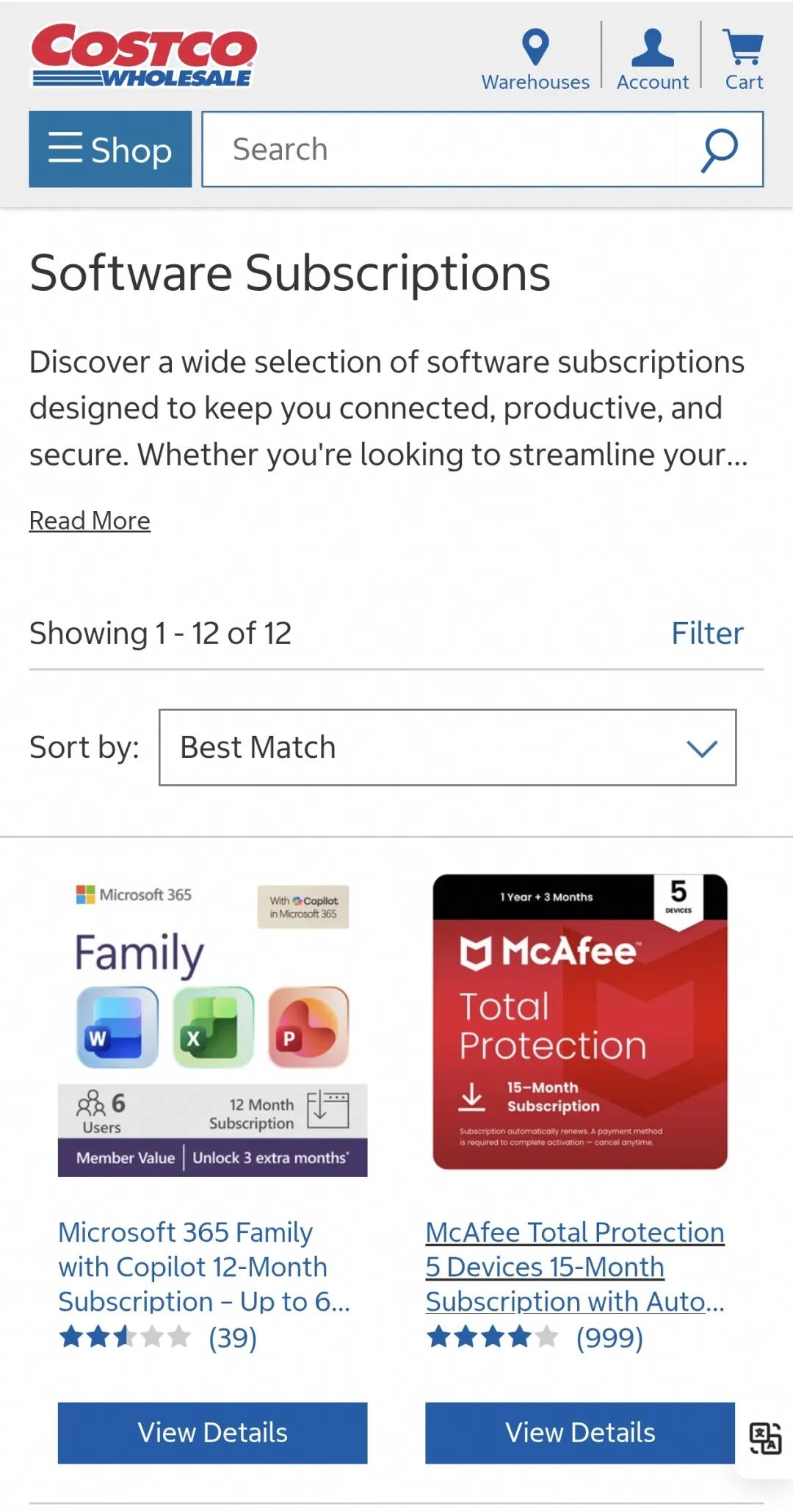
This is not the first time that AI has entered retail shelves. In the United States, Costco has begun to sell Microsoft 365 subscriptions with Copilot and Adobe Acrobat with AI Assistant online, where members can complete orders and redemptions just like purchasing other digital services.
It is relatively easy to understand why upper-layer AI applications expand retail channels: every consumer is also a potential AI to C user. However, the large model vendors at the middle layer previously served more developers, enterprises and other professional groups. Why have they also started to line up to enter e-commerce shelves?
What is happening behind this may be more than just a channel change.
Large Models and E-commerce Platforms: A Perfectly Matched Business
The two product wars in 2026 have directly shortened the progress bar of AI implementation.
One is the "lobster" scuffle among major manufacturers ignited by OpenClaw, which directly promoted AI from dialog boxes to productivity tools; the other is the ongoing AI office war, which has made more and more office workers actively embrace Agents, code assistants and automation tools, and pay for products such as model quota and Coding Plan.
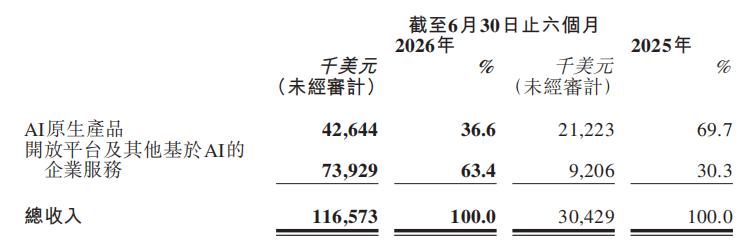
The growth of model call demand has been clearly reflected in the revenue of model vendors. According to MiniMax's financial report, in the first half of this year, the revenue proportion of open platform and enterprise services rose from 30.3% to 63.4%, driven by the increase of API call volume and the adoption of Token Plan. In the same period, Zhipu's open platform and API business revenue increased by nearly 2736% year on year; by the end of August, the call volume of Coding Plan on the platform increased by more than 23 times.
With both AI usage demand and users' willingness to pay on the rise, model vendors are facing new problems: how to reach more potential users? How to achieve higher revenue growth?
At this point, model performance and product capability are one dimension for improvement, while channel is another important dimension.
In terms of channel types, the official websites, apps and large model distribution platforms mainly receive users who already know the brand and actively look for suitable solutions; mature retail channels including e-commerce platforms reserve another group of potential users — they have established search habits and rigid demand for productivity upgrading, but will not actively visit the official websites of models due to technical or information thresholds.
This broader group of users includes entrepreneurs, freelancers, as well as employees in all walks of life with office demands. Sooner or later, they will become the targets of model vendors' user expansion.
Moreover, the more overlapping portraits of e-commerce consumers and AI user tags, the more accurate the future user expansion will be. Just like Microsoft and Adobe putting their products on Costco, even offering higher discounts than their own official websites, the goal is nothing more than covering family users, freelancers and small and medium business owners among Costco members. They not only have basic office demands, but also are eager for productivity tool upgrading. More critically, Costco members are typical groups with medium and high consumption power.
For AI vendors, this is undoubtedly a labor-saving and accurate screening process.
In this context, Zhipu and other vendors opening stores on Tmall generally follow a similar logic. Tmall, as an e-commerce platform led by brand operation logic, has a group of high-quality users who have formed stable consumption habits. According to Alibaba's financial report, by the end of June this year, Tmall's 88VIP members reached about 64 million, whose annual per capita consumption is 9 times that of non-members, and they purchase 19 categories and services on average.
In other words, Tmall has gathered a group of people with high-frequency, cross-category consumption habits, who are used to paying for memberships and services. This is an opportunity for model companies to find office, creation and development demands from mature consumer groups.
E-commerce platforms naturally also have sufficient motivation to introduce model vendors, because consumers' demands are constantly changing, and the supply must keep pace with the times.
In the past 20 years, e-commerce platforms mainly met users' livelihood needs such as food, clothing, housing and transportation; now, with the full popularization of AI, a person can not only buy clothes, home appliances and video platform memberships on the platform, but also purchase office software, AI memberships and model packages for work.
Model companies need new customers outside the technology circle, while e-commerce platforms need new salable goods and services. As AI evolves from a technical capability into a priced, comparable and repurchasable productivity product, the two sides have formed a clear intersection for the first time, turning it into a perfectly matched business.
Cutting-edge Technology Companies Also Need to Learn to Make Commodities
When cutting-edge technology services move to C-end shelves, the first boundary they cross is the line between "products" and "commodities".
Products can have their own "language system", but commodities need to be straightforward, even ordinary people can understand them easily.
In this regard, the embodied intelligence industry has taken a step ahead. At present, the robots of Unitree and Fourier Intelligence have been launched on e-commerce platforms such as Tmall and Amazon. When cutting-edge technologies that used to be mainly displayed in laboratories and industry exhibitions start to appear in the consumer electronics category alongside 3C products and home appliances, the first thing they need to clarify is what the robots can do at present, their applicable scenarios, how long the battery lasts after a full charge, and how services are provided.
Large AI models face higher interpretation costs. Robots at least have intuitive appearances, action videos and hardware configuration parameters, while large models sell an intangible capability — Tokens, points, contexts, APIs and continuously updated model versions, which are hard to compare like the memory of mobile phones or the screen size of TVs.
When ordinary users cannot verify each model parameter item by item, they care more about whether the model service is stable, whether it can help them get things done, and the specific monthly cost.
This means that technical services need to be transformed into "virtual commodities" to re-introduce themselves to new users.
E-commerce platforms can support virtual rights and interests. Similar to previous consumption scenarios such as App Store recharge cards, game point cards, video memberships and software redemption codes on the platform, model packages can follow this transaction mode.
As the first batch of model vendors to settle in Tmall, the brand flagship stores of Alibaba Cloud and Zhipu provide us with an observation sample.
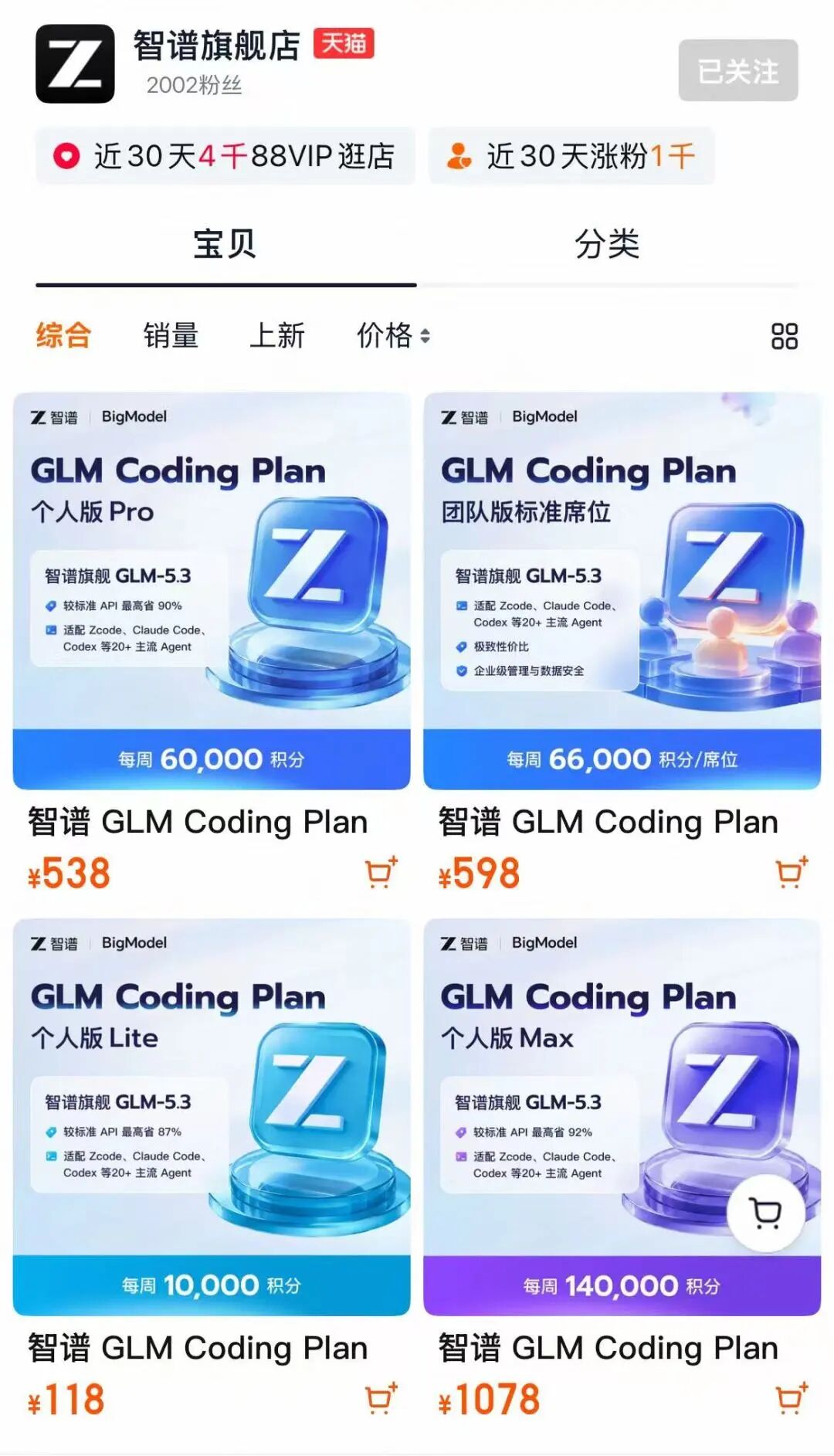
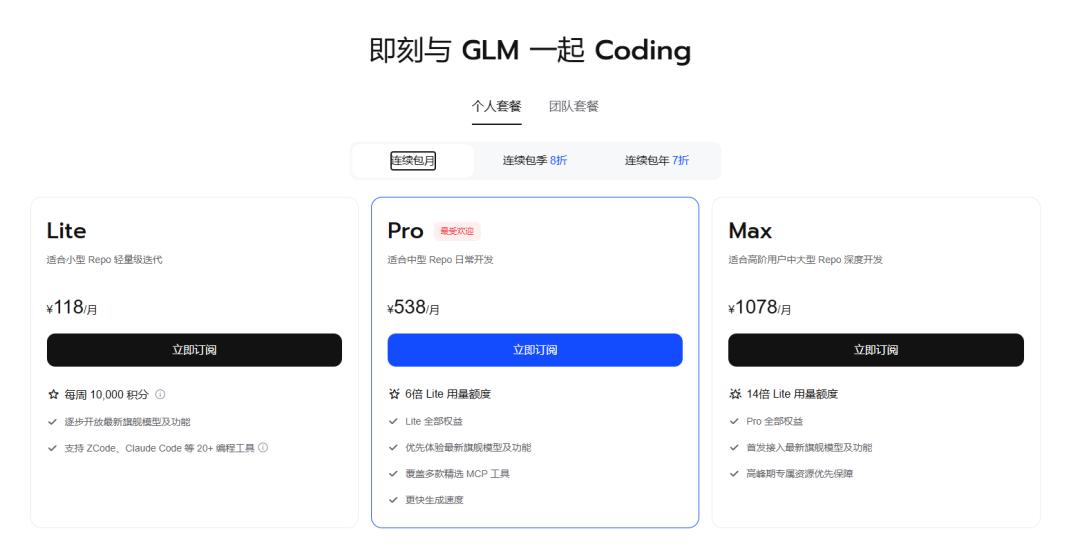
At present, both Zhipu's official website and Tmall flagship store provide personal and team versions of Coding Plan. The flagship store lists the Lite, Pro and Max versions as independent commodities respectively, and the team versions are concentrated in one link. This commodity structure is more oriented to individual buyers, making it convenient for them to make quick purchases according to their own needs.
Compared with the intelligent assistant replies on the official website, users can also directly consult human customer service at Zhipu's Tmall flagship store.
These service details of e-commerce are actually parts that are relatively unfamiliar to the existing sales systems of model vendors. Especially for model vendors like Zhipu that previously focused on B-end customers, they need to "leverage" e-commerce platforms to accelerate C-end penetration.
Theoretically, with the help of Tmall official flagship stores, Zhipu and other vendors can quickly enter the commodity information pool that consumers search, browse and compare in their daily lives.
When brands, packages, prices, activation instructions and customer service entrances are all integrated into the shopping interface that domestic users are extremely familiar with, models will have room to grow from technical products to consumer brands.
Are Large Models Starting to Lay Out "Ingredient Brands"?
From the perspective of ecological niche, Zhipu and other vendors queuing to enter Tmall may hide even greater ambitions.
There is a very important concept in modern commercial marketing — Ingredient Branding, whose most typical representative is the "Intel Inside" campaign of technology company Intel.
In the 1980s, the PC market grew rapidly, but Intel found a problem: when consumers bought computers, they cared about whole machine brands such as IBM, Compaq and Dell, and few people would buy a computer because of the microprocessor installed inside.
In 1991, Intel did one thing: translated its complex technical advantages into brand language that ordinary consumers could understand, and then implanted the "Intel Inside" brand mark into the prominent position of every computer and the minds of every user.
Intel thus obtained a very special brand asset: consumers would now choose a computer because of Intel. This made Intel the absolute "chain leader" in the PC industry chain.
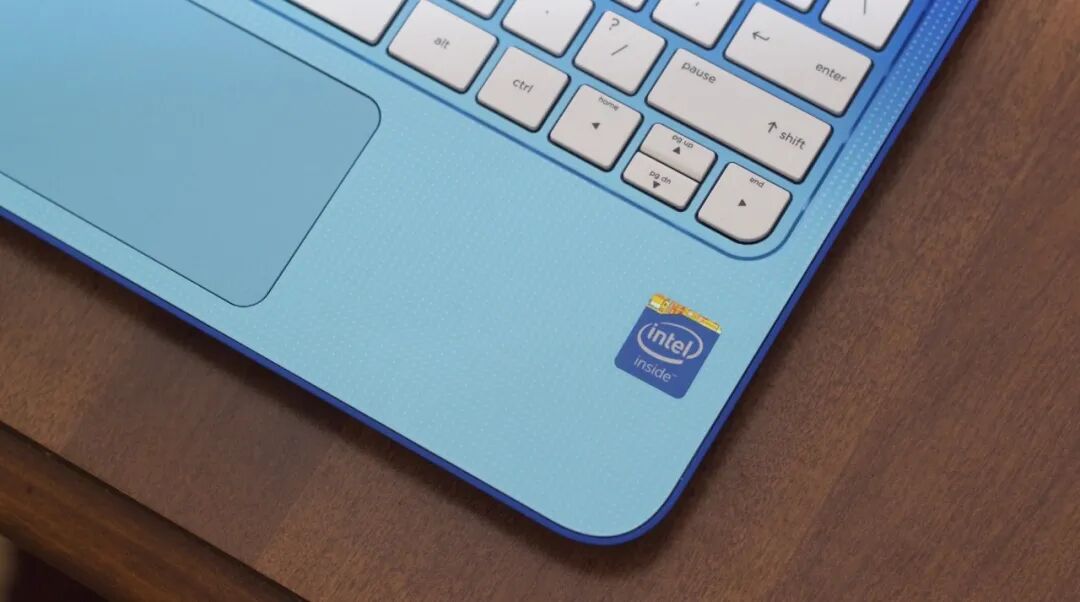
By analogy, today's Tmall flagship stores for large models, in addition to the practical value of shipment and new user acquisition, may also be the beginning of technology companies building consumer awareness and brand assets.
According to the current AI ecosystem, large models are still in the stage of intensive iteration. A one-time performance peak can bring attention, developers and call volume, but comparison will restart once the next new model comes out. Facing the situation that technical advantages are constantly refreshed, model vendors need to accumulate cross-version brand trust and consumption habits more than ever.
From the perspective of industrial evolution, models are being hidden in various Agents. Users care more about whether the "task" can be completed, and it is increasingly difficult for them to perceive which model is called at the bottom. Once the model is compressed into the background of an application and becomes a technical supplier, the traffic and attention brought by its leading performance may be quickly lost as the application switches models.
This is exactly what Intel was worried about before.
From this point of view, it is inevitable for technical products to evolve into consumer brands. Model versions will be iterated, but the user mindset, product system and service relationship represented by the brand can continue across versions.
In our opinion, this may become the next war for model companies: how to retain long-term users with brand mindset?
Referring to the practice of the veteran Intel, both brand mindset and purchase relationship require a stable consumption "entry". Therefore, brand flagship stores have the opportunity to become the "second official website" for model vendors. In the future, model versions will still be updated, but the commodities, orders and membership systems in the flagship stores can be precipitated.
Stores can also help model vendors observe what users really care about, which packages are more popular, which questions consumers repeatedly consult, and what doubts they have about prices, quotas and activation processes. All these can become the basis for the next round of product adjustment.
For Tmall, large model flagship stores are not a sudden new scenario. In April this year, Tmall implemented the commodity specification for the "AI Software and Applications" category, covering model subscriptions, Token recharge, API-Keys, plug-ins and deep synthesis applications.
*NoNoise* has previously reported that AI services such as AI tools, AI video production and Agent workflows are exploding on Taobao. The trading objects on the platform have extended from consumer goods to productivity that can be directly used for work and entrepreneurship, and a large number of new OPC users have emerged.
AI hardware is also exploding simultaneously. During Tmall's 618 shopping festival this year, the transaction volume of AI smart hardware on the platform increased by 80% year on year, with more than 1000 new products launched, covering categories such as AI computers, glasses, robots and companion devices.
These changes make a new consumption combination possible — individual users can buy model packages, computers, software and various services on the same platform, and gradually build their own "AI studio".
Where there is demand, the brand should cover that place. After Zhipu, it is estimated that more technology companies will turn their perspectives to e-commerce platforms. A new round of competition may have already begun.
This article is from the WeChat official account "NoNoise", authors: Liu Shiyu, Sun Jing, published with authorization from 36Kr.