How did Mac Mini become the new starting point of Apple's "server business"?
Generally speaking, a typical AI data center should be filled with the howl of high-speed cooling fans, flashing indicator lights, and huge racks stacked with NVIDIA H100 and H200 computing cards.
These expensive and bulky behemoths form the standard infrastructure of the generative AI era, built specifically for pre-training large language models that consume trillions of Tokens.
But in the public cloud computer rooms of some of the world's top AI labs, the scene is completely different:
Thousands or even tens of thousands of Apple Mac mini and Mac Studio units are neatly placed on custom rack trays. They require no external monitors, no keyboards or mice, and are only connected to the computer room network via power cords, high-speed Thunderbolt cables and 10-gigabit Ethernet ports.
According to information disclosed by foreign media, OpenAI has purchased tens of thousands of such Apple computers; Anthropic is also leasing a large number of Mac computing power instances on Amazon AWS; a number of startup platforms founded by former top AI infrastructure engineers have also begun to build cloud computer rooms specifically around Apple chips and Mac computers.
Why has a consumer-grade personal computer originally designed for home desks, student dormitories and offices entered the server rack and moved to the front line of AI technology evolution?
Agent Operation Training Ground
Why are Mac mini units so sought after in server rooms? This is because the focus of current AI research and AI model progress has undergone major changes.
Simply put, the main line of the AI race in the past few years has been "pre-training and post-training of base models". The goal of this stage is to allow models to learn massive amounts of data, understand human language and master cross-domain general reasoning capabilities, relying on floating-point operations on ultra-large-scale clusters.
In such scenarios, commercial GPUs equipped with dedicated HBM high-bandwidth video memory and NVIDIA's high-speed interconnection NVLink technology are absolute dominators, and consumer-grade hardware cannot get involved at all for now.
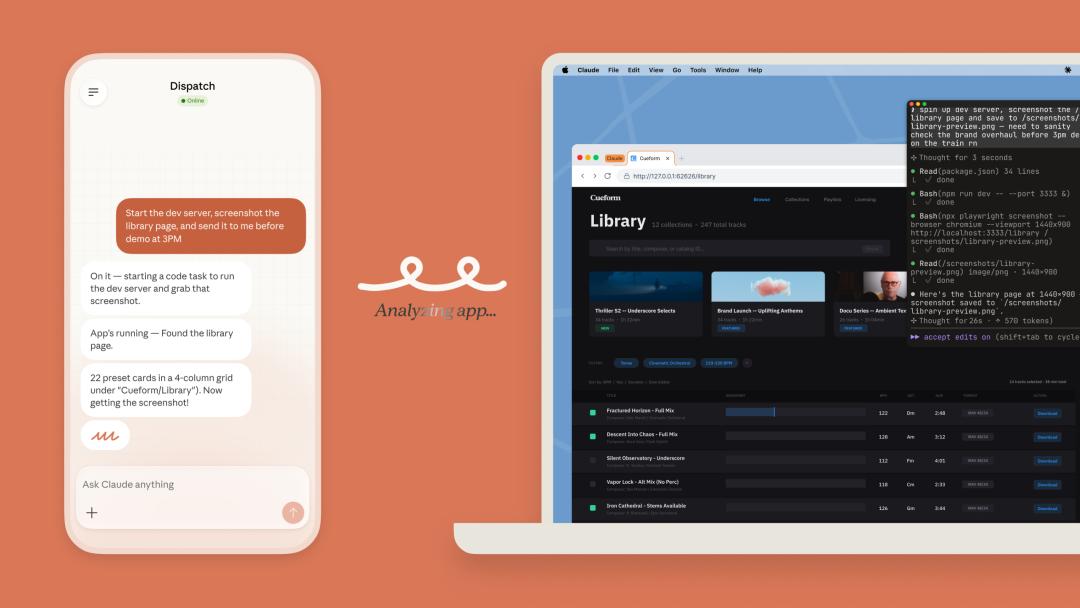
However, as the basic capabilities of underlying large models become increasingly stable, the R&D focus of cutting-edge labs has fully shifted to AI Agents — especially Agents that need to use various computer operation capabilities (computer-use) to help users solve various daily work and life tasks.
The ultimate goal of such agent-based tasks is to allow AI to no longer be limited to outputting text in chat boxes, but to be able to operate the operating system graphical interface familiar to human beings like a human employee sitting in front of the screen: move the mouse, click buttons, copy and paste between different software, fill in spreadsheets, process complex forms in the browser, write and debug code programs, and solve problems by themselves when error pop-ups appear.
The core method for training such operation-focused Agents is reinforcement learning based on environment interaction. This means that the lab does not need the model to swallow several TB of static text at one time, nor does it need such huge computing power, memory capacity and interconnection, but needs thousands of Agent instances to carry out a large number of trial-and-error cycles in a real, independent GUI environment.
At this point, the architecture of traditional data centers becomes rather awkward.
Source: Anthropic
The most common Linux containers in data centers are very suitable for running headless scripts and back-end services, which is completely opposite to the work process familiar to human beings. In real scenarios, most high-value work occurs on the graphical interface. Linux also has various distributions, which can be understood as operating systems for ordinary users, but its application ecosystem, graphics rendering methods, system permission rules and other aspects are very different from macOS and Windows.
This means that if you train in a Linux virtual desktop, the Agent operation capabilities learned by the model still require more adaptation to be migrated to the real macOS/Windows office environment.
In the era before the AI wave came, when cloud servers needed to provide specific operating systems for specific users, this was usually achieved through virtual machines.
This is a relatively occasional scenario, not a long-term persistent scenario. Running tens of thousands of macOS and Windows virtual machines virtually on traditional rack servers will bring huge system computing resource occupation and high commercial authorization costs. Especially the overhead of graphics virtualization is unreasonable for the fast boot and high-concurrency interaction required in the AI era.
Obviously, hosting a large number of native macOS instances is a more reasonable approach. macOS has mature graphical accessibility APIs, highly consistent window hierarchy specifications, and an extremely rich desktop software ecosystem. For researchers who want to train models on "how to use modern desktop computers" — all cutting-edge model labs, macOS is a natural and standard test field.
However, according to Apple's End User License Agreement, macOS can only legally run on Apple's own hardware. The so-called "Hackintosh" is just a play for a small number of enthusiasts, and it poses great risks for enterprise-level scenarios.
This is why model manufacturers need to deploy real Mac mini units in computer rooms. They have higher unit density than traditional servers and GPUs, and their procurement costs may even be lower.
Apple Silicon Comes in Handy
Of course, if it's just for compliance and to use macOS, there are still many alternative implementation ideas, such as purchasing early x86 Macs, or even a large number of "headless MacBook" (laptops with screens removed) available in the accessory market.
What really makes Mac mini a sharp tool in this round of Agent boom is the unique hardware features of Apple's self-developed Apple Silicon.
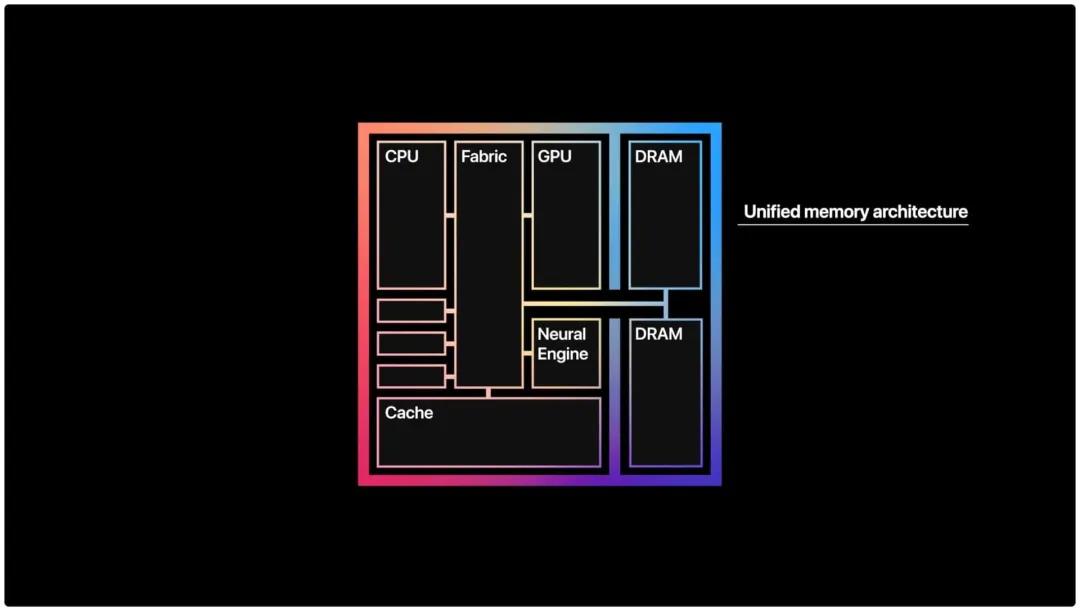
First, the unified memory architecture brings extremely high cost performance: In traditional PC and general server architectures, there is physical isolation between CPU memory and GPU video memory, and data needs to be copied between the two through PCIe channels.
This setting is insignificant for traditional tasks. But when you need to run a model with hundreds of millions to even tens or tens of billions of parameters locally, the communication delay and bandwidth bottleneck of the traditional architecture are extremely fatal.
At this time, the Unified Memory Architecture (UMA) of Apple Silicon comes into play. Computing components such as CPU, GPU, and ANE can share the same high-bandwidth memory pool, which means that a Mac mini with dozens of GB of unified memory can directly load the Agent decision model into the memory at one time, eliminating the delay of cross-bus data transfer — significantly reducing the task time for model companies and improving the efficiency of post-training and optimization.
Mac mini also has advantages in procurement cost: The hardware expenditure of a traditional x86 server configured with a commercial graphics card of the same large video memory capacity may be several times or even dozens of times that of a Mac mini (of course, the memory price increase affects everyone equally, and Mac is no exception, with prices rising by 1000 to 2000 yuan).
For training tasks that need to run tens of thousands of independent environments concurrently, the difference in single-node cost will be exponentially magnified.
In addition, the excellent performance of Apple Silicon, paired with the active cooling system of Mac mini, also allows persistent inference tasks to maintain high efficiency for a long time, and maintain long-term performance output at the low power consumption of only tens of watts for the whole machine. This low power consumption is more friendly to the heat dissipation and power configuration requirements of server rooms, and data centers can support dense Mac deployments without specially transforming expensive cooling systems or high-power power supply lines.
But Why Doesn't Apple Run Cloud Services?
Since the demand for Mac hardware in the computing power market is so strong, and Apple has so many unique technologies, why not go with the flow and build a public cloud computing power business similar to AWS and GCP? Interestingly, Apple just didn't do that.
At present, in the data center field, Apple has indeed accumulated quite deep technical investment. But according to public information, its strategic intention is completely focused on meeting its own needs, and it is deployed in "Private Cloud Compute (PCC)" servers.
It uses a dedicated M-series chip custom cluster and adopts a minimalist verifiable security OS to handle privacy-intensive inference tasks such as Apple Intelligence/Siri AI.
The essence of PCC is the "cloud extended privacy sandbox" built by Apple to solve the problem of insufficient computing power of end-side devices. When Apple Intelligence/Siri AI on iPhone, iPad or Mac encounters a large model task that cannot be completed independently by the end-side chip, the request will be encrypted and transmitted to Apple's data center, and the large model running on the M-chip cluster will perform the inference.
It is precisely because this architecture is fully proprietary that Apple's ultimate engineering control can be demonstrated: PCC computing nodes strip away all irrelevant components of traditional macOS, including persistent storage and administrator privileges, and only retain the kernel required for inference. These benefits are out of reach for third-party customers, no matter how high the price they are willing to pay.
Fundamentally, Apple's business logic has always been built on two points: "selling high-margin consumer hardware" and "earning service revenue from the huge consumer ecosystem".
Public cloud computing power leasing is a track with heavy assets, strong operation and maintenance requirements, and heavy B-end sales channels. Its profit margin is not low... but it is still not convincing enough compared with Apple's profit margin requirements. Apple obviously has no interest in involving itself in a head-on price war with Amazon, Microsoft and Google.
Apple Once Made Servers
Of course, this does not prevent technology companies from directly buying Mac hardware in batches as consumers for their own use — even many individual consumers were buying Mac mini at the beginning of this year to deploy OpenClaw or various Agents on them as their own "personal servers".
Somewhat ironically, Apple is not a server company, but has become the most popular server company.
The phenomenon that everyone is spontaneously transforming Mac mini into servers today is not the first time in Apple's history, and even has a dramatic color of historical reincarnation.
More than 20 years ago, in the era when "cloud services" had not fully exploded, Apple had officially entered the commercial server market.
The Ambition and Exit of Xserve
In May 2002, Steve Jobs launched Apple's first enterprise-level hardware product — Xserve.
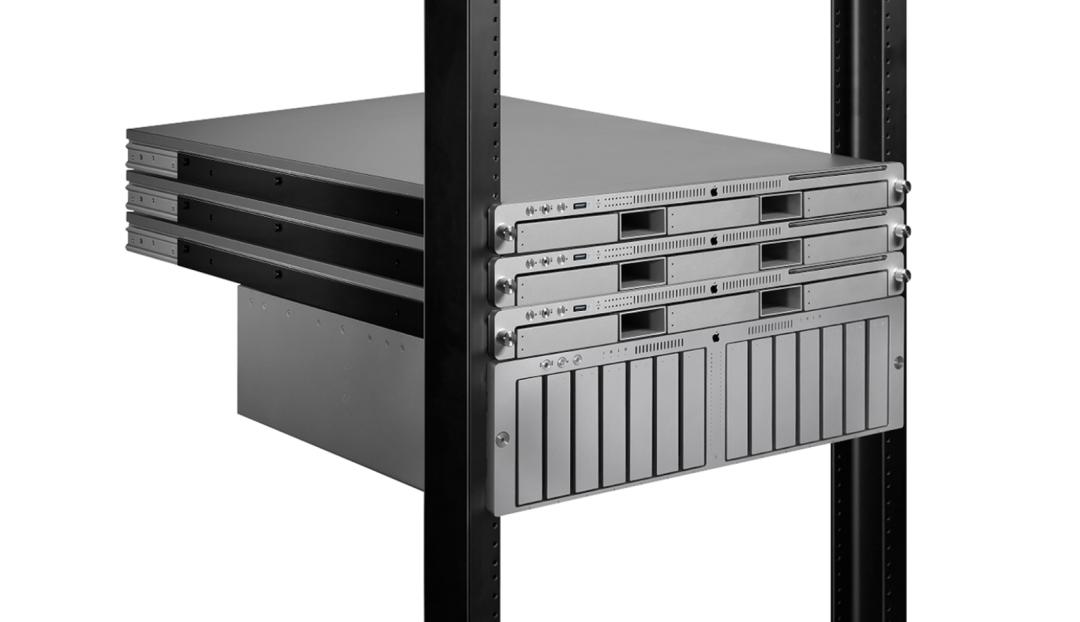
At that time, Xserve adopted a standard 1U rack-mounted body design, with a highly iconic integrated silver aluminum panel and hot-swappable hard disk tray on the front. It was successively equipped with PowerPC G4, G5 and later Intel Xeon processors, paired with a dedicated Xserve RAID storage system and a specially customized Mac OS X Server operating system, targeting university scientific research, film and television editing studios and high-end graphics rendering clusters.
Source: Apple, Petoo
Although Xserve has distinctive features in industrial design and software-hardware integration, it struggled in the harsh enterprise-level market:
First of all, Xserve was alien to the environment familiar to enterprises in terms of standardization and ecosystem. Most of the management tools, operation and maintenance scripts and underlying architectures of enterprise-level data centers are built based on Linux and Windows Server standards, and the relatively closed ecosystem of Mac OS X Server made it difficult to integrate into the existing IT management systems of B-end customers.
Compared with servers from Dell, HP and IBM that use general x86 parts, are low-cost and can be flexibly customized, the procurement and maintenance costs of Xserve are too high. This hardware premium, coupled with poor versatility, also made Xserve difficult to please users.
With the advent of the iPhone, Apple's energy and supply chain resources began to fully tilt towards consumer electronics. The negligible annual shipment volume of Xserve was insignificant in Apple's huge financial statements.
So at the end of 2010, Apple officially announced the end of Xserve. In the official release of alternative guidelines, Apple gave the recommended solution: recommend enterprise customers to switch to Mac Pro equipped with Mac OS X Server system, or buy "Mac mini Server" with dual hard drives.
— That's right, 15 years ago, Mac mini was once regarded by Apple as an official server product.
At that time, Mac mini Server was equipped with a quad-core Intel Core i7 and dual built-in hard drives, targeting small and medium-sized enterprises and small work groups, with usage scenarios including centralized Time Machine backup, intranet mail/calendar server, and managing other Apple devices on the network.
As for folk usage, there are many varieties. For example, it can be placed in the living room as a NAS (in fact, the first-generation Apple TV was a modified product of Mac mini made by Apple itself), and even long before HomeKit was officially launched, people were using Mac mini Server with third-party software as a smart home control center.
What is particularly interesting is that one of the official usage scenarios at that time included: Xcode continuous integration server. Because iOS development was in full swing at that time, teams could buy such a server to automatically check new code and integrate it into software packages — which is actually very Agent-like in today's context.
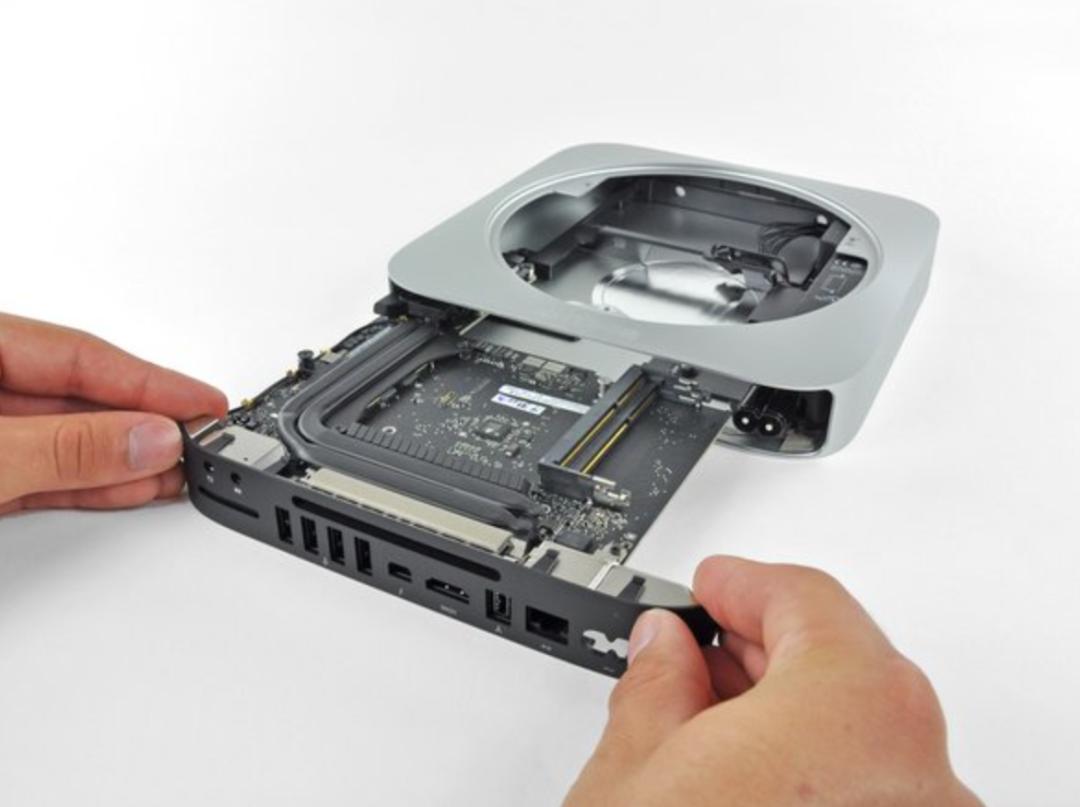
But at that time, Mac mini Server was still a consumer-grade product, and the official did not make special adaptations for the usage volume of today's public cloud level. Since Apple no longer sells rack servers, developers and hosting service providers had to find their own solutions.
Third-party hosting service providers represented by MacStadium developed custom rack trays specifically for Mac mini. Through precision CNC machining and 3D printed accessories, hundreds of ordinary Mac mini units can be packed into a standard 42U cabinet, and they are equipped with dedicated cooling air ducts, centralized power supply modules and mechanical power-on handles.
Later, Amazon AWS also launched EC2 Mac instances — its underlying implementation is also very simple: directly insert original Mac mini units into the physical rack slots customized by the AWS Nitro system.
If History Knocks Again
More than ten years have passed, the computer room has still not waited for Apple's official rack servers, but has waited for AI Agents that need them even more.
Facing the huge appetite of current AI labs for Mac mini and Mac Studio, although Apple has no motivation to rebuild a large enterprise-level cloud service department, this does not mean that it will stand by and watch.
If Apple wants to conform to this computing wave of the Agent era, it can completely release this part of computing value through a more lightweight and ecological way without destroying its existing high-profit business model.
For example, for the thousands of Mac mini units deployed in computer rooms, one of the current pain points is operation and maintenance. Compared with enterprise-level servers, consumer-grade devices are not so convenient for batch remote operation and maintenance, and cloud service providers and enterprise users need to do some adaptation work by themselves.
If Apple is willing, it can open more underlying remote management protocols and batch deployment interfaces for professional deployment scenarios, thereby reducing the operation and maintenance cost of large-scale deployments.
Also, at Apple's official level, Mac is still a computer product designed from a "standalone" perspective, which is different from designs like NVIDIA DGX Spark that can be natively connected via NVLink.
But as a technology media, ifanr also saw that in the past few years, Apple has cooperated with some third-party institutions to try to connect multiple Macs in an efficient way, verifying the feasibility of Apple Silicon's UMA architecture for AI distributed inference.
Last year, Exo Labs from the University of Oxford developed a series of infrastructures to connect multiple Macs together, and successfully demonstrated the inference of the full-size DeepSeek V3 (671B parameter) model on two Mac Studio units —