The Netherlands has turned sea islands into islands in lakes.
A two-lane two-way road paved with thick asphalt stretches straight far into the distance. This kind of utterly ordinary road in Europe surprised me a lot. The reason is quite simple: there is endless lake water on both sides of the road, and I am actually driving on a dyke.
Of course, the IJsselmeer on both sides of the road was not a lake at first, but part of the sea. Generations of Dutch people have been reclaiming land from the sea, and finally turned this place into a freshwater lake.
My destination is Marken. It was originally connected to the mainland, but under the force of a strong tide in 1164, it drifted away and became an island in the sea, and later turned into an island in the lake. The dyke I passed, which also serves as a road, connected Marken to the land decades ago, so that I can choose to drive here instead of only taking a boat.
Of course, cycling is also an option. For the Dutch people who are keen on cycling, the dozens of kilometers from Amsterdam to Marken is absolutely a piece of cake. Therefore, in the parking lot at the entrance of the small town, there are not only dense motor vehicles, but also rows of bicycles.
The small bridge next to the parking lot is the entrance of Marken. This Beatrix Bridge is named after Queen Beatrix of the Netherlands, and the white arch at the bridgehead is a typical Dutch style.
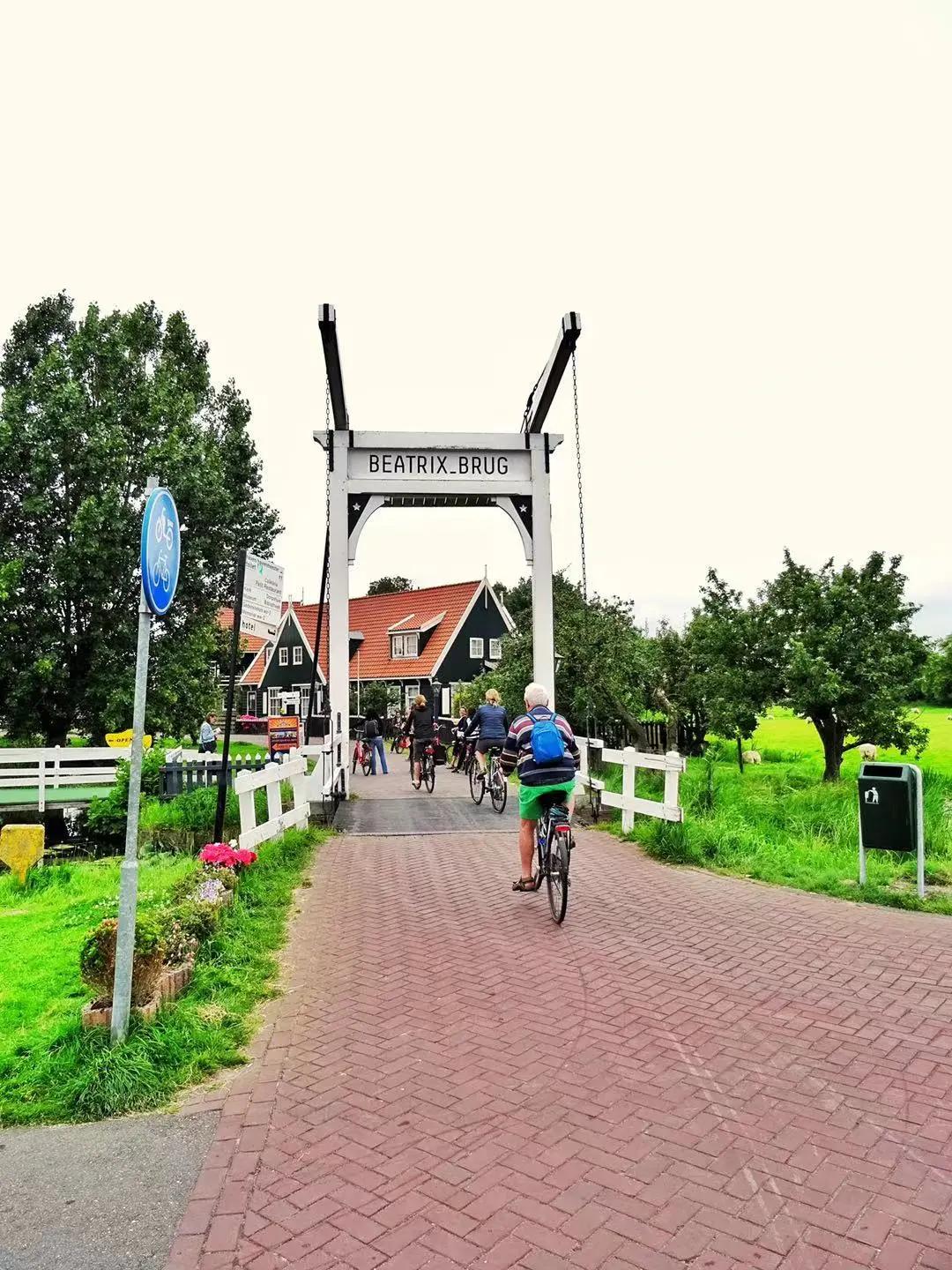
Beatrix Bridge
This small village also has a typical Dutch coastal rural appearance, with rows of houses with red tile sloping roofs standing along the canals that run across the village. The exterior walls of the first floor are mostly red bricks, while the exterior walls of the second floor are in green, red, brown or blue. The courtyards are large or small, and there are always neat lawns and fresh flowers. It is clean and tidy here, the small houses are like fairy tales, and on the large meadow next to the village, cows are extremely leisurely.
This is definitely not the most beautiful village in the Netherlands, but its former island identity obviously adds extra points, and even the laid-back and clean atmosphere is dreamy. In this small village where even wandering casually is very comfortable, everyone will slow down and walk aimlessly. But the flow of people will always guide you, either all the way to the northeast or all the way to the west.
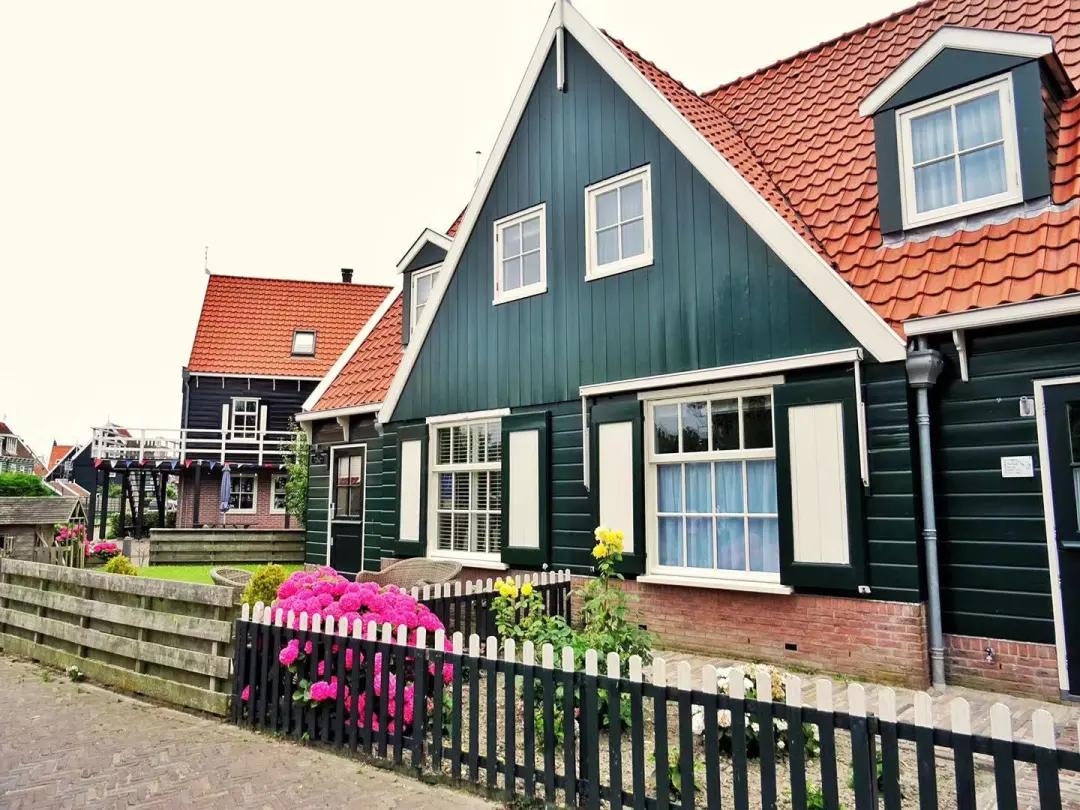
Walking to the northeast, you will pass the Máxima Bridge named after Queen Máxima of the Netherlands. It leads to the highest point of the small village — the Kerkbuurt Church, and this area is the most beautiful block of the small village.
If you go west, you can head to the harbor. It is the most charming place in Marken, where numerous sailboats and yachts are moored. All these boats are privately owned, and owning a boat seems to be an easy-to-achieve dream for the Dutch. People sail on the sea or the lake, travel along the dense canal network in the Netherlands to Marken, and moor and rest around the harbor. There is a row of sloping-roof houses by the lake, all of which are restaurants and cafes. Men and women sit at the door or by the lake, enjoying the pleasant breeze.
But if you trace back to history, you will know that all the ease and comfort in front of us did not come easily. For a very long time, Marken was even one of the most difficult places to live on the land of the Netherlands. It is far away from the mainland with inconvenient transportation, and coupled with soil problems, almost everything from building materials to grain relies on shipping. It was not until the rise of the Netherlands that this poor small island village gradually caught up with the prosperous development process of the Netherlands.
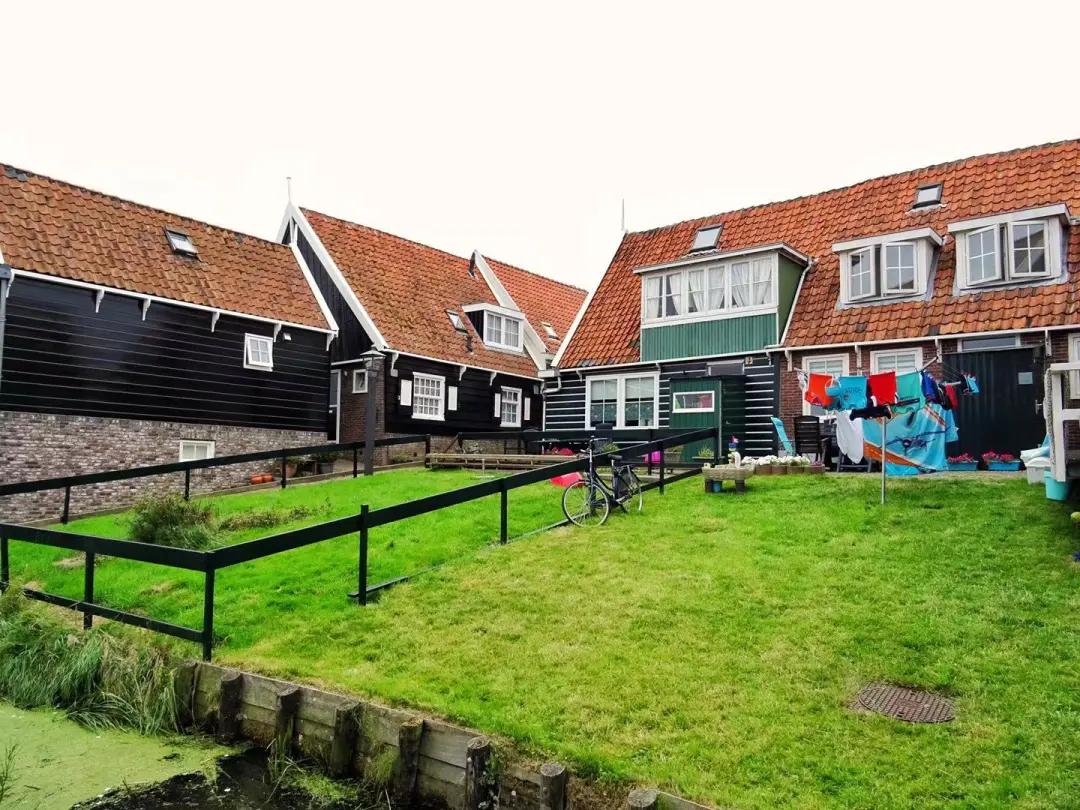
It can be regarded as a witness to the years of efforts of the Netherlands. For the Netherlands, a country that has been reclaiming land from the sea, the dyke that connects Marken to the land is not a huge project, but it brings this dreamy island back to the connected land. On this land, livability is real and tangible, and every effort people make is also down-to-earth.
(Image source | Photographed by Ye Kefei)
This article comes from the WeChat Official Account "Free Wanderer Fei", author: Ye Kefei, published by 36Kr with authorization.