Why did John Ternus stand out at Apple, a company brimming with a large pool of exceptional talents?
Who understands products best? Who best represents Apple's next 15 years? Whose personality is most capable of safeguarding this company's unique culture? Draw these three circles, and the person standing at their intersection is John Ternus.
At 3 p.m. Beijing Time on September 1, 2026, the "Leadership" page on Apple's official website was quietly updated. Under John Ternus's profile photo, his job title was officially changed to Chief Executive Officer. At the same moment, Tim Cook, who had led Apple for 15 years, stepped down as CEO and transitioned to Executive Chairman of the Board of Directors, marking the official inauguration of the 8th CEO in Apple's history.
Late the previous night, Cook posted his last social media update as CEO: "On my final day as Apple's CEO, sending all my love to the Apple community. My title will change tomorrow, but my love for the Apple community will never fade." There were no grand narratives, no farewell speeches, which was fully consistent with the consistent style of this leader known for his low-key and restrained demeanor. In an internal memo earlier, he confessed to all employees that even though he knew this day would come eventually, he was still overwhelmed with mixed emotions when the moment to leave truly arrived.
This is the second real power transition in Apple's history following Steve Jobs handing over the reins to Cook in 2011, and also one of the most high-profile handovers in the global business world in recent years. Apple is widely recognized as the most outstanding enterprise in the world and the company with the highest density of talent. Almost every one of its senior vice presidents is on the headhunting lists across the globe, and the target that other tech giants hope to poach. In the executive team under Cook's leadership, there are operations masters who orchestrate the global supply chain, software geniuses who shine brightly on the stage of product launches, organizational experts deeply engaged in retail and human resources, and semiconductor tycoons who lead a hundred-billion-dollar chip empire.
But in the end, the person who stepped up to take over is the least star-like figure, a hardware engineer who has very little presence in the public eye and has only done one thing for 25 years.
At Apple, where talents abound, why did John Ternus stand out from the crowd? The answer to this question lies in the clues left over the past year and a half, in Apple's 49-year succession history, and also in Apple's judgment of the next era.
A handover that started a year and a half in advance
To understand this transition, we must first grasp a key fact: this was not a last-minute decision, but a selection that has been carried out publicly for 15 months and prepared for far longer in reality.
Let's first review the complete timeline. On July 8, 2025, Apple released an executive announcement that did not draw sufficient attention at the time: Chief Operating Officer Jeff Williams would step down from his operational duties, with operations veteran Sabih Khan succeeding him as COO, while Williams himself would leave the company entirely before the end of the year. This announcement was packaged as "part of the long-term succession plan", but people with discerning eyes all understood its real implication: the top candidate widely regarded by the outside world as "Cook's successor" had withdrawn from the competition, either voluntarily or passively. Williams is only two years younger than Cook. Born in 1963, he was already 62 years old at that time, and even if he took over as CEO, he would hardly be able to serve a full term. His departure cleared the biggest obstacle for the people behind him.
Four months later in October 2025, as Cook was about to turn 65, the consensus that "Ternus is the most likely designated successor" began to form in mainstream US media. Another six months later, on April 20, 2026, Apple officially made the announcement: Cook would step down as CEO on September 1 and transition to Executive Chairman of the Board of Directors, while Senior Vice President of Hardware Engineering John Ternus would take over. There was a meaningful statement in the press release: this transition "was unanimously approved by the board of directors and is the result of a thoughtful long-term succession plan". Throughout the following summer, Cook stayed on as CEO and worked closely with Ternus to complete the handover for more than four months.
From Williams' departure to the official announcement, and then to the formal handover, every step of this power transition was taken unhurriedly and in full accordance with the plan. But for people studying corporate organizations, Apple's extraordinary solemnity towards the "succession" matter has profound historical reasons. In the 49-year history of this company, the lesson of choosing the wrong successor is so painful that it is etched in people's minds.
In 1985, Apple's board of directors chose to trust John Sculley, a professional manager who parachuted in from PepsiCo, and jointly ousted founder Steve Jobs from the company he founded. In the following 12 years, Apple successively appointed Spindler and Amelio as two successive CEOs, but the company sank gradually amid internal power struggles and strategic wavering, and was only 90 days away from bankruptcy at its most critical moment.
It was not until Jobs returned in 1997 that Apple was brought back from the brink of death. This history taught Apple three costly lessons: first, external executives parachuted in do not understand Apple's culture and product philosophy; second, the fight for the CEO position itself is the biggest drain on the company; third, successors must go through a long period of observation and cultivation before the power transition.
Therefore, when Jobs handed over the reins to Cook in 2011, he chose an insider who had deep roots at Apple for 13 years, personally rebuilt the global supply chain, and managed the company twice. This time, Apple's choice follows the same institutional logic, and has gone even further. Cook did not start thinking about the succession issue only when he was asked about it. He listed "succession planning" as one of the most important topics for the board of directors in internal discussions many years ago. Apple, which is full of talented people, is well aware that for a company with a market value of 4 trillion US dollars, the biggest risk is never the failure of a single product, but the disorder of power transition.
Who is Ternus?
Before answering the question "why Ternus", we must first figure out "who is Ternus". Compared with other candidates, Ternus's resume is so simple that it is almost monotonous, and this monotony is precisely the key to understanding this choice.
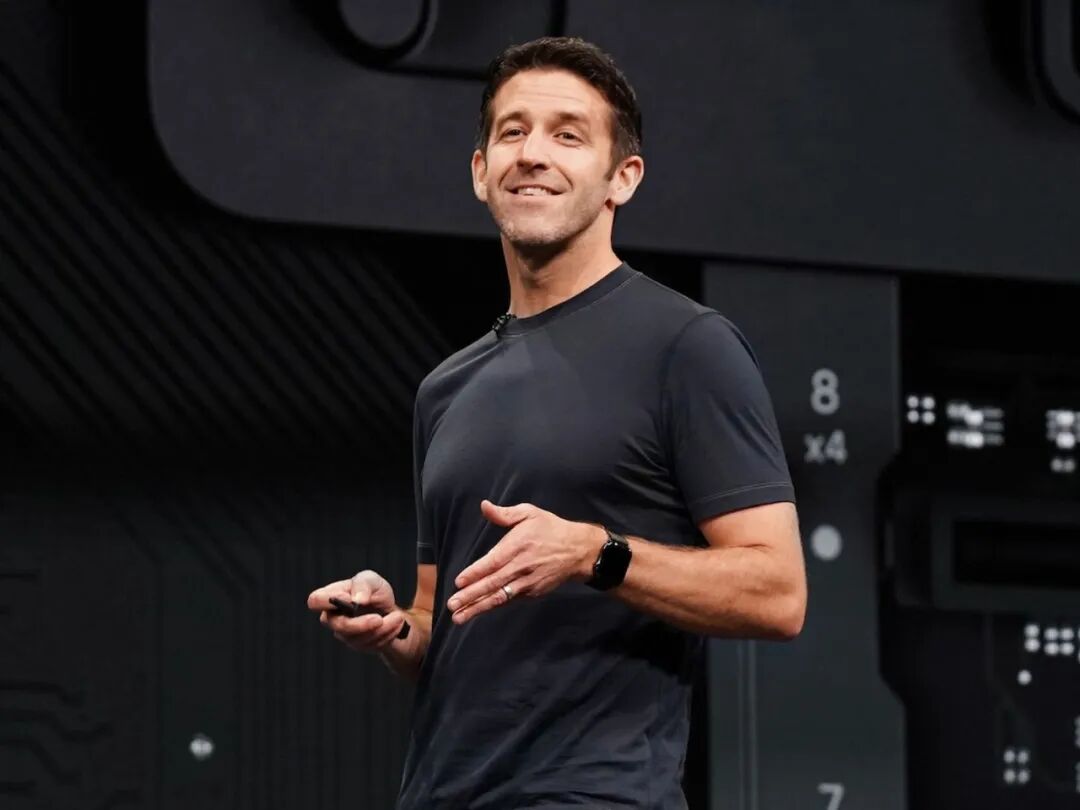
John Ternus, born in 1975, is 51 years old now, and holds a bachelor's degree in mechanical engineering from the University of Pennsylvania. After graduating from university, he first worked as a mechanical engineer at a company called Virtual Research Systems - an early company that made VR headsets, more than 20 years before the metaverse concept became popular. This experience made Ternus one of the first executives in the technology industry to be exposed to VR hardware, and also allowed him to understand the proportions and pitfalls of such products better than anyone else when he reviewed Vision Pro decades later.
In 2001, 26-year-old Ternus joined Apple's product design team. That is a time point worthy of being recorded in history - Jobs had just returned to Apple for four years, the iPod was about to be launched, and the iPhone was still in the highly confidential R&D stage. Ternus started as an engineer, and participated in the birth of almost all of Apple's core hardware in the following 25 years. In 2013, he was promoted to Vice President of Hardware Engineering; in 2021, he succeeded Dan Riccio, who moved to the Special Projects team, as Senior Vice President of Hardware Engineering, officially entering Apple's highest decision-making level. If we use only one sentence to sum up his achievements, it is that almost every Apple device in consumers' hands is related to him.
Breaking it down, the value of this resume is far more important than the outside world imagines. He was one of the hardware engineering leaders for the iPad, a brand new product line; he was deeply involved in the development of the first-generation AirPods, and gradually built it into the world's number one in-ear headphone with active noise cancellation and integrated hearing health system; he led the hardware evolution of multiple generations of iPhone products, including the iPhone 17 series that redefined the iPhone product line last autumn and the ultra-thin iPhone Air; in the strongest period of the 40-year history of the Mac product line, he was the key driving force behind it, among which the most hardcore battle was leading the historic migration of Mac from Intel chips to Apple's self-developed chips. This high-stakes code-named Apple Silicon freed Apple from its dependence on Intel, achieved industry-leading energy efficiency and performance, and is widely recognized as one of the greatest technological achievements in the Cook era. In addition, the application of recycled aluminum composite materials across multiple product lines, the mass production of 3D-printed titanium metal on Apple Watch Ultra 3, and continuous innovation in product repairability - these engineering breakthroughs hidden in the details are all marked with his name.
Inside Apple, Ternus's reputation is surprisingly consistent. People who have worked with him describe him as "demanding of every detail"; venture capitalists who have been in contact with him revealed that he travels frequently between Cupertino and Asian suppliers, and knows very well the difficulties and tricks of getting manufacturers to meet Apple's strict design requirements; while more external observers have noticed another trait of this executive - low profile. Among Apple's executive team, there are stars who speak wittily on the stage of product launches, and eloquent debaters who show their edge in interviews, but Ternus almost never steals the show. His exposure is mostly limited to the annual keynote, standing at the hardware session, introducing new materials, new structures and new technologies with the rigorous tone of an engineer, and then stepping back behind the scenes after the session.
In the official press release, Cook used three phrases to evaluate his successor: an engineer's mindset, an innovator's soul, and a heart of integrity. Ternus's own response showed his deep emotional bond with the company: "I have spent almost my entire career at Apple, and I am fortunate to have worked with Steve Jobs and received guidance from Tim Cook. It is my honor to have participated in shaping products and experiences that have profoundly changed the way we interact with the world and with each other." He specifically mentioned that he took this position "with a humble heart".
An insider who has worked with Jobs, been personally mentored by Cook, spent 25 years building products, and has a calm and low-key personality - putting these labels together, the choice seems self-evident. But only by putting these labels back into the full picture of the competition can we see the complete logic behind Apple's board of directors' choice.
Those equally qualified unsuccessful candidates
Succession selection never takes place in a vacuum. To understand Ternus's victory, we must understand why his competitors were eliminated, which is precisely the key part of this story.
Among them, Jeff Williams lost to age. Before Ternus came to the fore, Williams was the overwhelming top favorite. His script was almost completely parallel to Cook's: he joined Apple in 1998, long in charge of global procurement and operations, succeeded as COO after Cook was promoted to CEO, and was regarded as "Cook 2.0". He worked with Jobs for many years, led the entire process of Apple Watch from concept to product, and was deeply involved in the hardware design of iPhone, so he was not lacking in product experience. The outside world once thought that moving from COO to CEO was just a complete recreation of Cook's path. But the flaw in the script lies in age: Williams, born in 1958, is only two years younger than Cook. If he took over in 2026, he would already be 63 years old when he took office, while Cook himself chose to retire at the age of 65. Finally, in July 2025, Williams stepped down as COO and left Apple at the end of the year, drawing a decent but slightly regrettable end to this story. His departure objectively became the opening whistle of the Ternus era.
Craig Federighi lost to his identity positioning. This Senior Vice President of Software Engineering is the brightest star in Apple's executive team. With white hair flowing and witty remarks on the keynote stage, he is the "good-looking leader" in the hearts of countless Apple fans. In terms of technology, he is in charge of the two major operating systems iOS and macOS, and his ability is impeccable; in terms of popularity, his appeal in the developer community even exceeds Cook's. But it is precisely this brilliance that creates a mismatch between him and modern Apple. Apple's root lies in hardware. Nearly two-thirds of the company's revenue comes from physical products, the soul of its business model is the integration of software and hardware, and the master of this soul has always been hardware. Choosing a CEO with a software background will be interpreted by the outside world as a signal that Apple is "software-oriented and service-oriented"; while Apple's board of directors precisely wants to send the opposite signal. Market analyst Adam Crisafulli put it bluntly when commenting on this appointment: this appointment sends a clear signal that Apple still positions itself as a "hardware-first" company. Federighi did not lose to his ability, he lost to the fact that he is the "wrong symbol".
Sabih Khan and Deirdre O'Brien lost to the structure of their seniority. Sabih Khan, who took over as COO in 2025, is a strong player in the operation system, long responsible for operations and supply chain, but his stage is in the back office, and he has never really stepped into the front desk of product and strategy; Deirdre O'Brien, who leads retail and human resources, is also deeply trusted, but this veteran born in 1966 is already in her sixties, and her functional attributes determine that she is more like a guardian of the organization than a definer of products. As for Johny Srouji, who leads the chip empire, his semiconductor business spans technology and commerce, but the chip business is only one department of Apple, not the whole of Apple.
When we line up all the unsuccessful candidates, we will find a thought-provoking rule: none of them is mediocre, and each of them alone is more than qualified to lead a Fortune 500 company. But in Apple's context, "excellent" and "suitable" are two different things. Cook's successor does not need to be a second operations master, because Cook has taken operations to the extreme; he does not need to be a second supply chain wizard, because this system is already running as precisely as a clock. What Apple needs is the person who can answer the questions of the next era - and the question of the next era is product.
Apple's logic of choice
Combining all the information, I believe that Apple's choice of Ternus is the result of systematic trade-offs across five dimensions. These five dimensions all point to one judgment: among the talented people at Apple, Ternus is not the most well-rounded person, but he is "the person most needed for the next 15 years".
The first dimension is the return of product genes.
Looking back at the relay of Apple's three CEOs, the logical context is very clear: Jobs (1997-2011) defined new categories, completing the creation from 0 to 1; Cook (2011-2026) turned the creation into a global business, pushing the market value from 350 billion US dollars to 4 trillion US dollars, increasing revenue from 108 billion US dollars to 416 billion US dollars, the service business grew into a "Fortune 40-level" business with over 100 billion US dollars in revenue, and the two new product lines Apple Watch and AirPods have hundreds of millions of installed units. What about the third CEO?
The extreme operational efficiency of the Cook era also left another side: in recent years, the annual updates of the iPhone are increasingly like permutations and combinations of parameters, the user replacement cycle has extended from two years to more than three years, and "innovation anxiety" has become an open secret of this 4-trillion-US-dollar company. Choosing a pure, thorough hardware engineer as CEO is in itself a strategic declaration that Apple will step away from the inertia of "operational efficiency first" and return to the track of "product-driven growth". This is not a negation of Cook, but a response to the proposition of the era: the battle for efficiency has been won, and the next battle to fight is the battle for products.
The second dimension is the arithmetic of age.
51-year-old Ternus is exactly the same age as Cook when