Sam Altman's latest interview: The next thing to be disrupted is the way of working
Sam Altman, the founder of OpenAI, said in a recent exclusive interview that he once overestimated how fast AI would transform the business world.
When GPT-4 was launched, he thought the software industry would be completely reshuffled soon, but later found that people still purchased from familiar companies and used familiar tools. Even himself, after getting Codex, still could not get rid of the habits of copying, pasting, and scrolling through emails.
In this interview, he also talked about some of his experiences when he first started his business, and shared a lot of advice for entrepreneurs.
The content today is the essence of the interview, which is worth reading for every entrepreneur.
1. People often stick to old habits even when they know there is a better way
There is a paradox for me: the way I use computers has hardly changed in the past 20 years. Now that we have Codex, which clearly allows me to work in a different way, I still follow my old habits.
I shouldn't click around randomly, copy and paste between different chat apps, browse emails aimlessly, and try to figure out which one is the easiest to open and reply to, especially when I don't want to deal with them. I shouldn't make to-do lists and mechanically finish these routine computer tasks as I did before.
However, my mind is deeply rooted in the belief that doing these things is work and is efficient.
If you ask me if I like doing this, I will say I truly don't. Dealing with emails and completing to-dos could have been handed over to Codex more, but I didn't do that.
I can't tell why, maybe deep down I do get some satisfaction from these familiar actions.
I had a similar problem with my judgment of the software industry.
I love starting businesses very much and have been trying to understand startups. When GPT-4 came out in 2023, I thought the software industry would soon see larger-scale disruption, and a large number of businesses would be rapidly reshuffled.
Later I found that I misjudged the speed. The economy has very strong inertia: people continue to do what they used to do, continue to purchase from the original companies, and continue to want to use tools in familiar ways. To some extent, this is a good thing. It will make this huge transformation smoother and slower, and I am even a little grateful for that.
But this also means that even in the face of such amazing technology, all of us are too radical about the timeline. AI is one of the most incredible technologies ever invented by human beings, but society and the economy will adapt much slower.
In the early days of Netflix, when it was already possible to mail DVDs, I was surprised why so many people still went to Blockbuster (which started as an offline physical video rental store and was once the absolute overlord of the U.S. video rental industry). Now I think this is the power of habit: changing people's behavior is more difficult than people in the tech circle imagine.
However, some people have always been at the forefront, and Tobi Lütke of Shopify (the world's leading e-commerce platform) is one of those who left a deep impression on me.
From the very early stage of AI development, he has been writing software and doing experiments in person, giving us very detailed feedback. He cares about what current AI can actually do, what it can do soon, and how companies should change accordingly.
Many people give us feedback, but I rarely see a CEO of a large company who can test products and models to such an extent and accurately point out problems.
This is another point I want to talk about him: he is hands-on. He personally uses tools, writes software, tests models, and reconstructs his own workflow. Many companies of this size have a management team overseeing the execution team under the CEO, and a lot of rough real experiences will be smoothed out in the middle.
If the founder of a company does not get involved in the actual work in person, it is difficult to form a real intuitive sense of business.
Tobi (the nickname of Tobi Lütke) will try to rebuild Shopify at night, thinking about what the company should look like if we start from scratch today with existing technologies. I understand that feeling of his, but I am more conservative than him about how fast the changes will happen.
I don't think all industries will be changed in the same way. The more powerful AI is, the more people may want real experiences, pay more attention to sports and human-to-human connections, and some businesses that have little to do with AI may become more valuable as a result.
2. AI is very smart, but it may not be clear what you are busy with
Why didn't I use AI more thoroughly myself? I think the product is also responsible. We should make the tools better to make people switch to a new way of working more naturally.
Now there are two ways to use computers at the same time: on one side are familiar traditional operations, on the other side are new tools like Codex. People still don't know which one to use for which task.
This reminds me of the era of smartphones before the iPhone came out. Many technologies already existed at that time, but the product ideas that later made the iPhone what it is had not yet emerged.
Today's AI is similar: the technical puzzles have basically appeared, but we have not yet ushered in the "iPhone moment" that completely changes how people interact with technology.
Next, I hope AI can know me better.
The latest generation of models is already quite smart. What makes me feel more restricted at this stage is the amount of valid context information about me that AI masters.
I can't possibly read every internal discussion in the company, nor can I finish reading every customer's story about how ChatGPT helps them and where it disappoints them. That information is certainly useful, but I don't have the time and energy to process all of it.
I could have read more research papers, but that would consume a lot of mental energy. I very much hope to have an AI agent that constantly tries to help me, which can view and understand more context information than I do, and help me apply this background knowledge to provide high-quality suggestions when decisions need to be made.
Now, there is one thing worth thinking about seriously: if AI can master far more background information than I do, how can it use this information when I need to make important decisions?
No matter how smart a person is, he cannot read tens of thousands of pages of materials and apply them accurately in a few seconds. I look forward to this kind of help from AI, which can process the information that I am not capable of reading all by myself, and then bring the relevant content to the decisions in front of me.
The host who interviewed me today made a tool. He put the notes, highlights and program transcripts left from reading books since 2018 into it. When preparing a new program, he can ask for relevant experience from a certain entrepreneur he read before or a certain book.
I think this example is very cool, which is exactly the usage I mentioned.
The AI people need will not be only one type. Some tasks require strong reasoning ability, while some tasks have a large workload but do not require such high intelligence.
People need a large number of AIs, which are expected to be cheap, fast, reliable, and understand their own context.
I hope we can provide a unified entrance for people to connect to their personal or corporate AI, and provide interfaces for developers to build whatever they want on it.
3. I devote my time to research and computing power
Of course I wish I had more time to work on products, but there are already very excellent people in the company in charge of these matters, and now I spend most of my energy on research and computing power.
For OpenAI, the most important thing is still to build smart enough models, and then make enough people able to use them fully.
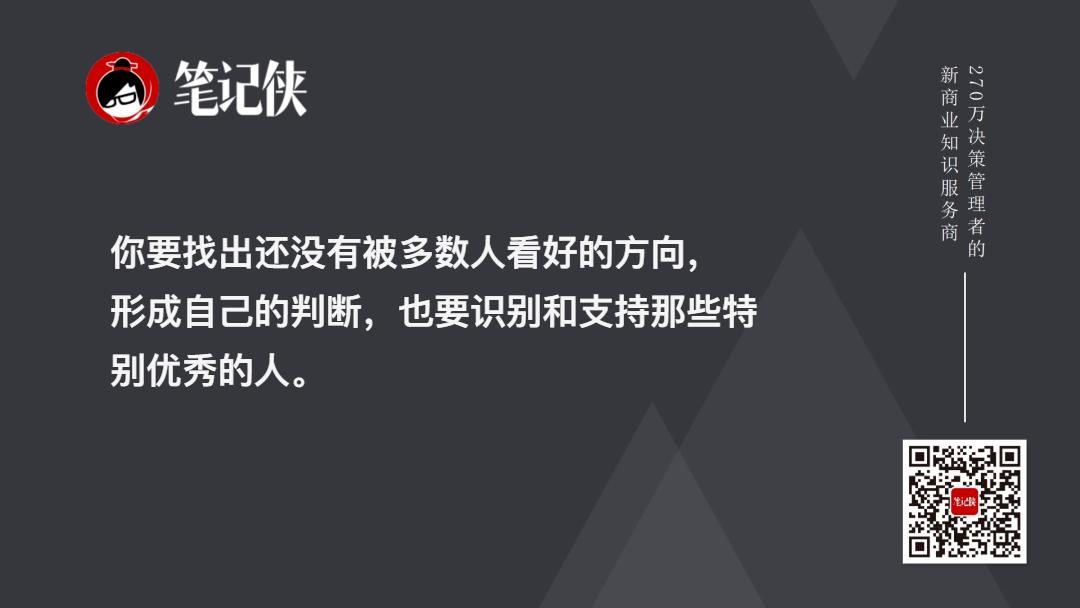
I used to do venture capital, and later when I managed research projects, I found that these two things have a lot in common: you have to find directions that most people are not optimistic about, form your own judgment, and also identify and support those exceptionally talented people.
In investment, the return of the most successful investment may be larger than the sum of all other investments. In AI research, I have seen a similar situation: a few projects that succeed will generate huge value.
Truly excellent researchers are often non-consensus, with new methods, high energy, and not very "standardized". You don't want to invest in someone who only slightly modifies a thousand past startup ideas but tries to package them as something brand new.
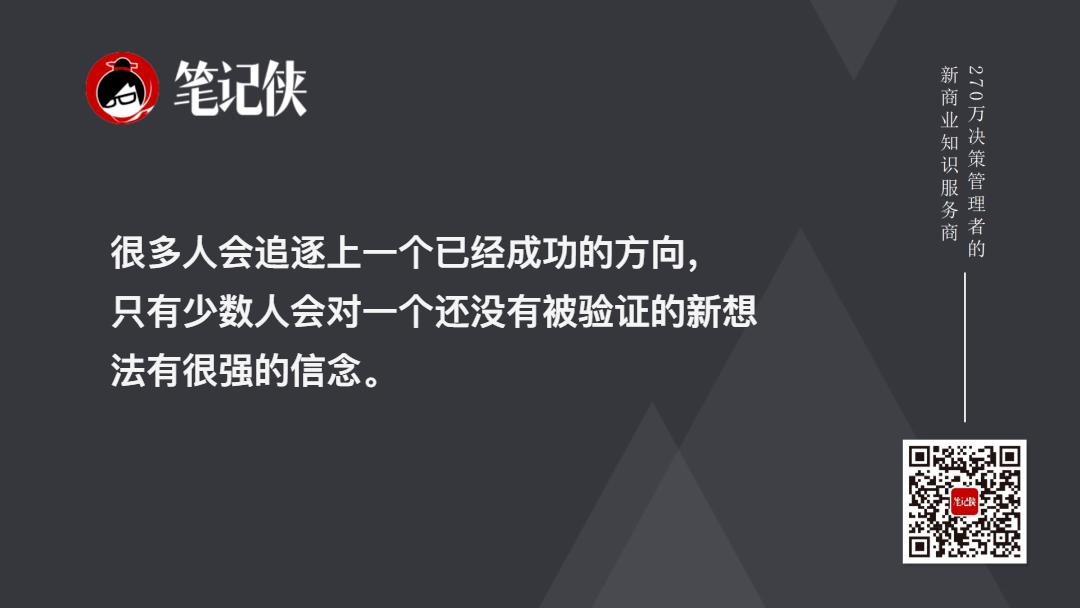
The same is true for research: many people will chase the previous successful direction, and only a few people have strong faith in a new idea that has not been verified yet.
When we started OpenAI in 2015, many people thought that AGI was almost impossible to achieve. We publicly said we were pursuing this goal and received a lot of criticism. Later, when we decided to invest in large language models, we were criticized once again.
My experience in doing investment allows me to accept this situation. Risky attempts are not a problem in themselves, as long as they are valuable enough after success. But we also have to decide where our limited resources should be placed.
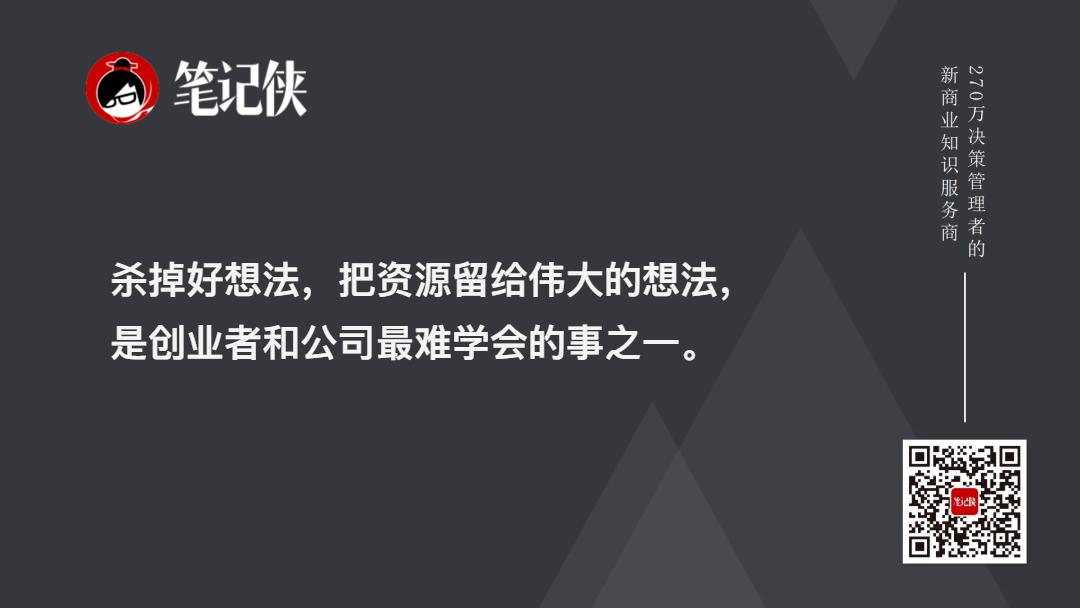
Killing good ideas and leaving resources for great ideas is one of the hardest things for entrepreneurs and companies to learn.
Giving up a pretty good idea is very painful, but computing power, talents and other resources are limited. We have to figure out what is the most worthwhile thing to do. After careful consideration, we decided that building general intelligence for knowledge work and eventually for scientific research is the most important thing we can do.
I don't think OpenAI should enter every product category, let alone compete with everyone. There are too many things to do in the world, and we should enable more people to have the ability to do them.
This article is from the WeChat official account "NoteMan" (ID: Notesman), the author is Lao Jia, and it is authorized to be released by 36Kr.