How did the Xbox feature that was heavily panned 13 years ago become the last lifeline for physical game discs?
Take a dusty physical disc of Xbox One or Xbox Series X off the shelf, insert it into the console's optical drive, listen to the familiar soft mechanical hum of the slot-loading drive, and you will see a new option popping up in the main menu on the screen — "Claim digital".
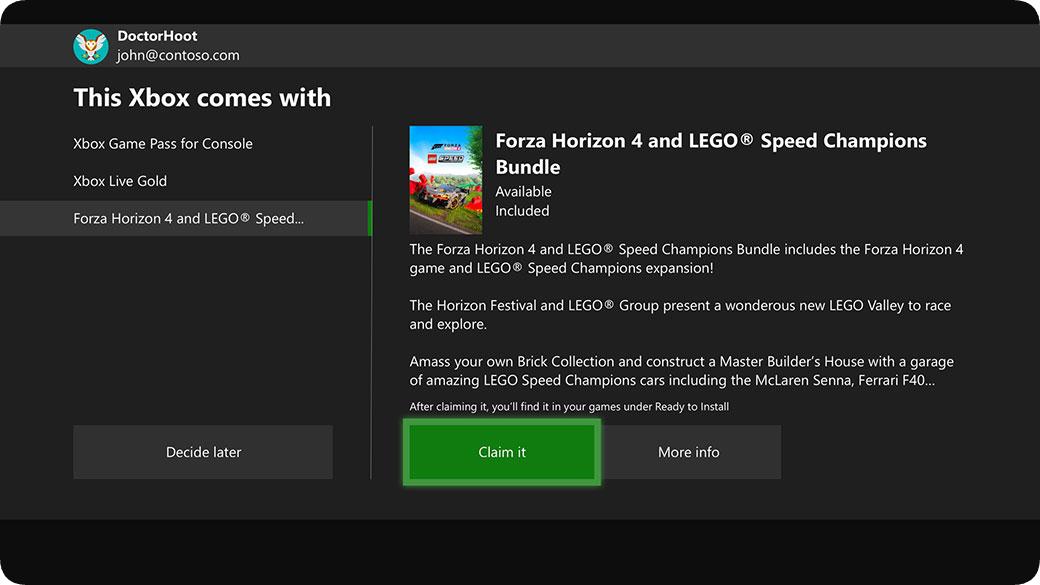
Figure | MSPowerUser
Press the A button on the controller. A few seconds later, a system notification will pop up, indicating that the digital version usage right of this game has been directly added to your Microsoft account.
In the circle of Xbox Insider users who obtained the first batch of test qualifications, everyone has been playing like opening blind boxes in the past few days:
Some players took out a scratched copy of *Call of Duty: Black Ops 3* that even threw errors when reading in the optical drive, and still successfully claimed the digital version after inserting it into the console, then downloaded the full game at full speed directly from the Microsoft server;
Other players dug out *Lego Dimensions*, which had long been removed from all online platforms and was never sold separately even on the regular digital store, and also successfully obtained the digital license;
Some people even "scanned" the discs into their accounts one by one on the Xbox One X in the living room, then turned around and launched the games on the disc-less Xbox Series S in the bedroom, or the PC handheld in the office.

For veteran players, this scene brings a wonderful feeling as if a whole lifetime has passed. Binding "buying a physical disc" to "obtaining a digital license for the account" is not a new idea that Microsoft came up with on a whim today. Thirteen years ago in 2013, Xbox One depicted almost the exact same blueprint at its initial launch.
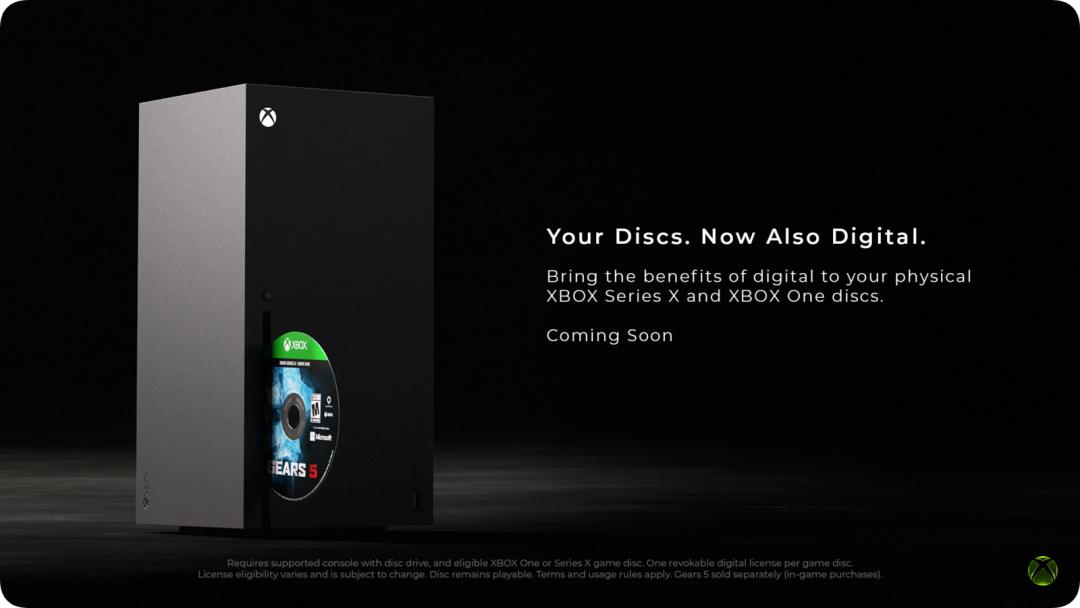
Figure | The official "Disc-to-Digital" test program announced by Xbox (Image source: Xbox Wire)
Unfortunately, Microsoft back then tied this convenience harshly to strict shackles including mandatory 24-hour online verification and locked second-hand circulation, which drew widespread condemnation from players all over the world, forcing the company to embarrassingly withdraw the policy overnight. Thirteen years later, the same problem is put on the table again, and Microsoft has finally delivered a different answer this time.
One tap to bring old discs back to life
Since the end of August, when Microsoft officially pushed this "Disc-to-Digital" feature to Xbox Insider users, the entire console community has been discussing this new logic.
The operation is very simple — as long as the console system is upgraded to the latest test version, insert a supported physical disc into the optical drive, and the "Claim digital" button will appear below the game card. After clicking to confirm, your account will get the digital usage right (Digital Entitlement) for this title.
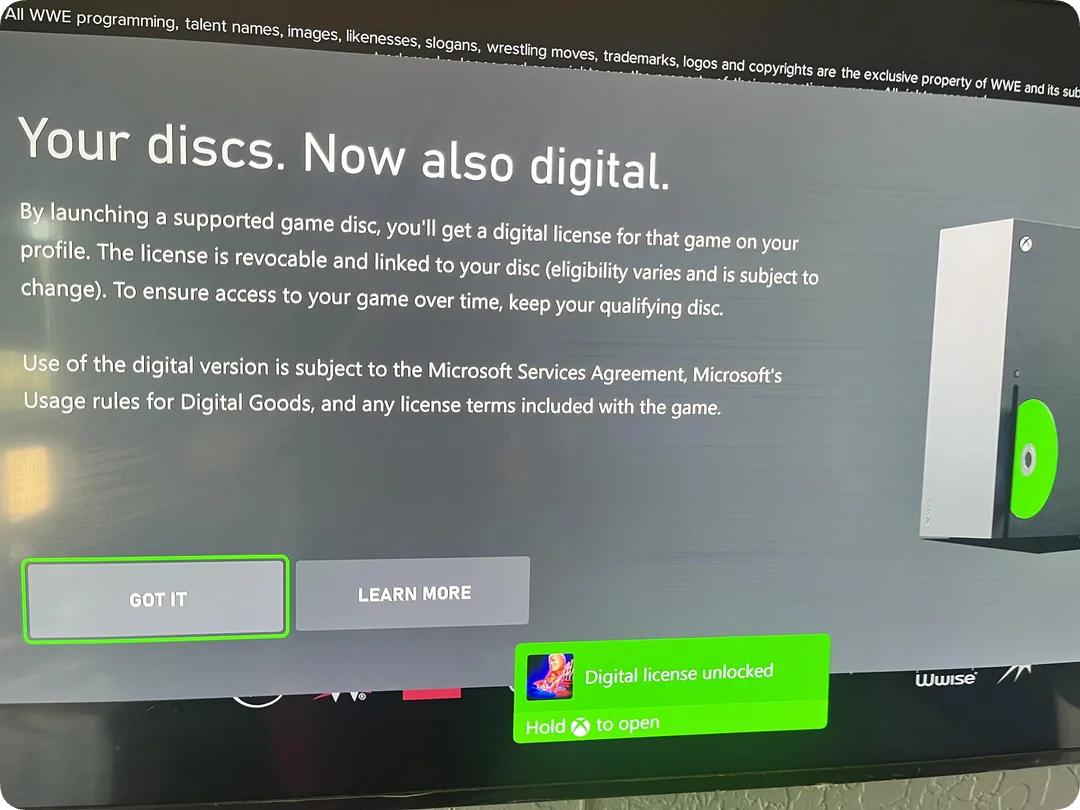
Figure | A Reddit player tested clicking "Claim digital" to get digital rights (Image source: Reddit / r/xbox)
However, the console does not read and copy dozens of GB of data from the disc to the built-in SSD on site. What actually happens is that Microsoft's cloud service confirms the legal validity of your disc through the physical features on the disc, and then directly issues a revocable digital license to your Xbox account.
Subsequent game downloads and texture pack updates all go through Microsoft's official high-speed CDN channel. After the physical disc completes this "check-in", you can eject the disc from the optical drive.
What excites physical game players even more is that the digital version converted from this physical disc inherits all the benefits of Xbox's modern ecosystem. As long as the game itself supports "Xbox Play Anywhere", after you claim the disc on the console, you can directly download and run the game by opening the Xbox App on PC;
If it supports Xbox Cloud Gaming, you can even start playing instantly on your mobile phone or tablet at any time. Old games that were originally firmly tied to the living room TV cabinet by physical media suddenly grow "digital legs" that can run everywhere.
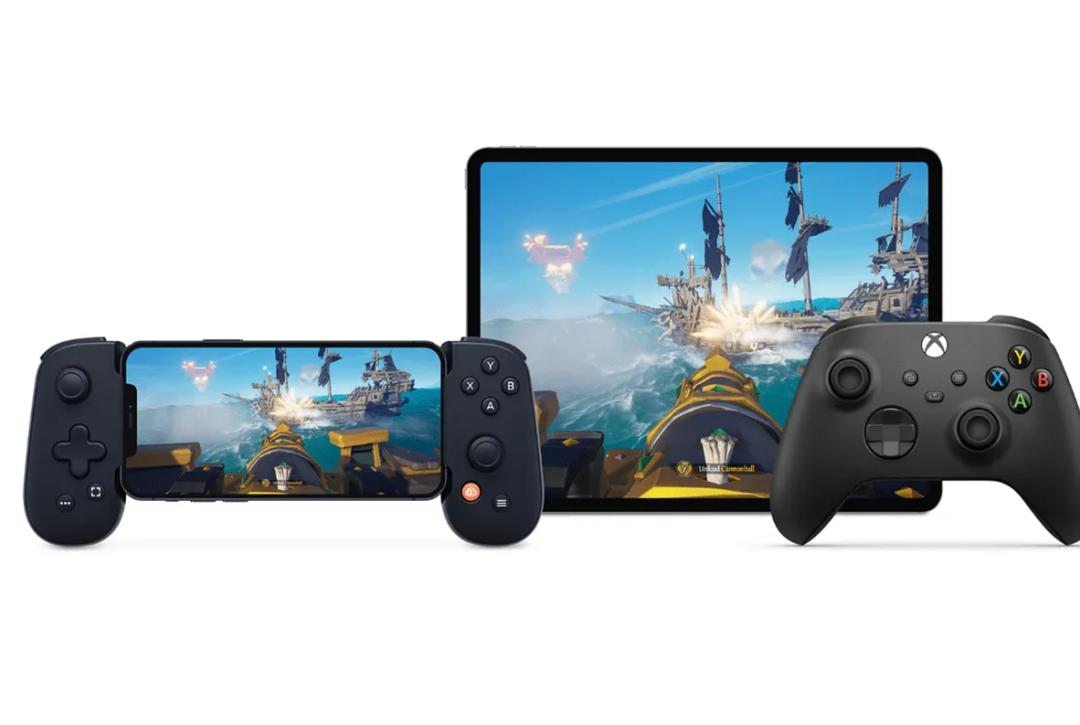
Figure | Xbox Cloud Gaming
However, according to current community tests, this mechanism is still in the exploration period of "semi-blind box opening". The official claims that the first batch supports thousands of Xbox One and Xbox Series X game discs, but has not released a clear whitelist.
Many players report that they have successfully claimed titles including *Deadpool*, *Ridge Racer*, *WWE 2K24* and other works containing removed content or special authorizations; but games like *Forza Horizon 3*, *Final Fantasy XV* and *Marvel's Avengers* show that they cannot participate in the conversion on some users' consoles.
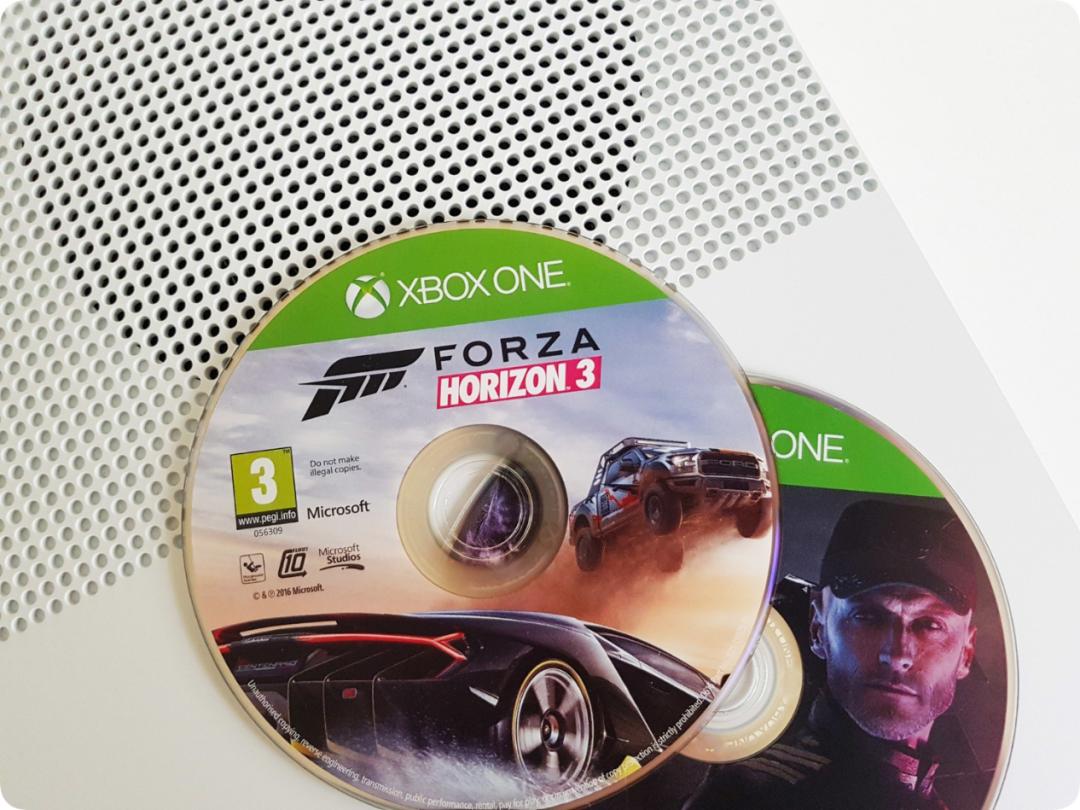
Figure | Windows Central
This experience of empowering physical discs with digital privileges is really eye-catching, but if you dig a little deeper, the platform has to face an unavoidable and thorny proposition: if a plastic disc can directly generate a full-featured digital license, how to define "which specific disc belongs to which specific player"?
To solve this problem, Microsoft actually paid a painful price for this lesson as early as 13 years ago.
Trying to make things easier for players, why was it bashed so badly back then?
Let's go back to the Xbox One launch event in May 2013. Many people now recall that launch event, and the only things left in their minds are the "TV, TV, TV" filling the whole screen and the mandatory bundled Kinect camera. But few people remember that Microsoft actually put forward an advanced and ambitious digital concept on the back-end system architecture at that time.
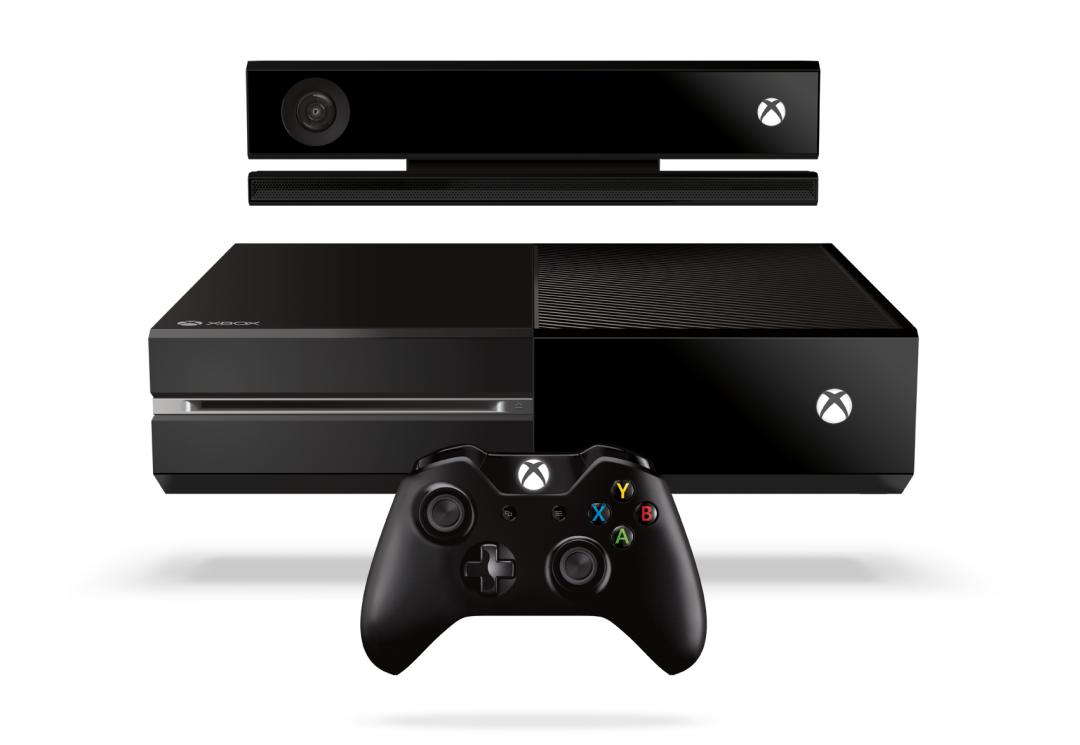
Figure | Official image of the original Xbox One and its accessories in 2013 (Image source: Xbox Wire)
In Microsoft's original vision, physical discs were just a distribution medium. As long as you insert the disc into the console to complete the initial installation, the game will be automatically bound to your personal Xbox Live account.
From that moment on, you no longer need to bend down to find and insert the disc every time you play the game; as long as you log in to your account, you can play your entire game library on any Xbox One at a friend's house, and you can even share the game library with up to 10 family members. Microsoft tried to bridge the experience gap between physical and digital versions.
However, behind this beautiful digital blueprint, there were hidden high-cost control measures. To prevent players from buying one disc, installing it on 10 consoles and then selling the disc, Microsoft put a very strict DRM tight spell on the system: the console must be connected to the Internet for verification at least once every 24 hours. Once disconnected for more than one day, all games would be directly unlaunchable.
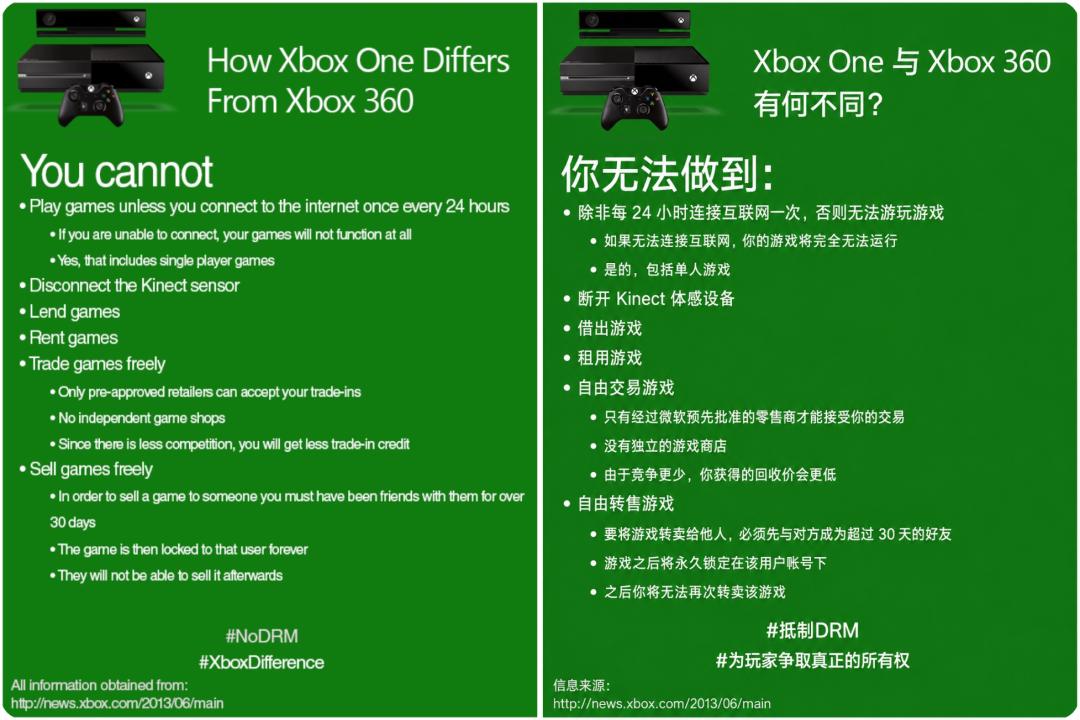
Figure | The "Boycott DRM" poster circulated on Reddit
Want to sell or lend your second-hand disc to others? Sorry, you can't go to the offline second-hand market at will, you have to go to the certified retailers designated by Microsoft, and game publishers also have the one-vote veto right; want to give it to a friend? You have to meet the strict prerequisites of "being friends for more than 30 days" and "each game can only be transferred once in a lifetime".
Sony keenly seized this fatal flaw at the E3 exhibition back then, and launched one of the most lethal marketing counterattacks in the history of the game industry.
In the 21-second tutorial video released by PlayStation, Sony executive Shuhei Yoshida smiled and handed a PS4 disc to Adam Boyes, who took the disc and replied "Thank you".
Without any complicated terms and cumbersome rules, just a physical handover action directly broke through the DRM rules that Microsoft had spent pages and pages explaining.

🔗 youtu.be/kWSIFh8ICaA?si=Tw_QgEA23qL7rTPd
Faced with overwhelming resistance and anger from players, Microsoft announced a full compromise on June 19, 2013, withdrawing the 24-hour online verification and second-hand control policies, and honestly returning to the traditional mode of "play with the disc inserted, trade freely".
Albert Penello, the executive in charge of Xbox planning at the time, admitted helplessly in an interview: With the complete reversal of the policy, the original beautiful design that freed physical discs from the constraints of the optical drive and converted them into pure digital licenses had to be swept into the garbage as an incidental cost.
What really annoyed players back then was never the convenient vision of "physical discs no longer need to be inserted like digital versions", but Microsoft's tie-up of this convenience with the platform's full control over players' property rights. When freedom is deprived, no matter how attractive the technology will become a cage in the eyes of players.
Let go of the desire to control players, and physical discs finally regain their dignity
Thirteen years later, when Microsoft restarts the "Disc to Digital" program again, the feature itself has not changed much, but the rights relationship has been completely reversed. In this new 2026 mechanism, physical discs are no longer suspects waiting to be supervised, but have become the only physical key to determine the ownership of digital rights.
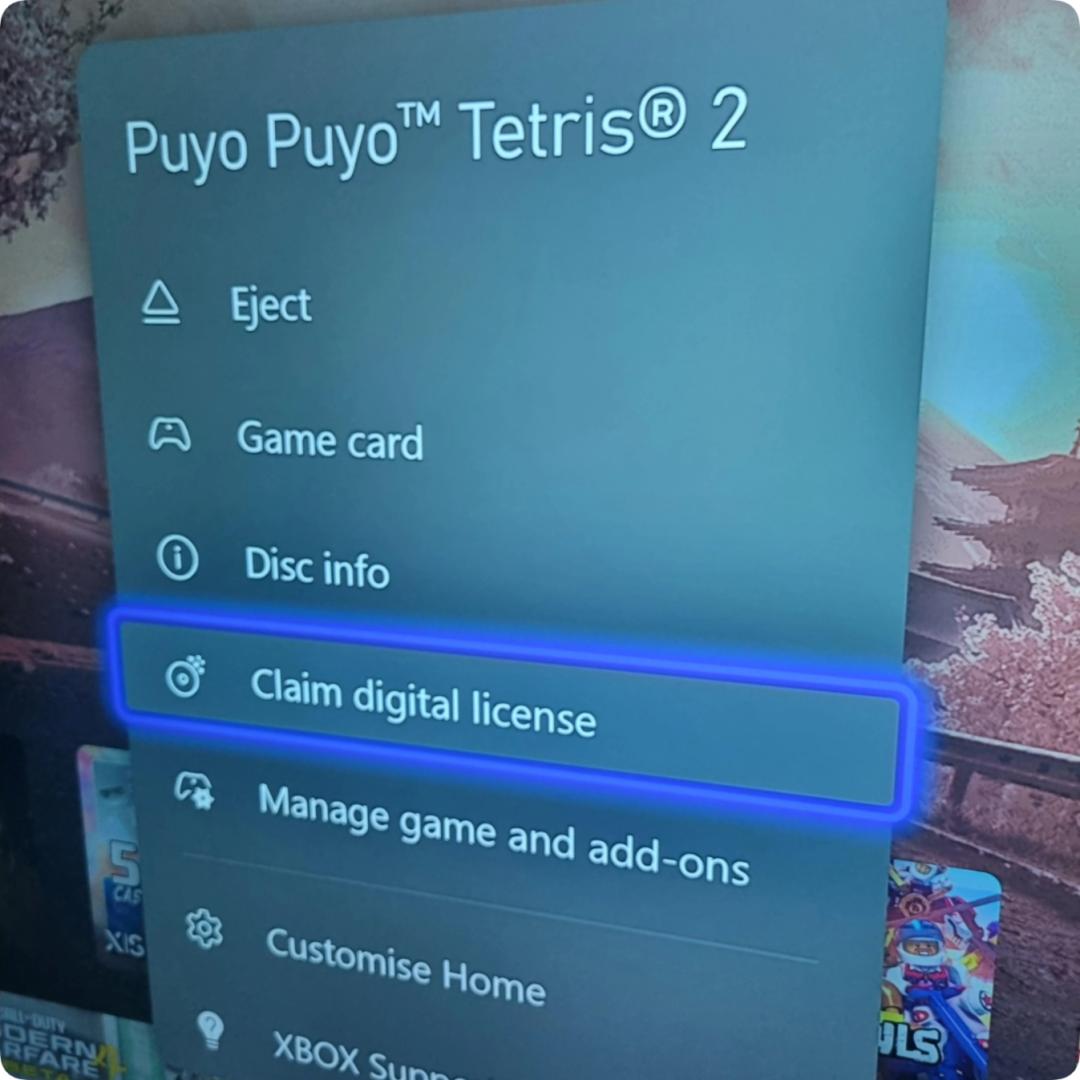
Figure | The "Disc to Digital" interface shared by players (Image source: Reddit)
According to the detailed rules announced by Microsoft, each physical disc only corresponds to one revocable digital license at the same time. When your friend takes the disc from you, or you sell it on a second-hand trading platform, as long as the new buyer inserts the disc into his own Xbox and clicks "Claim digital", Microsoft's server will detect the transfer of the physical medium, then issue digital rights to the new account, and the digital license on the original account will be automatically revoked.
This means that the free trading, borrowing and gifting of discs in the physical world are not deprived at all, but truly have the right to decide the fate of digital assets.
Why can Microsoft do this now without mandatory 24-hour online verification? The answer lies in the technological evolution of the disc medium itself. In the AACS industry encryption standard for Blu-ray discs, the specification called PMSN (Pre-recorded Media Serial Number) was defined as early as more than ten years ago, which contains a "Unique Value" field that can give each pressed disc a globally unique ID.
Therefore, Blu-ray discs of the Xbox One and Xbox Series X era are built with a unique identification basis for each individual disc at the factory, while the older DVD discs of the original Xbox and Xbox 360 generations lack this mechanism, which is the hardware reason why older generation console discs cannot participate in this program for now.
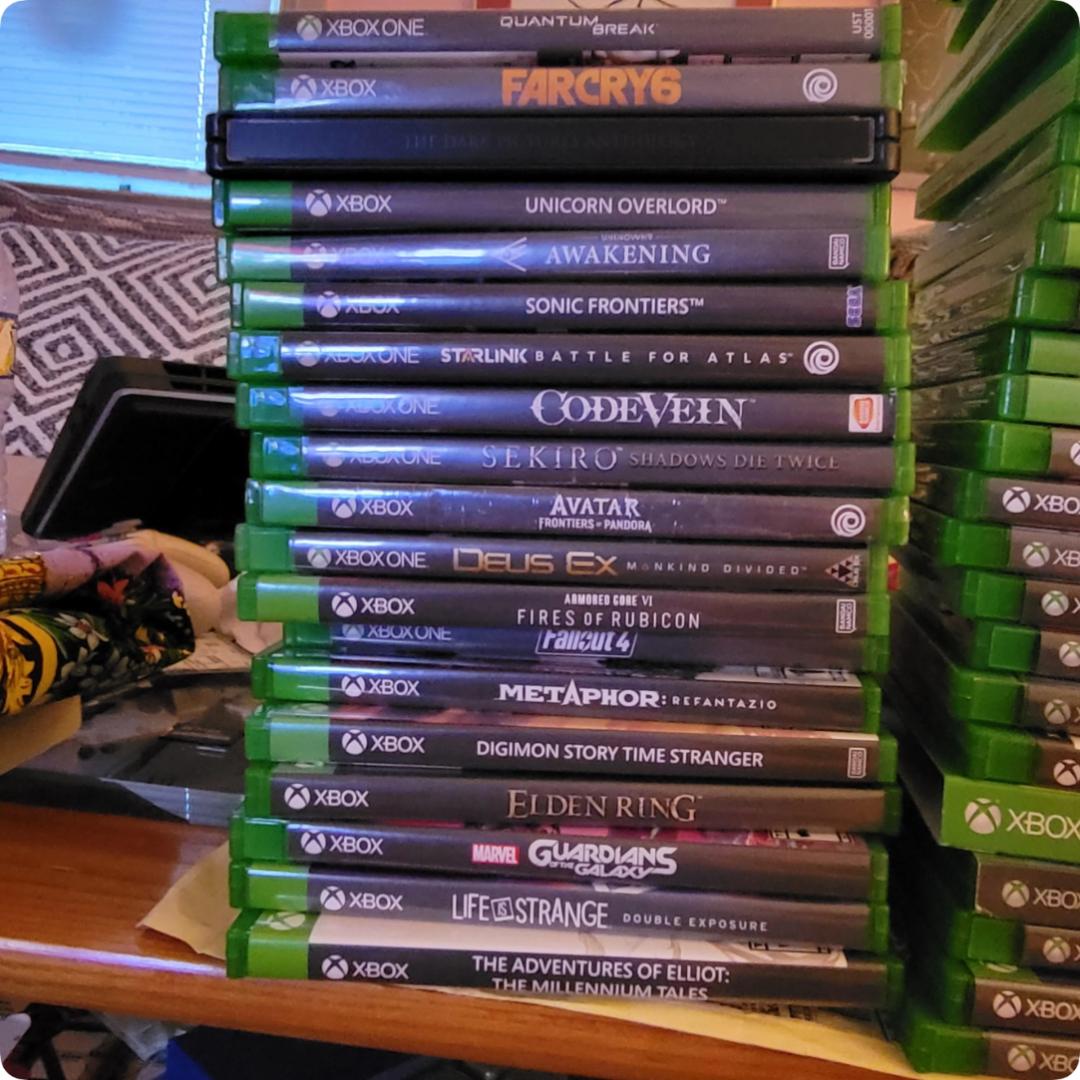
Figure | Xbox physical disc collection shared by players (Image source: Braggolach on Reddit)
Of course, for ordinary players, rational expectation management is also needed here. The current "Disc-to-Digital" is not a universal cure: it is still subject to the license agreements of third-party publishers, and some old games with expired copyrights may not be convertible at any time; the validity of this digital right still deeply depends on Microsoft's authentication server, and it is not equivalent to an offline cold backup archive that can be saved permanently.
It is not a digital utopia, but it has indeed built the most practical bridge between physical media and digital distribution.
Quite dramatically, Shuhei Yoshida, the former head of PlayStation who appeared in the 21-second ironic video to "teach Microsoft a lesson" back then, also commented sincerely on social media after seeing the Disc-to-Digital program launched by Microsoft:
A great move by team Xbox :)