Product Observation | Founded by ex-team members from ByteDance, DJI and Tencent, the startup targets the AI skiing track and has secured investment from Houxue Investment.
Source / Enterprise
This article is about 3300 words, with an estimated reading time of 8 minutes
Author | OU Xue
Editor | YUAN Silai
A group of young people from ByteDance, Tencent and DJI decided to redefine ski training with AI.
The core members of this team cover algorithm, software, hardware and global commercialization, and almost all of them have led large-scale projects at top tech companies.
The experience of founder Wu Zhenhua is very representative. He worked at ByteDance for three years, serving as regional business head and user growth head of Feishu, and previously served as CMO at Vika, witnessing the company's development from 0 to 1. The other three co-founders: Bei Junlong, head of software, once served as senior product manager at Tencent and ByteDance; Chu Jia, in charge of algorithms and data, was previously an algorithm engineer at ByteDance; Li Yuansheng, in charge of hardware, joined DJI at the age of 18 and also worked as a core R&D engineer at Seeed Studio.
But more important than their resumes is another label: they are all ski enthusiasts. 60% of the team hold international ski teaching certifications, some have worked as coaches, and some have even served as referees for the Winter Olympics.
Their choice to start a business in the ski track stems not only from the real pain points Wu Zhenhua experienced in his six or seven years of skiing, but also from a more fundamental judgment: past AI models only learned text and image information on the Internet, while data of falling, edging and carving in the real physical world has never been absorbed by any model.
"I will not do things that burn money. I will only do things that meet all four quadrants at the same time: do things I love, do things I am good at, have a clear financial model in the short term, and have a high enough ceiling in the long run," said Wu Zhenhua.
Skiing is still a sport dominated by "dark data" to this day. The data is hidden under the skis, invisible to the human eye, cannot be felt accurately by oneself, and it is also difficult for cameras to capture the details.
What Wu Zhenhua wants to do is exactly to capture these dark data, feed them to AI, and then feed them back to the training process.
In two ski seasons spanning the northern and southern hemispheres, the Heygo team carried dozens of sensors, conducted repeated tests at ski resorts at minus 30 degrees Celsius, and collected millions of real sliding data, trying to unlock this "black box".
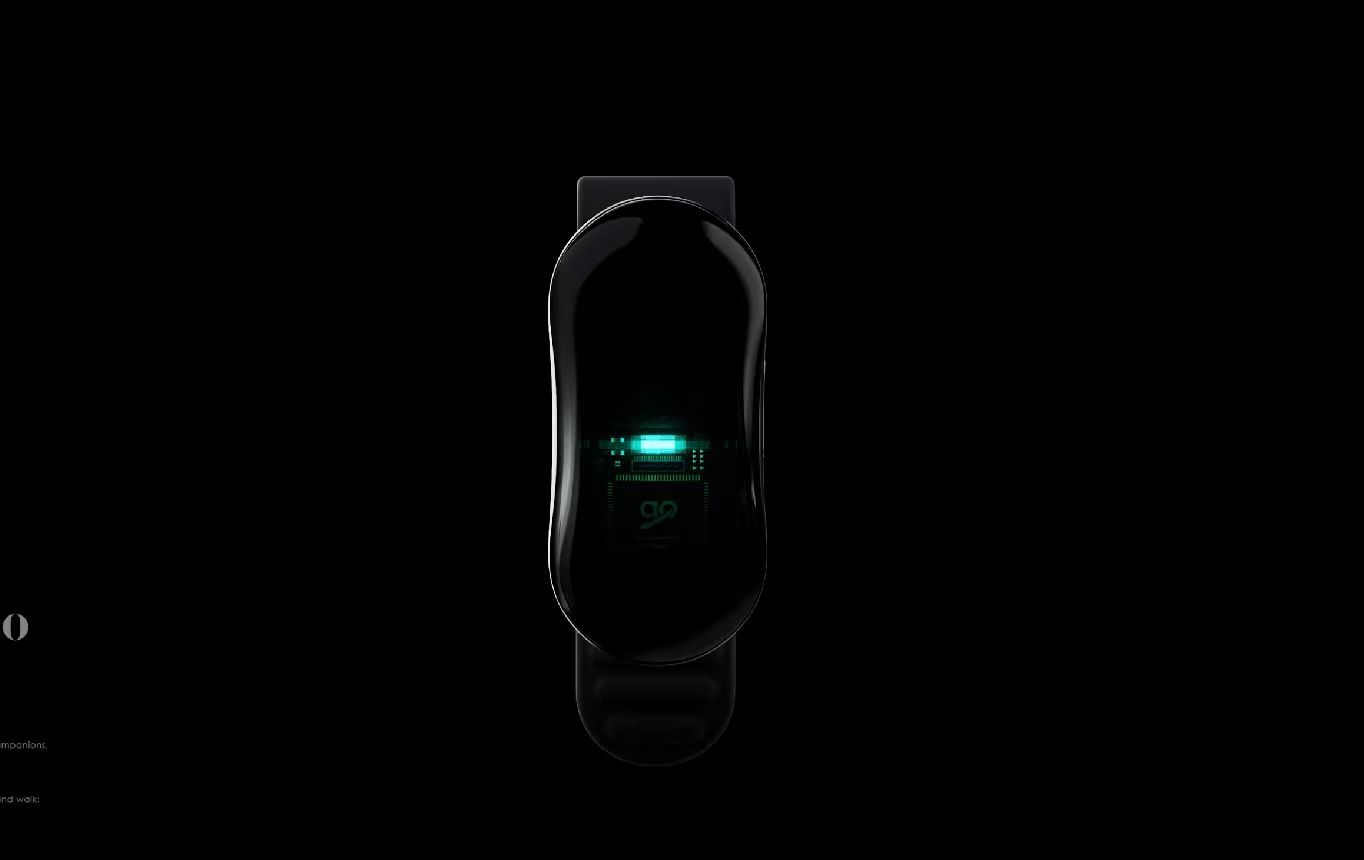
Heygo was officially established in 2025, and first launched an AI hardware for snowboarding. The team defines it as the perception entry of Motion Agent. "This Agent will observe you, understand you, remember you, give you feedback, and gradually find the most suitable progress path for you."
In addition, they are equally cautious about financing. At present, Heygo has only completed a round of angel financing of several million US dollars, exclusively invested by Thick Snow Institution.
From the germination of the idea to the upcoming pre-sale of products, Heygo has gone through nearly a year. The path Heygo chose is not to serve a small number of athletes at the top of the pyramid, but to commercialize professional capabilities as consumer goods, so that ordinary enthusiasts can afford them.
"Our strategy is not about how many sports we cover or how many hardware products we have. The real competitiveness lies in how well Heygo understands you, whether it can give you personalized feedback, and let you better understand your own boundaries," Wu Zhenhua said.

How does AI understand skiing?
Feedback on ski training is both expensive and scarce. A private lesson often costs thousands of yuan, but after class, you can only explore by feeling. "If you find 10 coaches, you may get 10 different explanations. Because they don't have your complete Context and Memory," Wu Zhenhua said.
Skiing is an individual closed-loop sport — you complete it, perceive it, and correct your movements all by yourself, which is naturally suitable for using sensors to capture movement data. More importantly, it is extremely difficult to achieve scientific quantitative analysis of skiing only by video. The ski suit is bulky, the movement is fast, and all key variables are out of sight.
Therefore, the Heygo team believes that AI hardware in the ski field is not a nice-to-have, but a rigid demand. But turning the rigid demand into a reliable product is far more complicated than imagined. The core team spent a year taking collective pay cuts to invest, focusing only on solving one core problem: how to make AI truly understand skiing.
The IMU sensor on the foot captures the movement of the ankle, but after the deformation of the ski boot and the transmission of the binding, the final state of the ski has deviated. A few degrees of error will be continuously amplified in the judgment of edging and carving. Different ski boot hardness, weight, and snow conditions make the deformation rules ever-changing, and there is no fixed compensation parameter that can adapt to all scenarios.
The team sums up this problem as "the boot is not equal to the board", which is the core obstacle that the industry has been difficult to break through in the past. Their solution is to break it down to the most basic level: during the model training phase, additional sensors are installed on the skis to collect the real motion data of the feet and the skis at the same time, so that the model can learn to calculate the ski motion from the foot data. On mass-produced products, there are still only two sensors on the outside of the ski boots.
Chu Jia said: "There is no set of fixed compensation parameters that can adapt to all ski boots, all body weights and all snow conditions. We can only let the model learn this mapping relationship by itself."
This process relies on massive amounts of real sliding data, not laboratory simulations, but repeated collection in various snow conditions such as hard snow, powder snow, and ice surface under temperature differences from minus 30 degrees Celsius to a few degrees above zero.
From Japan to Xinjiang and then to New Zealand, the team stayed at ski resorts in different countries for months. "Many people think the difficulty lies in model training. In fact, the real difficulty is to get clean, usable and labeled training data in extreme environments. This is hard work with no shortcuts," Chu Jia said.
Polishing the hardware is also not easy. The two sensors clipped to the side wall of the ski boot need to work stably under extreme cold, high impact and strong static electricity. The team adjusted the material selection and force analysis of the clips countless times. The team cooperated with the university's mechanics laboratory for simulation, tested the clamping force balance of ski boot walls of different thicknesses, and finally achieved IP68 waterproof and more than one week of sliding support on a single charge. With the support of hardware, the current Heygo data accuracy is within 3 degrees, reaching the top level in the industry.
"The thickness and hardness of the ski boot wall are different for each brand. If the clamping force is too large, deformation is easy to occur, and if it is too small, it will loosen. This balance point can only be found through repeated trials," Li Yuansheng said.
With accuracy, the next problem is how to make users perceive value. Heygo's answer is real-time voice feedback, which has become the essential difference between it and most "post-slip analysis" tools.
The feedback is divided into three levels: short prompts are given through Bluetooth headsets during sliding, only speaking at critical moments, and never interrupting the rhythm; a complete review is provided when you are on the cable car; after the day ends, Heygo generates a personalized report and next-step training suggestions based on the full-day data.
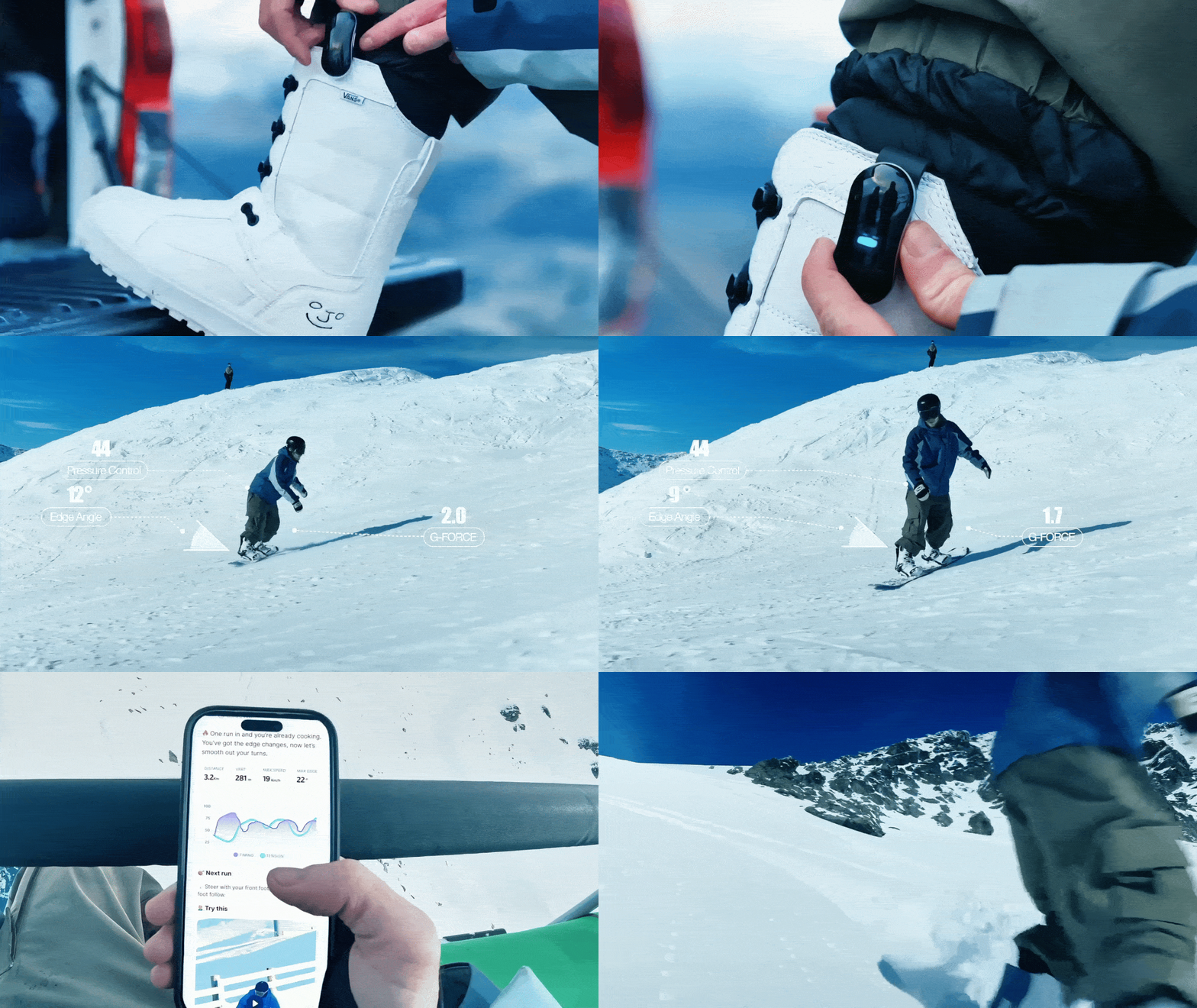
Heygo captures sliding data in real time (Source / Enterprise)
It is worth noting that the frequency and tone will be dynamically adjusted according to the user's level. "The core principle is not to interrupt the user's sliding. The information the brain can digest is very limited. Only speak at critical moments, tell the user what they can understand, and tell them what to do next in one sentence," Bei Junlong said.
Distinctions are also made at the personality level: users who fall frequently receive gentle encouragement, while advanced skiers who ski aggressively face more direct technical corrections. The team summarizes this logic as "individual baseline" rather than a generalized standard. The model must understand the difference between beginners and experienced skiers.

Heygo AI Chatbot for anytime interaction (Source / Enterprise)
This deep personalization relies on a huge backend system. Heygo has built its own data labeling platform, forming a closed loop from collection, segmentation, labeling to training and verification. Each sliding run is cut into the smallest granularity in units of "turns", and then divided into three stages: entering the turn, mid-turn, and exiting the turn, corresponding to dozens of indicators.
The premise for AI to understand skiing like a coach is to redefine skiing in a way that machines can understand. Up to now, Heygo has accumulated millions of real sliding data, built a snowboarding knowledge graph containing 15 to 20 advanced indicators, and continues to co-create and calibrate with coaches from different teaching systems around the world.
"The more users there are, the stronger the model will be. The more you ski, the more your Heygo will understand you," Wu Zhenhua said.

From skiing to personal sports intelligence
But it must be admitted that there is still a considerable distance from technological breakthroughs to commercial verification. Skiing itself has a high threshold, and equipment, ski passes and time are all costs.
Heygo's thousand-yuan hardware pricing plus subsequent subscription fees adds an extra threshold to existing consumption. But judging from the internal test feedback, in addition to intermediate and advanced players, more people who are willing to pay are amateur enthusiasts who have just learned to ski and want to continue to improve.
However, the Heygo team emphasizes that the product pricing anchor is not consumer electronics, but the consumption logic of ski equipment. In addition, the product software adopts a subscription system, the basic version is included with the hardware, and in-depth analysis and personalized plans require additional payment.
"When you just get into skiing and get a set of the most basic equipment, you have to spend 10,000 to 20,000 yuan. How much do you think an AI ski buddy that can accompany you for a long time and keep evolving is worth it?" Wu Zhenhua said.
In terms of market strategy, the team gave up crowdfunding platforms. Wu Zhenhua explained it this way: "We didn't plan to serve all skiers as soon as we launched in the first year. We prefer to focus on a group of core users who really have advanced needs and are willing to continue training, and polish the product thoroughly in their real sliding scenarios. Serving this group of people well first is far more important than pursuing a larger user scale at the beginning."
Instead, they adopt a precise combination of independent stations and domestic e-commerce, supplemented by more than 20 offline ski shops around the world. It is learned that Heygo products are scheduled for pre-sale in September this year and delivery in October, covering 38 countries and regions in the first batch.
The early brand building follows the route of authoritative endorsement. The team has established cooperation with ski associations and top instructors in New Zealand, Canada and other countries.
"There is a general play for vertical sports like skiing: top-down, higher, faster and stronger. What top skiers use, everyone will trust." The team lets professional groups use the product first, and then penetrate into the public circle.
This actually reflects a counter-consensus judgment: the ski market seems to be niche, but the user value is extremely high.
At present, the global number of skiing visits is close to 400 million, and the Chinese market has more than 20 million visits per year, with a rapid growth rate. Among them, there are some ski enthusiasts who go skiing regularly every year and are willing to pay for progress. "If the penetration rate reaches 1%, it can already support a very high-quality company." They believe that ski users have high net worth, high willingness to pay, high stickiness and high communication power, but there was no product that really solved their core needs in the past.
From a longer-term perspective, skiing is only the first stop. What the Heygo team really wants to do is "personal sports intelligence".
Skiing, surfing and skateboarding share part of the underlying logic: people interact with the environment through boards, and the core is center of gravity, rhythm, edge control, turning speed, etc.
Sensor fusion architecture, attitude estimation method, personal model training and Agent interaction are transferable. What really needs to be re-accumulated is the knowledge graph and data assets of each specific sport.
But the team is in no hurry to expand horizontally. In Heygo's view, the key issue has never been "how many sports are supported", but whether it can truly understand how a person perceives, acts, learns and progresses in the real world.
And when this capability truly spills over to a wider range of sports scenarios, Heygo may become one of the important samples for AI to understand the physical world and the logic of human movement.