The biggest suspense of this year's Apple launch event is not the foldable screen.
Apple has officially announced that its special fall event will be held at 1 a.m. Beijing Time on September 10, and this year's official theme is "Open a New Chapter, Shine Bright."

Image Source: Apple
Connecting the news about Apple over the past few months with the event invitation, it is not difficult to find that Apple may be turning a rather special new page this year. On one hand, this is the first high-profile new product launch event after John Ternus took office as Apple CEO; on the other hand, the iPhone release schedule that Apple has maintained for more than a decade may be truly disrupted for the first time: there will be no standard iPhone 18 this time, only the iPhone 18 Pro, Pro Max, and the foldable iPhone that has been rumored for two to three years will be launched this fall.
Of course, there may be something even more significant for Chinese users: Apple Intelligence finally gets the chance to officially arrive on the Chinese mainland version of iPhone.
Therefore, this year's event is far more than a simple Apple fall new product launch, it is Apple answering three core questions: What will the iPhone look like in the next stage? Is the foldable screen the next mobile phone form factor that Apple approves? And after AI has become a standard feature for domestic Chinese mobile phone manufacturers, how will Apple fill the gap?
Standard iPhone 18 Postponed for Release
For many years in the past, the product lineup of Apple's fall launch event has been so familiar that it is almost public information: standard iPhone, Pro, Pro Max, paired with Apple Watch and occasionally AirPods. But according to relatively consistent reports from multiple sources including Bloomberg, Apple will launch the iPhone 18 Pro, iPhone 18 Pro Max and its first foldable iPhone this fall; the standard iPhone 18, iPhone 18e, and even the second-generation iPhone Air will be "postponed" to the spring new product launch event in 2027, which means Apple will split the iPhone release cycle into two halves of the year for the first time.
On the surface, it seems to be to avoid making the launch event too long and make room for the foldable iPhone, but the more practical change for consumers is: the new Apple product lineup in September in the future will become extremely "premium".
Starting from this year, the "entry threshold" of the September new product launch will directly start from the Pro line, and above that there will be a foldable iPhone whose price is likely to exceed 2000 US dollars. For Apple, this is obviously conducive to further increasing the average selling price in the new product cycle, but in the current mobile phone market this strategy is somewhat risky.
The reason is very simple: mobile phones are really getting more and more expensive this year.
Since the second quarter of this year, the continuous rise in costs of memory, flash storage and advanced process chips has become an unavoidable problem for the entire consumer electronics industry. Well-known Weibo KOL Digital Chat Station stated that the current procurement price of 12+256G memory combination has reached 2200 yuan, which was only 500 yuan in the same period last year, an increase of 1700 yuan. This premium even exceeds the procurement price of the latest flagship chip.

Image Source: Weibo
According to IDC data, the domestic Chinese smartphone market continued to decline sharply year-on-year in the second quarter, but Apple grew by 24.4% instead, returning to the second place in the market. A very important part of the reason why Apple can achieve counter-trend growth is exactly that the iPhone 17 series did not follow the Android camp to raise prices rapidly, and with channel discounts, its price competitiveness was highlighted. But the iPhone 18 Pro is unlikely to continue to replicate this strategy.
The A20 Pro will become Apple's first-generation mobile phone chip using 2nm process, while the costs of DRAM and NAND are also at a high level. Recent predictions from industry analysts range from a $100 to $300 price increase. Although the final pricing will most likely not be so straightforward, the price increase of the iPhone 18 Pro is almost a done deal.
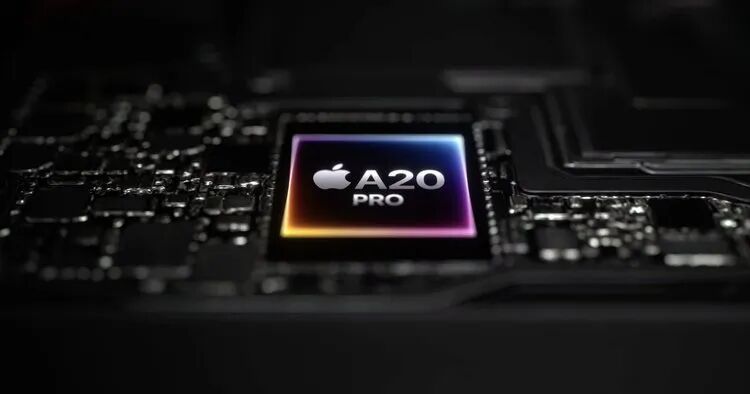
Image Source: Internet
Without the standard iPhone 18 to share the sales volume, Apple may need the iPhone 17 that has been on the market for a year to continue to undertake a very important task of driving sales volume.
iPhone 18 Pro Series: No New Chassis, But Fully Refined Inside
If you are expecting an iPhone 18 Pro with a brand new appearance, you may be disappointed this year. All currently reliable information points to one conclusion: the iPhone 18 Pro and Pro Max basically inherit the design of the iPhone 17 Pro.
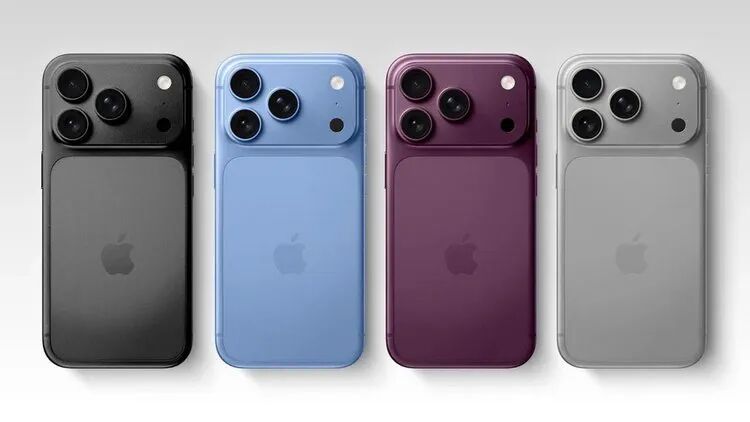
Image Source: Internet
The 6.3-inch and 6.9-inch screen sizes will not change significantly, and the camera area on the back will also continue to use the design language established in the previous generation. Apple may continue to shrink the Dynamic Island, and place part of the Face ID components under the screen, but the real changes are almost all hidden inside the device.

Image Source: Internet
The most "core" change is the A20 Pro, which marks Apple's first time advancing the iPhone chip to 2nm. Today when mobile phone performance is already clearly over-sufficient, its significance is not as simple as the previous "process node upgrade". What Apple really needs is not to further increase the benchmark scores, but to reduce the power consumption of AI, local models, image computing and continuous high-load tasks.
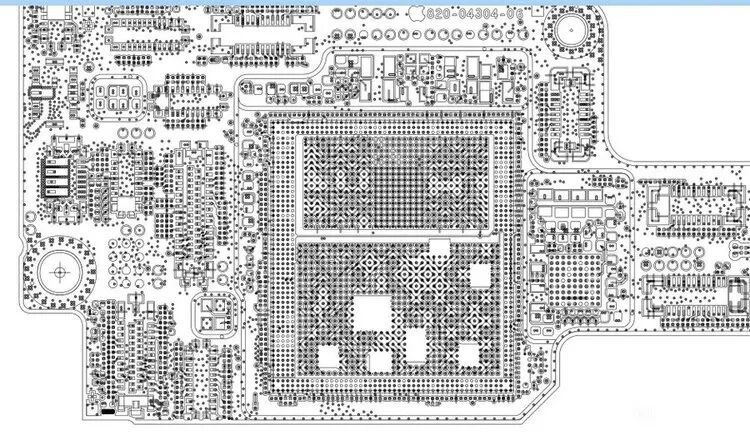
Image Source: Internet
This year, Apple Watch also began to emphasize the computing power required by AI, which also shows that Apple's hardware design logic is gradually changing: in the past, chip performance mainly served apps and games, and now more and more computing power budget is reserved for system-level AI.
The second noteworthy change is the imaging system.
Current reports show that at least one iPhone 18 Pro is expected to use a mechanical variable aperture for the first time, most likely the larger-sized iPhone 18 Pro Max. The mobile phone industry has long adopted this feature, Huawei, Xiaomi, Samsung, Sony have all used similar designs, so "mobile phones with variable aperture" itself is not a function that "Only Apple can do".
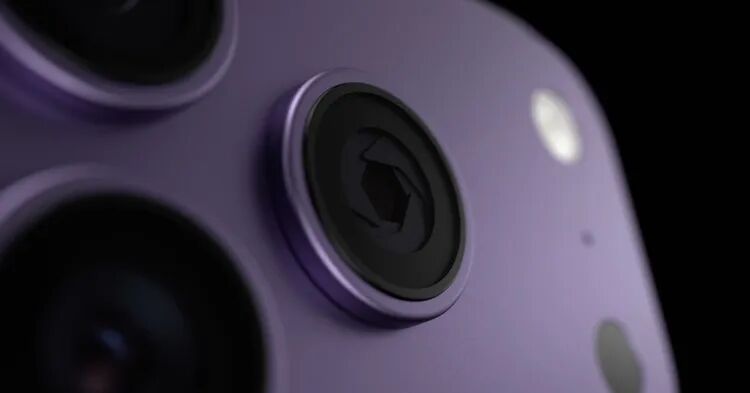
Image Source: Internet
What we need to pay attention to is what Apple plans to do with it. iPhone has always attached great importance to video shooting, and in addition to changing the amount of incoming light and depth of field, the more practical use of variable aperture is to help video shooting get a more reasonable shutter speed in strong light environments. If Apple finally makes it an exclusive feature of the Pro Max, the product differentiation between the Pro and Pro Max this year may be further "widened".
In addition, the self-developed C2 cellular baseband, new-generation network chip, LTPO+ screen, and larger Pro Max battery have all appeared in various leaks. The battery capacity of the Chinese mainland version of iPhone 18 Pro Max may reach 5391mAh, a very significant increase compared to the previous generation.
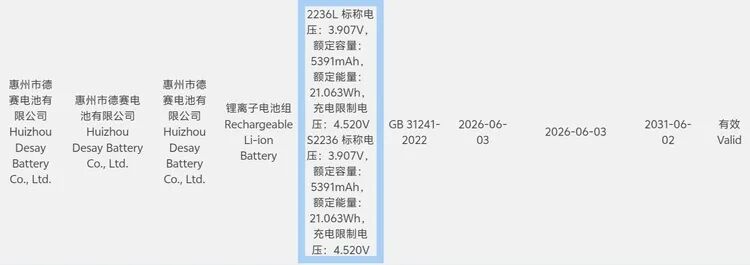
Image Source: Internet
In the past, Apple rarely relied solely on "increasing battery capacity" to solve battery life problems, but with the 2nm A20 Pro, new display panel and larger battery all present at the same time, the iPhone 18 Pro Max has the opportunity to become the regular iPhone with the most intuitive improvement this year. Next to it, however, there is a new product that is hard to ignore.
Apple Finally Launched a Foldable Phone, But Chinese Users Are the "Hardest to Satisfy"
Regarding Apple's first foldable phone, the name "iPhone Ultra" is widely used publicly at present. It is confirmed that it is a large foldable device that unfolds horizontally, with the leaked dimensions being about 5.5 inches for the outer screen and 7.7 to 7.8 inches for the inner screen, and the aspect ratio after unfolding is close to 4:3.
In other words, Apple hopes that after unfolding, it will look more like a small-sized iPad, becoming the most perfect "portable tablet computer".
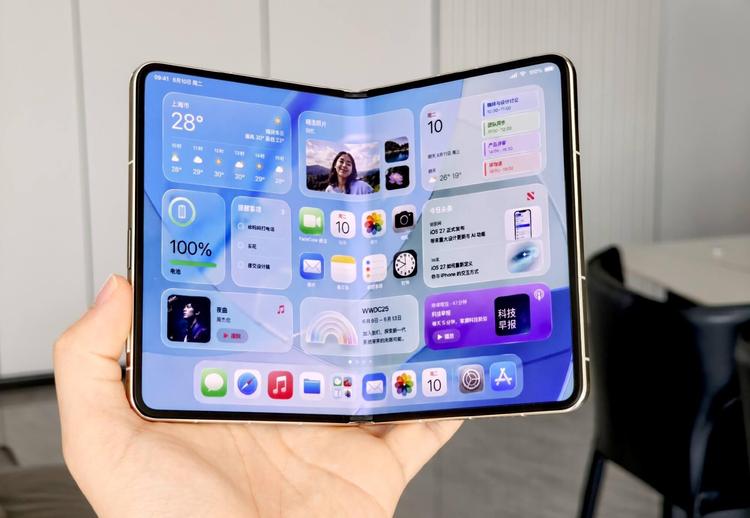
Image Source: Internet
A core contradiction of Android foldable phones in the past few years is how to switch between "mobile phone" and "tablet". Many products have been made very thin in hardware, but after unfolding, if you only zoom in the mobile version of the App, the value of the foldable screen is still limited. Yes, Samsung, I'm talking about you.
Apple seems to be ready to solve this problem at the system level. iOS 27 has added side-by-side Apps and iPad-like multi-tasking layout for the foldable form factor. On the latest version of MacOS 27, the iPhone mirroring screen already supports stretching to landscape mode.
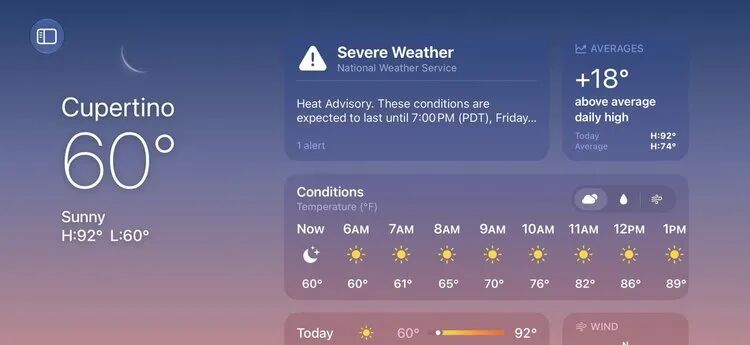
Image Source: Internet

Image Source: Internet
But this foldable device still runs iOS instead of iPadOS, and will not directly become a small tablet that can run the complete iPad application ecosystem.
In terms of hardware, Apple obviously puts "thinness" in a very high priority. Current reports say that the unfolded thickness may be only about 4.5mm, and about 9mm after folding. The trade-off is that Face ID is likely to be canceled and replaced with side-mounted Touch ID similar to the iPad Air; the rear camera has also been changed from the triple-camera setup of the Pro series to a dual-camera setup, removing the telephoto lens.
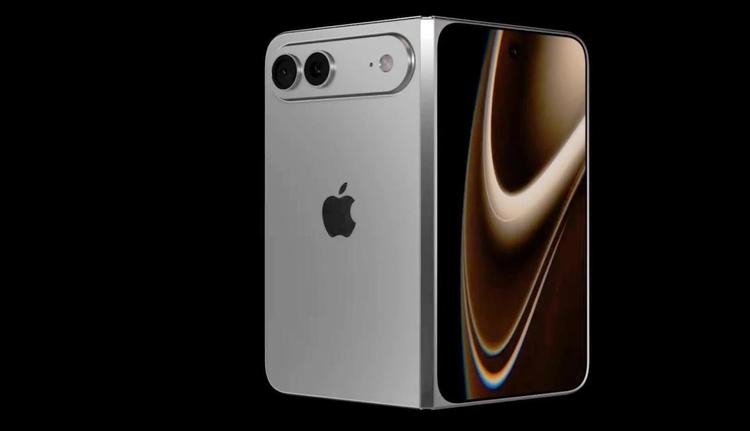
Image Source: Internet
For an iPhone with an expected selling price of more than 2000 US dollars, these compromises are not trivial.
What's more, China may be exactly one of the most challenging markets for this phone; although Apple is making a foldable phone for the first time, domestic Chinese mobile phone manufacturers have been making foldable flagships for many years. Manufacturers such as Huawei, Honor, OPPO, and vivo have iterated foldable phones for several rounds: weight, thickness, hinge, crease, imaging capability, fast charging, battery capacity, split-screen interaction and even maintenance costs have all become very mature comparison dimensions.
In the European and American markets, "Apple finally made a foldable" may be enough to be a selling point on its own, but in the Chinese domestic market, users will most likely immediately list a series of questions: How heavy is it exactly? What about the crease performance? Why did you remove the telephoto lens? Is the inner screen aspect ratio suitable for WeChat and Xiaohongshu? Is the split screen really more usable than domestic foldable phones?
If all these dimensions