"Half-piece Top" is now on sale, consumers have long been fed up with the various unreasonable and poorly designed women's clothing products on the market.
In previous years, women's clothing sizes kept getting smaller and smaller, and some people online joked, "Why don't we just DIY them ourselves?" A few years later, a brand called MOF Girls Department Store turned this idea into reality: selling a single knitted cardigan split into "half pieces". A half-piece vest is priced at 123 yuan, and the long-sleeve half-piece is 153 yuan — the total price of two pieces to make a full garment is about 246 to 306 yuan, which is equivalent to the retail price of similar complete knitted cardigans.
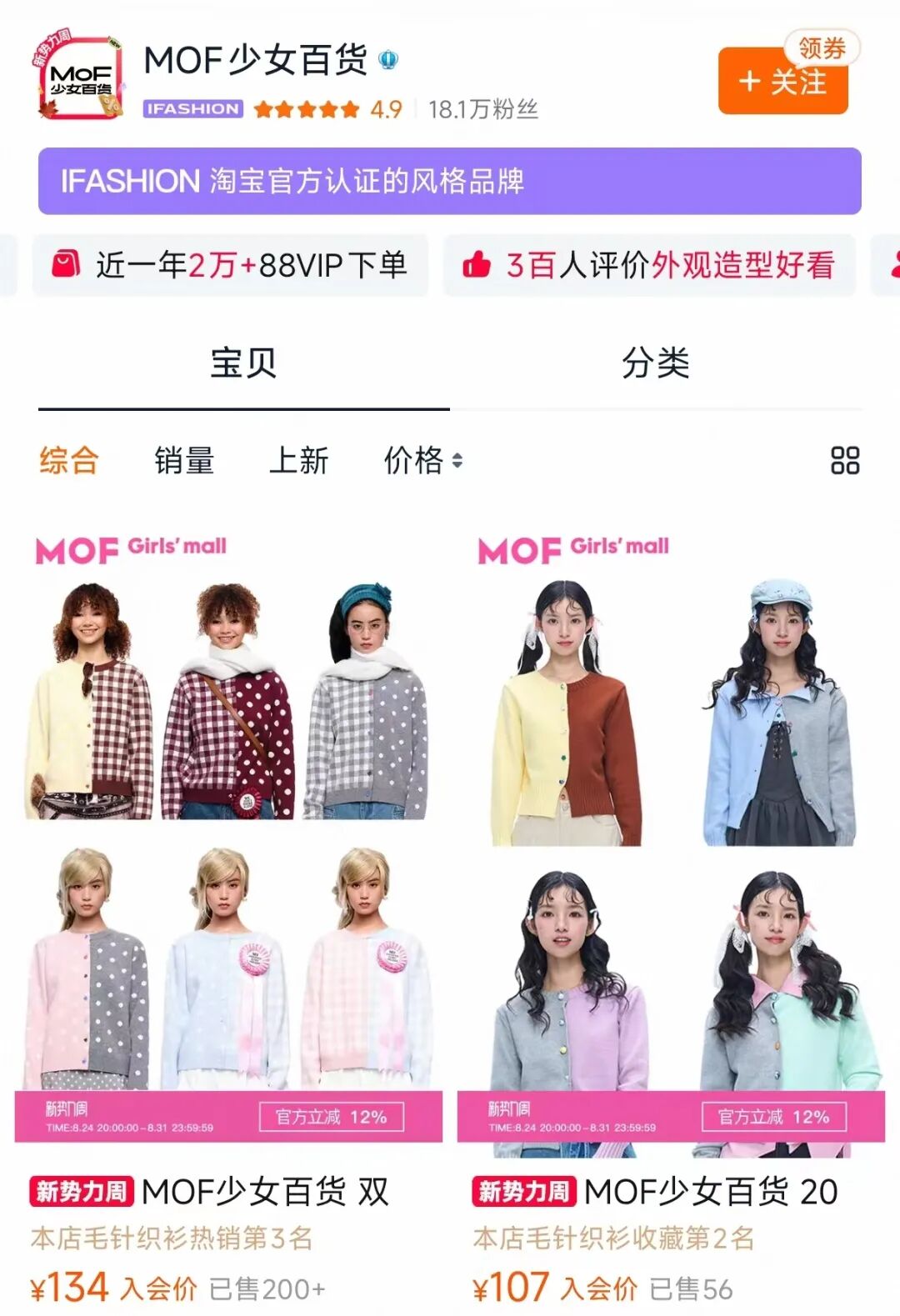
Source: Taobao
400 orders are trivial in the huge women's clothing market. But it made headlines not because of its sales volume, but because it precisely hit the most painful nerve of the entire industry — what will merchants do when the return rate of an industry soars to 80%?
Netizens commented: "Why not split the sleeves off too, you can even sell more that way."
Following this logic, half-piece pants and one-third skirts will appear sooner or later. Since "selling separately" can be called "DIY freedom", there is no reason not to split two pant legs of a pair of pants and sell them separately, or sell skirts in pieces.
MOF may just be playing a marketing meme. So far, no other brand has clearly followed up — but only a few days after the media report, imitators are already on the way. When "half pieces" can sell more than 400 orders, when a concept is proven to attract traffic, generate topics and attract paying customers, the fashion industry has never been slow to imitate: once a hit logic works, it will be spread across all shelves within three days.
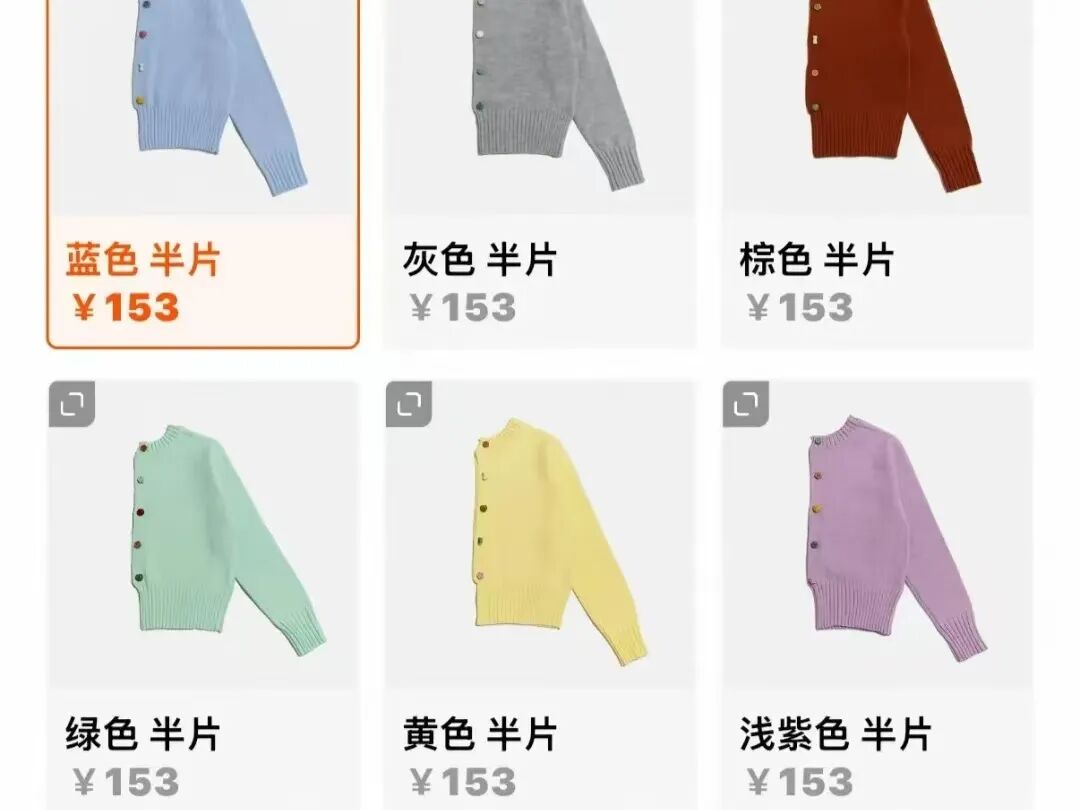
Source: Internet
Even if it is just a meme, when the price of a half-piece exceeds the price of a full garment from other brands, the boundary between "creativity" and "exploiting consumers" has long been blurred.
But the question is, is this even fashion?
The right to define fashion has never been in the hands of consumers. If MOF does this today, you may question it; but if it is LV or Balenciaga that does it, public opinion will probably call it "deconstructivism" or "avant-garde design". Whether fashion itself makes sense largely depends on who is doing it and who is defining it.
So the problem is not "whether this counts as fashion". Even if it is — the real problem is: when merchants package an obvious cost-shifting behavior as "DIY freedom" to sell, do consumers realize what they are paying for?
MOF claims that this practice is "to allow customers to freely match colors". But the price of a half-piece is almost equal to that of a full garment from other brands. When you pay for two pieces to make a complete one, you are paying for design premium, "curiosity" premium, and a talking point that can be posted on social networks. Some people are willing to pay for this — but it is worth asking: when the market is flooded with this kind of "curiosity replaces quality" gameplay, how can those small women's clothing brands that make clothes honestly survive?
How the return rate drives the industry crazy
The "half-piece garment" is not an isolated case. It is a representative footnote to the collective dilemma of the women's clothing industry.
The return rate of traditional e-commerce is about 35%–40%, that of live-streaming e-commerce is as high as 60%–80%, and the average rate across the entire network has risen to 75%–80%. Within two months, more than 10 women's clothing brands with hundreds of thousands or even millions of fans announced their closure. "Jigu Jigu Home", which has 4.67 million fans, has been deeply rooted in Taobao for more than 10 years, with annual sales of 2 million pieces, and turned from profit to loss in 2026 — the direct driving force is the rising return rate.
The direct cause of the high return rate is that the product does not match the description — the actual product received by consumers is seriously inconsistent with expectations; and merchants, forced to bear high return costs, are forced to cut corners on fabrics and workmanship, which in turn aggravates the mismatch between products and descriptions, forming a vicious cycle.
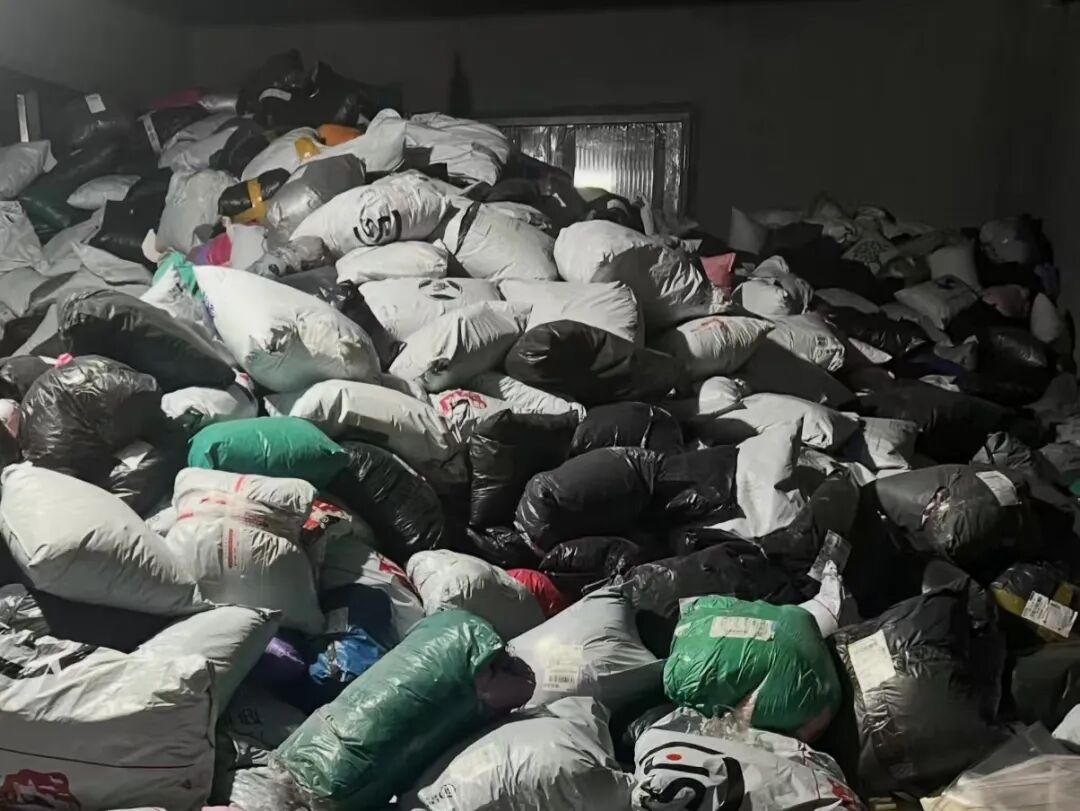
Source: Internet
The pre-sale system and freight insurance do boost returns — consumers are prone to regret after waiting too long, and the return cost is almost zero. But the root cause has always been the huge gap between the actual product and expectations; if the quality and size are reliable, the return rate will not be so out of control.
There is a closed loop between return rate and quality: profits are compressed → fabrics and workmanship are downgraded → the deviation between the actual product and the description is larger → the return rate continues to rise. How exactly do they cut costs? For the M size of the same brand, the chest circumference has shrunk by 5 to 8 cm in three years; the S sizes of different brands can differ by 15 cm.
But you might say: If the M size is too small, I can just buy an L size at the same price, right?
The chaos of size does not convey "you can't wear it", but "your body shape is abnormal" — using size to PUA consumers is one of the industry's most hidden manipulation methods.
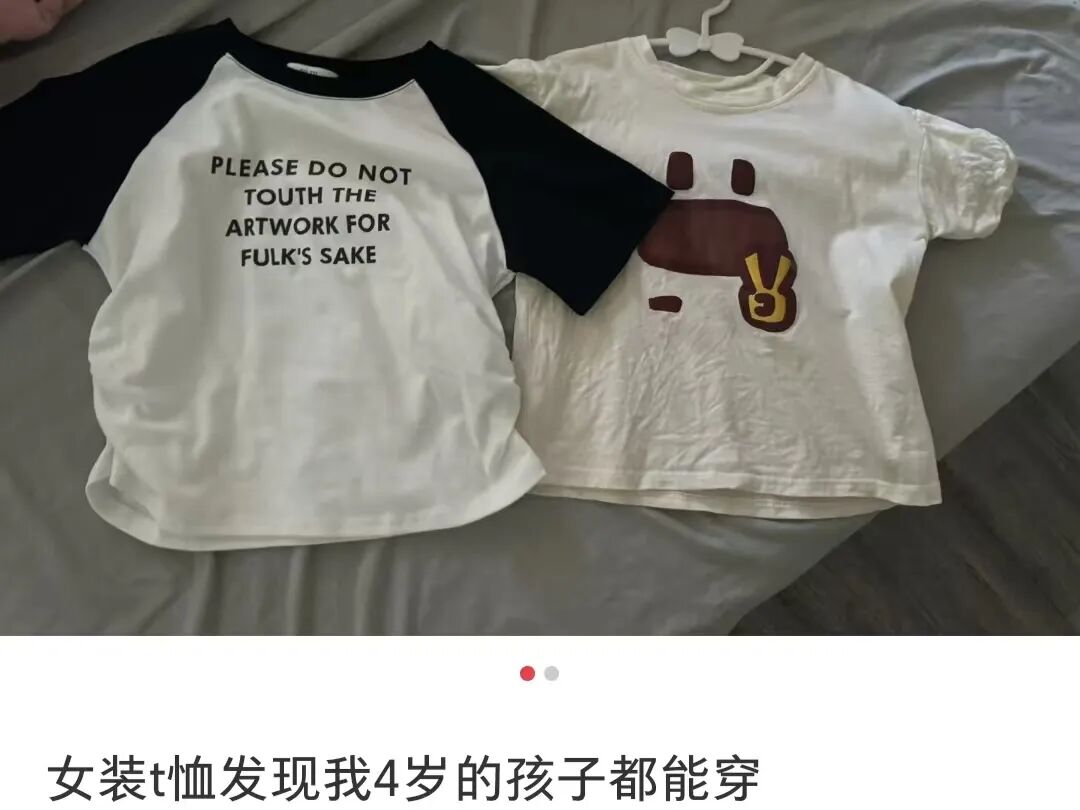
Source: Internet
Then what? The products consumers receive — fabrics so thin that they are translucent, zippers that get stuck as soon as you pull them, seams that fall apart after one wash, and size labels that are treated as a joke — are returned.
The return rate keeps rising. Costs keep being cut. Quality keeps declining.
How do merchants respond? — Filter out consumers
A platform launched a feature in 2025: merchants can "block high-refund users". The system helps merchants filter out users with high return rates, and prevent advertisements from being displayed to these people. Merchants say the ROI can be increased by 30% to 50%.
Merchants choose to block high-refund users instead of improving quality, keeping out "people who find problems" and leaving consumers with higher tolerance. This strategy is commercially feasible, but it turns the industry into a screening funnel of "bad money driving out good money".
Merchants have no incentive to improve their products, because even "bad" products can find buyers.
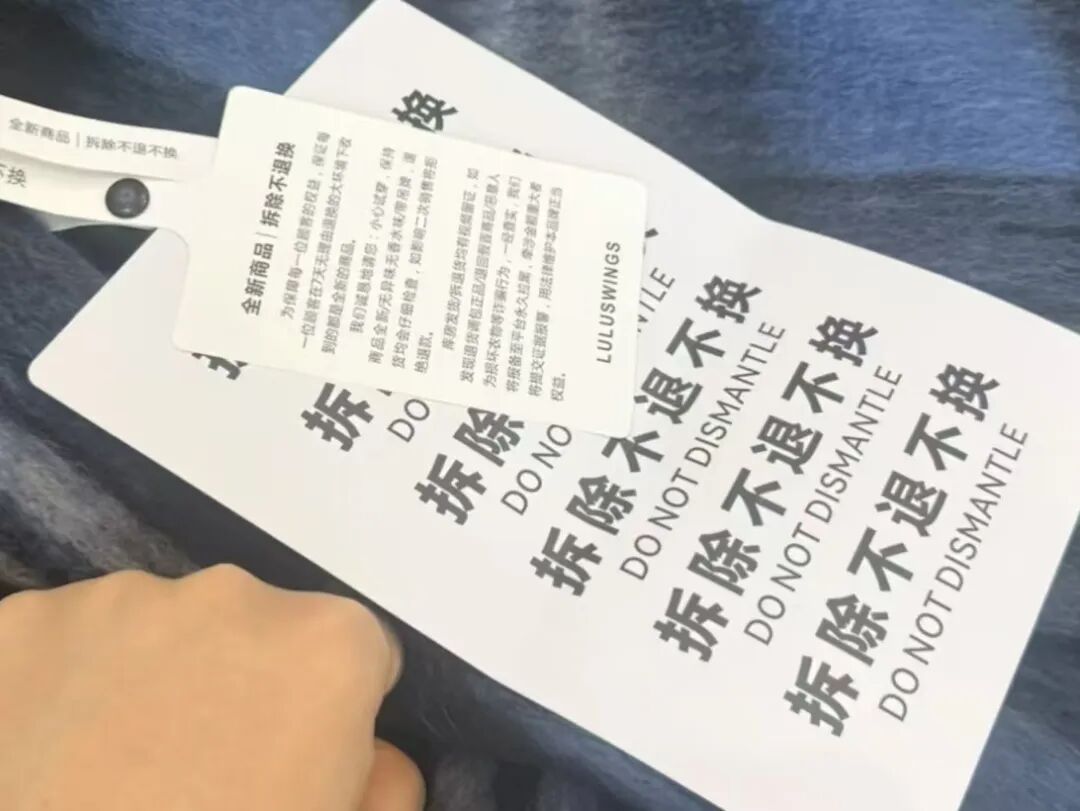
Has the industry made progress? No. Filtering consumers is lowering standards, not improving quality. When merchants find that "blocking picky people" is more cost-effective than "making good products", the entire industry will continue to sink. This is not a moral problem of a single merchant, but the incentive mechanism of the entire industry has gone wrong — and the distortion of the incentive mechanism is more difficult to repair than any single merchant's "misconduct".
Source: Internet
Women have suffered from poor women's clothing for a long time — women are turning to the men's clothing section
While the women's clothing industry is busy filtering consumers, another thing is happening.
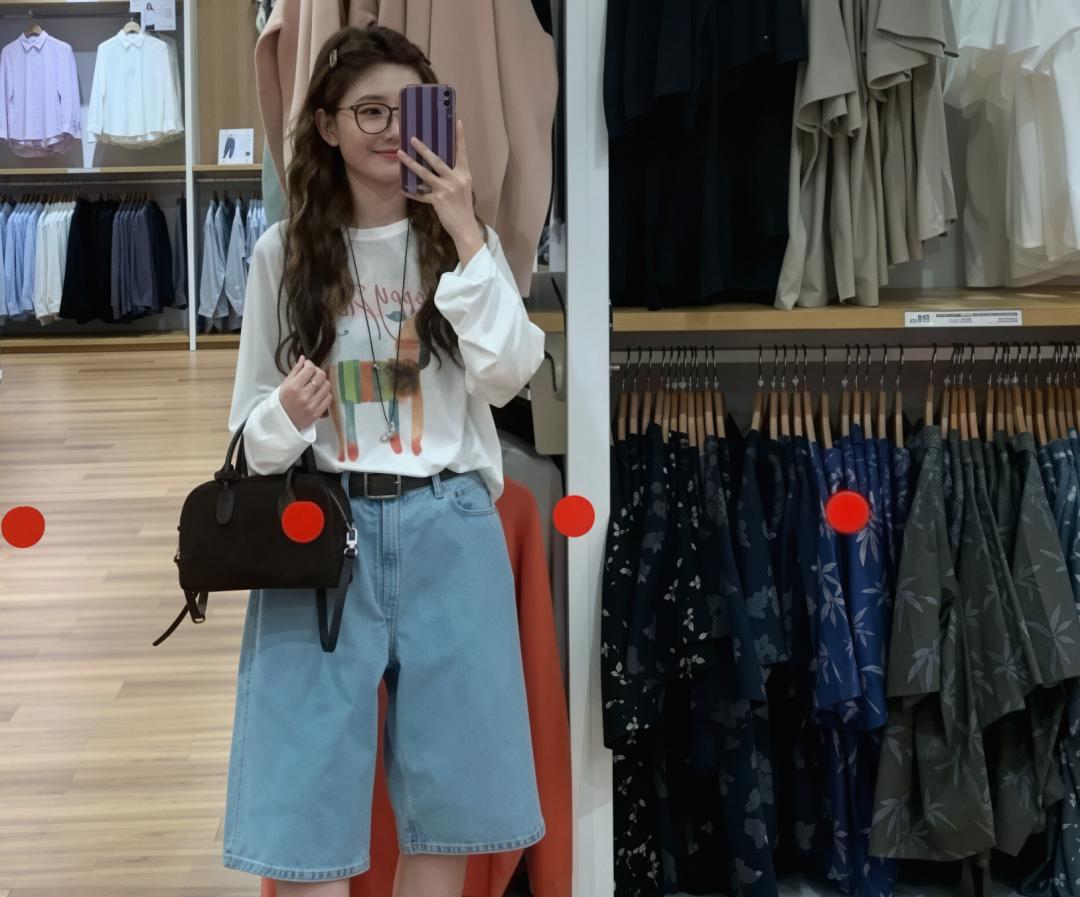
The chaos in the women's clothing industry is pushing consumers to men's clothing: the proportion of female buyers in the men's clothing market has risen from 15% to 28%, and the post-2000s generation accounts for 62%; the search volume of "women wear men's clothing" on Taobao has increased by 68%, related topics on Xiaohongshu have exceeded 100 million views, and 38% of customers in Uniqlo's men's clothing section are women.
There is certainly an element of "rebellion" in this decision — wearing men's clothing itself has a cool vibe, and breaking gender labels is an attitude in itself. But it cannot be simply attributed to rebellion. A more practical consideration: a post-2000 consumer said that women's clothing models are always wearing high heels and carrying handbags, but she has to carry a laptop, squeeze the subway and carry express deliveries every day. She needs a pair of pants that allows her to squat down to tie shoelaces. Men's work pants have 8 pockets, so you can put your phone and keys anywhere; women's jeans will bulge even if you just put a phone in. At the same price point: zippers of women's clothing are easy to break, pockets are too shallow to put hands in, fabrics are so thin that they are translucent; zippers of men's clothing are smooth, pockets are deep, and fabrics are solid.
Source: Xiaohongshu @ Sanshui Xing Shui Le
This is not entirely an aesthetic issue — when functional deficiencies reach a certain level, aesthetics have to give way. Besides, men's clothing itself is not ugly, it just does not meet the traditional setting of "women's pants should have a waistline to highlight curves". But demand will change, which is related to the awakening of female consciousness and the change of daily scenarios.
They are buying men's clothing, but not the setting of "men's clothing", but products with accurate sizes, solid fabrics, pockets that can hold things, and seams that can survive three washes — a normal piece of clothing.
Women have suffered from poor women's clothing for a long time. When "normal" becomes a luxury, consumers will naturally flow to places that can meet their basic needs.
So what should small women's clothing brands do?
Go back to the previous question.
A small women's clothing brand that makes clothes honestly, uses normal sizes, and does not engage in pre-sales is in a very awkward situation.
Its cost is naturally higher than others. Solid fabrics mean higher unit cost; standard sizes mean you cannot save fabric money by shrinking sizes; not engaging in pre-sales means you have to stock up in advance, and the inventory pressure and capital occupation are much larger than the "receive payment first, produce later" model. And it cannot escape the freight insurance and logistics costs brought by the return rate.
When everyone is competing to make up "concepts", "normal" has become the least eye-catching thing. What will these small brands do? Switch to making men's clothing? Give up? Or join the "half-piece" trend?
There is no standard answer. But it is certain that if in a market, the return of "playing gimmicks" continues to be higher than the return of "making good products", the rational choice is to follow the gimmicks.
The market has no morality, it only serves money. You make money in the short term, but in the long run, the entire industry will be dragged down. At this time, what is needed are pioneers — brands that dare to make good products and do not follow the trend to play concepts.
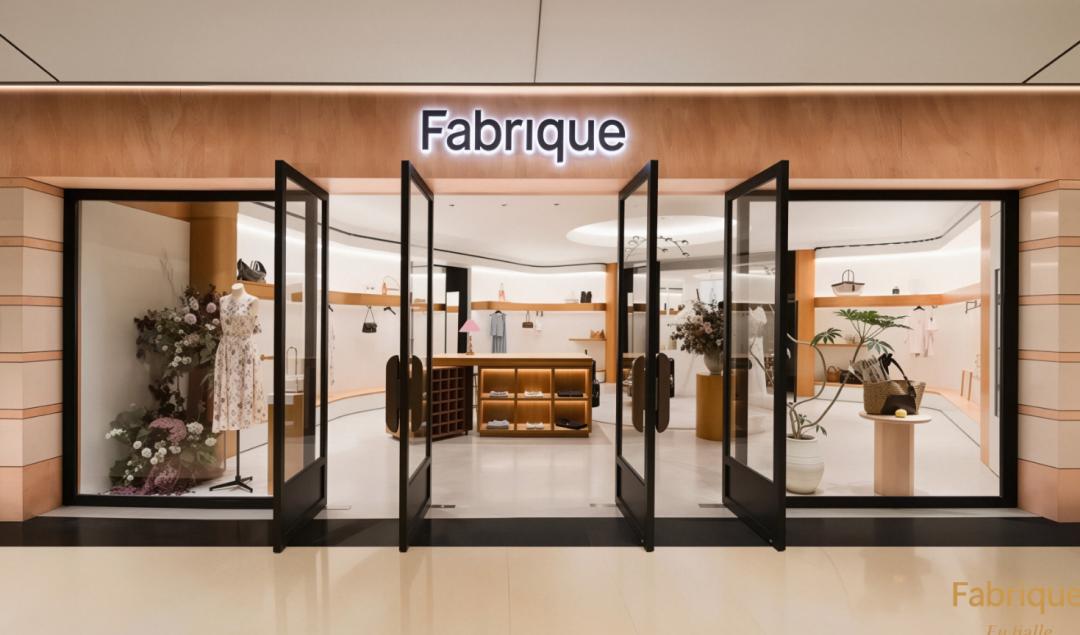
Of course, not all women's clothing brands are sinking. ICICLE has risen from outside the top 400 to the 9th place in the women's clothing list in seven years, with a growth rate of 80% and no discounts; CHICJOC, KEIGAN, UNICA and C'EST M are known as the "Four Great Kings" of Taobao women's clothing in the industry, relying on fabrics and versions to win; Fabrique has risen from 11th to 7th in the women's clothing list. Their existence proves one thing: the road of "making good products" works, but too few people are walking on it.
Source: Internet
We can look at the path of domestic sneakers. In the past, the quality of domestic sneakers was poor, and everyone bought Adidas and Nike. But in recent years, with the rise of domestic fashion, the product strength and brand strength of Anta, Li-Ning and Xtep have all improved, and the post-2000s and post-2010s generations have begun to actively choose domestic products. The comeback path of domestic sneakers is clear: Anta and Li-Ning won back consumers by product strength, not by creating hype through concepts.
The women's clothing industry is exactly missing this path.
The comeback of domestic sneakers was driven by external pressure — Adidas and Nike set the standards, and you will be left behind if you do not catch up. The women's clothing industry does not have this whip. There is no "catfish" rushing in to tell everyone "clothes can be made like this", forcing the entire pond to swim together. When everyone is competing to be worse, bad becomes the baseline. The "normal water level" of the industry is pulled below the floor, and then merchants say: this is the market.
Variables in the fashion power structure
There is another variable worth considering.
If it was Balenciaga instead of MOF that launched "half-piece garments" today, what would public opinion be like?
Most likely it will be called "deconstructivism", "avant-garde design", "breaking the rules" — the tone of fashion media will be completely different. The right to define fashion is in the hands of a few brands and a few people, and ordinary consumers have never been the judges of "what counts as fashion".
What if a top-tier female celebrity wears it, shoots a styling video, and promotes it on Xiaohongshu? The "half-piece" will change from a "stupid tax" to a "celebrity same style", from "cutting corners" to a "fashion item".
