36Kr Exclusive | Addressing the coating challenge of perovskite materials, the CAS-backed enterprise has completed a Pre-A round of financing of tens of millions of yuan.
Author | Qiao Yujie
Editor | Yuan Silai
This article is 1500 words long, and the estimated reading time is 4 minutes
Hard Krypton has learned that Changchun Riyao Optoelectronic Technology Co., Ltd. (hereinafter referred to as "Riyao Optoelectronics"), an enterprise engaged in perovskite solar cells, has completed a Pre-A round of financing of tens of millions of yuan, with joint investment from Tianjin Venture Capital Management Co., Ltd. (Tianchuang Capital) and Jilin Provincial Science and Technology Investment Fund Co., Ltd. (Jilin Provincial Science and Technology Investment). Previously, the company had received exclusive angel round investment of tens of millions of yuan from Changxing Fund.
Founded in 2023, Riyao Optoelectronics was established based on the research achievements of the team led by Researcher Qin Chuanjiang from Changchun Institute of Applied Chemistry, Chinese Academy of Sciences. The team has published more than 110 papers in journals including Science and Nature. The company currently deploys three major product lines: novel self-assembled molecule (SAM) materials, on-line thin film testing equipment, and perovskite solar cell modules.
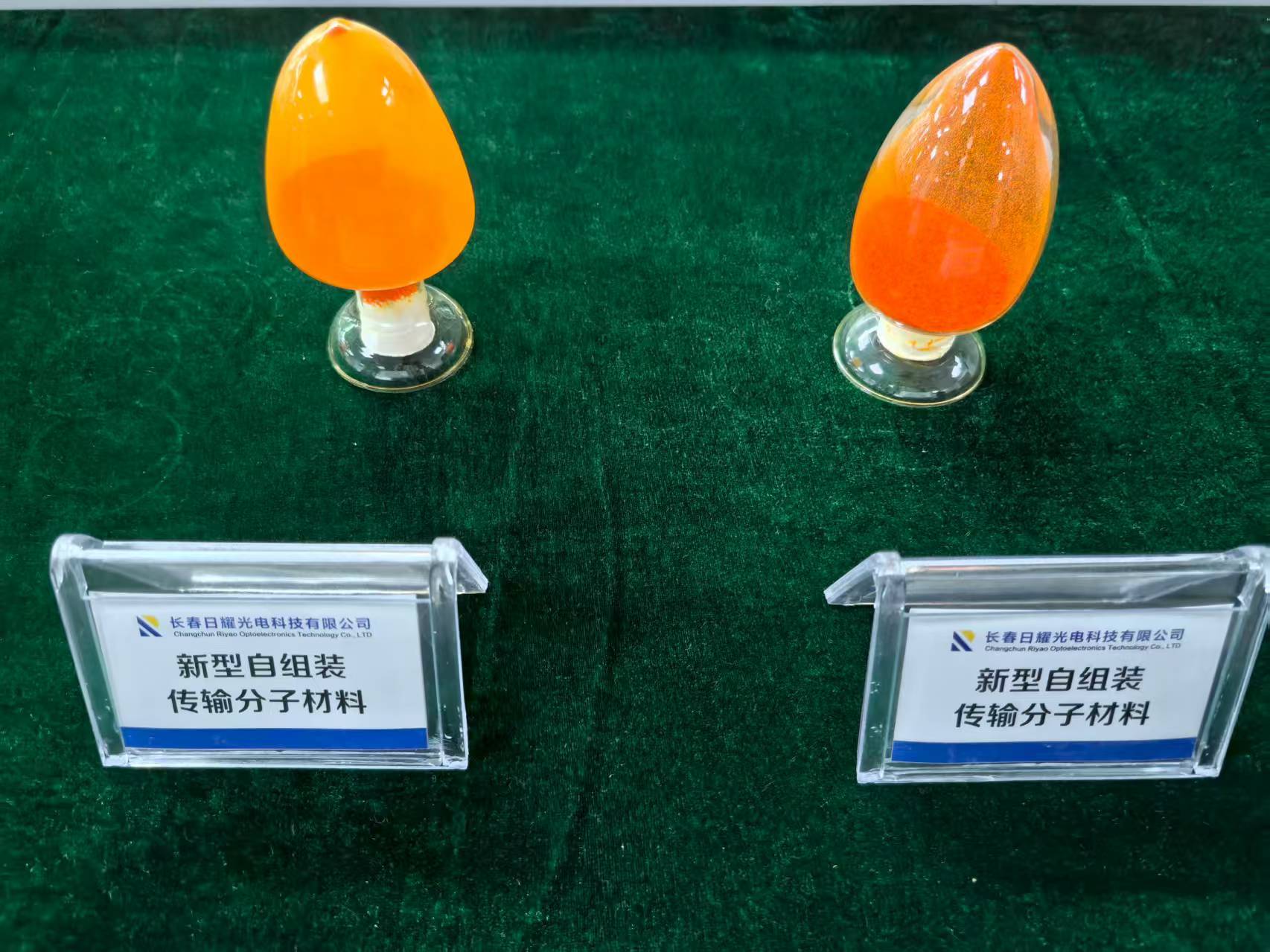
SAM material is the core breakthrough point of Riyao Optoelectronics. This material is mainly used as the hole transport layer of perovskite cells. The novel radical SAM molecule developed by the team introduces functional groups or twisted configurations into the structure through unique molecular design, which significantly improves its dispersibility in solution, and for the first time in the world solves the large-area coating difficulty of SAM thin films.
(Image source / Enterprise)
At present, nickel oxide (NiOx) is commonly used as the hole transport layer in perovskite cell production lines, and then a passivation layer material is added, which leads to complicated procedures and high costs. The SAM material developed by Riyao Optoelectronics can realize a new large-area preparation process without NiOx, optimize the production line structure, reduce the production line investment cost by 20% and the cell manufacturing cost by 10%.
Based on this self-developed SAM material, the efficiency of the perovskite/crystalline silicon tandem cell developed by the company in cooperation with LONGi and certified by NREL reaches 34.2%, ranking among the top three in the world. At present, the core SAM material has carried out cooperation with more than 100 enterprises and scientific research institutions at home and abroad.
In terms of testing equipment, Qin Chuanjiang told Hard Krypton: "It is very difficult to characterize the physical and chemical properties of SAM thin films which are only 2–3 nanometers thick. There is no commercial equipment on the market that can comprehensively evaluate the performance of this layer."
Aiming at this pain point, Riyao Optoelectronics pioneered SAM in-situ characterization technology, and jointly developed integrated testing equipment, which can realize in-situ, high-precision, multi-modal, high-throughput material screening and on-line production line testing. Based on the electrochemical principle, this equipment can effectively characterize the physical and chemical properties of thin films, filling the gap of process monitoring in the production process of perovskite cells. The equipment is currently undergoing commercial iteration.
In terms of cell modules, the team can independently complete the whole process development from materials to modules, and currently can prepare devices with a maximum size of 300×300 mm. In the future, the company's products will mainly target two major directions: vehicle-mounted photovoltaics and aerospace photovoltaics.
The funds from this round of financing will be mainly used to build China's first 100kg annual output pilot line for novel self-assembled hole transport materials, and expand the core R&D team; at the same time, build a test line for large-size perovskite cell modules to secure the two application tracks of vehicle-mounted photovoltaics and aerospace photovoltaics.
The following is an excerpt of the communication between Hard Krypton and the founding team of Riyao Optoelectronics:
Hard Krypton: The biggest bottleneck of perovskite mass production is large-area preparation. Which specific layer does the difficulty of large-area coating lie in? What problem has Riyao Optoelectronics' SAM material solved?
Qin Chuanjiang: Our material is equivalent to the first functional layer at the bottom of the perovskite cell, coated on the conductive substrate. The current mainstream production line process is to first deposit a layer of nickel oxide on ITO conductive glass, then coat the passivation material on the nickel oxide or directly prepare perovskite. Our material is coated directly before the perovskite.
The difficulty of large-area modules is that each layer must be of good enough quality to finally obtain high-efficiency devices. This is also the reason why the efficiency of small-area devices can be very high, but the efficiency of large-area modules cannot yet reach the level of crystalline silicon. Our SAM layer material first solves the quality problem of the hole transport layer itself, and at the same time it will directly affect the film-forming quality of the perovskite layer above. More importantly, it enables the hole transport layer to be prepared without nickel oxide, eliminating one process step.
Hard Krypton: At the current stage, your revenue comes from SAM materials and testing equipment, and you will expand to modules in the future. How did you consider this development pace?
Qin Chuanjiang: Our current positioning is an upstream material and process supplier, and there is no direct competition with downstream OEMs, which makes it easier for us to gain recognition in the industry. Prioritizing the development of materials and testing equipment is essentially to secure a position at the most upstream of perovskite industrialization. At this stage, what we compete for is technology and material performance, not module production capacity.
Of course, we also need to consider the risk that customers will independently develop similar materials in the future, so we will maintain our leading position through continuous technology iteration.
In terms of modules, we are already able to produce them in small batches. As for whether to build a large-scale module production line and when to build it, we will decide according to the development of the market. If the perovskite market grows rapidly and the market space is large enough, we may also build a module production line, which is a long-term strategic option for the company.