OpenAI and Anthropic are vying for the right to define "AI hardware"
It has been 21 months since the release of MCP, and Anthropic has launched its second standard: MHS, the Model Hardware Standard. This marks the first time that Anthropic has expressed its attitude and ideas of integrating AI into hardware through a standard.
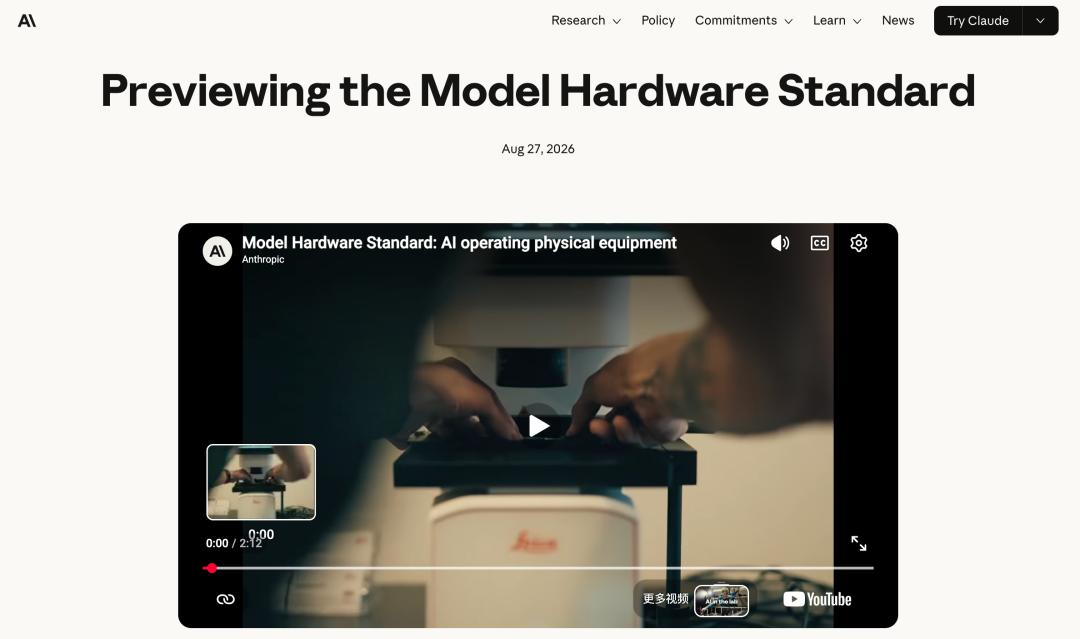
In simple terms, MHS is a set of protocols similar to MCP. The difference is that MCP serves as the interface between models and applications, while MHS connects models and hardware. With MHS, agents can operate multiple laboratory, manufacturing instruments and hardware in parallel. It connects models at the top end and hardware at the bottom end, and any agent framework can access it through the standard protocol, with no restrictions on the models used.
Anthropic has also carefully produced two comparison charts to clearly show the differences before and after access.
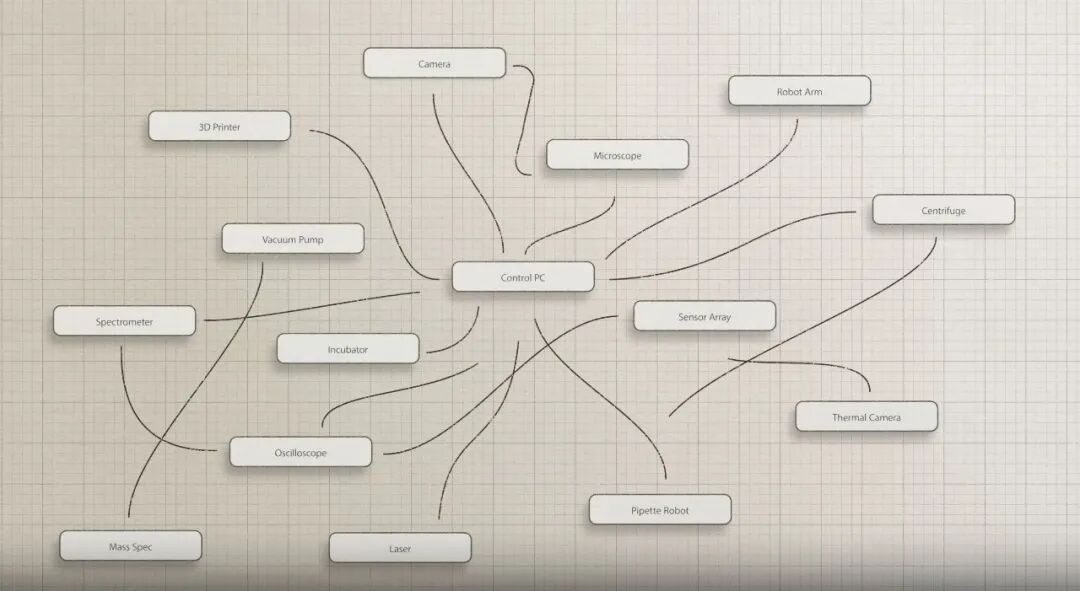
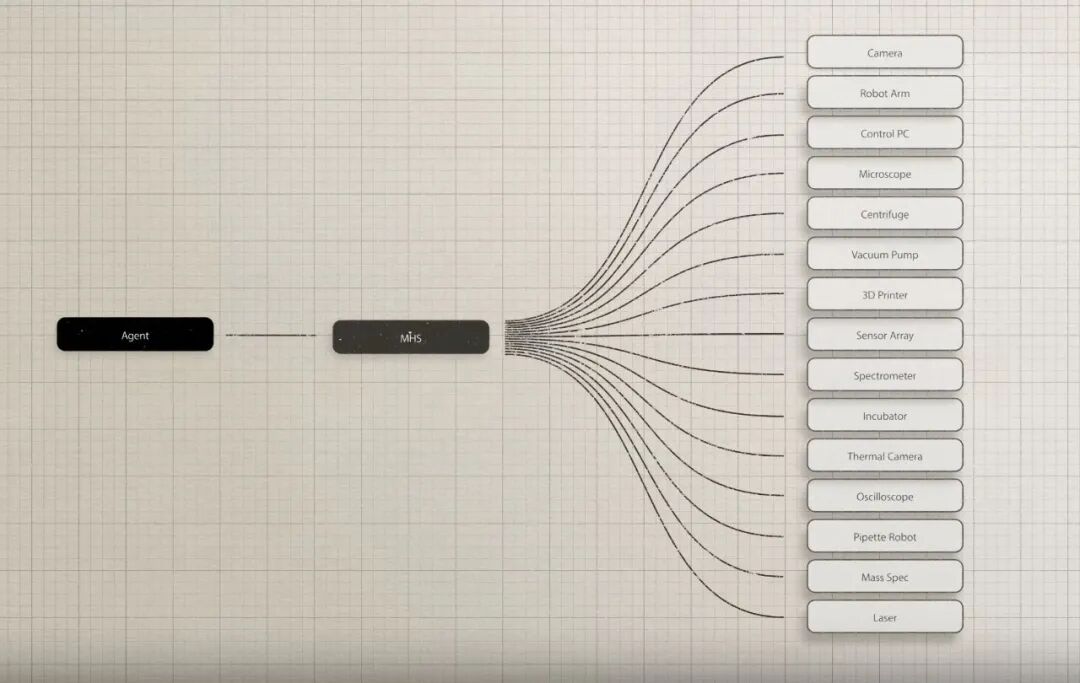
The upper part shows the process before accessing MHS, and the lower part shows the process after accessing MHS | Source: Anthropic official website
The core of MHS is a standardized driver, which is a layer of software that performs conversion between the computer operating system and hardware devices. This driver can use a set of very simple commands, such as "read" to obtain temperature and "write" to set temperature, to make any hardware device understand the needs of agents and configure related programs.
After installing this driver, each device can also actively "introduce itself" in the agent connection network, stating what device it is and what commands it can execute in a unified format. Other devices can find this hardware on the network with one search and directly interact with it, just like how a computer searches for printers on the local area network.
The last time such a standard appeared was in November 2024, when MCP was released and no one paid attention to it at that time. But a year later, everyone can hardly live without it. MCP unified the interface of the AI and software world in one year, and this time Anthropic is targeting the connection standard between models and hardware.
Anthropic can't wait to deploy models on hardware, and neither can the hardware industry.
01 The "software-hardware" adapter for AI
After understanding what MHS is, let's take a look at how MHS solves and unifies the connection problem between models and hardware. Broken down, MHS actually provides three things for each device: a permanent manual, a connection adapter, and self-repair capabilities.
First, let's talk about the manual. The MHS driver contains a set of tags that allow users to directly write the machine operation guide in natural language. This guide can be written by yourself, or you can chat with the agent, let it ask about your hardware configuration, and the AI can generate the manual for you. Based on this information, the driver will automatically generate a reference document that clearly states what this device can measure, what can be adjusted, and what safety measures will be enforced.
When the agent gets this document, it will have all the information needed to operate the device and can operate it correctly. The operation rules that were passed down from senior students to junior students in the past, and the experience of senior engineers, are now all inherited by the agent.
It is not a single adapter, it can support one-to-many, or even many-to-many connections. In addition to the devices that have been accessed during the internal test phase, this interface is also suitable for hardware that is still under development. The MHS driver can help the agent understand a device it has never seen before, and provide machine characteristics that cannot be obtained by reading code alone.
In the past, making multiple devices in a laboratory or factory workshop communicate with each other has always been a troublesome task. Because each device has its own programming interface, there is no standardized method. After the devices are connected, there is no way to make them share data with AI agents, let alone allow agents to operate them safely. Therefore, laboratories or factories need to spend weeks or even months building platforms and integrating hardware, and MHS shortens this process to hours or even minutes.
After the devices are connected and the agent recognizes each device, the last step is control.
MHS provides three mechanisms: MCP, command line interface and code files (API). The three work together to coordinate multiple devices with only one line of code. After the agent gets the control right, it can receive the operation data of each device, conduct supervision and command, for example, sort the operation steps of different instruments, monitor the results, and adjust parameters according to real-time changes. When encountering long-term tasks, or when the operation rhythm is faster than its online inference speed, it can also write the driver commands of multiple devices into code files, let the devices execute them by themselves, and report to the user.
Interestingly, this interface is not static and can only execute fixed operations. After connecting to MHS, the control system of the hardware has self-repair capabilities. The agent can monitor the operation of the hardware, adjust parameters in real time, and in some cases, it can recover from hardware failures without human intervention. Researchers and engineers no longer need to be 24-hour supervisors. After people get off work, not only the programs can continue to run, but also the robotic arms can be controlled to perform operations or adjust parameters such as temperature.
How exactly does AI control these devices?
According to the official description, during the process of testing MHS, we found that the way Claude operates experimental hardware is actually unpredictable. For example, when Claude adjusts the laser, it first observes the result through the camera, evaluates how to adjust the laser beam, and then repeats this process to try to understand the sequence of events. After that, Claude packages the learned information into a code file and writes a deterministic script. When performing repetitive operations later, each step can calibrate the laser without further inference, so that the whole process can run as a single command. However, combined with the situation of the next experiment, the operation sequence will also be adjusted, and the official describes it as thinking "like a scientist".
But this will indeed optimize many experimental links. For example, in the past, the QuEra quantum computer was driven by laser, and the laser frequency needed to be locked at an accuracy of one trillionth. If there was temperature change, vibration, or even someone pushing the door, it would "fail". Therefore, only skilled workers in the laboratory could restore the locked state of the equipment within 5 to 10 minutes. They tried AI automation, but the script written by a team of four people for several months only had a success rate of 58%.
Now through MHS, four Claude agents form a workflow, putting forward hypotheses, modifying scripts, running on real machines, reading logs and making revisions, and can iterate hundreds of rounds in one night. The next morning, the time to restore device lock was reduced from 150 seconds to 6 seconds; in the subsequent 700 blind tests, the success rate reached 695 times, with a 99.3% success rate. Moreover, the parameters adjusted by Claude ran continuously for 19 hours with zero loss of lock, while the parameters manually adjusted by experts lost lock 1.6 times per hour on average. In the end, Claude delivered an ordinary, fully auditable Python script that does not require any continuous AI presence when running in the production environment.
The open ecosystem of MCP has made it the default choice in the agent era. The release of MHS seems to want to replicate the success path of MCP. When the hardware world moves towards MHS, Claude-series models can access these devices the fastest, and the understanding of agent execution will also accumulate faster. After the models are deployed to hardware, each connected hardware device will consume model inference during operation, which will also open up the demand for model consumption.
02 OpenAI and Anthropic, two different paths
The current version of MHS is the internal test form of Anthropic, and developers need to apply to join the internal test list. The official statement is that they are sharing the early version with partners in the fields of science, robotics, electronics and manufacturing, and together build safety assessments and formulate the best way for AI to operate physical devices before the standard is open sourced.
However, looking at Anthropic's attitude towards hardware from the framework of MHS, we can clearly see that Anthropic and OpenAI, the two leading model companies, have two almost opposite paths for hardware.
OpenAI is currently taking a path from easy to difficult: it first builds AI hardware that can be executed directly, with simple interaction and simple functions, and enters the AI hardware direction starting from consumer terminals, so its first hardware is a home smart speaker.
Anthropic is obviously taking the path from difficult to easy. Its first move is to control precision scientific research equipment, allowing AI to control the lasers of quantum computers and the liquid platforms in pharmaceutical factories, which requires the model to have a deeper understanding of the physical world and much higher operation precision. However, this may also be closely related to the fixed and standardized operation procedures of laboratories.
The two companies also have different choices on what the AI in hardware is mainly based on. According to the existing industry leaks, OpenAI puts the model into the hardware, focusing on the end-side model. Anthropic chooses to let agents access the hardware.
In addition, building its own hardware and using its own models, OpenAI's current performance on hardware is somewhat biased towards a closed ecosystem, which is quite like replicating the "Apple" path. From this ecological protocol, we can see that Anthropic's current ecological focus is on the upstream software layer or protocol layer.
However, there have also been rumors in the industry before that Anthropic has begun to explore hardware R&D. A report from CNBC mentioned that it is forming a chip team to design custom chips for its own models, and has poached Caitlin Kalinowski, an executive who has worked in hardware at OpenAI, Meta and Apple successively.
OpenAI's bet on building equipment is on the terminal, hoping to create the next iPhone, and if it wins the bet, it will become the next "Apple". Anthropic's bet on setting standards is on the platform, hoping to transform the connection method between AI and hardware, and better control the existing programmable "hardware" devices.
In April this year, we communicated with Anthropic's staff at an overseas exhibition. At that time, we talked about why Anthropic did not build its own hardware? The other party replied at that time that Anthropic had many items at the same time, and would prioritize the one that was more needed by users.
Looking back now, the release of MHS may be that signal. In Anthropic's internal priority list, the deployment of AI on hardware has been put on the agenda.
03 The window period of AI hardware is shortening
If we say that in 2025, the AI hardware boom was completely ignited by the stimulus of Plaud's shipments exceeding one million units, and products of various forms such as AI pendants, AI rings, AI glasses, and AI toys emerged explosively. In 2026, AI hardware has obviously entered the era of de-foaming, investors are more cautious in making investments, and there are no big hit products in the market anymore.
But in this year of de-foaming, the underlying enthusiasm has not dissipated. Chip manufacturers are solving the end-side computing power problem, mobile phone manufacturers are solving the engineering problem of running models on terminals, and the infrastructure problems of deploying models on hardware are being solved layer by layer.
Now, OpenAI and Anthropic have entered the market one after another, one builds equipment and the other sets standards. When the infrastructure and leading players are all in place, in the next two years, we may welcome a new small upsurge of AI hardware.
We may predict what the next wave of products will look like in advance.
Intelligent capabilities will be enhanced, no longer just simple question-and-answer interaction, large models can be deployed into hardware devices in a better way to play a greater role;
More hardware interconnection: after the protocol is unified, hardware may no longer exist alone, and multiple devices can be interconnected; whether it is the transformed "AI hardware" or new product categories, the interconnection will enhance the gameplay;
The interactive experience will be greatly upgraded: after the intelligence of the model is enhanced on the hardware, the interactive feedback will no longer be limited to a certain form, but will have richer forms of expression.
At the same time, after the last round of AI hardware boom, the new round of AI hardware must be products with aesthetic design for product form and functions, and can bring tangible value to users, so that it is possible to ignite the market again. The days of AI hardware that only relies on stacking materials and hyping concepts may be numbered.
But will we directly enter the "iPhone" era of AI hardware? To some extent, it may be difficult to make such an analogy. The iPhone is also a product that redefines the product form of mobile phones after going through the feature phone era for many years, thus opening the era of mobile Internet. In the current AI hardware field, we can't even confirm what the next-generation "AI phone" will be. The iPhone moment will not appear when the core product form has not yet emerged. But hardware form innovations similar to "mobile phones" may emerge first and become the representative work of this stage.
Not only that, what is more likely to enter next is an era similar to smart homes, where there will be a "smart hub" center that can connect various innovative AI hardware, and can also connect to the AI entrances transformed from traditional hardware through protocol interfaces, then unify the information and data flow of key scenarios, and complete agent hosting around specific scenarios.
Back to MHS, although it is only a standard in internal testing today, there will still be various bugs in its understanding of the physical world. But the trend of models moving towards hardware has changed.
In the past two years, almost all people in the industry who make hardware have been trying their own ways, making various modifications to force the models to run on devices. But from now on, model manufacturers have also begun to prepare for deploying their models on hardware.
But Anthropic's battle for hardware interfaces may be much more difficult than the MCP battle. When the software world accepts a unified interface, all parties are beneficiaries; the hardware world is different. The interface is the entrance, and behind the entrance are devices, models, data and business. No large manufacturer will give it up easily. To become a recognized interface, MHS still needs sufficient strength, technical implementation capabilities and product effects far exceeding its peers.
The battle for standards is often longer than the battle for technology.
This article is from the WeChat official account "GeekPark" (ID: geekpark), written by Xu Shan, authorized for release by 36Kr.