Swiss biotech enterprise Nerai Bioscience develops artificial intelligence-based high-throughput protein engineering technology to produce novel CRISPR gene editing tools | Top 100 Swiss Innovations
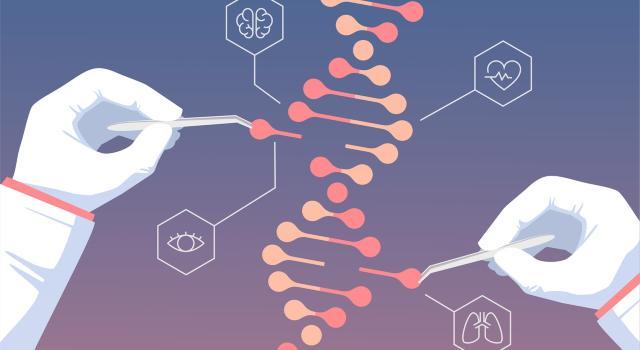
Image source: STARTUP.CH
Swiss biotech firm Nerai Bioscience (hereinafter referred to as Nerai) was founded in 2025. The company is dedicated to developing AI-based high-throughput protein engineering technology. Combining directed evolution, high-throughput screening and artificial intelligence, this technology can enable large-scale development of customized, high-precision and personalized novel CRISPR gene editing tools, access mutation sites that cannot be covered by existing tools, and significantly improve the activity, accuracy and specificity of gene editing tools.
Nerai is a spin-off company of the University of Zurich, co-founded by Vincent Forster, Kim Fabiano Marquart, Lukas Schmidheini and Sasha Melkonyan. Vincent Forster, CEO of the company, holds a doctorate in pharmaceutical sciences from ETH Zurich and was once the co-founder of liver disease biotech firm Versantis. Kim Fabiano Marquart, head of the company's screening platform, holds a doctorate in biology from ETH Zurich and has previously conducted research on CRISPR protein engineering and therapeutic gene editing at the Institute of Pharmacology and Toxicology of the University of Zurich. Lukas Schmidheini, head of the company's engineering platform, holds a doctorate in biology from ETH Zurich. Sasha Melkonyan, head of the company's machine learning team, holds a master's degree in computational biology from ETH Zurich.
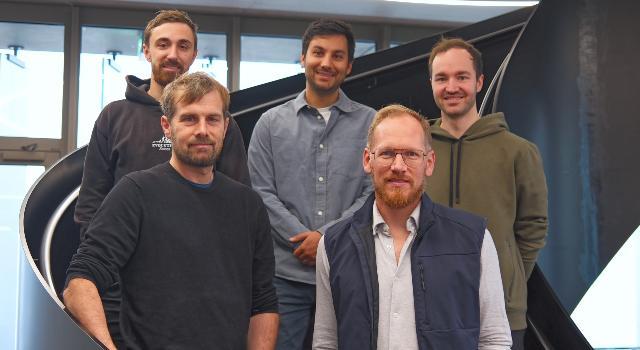
Image source: STARTUP.CH
CRISPR is a repetitive sequence in the prokaryotic genome that can recognize and cleave foreign viral genes invading its own genome through the CRISPR-Cas mechanism. The CRISPR gene editing technology utilizes this mechanism to precisely guide nucleases such as Cas9 to the target DNA sequence with the help of guide RNA (gRNA) to complete the cleavage, so as to realize the knockout, insertion or replacement of target genes, which is mainly applied in fields including gene function research and genetic disease treatment.
Around one in ten people worldwide suffer from genetic diseases, of which more than 90% have no approved therapies yet. Although the pathogenic genes and mutation sites of many rare genetic diseases have been identified, existing CRISPR gene editing tools are restricted by DNA recognition sequences, editing windows and the inherent performance of editing proteins, and most of them can only target specific regions of the genome, which can currently only repair about 20% of pathogenic mutations. Meanwhile, the same rare disease is often caused by a variety of different mutations, and the mutation positions of different patients are also different, so a single CRISPR gene editing tool can hardly cover all patients. The overall group of rare disease patients is relatively small. If new CRISPR gene editing tools are separately developed, screened, optimized and verified for each disease or even each mutation, it will not only lead to a complex R&D process and long cycle, but also incur high clinical development costs, which further restricts the development and commercialization of relevant gene editing tools.
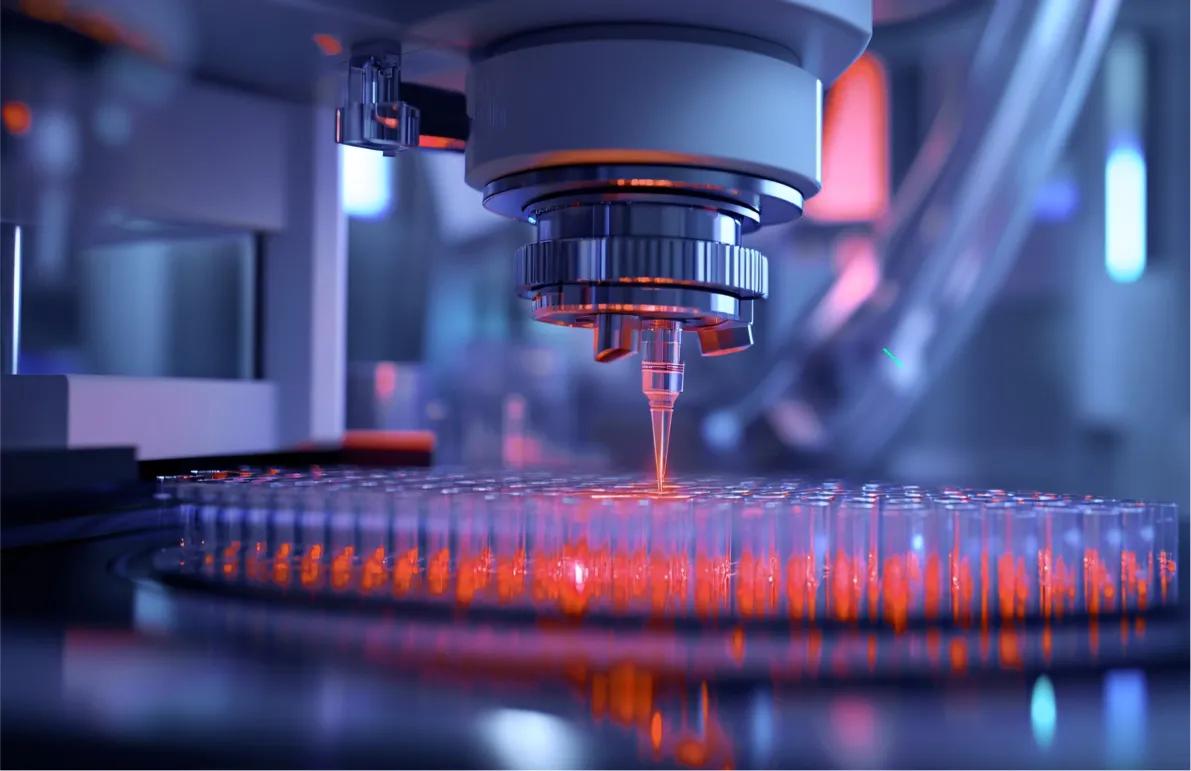
Image source: Nerai Bioscience
Nerai has developed an AI-based high-throughput protein engineering technology that integrates large-scale automated directed evolution, high-throughput cellular function screening and machine learning. It can generate genome editing tools with high specificity, activity and safety on a large scale, create new customized variants targeting specific genome sequences, break through the target restrictions of existing CRISPR tools, and accelerate the development of safe and efficient gene editing tools.
The high-throughput protein engineering technology of Nerai adopts automated directed evolution of proteins, which can carry out 100 sets of parallel evolution experiments on multiple CRISPR enzymes simultaneously, and continuously discover novel enzyme variants with different PAM recognition capabilities and better editing performance. PAM determines the targeting specificity of CRISPR gene editing tools through specific enzyme recognition. Subsequently, Nerai uses high-throughput cell screening technology to conduct large-scale activity assay and genotyping on hundreds of candidate CRISPR gene editing tools obtained through directed evolution, introduces them into human cells, measures their targeted editing activity, accuracy and editing efficiency at thousands of DNA target sites, and selects tools that can act on target mutations more effectively. At the same time, Nerai uses machine learning to analyze high-quality data generated by directed evolution and cell screening, learns the relationship between different protein sequences, DNA target features and actual editing effects, predicts and enhances editing performance, and then applies the results to guide the design of the next round of CRISPR gene editing tools, forming a continuously self-optimizing feedback loop.
Based on this technology, Nerai has currently laid out 8 CRISPR gene editing tool pipelines, focusing on rare inherited liver diseases and inherited ophthalmic diseases, and each pipeline adopts customized PAM-specific Cas9 variants. In the liver field, the company's NB-301 targets type I citrullinemia, NB-20X targets phenylketonuria, and NB-101 targets alpha-1 antitrypsin deficiency, all of which have entered the in vivo lead optimization stage; the remaining pipelines are still in the discovery stage, including NB-401 for homocystinuria, NB-501 for classic type I galactosemia, NB-601 for primary hyperoxaluria, and NB-701 with undisclosed specific indications. In the ophthalmology field, the company has developed NB-e101 for the treatment of autosomal dominant retinitis pigmentosa.
In May 2025, Nerai completed a seed round of financing of 500,000 Swiss francs, with Kickfund as the investor. The funds will be used to advance the preclinical development of its high-throughput protein engineering technology and rare genetic disease treatment pipelines.

Nerai Bioscience is a 2025 TOP100 Swiss Startups honoree. TOP100 Swiss Startups gathers the best "Swiss made" startups and growing technology innovation enterprises, and is the most internationally influential benchmark list in Switzerland's technology innovation sector. Since 2011, the list has selected 100 of the most groundbreaking and market-prospective Swiss innovative enterprises and 25 most unicorn-potential Swiss growing enterprises across the country every year, covering fields including life sciences, engineering machinery, robotics, information and communication, low-carbon technology and food technology. The TOP100 Swiss Startups and its series of brand events are landmark activities of the Swiss innovation ecosystem, representing the highest ground of Swiss innovation and the forefront of international investment and financing.
The 2025 Chinese version of TOP100 Swiss Startups is honorably released by Insight Tech. Insight Tech is the authorized Chinese partner of TOP100 Swiss Startups, responsible for the operation and promotion of TOP100 Swiss Startups in China and assisting the commercial cooperation of list projects with China. Insight Tech is a China-Europe (Switzerland) industrial innovation service provider, dedicated to promoting the localization of Swiss innovation in China and the internationalization of Chinese industries through ecological construction and cross-border empowerment.
To obtain the full list and industry-specific lists of TOP100 Swiss Startups, please visit the official WeChat account or official website of Insight Tech.