AIGC breaks into the feature film set
In the past year, relying on low cost and high production capacity, AI short dramas have rapidly achieved large-scale production. The logic of "expanding market share through volume" has been validated, but the ceiling is also clearly visible: converging themes, mass replication, and the audience's sense of novelty is fading away...
The path is getting narrower and narrower. Apart from the fast, low-cost short-form content, what else can be done? The answer is starting to point to feature-length films.
With iterative technological upgrades, improvements have been made in character consistency and camera control capabilities, enabling AI-generated content to support longer narratives. Works such as Tales of the Weird: Paper Blade Crossing the Wasteland and the "Floating Life Dream" series of Soul Ferry have emerged one after another. According to TopKlout, AI film and television is undergoing a new transformation.
The Feature-Length Film Track: Everyone Lines Up to Start the Race
In the past few months, long-form video platforms and AI tool vendors have begun testing the waters from different directions, and AI feature-length films are moving from concept verification to project verification.
The first to step into this field are long-form video platforms.
iQIYI has taken a relatively clear path: IP + AI feature-length films. Since the beginning of this year, iQIYI has successively promoted AI film projects such as the "Floating Life Dream" series of Soul Ferry. These films have obtained image authorization from the original cast including Yu Yi, Liu Zhiyang and Xiao Yin, and completed character performances by combining real-person dubbing and motion migration.
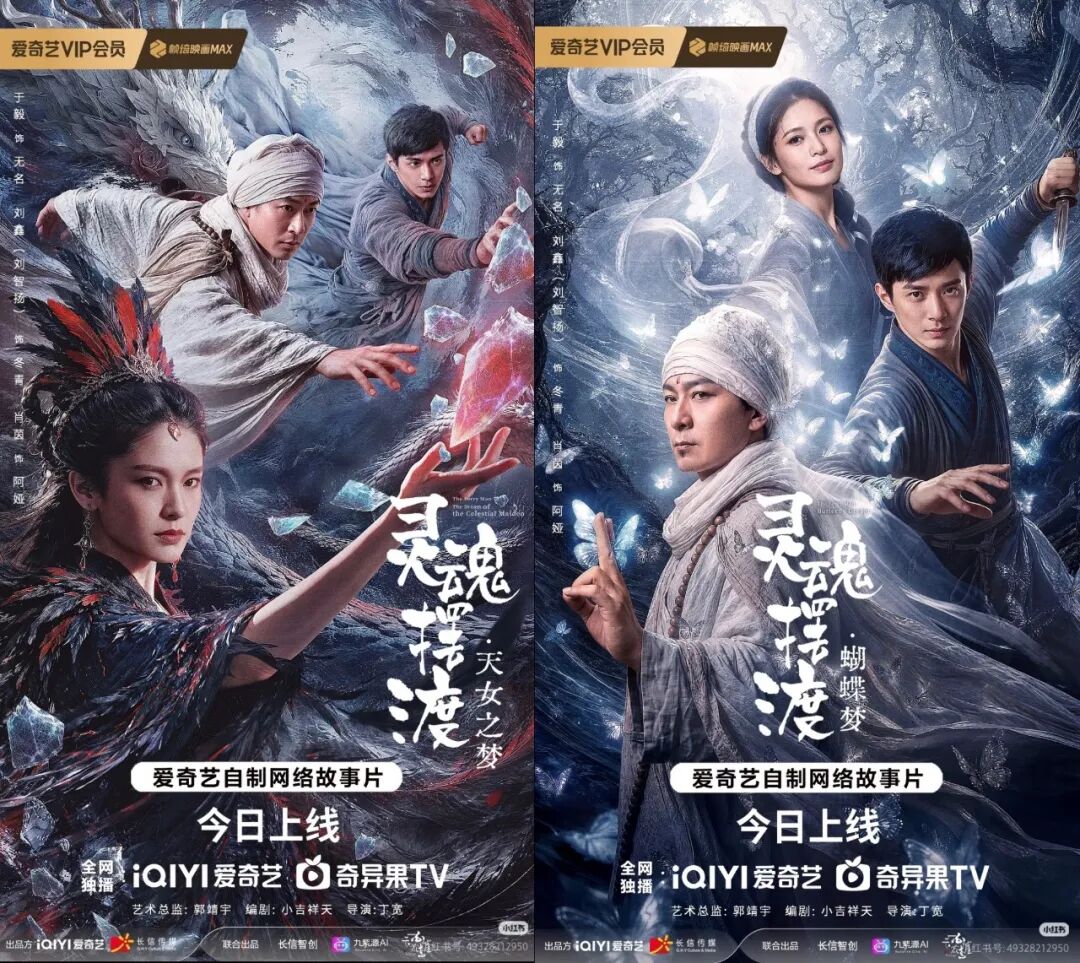
Source: iQIYI
Tencent Video is trying another path: full AI original creation. At present, Tencent Video has launched a sci-fi suspense AI feature film 100 Ways to Kill Him, which is 70 minutes long in total. It topped the suspense channel of Tencent Video on its first day of release, and is also one of the early pure AIGC feature film samples in China.
This is not a simple attempt. In April this year, Tencent announced that it is using the full AI workflow to produce more than a dozen episodes of TV series and a 90-minute film, which are planned to be released to the public in the third quarter of this year.
For long-form video platforms, making AI feature films is not just an attempt at a new production method. They have mature IP reserves, content production experience and distribution channels, and are naturally equipped with the conditions to bring AI content to the market.
Judging from current feedback, the market has given an initial response. The two films of the "Floating Life Dream" series of Soul Ferry have accumulated a box office revenue sharing of more than 3 million yuan three days after their release, and the in-platform popularity has risen rapidly.
Long-form video platforms have verified the market, while tool vendors are moving upstream in the content production chain. Dreamina has chosen feature-length films as its entry point.
On August 26, Dreamina AI launched the "Dreamina Studio" to publicly solicit film and TV series projects, among which film projects are required to be more than 90 minutes long. Selected projects can obtain support in computing power, technology, capital and industry resources, and S-level projects will also get higher computing power and in-depth co-creation from the production and R&D team.
The role of AI tool vendors is no longer just providing models, but they are starting to directly find and incubate feature-length film projects.
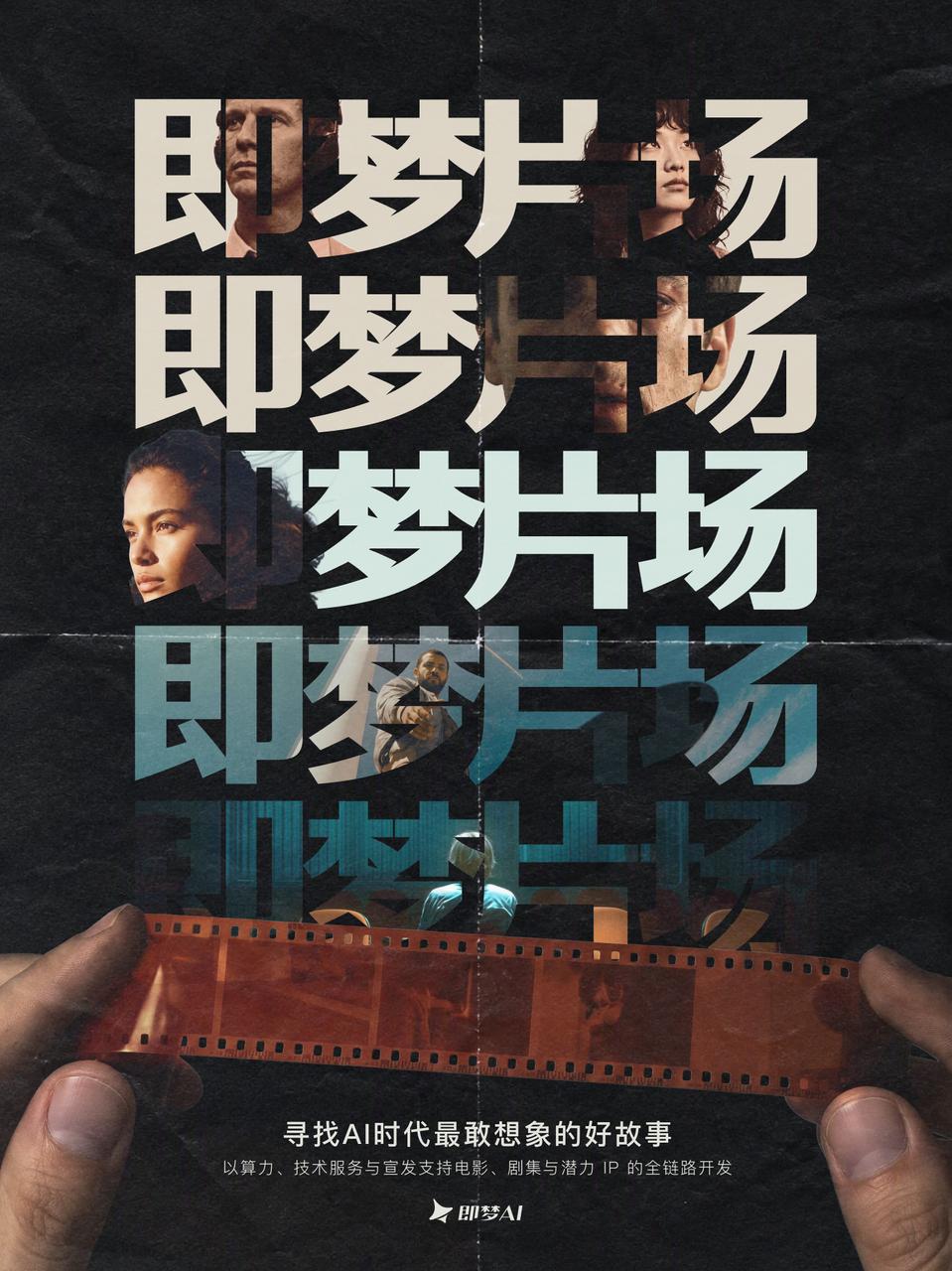
Source: Dreamina AI
With platforms testing the waters and vendors stepping into the field, AI feature films are moving towards a more complete production workflow, which in turn forces changes in the division of labor and collaboration of real-person filming.
The "Film Crew" Disappears? AI Starts to Restructure the Film Set
The changes first take place on the film set.
As tools such as Seedance 2.5, Keling 3.0 and Doujia AI Drama continue to mature, the capabilities of character, scene and camera control have been gradually improved, allowing AI to take over part of the work in film production.
The production team of Tales of the Weird: Paper Blade Crossing the Wasteland has more than 20 people. In addition to traditional positions such as director and screenwriter, the list of main creators at the beginning and end of the film also includes positions such as AI director, AI asset effects artist, AI storyboard artist, AI art director, and AI scene & prop generator.
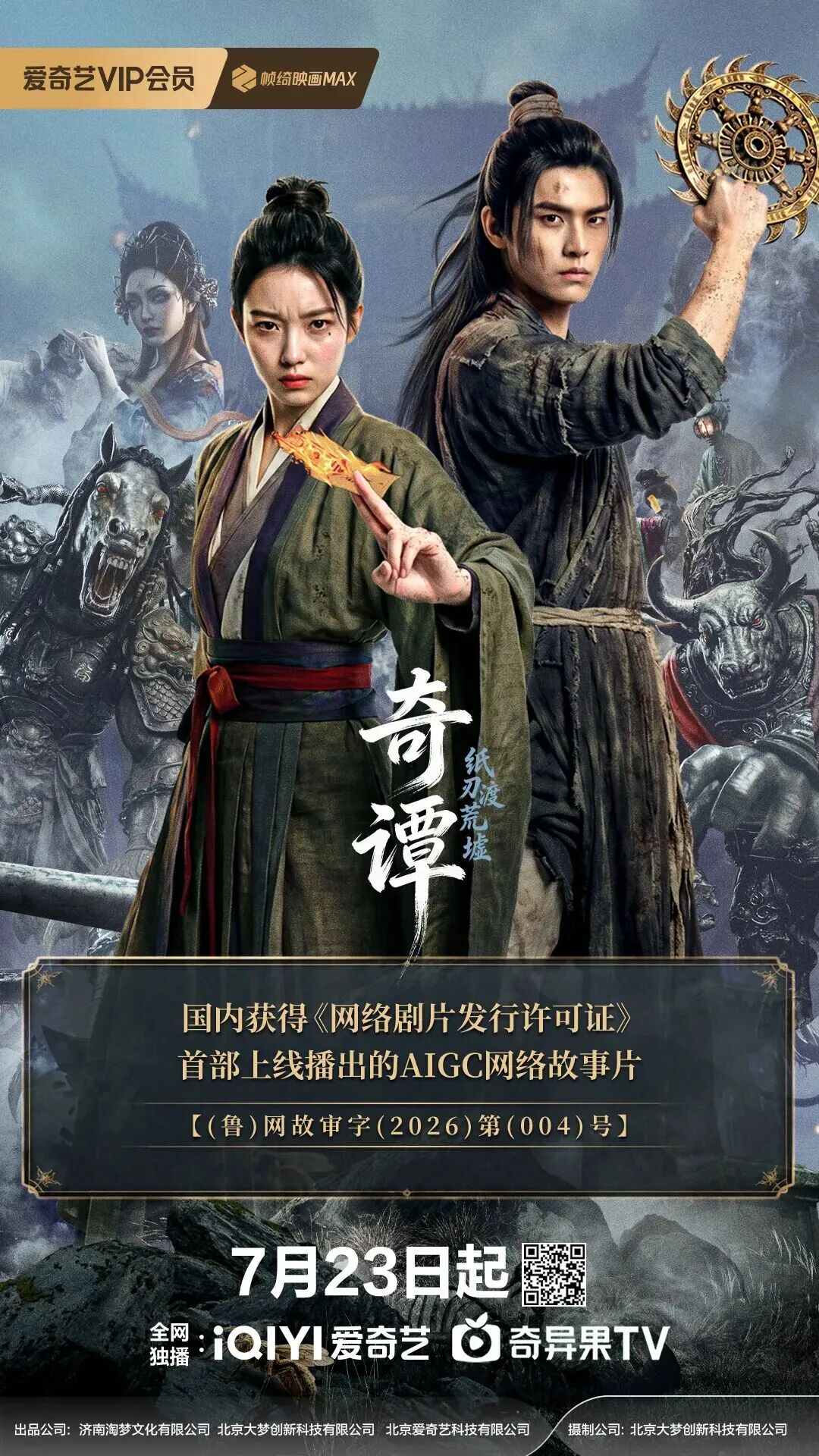
Source: iQIYI
The emergence of new job types has shifted part of the work originally completed by cinematographers, art staff and post-production teams to links such as prompt design, character and scene asset management, and generation result screening.
Similar changes are also taking place in the talent market. According to data from Zhaopin, the recruitment demand for AI editors in June this year surged 179% year on year; positions such as AI video generator and AI director generally offer salaries of more than 10,000 yuan per month.
While positions are changing, the production methods of AI feature films are also diverging. Different teams have chosen completely different paths according to their own resources and goals.
At present, AI feature films have roughly formed two production paths.
The first one is full AI generation.
The biggest change of this type of project is that the links that used to be highly dependent on manpower and on-site shooting are compressed to a small number of core creators, which greatly reduces the cost.
Hot-blooded Dachen Island is a typical case. This 120-minute complete feature film was completed by a 5-person core team, with a production cycle of 48 days and a production cost of less than 500,000 yuan; while the 68-minute Tales of the Weird: Paper Blade Crossing the Wasteland has a production cycle compressed to 45 days, and the cost is only one seventh of that of a real-person online film of the same specification.
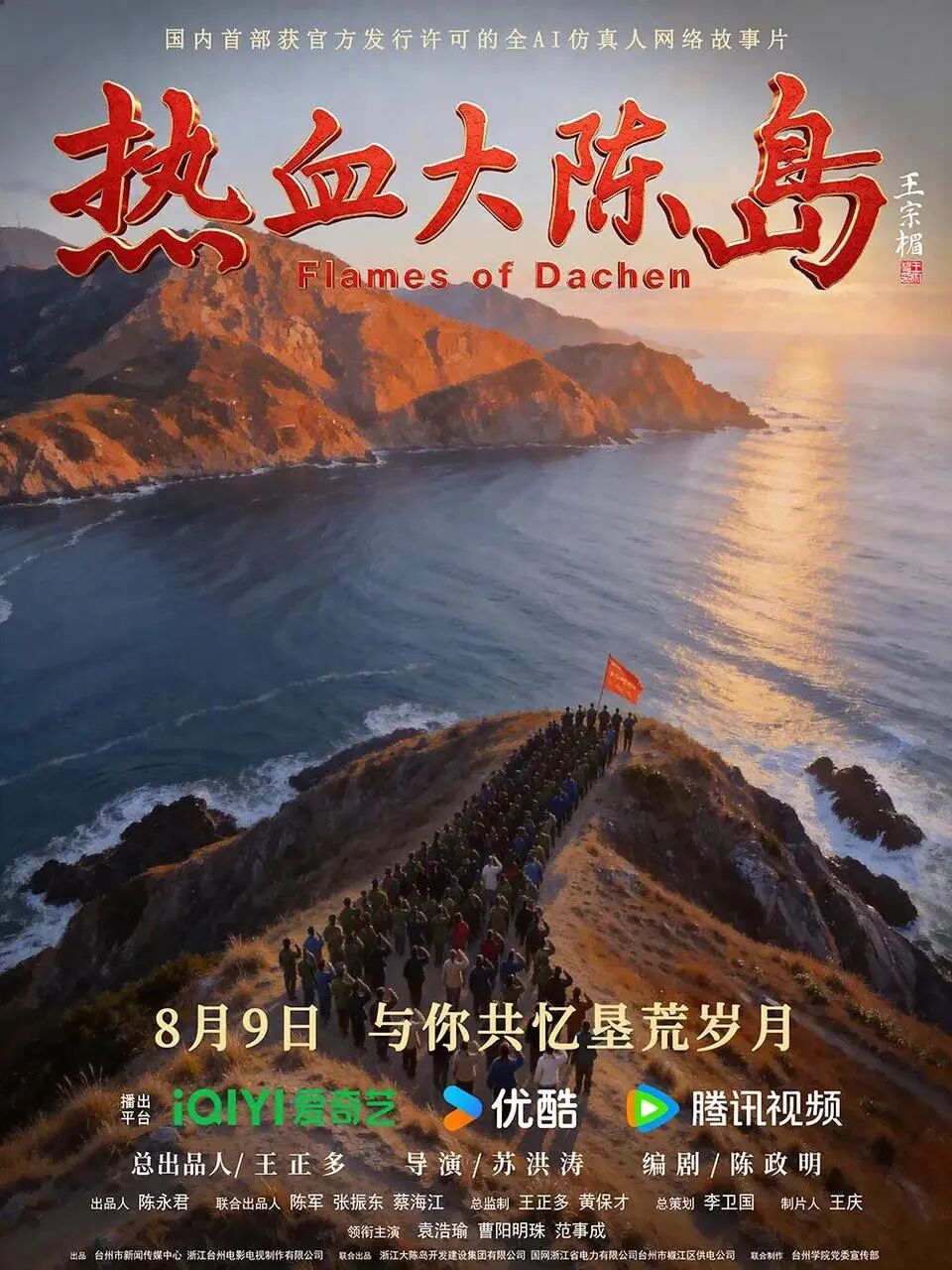
Source: Internet
The second path is AI integrating into the traditional film industry.
This path does not pursue completely replacing real-person shooting, but embeds AI into the existing production workflow. Similar explorations have emerged abroad. According to relevant media reports, SEEN Studio founded by Luc Besson announced that it will use Seedance 2.0 combined with full iPhone on-site shooting to create the first AI animated feature film.
The two paths seem different, but essentially they are doing the same thing: re-deconstructing the film production workflow. When the division of labor is redefined, the form of the film crew will also change accordingly, reorganizing in another way.
How Many More Barriers Do AI Feature Films Need to Cross?
AI has lowered the production threshold of feature films, but there are still several unavoidable thresholds before it can truly become a mature film production method.
The first barrier is copyright.
The copyright issues involved in AI feature films are more complex than those of short content. From what data is used to train the model, to whether the characters, scenes, music and frames in the generated content involve the rights of others, every link may give rise to new copyright issues.
Especially for films that are 90 minutes or even longer, more materials are involved, and the rights chain is also longer.
If the character image in the work is highly similar to a real actor or artist, or the generated frames are obviously related to existing film and television works, who should bear the responsibility? There are still no sufficiently clear industry rules at present.
The second barrier is the "human touch".
At present, AI-generated characters still tend to show a mechanical sense in emotional details, body movements and eye changes. A single shot may look realistic enough, but when put into the complete plot, whether the character has continuous and credible emotional changes is another matter.
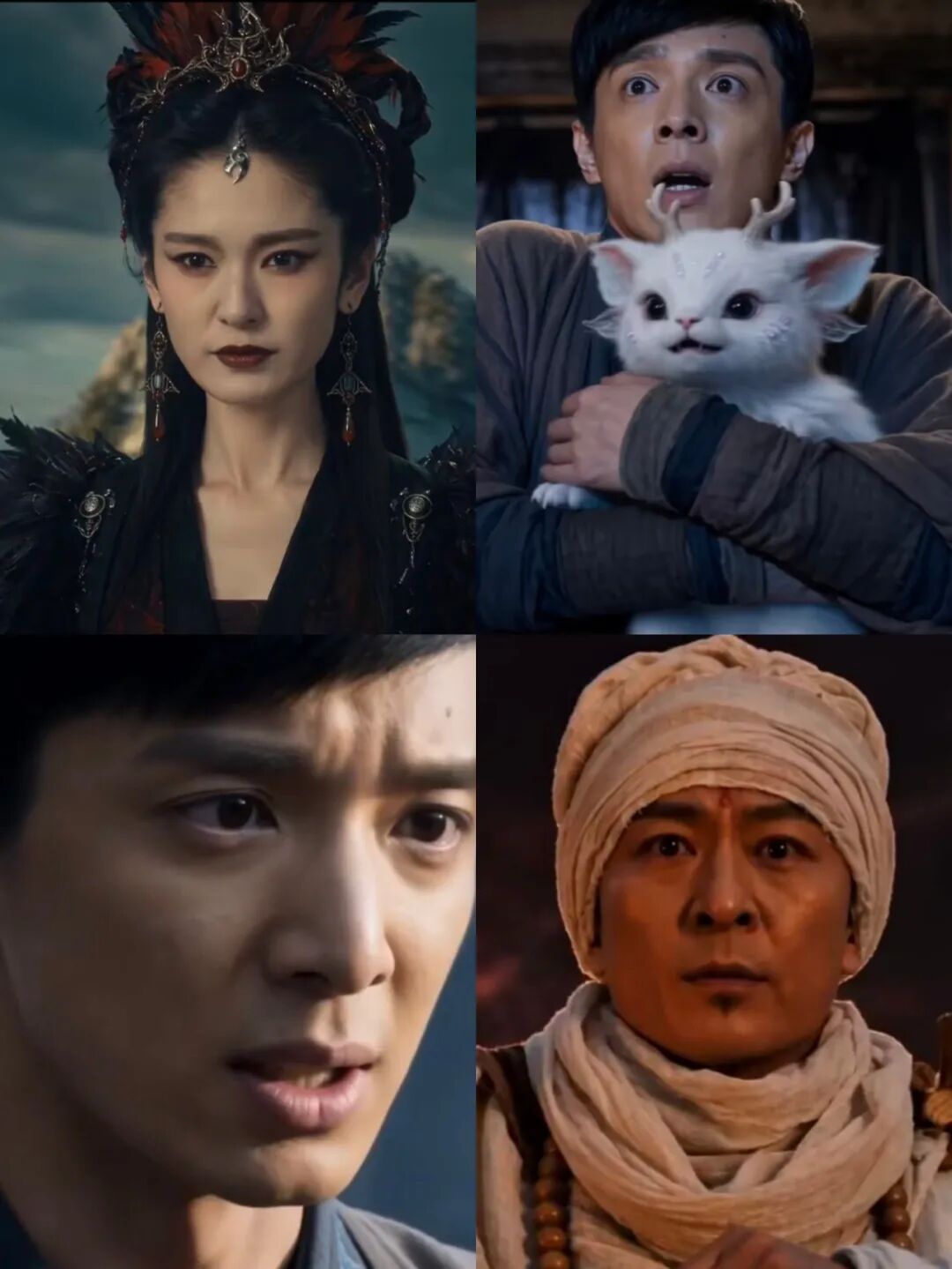
Source: "Floating Life Dream" series of Soul Ferry
Short videos only need a few seconds to capture the audience, while feature films put higher requirements on narrative coherence and emotional appeal. Many audiences report that current AI-generated content is still at the stage of "similar in form but different in spirit", which is difficult to understand the core of the script, grasp the state of mind of the characters, and make the audience have deep empathy.
The third barrier is the commercial closed loop.
Traditional films have formed a relatively mature mechanism for production, promotion, distribution and box office revenue recovery, but AI feature films have not yet found their own position.
Is it more suitable for theaters or online platforms? After the production cost drops, are audiences willing to pay for an AI film? If it enters the theater chain, how to face the problems of screening scheduling, rating and promotion costs?
At present, the commercial value of AI feature films is still in the stage of tentative verification, and a complete profit model has not yet taken shape. Judging from market feedback, the audience's perception of AI film and television still stays at the low-cost mass-produced content, and the willingness to pay and recognition are generally low.
Compliance, texture and commercialization are three barriers in front of us. AI feature films have stepped into the film set, but there is still a long way to go before they can truly become a mature film business.
Conclusion
AI is entering the feature film set, but what is really changed may not be the form of films, but the way films are produced.
From platforms testing the waters to vendors stepping into the field, AI is disassembling and redoing the production workflow that used to be highly dependent on capital, equipment and manpower. The film set is getting smaller, but the boundary of films may become larger.
This article is from the WeChat official account "TopKlout" (ID: TopKlout), author: dawn, published with authorization from 36Kr.