Smartphones are "killing" power banks, yet their prices are still rising surreptitiously.
I recently wanted to buy a power bank, and when I opened the shopping website, I found that what I used to think could be settled for dozens of yuan now costs two to three hundred yuan for even a decent model.
My first reaction was naturally: Why have power banks become so expensive?
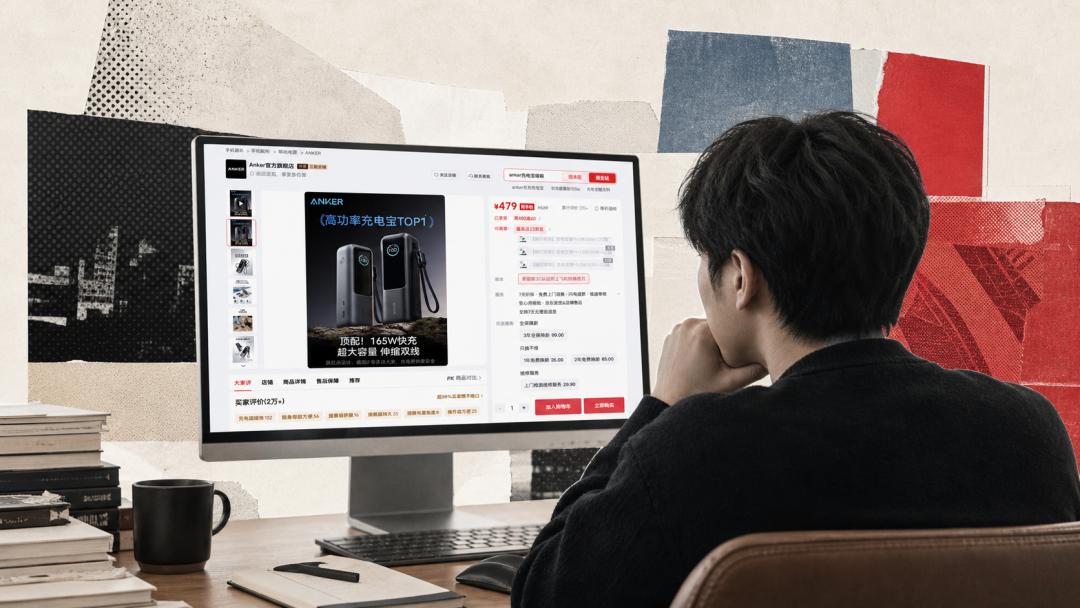
What is even more abnormal is the sales volume. Data shows that in May 2026, the retail volume of the mainstream domestic online mobile power market reached 3.123 million units, down 10.6% year-on-year, marking the fifth consecutive month of decline since 2026; however, the average retail price in the same period rose to 137.1 yuan, up 12% year-on-year.
Sales are getting lower and lower, while prices are getting higher and higher.
New national standard: Safer, but also more costly
In 2025, many leading brands recalled some mobile power products due to cell safety risks, and the State Administration for Market Regulation revoked and suspended the CCC certifications of multiple power bank and cell manufacturers. The Civil Aviation Administration of China subsequently announced that starting from June 28, 2025, power banks without CCC marks, with unclear marks, or belonging to recalled models are strictly prohibited from being carried on domestic flights.
For ordinary people, the change of this regulation is specific and direct — before a business trip, you have to flip the power bank over, look at the small line of text at the bottom under the light, and confirm whether there is 3C certification on it. The old power bank that has been used for several years can only be left at home and gather dust.
What is stopped at the security checkpoint is not just a few problematic power banks, but also the "outstanding debts" of the entire industry accumulated over more than ten years.
How did this debt come about? Rewind the clock more than ten years ago: Mobile power was originally a not-so-cheap digital accessory.
In 2013, LG launched the 5200mAh PMC-510 with an official price of 59,000 won, equivalent to more than 300 yuan; in 2014, Sony CP-V10 focused on its own polymer lithium-ion battery, claiming that it could still retain more than 90% of the available capacity after 1000 charge-discharge cycles, and its price in yuan was close to 200 yuan.
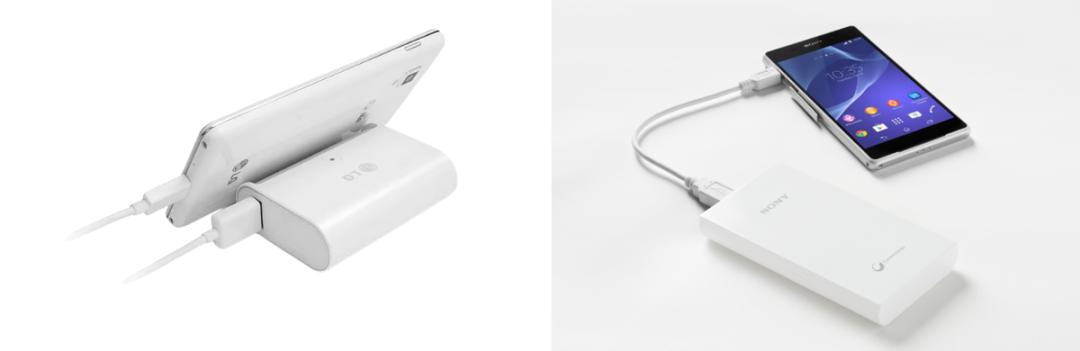
Left | LG PMC-510 Right | Sony CP-V10
Later, China's supply chain matured. Large-scale production and online sales gradually pushed down the prices — Xiaomi sold its 10400mAh mobile power for 69 yuan, and clearly stated that it used LG and Samsung cells. This is real industrial progress: consumers no longer have to pay excessive premiums for an ordinary backup battery.
However, after product homogenization, the direction of competition changed quietly: it slipped from "efficiency improvement" to "cost compression". What was compressed was no other than the invisible links such as cells, protection circuits and quality inspection — every penny saved came at the cost of safety.
Behind this is a more hidden vicious cycle. When low price becomes the only selling point, some manufacturers will always cut costs on cells, protection circuits and quality inspection; the saved money turns into price advantage, squeezing more expensive competitors off the shelves. The lower the price, the more consumers believe that "power banks are supposed to be things that cost dozens of yuan", and those who are willing to pay more for quality even seem to be paying an unnecessary "stupidity tax".
Once the price anchor is fixed, manufacturers that make products with quality are caught in a pincer attack: if they follow the price cut, they have to reduce quality; if they keep the quality, they have to accept poor sales.
Bad money drives out good money, and this scene is staged round after round in the invisible supply chain.
This cycle was not a secret as early as 2014 — in the industry survey of that year, "falsified capacity", "recycled cells" and "low-cost cells" had already appeared in large numbers.
Debts will have to be paid sooner or later.
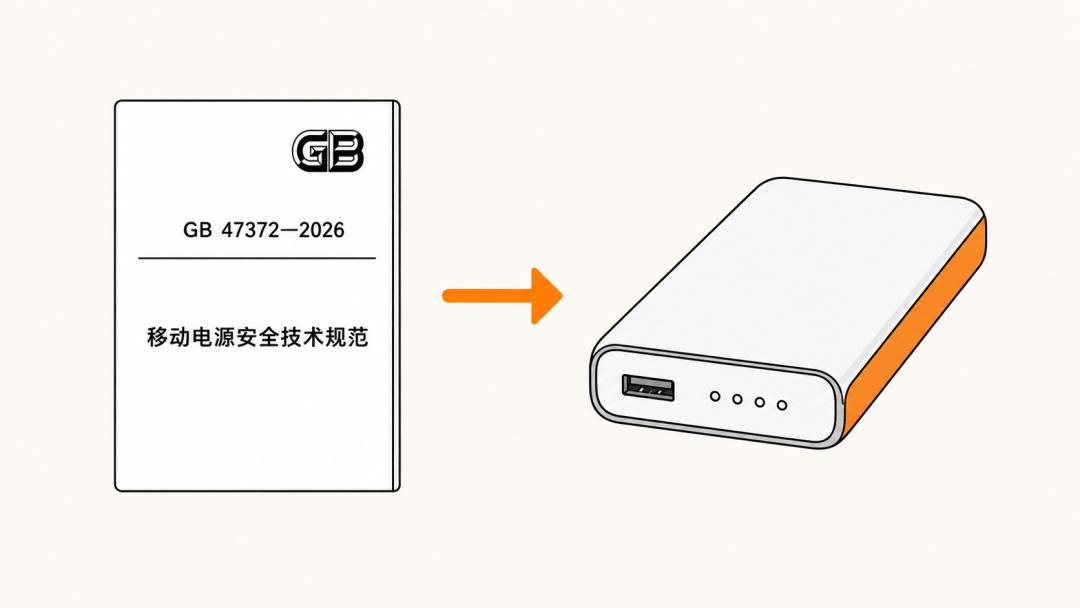
On March 31, 2026, GB 47372—2026 "Safety Technical Specification for Mobile Power Supplies" was officially released, and will be mandatorily implemented on April 1, 2027. The 3C certification makes up for the threshold of "whether there is a certificate", while the new national standard makes up for the "safety foundation behind the certificate". Although it is still the certification transition period, the market has to prepare for the new standard.
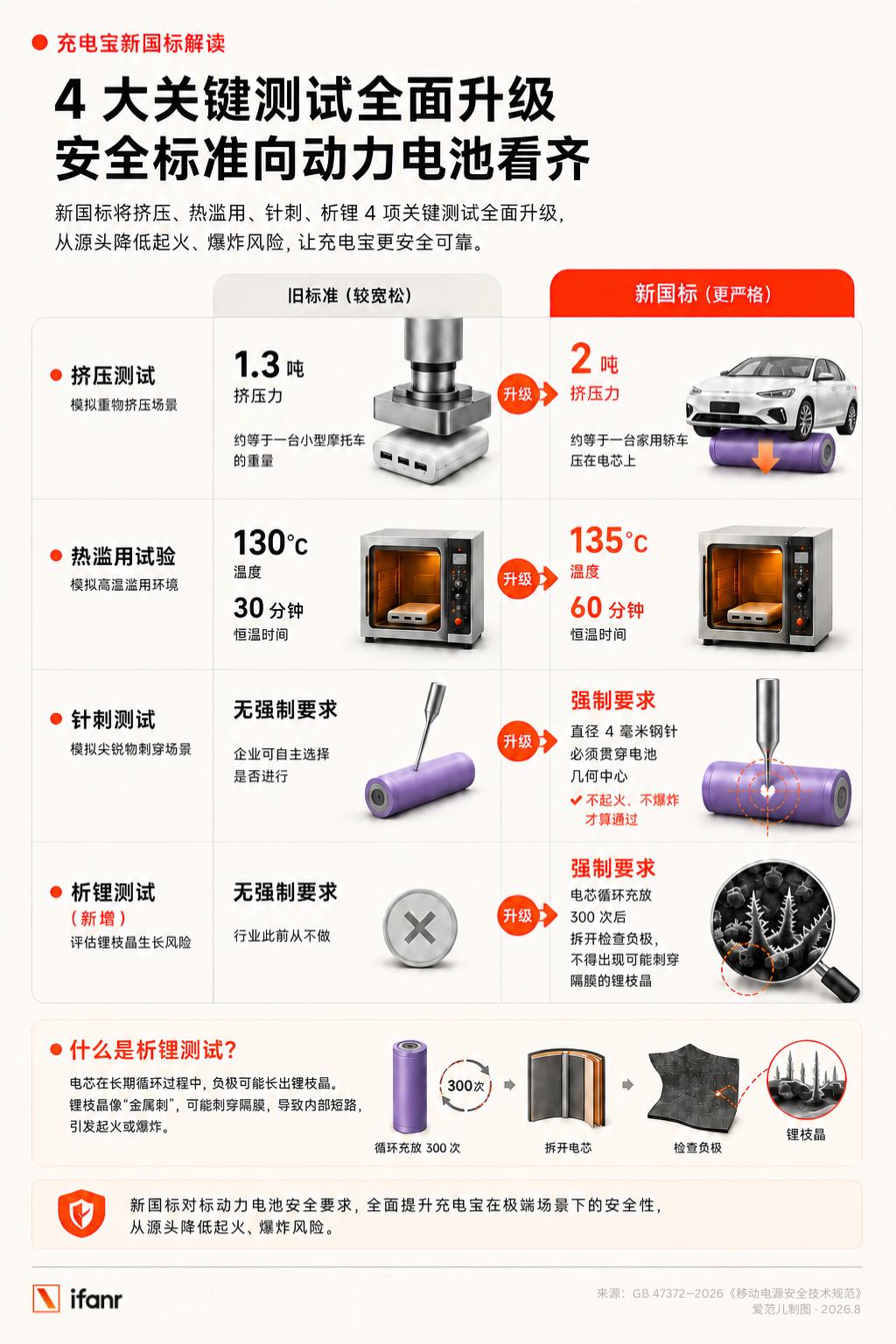
It puts forward more detailed requirements for a power bank than before, making it harder to cut corners. Under the old standard, the inspection of power banks was more like a formality: the extrusion test used a pressure of 1.3 tons, the thermal abuse test was carried out in a 130°C box for 30 minutes, and there were even no mandatory requirements for nail penetration and lithium precipitation — whether a product can be launched on the market largely depends on whether the enterprise itself conducts the test.
The new national standard completely overturns all these rules. The extrusion pressure is increased to 2 tons, which is roughly equivalent to a family car pressing on the cell; the temperature of the hot box is raised to 135°C, and the cell needs to be baked at constant temperature for 60 minutes; a steel needle with a diameter of 4mm must penetrate the geometric center of the battery, and it can only pass the test without fire or explosion; the newly added lithium precipitation test requires the cell to be cycled for 300 times before being disassembled for inspection, to check whether there are lithium dendrites on the negative electrode that may pierce the diaphragm — this is the test standard for power batteries, which was never implemented in the power bank industry before.
There are also more new rules. Power banks are required to be printed with "recommended safe service life", and the battery code must be able to trace back to the manufacturer and production date. In other words, power banks have a shelf life and birth certificate for the first time.
These changes are reflected in the account books, that every line of cost is rising: cells need to be manufactured according to higher standards, the shell needs to be replaced with V-0 grade flame retardant material, the protection circuit and intelligent management chip need to be upgraded, and each model needs to go through the certification process again, with the testing fee starting from tens of thousands of yuan.
Although we have not found public cost information, many manufacturers have stated that "the cost has increased a little compared with the past".
Safety costs are being re-included in the commodity prices.
For small factories that only rely on public version solutions and reduce prices by cutting inspection links, the new national standard means a higher entry threshold.
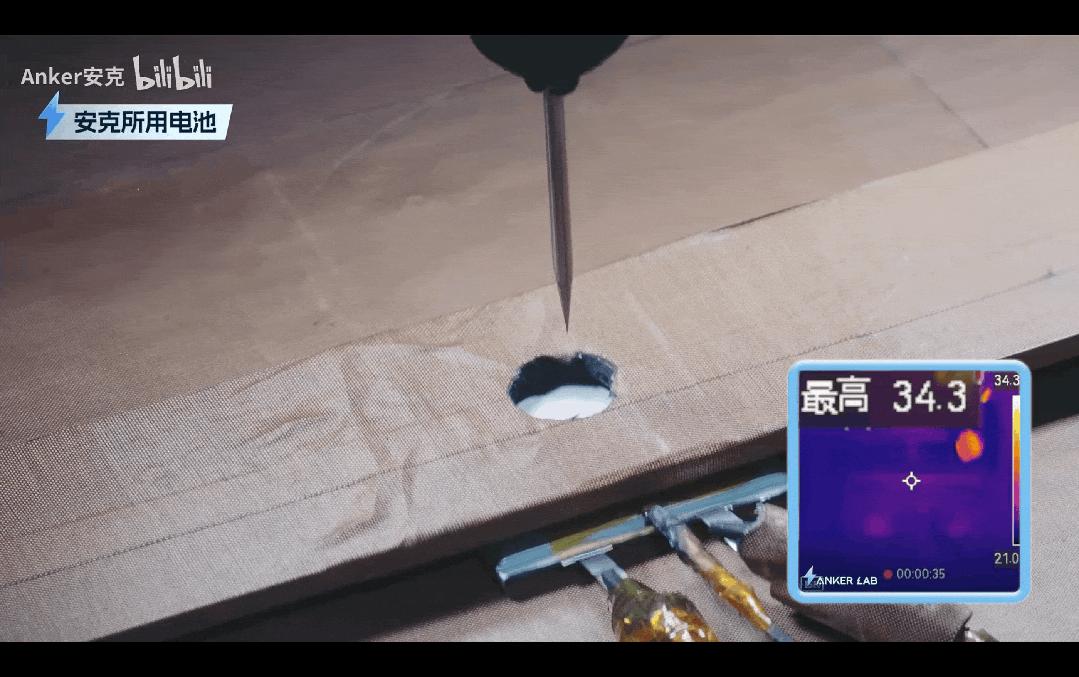
Image | Anker
When cutting safety costs is no longer legal, the price war has a clear end point. The competition is no longer about who dares to cut costs, but who can build solid safety performance. The industry is returning to rationality.
Therefore, this round of price hikes is not so much manufacturers "harvesting consumers" as making up for the omitted costs in the past. For ordinary consumers, this may even be a good thing: the extra money you pay buys safety certification and traceability, rather than the falsified capacity that was common ten years ago.
But after all, someone has to pay this bill, and this time it falls on everyone who goes out with a power bank.
Price increase is only one side of the coin. The other side is more thought-provoking: the basic market that power banks rely on for survival is being gradually taken away by the object they have served for more than ten years — the mobile phone itself.
Silicon-carbon anode materials continue to increase the battery capacity, and Honor WIN RT has already put a 10000mAh battery into the mobile phone.
This is not an isolated case. In 2024, there were 32 new models with a battery capacity of more than 6000mAh; by May 2025, the sales proportion of mobile phones with a capacity of more than 6000mAh in the Chinese market has risen from 9% a year ago to 35%. If we look at the more extreme 8000mAh gear, there were only about 3 models from mainstream brands in the first eight months of 2025, and the number has increased to at least 5 in the same period in 2026. The capacity that used to belong to a few "endurance monsters" is now entering ordinary consumer mobile phones.
For the vast majority of users, a battery capacity of more than 6000mAh can basically last for more than one day, and the daily presence of power banks is diluted by these high-capacity mobile phone batteries little by little.
Chip manufacturing process is also making progress. The first batch of mobile phone chips with 2nm process have been launched, with greatly improved energy efficiency; coupled with continuous optimization of system scheduling, screen, temperature control and background management, as well as fast charging that reduces the temporary power replenishment time to less than half an hour.
Combined software and hardware, mobile phones' dependence on external power supply is visibly weakening.
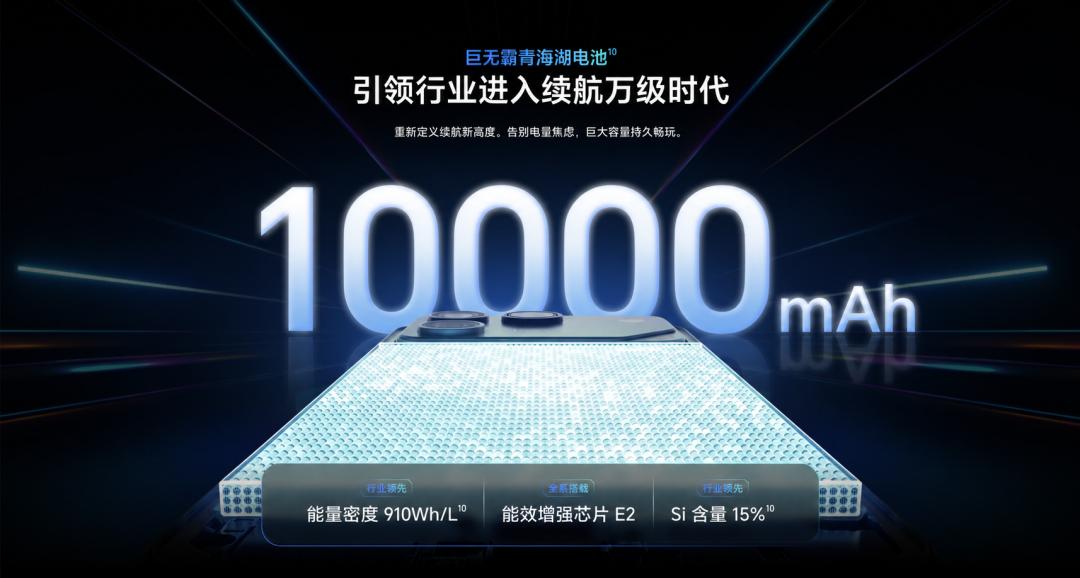
Image | Honor
Although this does not constitute the direct cause of this round of price hikes, it quietly changes the demand — the most common, undifferentiated demand of "giving the mobile phone a little extra power" is decreasing.
Demand is shrinking, sales are declining, but the remaining consumers are becoming more picky. This also explains why power banks are getting more expensive when sales are falling.
People who are still willing to buy power banks today often have more clear purposes than in the past: some people need to power their mobile phones, tablets and laptops at the same time during long-distance business trips, some people need higher power for outdoor shooting, mobile office or gaming.
For them, power banks are no longer just "charging the mobile phone once more", but mean higher power, more protocols, multi-device output, built-in cables, magnetic attraction and status display — these functions themselves will push up the average market price.
It is not that the same power bank has become more expensive, but that more expensive power banks are selling better, pushing the market to more segmented categories and higher-end structures.
The analysis of the May 2026 market by Luo Tu Technology also confirms this point: products with bidirectional fast charging, built-in cables, large capacity and multi-device power replenishment are becoming popular, which has become an important support for the rise of average price.

Image | Anker
Therefore, this round of price hikes is half due to cost, half due to product structure upgrade.
The improvement of mobile phone battery life reduces the necessity of basic power banks; the new national standard raises the minimum cost of manufacturing a qualified power bank. The low-cost basic models caught in the middle not only do not have enough profit to absorb the new costs, but also find it difficult to persuade consumers to continue to pay with their functions — the largest and most lively mid-to-low end market in the past is being squeezed from both ends.
This is more like a return: power banks were originally emergency tools for business trips and outdoor activities. Later, with the popularization of smartphones and the drop in prices, they became mass accessories that everyone owns. Now, they are just returning to their original position, serving people who really need them.
It survives in another form: more expensive, more sophisticated, and safer.
The traditional power bank that exists as a "mobile phone accessory" — an external battery with only general interfaces, mainly serving mobile phones — its classic form is entering a countdown to extinction.
Yang Meng, CEO of Anker, made a very direct judgment: in the long run, the power bank category will eventually disappear. He also admitted that it has not reached the point of extinction yet — but the judgment of the general trend is clear, it is only a matter of time.
What supports this judgment is the current reality: more and more smart devices are bypassing the "intermediary" of power banks.
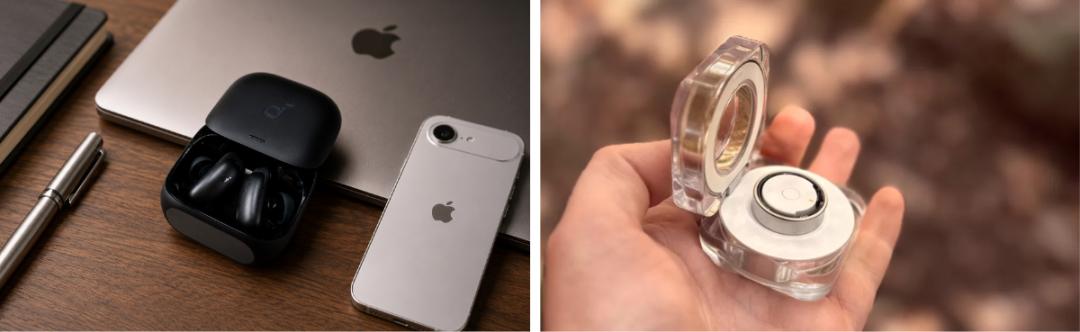
Left | Soundcore Liberty 5 Pro Right | Samsung Galaxy Ring
It is easy to understand. For one thing, these devices are often worn on the body — a pair of AI glasses, a smart voice recorder, their charging interval is calculated in days or even weeks, most of the time there is no need for an external power supply; for another, they cannot be charged during use — when you wear glasses to have a meeting or record materials, it is impossible to take them off for 15 minutes of charging and then wear them back. You can only wait for them to run out of power, put them back into the charging case, and they will be fully charged automatically when you take them out next time. The charging function is integrated into their own bases and charging cases, and has nothing to do with power banks.
Furthermore, as various smart hardware occupy people's field of vision — information is displayed on glasses, operations are completed on watches — the power consumption of mobile phones themselves is also decreasing.