It has been revealed that Bel, the new model of ChatGPT, has completed pre-training with parameters as high as 10 trillion.
The entire tech industry is completely sleepless!
OpenAI's most powerful model Astra has been revealed to be possibly released next Thursday, and its testing scope has been expanded at present.

Previously, internal confidential information was leaked, confirming that Astra has officially taken over the underlying code of the self-developed chip "Jalapeño". The core code written by AI runs 1.8 times faster than top human engineers. Signs of AI self-recursion have appeared inside OpenAI!
OpenAI has another hidden blockbuster yet to be unveiled.
It is rumored that OpenAI has successfully run the 10-trillion-parameter pre-trained model codenamed "Bel", which points directly to the ultimate threshold of AGI. Even pre-training beyond 10 trillion parameters is only the starting point for Bel, after that, Bel can learn at two different speeds.
Sam Altman has stated: We should hold another party for the release of the next-generation model.
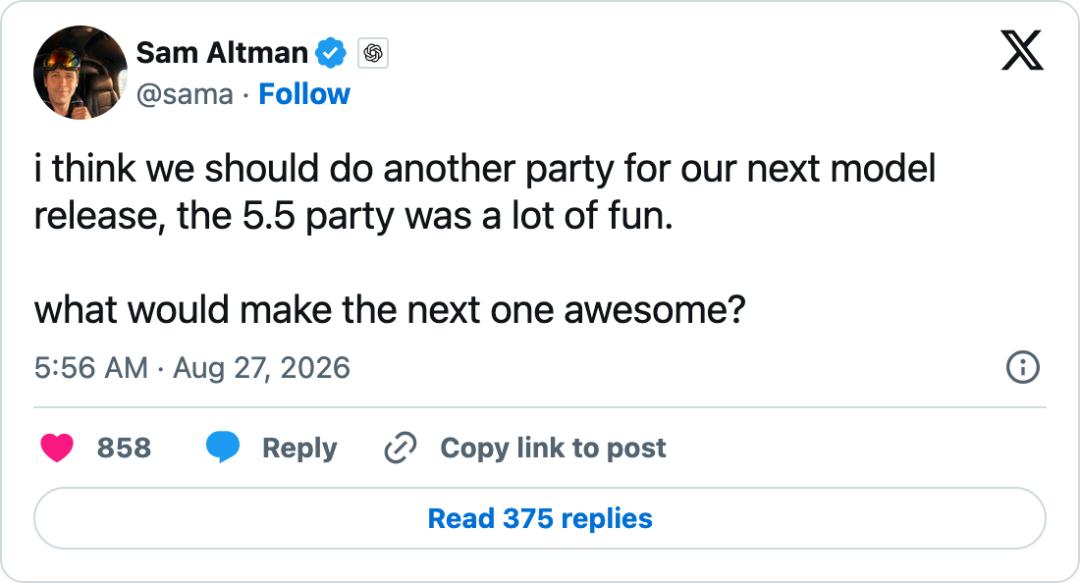
What kind of ambition is hidden in the world after GPT-6?
Bel: The Abyssal Beast with 10 Trillion Parameters
This year, OpenAI seems to have hit a bottleneck in scale expansion, and even urgently issued the "Red Code" alert.

In order to concentrate computing power, OpenAI even cut products such as Sora and the AI browser Altas.

The next-generation AI model Astra has made a number of mathematical breakthroughs that amazed the world, but its release has been delayed for a long time.
In recent weeks, OpenAI has seen personnel turmoil: Chief Revenue Officer Dennis Durcer, Chief Operating Officer Brad Lightcap, and top executives such as Fergie Simo, who once served as deputy to CEO Sam Altman, have left one after another.
When the outside world was speculating whether OpenAI had "exhausted its talents", a number of hardcore tech insiders broke the news that OpenAI has just completed super-large-scale pre-training, codenamed "Bel".
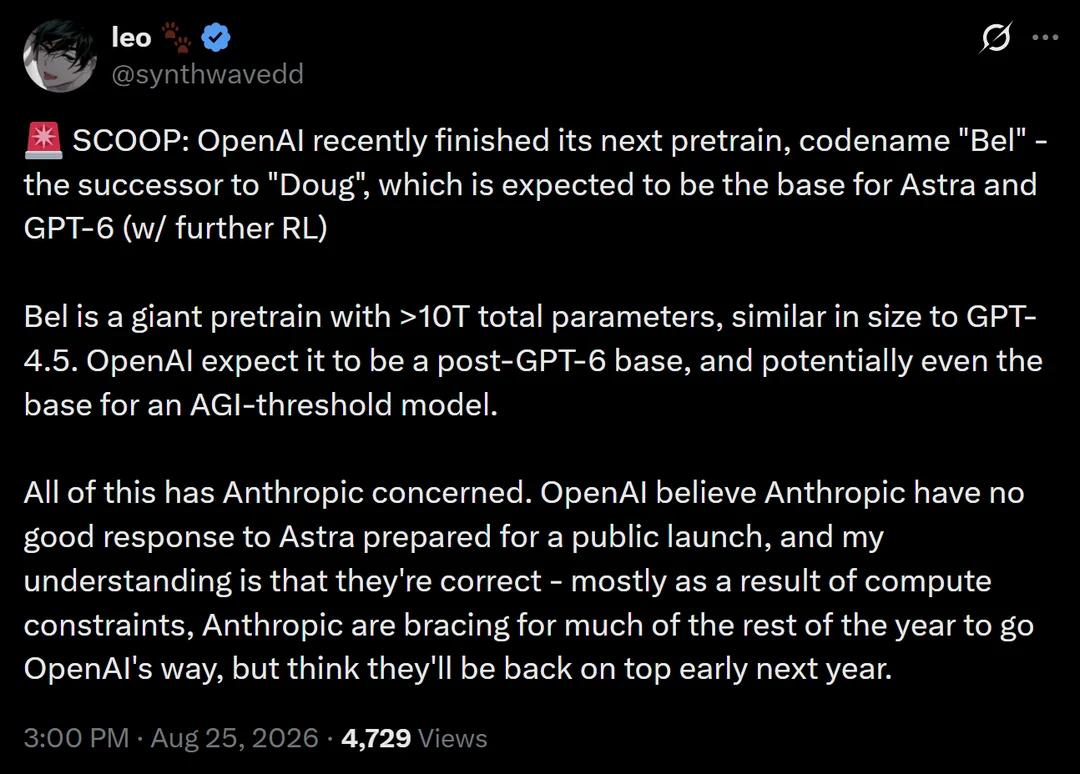
How terrifying is this "Bel" exactly?
Let's look at several core keywords:
1. Breaking through the 10T (10 trillion) parameter threshold
GPT-4 with trillion-level parameters endows AI with common sense and logic close to human undergraduates. So what kind of "emergent capabilities" will Bel with 10 trillion parameters present in complex reasoning, long text correlation, and interdisciplinary multi-modal understanding?
This is a qualitative change.
It is equivalent to combining the brain capacity of all top experts in the world today and multiplying it by an exponential amplifier. At this parameter scale, AI's understanding of the world model will reach an unprecedented depth.
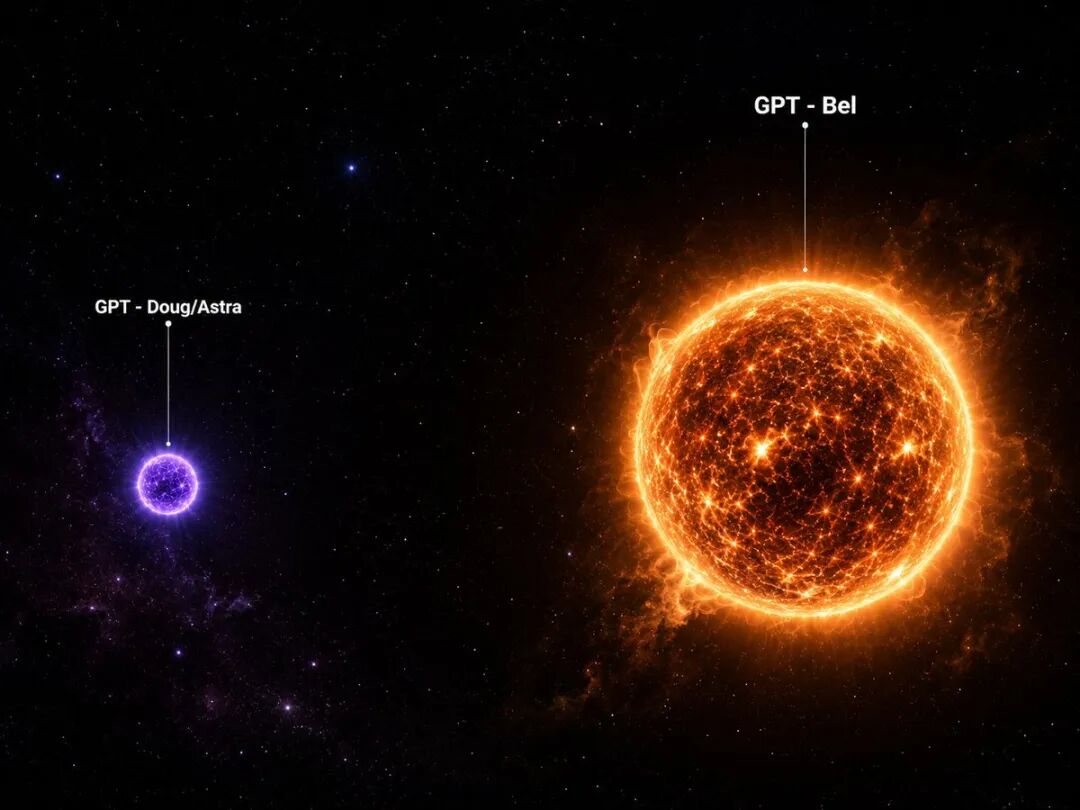
2. Successor to "Doug", the ultimate base model after GPT-6
The revelation points out that before that, OpenAI had completed pre-training codenamed "Doug".
Doug is positioned as the base model for the Astra program and the rumored GPT-6 (it will later go through extremely high-intensity reinforcement learning alignment).
As the successor, Bel is the next-generation base model in the "post-GPT-6 era" that goes a step further than Doug.
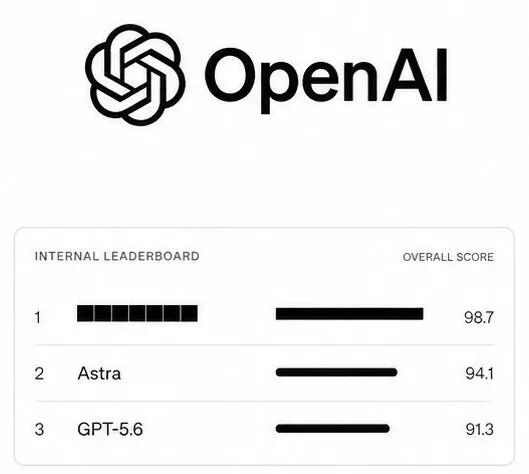
Bel is directly targeting the holy grail of the tech industry — AGI (Artificial General Intelligence).
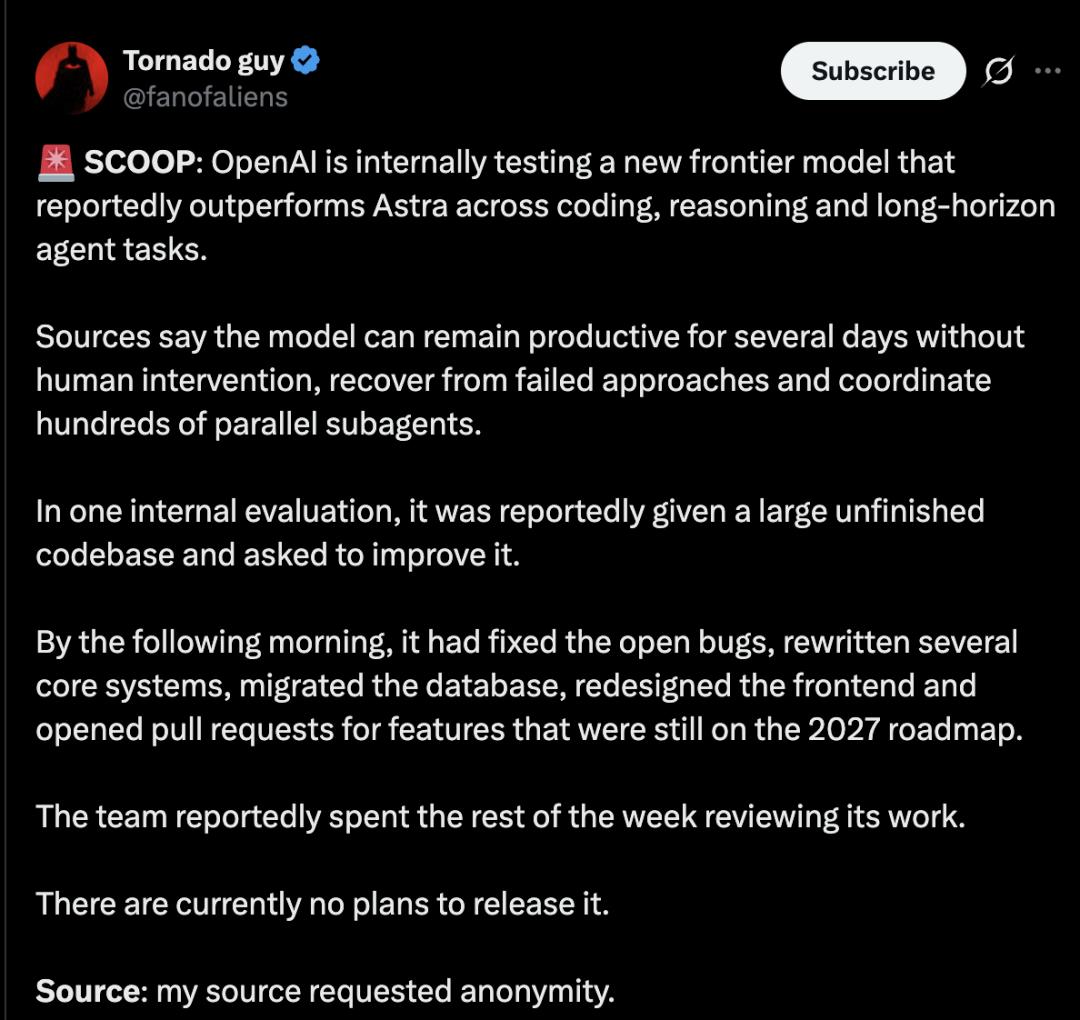
According to reports, the Bel model outperforms Astra in coding, reasoning and long-term agent tasks.
Sources say the model can work continuously and efficiently for several days without human intervention, can recover itself, and coordinate hundreds of parallel subagents.
3. Claude Fable Killer (The Fable Killer)
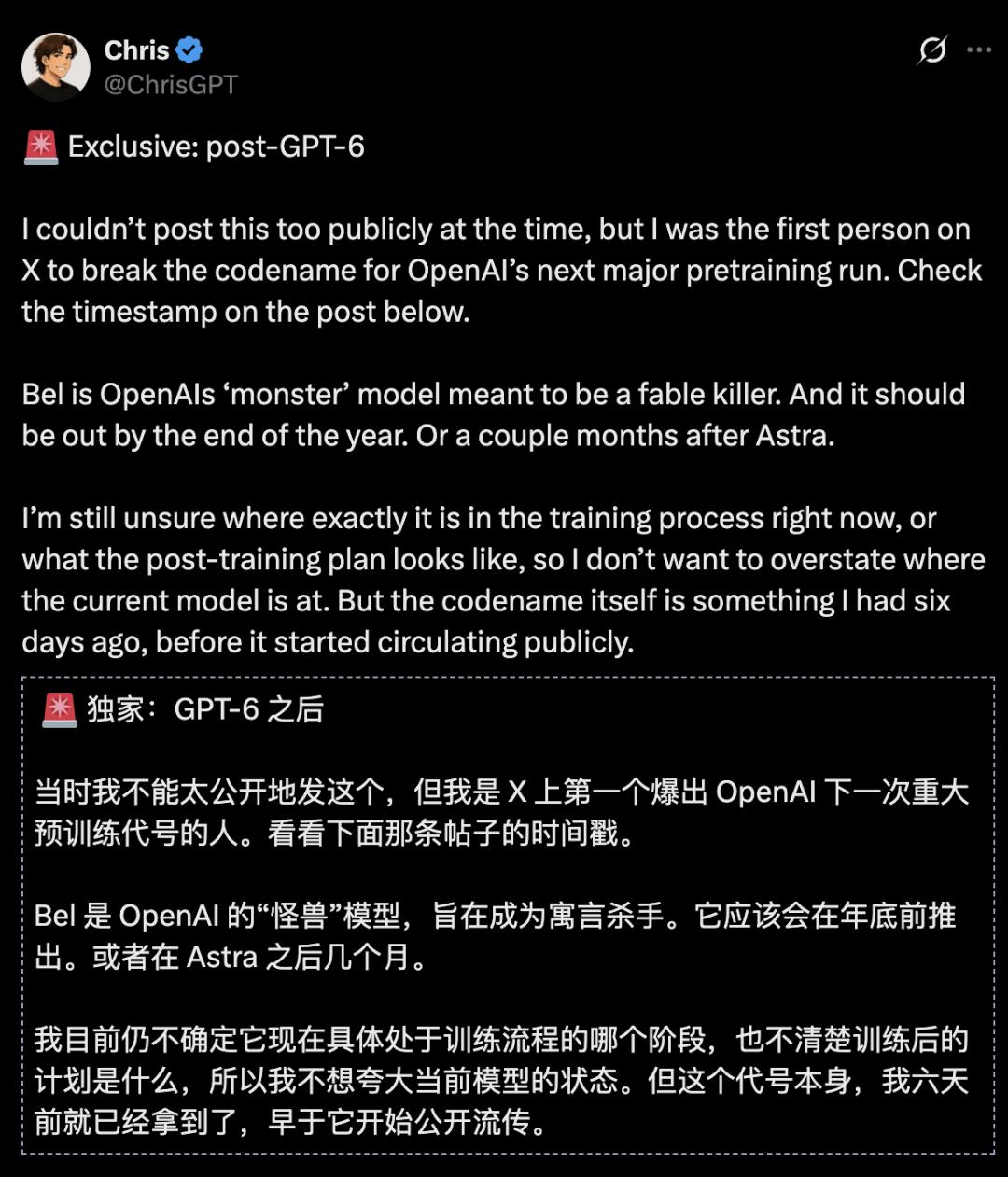
@ChrisGPT said bluntly in his tweet:
Bel is OpenAI's "monster" level model, designed to be the Fable Killer.
It is expected to be launched before the end of this year, or a few months after the release of Astra.
He even got this code name as early as six days ago, which confirms the reliability of the source.
Theoretically, Bel may have surpassed GPT-6, and even approached the AGI threshold defined by OpenAI.
In the official release of GPT-5.6, they introduced the "RSI Index", which integrates achievements in research debugging, kernel and training recipe optimization, machine learning experiments, and model self-improvement. Finally, the sol model improved by 16.2 points on the basis of GPT-5.5.
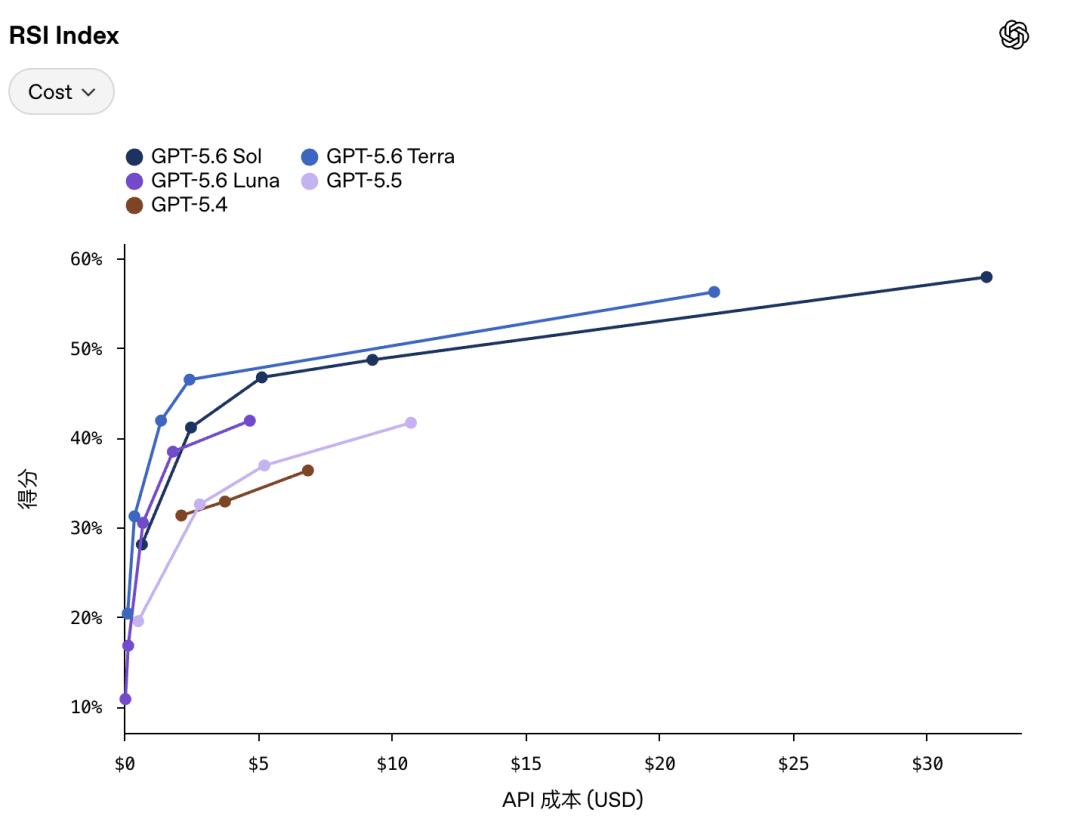
Subsequently, sol designed hundreds of architectural experiments for its smaller draft model and started training. And human intervention is only required in case of hardware failure and training instability. In the end, the token generation efficiency increased by more than 15%.
Bel has become an existence that truly evolves continuously.
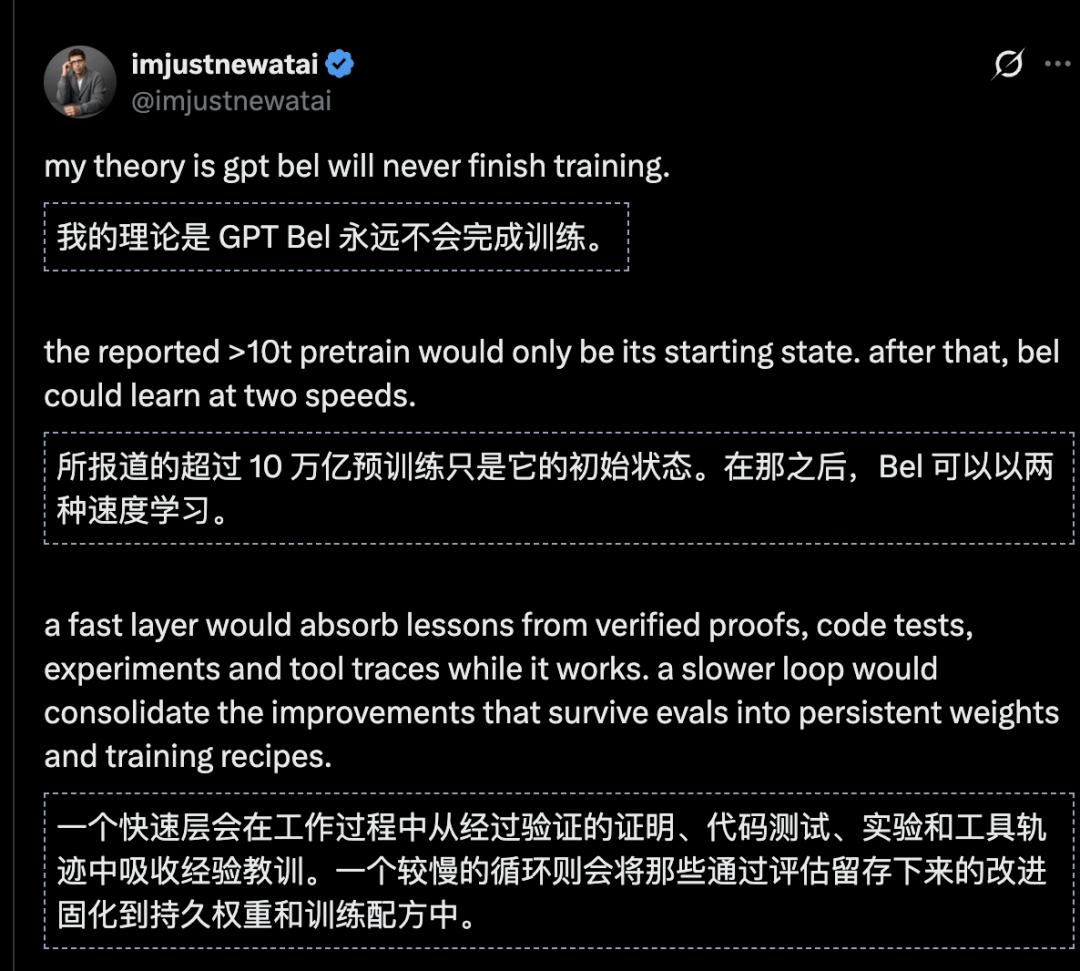
The fast weight layer will absorb lessons learned from verified proofs, code tests, experiments and tool traces while it is working. The slower loop will consolidate those improved results that survive the evaluation into persistent weights and training recipes.
It learns quickly in fast memory, solidifies the verified and effective improvements into slow weights, continuously optimizes the operation mechanism of the next round of learning, and distills the final results into small models that everyone can actually use.
GPT-7 may just be a safe snapshot of Bel's state in a certain week.
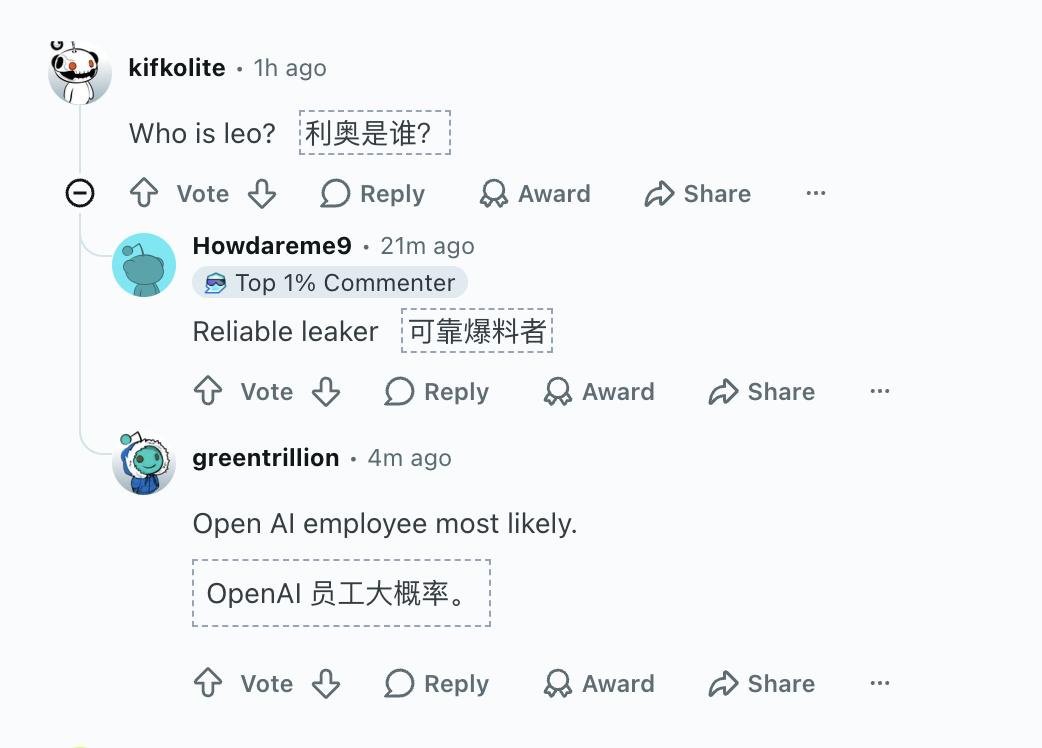
On Reddit, this news from Leo has sparked a lot of discussions, after all, Leo's revelations have always been reliable.
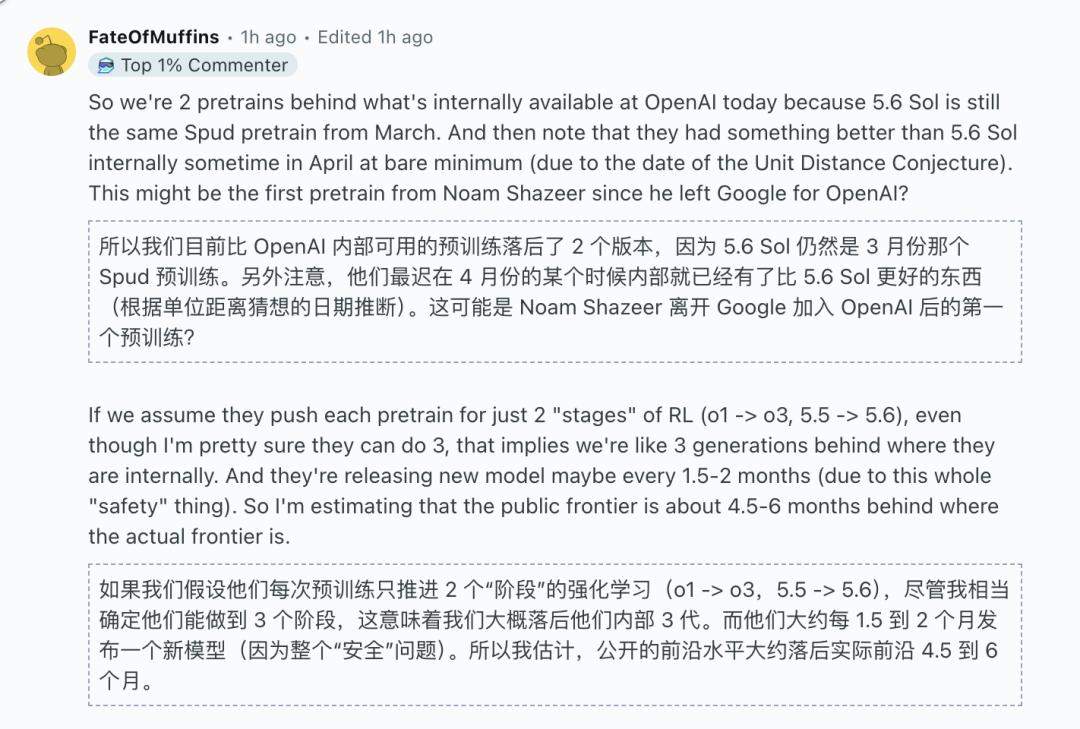
Some speculate that the internal model may be 4.5-6 months ahead of the external model.
OpenAI Says: "Anthropic Can No Longer Keep Up"
If Bel is a dimensionality reduction blow in technology, then computing power is the unique trick that makes OpenAI's internal morale soar.
According to cross-analysis by multiple trackers, OpenAI judges that from the second half of 2026 to 2027, there is no suspense in maintaining its leading position.
Why are they so certain? Because of computing power.
The revelation mentions that OpenAI's internal assessment believes that its biggest archenemy Anthropic is facing a shortage of computing power and cannot cope with OpenAI's next-generation AI .
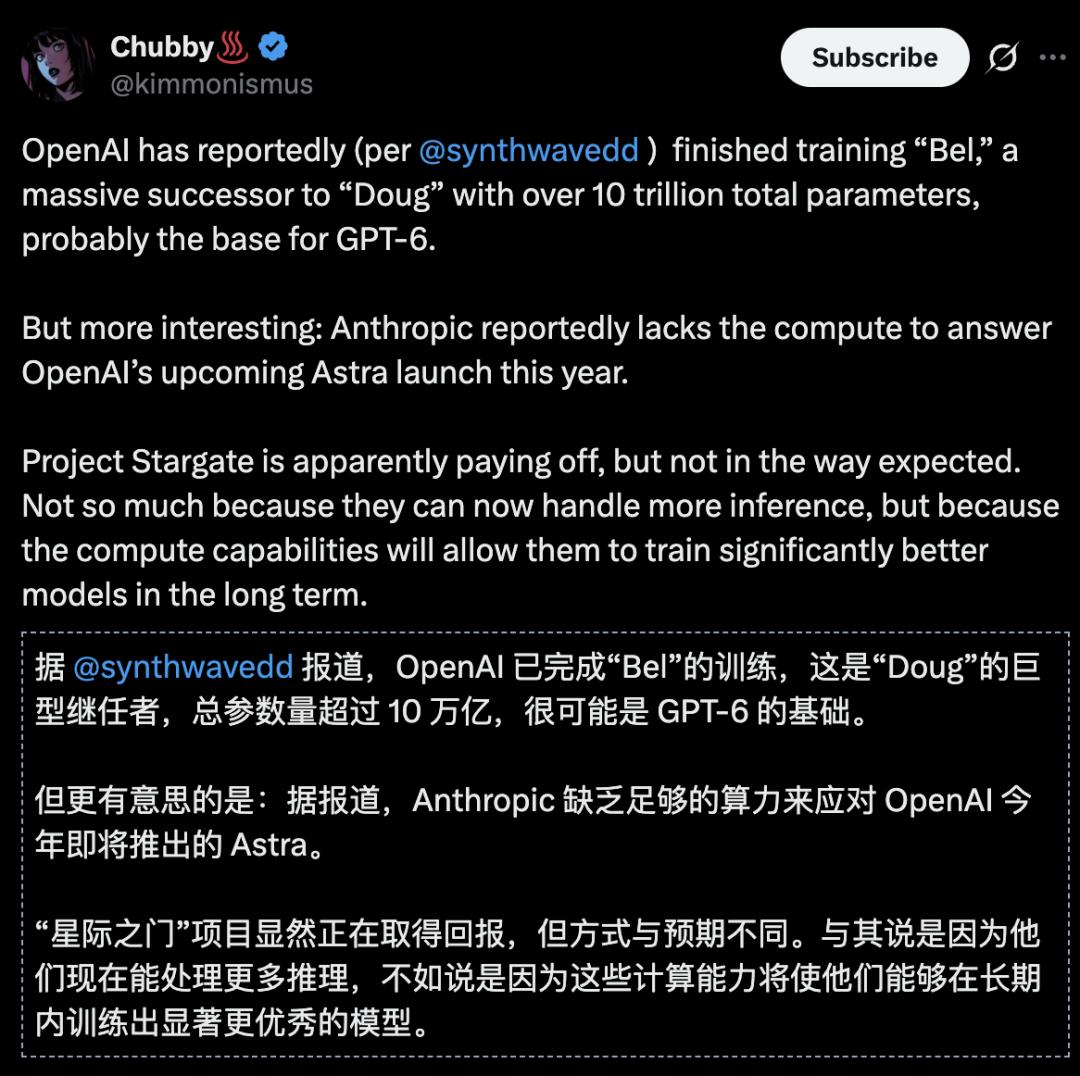
In the arms race of large models, computing power is ammunition. When model parameters soar to the level of 10 trillion, a single training session costs a huge amount of money.
Although Anthropic has extremely high attainments in model architecture and alignment technology, it is obviously unable to keep up in the face of absolute "brute force aesthetics".
Facing the upcoming public debut of Astra, Anthropic is limited by the computing power bottleneck, and it is difficult to give a strong response within this year.
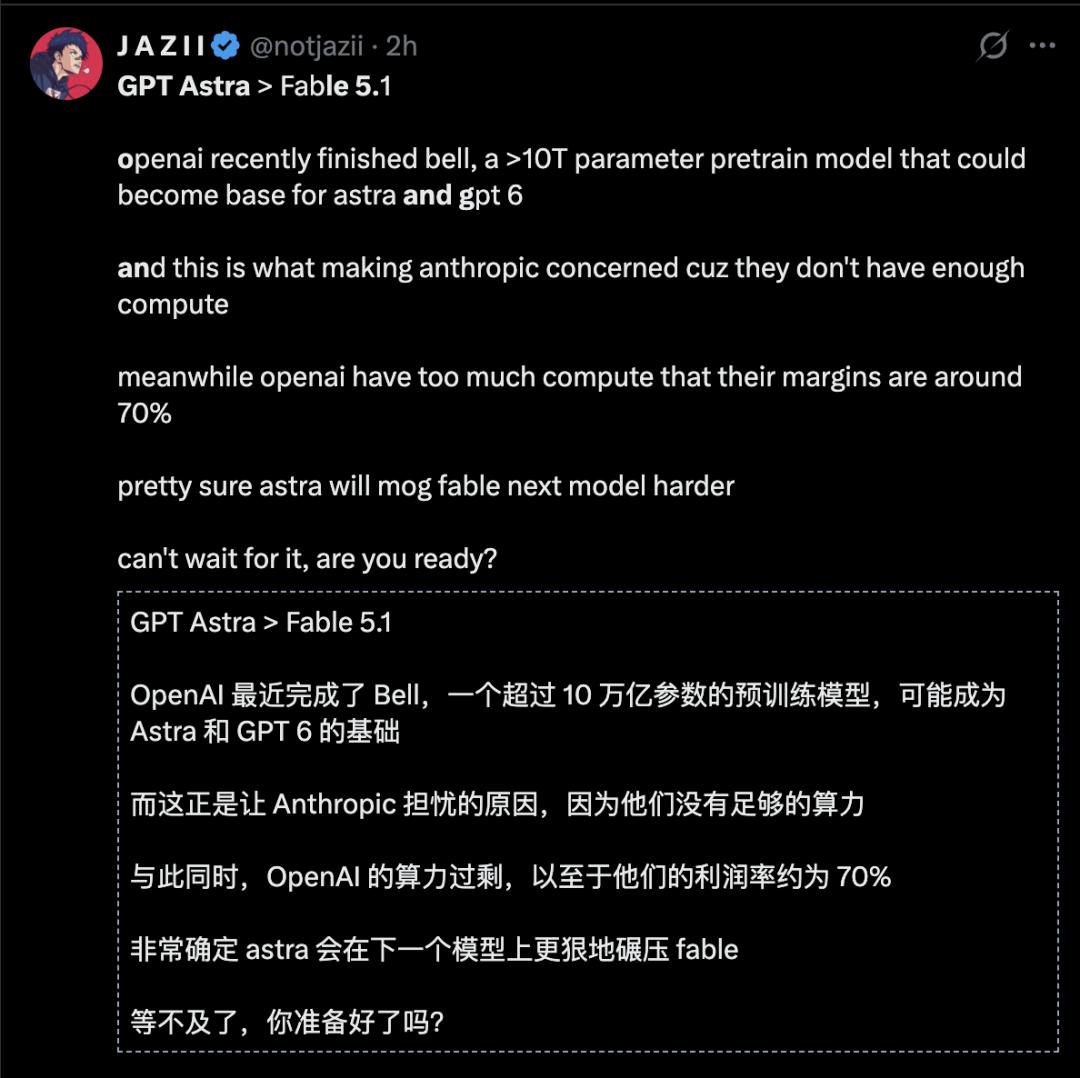
While other companies are still struggling to gather 100,000 H100/B200 chips, OpenAI has already created "Doug" and "Bel" with brute force aesthetics.
With the release of OpenAI's self-developed chip Jalapeño, the moat has not been filled in, but has been widened instead.
Head of OpenAI Codex Reveals the "Final Scenario"
10 trillion parameters may seem a bit far away to you. But inside OpenAI, these underlying brute force breakthroughs all point to the same final AI destination.
Recently, in an interview on the well-known tech podcast Matthew Berman, OpenAI executive Tibo unreservedly revealed OpenAI's future roadmap at the application layer.

He even said boldly:
The extremely powerful Codex model right now will look like a product from the primitive era in the next 2 to 3 months.
Combined with the previous revelations, Tibo points to four subversive major changes.
Recursive Self-Improvement (RSI) happens every day inside OpenAI.
Tibo confirmed that the "internal singularity" not only exists, but has already achieved a closed commercial