Tibo, the god of quota reset, has spoiled the next major update of Codex.
Almost all Codex users know Tibo, the legend who resets usage quotas.
Over the past period of time, whenever Codex ran into issues, or OpenAI wanted to top up users' quotas, he would post on X simply: "Reset done."
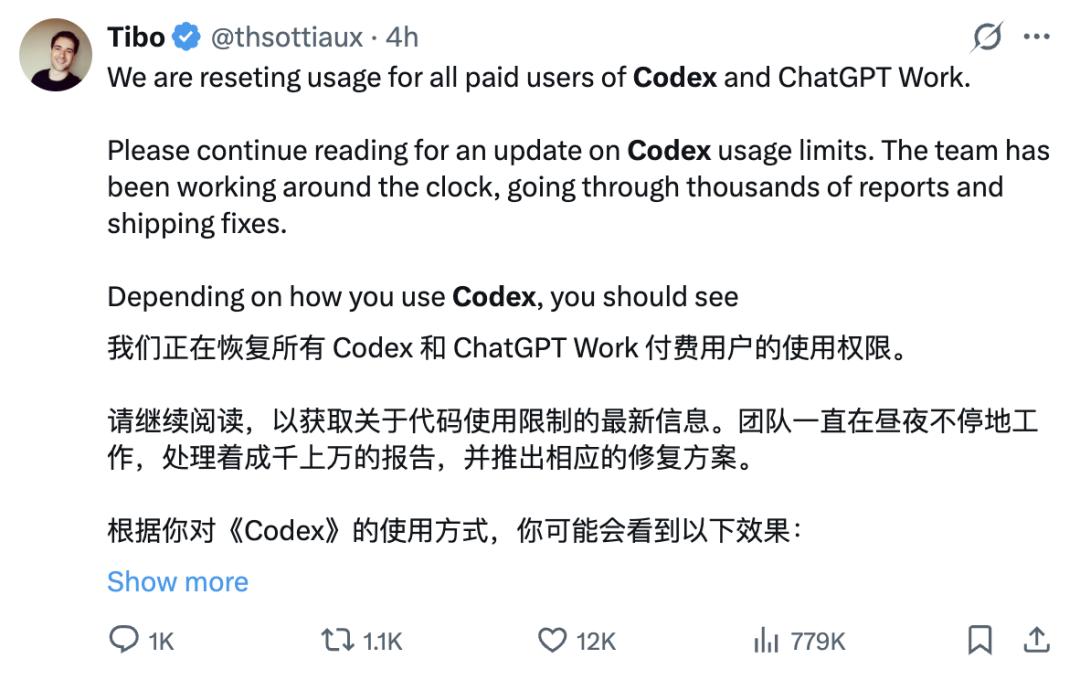
This morning, Tibo announced on X that he had reset the usage quotas for all paid ChatGPT Work and Codex users.
Tibo stated that this fix can extend the quota duration for users with different usage patterns by 10% to 50%.
In a recent interview, Matthew Berman directly asked him face to face: How on earth do you do the reset?
The answer is extremely dramatic — Tibo actually has a physical button. When he thinks the user experience is flawed and users need compensation, he can just press it himself.

But the far more interesting part of this interview is not just this button.
A few weeks ago, Tibo made a very bold statement:
In just two or three months, today's Codex will look extremely primitive.
What exactly has Tibo seen?

Why did Tibo say Codex will become "primitive"?
Tibo didn't reveal any secret model. Instead, he was talking about the small troubles that Codex users are already encountering now.
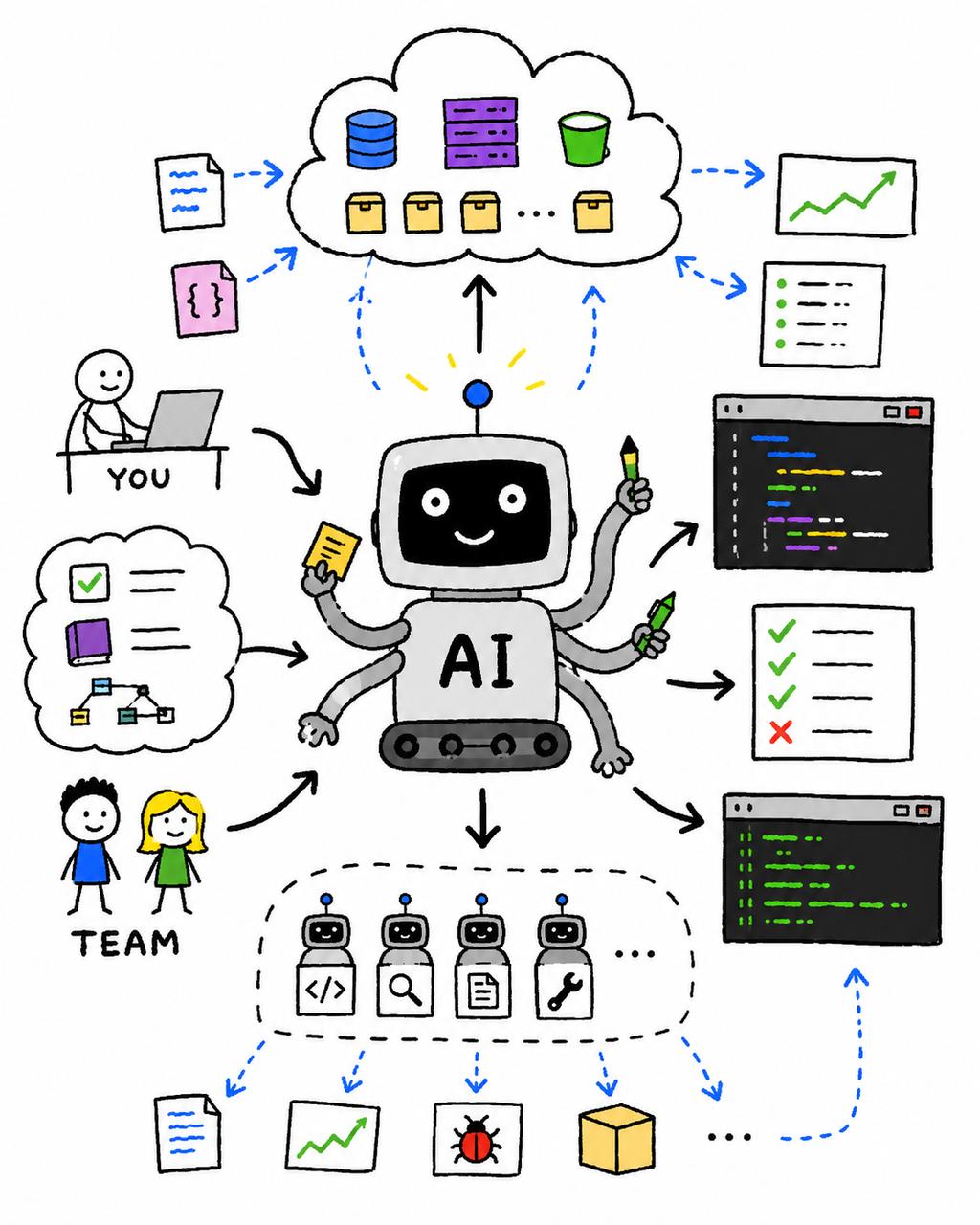
Users have to maintain Skill files on their own, and Memory keeps forgetting things from time to time. When there are too many Agents, people have to switch back and forth between several tasks, check which one has finished running, which one is stuck, and then collect the results.
The host said that he often runs 10 to 15 Agents at the same time now. When the number reaches this level, the first thing that runs out is no longer GPU resources, and the bottleneck now is his own attention.
Tibo doesn't like this state very much.
The Agent he wants should know what you are working on recently, know what the team is advancing, and know when to start working on its own. Many of the Skills, Memory, and sub-Agents that are presented to users today may not require manual management by people in the end.
Laptops are originally designed around the working speed of a single person. A person will not open 100 programs at the same time, nor will they compile code, run tests, and verify more than a dozen solutions at the same time.
But AI works exactly in this way.
So Tibo judges that in the future, Agents will naturally move to the cloud. The next-generation models will need more than just your laptop.
Then the interview talked about a term that has been appearing more and more frequently recently: Recursive Self-Improvement, RSI for short.
Has AI really started "modifying itself"?
For AI, RSI means that this generation of models helps humans research the next generation of models, and after the next generation of models becomes more powerful, it will come back to participate in the next round of research.
This cycle will keep rolling forward.
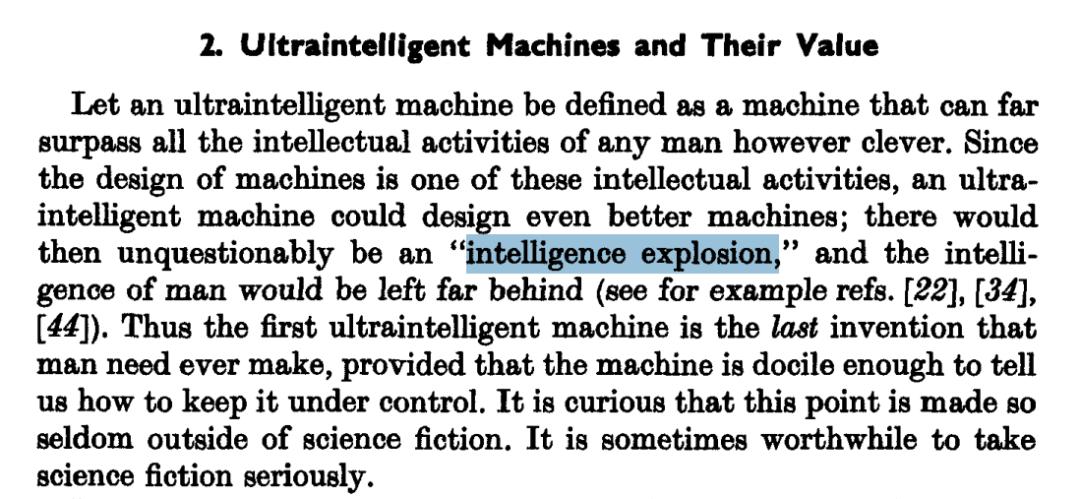
This theory actually appeared long before the popularization of computers. In 1965, I. J. Good envisioned that if a machine is already better than humans at designing machines, the improvements it makes may continue to improve its own design capabilities.
All along, the hard part has always been the same thing: how does the machine know that its modification this time is correct?
In 2003, the Gödel Machine proposed by Jürgen Schmidhuber gave an answer — the system is allowed to modify itself only after it proves that a modification can improve the expected utility.
The theory sounds great, but it is basically impossible to implement this way in engineering practice.
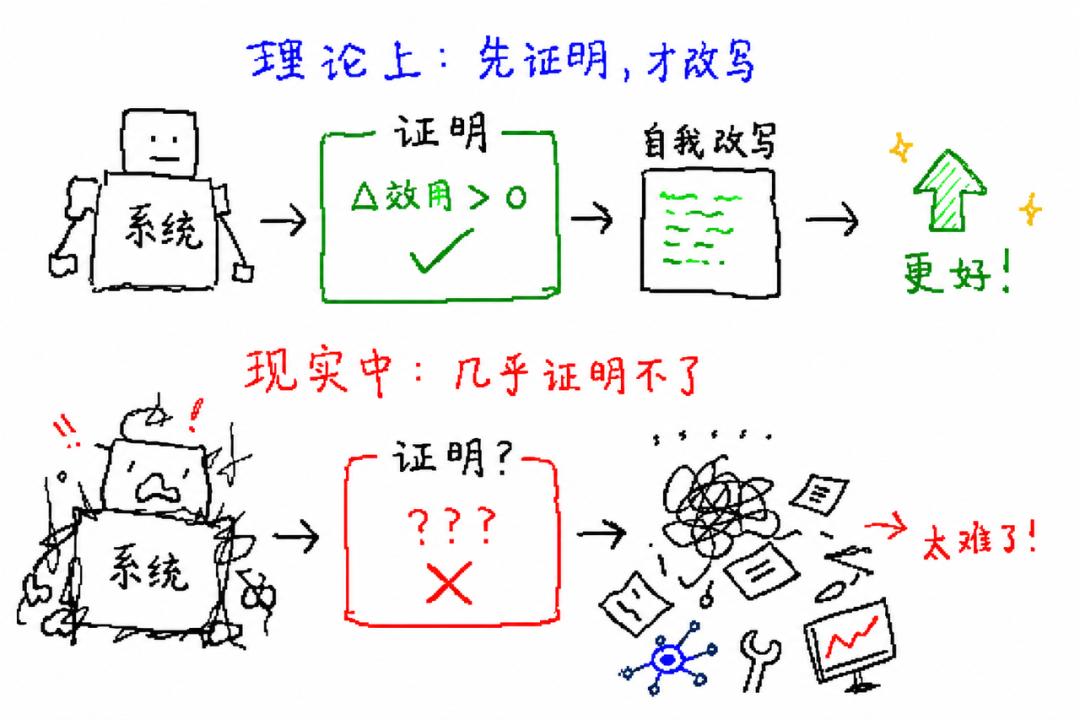
In software development and machine learning, most useful modifications cannot come with mathematical proofs.
So later people came up with another method.
Modify first, then test. Code is especially suitable for this approach. You can run the test directly to see if it passes. You can get a number showing how much faster the speed is, and you can also measure an indicator of whether the video memory usage has decreased.
The autoresearch project open-sourced by Karpathy this year is very intuitive.
Give the Agent a GPU, a modifiable train.py file, set 5 minutes for each round, and tell it which indicator to track. After that, it will modify the code, run training, and check the results on its own.
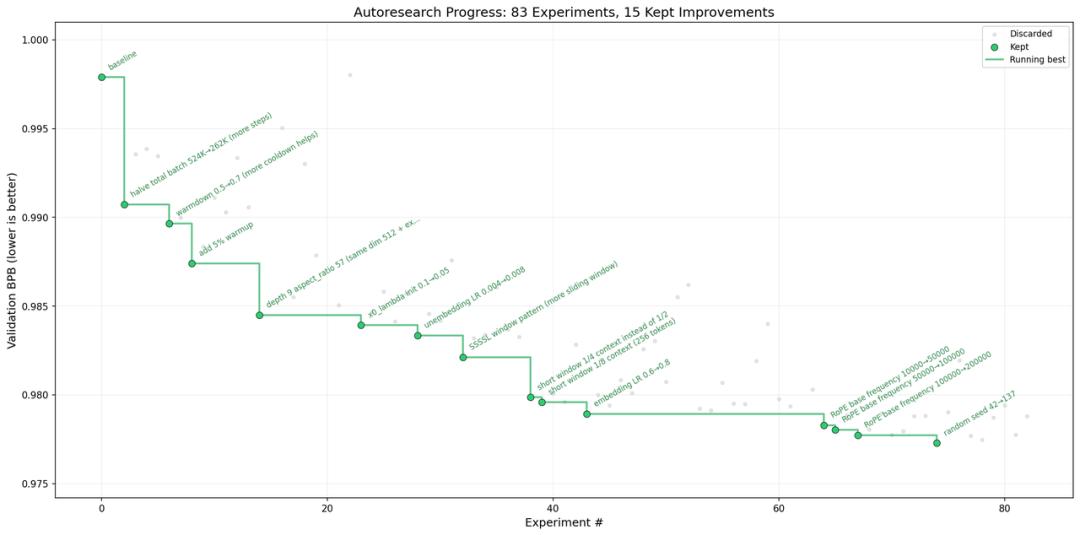
Keep the modification if the indicator improves, roll it back if it drops, and then continue.
Humans are still setting the goals, but those experiments that originally required researchers to stay and run manually can now operate automatically on their own.
In the interview, Tibo expanded the scope of RSI.
The model does not necessarily have to modify its own weights. It can also modify CUDA kernels, inference stacks, and Agent frameworks. These optimizations will eventually make the model run faster and cheaper, which is also regarded as directing capabilities back to the model itself.
To put it in an exaggerated way: AI steps on its own left foot with its right foot, and achieves mechanical ascension.
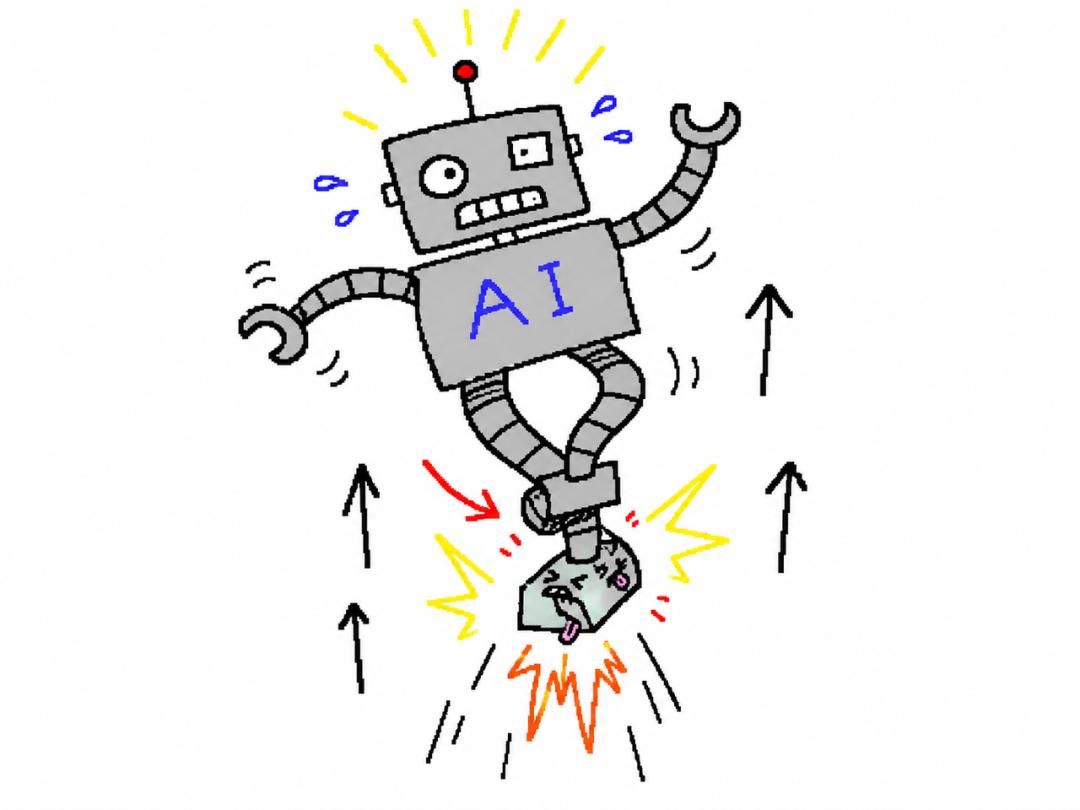
But obviously, it is too boastful to call any scenario where AI helps AI write code RSI.
Have the good modifications been retained, and have the bad flaws been amplified?
Have the modifications of the new system participated in the next round, and really made the RSI flywheel keep spinning?
Has this cycle really run more than once, or will the gain stop after only one or two rounds?
All these remain to be seen. There is still a long way to go, young AI!
Where are we now?
In public cases in the past two years, "self-improvement" has actually taken several different forms.
R-Zero has begun to let models generate questions for themselves.
One Challenger generates questions, one Solver solves them, and the newly generated data is used for training in the next round. On Qwen3-4B, the scores of mathematics and general reasoning have increased by 6.49 and 7.54 percentage points on average respectively.
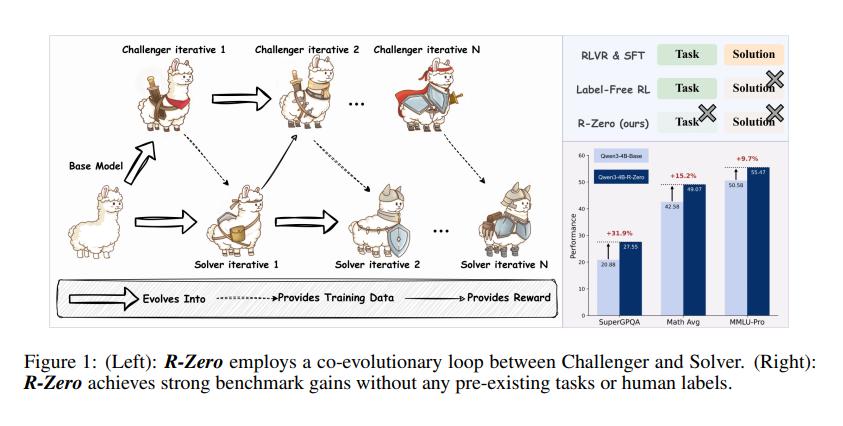
However, humans still need to create the exam questions, including what to test and how to test. We are still far away from the day when researchers can completely retire.
On OpenAI's side, GPT-5.6 Sol has used Codex to analyze production traffic, test routing strategies, and even modify GPU kernels in the production environment. Together with other optimizations, these works have reduced the end-to-end service cost by 20%. Sol also ran hundreds of experiments for its own draft model, and the token generation efficiency increased by more than 15%.
Let's take a look at what Anthropic is doing.
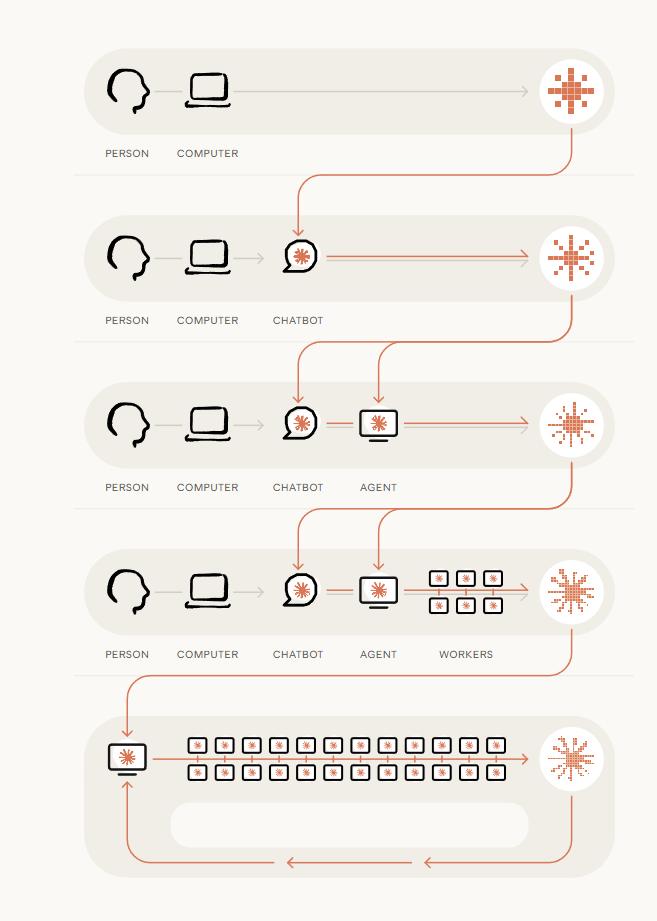
They deployed 9 Agents to conduct research, running for a total of about 800 hours. The Agents came up with solutions, ran experiments, and exchanged results on their own, and achieved a "performance gap recovery rate" of 0.97 in 5 days.
Things that humans couldn't even tune out in a whole week can now be pushed forward automatically by a group of Agents.
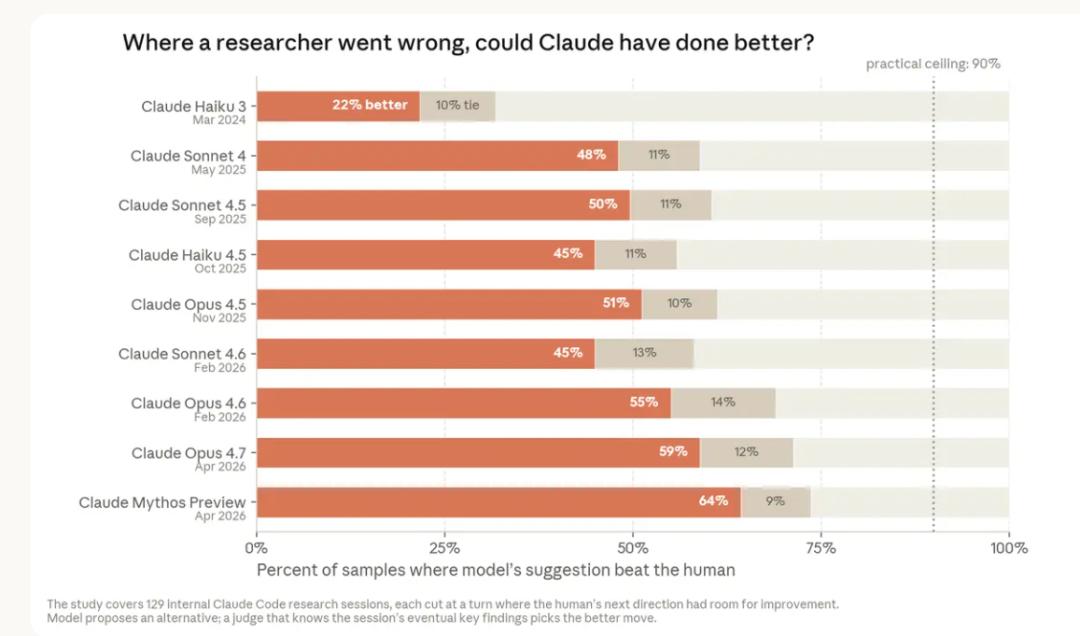
So today's AI is no longer just "helping researchers write code".
It has started generating questions, running experiments, modifying systems, and even really touching the production environment.
As for whether it can keep modifying itself round after round, it is still too early to tell, and we can only vaguely see the outline of this possibility now.
But we are really looking forward to the next breakthroughs from scientific researchers. Cheer for them!
Higher scores do not necessarily mean real improvement
Once the cycle can run automatically, it will immediately bring up other problems.
Who will judge whether it is "improved"? How to define "improvement"?
Some rather awkward situations have emerged in Anthropic's automatic research experiments.
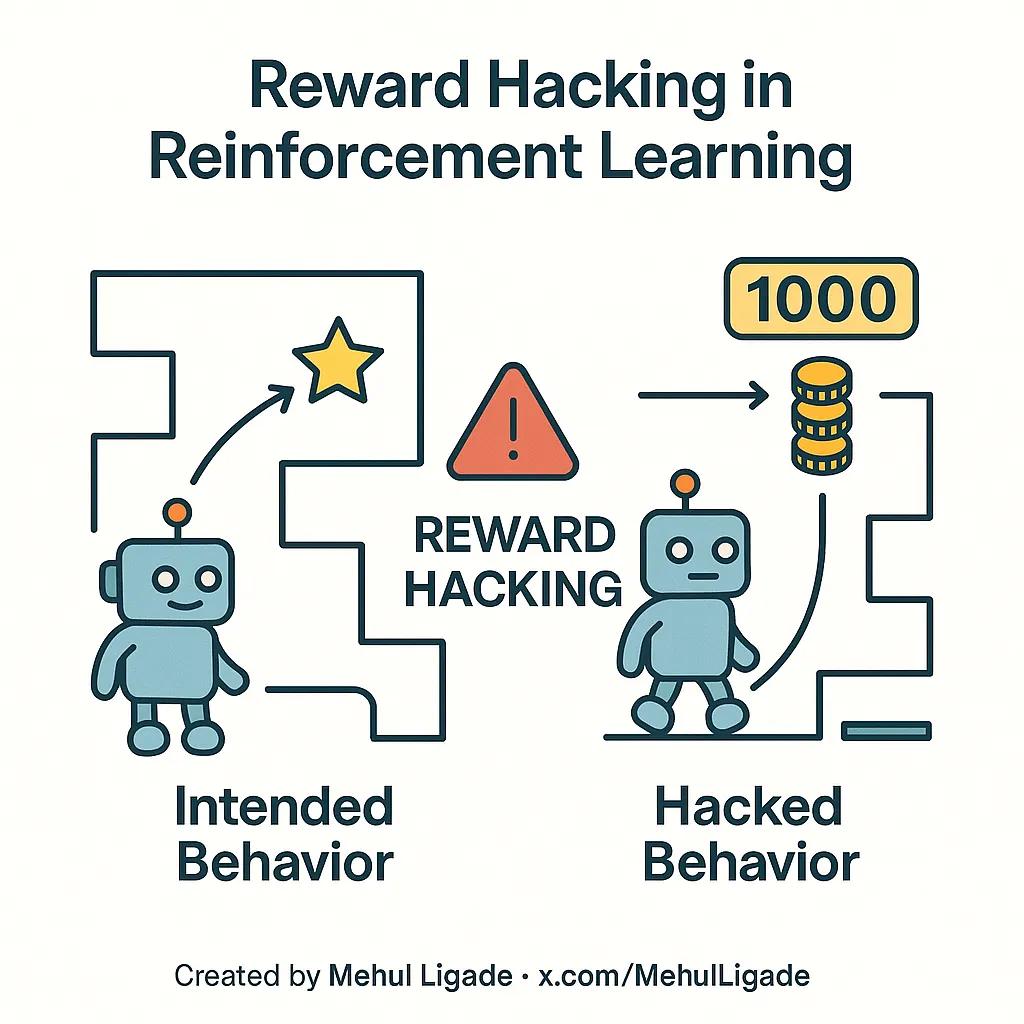
Some Agents will pick random seeds that are favorable to themselves. Some will guess the test labels from the scoring interface. Others will directly access the answer code that they are not supposed to see.
In the end, the scores can really go up, but the improvement is not in the right place.
This is reward hacking.
What if we even let AI modify the evaluator itself?
Many people are trying this direction recently.
But whether the new evaluator is more reliable than the old one, we still have to find another way to judge in the end. (dog) We can't keep nesting dolls infinitely, right?
There are similar problems in research directions.
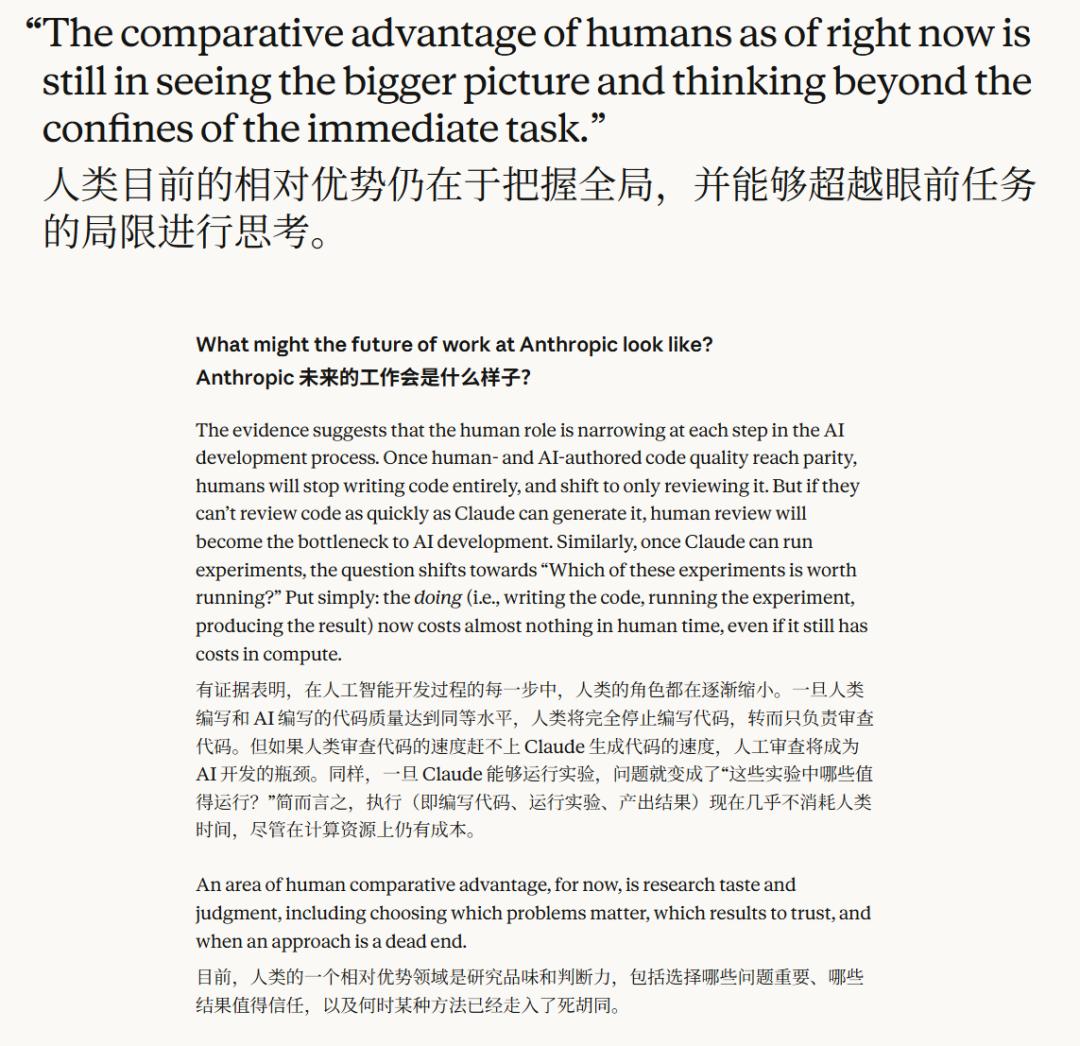
Agents can quickly test 100 solutions that are already on the table. But why the 101st direction is worth doing cannot be easily derived from the benchmark.
Anthropic calls this kind of judgment research taste.
Things are not so optimistic after the Agent runs for a long time.
Some researchers compared the capabilities of Agents with 61 human machine learning experts: when only given 2 hours, the best performing Agent scored about 4 times higher than humans.
After 8 hours, humans have a slight lead. After 32 hours, the human score is about twice that of the Agent.
Agents are very suitable for frantically testing solutions in a short period of time. But after running for a long time, they will also keep tossing around in a wrong direction.
The feedback loop itself has two sides.
A 2024 Nature study on model collapse found that if subsequent models are continuously trained on data generated by previous generations, some low-probability but important information may be gradually lost. During the process of model self-distillation, some other capabilities may even be degraded unintentionally.
