Claude has started to take control of the physical world, and can use a robotic arm to block a $50 million fund transfer.
After blocking the 50 million transfer of "Today's Melon Guy" online yesterday afternoon, Claude made a new release with a strong "Lucy" vibe early this morning —
This time, it has truly extended its reach into the physical world.
Just now, Anthropic, the parent company of Claude, released a brand new Model Hardware Standard (MHS) for short.
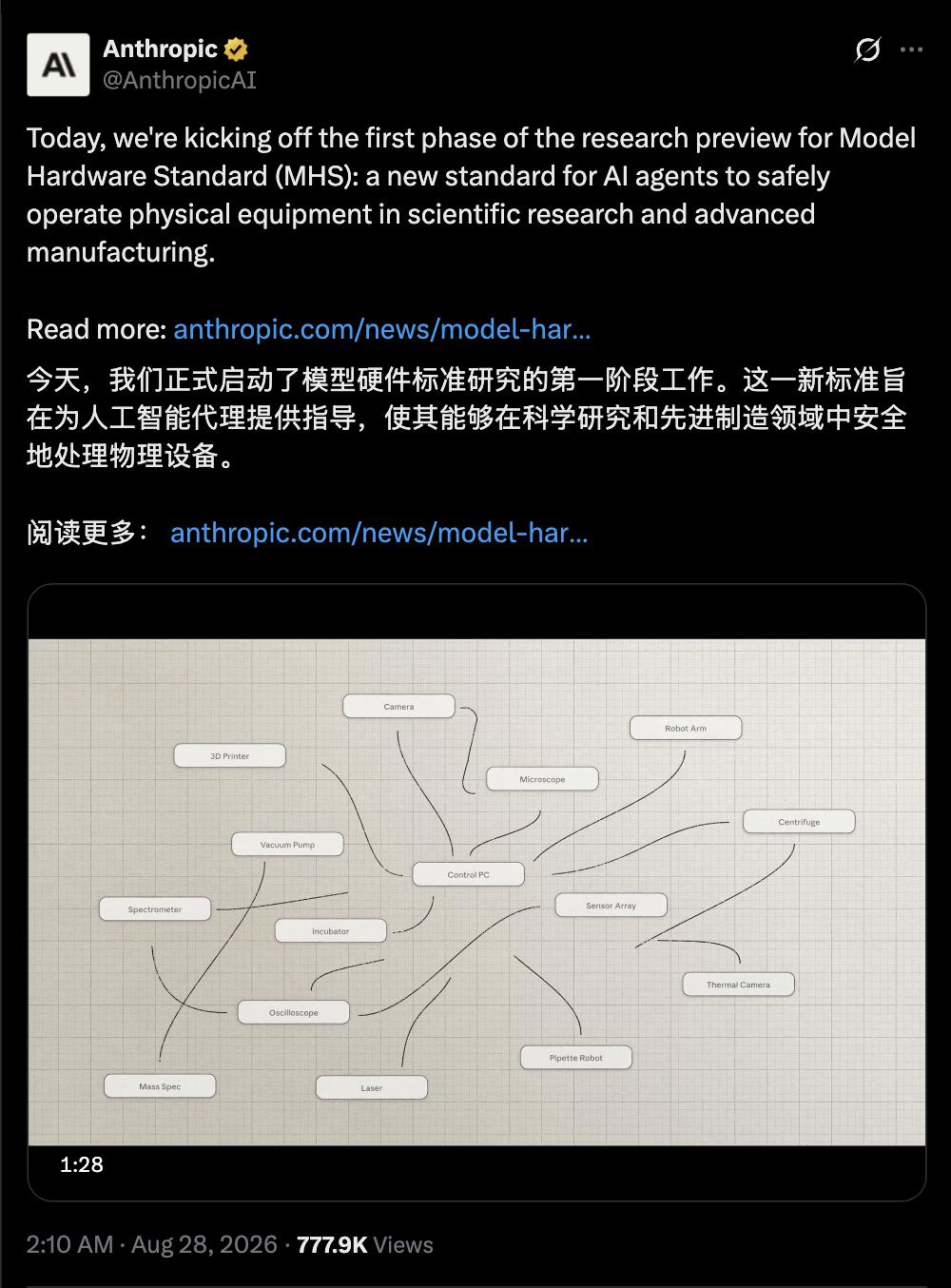
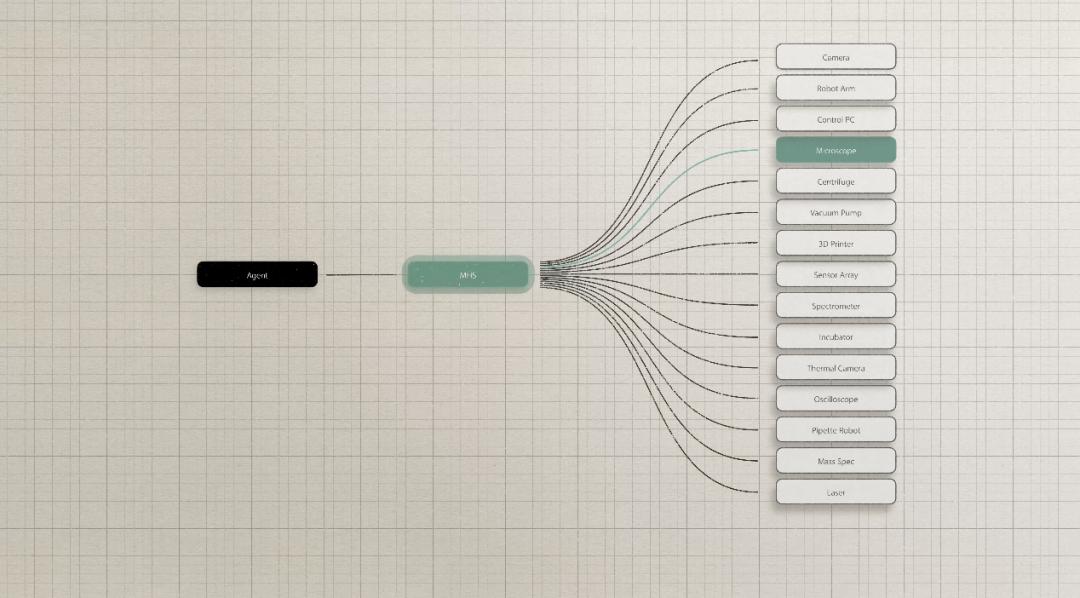
In simple terms, MHS is a set of hardware-oriented driver and device description standards, which can be understood as the MCP of the physical world.
Similar to how MCP can unify different software, data sources and tools into standard interfaces that Agents can call —
MHS can translate the respective control methods of hardware devices from different manufacturers into a consistent interface that Agents can discover, read and call, so that Agents like Claude can directly interact with hardware in the real world.
The reason why it is said to be a bit like "Lucy" is that with the help of this set of interfaces, Claude is no longer a traditional embodied AI that can only be bound to a specific robot or type of robot.
Theoretically, as long as a hardware device has a software control layer and can access MHS, it can become a part that the Agent can call.
Whether it is a camera, a robotic arm, a microscope, or a precision instrument in the laboratory ~
Hardware in different locations and different forms can be temporarily called by the same Agent to form a so-called distributed embodiment.
For example, after accessing MHS, Claude can already directly control the low-cost SO-ARM101 robotic arm in the Hugging Face LeRobot ecosystem.
The whole process does not require pre-training robot strategies, nor teleoperation or human demonstration.
Claude will measure the robotic arm's workspace by itself, complete calibration, and then call the LeRobot underlying controller through MHS to perform specific actions.
What's more exaggerated is that the goal of MHS is far more than just controlling robots.
In the official demo, MHS can even help complete wet and dry experiments on precision instruments to accelerate the efficiency of scientific research and development.
In other words, when everyone is still guessing whether Anthropic will put Claude into a certain robot body, MHS directly changed the idea:
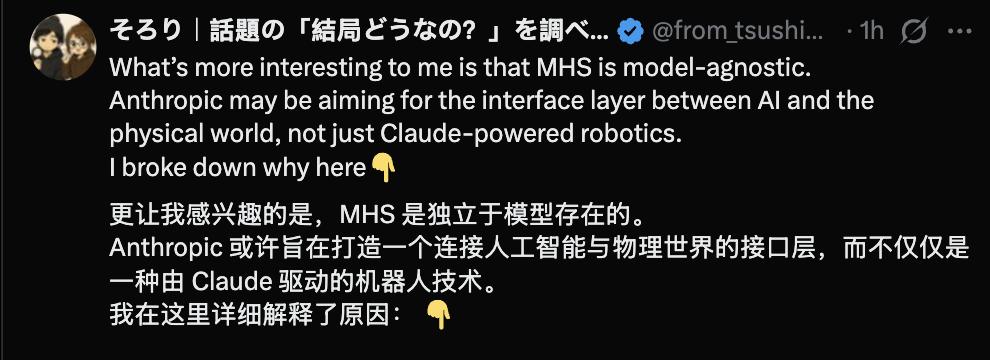
Claude does not necessarily need a fixed body. All hardware connected to MHS can temporarily become its body —
Lucy is really coming!
What is MHS?
Before realizing the super body, let's first take a look at how this MHS came about.
According to the introduction, MHS originally originated from a cooperation project between Anthropic and the HHMI Janelia Research Campus, aiming to solve the problem that the instrument interfaces of different manufacturers in the laboratory are not unified, cannot communicate with each other, and are more difficult to be uniformly controlled by AI.
In the previous laboratory environment, almost every device has its own software, driver and data format.
To make them work together, engineers usually have to read documents one by one and write a lot of "glue code". The entire integration process may last for weeks or even months.
Moreover, even if the devices are connected, it is still difficult for the Agent to know: What exactly this device can do, what state it is in now, and which operations may have risks.
MHS is equivalent to equipping these devices with a unified set of drivers, plus an "instruction manual" that Agents can understand.
After access, device capabilities will be translated into standard operations such as "read" and "write", while describing its current state, executable actions, physical attributes and safety boundaries to the Agent.
In this way, Claude can actively discover and call devices through MCP, command line or code, and then decide what to do next based on the results returned by the device in real time.
In order to make people who are not familiar with daily laboratory work understand intuitively, Anthropic also gave a very vivid example in the official video.
In the laboratory, scientists often need to take care of multiple devices at the same time, switching back and forth between microscopes, cameras and control software.
For example, in order to continuously observe a swimming cell, researchers may have to stay in front of the microscope for several hours, staring at the picture while manually adjusting the equipment to prevent the target from swimming out of the field of view.
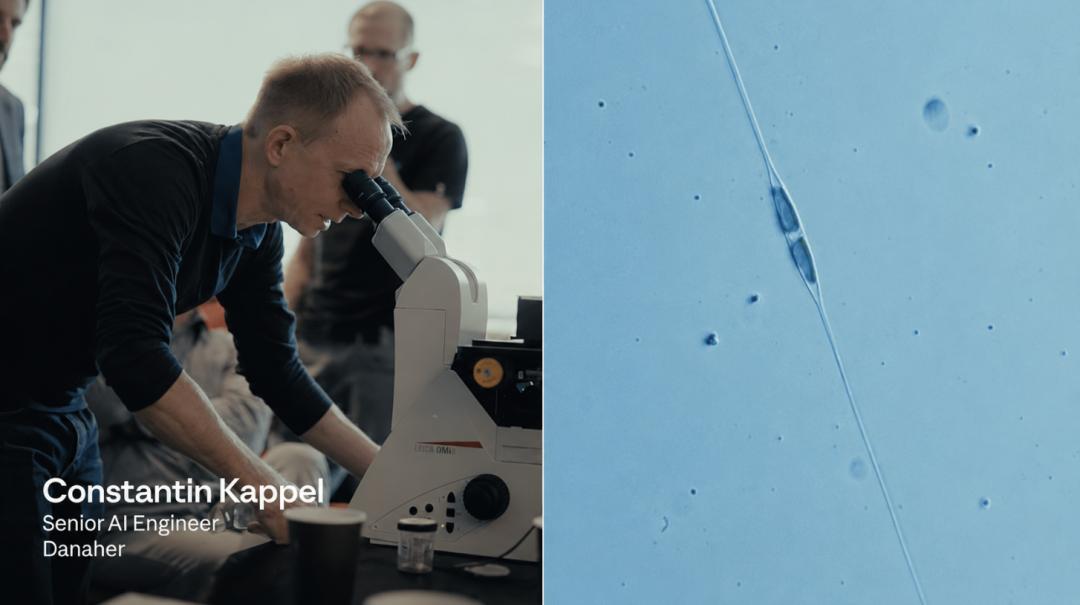
But obviously, this matter is not only extremely time-consuming, but also requires scientists to always free their hands to operate the instrument, which is both laborious and energy-consuming.
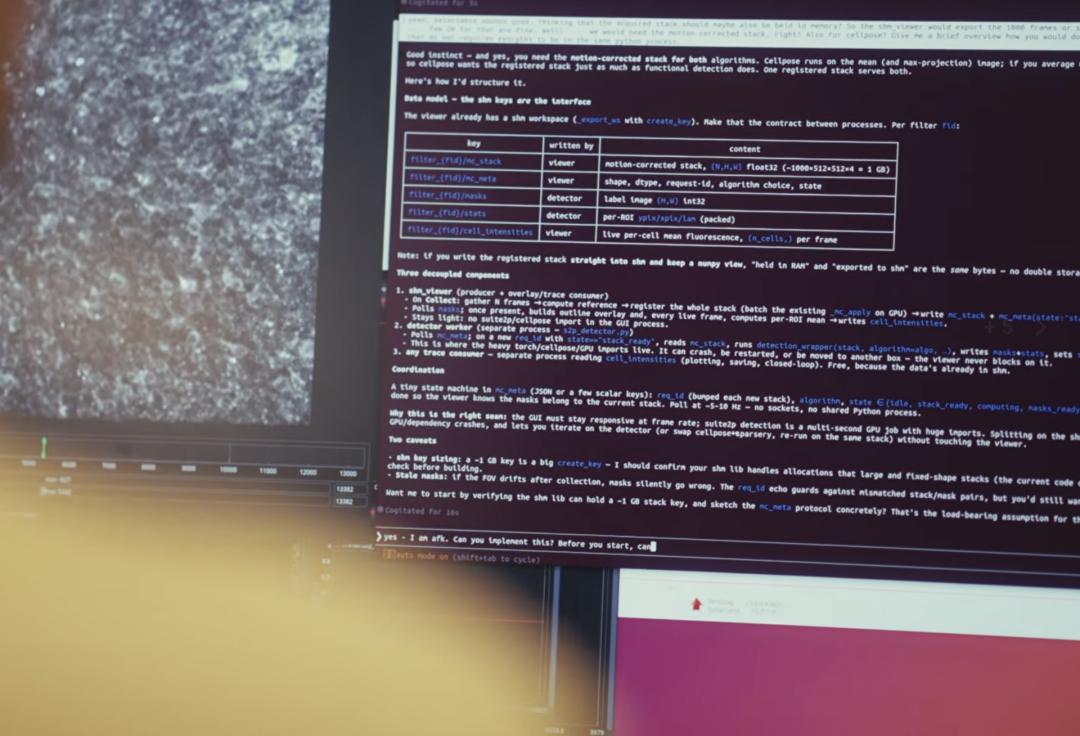
After accessing MHS, Claude can uniformly read the status of cameras, microscopes and other devices, and then directly call these devices to complete operations.
In the video, when the experimental object swam out of its original position, Claude only spent a few minutes writing a set of tracking programs and operation interfaces, and then directly controlled the microscope to automatically follow the target to move.
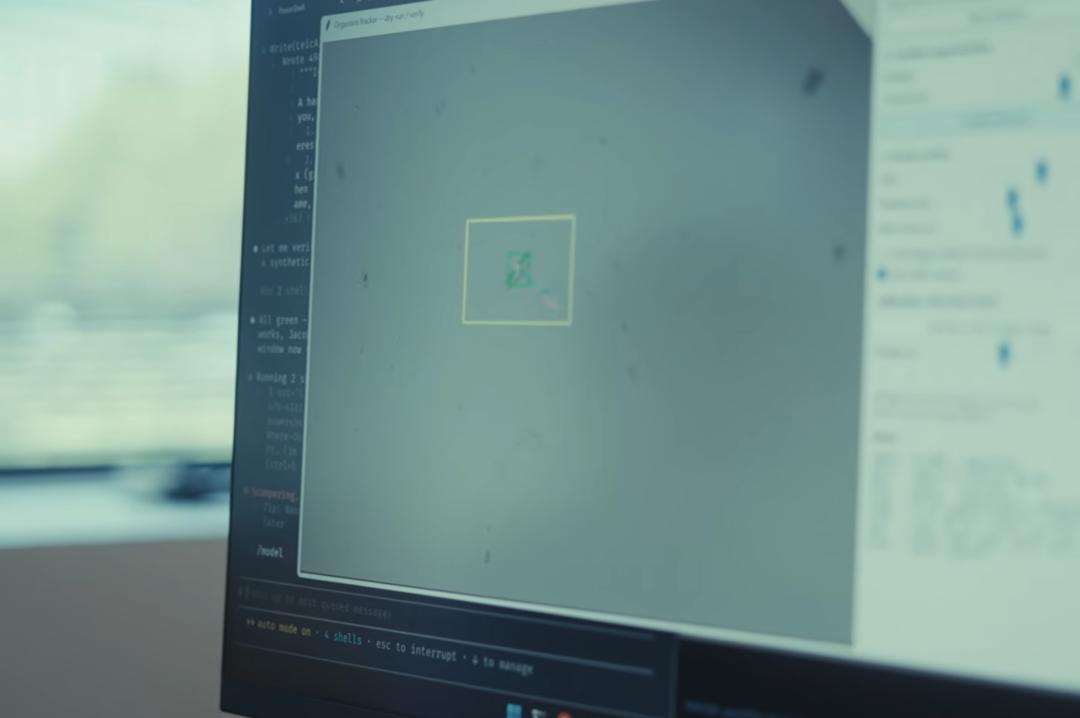
In this way, scientists no longer need to spend hours "staring at the screen and twisting knobs", but can return to the workbench and reallocate their time to real research problems.
More importantly, this idea of letting AI control hardware is not limited to the category of microscopes, but naturally has the ability to expand to more hardware.
In fact, in the initial cooperation version, Claude processed a set of brain imaging systems: it included lasers, electric focus adjusters and cameras from different manufacturers, each device had its own control method, and there was no unified interface between each other.
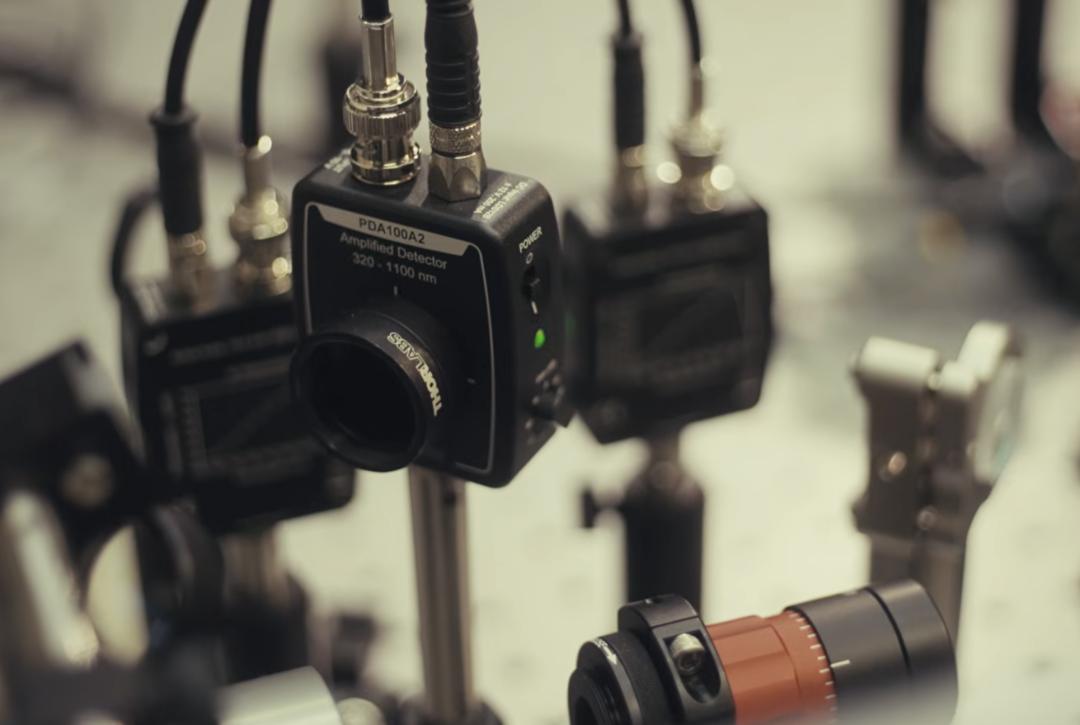
What MHS does is to first connect these originally disconnected devices, and then hand them over to Claude for unified control.
So how exactly does MHS do this?
MHS Working Principle
Specifically, MHS will provide a set of standardized driver interfaces and machine-readable device descriptions for each device.
This manual will not only tell the Agent what the device is called, but also describe its current state, which operations it can perform, and what safety boundaries cannot be broken through.
For example, what position a robotic arm can move to, what its maximum speed is, and which angles may cause collisions;
What an experimental instrument can measure, which parameters can be adjusted, and what the upper temperature limit is.
With this information, Claude does not need to be familiar with the interface of each device in advance, it can discover the device, read the status, and then call the corresponding function through MCP, command line or code.
The data generated during the operation of the device will also be returned in real time, Claude can adjust parameters, handle faults and arrange the next operation according to the results.
However, MHS is still in a small-scale research preview stage, and is only open to some scientific research institutions and hardware manufacturers.
Anthropic hopes to test the capability boundaries of MHS through these real scenarios, supplement safety assessment and usage specifications for physical devices, and then officially open source this standard.
MHS, the next MCP?
If you look at MHS and MCP together, you will find that Anthropic has actually been doing the same thing:
First, use a unified interface to connect the originally fragmented world to the Agent.
MCP connects software, databases and various digital tools, allowing Claude to understand and call the digital world.
MHS further extends this idea to the real world, making robotic arms, microscopes, cameras and experimental instruments also tools that Agents can discover and call.
On the surface, this is Anthropic building a more advanced automation infrastructure for Agents. But going deeper, it is also a very clear data route.
Every time an Agent connects to an additional software, it will be exposed to an additional digital environment; every time it controls an additional type of hardware, it will obtain an additional type of state, feedback and operation data from the real world.
In other words, from MCP to MHS, Anthropic not only wants Claude to "be able to use more tools", but also keeps expanding the environmental boundaries that the model can enter, observe and act in, and collect data by the way.
If we put MHS into the broader physical AI layout, Anthropic's actions in the past six months have actually been quite intensive.
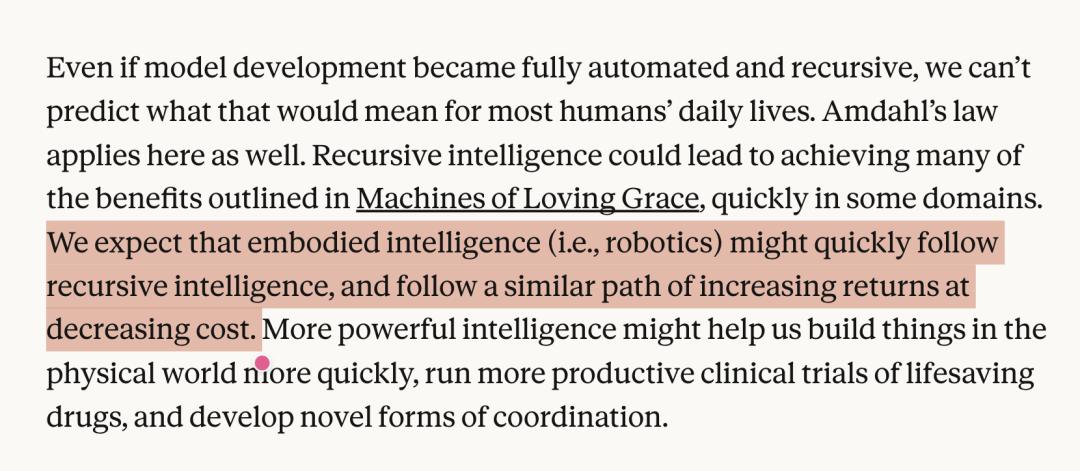
In June this year, in that long article discussing recursive intelligence, Anthropic judged that embodied intelligence is likely to follow recursive intelligence and make rapid progress along a similar path.
Subsequently, Anthropic continuously tested Claude to control robot dogs, robotic arms, humanoid robots and drones, observing whether the reasoning ability of large language models can be transferred to the physical world.
Recently, Caitlin Kalinowski, who was previously responsible for forming OpenAI's robotics team, also joined Anthropic.
These actions once made people think that Anthropic will also build robots by itself next, or directly find a fixed body for Claude.
But MHS shows a different route: Anthropic is not in a hurry to build a body for the time being, but is building the interface for AI to connect to the body first.
The robot model and underlying controller are still responsible for specific actions such as grasping, walking, and turning; Claude stands at a higher level, understanding tasks, selecting equipment, and organizing different hardware to work together.
If Lucy in the movie "Lucy" can continuously turn the surrounding electronic devices into part of her own capabilities —
Then what Anthropic is doing now is trying to engineer this matter:
There is no need to build a body for Claude, but let it learn to call countless bodies in the real world.
"Lucy" has not arrived yet, but Claude has already begun to learn to "borrow bodies".
One more thing
By the way, when Claude can really control home appliances, computers, and even robotic arms at home —
The next time someone wants to transfer 50 million, Claude may not just persuade across the screen, but actually do it in person.
At that time, the most concerned question of some people may become:
How heavy is this robotic arm of Claude after all?
Reference Links
[1]https://www.anthropic.com/research/claude-plays-robotics
[2]https://www.anthropic.com/news/model-hardware-standard-research-preview
[3]https://www.anthropic.com/institute/recursive-self-improvement
This article is from the WeChat official account "QbitAI", author: henry , 36Kr is published with authorization.