AI dating scam exposed: the "perfect uncle" is generated by AI, specifically targeting middle-aged and elderly women
New romance scam has emerged recently.
On August 27, according to China Central Television News, an AI matchmaking scam targeting middle-aged and elderly women has appeared in the society, where lawbreakers use AI to generate so-called dating partners to defraud money from victims.
According to the victim Ms. Bian, she came across a matchmaking agency on an online video platform. After expressing her willingness to find a date, a person with the account nickname "Director Wang from Matching Center" sent her the profile of "Brother Li", which detailed the personal information of "Brother Li" and attached a photo.
The profile shows that "Brother Li" is 67 years old, with an elegant appearance, an annual income of 6 million yuan, multiple properties in Hangzhou and Shanghai, no parents or children, and healthy living hobbies.
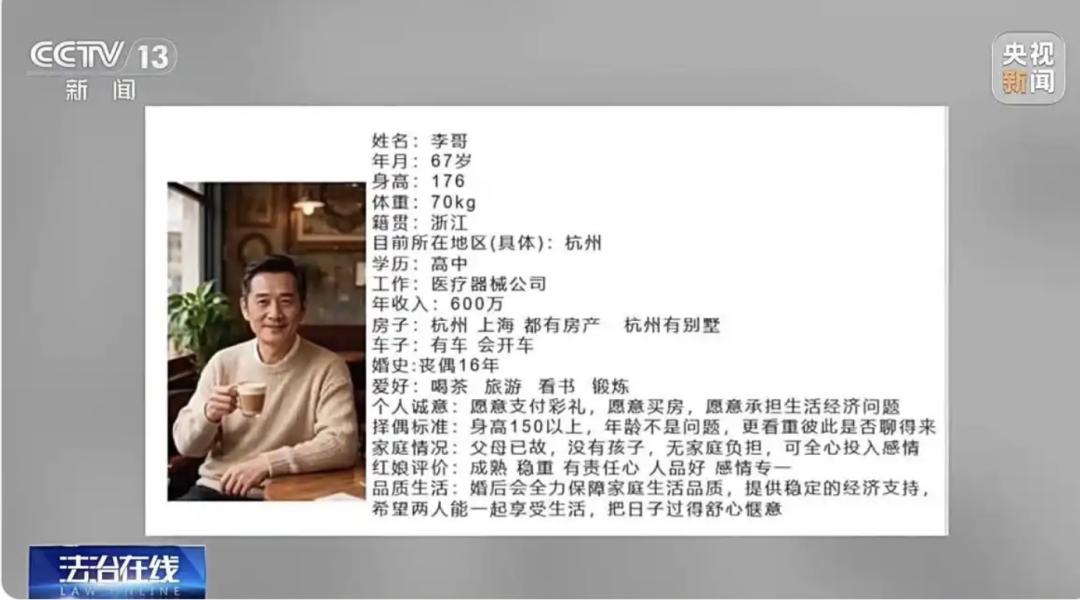
"Director Wang from Matching Center" said he could help Ms. Bian make a connection, and promised Ms. Bian that as long as she paid the fee, she could exchange contact information with the match.
Later, Ms. Bian paid 2,000 yuan of matchmaking service fee successively, and signed a letter of commitment with this dating service company. Party A was Ms. Bian, and Party B was Sichuan Wanhe Xitang Dating Service Co., Ltd. It clearly stated that the company needed to "recommend matching objects as required by Party A" and "arrange meetings or exchange contact information for Party A".
After paying the money, "Director Wang" gave Ms. Bian the phone number of "Brother Li", but "Brother Li" could not be reached at all. Gradually, "Director Wang" on the other side of the screen no longer replied to messages. At this time, Ms. Bian realized that she might have been defrauded, so she called the police, hoping to get her money refunded.
The police found through investigation that the "Sichuan Wanhe Xitang Dating Service Co., Ltd." that signed the contract with Ms. Bian did not exist, but a company with very high similarity was found during on-site verification. This company's main business is matchmaking, but there are no dating clients or "matchmakers" on site, only sales, editing and host positions. On the computers of these editors, the police saw the AI image exactly the same as the dating male guest information provided by the reporter.
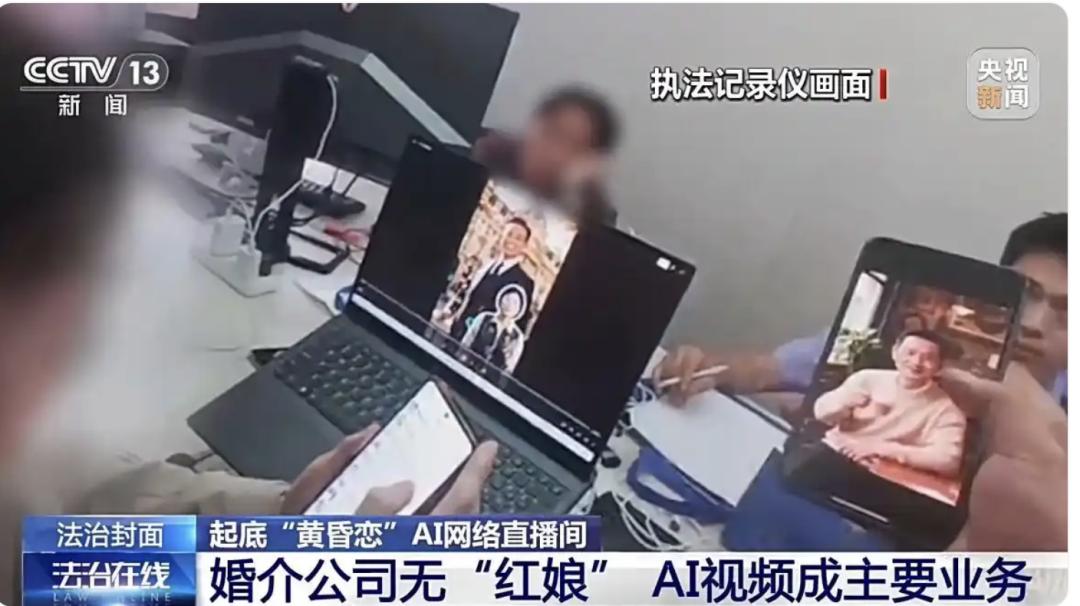
The police contacted the boss of the company, Mr. Wang, through the on-site employees. On the phone, Wang said that the actual registered name of the company is Sichuan Wanhe Xitang Matchmaking Service Co., Ltd., which is the same company as Sichuan Wanhe Xitang Dating Service Co., Ltd. written in the contract. Wang later refunded all the money to Ms. Bian.
Later, the police continued to investigate and found that there might be a criminal gang behind the company. After obtaining conclusive evidence, the police successively arrested 28 criminal suspects including Wang. At the arrest scene, the gang was still using AI male images to live stream, and had produced a lot of "closing deal" scripts and lines. From the character design of the AI image to the line interaction, every link in the live broadcast was carefully designed.
According to the investigation, in less than a year, the amount of money involved in the gang's crimes reached more than 1 million yuan, and about 50 people suffered property losses. At present, 28 criminal suspects including Wang have been taken compulsory criminal measures by the public security organ in accordance with the law.
The Tianyancha APP shows that Sichuan Wanhe Xitang Matchmaking Service Co., Ltd. was established on February 9, 2026, with a registered capital of 1 million RMB. The legal representative and actual controller is Hu Xianlong, and its main business is marriage introduction services. On July 29 this year, the company was listed as abnormal in business operations because it could not be contacted through the registered residence or business place, and the decision-making authority was the Chengdu High-tech Zone Market Supervision and Administration Bureau.
In recent years, cases of using AI to commit romance fraud have emerged from time to time.
In June this year, the Zhifu Branch of Yantai Public Security Bureau cracked a related romance fraud case. In the case, Ms. Wang met a man on a social platform, who claimed to be the boss of a medical device company. Through chatting, Ms. Wang learned that the man was single and divorced, raising his child alone, and taking the child to visit his grandparents on weekends. He also shared many daily photos of the child. Ms. Wang was also a single mother. Looking at these photos, she thought "this father is quite reliable".
When Ms. Wang proposed a video chat, the other party refused her and gave a very "sad" reason, which made Ms. Wang feel more distressed about him.
Later, the man on the other side of the screen said that he had a side business to make money, which was reselling star concert tickets. After buying tickets at a low price, he could sell them at a premium, and the money would be directly credited to the account. The other party did not touch the funds throughout the whole process, which completely dispelled Ms. Wang's guard. In this way, Ms. Wang mailed 850 grams of gold to the other party, trying to send it to the so-called "third-party platform" for investment. Finally, the police found it in time and stopped the gold worth more than one million yuan.
After investigation and confirmation by the police, those so-called daily life photos were all made by the fraud gang using AI tools. Forged photos, refusal to meet, and using tragic experiences to win sympathy — each of these three signals is an alarm, but Ms. Wang did not notice any of them at that time.
Facing the frequent AI romance scams on the Internet, how should relevant platforms implement their main responsibilities? Some experts pointed out that for scenarios where risks have been exposed, platforms should strengthen detection and early warning, and establish a risk hierarchical disposal mechanism. When detecting live streams and short videos that are suspected of being AI-generated and have the characteristics of dating and socializing drainage, and have fraud clues such as inducing users to jump out of the site and asking for service fees, platforms should not only stay at the content labeling level, but also take restrictive measures by stages, and transfer the fraud clues to competent departments such as public security and cyberspace administration in accordance with regulations.
For ordinary users, they need to build up their own risk awareness, and face the content suspected of being AI-generated, they can also use technical detection to identify the authenticity.
This article is from the WeChat official account "Jiemian News", author: Hou Ruining, released by 36Kr with authorization.