The most comprehensive leaks of Apple's launch event: the foldable iPhone and new CEO are both coming, and there is still one more thing
Apple's most important launch event of the year has finally got a confirmed date.
At 1 a.m. Beijing Time on September 10, Apple will hold its autumn new product launch event at the Steve Jobs Theater in Apple Park. Apple has sent invitations to the media, and confirmed that the event will be live streamed on official website and other channels.

Over the past few years, the product lineup of Apple's autumn launch event has been quite stable, but this year it is very likely to see the biggest adjustment in recent years.
According to current information, Apple will not update the full digital-series iPhone in one go as it used to, but split the release pace into two rounds —
The protagonists in September will only be iPhone 18 Pro, iPhone 18 Pro Max, and the foldable iPhone that has been rumored for almost a decade. The standard iPhone 18 and iPhone 18e will be postponed to the spring of 2027.
On the other hand, this is also likely to be the first real major product test after Apple's new CEO John Ternus took office.
In other words, at the early morning of September 10, what we are waiting for is not just a new iPhone.
Apple will update the iPhone form factor at the same time, and kick off the era of its new leader.
Foldable iPhone: Apple's "Wide Fold" is finally coming
If you can only pick one most worth-watching product of this year's launch event, the answer is no suspense.
Foldable iPhone.
With the gradual exposure of supply chain details, system codes and Apple's internal product roadmap, this device has gone from vague rumors to a relatively clear product outline in the past year. ifanr has previously combed through it for multiple rounds based on various clues from The Information, Ming-Chi Kuo and iOS 27.
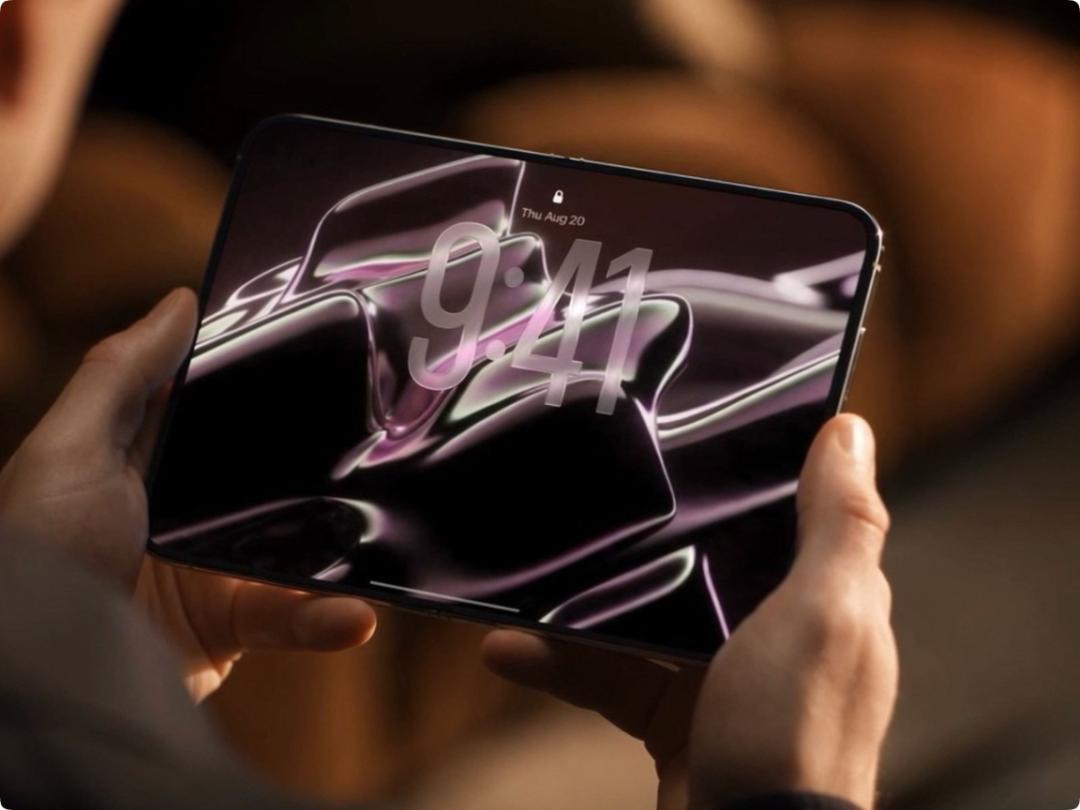
Photo | MacRumors
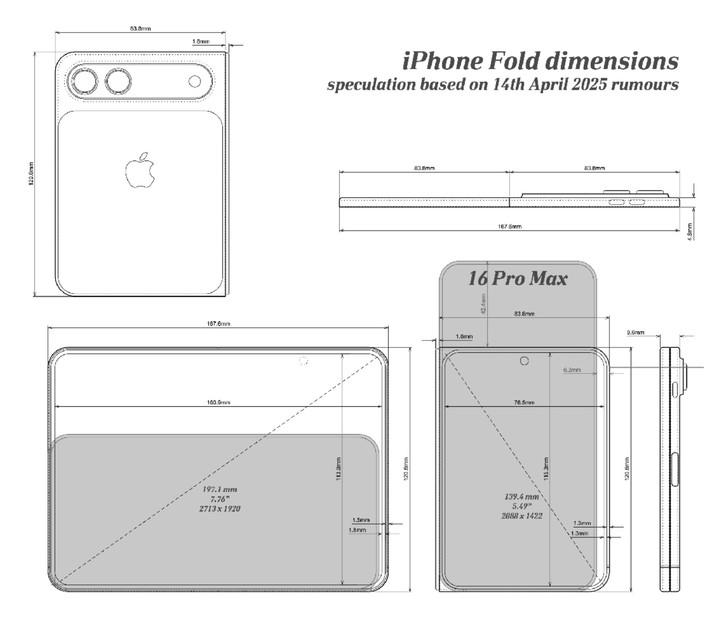
The widely accepted statement at present is that Apple did not choose the small vertical foldable form like Samsung Galaxy Z Flip, but a large foldable device that unfolds left and right. Its external screen is about 5.3 to 5.5 inches, and the internal unfolded screen is about 7.8 inches.
The screen aspect ratio is probably the most obvious difference — unlike most current "large foldable" phones that are nearly square when unfolded, Apple chose a "wider" internal screen, which is more like the popular "wide fold" form factor. Information previously obtained by ifanr shows that this product with internal code V68 looks very much like a horizontally placed iPad when unfolded.
This choice is very consistent with Apple's consistent product philosophy.
Over the past few years, phone manufacturers have been answering one question: how to put a large screen into a pocket?
But Apple may be answering another question: how to put an iPad into an iPhone?
The two seem similar, but they actually determine completely different product logic.
In fact, Apple has paved the way for this form factor at the software level in advance.
In iOS 27, system apps such as Weather and Music have obviously added layouts for landscape orientation and different screen sizes; more leaks point out that the new system will automatically switch to an iPad-like app layout, bringing more interactions optimized for landscape view, multi-column display and large-size screens.
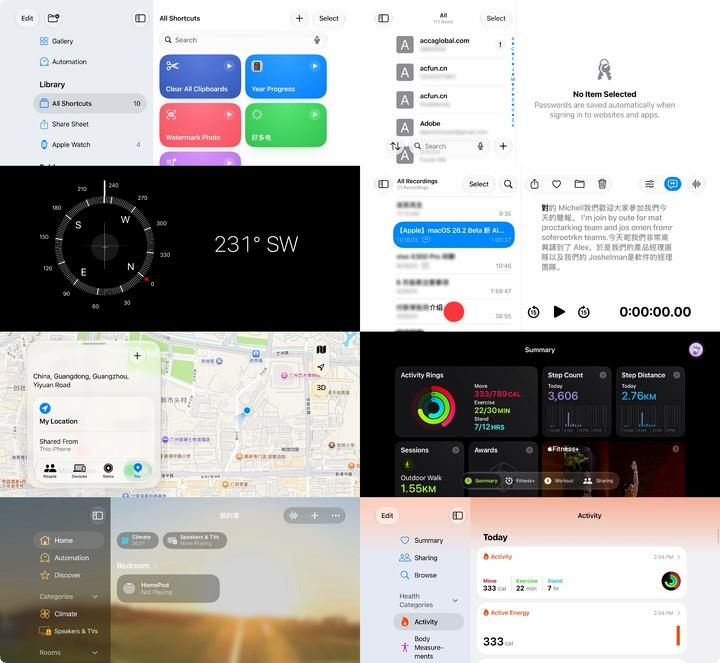
In terms of hardware, current leaks are also quite comprehensive.
The foldable iPhone will most likely adopt the A20 series chip and 12GB of RAM.
To control the body thickness, Apple may abandon Face ID for the time being and use side-mounted Touch ID instead.
The rear imaging system is expected to adopt a dual-camera solution, with an unfolded thickness of about 4.5 to 4.8mm and a folded thickness of about 9mm. The hinge will use titanium alloy, stainless steel and other materials, together with UTG ultra-thin glass to reduce creases as much as possible.
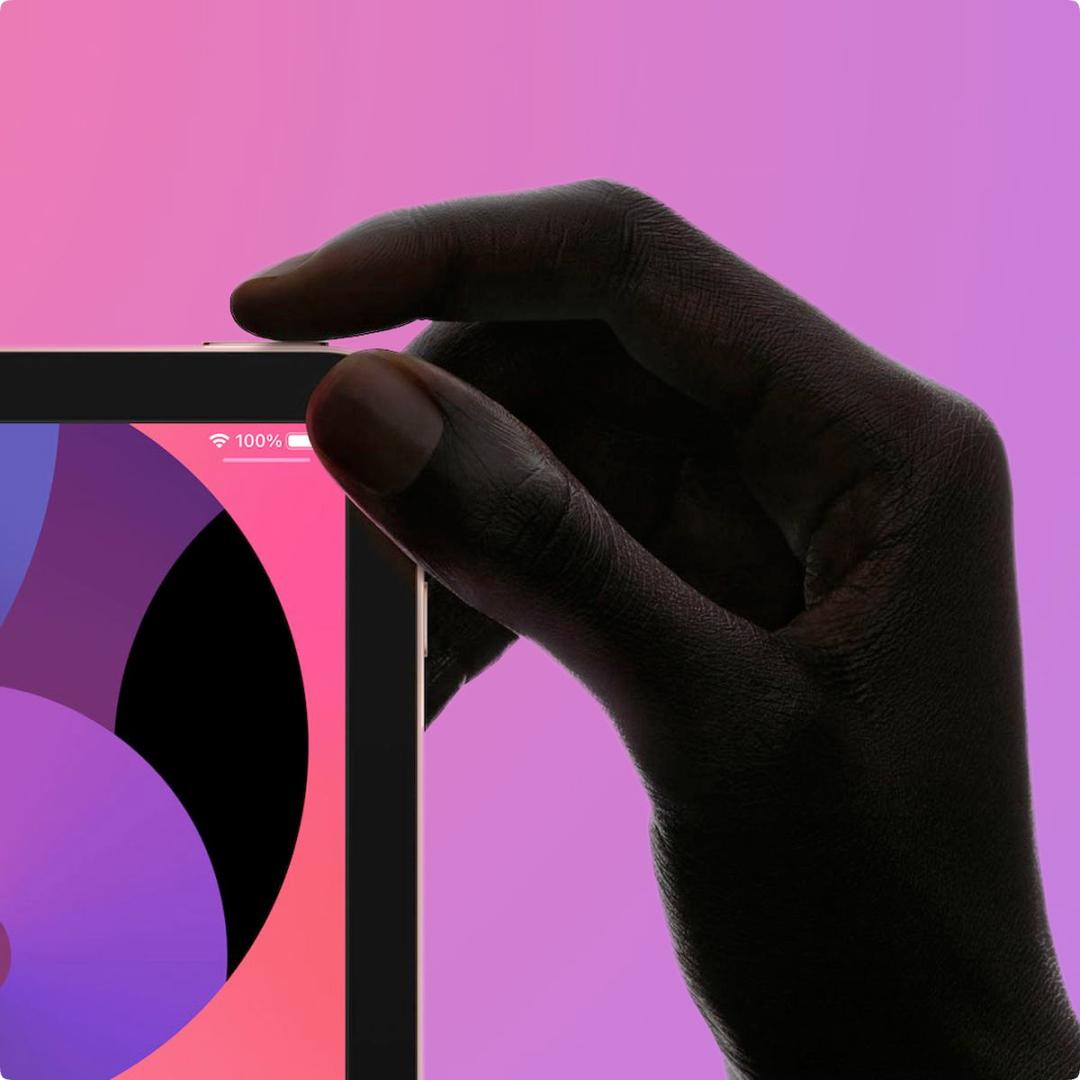
Photo | Apple
However, it may also become the most expensive iPhone ever.
The general public expects its selling price to exceed 2000 US dollars, and some predictions even give a price as high as 2500 US dollars, which is roughly the total price of one iPhone plus one iPad Pro.
Apple entered the foldable screen market nearly seven years later than its competitors. Relying only on a foldable iPhone is hardly enough to make people accept its high price. The crease in the middle of the screen, hinge lifespan, body thickness, and software adaptation are all areas where it needs to deliver satisfactory answers.
This is most likely not an iPhone designed to boost sales volume.
It is more like the original Apple Watch and Vision Pro back then: Apple needs to nail down a new product coordinate first.
The iPhone 18 Pro will be the model that truly undertakes the sales task this year.
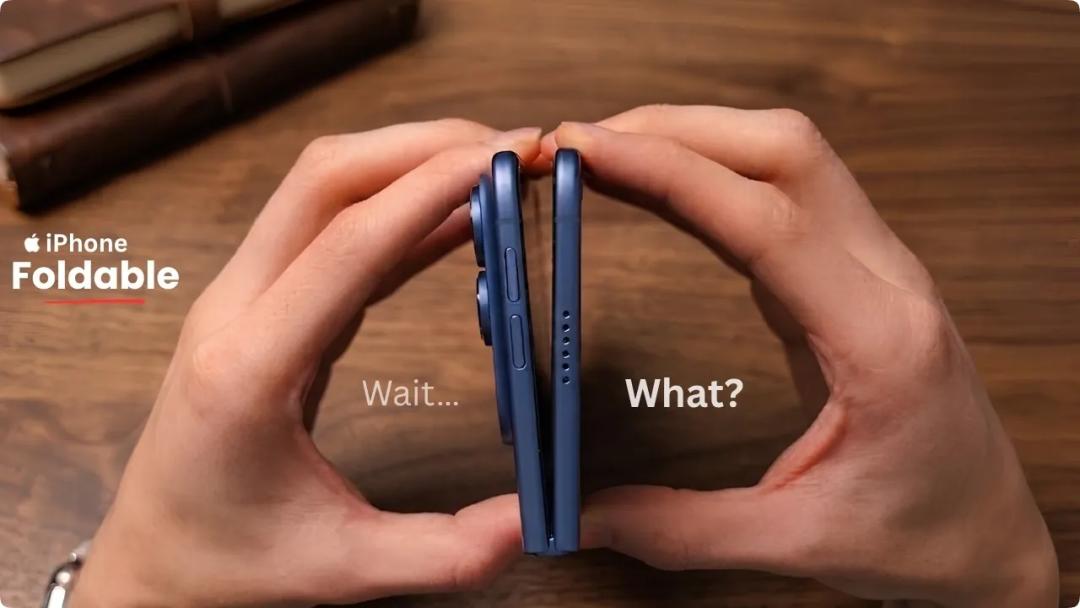
Source from the internet
iPhone 18 Pro: Looks unchanged, everything inside is new
Compared with the foldable iPhone, the appearance changes of iPhone 18 Pro and Pro Max are much more restrained.
Current information shows that the two phones will still retain the 6.3-inch and 6.9-inch sizes, and the overall appearance will continue the design of the previous generation. The under-display Face ID that has been rumored for a long time is now more likely not to be implemented in this generation, and Apple is more likely to further shrink the Dynamic Island.
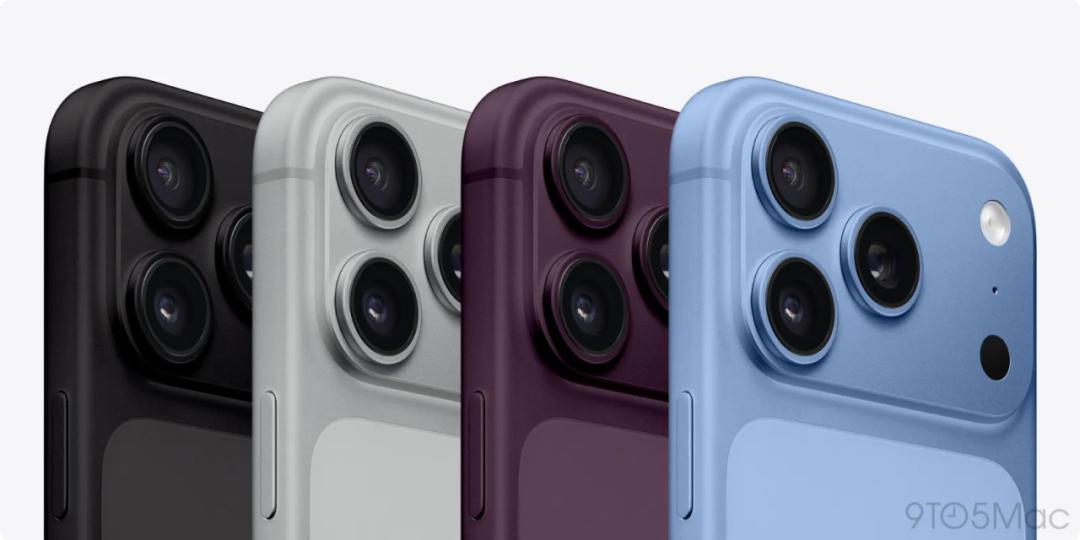
Photo | 9to5Mac
The main changes are concentrated inside the device.
First look at the A20 Pro. It is expected to become Apple's first mobile chip using TSMC's 2nm process. Compared with the current 3nm A19 Pro, the focus of the upgrade is expected to be not just benchmark scores, but the balance between performance, energy efficiency and chip size.
As on-device AI models become larger and larger, the transistor budget of SoC is becoming important again. The A20 Pro may also adopt a new packaging design to further improve memory access and overall efficiency.
Another notable chip is the C2.
From C1, C1X to C2, the update speed of Apple's self-developed baseband has accelerated significantly. If the previous news is accurate, the iPhone 18 Pro will further reduce its dependence on Qualcomm's baseband, and may expand satellite communication from emergency SOS to ordinary data connections.
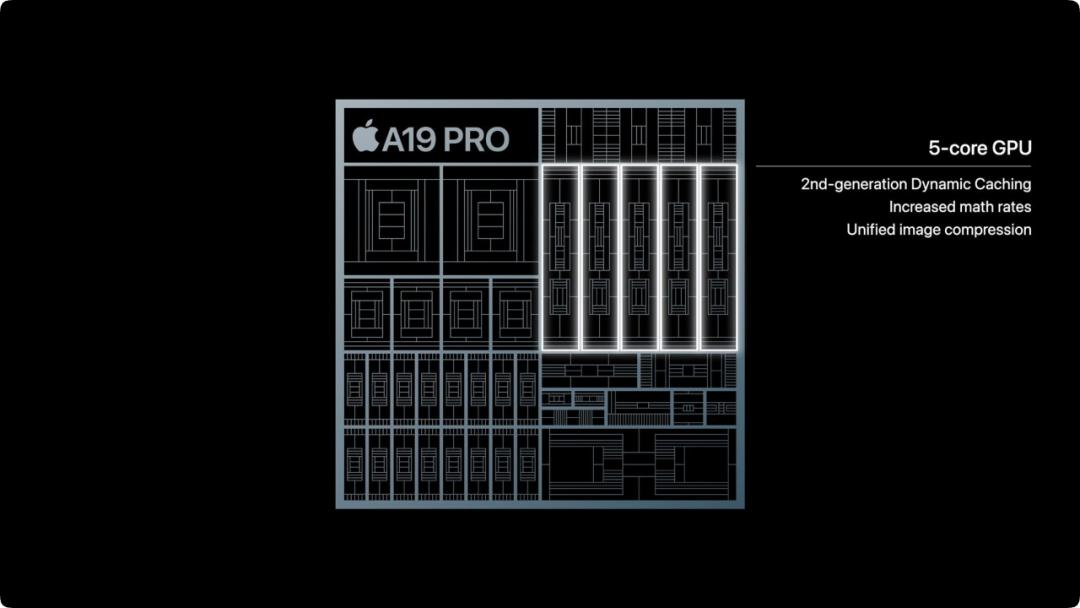
The camera may also see a long-awaited mechanical structure upgrade.
Multiple sources point out that the iPhone 18 Pro series is testing a variable aperture main camera, which can change the actual light intake of the lens through a mechanical structure, so as to adjust depth of field, shutter and image quality in different scenarios. It is not yet certain whether both Pro models will be equipped with this feature, and some sources say the variable aperture will be an exclusive function for the Pro Max.
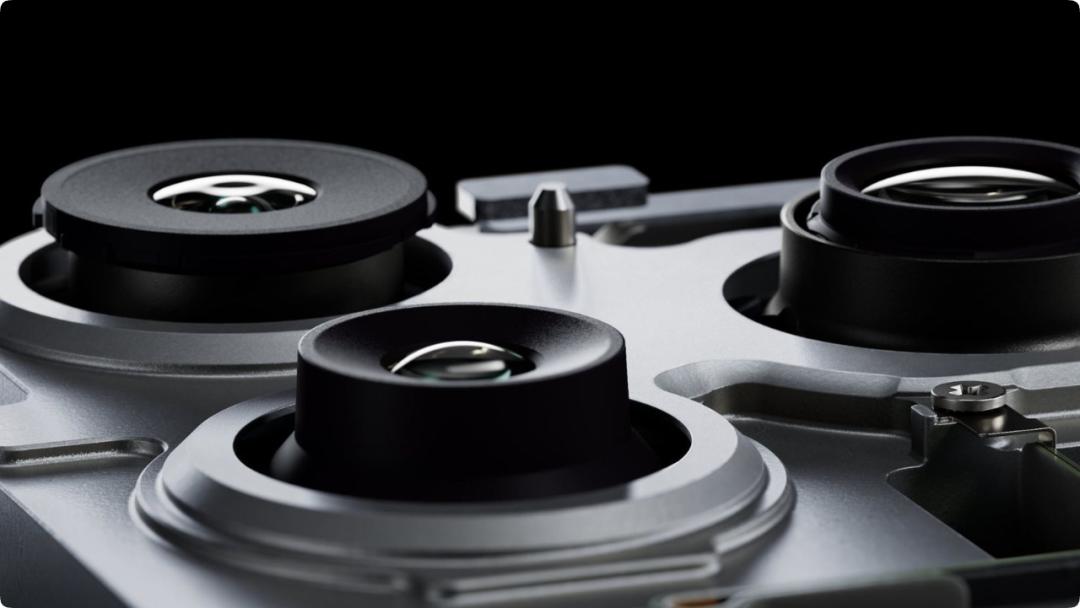
Photo | MacRumors
In addition, there are longer battery life, 12GB RAM, a new generation of wireless chips, and new body color options.
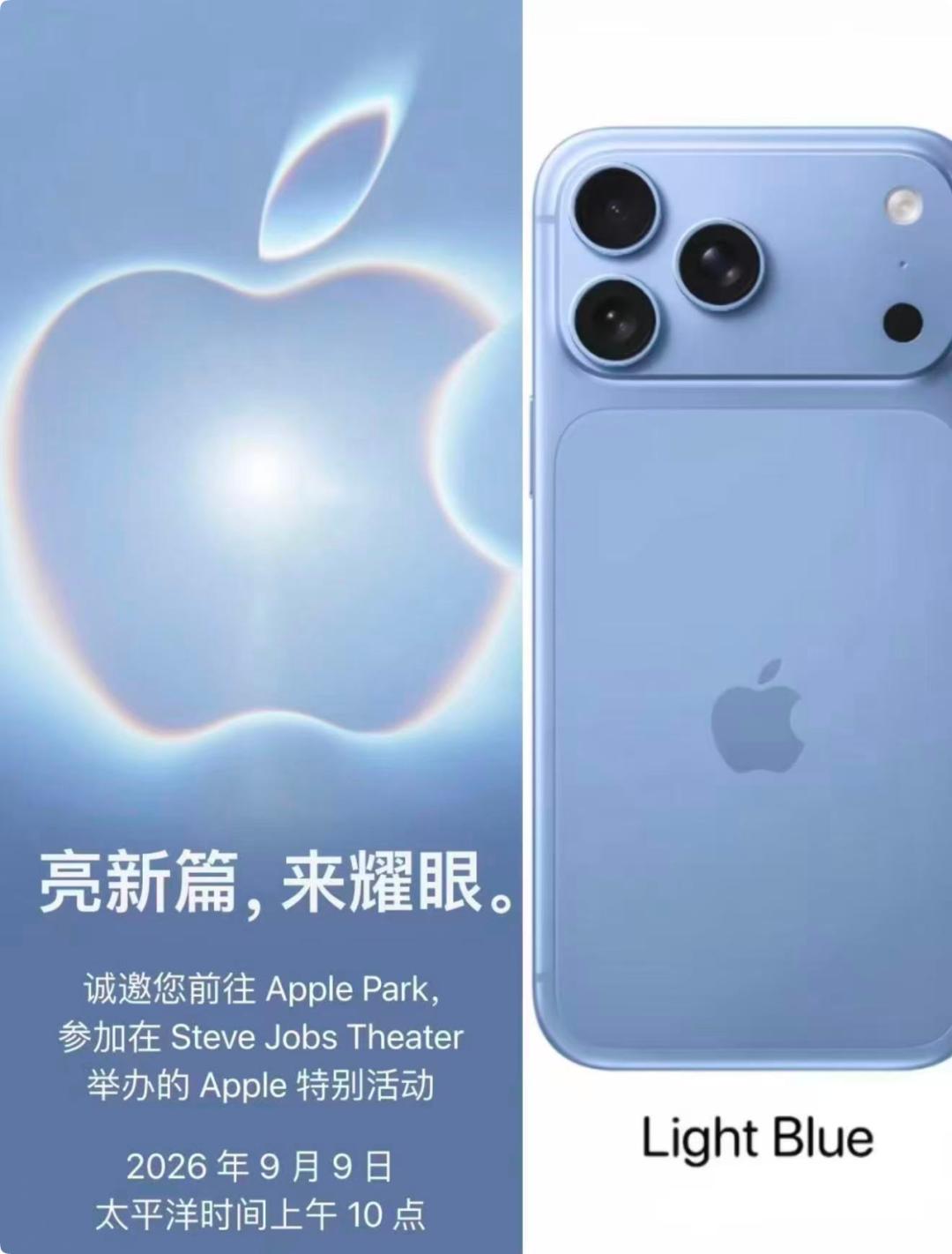
The media invitation sent early this morning also seems to echo these upgrades in advance.
A clear starburst can be seen in the center of the picture, with a ring of halo around it. In photography, sun starbursts can usually only be captured clearly with a smaller aperture, which exactly corresponds to the previous leaks about the variable aperture main camera of the iPhone 18 Pro.
The sky blue background also seems to correspond to the previously exposed new phone color. Apple often hides clues of new products in the invitation in advance, and these details are hard to ignore.
In front of the disruptive form change of the foldable iPhone, the iPhone 18 Pro series does seem a bit plain, more like a step-by-step steady upgrade.
But almost all the changes of this generation of Pro happen in invisible places — A20 Pro, C2 baseband, self-developed wireless chip, plus imaging and memory upgrades, more and more core components are adopting Apple's own solutions.
The iPhone 18 Pro may not bring a new form factor that catches the eye at first glance, but it is likely to become the iPhone with the highest degree of Apple's independent development so far.
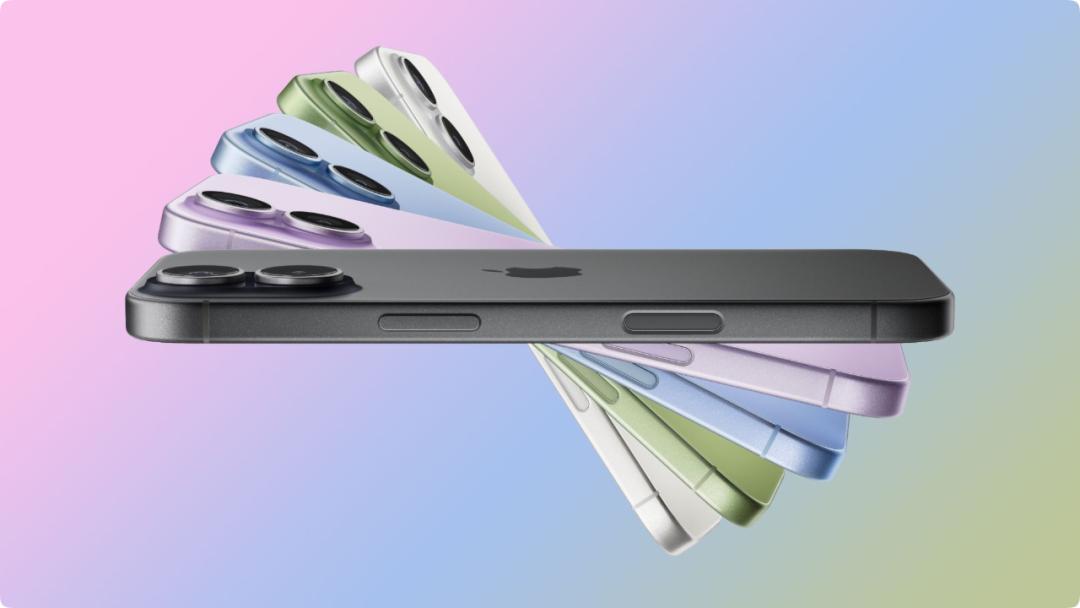
Photo | MacRumors
As for the cheaper standard iPhone 18, we will probably see it next year.
Apple has basically confirmed that it will change the release rhythm of iPhones — iPhone 18, iPhone 18e and iPhone Air 2 will be postponed to the spring of 2027, forming another major iPhone update node.
This also means that the product line in September this year will be obviously tilted towards high-end positioning as a whole.
On one side is the iPhone Pro with a starting price of more than 1000 US dollars, and on the other side is the foldable phone with a starting price as high as 2000 US dollars.
This may be the most expensive iPhone lineup ever.
Apple Ecosystem: None can be missing
Just two weeks before the launch event, a new member was added to the leak list — AirPods 5.
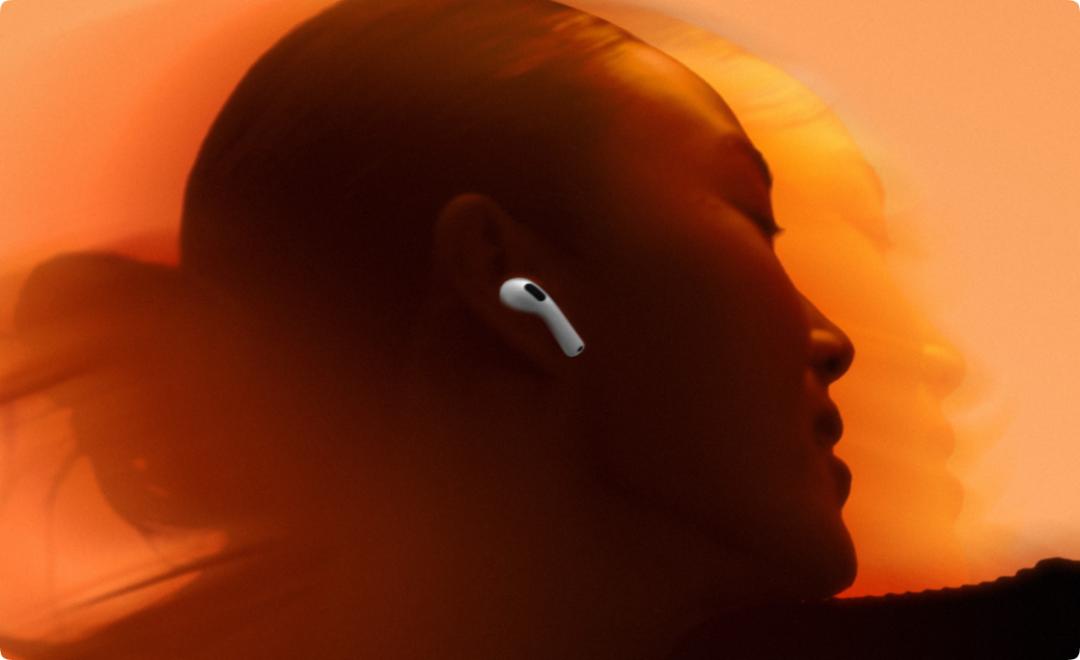
According to Mark Gurman's latest report, Apple will launch the fifth-generation AirPods as early as this autumn launch event. The product arrangement will follow the idea of AirPods 4, offering two versions at once, one is the standard version, and the other supports active noise cancellation.
Relevant codes for two AirPods 5 models have also been found in macOS 26.7 RC, which basically means that the product is nearly ready for official release.
As for what specific upgrades it will bring, there is very little information at present — it is most likely a regular update with unchanged appearance, but equipped with a new generation of H-series chips, making AirPods have lower latency, better sound quality and longer battery life.
But one thing can be confirmed for sure: it is not the "camera-equipped AirPods" we reported some time ago.
That product was originally in Apple's 2026 product roadmap, and even related demo materials have been added to macOS. However, due to supply chain and software problems, it has now been basically confirmed to be postponed to 2