Enterprise Observation | Xinpeisen carries out AI4M implementation practice with ternary closed-loop solution
Against the backdrop of the rapid development of the AI4S (AI for Science) industry, many new material R&D institutions and university research groups have attempted to carry out AI4M (AI for Materials) material computing relying on general-purpose CPUs and GPUs. However, CPUs and GPUs are faced with the challenges of memory wall and power consumption wall, which lead to slow material computing speed, high energy consumption, and difficulty in implementing large-system atomic simulations. At the same time, most material computing services on the market have the phenomenon of multi-layer subcontracting, leaving researchers in the dilemma of "slow computing, unreliable data, and unaffordable computing".
As a representative AI4S enterprise in the Greater Bay Area, Guangdong Xinpeisen Technology Co., Ltd. has focused on atomic-level scientific computing and explored an implementation path that coordinates hardware computing power base, AI intelligent tools and professional scientific research services, providing new solutions for the field of material R&D.

Who is Xinpeisen: Tsinghua-affiliated founding team and "non-Von Neumann" technical route
Xinpeisen focuses on the AI4M (AI-empowered Material R&D) field, engaged in the R&D and sales of computing tools such as dedicated computing chips, acceleration cards, servers, clusters, as well as computing services including cloud computing, vertical model development, computing scheme design, and computing technology training. The enterprise is not positioned as a pure chip company, but is committed to becoming a dual leader of the AI4M computing power base and application solutions, building a ternary closed-loop ecosystem of "Super Terminal (Xinpeisen·MaterHaven) + Agent (Xinpeisen·MaterPlato) + Computing Solution (Xinpeisen·SwiftMater)".
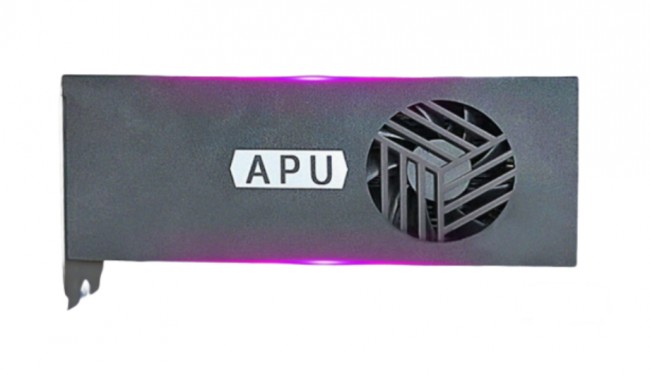
The core technical route of Xinpeisen is the "non-Von Neumann" dedicated chip architecture, and it has developed the atomic-level material computing tool APU (Atomistic Processing Unit) — a dedicated computing chip specially designed for atomic-level material computing. Different from traditional general-purpose chips, APU redesigns the underlying architecture according to the computing characteristics of atomic simulation, breaking through the bottlenecks of "memory wall" and "power consumption wall".
The team background of this enterprise is also noteworthy. Among them, Professor Liu Jie, co-founder, chairman and chief scientist, is a second-level professor and doctoral supervisor of Hunan University. He holds dual bachelor's degrees in Electrical and Electronic Engineering and Computer Science from Huazhong University of Science and Technology, a master's degree from the Department of Electrical Engineering of Tsinghua University, and a Ph.D. in Electronic Engineering and a master's degree in Applied Mathematics from the University of Washington, USA. He was selected into the national "Ten Thousand Talents Program" leading talent list in 2024. He once served as a senior R&D engineer at Synopsys USA and an intern engineer at Micron, undertook 6 entrusted R&D projects in the chip field for Huawei, published more than 60 academic papers in top international journals and conferences, and applied for more than 10 US patents and PCT international patents, as well as more than 30 Chinese invention patents.
Mr. Fan Zhengwei, co-founder and general manager, graduated from the School of Electrical Engineering of Wuhan University, was admitted to the Department of Electrical Engineering of Tsinghua University through recommendation, and later transferred to the Institute of Economics of Tsinghua University, giving him advantages in both engineering and economics disciplines. He has long been engaged in research and investment in the technology track on a trillion-level fund platform, with rich dual perspectives of investment and industry.

Ternary closed-loop material computing solution: full-stack closed loop from chips to services
"Some outsiders simply regard Xinpeisen as an enterprise that only makes chips, which is a misinterpretation of our model," said Mr. Fan Zhengwei, co-founder and general manager of Xinpeisen, in an interview. "Xinpeisen APU chip is the hardware base of the whole system, and what scientific research customers really need is a complete material R&D solution that can solve practical R&D problems. Hardware computing power, AI intelligent tools and professional scientific research services are all indispensable, which is also the starting point for us to build a ternary closed-loop ecosystem."
First, the first element in the ternary closed loop is the Xinpeisen·MaterHaven super terminal, which is a material computing tool corely based on the self-developed APU (Atomistic Processing Unit) chip.
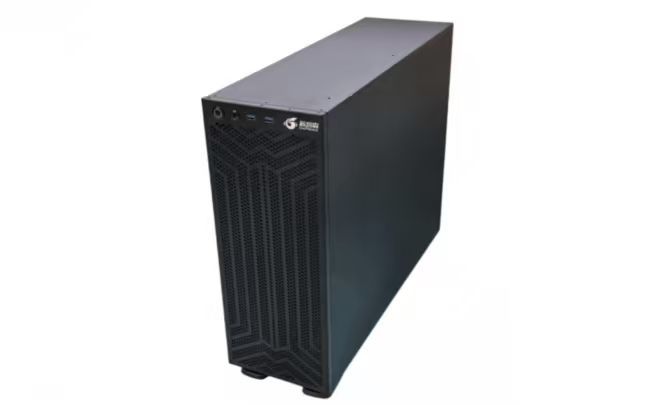
Different from the general-purpose chip route, Xinpeisen APU uniquely adopts the non-Von Neumann dedicated chip architecture, reconstructs the underlying layer for the computing characteristics of atomic simulation, and specifically solves the bottlenecks of memory wall and power consumption wall. Actual measurement data shows that in atomic-level scientific computing scenarios such as machine learning molecular dynamics (MD) and density functional theory (DFT), compared with traditional CPUs/GPUs, APU increases the computing speed by 1-3 orders of magnitude and reduces energy consumption by 1-2 orders of magnitude, which can support first-principles accuracy simulation of hundreds of millions of atoms for dozens of hours without interruption. The HeXi server built with this chip as the core adopts a super-heterogeneous computing architecture (CPU+GPU+APU collaboration), which consolidates the hardware foundation of the AI-empowered material R&D solution.
Relying only on high-performance hardware is still difficult to release the full value of computing power. The second element of the ternary closed loop is the Xinpeisen·MaterPlato material R&D agent. In the traditional material computing process, researchers spend a lot of time on repetitive work such as manual modeling, repeated parameter adjustment, and error troubleshooting. As an internal AI efficiency improvement tool, Xinpeisen·MaterPlato can realize full-process automation including intelligent parameter optimization, automatic modeling, error pre-detection, and auxiliary post-processing. Fan Zhengwei introduced to reporters: "This material computing AI agent will continuously learn from real projects, forming a growth flywheel of 'computing power generates data, data trains models, and models feed back to improve efficiency'."
The third element of the ternary closed loop is the full-time directly-operated master and doctor team of Xinpeisen·SwiftMater — reconstructing the production relationship of material computing.
Nowadays, many material computing agency services in the industry still adopt the multi-layer subcontracting intermediary model, which brings problems such as opaque prices and difficult traceability of results. Xinpeisen adopts a full-time on-the-job master and doctor team to directly connect with university PIs and enterprise R&D research groups, eliminating all intermediate markup links. With a three-layer quality control system paired with legal-level compensation guarantee, it makes "punctual, accurate and traceable" change from a promise to a standard configuration.
The value of Xinpeisen lies not only in the narrative of "material R&D super terminal", but also in its precise response to an industry pain point — the computing power bottleneck of material R&D requires not only faster chips, but a systematic solution from underlying hardware to upper-layer services.
At present, domestic AI for Science is still in the critical stage of industrial implementation. Most enterprises related to material computing choose single-point breakthroughs: some focus on chip hardware R&D, some deploy algorithm tools, and some only provide agency computing services. However, material computing itself is a field with deep coupling of hardware, algorithms and scientific research services. The core value of Xinpeisen's ternary closed-loop model lies in opening up the links of the computing power base, vertical intelligent agent and directly-operated scientific research services, avoiding the disconnection between hardware performance and actual R&D demands. In the future, the ternary closed-loop solution may become an important development direction of AI-empowered material R&D. We look forward to more local science and innovation enterprises continuously accumulating technologies and effectively converting computing power capabilities into innovation momentum for the new material industry.