Mark Zuckerberg wouldn't give up, Manus "developed in-house" one, but the model it used is Claude...
Zuck just can't let it go...
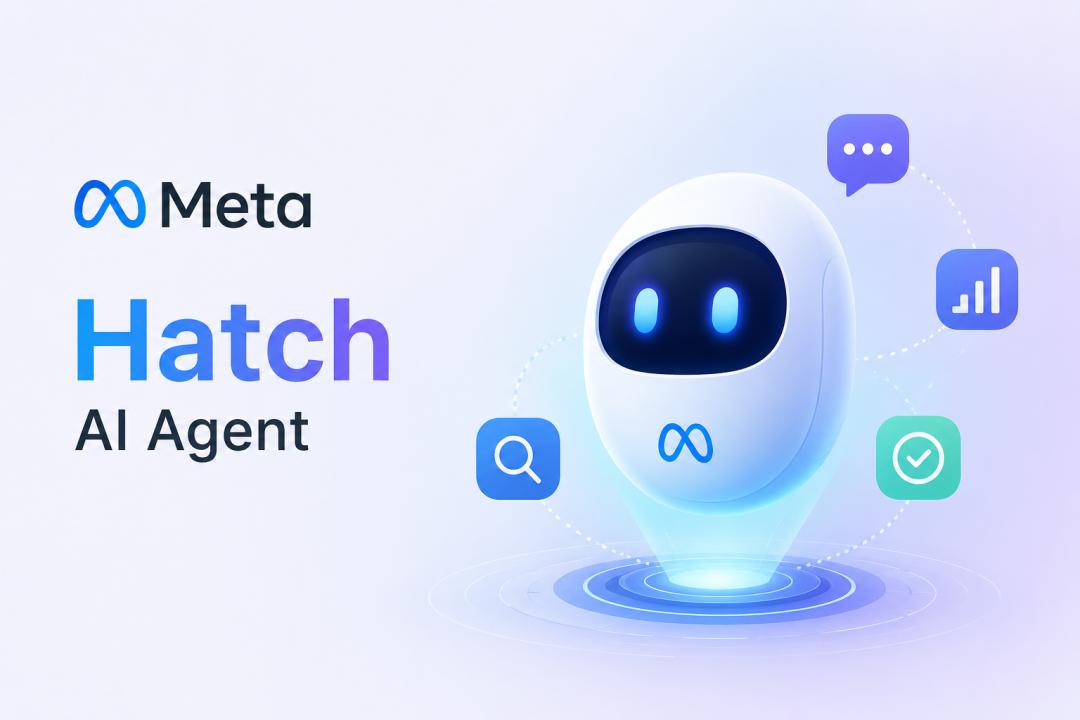
Right after spinning off Manus, Meta turned around and launched its own agent platform "Hatch".
Zuck just can't let it go...

The Information reports that Hatch's core feature is highlighted as "given a goal, it will automatically break it down and deliver the result", which looks quite similar to Manus, but it is deliberately positioned with a new promotional slogan as "the consumer version of OpenClaw".
Its highest price is $199.99 per month, which is also aligned with Manus's top tier $200 per month.
In addition, the model Hatch uses in the development phase is Claude, and it is planned to switch to the self-developed model Muse Spark when the product is officially launched, with a new model called Watermelon to be rolled out in October.
Failed Acquisition, Build It In-House
Different from essential developer tools such as Codex and Claude Code, which are designed for coding, debugging and software construction.
Hatch focuses more on "consumer digital life".
In the early stage, Meta configured Hatch's training environment with simulated versions of internet services including DoorDash, Etsy, Reddit, Yelp and Outlook.
These scenarios cover local services and delivery, commodity trading, community information retrieval, and personal productivity management.
Plus Meta's own social network ecosystem consisting of Instagram, Facebook and WhatsApp.
In other words, Hatch aims to open up the full path of "discovery - comparison - communication - arrangement - purchase".
If a user sees a pair of shoes in Instagram Reels, Hatch can theoretically identify product clues, search for similar products, compare prices and delivery times, give recommendations based on the user's budget and historical preferences, and request confirmation before payment.
However, it also differs from Manus. Manus is an independent general-purpose execution environment oriented to research, web automation, coding and content production. Hatch puts more emphasis on long-term memory, personalized context, cross-service operations, and deep integration with Meta's social ecosystem of billions of users.
In terms of technical route, using Claude in the development stage easily leads people to the conclusion that Muse Spark has not yet met the standards in agent tests such as multi-step reasoning and tool calling.
However, long-term dependence on competitors is obviously not in line with Meta's cost and strategic interests. Once consumer-grade agents form high-frequency calls and long-chain reasoning, the reasoning cost will rise sharply.
Meta's plan is to migrate in phases.
It will use Claude as a transition during the R&D and internal testing phase, switch to the self-developed Muse Spark series of models in the initial productization phase, and then take over with next-generation models such as Watermelon to be launched in October in the subsequent expansion phase.
This seems to be another hidden trouble, since model behaviors vary from each other, the migration will not be easy, right?
However, it has not been confirmed yet whether Watermelon belongs to the Muse series and whether it will directly become the core model of Hatch.
Meta's advertising business has long generated strong cash flow, but the rapid rise in costs for AI infrastructure, model training and reasoning requires the company to build a more direct AI monetization method beyond advertising.
The biggest ace of Hatch's high-end subscription pricing is "default distribution".
Users familiar with the Meta ecosystem do not need to download additional unfamiliar tools, and can use Hatch directly in Instagram, Facebook, WhatsApp, Messenger, the Meta AI app and even smart glasses.
A typical problem faced by general agents is that they do not understand users. Meta hopes to convert these scattered signals through Hatch into the ability to "understand user intent", which is a condition that pure chat AI products do not have.
However, the price of nearly $200 per month means users will measure whether it can stably save several hours or even dozens of hours of manpower.
This requires Hatch to maintain reliable performance in real-world scenarios such as complex web pages, incomplete information, changing login statuses, payment confirmation and exception handling.
The real internet is far more complex than the simulated training environment. Web page structures often change, and pop-ups, verification codes, anti-bot measures, regional differences and inventory fluctuations will all cause task failures.
This article is from the WeChat Official Account QbitAI, Author: Meng Chen, 36Kr publishes this content with authorization.