Microsoft, Alibaba Qwen, Plaud, KIRI: "Silicon-based Employees" are coming, is your organization ready?
AI has greatly boosted individual productivity, yet value creation at the enterprise level is severely lagging behind.
In March 2026, U.S. venture capital firm a16z pointed out this long-standing thorny problem plaguing enterprises in its publication Institutional AI vs Individual AI. Three years ago, AI advanced at a blistering pace, evolving from demos to full-fledged models, and shifting from individual use cases to enterprise scenarios. Three years later, some people are building AI Native companies from scratch, while others are trying to embed AI into existing workflows. However, a large number of enterprises are stuck at the same bottleneck: disconnected data, misaligned processes, and business teams that cannot fully master the technology.
Only at this moment has the real challenge surfaced: When AI enters an enterprise, is the organization itself ready? Are workflows reconstructed? Is the return on investment clearly calculated?
At the 2026 Pinchuang Global Brand Festival co-hosted by AIXATLAS, Wu Zhuohao, Associate Professor of Communication University of China, David Gu, Global Partner of Microsoft, General Manager of Win-Win in China Division, and CEO of Microsoft Mobile, Li Chenzhong, Director of AI Product Solutions for Alibaba ATH Qwen Large Model, Liang Chao, Head of Product and Operations for China at Plaud, and Wang Zhengnan, Co-Founder & CEO of KIRI Innovation, held an in-depth dialogue on the new AI business form. We may gain some insights from this conversation.
The following is the full transcript of the roundtable, edited and organized by iBrandi Pinchuang:
The Watershed of Enterprise AI: Models or Organizational Capability?
Wu Zhuohao, Associate Professor of Communication University of China: It is a great pleasure to sit with everyone today to talk about the new business form in the AI era.
Before we start, let me introduce the guests first. First of all, David Gu from Microsoft, who is currently fully in charge of Microsoft's Win-Win in China strategy and related products, and is also an industry expert in cutting-edge technologies such as artificial intelligence and blockchain. Next is Li Chenzhong from Alibaba ATH Qwen Large Model, and Qwen can be said to be a highly popular star product recently. Then Liang Chao from Plaud, who is currently mainly responsible for product and operations in the China region, and Plaud focuses on AI meeting minute products with very comprehensive functions. Last is Wang Zhengnan from KIRI, whose product Remy is a very interesting 3D spatial memory application. After introducing these distinguished guests of today's roundtable, let's officially start our discussion. Let's first talk about a very important question: What exactly is the watershed of enterprise AI? Is it model capability? Or the organizational capability to deeply integrate AI into the enterprise?
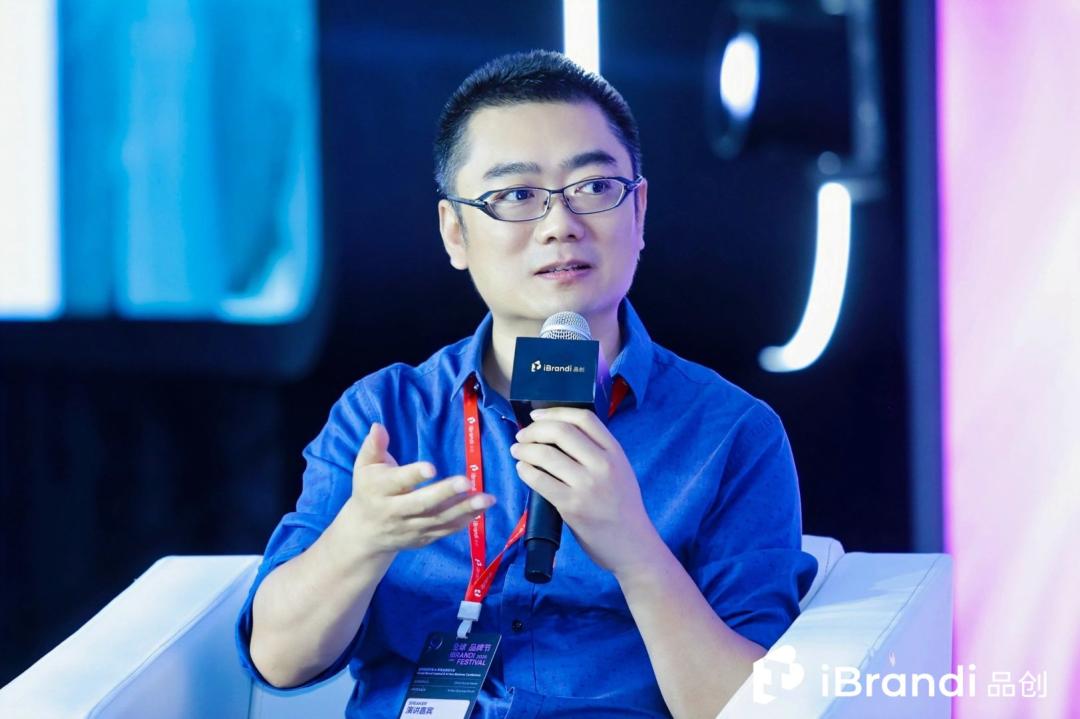
Wu Zhuohao, Associate Professor of Communication University of China
David Gu, Global Partner of Microsoft, General Manager of Win-Win in China Division, and CEO of Microsoft Mobile: The watershed is the latter, namely "the organizational capability to deeply integrate AI into the enterprise". Now we can clearly feel that AI is very effective in improving individual productivity, but it is worth noting that there is little growth for organizations. The reason is that the improvement of individual efficiency brought by AI is explicit, while the most needed efficiency improvement for organizations lies in collaboration issues, which AI cannot achieve at present.
I believe that to solve this problem, we need to start from two levels: First, let AI master sufficient organizational context. We need to let AI understand what the workflow of organizational collaboration looks like, so that it can participate in decision-making. Second, let AI improve the efficiency of "consensus building" among organizations. AI helps humans make specific decisions, but organizational efficiency depends on whether people can quickly align their cognition. For example, meetings and document writing are essentially processes to fill cognitive gaps. AI is good at expression, so can we use this capability to help teams reach consensus faster? This is the real key point for enterprises to take their AI application to a higher level.
Li Chenzhong, Director of AI Product Solutions for Alibaba ATH Qwen Large Model: I also believe that organizational capability is more important than models. Even though I work in the model business, this watershed no longer lies in the model itself. Nowadays, models are becoming increasingly capable, and their performance is more than sufficient for enterprises. At this time, we need to return to the essence of business. Therefore, enterprises should think more about how to combine AI (models) with business scenarios, dig deep into scenarios, and form AI that is truly bound to industries and scenarios and can give full play to productivity.
Liang Chao, Head of Product and Operations for China at Plaud: Let me share my understanding of this issue. Are models important? Very important. Without the capabilities of understanding, generation, reasoning and multimodality of models, so many AI native applications would not be possible. But for enterprises, what is more needed is to bring models into real work scenarios.
Wang Zhengnan, Co-Founder & CEO of KIRI Innovation: I would like to use the situation of our company KIRI to answer this question. KIRI currently has less than 50 employees, and its two products (KIRI Engine and Remy) manage more than 10 million users in total. Many people think we have at least 200 to 300 employees, but in fact, less than 50 people are operating these two large-scale products. It is AI that has multiplied everyone's work efficiency many times over.
AI even allows one person to do the work of seven people. For example, in the past, it was almost impossible for one person to be responsible for a 10-million-user database, but now, what one person does is not directly manage the database, but manage a group of agents, who optimize data, organize information, and develop new features. So as far as I am concerned, the most important thing for enterprise AI is how humans use Agents.
Agents Reconstruct Organizations: From Partial Replacement to Process Rebuilding
Wu Zhuohao, Associate Professor of Communication University of China: I would like to follow up on the previous topic and ask David Gu a question. More than 20 years ago, I also worked at Microsoft Research. The most shocking thing for me at that time was that there was an organization in the world that could make thousands of people collaborate on the same product.
Today, AI Agents are starting to be deployed in large numbers in enterprises. I would like to ask, when these "silicon-based employees" truly become the norm in organizations, what will the future enterprise working state evolve into?
David Gu, Global Partner of Microsoft, General Manager of Win-Win in China Division, and CEO of Microsoft Mobile: Projects like Windows that involve thousands of people, or even projects that involve tens of thousands of people across Microsoft, were indeed remarkable paradigms in the past. But now that AI coding efficiency has improved, new problems have emerged, such as compliance, review, privacy and security issues. Who will solve these problems?
We have found that AI currently only changes one link in the organization. Many studies have also mentioned that to make full use of AI, we cannot only replace parts of the original process, but need more underlying reconstruction. But to be honest, there is no standard answer for how to build an AI Native organization now, and there will probably not be a unified template in the future. Each enterprise has different business forms and cultures, and our exploration is also dynamically adjusting.
Our current core idea is to start a pilot from the smallest "AI Native" unit. First, select a team that has the deepest understanding of AI, feed all the context we can obtain, including online data and offline unstructured information, to AI, so that it can truly participate in decision-making.
There is a very key issue here: when we want to add a "carbon-based" member to this AI team, we must first ask ourselves, why can't the existing "silicon-based" members solve this problem? The answer to this question can help us clarify which work can be done by AI and which must be left to humans. Organizational change is more like letting this small AI Native unit grow gradually and radiate outward, rather than knocking down the entire existing system all at once.
Of course, this idea is not fixed. Different business scenarios and the rapid iteration of model capabilities will affect the position and retention of roles, which is itself a continuous evolution process.

David Gu, Global Partner of Microsoft, General Manager of Win-Win in China Division, and CEO of Microsoft Mobile
Wu Zhuohao, Associate Professor of Communication University of China: The data of "one person doing the work of seven" mentioned by Wang Zhengnan from KIRI just now is very intuitive. Then I would like to ask David Gu, from the practical cases in different industries you have come into contact with, are there any relatively referenceable indicators that can help enterprises position themselves?
David Gu, Global Partner of Microsoft, General Manager of Win-Win in China Division, and CEO of Microsoft Mobile: This is a very difficult question. Many enterprises initially tried to use quantitative indicators to measure, such as PR Rate and Token consumption, but after practice, they found that these figures have little correlation with actual business value, and now the industry is no longer pursuing these superficial indicators.
In addition, the difference between To B and To C scenarios is very large. Problems in To C scenarios can be rolled back quickly, but To B scenarios involve the business continuity of enterprise customers, and any problem will affect a wide range of stakeholders and bear heavy responsibilities. So there is indeed no unified number that can be applied to all enterprises.
I prefer to look at another dimension: what proportion of decisions in the organization can AI participate in and provide real support. But how to calculate this proportion and what the denominator is must be dynamically defined according to the business form and AI implementation depth of each enterprise, and cannot be applied uniformly across the board.
For Enterprises Using AI, Choose Ecosystem or Choose Model?
Wu Zhuohao, Associate Professor of Communication University of China: Next, let's invite Li Chenzhong, who works on large models, to share his views.
In this multi-model era, are enterprises choosing a model or an ecosystem? At present, Alibaba has the most complete range of models with different parameter scales from small to large, which may cover all kinds of demands, so we would like to ask you to introduce this.
Li Chenzhong, Director of AI Product Solutions for Alibaba ATH Qwen Large Model: Before answering this question, I would like to ask all the business leaders a question: Which kind of report would you prefer to hear? One is that an employee says he wants to start a new project, but he has to spend 2 million yuan and wait three months to build the infrastructure before he can start testing. The other is that he says he spent 80 yuan last night to run a test, verified the key problem, and now knows how to move forward.
I think many people at the scene will choose the latter, but in reality, the former is the majority. Many enterprises cannot start their AI practice for a long time because they are stuck in the mindset of "invest first and see results later". Especially for large models, a computing server costs at least 2 million yuan. Money is invested and time is spent, but we have no idea whether the core business problem can be solved at all. Why not do the opposite? Leave the heavy work of computing power, deployment and infrastructure to the ecosystem, and you only need to focus on the business scenario itself. If the test succeeds, you can continue to promote it; if it fails, you only lose a few days of time and dozens of yuan.
So my point is very clear: In the multi-model era, enterprises must first learn to embrace the ecosystem. As for how to choose models, it depends on scenarios. If you want to develop your own computer vision recognition model or embodied intelligence model, that is indeed a track for only a few players. But for the vast majority of enterprises, what they need is the function of "recognizing objects" itself, and it does not matter at all which model is used behind it. Reusing ready-made capability modules and integrating them into products quickly is the most efficient way.
All in all, the AI era is a race against time. The industry is bound to be reconstructed by AI, it's just a matter of time. The one that runs faster will take the market first. So my suggestion is cherish your time and capital, make good use of the ecosystem, verify quickly, and cover the market quickly.
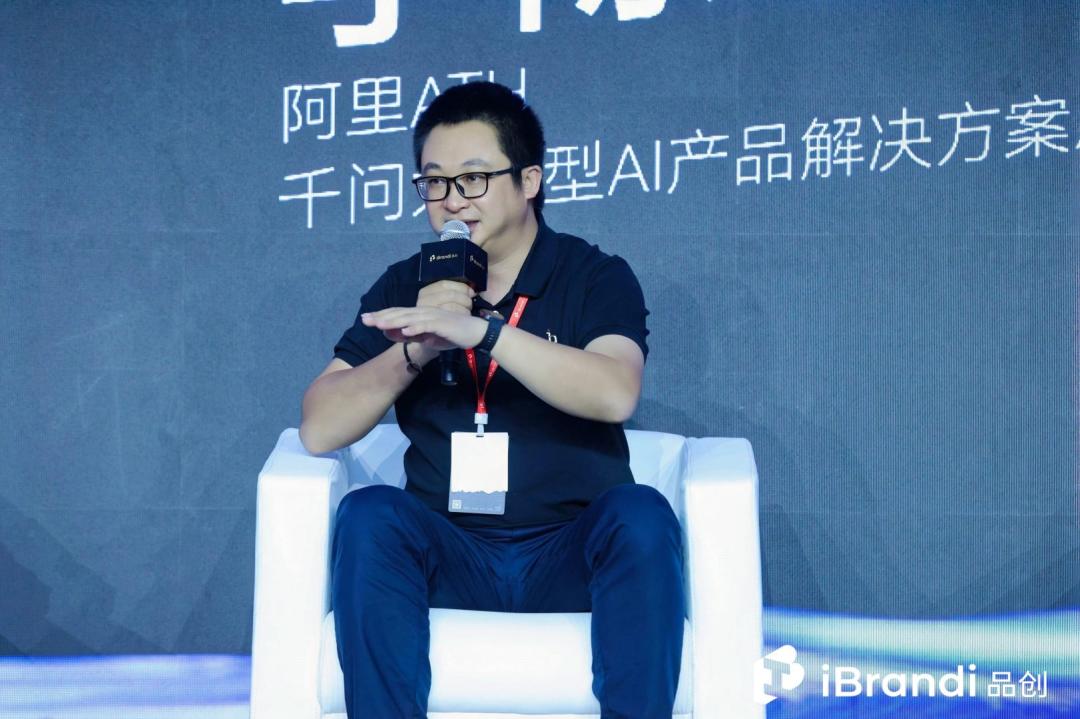
Li Chenzhong, Director of AI Product Solutions for Alibaba ATH Qwen Large Model
AI Access to Internal Systems: How to Reorganize Information Assets?
Wu Zhuohao, Associate Professor of Communication University of China: In fact, the AI ecosystem is very important for enterprises. If we want to integrate the ecosystem into existing workflows, I think the first step is to let AI truly understand the enterprise. Does that mean that we must rebuild a whole set of knowledge, data and content systems? I would like to ask Liang Chao this question.
Liang Chao, Head of Product and Operations for China at Plaud: That is indeed necessary, but more accurately, it is "reorganizing" them. In fact, what we are doing is the "first mile" of AI entering real physical work scenarios: converting information in offline scenarios into continuously reusable organizational context through this set of workflows.
As an AI Native information processing company, Plaud has some experience in "information reorganization" that we can share with you. Our method mainly combines software and hardware, and is divided into four steps:
The first step is capture: collect all relevant information in work scenarios through hardware facilities;
The second step is extraction: extract core content from the collected information;
The third step is processing: convert the extracted information into structured context;
The fourth step is reuse: allow people in the organization to follow up for inquiries, secondary creation or decision support based on this context.
Therefore, I believe that in the AI era, we need to reorganize information assets, but we do not need to completely discard the existing systems. With AI capabilities and appropriate tools, we can fully reorganize the scattered information in the real work scenarios of enterprises into a continuously growing and usable knowledge system.
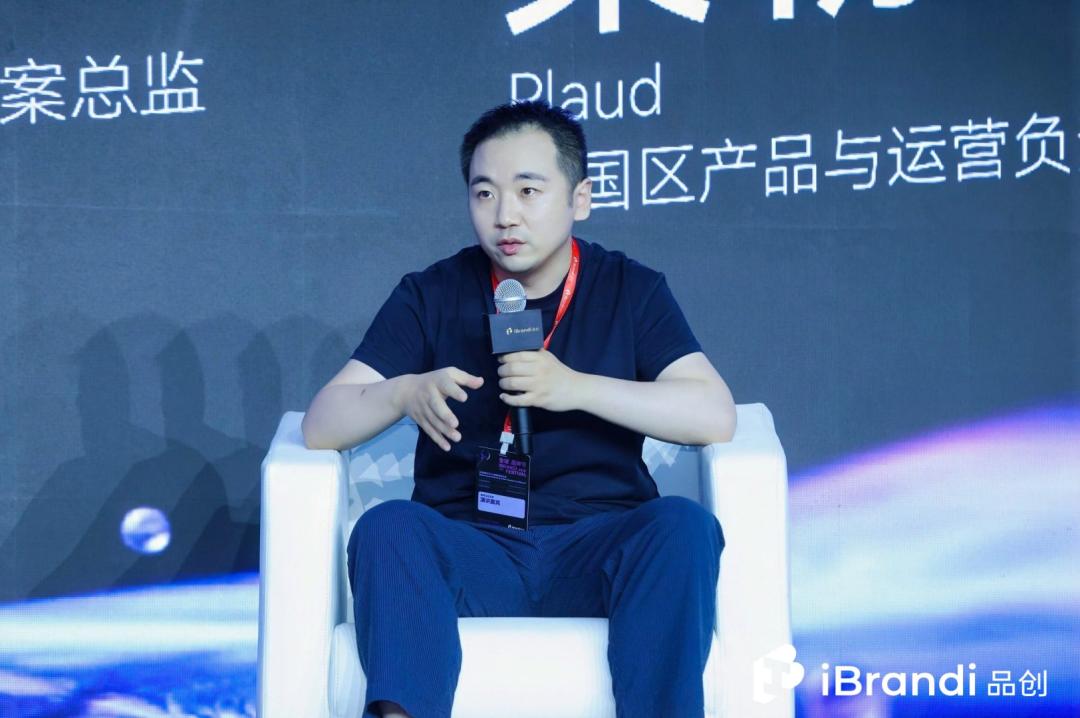
Liang Chao, Head of Product and Operations for China at Plaud
50 Employees vs 10 Million Users: How AI Rewrites Enterprise Processes?
Wu Zhuohao, Associate Professor of Communication University of China: We have discussed so far, we have selected the ecosystem and completed the preliminary preparation work. When AI truly enters the internal organization of the enterprise, which process will it change first? Wang Zhengnan, can you share the experience of KIRI?
Wang Zhengnan, Co-Founder & CEO of KIRI Innovation: Of course I can. But since the situation of each enterprise is different, we cannot generalize, I will mainly talk about how our team uses AI. Our team is small in size, 80% of whom are R&D personnel