Valued at 100 billion yuan, the smart ring firm is racing to launch an IPO, but lawsuits have already come knocking on its door.
Oura, the star enterprise in the smart ring sector, is recently sprinting for its public listing while being sued in court.
On August 24, according to media sources, smart ring manufacturer Oura plans to launch its U.S. IPO as early as September, raising up to 3 billion U.S. dollars with a valuation exceeding 16 billion U.S. dollars. By then, it will become the "world's first AI jewelry stock".
It is reported that Oura will sell shares together with some existing shareholders, and old shareholders are expected to account for a considerable part of the share sale. In other words, early investors hope to cash out and exit at the 16-billion-U.S.-dollar valuation.
Just a few days ago, on August 20, the Clarkson law firm in San Francisco filed a proposed class action against Oura in the Federal Court for the Northern District of California. The complaint alleges that Oura advertised the sleep stages estimated based on signals such as heart rate, body temperature, breathing and movement as results close to clinical sleep detection. The complaint cites a study stating that Oura's accuracy in identifying sleep stages is only 53.18%, which is close to "flipping a coin".
Oura responded that a large number of independent scientific evidences have shown that the ring can reliably estimate sleep stages based on multiple physiological signals; but Oura also emphasized that the product is not a medical device and cannot replace professional sleep detection.
At present, this lawsuit is still in the proposed stage, and the relevant allegations have not yet been recognized by the court.
When introducing its products, Oura highlights accuracy, personalized suggestions and insights into physical status; when facing doubts about accuracy, the company emphasizes the capability boundary of consumer-grade products and algorithm estimation.
When the three layers of packaging of health monitoring, AI suggestions and fashion are combined, a sensor ring is promoted as an AI health terminal, and it also stacks up an expensive "IQ tax" for consumers.
What the Oura lawsuit has torn apart is exactly this product logic: manufacturers first package problems such as understanding sleep, recording life and improving efficiency as the demand for purchasing new hardware; then let AI undertake tasks that the hardware is incapable of completing, or has not been proven to be able to complete.
This dual exaggeration of the necessity of new hardware and the delivery capability of AI constitutes the most common source of premium for AI hardware.
What consumers finally buy is both a hardware demand created by manufacturers and a set of product promises amplified by AI.
The so-called AI hardware innovation often only accomplishes two things in the end: putting a new shell on old functions, and using AI to exaggerate the product capability. This is exactly the real lack of imagination exposed by this round of AI terminals.
01
How a ring stacks up three layers of AI premium
Oura is not new hardware that emerged after the generative AI wave. It was originally a consumer electronic product that relies on sensors and machine learning algorithms for health tracking.
After the advent of generative AI, Oura added functions such as AI Advisor to convert the data collected by the ring into more complete health explanations. As a result, a smart ring has gradually stacked up three layers of premium.
The first layer is to rewrite the unmet demand in women's health into the demand for the ring.
Oura initially mainly attracted tech enthusiasts who pay attention to physical indicators, and then gradually shifted its growth focus to women. Functions such as menstruation prediction, pregnancy preparation, pregnancy and perimenopause were successively added to the product, and in 2026, it began to test the AI model for women's health. Oura CEO said that sales revenue from female consumers increased by 250% within one year.
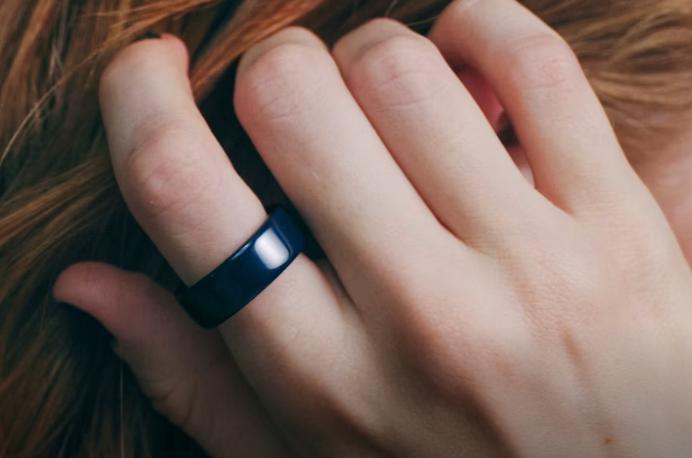
Image source: Oura official website
There has long been a gap in research and services for women's health, and the continuous recording of body temperature, sleep and cycles is also a real demand. Oura seized this gap and turned the problem of difficulty in obtaining health information continuously into a reason for wearing the ring for a long time.
After the demand is amplified, the next question is whether the ring can provide corresponding capabilities. Taking Oura's core sleep monitoring as an example, sleep duration, sleep stages and physical recovery status are not the same type of measurement. Consumer-grade wearable devices can record signals such as heart rate, body temperature and movement for a long time to help users observe changes, but they cannot obtain exactly the same capabilities as clinical detection.
The focus of the dispute in the Oura lawsuit lies in whether the manufacturer further advertised "can estimate" as "accurately enough to identify sleep stages".
The complaint cites a study published in *Scientific Reports* in 2025. The study included 45 clinical patients, and Oura obtained valid data for 31 nights. Compared with polysomnography monitoring, Oura's accuracy in distinguishing sleep from wakefulness is 85.03%; after entering the four-stage sleep classification, the overall accuracy drops to 53.18%.
Similar capability expansion also appears on other smart monitoring devices. The FDA has separately warned that there are unauthorized products on the market that claim to be able to measure blood pressure and non-invasive blood glucose through smart watches or smart rings. The more important the health issue is, the more difficult it is for consumers to verify the results on their own, and the easier it is for manufacturers to obtain premium by blurring the capability boundary.
The second layer is to use AI to turn estimation results into health suggestions.
In Oura's product system, machine learning algorithms are responsible for judging sleep stages and generating scores for sleep, activity and recovery; Oura Advisor driven by large language models converts long-term data, user input and algorithm results into cause analysis, health suggestions and action plans.
The large model does not add new sensors to the ring, nor does it directly increase the amount of information that the ring can collect. What it adds is the explanatory capability: organizing a set of probabilistic results into coherent, specific, seemingly personalized suggestions.
After users enter the App, whether they have fallen asleep, which sleep stage they are in, and how their body has recovered are compressed into several simple scores, and then AI generates a set of action suggestions. The original capability difference in underlying measurement is also covered by a smooth explanation.
What AI amplifies is not only the product experience, but also consumers' imagination of hardware capabilities.
The third layer is to hype health devices as fashion items.
Through material, color matching, lightweight design, celebrity endorsement and women's health functions, Oura turned the product that originally had the temperament of health monitoring equipment into a piece of jewelry that can be worn every day.
The appearance of jewelry adds new consumption reasons for the hardware price of hundreds of dollars and continuous membership fees. Even if the health functions are still controversial, the product can enter the consumer market relying on aesthetics, identity and daily matching.
In May 2026, Oura launched Ring 5 with a starting price of 399 U.S. dollars, and the membership fee is still 5.99 U.S. dollars per month; the company has sold a total of about 5.5 million rings, with nearly 5 million paid members.
Health monitoring makes the ring look useful, AI explanation makes it seem to understand users better, and the appearance of jewelry makes consumers willing to wear it for a long time. The three layers of packaging support each other and together constitute the premium part of the smart ring.
Jewelry can be sold for design, health devices can be sold for monitoring, and AI can also be sold for suggestions. When three values are superimposed on the same product, the extra price consumers pay for health capabilities and AI suggestions that have not been fully verified shows the nature of IQ tax.
02
The imagination of AI hardware,
always stays at finding a shell for AI
Oura's packaging strategy is also the common development logic of this round of AI hardware.
Companies first need an AI terminal story, and then supplement it with usage scenarios, target users and purchase reasons. The so-called pseudo-innovation and IQ tax often appear in this reversed product development sequence.
In order to seize the AI trend, model companies need the next generation of traffic and data entry, mobile phone manufacturers worry that new terminals will bypass mobile phones, traditional hardware companies need to prove that they have not missed the AI wave, and start-ups need a set of new terminal stories sufficient to obtain financing and attention.
Therefore, manufacturers first determine the functions that large models can recognize, summarize, translate and answer, then select carriers such as rings, glasses, pendants, earphones and recording cards, and finally package these capabilities into health management, meeting assistants, second brains, real-time translation and personal companionship.
Health, recording, translation and efficiency improvement are indeed real pain points. Pseudo-demand mainly appears in the next step: do these problems really require the separate purchase of an independent new piece of hardware?
This also reflects the root cause of the lack of imagination of AI hardware. Manufacturers first look for hardware carriers for large models, and the AI narrative of product service companies is borne by users.
In order to convert the company's entry demand into consumers' purchase demand, AI hardware usually completes packaging through three steps.
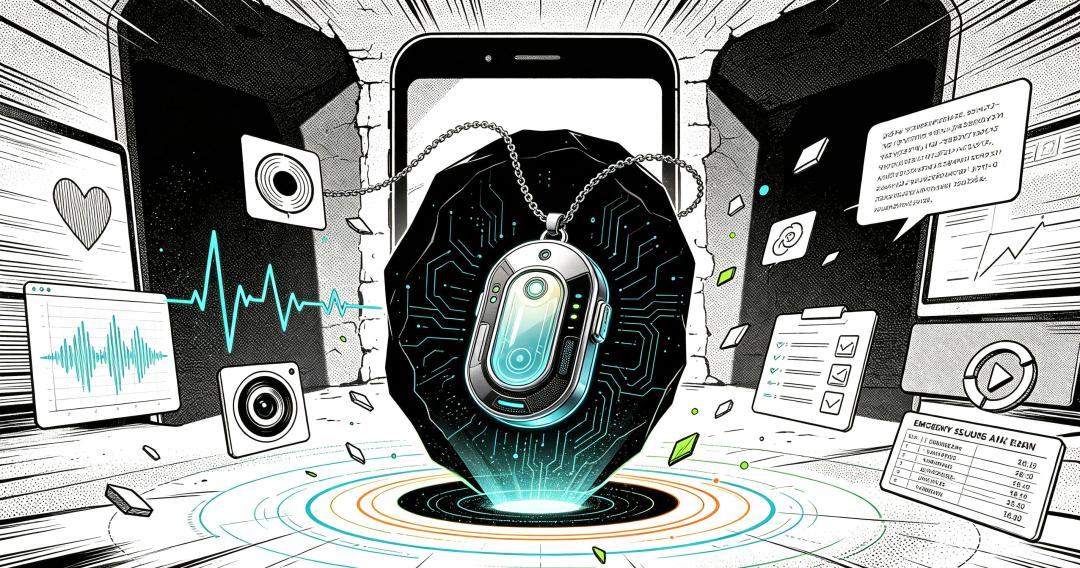
The first step is to select a scenario from real problems such as health, recording, translation and efficiency.
The second step is to emphasize that mobile phones and computers are not natural enough, not active enough or not close enough to the body, and expand the inconvenience in usage into the necessity of purchasing new terminals.
The third step is to use AI to expand product capabilities, so that hardware can be upgraded from a tool for recording, shooting or displaying to an intelligent partner that understands users, manages health, preserves memories and actively provides help.
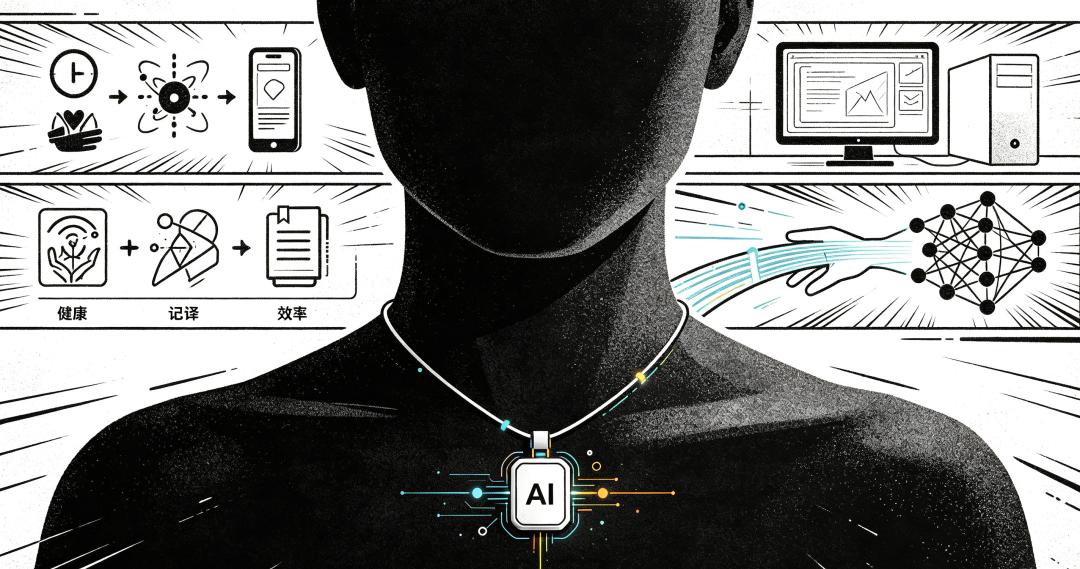
The "resurrection" of AI pendants is exactly the latest sample of manufacturers' anxiety over AI entry.
Humane AI Pin once tried to use a device worn on the chest to undertake tasks such as question answering, translation, photography and communication, and even challenge smartphones, but it did not provide added value sufficient to cover the problems of heat generation, battery life, response speed and wearing burden. Less than a year after the product was launched, Humane stopped selling the AI Pin; after the cloud service was shut down, main functions such as calls, messages and AI question answering also failed accordingly.
The AI Pin has stopped service, but the logic of pendants has been revived in Meta's roadmap. It was exposed this year that Meta plans to start testing work-oriented AI pendants within the next year. At the end of 2025, Meta acquired Limitless, an AI recording pendant company, which subsequently stopped selling hardware to new users. At present, Meta has not announced the specific functions of the new pendant, and the outside world believes that it may continue Limitless's product logic of portable recording and transcription.
Hardware can fail, teams can be acquired, but manufacturers' anxiety over AI entry will make the same pseudo-demand constantly change its shell.
If the added value is insufficient, and manufacturers create the "must-buy" necessity through AI stories, this part of AI premium will show the nature of IQ tax.
03
AI hardware begins to hit the responsibility boundary
The IQ tax of AI hardware is not only reflected in the extra money consumers pay for immature functions.
After entering sensitive scenarios such as health monitoring, camera recording and audio recording, the premium obtained by manufacturers through blurring boundaries may also transfer accuracy risks, data costs and privacy costs to consumers, and even to bystanders who have not purchased the products.
The first question raised by the Oura lawsuit is the accuracy of AI health hardware: whether there is a basis for the accuracy publicity, whether the product limitations are clearly stated, and whether the disclaimer can offset the impact caused by previous publicity.
If manufacturers do not take the initiative to explain functions, data and usage scope, consumers will vote by returning products and stopping renewal, and courts, regulators and public places will also draw clear boundaries for them.
When AI hardware expands from rings to glasses and pendants, the issue of responsibility is extending from buyers to bystanders. After cameras and microphones enter daily wearable devices, people around may be photographed and recorded without their knowledge, and the relevant content may also enter the cloud or be used for model training.
Meta smart glasses are currently facing this kind of external boundary drawing. In May this year, the Texas Attorney General of the United States launched an investigation, focusing on Meta's privacy disclosure and the product's collection risks for videos, private data and facial geometric information; in August, German digital rights organization HateAid filed a criminal complaint. Some cinemas, theaters and courts in the UK have also begun to restrict smart glasses with cameras in accordance with anti-piracy recording or existing no-photography rules.
These actions all point to a more fundamental problem than the privacy policy: the consent of the device buyer cannot replace the consent of bystanders.
Buyers can read the terms, turn off functions or stop subscriptions, but bystanders do not have corresponding settings and exit entries. It is difficult to judge when the camera and microphone are activated, and they cannot choose whether their images and voices enter the cloud. The convenience provided by AI hardware belongs to the wearer, but the data cost may be passed on to everyone around.
The French data protection agency CNIL surveyed 2128 adults this year, and 67% of the respondents believed that smart glasses would threaten privacy. CNIL believes that it is increasingly difficult to distinguish ordinary glasses from smart glasses, and the notification range of a prompt light is limited, so it is difficult for people around to judge whether the device is collecting data. The agency then launched a special action, and the European Data Protection Board also began to study the "social acceptance" of smart glasses.
As a result, smart glasses push the ethical issues of AI hardware beyond the consumer relationship: the product serves one person, but may collect data from everyone around; the convenience belongs to the wearer, but the responsibility of notification and prevention falls on bystanders.
At the same time, some products on the market have also begun to narrow the sensing range and task boundaries.
Thunderbird released iO in August this year, which is not equipped with cameras and speakers, weighs 34 grams, and its functions focus on display, translation, teleprompter and meeting recording; Halliday also chose the no-camera route. Plaud launched NotePin S, changing the activation method to a physical button, concentrating tasks on recording, transcription and summarization; recording devices such as Pocket also chose a similar route.
These products still emphasize AI, and what shrinks is the camera, weight, activation method and number of tasks. Removing the camera can reduce visual collection, physical buttons can make the activation moment clearer, and concentrating tasks can make it easier for users to judge whether the functions are fulfilled.
Meta is still strengthening camera, display and AI capabilities, while responding to privacy disputes through shooting indicator lights, occlusion detection and other methods.
The industry is being forced to make up for the product responsibilities that were covered up by AI stories in the past: what the device collects, when it is activated, how the data is processed, and what the functions can achieve, all need to become boundaries that can be perceived, verified and held accountable by users and bystanders.
AI hardware can use anxiety to package new demands, package traditional functions as AI capabilities, and also package tech products as fashion items.
But after the packaging is completed, consumers still have the right to ask: why do they need to buy a new piece of hardware, what extra value AI has brought, how the data collected by the product is used, and who is responsible when the promise fails.
If the demand is created by manufacturers, and AI is only responsible for filling the product story, every unit of this hardware sold is an industry experiment where consumers bear the cost.
The Oura lawsuit means that the IQ tax of AI hardware has entered the settlement moment. Every layer of premium that manufacturers obtained in the past by blurring boundaries may eventually turn into issues of accuracy,