Global and China Unmanned Logistics Delivery Vehicle Market Research Report
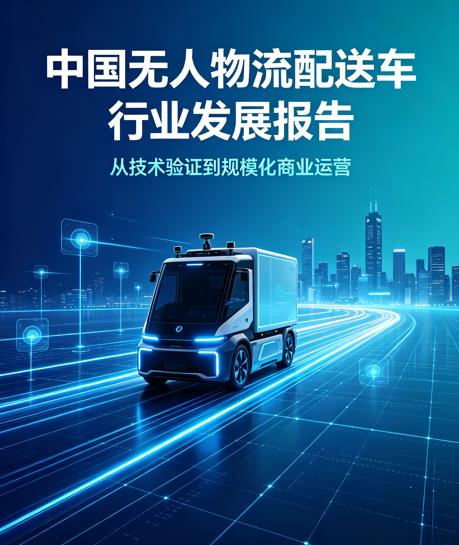
The global autonomous logistics delivery vehicle market is at a critical window of full transition from technical verification to large-scale commercial operation. Driven by the continuous growth of express business volume, rising labor costs for last-mile delivery and the increasingly mature autonomous driving technology, autonomous logistics delivery vehicles are moving from pilot operations in closed parks to normalized operations on public roads.
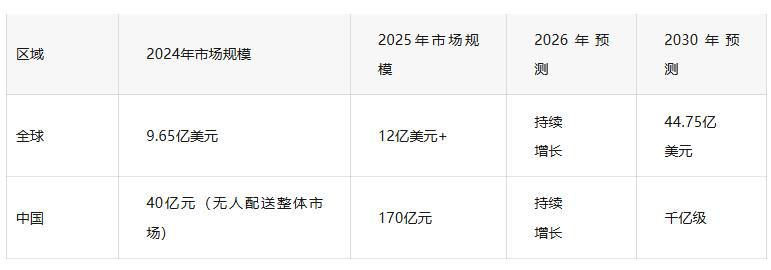
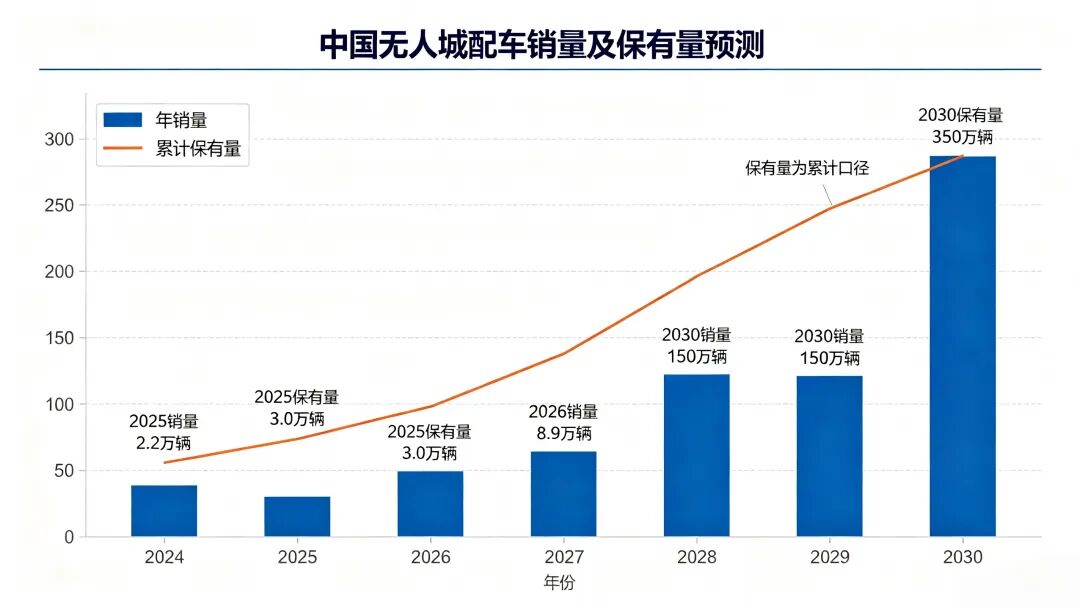
2025 is widely recognized by the industry as the "first year of large-scale development of autonomous logistics delivery vehicles". The global market size of autonomous delivery vehicles reached about 965 million U.S. dollars in 2024, and exceeded 1.2 billion U.S. dollars in 2025. The Chinese market has become the core engine of global growth — in 2025, the sales volume of China's urban autonomous delivery vehicles was about 22,000 units, and the national inventory exceeded 30,000 units. It is estimated that the annual sales volume of China's urban autonomous delivery vehicles will reach 89,000 units in 2026, and is expected to approach 1.5 million units by 2030, with the total inventory exceeding 3.5 million units.
In terms of market competition pattern, the head effect is prominent. Enterprises represented by Neolithic and JiuShi Intelligence have formed a "duopoly" pattern, and the two together accounted for about 84% of the market share in 2025. The business model is evolving from traditional hardware sales to the RaaS (Robovan-as-a-Service) model, where customers pay by order or by mileage without bearing the investment in vehicle assets.
The policy environment has achieved a key breakthrough. On July 1, 2026, the Ministry of Public Security's Safety Specification for Road Test and Demonstration Application of Intelligent Connected Vehicles (GA/T 2388-2026) was officially implemented, which is the first national industry standard in China covering all categories of autonomous delivery vehicles. More than 100 cities across the country have opened road rights for autonomous delivery.
Autonomous logistics delivery vehicles are moving from "technical verification" to a "hundred-billion-level blue ocean", becoming the key infrastructure of the smart logistics system.
Chapter 1 Development Trend of the Global Autonomous Logistics Delivery Vehicle Market
1.1 Development Status of the Global Delivery Logistics Market
The global logistics delivery market is undergoing profound changes. The continuous expansion of e-commerce, the rise of instant retail and the increasing requirements of consumers for delivery timeliness are promoting the continuous reconstruction of the last-mile delivery network.
E-commerce and instant retail drive explosive demand. The global e-commerce penetration rate continues to rise, and the parcel volume has repeatedly hit new highs. At the same time, new consumer formats such as instant retail and community group buying are expanding continuously, the fulfillment radius is continuously compressed, and the replenishment rhythm is significantly accelerated. The last-mile delivery has shifted from low-frequency, planned tasks to high-frequency, all-weather operations. The consumer last-mile logistics network is characterized by denser nodes, more fragmented orders and higher timeliness requirements, and the traditional labor-based delivery model is facing increasing pressure in terms of cost, stability and scalability.
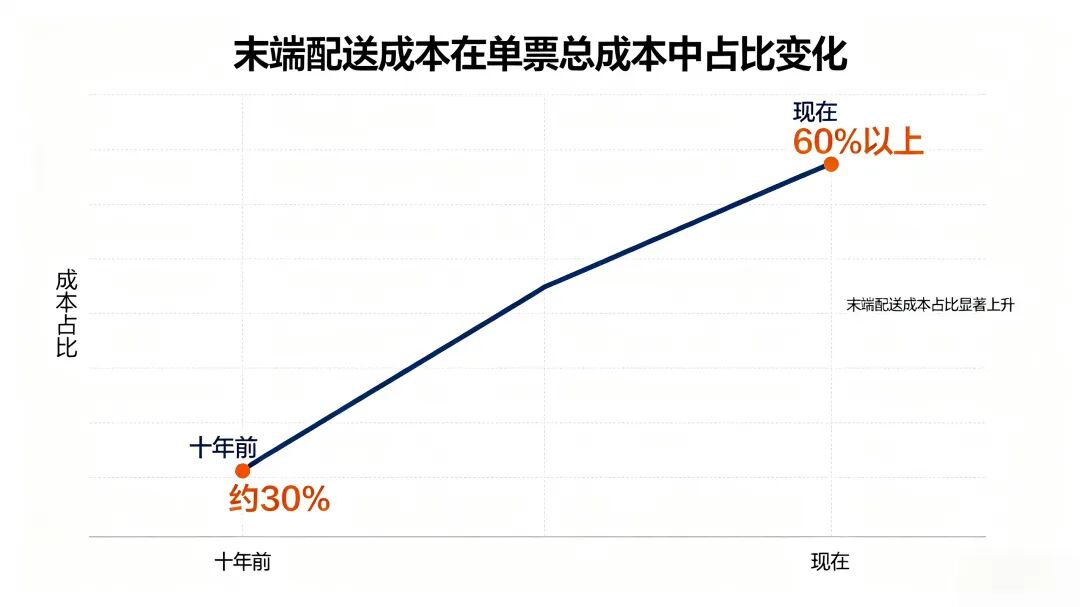
The pressure of last-mile delivery costs has increased sharply. Against the background of "volume increasing and price decreasing" in China's express delivery business, the proportion of last-mile delivery cost in the total cost per order has risen sharply from about 30% ten years ago to more than 60% at present, which has become a key bottleneck restricting the profit of the industry. The continuous rise of labor costs and the increasingly severe shortage of delivery staff make logistics enterprises urgently need to find alternative automated solutions.
The scale of the global delivery logistics market continues to expand. The global express business volume maintains a stable growth trend, and the density and coverage of the last-mile delivery network continue to expand, providing a broad application space for autonomous logistics delivery vehicles.
1.2 Development Status of the Global Autonomous Logistics Delivery Vehicle Market
Factors such as increasingly mature technology, substantial cost reduction and gradual policy liberalization jointly promote the global autonomous logistics delivery vehicle market to enter a stage of rapid growth.
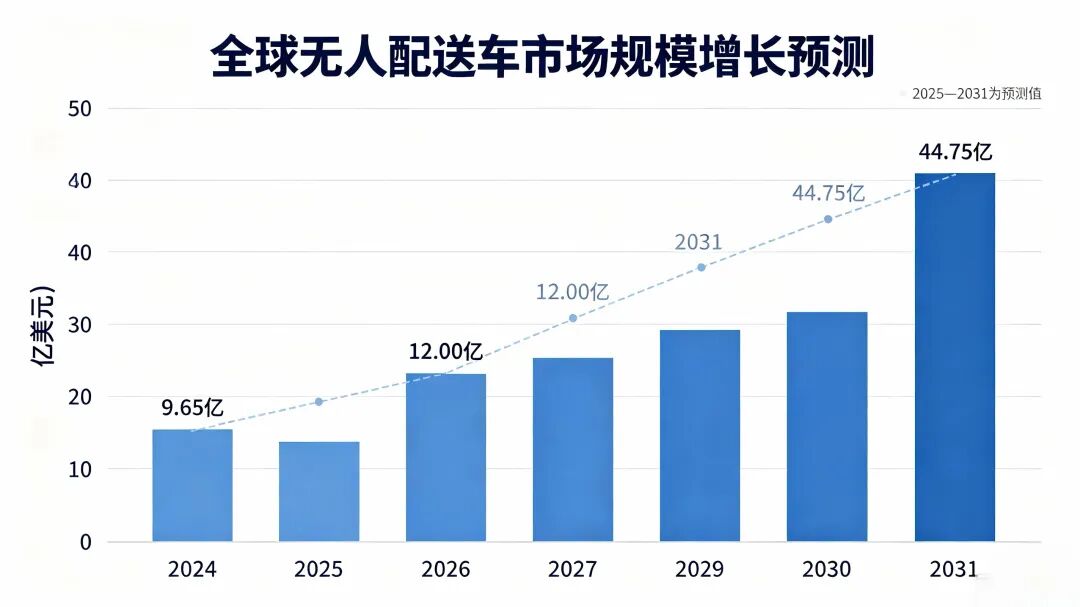
The global market size is growing rapidly. The global market size of autonomous delivery vehicles reached about 965 million U.S. dollars in 2024, and exceeded 1.2 billion U.S. dollars in 2025. It is expected that the global market size will reach 4.475 billion U.S. dollars in 2031. According to statistics from other research institutions, the global market size of autonomous ground delivery vehicles was about 1.118 billion U.S. dollars in 2025, and is expected to reach 6.021 billion U.S. dollars in 2032, with a compound annual growth rate of 27.2%.
The Chinese market leads global growth. As the world's largest express market, China has become the largest application market for autonomous logistics delivery vehicles. In 2025, the sales volume of China's urban autonomous delivery vehicles was about 22,000 units, and the national inventory exceeded 30,000 units. Chinese enterprises play the role of leaders in the technological revolution of autonomous delivery vehicles, with a leading market share.
Leapfrog growth in production capacity and delivery volume. In 2025, the delivery volume of autonomous logistics vehicles in the domestic market reached about 30,000 units, a year-on-year surge of more than 350%, marking that the industry has officially crossed the "large-scale" threshold. By the end of November 2025, the cumulative shipment of autonomous delivery vehicles applied in outdoor scenarios in China has exceeded 39,000 units. The expected delivery volume in the first two months of 2026 will reach 7,000 to 9,000 units, and the annual delivery volume is expected to cross 100,000 units.
Data sources: iResearch Consulting, China Commercial Industry Research Institute, Low-Speed Autonomous Driving Industry Alliance
Technological maturity and cost reduction are the two core driving forces.
Technology is becoming increasingly mature. L4-level autonomous driving technology has become mature in semi-enclosed/structured scenarios such as parks and fixed routes. In 2025, the L4-level "mapless" autonomous driving solution has begun to enter the commercial delivery stage, further reducing deployment complexity. Autonomous logistics delivery vehicles adopt a differentiated technology development path from Robotaxi, focusing on "dispatching, planning and control" as the core, and focusing on achieving efficient and stable mass transportation in deterministic scenarios.
The supply chain has achieved remarkable cost reduction and efficiency improvement. The prices of core components such as domain controllers, LiDAR, batteries, and electric drives continue to decline. The overall cost of autonomous delivery vehicles has dropped significantly from 200,000 to 300,000 yuan three years ago. Taking Neolithic as an example, its autonomous vehicles have completed 6 iterations. Each iteration improves performance while reducing the cost by about 30%. Now the cost of a single unit has dropped to less than 100,000 yuan. The cost of autonomous delivery vehicles has decreased by 80% in four years.
The business model has been initially verified. The industry is transforming from "selling hardware" to "selling services". The RaaS (Robovan-as-a-Service) model has become an important trend. Service providers provide delivery services based on the autonomous vehicle network, and customers pay by order or by mileage. The cooperation case between urban autonomous delivery vehicle operators and freight platforms in Qingdao has verified the commercial feasibility of this model.
Chapter 2 Development Trend of China's Autonomous Logistics Delivery Vehicle Market
2.1 Market Size of China's Autonomous Logistics Delivery Vehicle Market
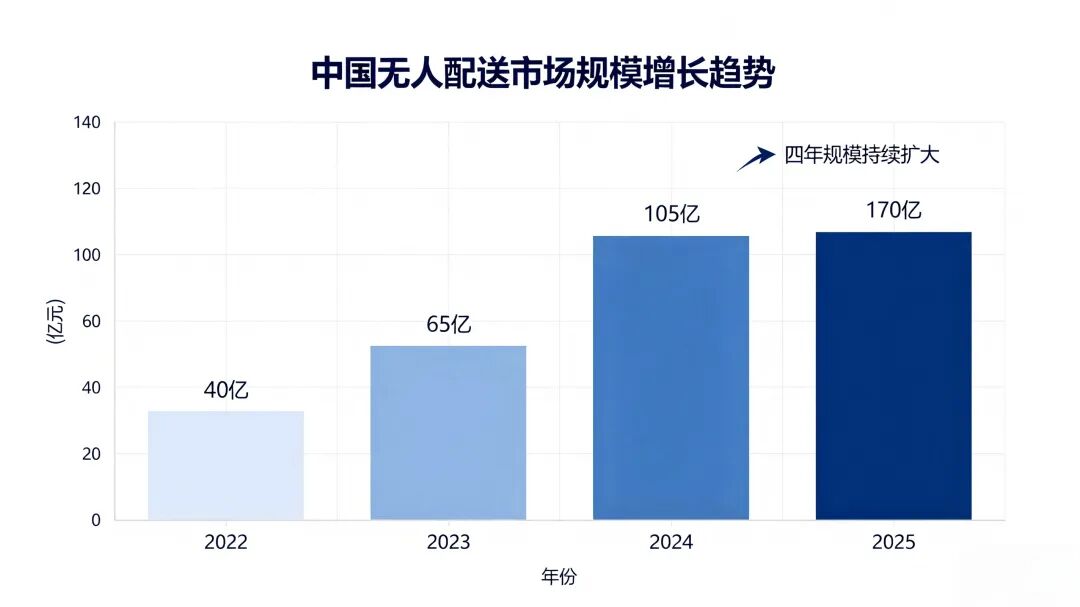
China has become the most dynamic and potential market for autonomous logistics delivery vehicles in the world. The size of China's autonomous delivery market was 4 billion yuan in 2022, grew to 6.5 billion yuan in 2023, reached 10.5 billion yuan in 2024, and further expanded to 17 billion yuan in 2025.
In terms of vehicle sales, the sales volume of China's urban autonomous delivery vehicles in 2025 was about 22,000 units, and the national inventory exceeded 30,000 units. Looking to the future, the annual sales volume of China's urban autonomous delivery vehicles is expected to reach 89,000 units in 2026. It is expected to approach 1.5 million units by 2030, with the total inventory exceeding 3.5 million units.
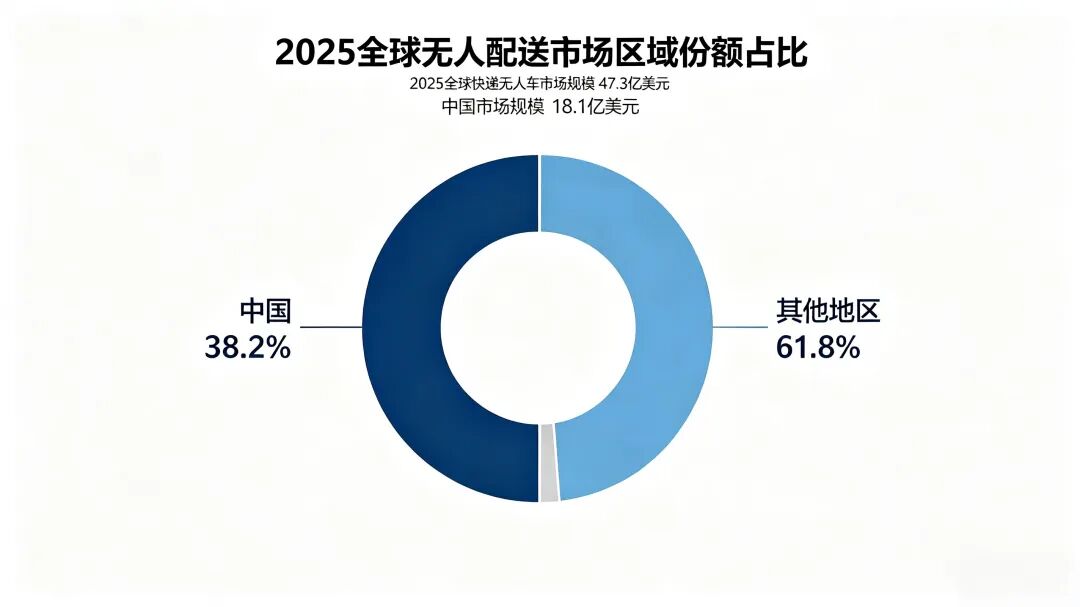
From a global perspective, the global market size of express autonomous vehicles reached 4.73 billion U.S. dollars in 2025, an increase of 82.6% over 2024. As the core growth pole, China contributed 38.2% of the global total, with a market size of 1.81 billion U.S. dollars.
2.2 Analysis of Core Driving Factors and Development Trends of China's Autonomous Logistics Delivery Vehicle Market
2.2.1 Policy Support: From Local Pilot to National Unified Standard
The rapid development of China's autonomous logistics delivery vehicles benefits from continuous policy breakthroughs, realizing the leap from "local pilot" to "national unified standard".
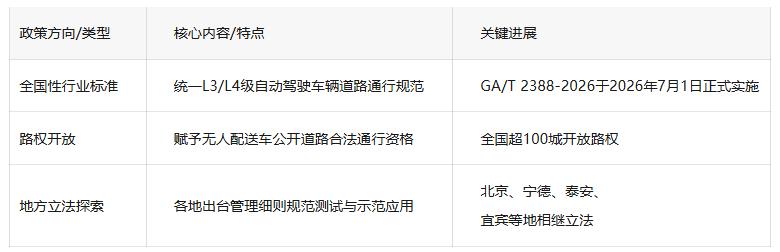
National industry standards have been implemented. On July 1, 2026, the Ministry of Public Security's industry standard Safety Specification for Road Test and Demonstration Application of Intelligent Connected Vehicles (GA/T 2388-2026) was officially implemented. This is the first national industry standard in China covering all categories of autonomous delivery vehicles, and sets a unified national traffic specification for road tests and demonstration applications of L3 and above intelligent connected vehicles. This standard gives unified specifications from road right allocation to accident responsibility determination, ending the gray state of "technology can go on the road but the law is unclear".
The opening of road rights is accelerating. China's legal road rights for autonomous delivery were first born in 2021. Beijing took the lead in issuing management rules, issuing body codes to enterprises such as JD and Neolithic in the High-Level Autonomous Driving Demonstration Zone, and granting autonomous delivery vehicles legal access to public roads for the first time. Up to now, more than 100 cities across the country have opened road rights for autonomous delivery.
Local legislation is actively exploring. Beijing has issued 4 local standards in the field of autonomous driving, including Technical Specification for Testing of Intelligent Connected Vehicles in Closed Test Sites Part 2: Autonomous Delivery Vehicles, setting test items around the two cores of safe traffic and scene adaptation. Cities such as Ningde, Tai'an and Yibin have also successively issued detailed implementation rules for the management of low-speed autonomous delivery vehicles.
2.2.2 Technological Maturity: Focus on Scenarios, Balance Cost and Efficiency
Autonomous logistics delivery vehicles adopt a differentiated technology development path from passenger car autonomous driving, focusing on "dispatching, planning and control" as the core, and focusing on achieving efficient and stable mass transportation in semi-enclosed/structured scenarios such as parks and fixed routes.
The mapless autonomous driving solution has been commercially implemented. In 2025, the L4-level "mapless" autonomous driving solution has begun to enter the commercial delivery stage. Neolithic has become the first company in the autonomous delivery industry to deliver a mapless technology solution. By reducing the dependence on high-precision maps, it can save more than 90% of related expenses. The mapless technology reduces the overall cost by more than 50%, and can flexibly adapt to multiple application scenarios such as fresh cold chain and supermarket express delivery.
End-to-end large model empowers perception and decision-making. Leading enterprises in the industry have begun to apply end-to-end large model technology. For example, vehicles equipped with the "Hongtu Intelligent Mapless Algorithm" and the one-stage end-to-end large model can predict the intention of pedestrians or vehicles within 100 meters in 0.01 seconds, and make a detour or emergency brake decision within 100 milliseconds.
The sensor solution continues to be optimized. On the premise of ensuring functional safety, autonomous logistics delivery vehicles adopt more economical sensor solutions (such as vision-based) to effectively control the overall vehicle cost. This focus on deterministic scenarios has laid a solid foundation for large-scale deployment.
2.2.3 Market Demand: Solve the Last-Mile Delivery Cost Dilemma
The fundamental driving force for the rapid development of the autonomous logistics delivery vehicle industry comes from the direct response to the severe cost reduction demand of the logistics industry, especially the express delivery field.
The proportion of last-mile cost exceeds 60%. Against the background of "volume increasing and price decreasing" in China's express delivery business, the proportion of last-mile delivery cost in the total cost per order has risen sharply from about 30% ten years ago to more than 60% at present. By converting variable labor costs into controllable asset depreciation, urban autonomous delivery vehicles provide a quantifiable cost reduction solution for last-mile logistics.
The cost per order has dropped significantly. Under the condition of large-scale operation, the cost per order of autonomous delivery can be reduced to about one