Tibo, Head of Codex: OpenAI's recursive self-improvement starts with infrastructure optimization
In Matthew Berman's latest interview, Tibo, Head of Product at OpenAI, shared his judgments on the next wave of artificial intelligence around the development of Codex, personal AI agents, model efficiency improvement and recursive self-improvement.
Tibo elaborated on how OpenAI promotes the integration of ChatGPT and Codex to build a general-purpose agent that can understand users' goals, daily work and personal preferences; he also explained how ultra-high-speed models will change the way developers work, enabling AI to keep pace with humans and even outperform humans in some tasks. The conversation also extended to topics such as OpenAI's product culture, competition with Anthropic, model efficiency optimization, pausing cutting-edge reinforcement learning training, and how AI is gradually becoming cheaper and more accessible.
This article is compiled from the content of Matthew Berman's interview, the original link is https://www.youtube.com/watch?v=4qjEgPojjzM, the full compiled content is as follows.
1
From DeepMind to OpenAI: Research Results Must Be Truly Delivered to Users
Matthew Berman: I'd like to start with your experience at Google. You were on the DeepMind team back then, and before ChatGPT came out, there was actually a project called LM Chat inside Google. You once posted a message saying that Google was too nervous to release it at that time; DeepMind was also restricted from launching products that might disrupt Google. You were involved in these projects back then, long before ChatGPT changed the world. What were you thinking at that time?
Tibo: It was a really exciting period. DeepMind was an incredibly creative place. I was mainly responsible for infrastructure and products at that time, with the goal of accelerating research. There were of course people on the team working on language models and large-scale model training, and we had already achieved pretty good results. The natural next question was: can we turn these models into a conversational tool that people can use for all kinds of things? So ideas like LM Chat gradually emerged. It started out as an internal project, and later the team came up with the idea of making it a public tool.
Matthew Berman: When was that roughly?
Tibo: It was about a year before ChatGPT was released. Besides that, we were working on a lot of other things, but I won't go into details about those. DeepMind was indeed a very creative place back then. But it wasn't an organization built with the goal of delivering products, which is very different from OpenAI. At OpenAI, the collaboration between research and product is extremely close. The two sides come up with ideas together and design products together. We have a strong product delivery orientation, and we really want to get the technology into users' hands as soon as possible. That's something I really love, and it's one of the reasons I was drawn to OpenAI. There's a sense of mission, great people, and a very high density of talent here.
Matthew Berman: When you were working on LM Chat back then, did you already realize that it was special, or that it could become special in the future?
Tibo: I did feel it was very special at the time. It was the first time we realized that models could generate coherent text and provide something genuinely helpful. At the very beginning, it was more "fun" than "useful"; but as the model kept improving, it gradually became more and more helpful. You said I often think back to that experience, and I do. For me, it's not just about what kind of culture I want to build in the team, but also about the overall culture of OpenAI: what good things we should keep, and what mistakes we shouldn't repeat.
OpenAI has a very bottom-up culture, a culture that fully empowers employees. Everyone can come up with all kinds of ideas, get together quickly, and then build things out very fast. Generally speaking, when facing new product ideas, there are very few strong "brakes" inside the organization. It feels extremely exciting and fun, because everyone is working to make the world a better place. Of course, this culture also needs another force to balance it. We can't make our products a messy hodgepodge of features, we can't lack a clear overall direction, and we can't lack consistency. Products should be easy to use and stand up to quality checks. The ChatGPT iOS app is a great example of this, it's one of the best apps out there right now. We will continue to invest in improving the joy, performance, efficiency and simplicity of our products, while continuing to let everyone try new things and deliver quickly.
Matthew Berman: If you were to give an entrepreneur advice on how to build a culture similar to OpenAI, what more specific practices would you mention?
Tibo: First, you need to have firm judgment, find ways to get the product into users' hands as soon as possible, and then iterate quickly based on feedback. Besides that, you have to be willing to disrupt yourself. This is equally important for entrepreneurs, but especially important for mature companies like OpenAI. We keep coming up with new research results and new ideas, and the key is to judge when we should invest resources, even if that means reallocating resources from the most important current business. This process is very difficult, but the company must have this capability.
Matthew Berman: That's exactly the problem you mentioned earlier when you described Google. Google didn't seem to do that back then. For OpenAI or any growing company, as the company matures, does it get harder and harder to maintain this culture of fast delivery and willingness to disrupt yourself? Especially when the company already has a core business that keeps making money, and a potentially innovative new direction emerges alongside it.
Tibo: We are very focused on the future. The next stage of development of artificial intelligence and what humanity can ultimately get from it will not wait for you just because you have built a business in the past few months. So the company must truly open its eyes, see clearly where things are going, and then find a way to position itself on this wave.
Even at OpenAI, after we train a model, we often need to use it ourselves to truly discover what capabilities the model has. Benchmark tests can't tell us everything. We need to interact with the model repeatedly before we suddenly realize: "Oh, it can be used in this way." This often changes our understanding of the product.
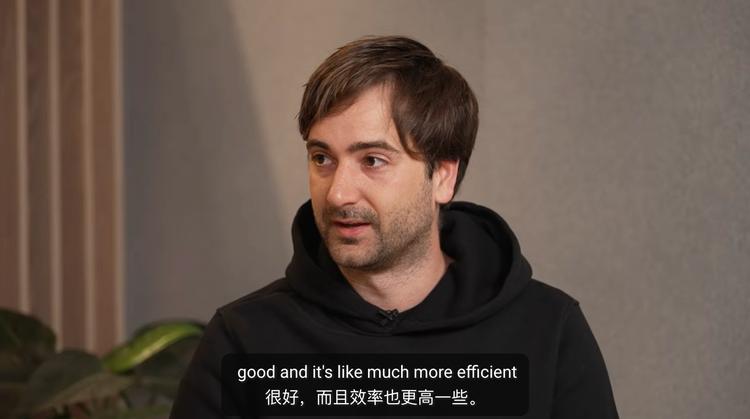
Take the new voice feature right now for example, it feels extremely natural to use, and it already has the ability to call tools. It has changed the way I work: I now spend more time talking directly to it. I also use the dictation feature a lot, because its dictation quality is so good, it's far more efficient than manually entering prompts. In the morning, I pick up my phone and say out loud a few things I need to do that day, then it can call various tools I use to continue finishing the rest of the work. This experience was impossible to achieve when we didn't have good enough voice models in the past. But once it exists, people's imagination of the product will change completely.
2
Next-Generation Agents: Truly Understand You, Not Just Execute Commands
Matthew Berman: A few weeks ago, you posted that looking back a few months from now, Codex might seem very primitive; the next generation of models will need more than just your laptop. Let's start with the tools and systems that agents rely on. As model capabilities improve, which parts are most in need of continued innovation?
Tibo: There are still many areas that need innovation. Take voice as an example, right now if you are a power user of Codex or other coding agents, you are more or less used to some inconvenient parts. You need to maintain skill files to teach the model some things, but over time, these files become very hard to maintain. The model has memory, but it doesn't always remember everything. If you use multiple sub-agents, you also have to manage these sub-agents. The whole system will gradually turn into a small network, and users will feel this complexity in different links, breaking the original natural interaction feeling.
What people really want, in fact, is an assistant that understands them deeply. It needs to understand your goals, your daily schedule, and what your team is doing. It should not only respond to your requests, but also take the initiative to act at the right time, help you handle daily affairs, and always maintain the feeling that "it is your perfect partner". That's exactly the direction we are working towards.
Another problem is that when models become powerful enough, the laptop itself will become a limitation. Laptops were originally designed according to the way humans work: the amount of tasks they can handle roughly depends on how much text a person can input, how fast they can think, and how many apps they need to open at the same time. But models are not limited by these. They can process a hundred apps at the same time, and even more in the future. So obviously, future models will need to access resources beyond what your personal computer can provide.
Matthew Berman: You must be talking about cloud-based agents. Right now, the generation speed of ultra-high-speed models may be ten times that of ordinary high-speed models, or even fourteen times according to the official statement. After reaching this speed, the limiting factors have changed. In the past, it might have been that the model generation speed was not fast enough, but now the network, tool calls and the extra overhead in the whole system have become bottlenecks instead.
Tibo: Exactly. One of the solutions is to let the model handle multiple tasks at the same time. It can explore while writing tests, compiling code, and verifying a new hypothesis at the same time. In this way, the bottleneck will keep shifting, because the model can do more things in parallel and handle these tasks very efficiently and quickly.
Matthew Berman: At the current speed, I often start 10 to 15 agents at the same time. But this also brings me a huge cognitive burden, because I have to keep switching contexts, and usually I have to wait 30 or 40 minutes for the tasks to return. With ultra-high-speed models, the way solo developers work may change a lot. Maybe instead of running 10 to 15 agents at the same time, people will only run three or four. What do you think about the future workflow of solo developers?
Tibo: We attach great importance to how to manage users' attention, and how to make products more aligned with human attention patterns. We are ultimately building tools for humans, hoping that technology can enhance human capabilities. Therefore, products must be designed around human multitasking capabilities: when do users want to see results? Should they be presented right now, or is 30 minutes later more appropriate?
When ultra-high-speed models are combined with voice, the model can work as fast as humans, or even faster. Users can stay in the working state, conceive ideas while seeing prototypes, and generate reports in real time. This feels very natural. You will suddenly find that the old way of managing ten agents at the same time is not what you really want, and you don't want to go back to that working state. We hope to provide a truly natural experience, where technology adapts to users, instead of users adapting to technology.
Matthew Berman: In the past few months, there has been a lot of discussion about agent programming methods, such as loops, graph structures, etc. Are these methods all helping solo developers manage their own attention?
Tibo: I would divide the problem into two categories. The first category is to build the best personal general intelligence, or personal agent. It should work with you, actively come up with important new ideas, act quickly when it finds opportunities, and be able to complete the things you really want to do very efficiently. Whether it's technical problems, research on materials, or daily advice, it should be able to handle them and be highly adapted to you. The core of this direction is to deeply understand you as a unique individual.
The second category is full automation. That is to say, build intelligent systems that can take over complex processes. For example, it can view production environment logs and automatically perform performance optimization; after detecting system regression issues, it can automatically fix them; in the field of cybersecurity, after a scanner finds a vulnerability, the system can automatically patch it, reducing the time window of vulnerability exposure to nearly zero. The whole process does not require continuous human participation, or only requires approval for high-risk operations. Most of the work can be done automatically by the system, and users don't have to maintain direct control all the time.
3
The Integration of ChatGPT and Codex: Towards Personal General Intelligence
Matthew Berman: Over the past few months, ChatGPT and Codex have been gradually merging. How is this process progressing inside OpenAI? What's the user feedback like?
Tibo: This integration has been very helpful. At the very beginning, a lot of people gave feedback: "Why do we have to merge? Is this really necessary?" But future models themselves require us to merge them, so we will do it eventually. This is the simplest and most reasonable direction.
What we are building is a highly personalized, extremely capable agent that can help you in all kinds of ways. Whether you are coding or doing other things, the same set of technology, the same set of tool systems and the same mindset will be used at the underlying level. It is highly multimodal, voice-first, and extremely efficient. You shouldn't have to use a programmer interface just because you are a programmer; nor should you have to use a completely different product just because you don't understand technology.
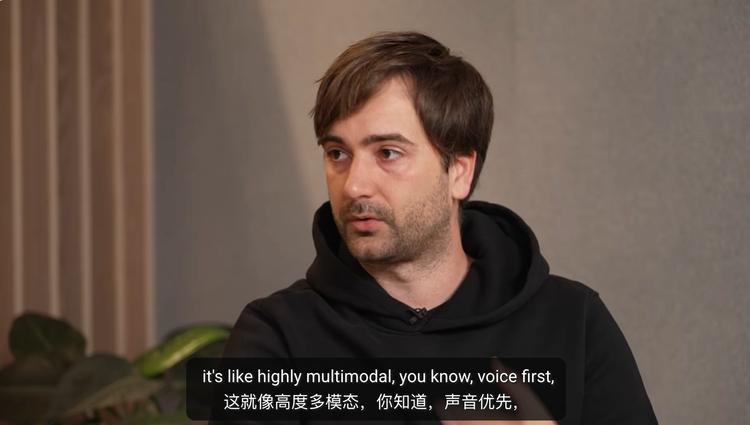
Labels like "software engineer" and "designer" are essentially just abstract concepts invented by humans to deal with complex realities. Everyone is actually on a continuous spectrum, with different capabilities and needs. Therefore, we hope to build an interface that can automatically adjust according to each person's specific situation. Whether you understand technology or not, the system will adapt to your personal characteristics.
Matthew Berman: Does this mean that in the end, there will only be one unified interface, and you no longer need to select between different products through a dropdown menu? Imagine that my mother might use the exact same interface as me, except that the system is customized for each of our needs respectively, that idea is incredible.
Tibo: Right, you and your mother will eventually use the same thing, which is your respective personal general intelligence. But the tasks you complete are different, and the value you get from it is different. You will connect it to different tools, ask different questions, and have different usage needs. The system will continue to adjust according to these differences to provide maximum help for everyone as much as possible.
Matthew Berman: You mentioned "maintaining a natural feeling" several times just now. If we look ahead a few years, what will the interaction between ordinary users and AI look like?
Tibo: For me, it should be a highly human-friendly interaction method. The success of large language models is largely because natural language itself is a human concept. Humans are already used to communicating through language. If you write me a letter tomorrow, I can read it; because we know each other well, I can even understand the emotions and tone in the letter.
These are all very human ways of communicating. The technology we are building should also be rooted in the way humans communicate and do things. Users should not often encounter situations where: "You misunderstood me, because you didn't understand my tone, and you didn't understand the meaning behind my words." We hope to avoid this problem, not ask users to change their way of expression, but let technology become a natural extension of humans' original behavior patterns.
Matthew Berman: A large part of human-to-human communication is non-verbal information, such as gestures, facial expressions, etc. Will future AI need to understand this information through vision? Or is text already sufficient?
Tibo: I think this information is very important. Future AI should be an ubiquitous, very natural existence. For example, if I go to the office tomorrow, write something on the whiteboard and suddenly have an idea, the AI should also be able to perceive this content. Or I say directly to it: "What do you think of this?" Then we chat naturally through voice.
Since we launched the new voice feature, the number of users who interact with ChatGPT purely through voice is growing rapidly. I think there is an important rule here: as long as you make the interaction method more natural, humans will choose the path of least resistance. For some people, typing in a small input box is natural, but it's not the case for everyone. Once an easier and better way appears, everyone will naturally choose it.
Matthew