The battle of office Agents is not essentially about the Agent itself.
The red envelope war is over, the lobster-related hype has faded, and major companies are scrambling to rush to the next battlefield: productivity. The attention of large tech firms is sometimes shorter than the holding period of retail investors.
The reason is simple. In SpaceX's prospectus, Musk, the most business-savvy entrepreneur, calculated a figure for the entire industry:
The total future market size of AI applications will reach 28.5 trillion US dollars (excluding China and Russia), of which 2.4 trillion goes to infrastructure and 22.7 trillion to enterprise applications. As for the scale of C-end subscriptions and advertisements, Mr. Musk, who has always been bold in his ideas, only estimated it at 1.36 trillion US dollars, which is less than a fraction of the enterprise-end scale.
At the technical level, "code" has gradually evolved from a vertical capability to a general capability. When the programming proficiency of the model is high enough, it can compile natural language into executable steps, and then demonstrate astonishing Agent capabilities in real scenarios.
As a result, Tencent's Workbuddy is gaining massive traction, Alibaba's Qwen Office is launched at a rapid pace, and ByteDance is as bold as ever: the Feishu team is merged into the Doubao division, the product system is fully integrated, and a brand new product Doubao Work is launched.
Different from similar products, Doubao Work is deeply interconnected with Feishu, allowing users to log in directly with their Feishu accounts, and the original Feishu-integrated Doubao Enterprise version has also been upgraded to Doubao Work.
ByteDance has set up three entry points for Doubao Work in total: 1. The independent Doubao Work application; 2. The work mode inside the Doubao application; 3. The Doubao Work entry embedded in Feishu.
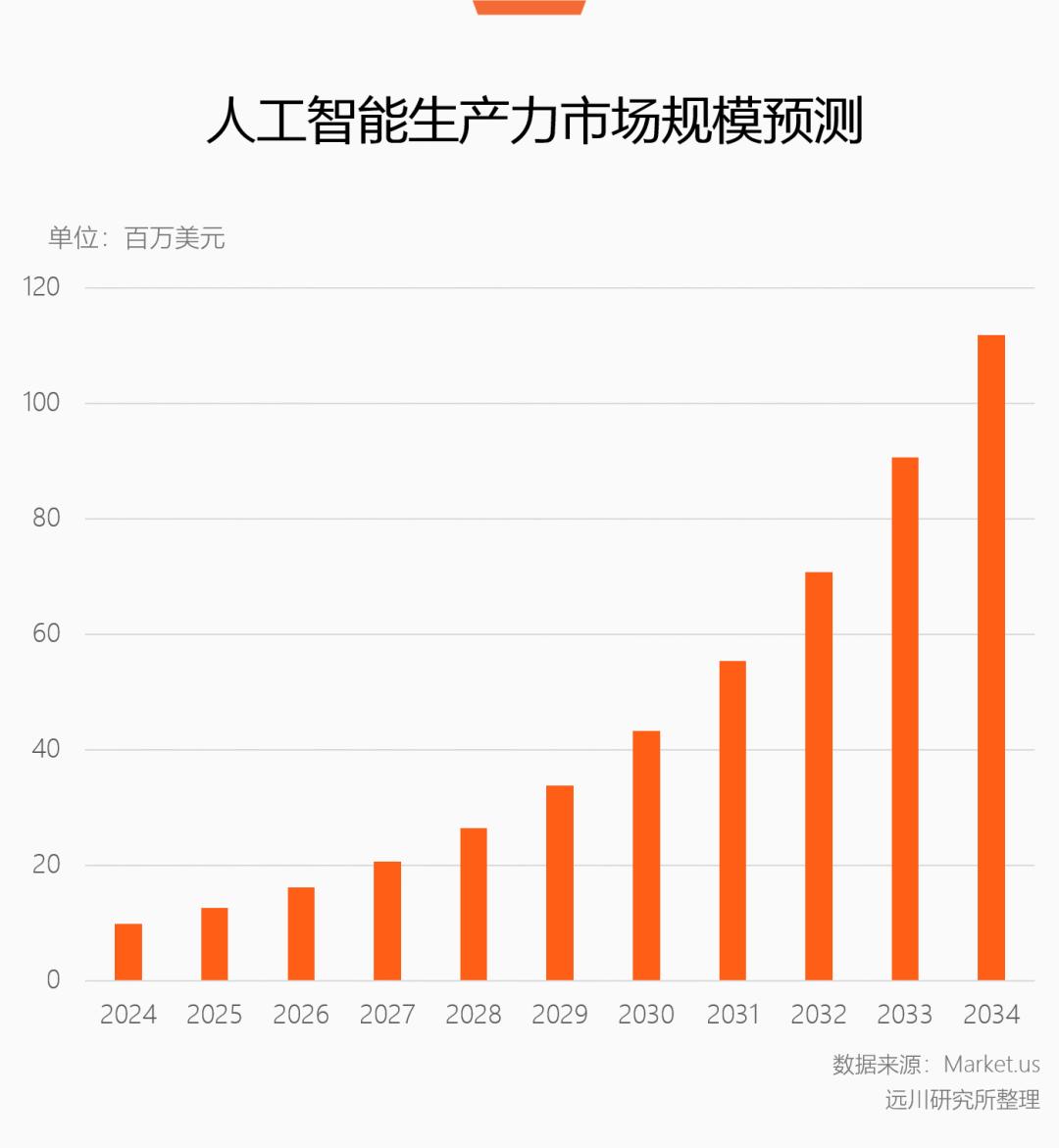
One has already charged ahead, one has just mounted its horse, and the third one is still sharpening its knife. But the one sharpening the knife is sometimes the most terrifying — no one knows who it will slash once the knife is ready.
Stepping out of consumer-facing scenarios and diving deep into productivity scenarios has become a consensus among large companies. Whether AI can make money depends on whether business owners are willing to issue invoices for related services. But new problems soon emerge:
At present, the moat of Agent office products seems to lie in the intensity of elevator advertisement placement, making the sales team of Focus Media the biggest winner.
So far, the Agent products of major tech firms cannot be said to be completely identical, but their differences are as trivial as the distinction between Jason Statham and Guo Da, or between Wu Jing and Araki Hirohiko — they are highly homogeneous.
Agent office is composed of two layers of capabilities: the first is Model, which determines the upper limit of understanding and reasoning, and the second is Harness, which is the infrastructure behind the Agent. It can be simply understood that the model sets the strategy, while Harness is responsible for specific work, operation and control.
Theoretically, whether an Agent product is easy to use depends on how solid the Harness is. But Harness is ultimately an engineering problem. It is predictable that the Harness of all manufacturers will move towards homogeneity sooner or later.
Considering that OpenAI has open-sourced the Harness of Codex, this process will not take long.
Models are not moats, nor are functions moats. After fighting the AI office war for so long, everyone ends up giving the "soul" of their business to Focus Media. Where did things go wrong?
Context
The first group of trendsetters who pay to use office AI have already realized a problem: Whether an Agent is easy to use has little to do with the Agent product itself, the key lies in "context".
What is context? It refers to the specific "contextual environment" in work scenarios.
For example, the sentence "help me revise this" means revising code in a R&D group, but means editing images in a design group. The experience of human employees in the company is the complete context. If you do not inject sufficient context into the Agent, the Agent can only perform literal matching and cannot understand the real intent behind the instruction.
In the widely circulated "Wen Feng Meeting Minutes" before, Liang Wenfeng gave an example: the boss asks Xiao Wang to come over, the premise is that the boss knows who Xiao Wang is, what his position is, where he is, how to find him, and what to pay attention to when looking for him.
In this scenario, the boss already has a full grasp of the company's complete context. When an Agent first starts working in the company, it does not even recognize all the people in the department. It must rely on human input of sufficient context to become a "veteran" familiar with all the rules in the company before it can perform tasks accurately.
Therefore, Liang Wenfeng set an important prerequisite for the event of "AI surpassing humans": Provide AI with complete context and complete instructions.
The same logic applies to Agent office scenarios. If there is no company's management regulation document, when you ask AI how many annual leave days you have, even if AI studies the labor law for three days and three nights, it cannot give you an accurate answer.
The context of large companies is extremely complex, coming from documents, data, historical records, internal enterprise knowledge and rules, covering the entire organization's history and structure.
For example, when the owner of a small clothing store asks the Agent "how many pieces of this clothing have been sold", the Agent can give an answer quickly. But for a retail company with thousands of stores, the Agent will first ask several questions: Is it the same-store caliber or the store-wide caliber? Online or offline? Are returns counted in? By order caliber or receipt caliber?
The context of AI enthusiasts and one-person companies is all stored in the computer hard disk, which can be called at any time. But the context of companies is scattered in ERP, POS, e-commerce backends, member systems and logistics systems, each with its own statistical caliber and statistical time point.
Data is the core of AI. If enterprise context cannot be properly called, the performance of Agent will be greatly restricted.
Goldman Sachs mentioned in its report *Decoding the Agentic Economy* that under the Agentic model, models need to continuously go through the cycle of "thinking - retrieving - calling tools - re-reading the full context", leading to a sharp surge in Token consumption.
In other words, a powerful model + Harness is a good executor that can precisely follow instructions. But in enterprise operation, only by combining the complete enterprise context can it become a practical work Agent.
Even to an exaggerated extent, whether an Agent is easy to use has little to do with the Agent itself, but depends on the completeness of the context. That's why individual users can use Agent very smoothly, while enterprise-level Agent still seems to be in its embryonic stage.
Large companies that have finished placing elevator advertisements have actually discovered this problem: The larger the customer with stronger payment capacity, the more complex its context is.
Fragmentation
Whether an enterprise's context can be fully utilized first tests the digitalization level of the enterprise.
In 1997, Huawei introduced IBM's IPD (Integrated Product Development) system, which spans multiple departments including R&D, marketing, procurement, manufacturing and finance. The implementation was extremely complex, and IBM's quotation exceeded 2 billion RMB, which Huawei agreed to without hesitation.
Huawei has always attached great importance to informatization. In 1993, when Huawei had only more than 300 employees, it established more than a full-time MIS (Management Information System) development teams internally. In 1995, Huawei spent tens of millions of RMB to introduce Oracle's ERP system.
There were not many companies that realized the importance of digital construction as early as 1997; and there are not many companies that are willing to spare no cost for digital construction like Huawei even now. This leads to a problem:
The context of most enterprises has not been systematically precipitated, only the employee attendance data is accumulated in massive volumes, from which you can only distill an Agent that checks attendance. Only a small number of enterprises have a systematic knowledge base and standardized document system.
On the one hand, many enterprises are still at the stage of offline Office processing, local storage in computer rooms locked with big iron chains, and asynchronous transmission via chat software;
On the other hand, once the business goes online, a bunch of office software will be adopted. A company with a dozen employees might have to write recommendation letters for dozens of SaaS vendors.
In this case, the enterprise context is scattered in various corners and lacks a unified system. Even for enterprises with a strong document culture, it is difficult for employees to "documentize" all their thoughts and understanding.
At the same time, a large amount of context in an enterprise is highly fragmented, including but not limited to impromptu discussions in group chats, temporary operation review meetings, PUA-style remarks from leaders in chat records, etc. When the boss criticizes you that "your practice of the company culture is not solid enough", an Agent that is not familiar with the company's unspoken rules will instantly crash due to memory overload.
But it is exactly these daily scenarios that human employees are immersed in that can truly reflect the real operation status of the company.
There is a joke online: I fed all our 5-year chat records to AI, and AI concluded that he never loved me based on data analysis. This is actually the process of collecting fragmented context and inputting it completely to AI.
In *The Truman Show*, the context of Truman's first 30 years of life was completely recorded by cameras. If AI existed at that time, the data could be directly fed to a digital avatar to continue the show, and Truman could go wherever he wanted.
But in enterprise organizations, it is neither realistic nor possible to ask every employee to consciously collect context. This leads to a large amount of tacit knowledge inside the enterprise being hidden in a fragmented state.
Therefore, after crossing the "snow mountain" of model development and walking across the "grassland" of Harness construction, how to collect all the hidden context in the enterprise organization and systematically integrate it to improve the intelligence upper limit of Agent has become the most intense battlefield in the current AI office track.
In other words, effective collection of context is the key for office Agent to achieve product differentiation, and also the key to avoid the situation where employees "pay to work" and make business owners willing to actively pay for the service.
Take Action
Where is the most complete context of an enterprise? The answer is office software, specifically, collaborative office tools such as Slack and Feishu.
In the past period of time, many products under the "AI Coworker" concept have emerged in the US market. Their feature is integrating Agent into the specific writing scenarios of enterprises, allowing them to work together with human employees like a regular team member, even taking the initiative to find tasks and work overtime obsessively.
Why must it be connected to office software for use? The key lies in context:
Only by continuously inputting data in the real office environment can Agent gradually form long-term memory of the company, growing from a new intern to a veteran familiar with all the rules.
This actually reflects the problem to be solved in the implementation process of Agent: the intelligent capability is provided by Agent, but the enterprise context is precipitated in IM/collaboration software, and the two must be interconnected.
There are a lot of tutorials online about connecting Agent to Feishu, the reason of which is the massive context precipitated in Feishu. Even the Agent products of large tech firms will focus on demonstrating the process of connecting to Feishu during customer demos.
On the one hand, as an office software, Feishu naturally carries the enterprise context, giving it structural advantages over similar products. On the other hand, Feishu has invested a lot in CLI open capabilities, making it naturally AI/Agent-friendly.
ByteDance is certainly aware of this, and has achieved account-level integration between Doubao Work and Feishu, with the goal of fully interconnecting enterprise context while avoiding security risks caused by out-of-control permissions.
Several major domestic internet companies basically have a complete ecosystem covering model-Agent-collaboration tools. The real moat of enterprise-level Agent probably lies in how much enterprise context has been accumulated in this ecosystem, thus forming user stickiness.
In other words, what determines the outcome of the AI office war is actually the quality of the enterprise context accumulated by the organization in its own ecosystem. If only a large amount of attendance data is accumulated, the Agent can only help the HR department strictly check work attendance.
Feishu's strength lies in context accumulation. The cloud documents, multidimensional spreadsheets and intelligent minutes that Feishu advocates are inherently AI-Native working methods:
For example, in Feishu cloud documents, the comments, revisions and discussion processes of all users in the same document are fully recorded online. Each column of the multidimensional spreadsheet is a clearly defined field, and tables can be associated with each other.
Similar products only treat documents as the "result" of work, but when Feishu designed its cloud document feature, it inherently includes the "process" of work, so context is automatically precipitated as data assets, no need to manually import them to AI afterwards.
In addition, Feishu's product logic is "All in one". If different links of an enterprise correspond to different tools, Agent has to establish connections with each of them one by one. With Feishu bound to Doubao Work, Doubao Work can fully access the accumulated enterprise context without starting from scratch.
All in all, Feishu is the platform with the highest level of information standardization and the most complete adaptation for Agent among mainstream collaborative tools. This complementary nature in products has led to the adjustment of the organizational structure.
Now the product is formed and the context interconnection is completed. One last step is still needed to make business owners willing to pay for the service without hesitation.
Commercial Product System
Individuals and enterprises have two completely different sets of evaluation criteria for Agent.
The context of individual users is stored in their minds and hard disks. If the Agent gives a wrong answer, they can just rephrase the question and try again with almost zero cost, so product experience weighs a lot for them. The context of enterprises is scattered in five departments and three sets of systems, and a wrong number will lead to compliance accidents, so what enterprises really care about is reliability.
This reliability has two specific indicators:
The first is to manage the consumption of Token quota. This year, major Silicon Valley companies are drastically cutting their Token budgets. Microsoft requires all teams to migrate back to its self-developed GitHub Copilot CLI. Uber spent its full-year Token budget in four months. Salesforce banned the sales team from using AI for copy polishing or even daily chatting.
Meta once launched an internal leaderboard to compare who uses AI the most heavily. As a result, the top user burned 500,000 US dollars in just one month.
The second is data security. Any formal manufacturing enterprise will strictly manage employees' use of personal AI tools, the reason of which is data security.
For this point, anyone who has worked as a cloud computing salesperson must have a deep understanding. In the minds of many business owners, the safest way is to place the computer room downstairs of the company, with servers and network cables within easy reach. The door is locked with a big iron lock, and the key is placed under the pillow.
Many high-tech industries such as chip design are extremely conservative in related concepts, and the reason is still data security. Patents and technical documents are the lifeblood of chip companies. Once RTL codes, chip netlists, process design kits and IPs are leaked, the R&D achievements will be handed over to others for free.
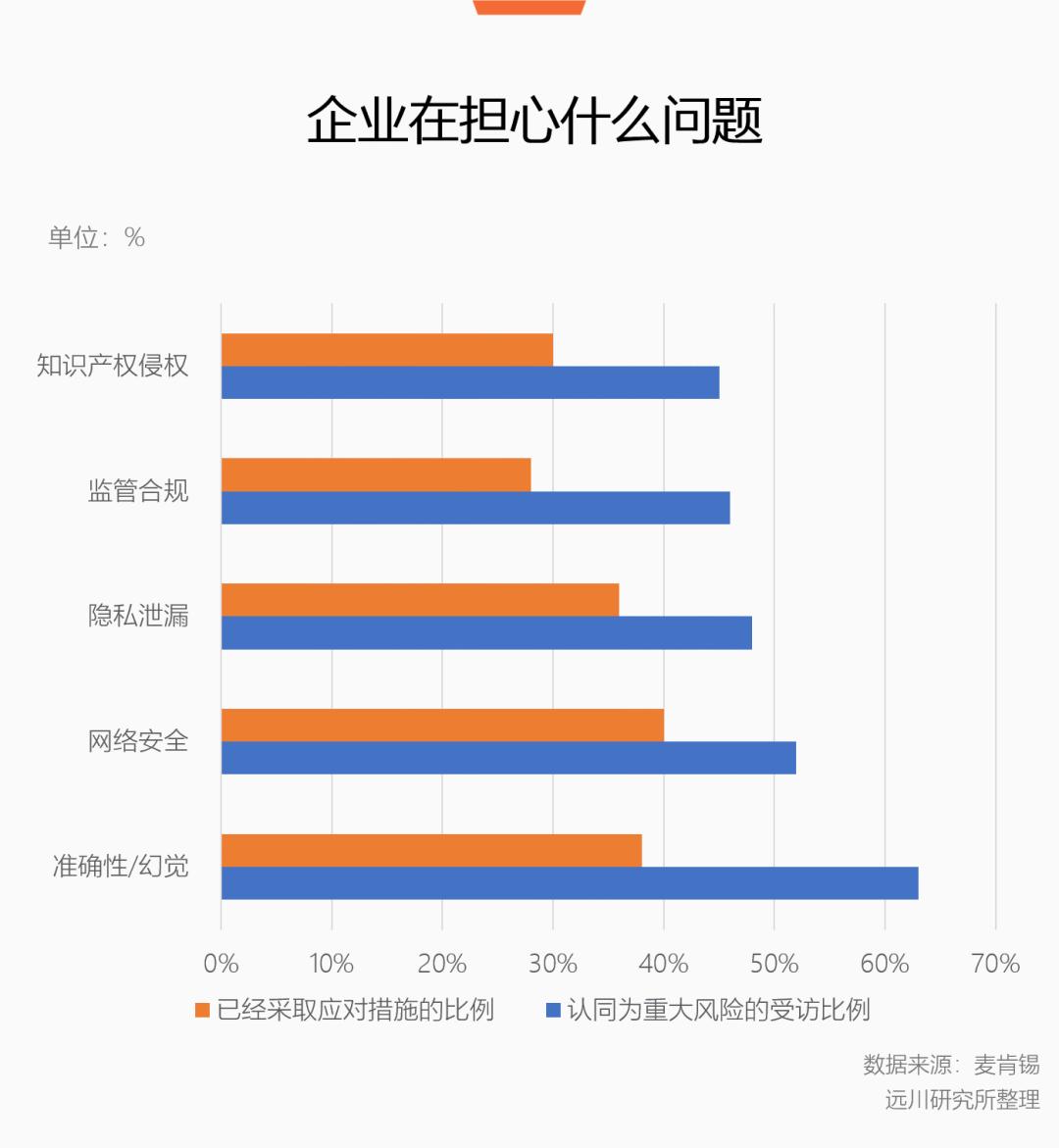
If the boss of a responsible chip company hears that employees are letting Agent access the company's context, he will immediately take out a professional hydraulic pliers to cut off the company's network cable. Letting employees "pay to work" is very dangerous.
The two indicators of quota management and data security point to one result: individual users can use Agent to write weekly reports as much as they want, but enterprise-level Agent cannot be solved by a single product, and a mature commercial product system is required.
In the product logic of Doubao Work, it can fully inherit the existing permission settings of the enterprise on Feishu