A sleep AI hardware company incubated by Li Zexiang has secured new financing, with Shenzhen High-Tech Venture Capital leading an investment of tens of millions of yuan | Hard Krypton Exclusive First Release
Written by Huang Nan
Edited by Yuan Silai
36Kr has learned that Linglu Technology, a sleep AI hardware company, recently completed tens of millions of yuan in angel round financing. This round was led by Shenzhen High-Tech Investment, with continued capital contribution from existing shareholder Heding Capital. The raised funds will be mainly used for iterative polishing of core technologies, improvement of the complete supporting software and hardware system, acceleration of commercial implementation and market expansion, and promotion of mass production and delivery of products. Potential Capital has long served as the exclusive financial advisor of the company.
Linglu Technology was founded in early 2024 at the Shenzhen Institute of Innovation and Technology established by Professor Li Zexiang. The company focuses on neural intervention technology in the field of sleep science. Based on independently developed sleep wearable devices, neural signal data acquisition systems and AI decision-making models, it has built a complete technical path from hardware ontology to data closed loop. Its first product, the AI sleep wearable device, was officially launched in the domestic market in July 2026.
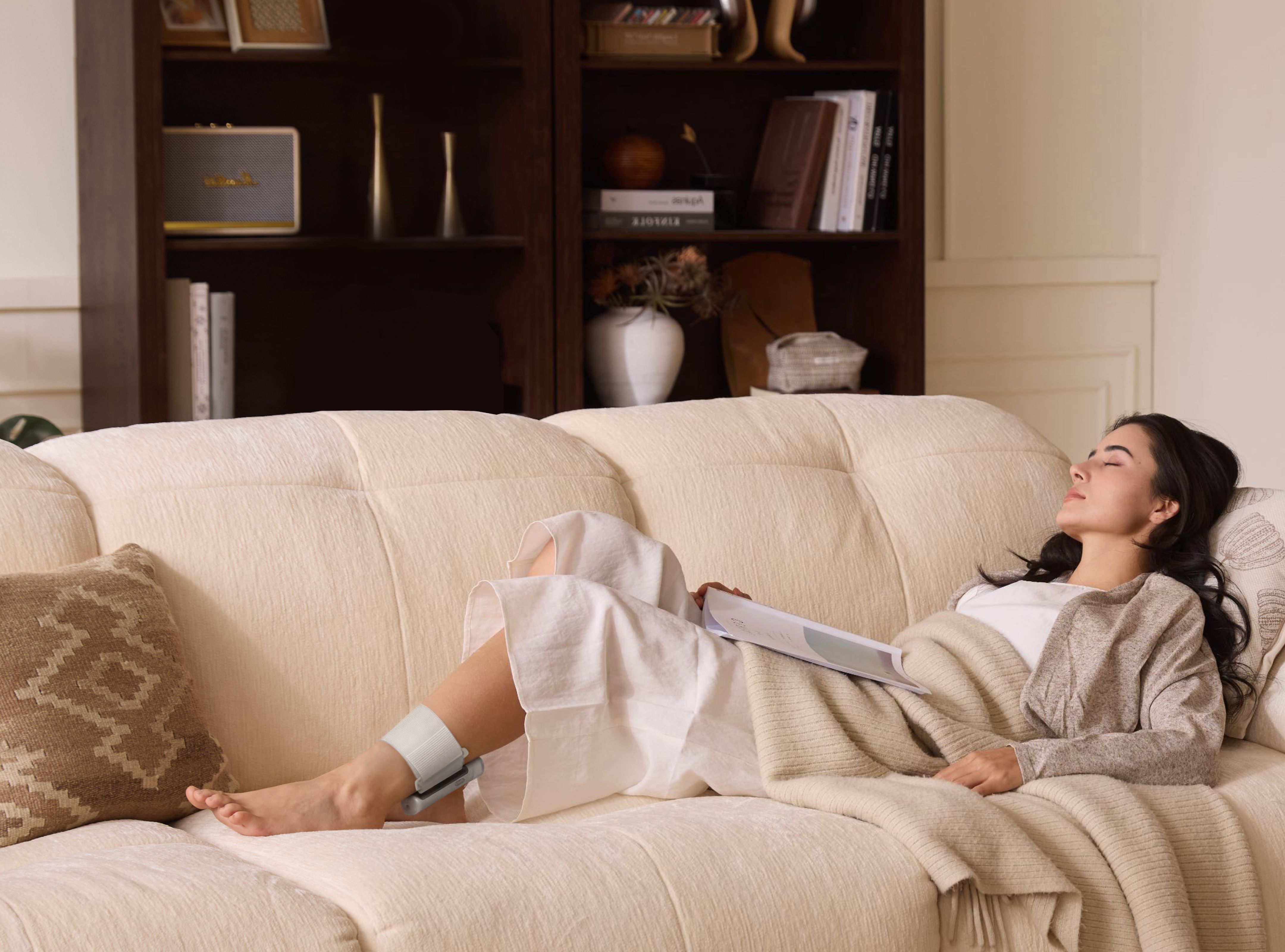
Linglu Technology's first product, the AI sleep wearable device (Source: Enterprise)
The core team has a background of serial entrepreneurship and interdisciplinary industrial vision. Zhang Tao, founder and CEO, was born in 1997. He graduated from Northwestern Polytechnical University with a bachelor's degree, and co-founded a leading autonomous driving enterprise in the industry. After that, he has engaged in hard technology entrepreneurship for 9 consecutive years, with rich closed-loop implementation capabilities from R&D to sales, and has promoted the development of multiple large-scale robot product lines from 0 to 1 to 10. Cao Zhe, CTO, is a doctor of artificial intelligence from Northwestern Polytechnical University, who once worked at Huawei 2012 Central Research Institute. In the past two years, he has published 9 papers in top artificial intelligence journals and international conferences including IEEE TPAMI as the first author.
Other core members of the team have more than 20 years of industry experience, and have worked in enterprises such as Huawei, Tencent and Great Wall Co., Ltd., accumulating cross-border integration capabilities from autonomous driving, consumer electronics to neural interfaces.
Sleep has become a trillion-level rigid demand business. According to data from iiMedia Research, the market size of China's sleep economy grew from 2.616 trillion yuan in 2016 to 5.737 trillion yuan in 2025, doubling in nine years, and is expected to exceed 12 trillion yuan by 2030. The global sleep technology device market is also growing significantly, and is expected to reach 134.7 billion US dollars by 2034.
However, the market expansion has not spawned a real "killer product". "Over the past decade, the mainstream narrative of the sleep hardware industry has always stayed at the 'monitoring' dimension, such as using bracelets to record sleep duration and rings to analyze sleep depth. But monitoring itself cannot improve sleep. What users want is not a report, but a solution that can really help them fall asleep," said Zhang Tao, CEO of Linglu Technology. "The market demand is undergoing a critical transition from 'passive monitoring' to 'active intervention'."
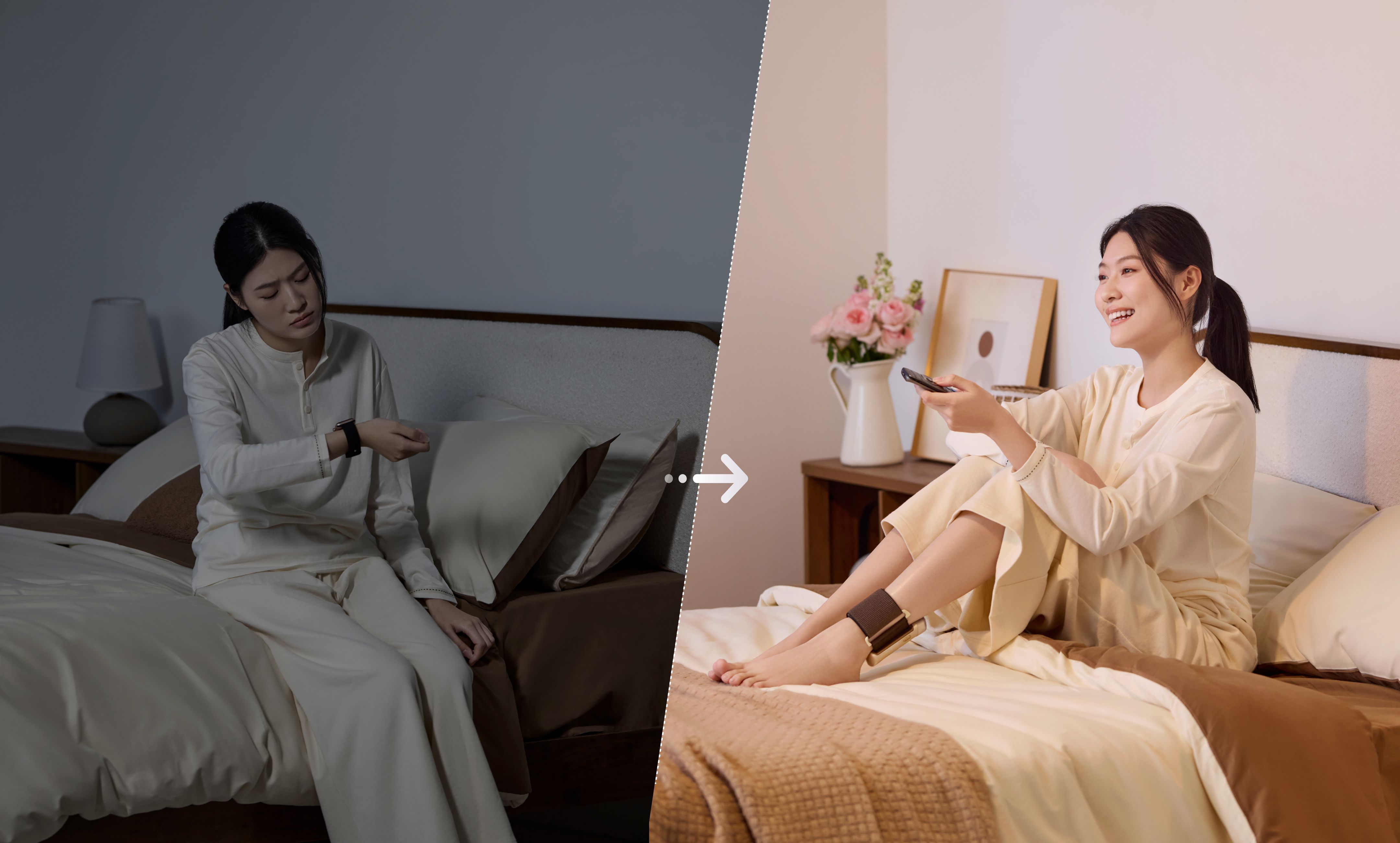
Taking the ankle as the main wearing area (Source: Enterprise)
To understand the product logic of Linglu Technology, we need to return to the essence of sleep problems. Zhang Tao told 36Kr that the current users' sleep difficulties can be roughly divided into three categories: sleep environment, sleep diseases and high arousal before sleep. The first two are the main battlefields of current consumer-grade products and serious medical care respectively, but the third category, which is really common and not effectively solved, is that according to a 2024 survey by the American Academy of Sleep Medicine, more than 74% of the general population's sleep is first destroyed by alert states such as stress and anxiety. This is a physiological high arousal of "the brain can't stop", which is the most common cause of difficulty in falling asleep in the daily life of healthy people.
This is exactly the track that Linglu Technology is targeting, to make neural intervention truly enter the consumer scenario.
Neural intervention faces two thresholds that must be crossed at the same time: effectiveness and low friction. Effectiveness means that it cannot be a pure placebo effect, but must be universally effective and work that very night. Low friction means that in the scenario where users are extremely sensitive to foreign body sensation before falling asleep, the product must be worn without burden.
To this end, Linglu Technology has cut into a special wearing area — the ankle.
This choice is based on multiple considerations. Zhang Tao said that from the perspective of action mechanism, the neural targets at the ankle have dual theoretical support of traditional Chinese and Western medicine: from the perspective of traditional Chinese medicine, it is the representative Sanyinjiao acupoint in acupuncture therapy; from the perspective of modern medicine, tibial nerve regulation realized at this position has been clinically verified for decades, with a large number of effective evidences and no reports of serious side effects.
However, in the past 40 years, this set of technical ideas has never been implemented in consumer-grade products. The reason is that the past tibial nerve regulation was mostly invasive schemes, either relying on acupuncture to pierce the skin, or surgically implanting electrodes around the nerve. Most of the non-invasive technologies on the market in the past have never been able to achieve effective regulation.
The core breakthrough of Linglu Technology in product function comes from the application of Temporal Interference technology. It is also one of the currently recognized cutting-edge routes in the field of brain-computer interface, and is one of the few technical solutions that can truly achieve targeted penetration of deep nerves under non-invasive conditions.
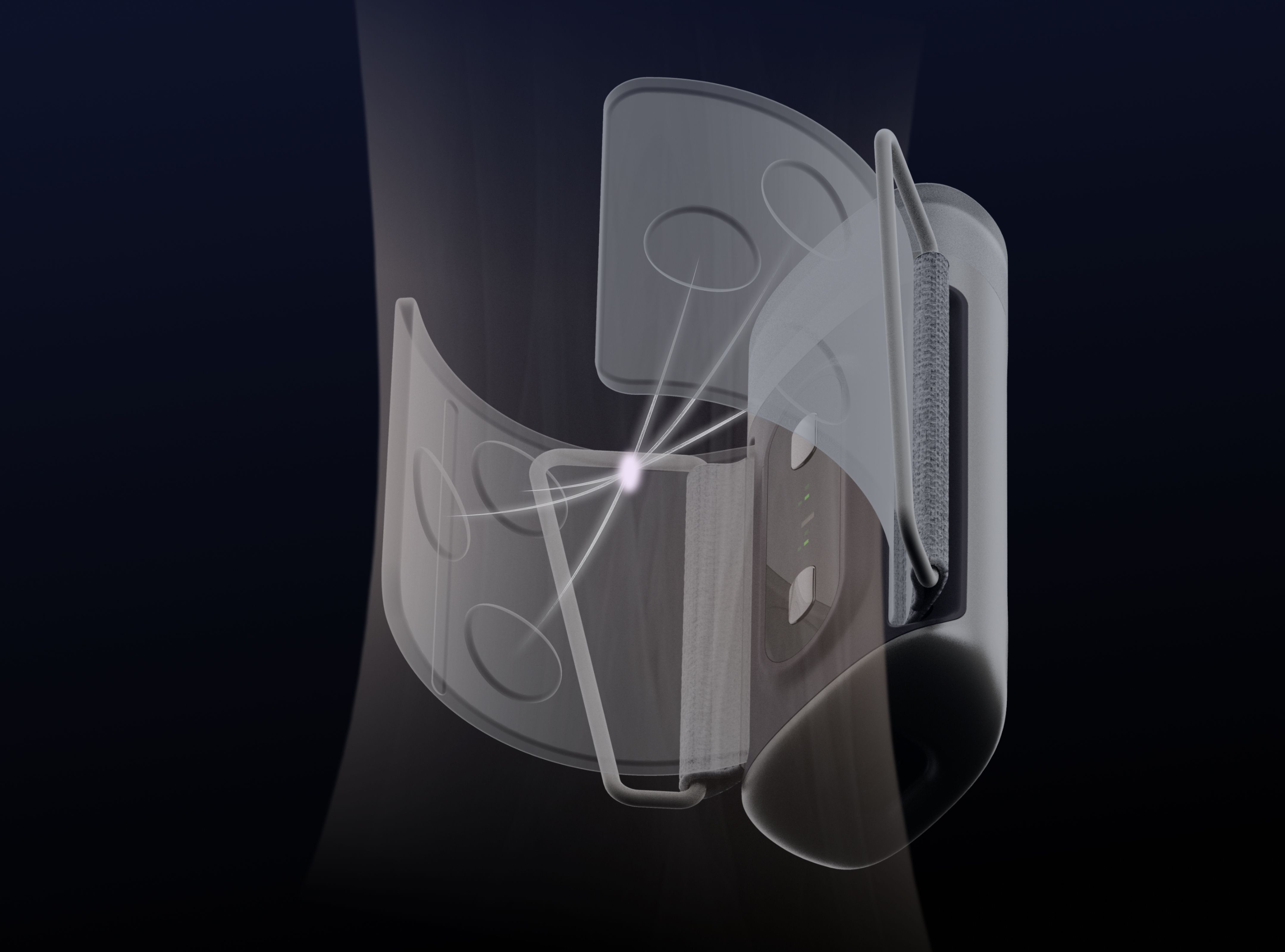
Temporal Interference technology can achieve targeted penetration of deep nerves under non-invasive conditions (Source: Enterprise)
From the perspective of wearing experience, the ankle also has unique advantages compared with bracelets and ring devices. The average weight of an ordinary smart watch is about 30 grams. Once the weight continues to increase, it will interfere with sleep and daily limb activities. The ankle itself is the weight-bearing part of the human body, and its weight-bearing capacity is hundreds of times that of the wrist. Wearing on the ankle hardly causes foreign body sensation, and there is sufficient hardware space for the development of high-performance sensing and edge computing.
More importantly, it is not a sleep monitoring hardware that needs to be worn all night, but an intervention device used before going to bed. Users only need to wear it for 15 minutes before going to bed, and then they can take it off directly. This logic is very similar to that of offline acupuncture clinics. Users can leave after completing acupuncture treatment without taking the physiotherapy equipment home with them.
Linglu Technology is transplanting this "use and go" sleep-aiding mode into the family consumption scenario.
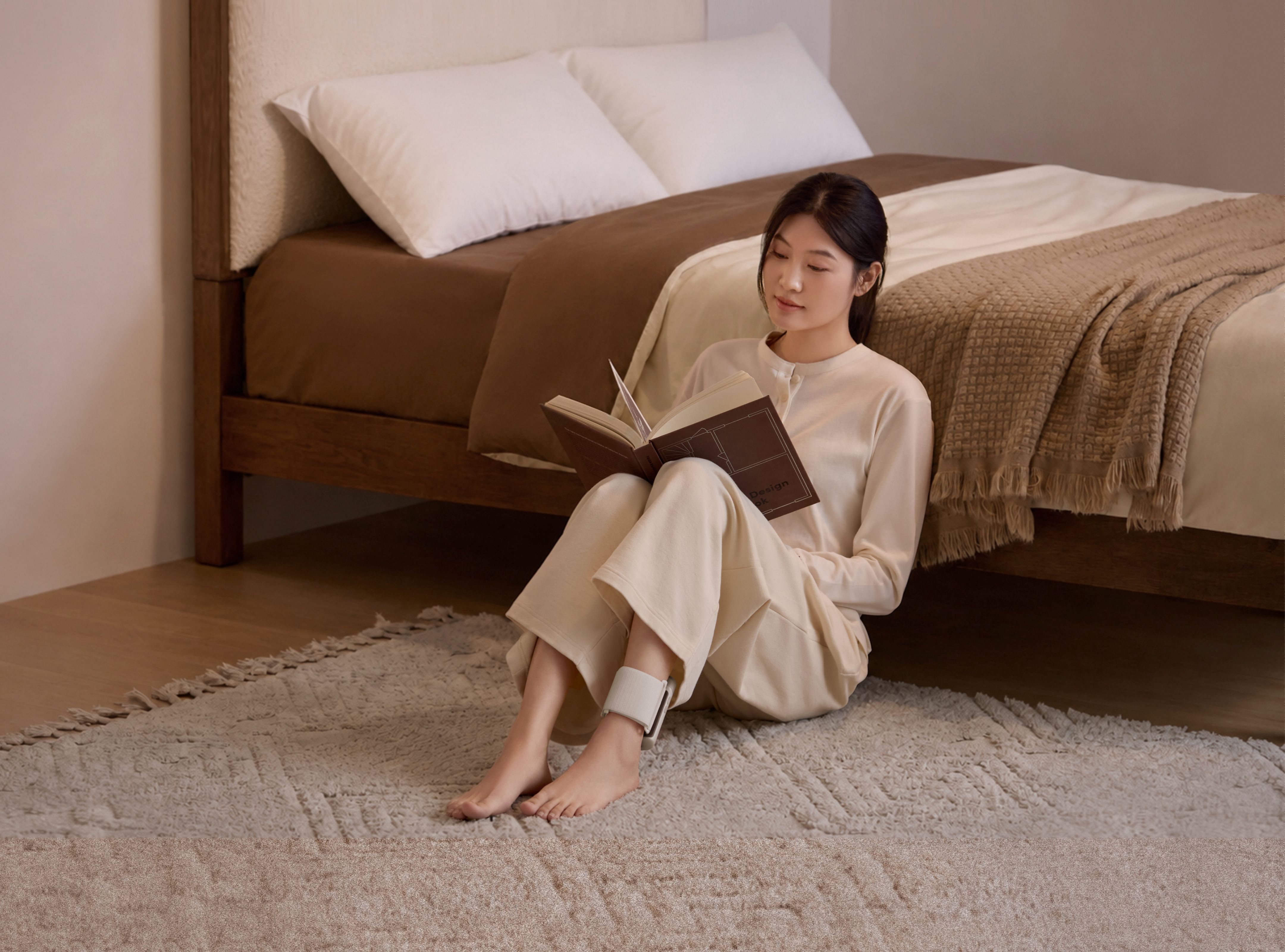
Linglu Technology's first product, the AI sleep wearable device (Source: Enterprise)
36Kr has learned that before its products were officially launched to the market, the team launched a small-scale experience test in early 2026. During the three-month offline activity, the results showed that almost all users felt obvious drowsiness and deep relaxation within a short time after completing the 15-minute wearing experience, several of them even fell asleep directly in the noisy on-site environment, and a quarter of the experience users took the initiative to invite friends around them to participate in subsequent sessions, with considerable efficiency of spontaneous user communication. In July this year, Linglu Technology's first product "Linglu SE" was officially released, and it was sold out within 48 hours of the first sale.
Sleep is a track with rigid user demand but rarely correctly met. Linglu Technology has chosen a path with higher technical threshold and deeper barriers once it is unblocked: instead of optimizing the external environment of sleep, it takes modern neuromodulation science as the underlying basis, and through the collaboration of hardware implementation and algorithm models, directly intervenes in the state transition of the nervous system, helping the human body complete the physiological transition from wakefulness to sleep.
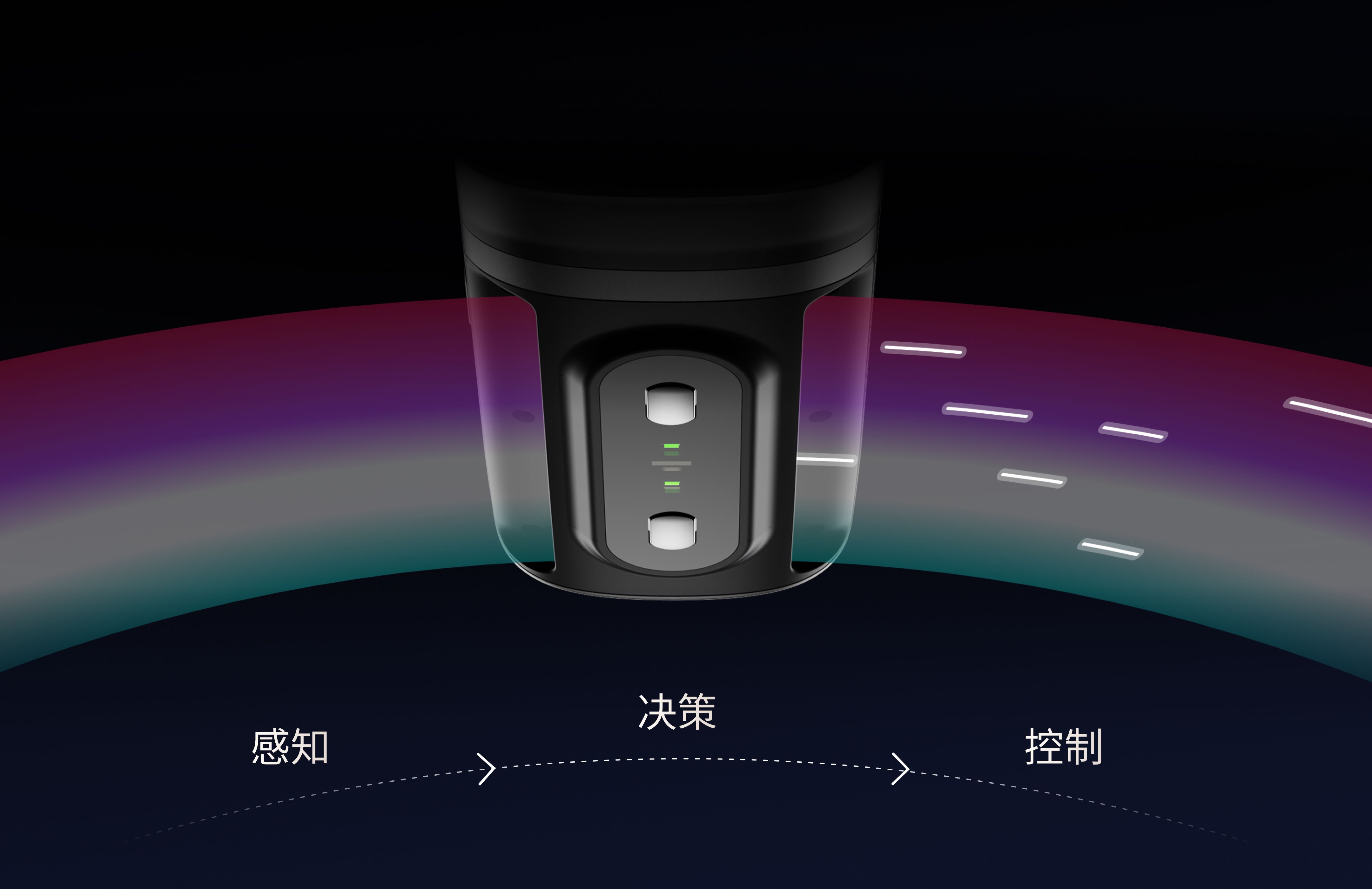
The technical closed loop of "Perception - Decision - Execution" (Source: Enterprise)
According to the plan, Linglu Technology's second-generation product is expected to be officially released overseas in the next six months. The company will continue to improve the technical closed loop of "Perception - Decision - Execution", and plans to build the world's largest somatic neural interface data set through large-scale user data. On the one hand, it will gradually extend its capabilities from sleep assistance to a wider range of health management scenarios, and on the other hand, combined with the new generation of artificial intelligence technology, it will explore the broader implementation boundary of neurodynamics.
The following is an excerpt of the interview between 36Kr and Zhang Tao, Founder and CEO of Linglu Technology (slightly edited):
36Kr: There are many forms of sleep products on the market now, such as bracelets, rings, earphones or glasses. Why did Linglu choose the ankle as the wearing position?
Zhang Tao: First of all, what we make is not a monitoring device worn all night, but a "sleep-inducing wearable" device used before going to bed, which can be understood as a non-drug alternative to melatonin. Users only need to wear it for 15 minutes before going to bed, take it off and then go to sleep. This usage logic determines that the design focus of the product is not on the comfort of long-term wearing, but on the efficiency of short-term use and the freedom during use.
From the perspective of the choice of wearing position, the ankle has an advantage ignored by most people. Head-mounted or ear-mounted products themselves will limit the freedom of movement before going to bed. Users wearing earphones or glasses to wash, read books and make preparations before going to bed will have obvious loss of experience. However, wearing on the ankle does not affect these activities at all. Users can move freely during wearing, and the product does not need to sacrifice the integrity of the usage scenario to accommodate the wearing position.
36Kr: From the actual feedback of users, what is their acceptance of this wearing position? Can ankle wearing really achieve no perception?
Zhang Tao: Back to a bigger question, the sleep track is very hot, but why has there been no real hit product for a long time?
According to our observation, the paths chosen by the current mainstream players are no more than four: sound, light, temperature and fragrance, that is, white noise, light adjustment, temperature control and aromatherapy to aid sleep. The core limitation of this kind of solution is that they can only improve the external conditions of sleep, but cannot really solve the internal contradiction of sleep problems.
High arousal before sleep is a neuro-level problem, the brain can't stop, and the sympathetic nerve is continuously excited. Environmental intervention can only do auxiliary preparation, and cannot deliver deterministic results. What users need is not an aid that may be useful, but the certainty that "I can definitely fall asleep tonight".
We choose to skip the environmental intervention link and directly enter the level of neural intervention. In essence, it is a redefinition of this problem: no longer asking how to make the sleep environment better, but how to complete the state transition of the nervous system before going to bed.
36Kr: Different users have different sleep habits and problems. With the increase of product usage time, how can the algorithm deeply understand the physical state of specific users? How is this personalization achieved?
Zhang Tao: This problem can be viewed from two levels.
The first is the explicit level that users can directly perceive. Users will gradually notice physical changes such as "how many minutes it takes to take effect today". It may take 8 minutes to feel it today, and 15 minutes tomorrow. This kind of daily difference is normal, and due to different pre-sleep states every night, the user's stress level, fatigue degree of daytime activities, and even dinner time will affect the initial state of the nervous system. The system will dynamically adjust parameters based on the real-time collected physiological data to ensure that each use can achieve the expected regulatory effect.
The second is the implicit level directly observed by the technology. For the convenience of understanding, I want to cite a core concept in acupuncture — "Deqi": from the user's perspective, it is reflected as a composite physical sensation of soreness, numbness, distension and heaviness; from the doctor's perspective, it is similar to "fish biting the hook", with a tight feeling under the needle, indicating that the nerve has been effectively activated. There is a basic premise for acupuncture to take effect: Deqi must be induced, so that nerve signals can be effectively transmitted upward. If only the acupuncture action is completed without the Deqi sensation, it is difficult to evaluate the effect.
Based on the above two levels of needs, this is exactly why we build a closed-loop neuromodulation system. The system collects neural signals in real time through multi-modal sensors, and adjusts the electric field output parameters in real time under the response of a high-speed unmanned system, so as to pursue the dual optimal solution of "effectiveness" and "comfort". That is, an intelligent system including "Perception - Decision - Control", which can achieve long-term evolution combined with large-scale user data, and we are also looking forward to seeing the ultimate potential of this evolution.
Investor's View:
Shenzhen High-Tech Investment stated that sleep technology directly faces the most basic physiological needs of human beings, and is a huge opportunity that has been verified for a long time. However, for a long time, the industry is still facing challenges such as serious product homogenization and limited technical paths. How to truly achieve sleep improvement that users can perceive in a short time has always been the core problem that has not been fully solved in the industry.
The value of Linglu lies in that it does not follow the path of traditional sleep products, but starts from the first principle, and redefines the technical route of sleep science with neuromodulation. The company rarely integrates the capabilities of embodied intelligence, consumer electronics and medical research, achieving a high degree of combination between deep technical exploration, product engineering capability and commercial implementation speed. The founding team has long accumulated around the direction of human-computer intelligent interaction, and has shown the vision and execution to build the next generation of sleep technology platform.
Although Linglu is still in a very early stage, it is at this stage that we see its value in exploring the new paradigm of next-generation intelligent health technology. Shenzhen High-Tech Investment has always focused on hard technology projects with long-term technological innovation potential, and adheres to the pioneering "insurance-investment linkage" model to escort the development of enterprises with comprehensive financing solutions. What Linglu is exploring is not the upgrade of a single sleep product, but a new direction from "perceiving the human body state" to "understanding and regulating the human body state". We look forward to Linglu continuously breaking through the boundaries of sleep technology and neural interface, and growing into an innovative enterprise with long-term influence.