6 Claude Code masterpieces handpicked by Anthropic
Recently, the official Claude team has showcased a number of extremely cool Claude Code projects.
These "masterpieces" are created by regular users, covering practical tools, visual creativity and fun applications.
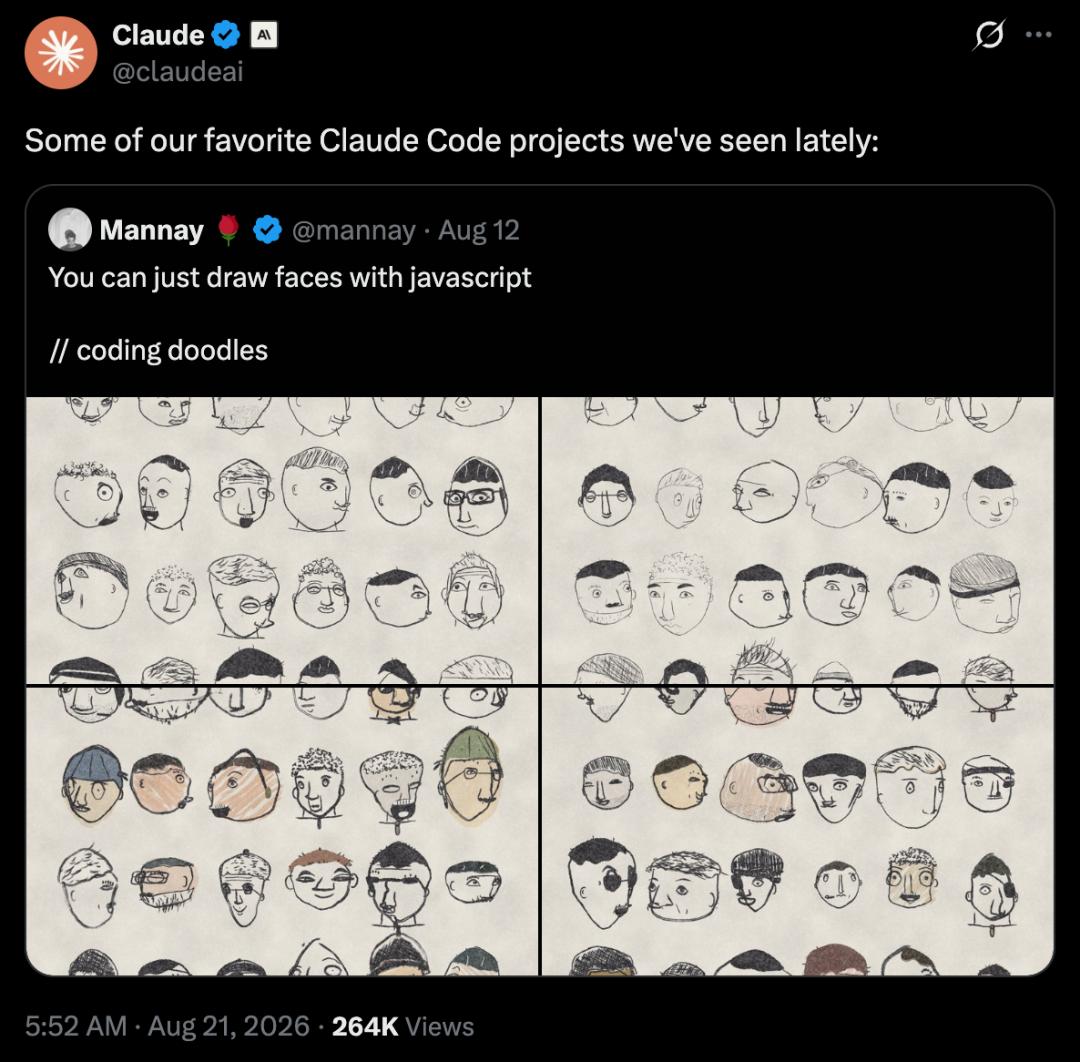
Artist Creates Face Doodles with JavaScript
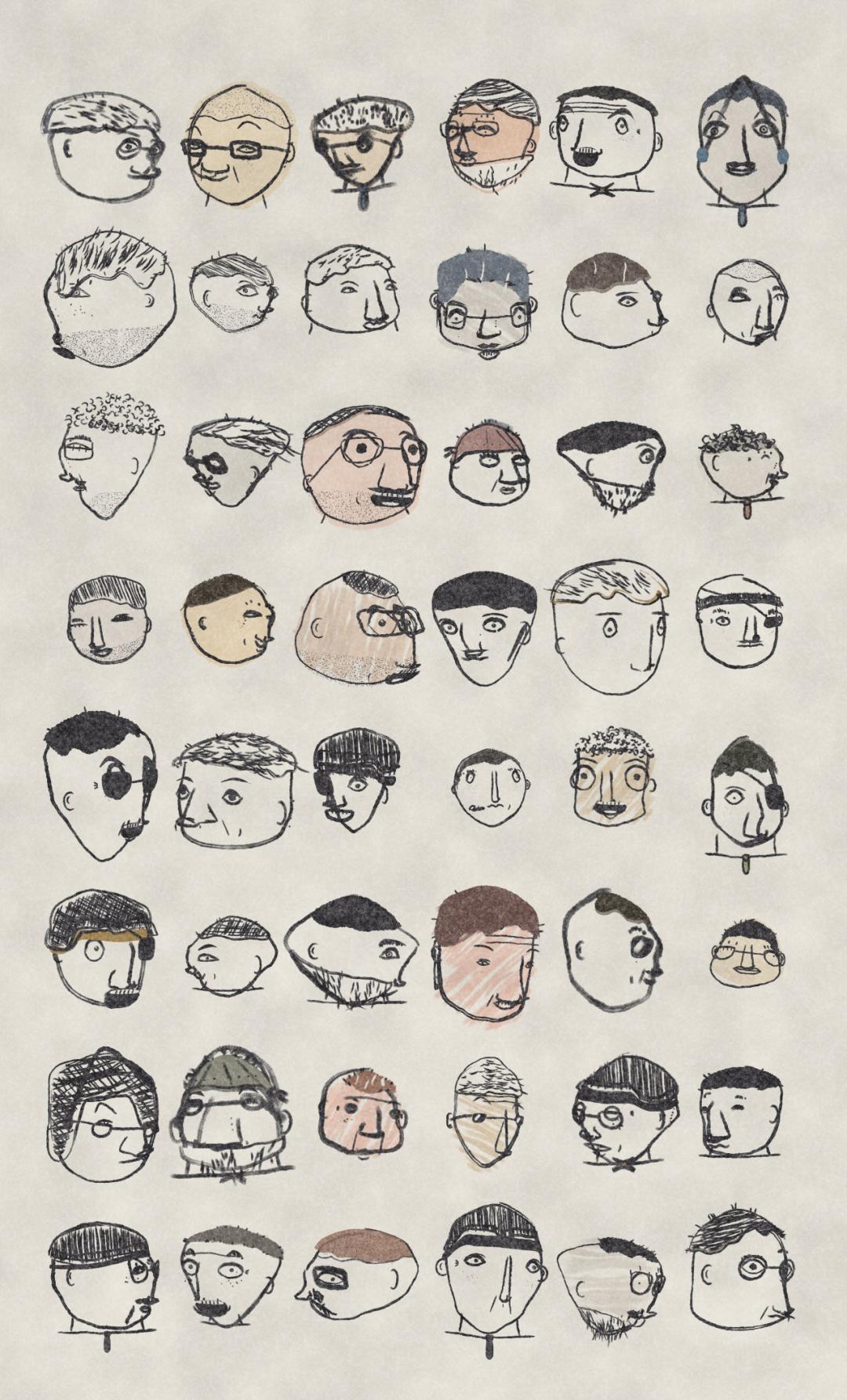
Artist and developer @mannay generated a batch of face doodles using JavaScript.
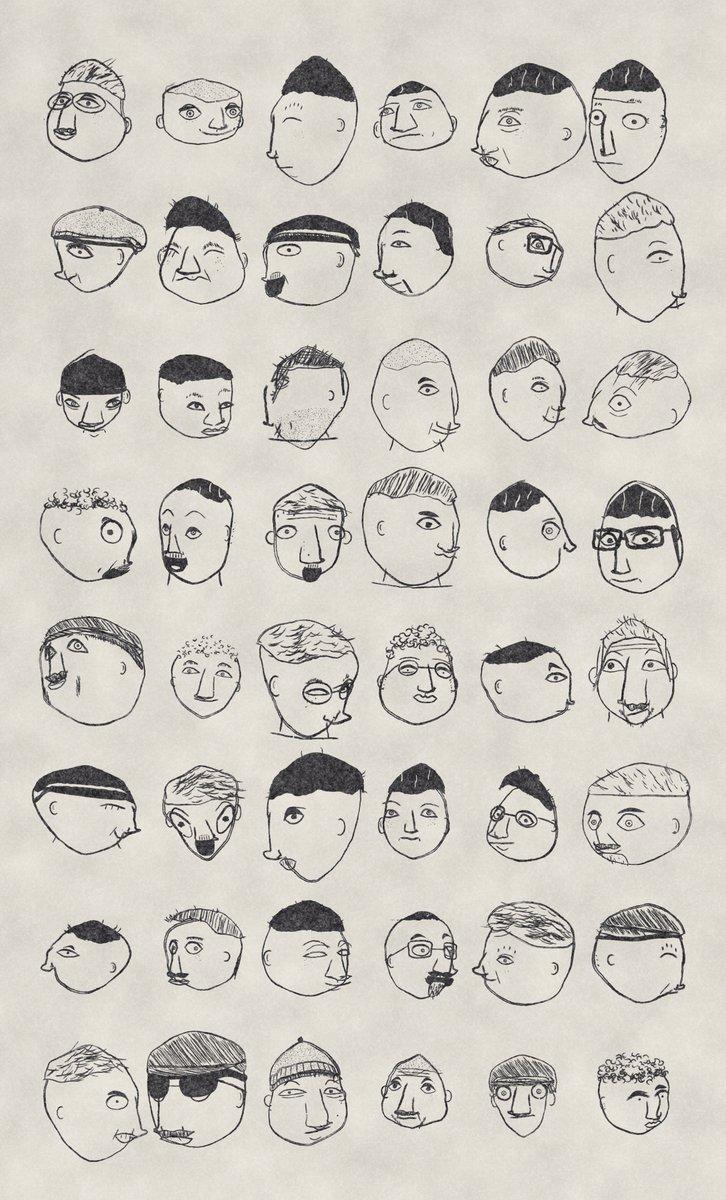
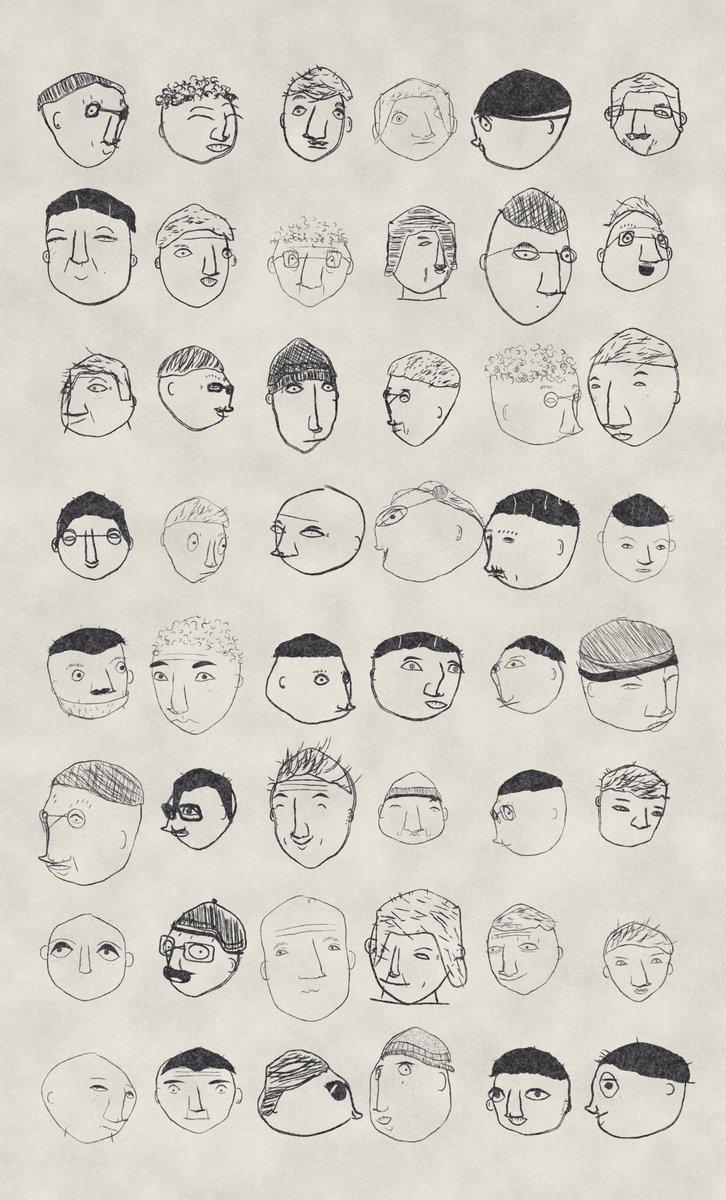
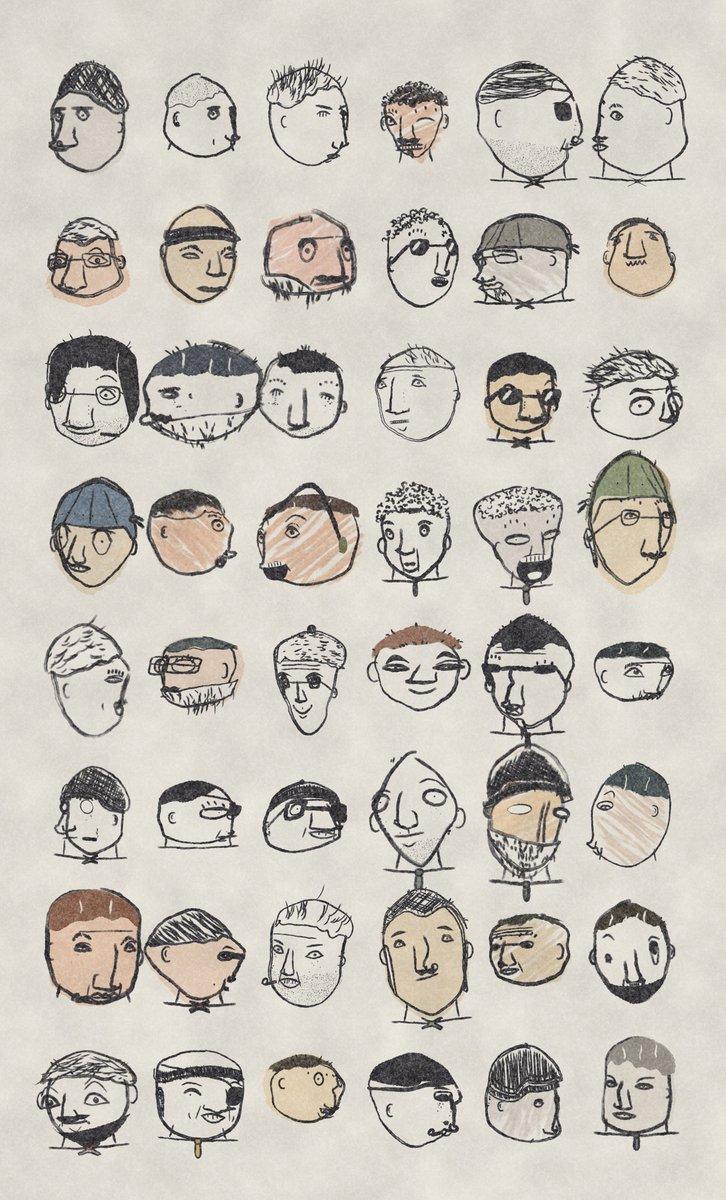
https://x.com/mannay/status/2087522034351796728?s=20
They feature different hairstyles, contours and expressions, with naive and simple lines, presenting the quirky, artistic cartoon style reminiscent of *Ed, Edd n Eddy* and *The Cramp Twins*.
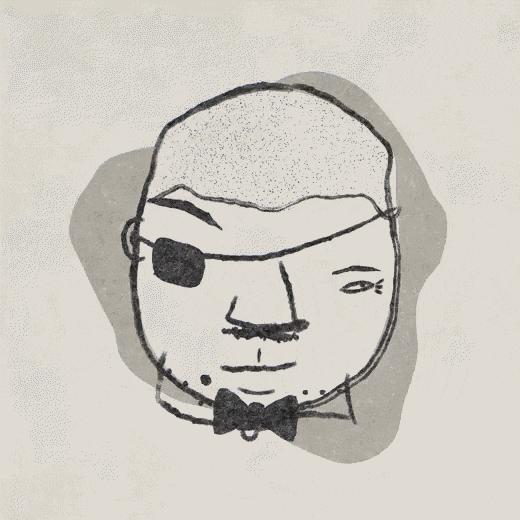
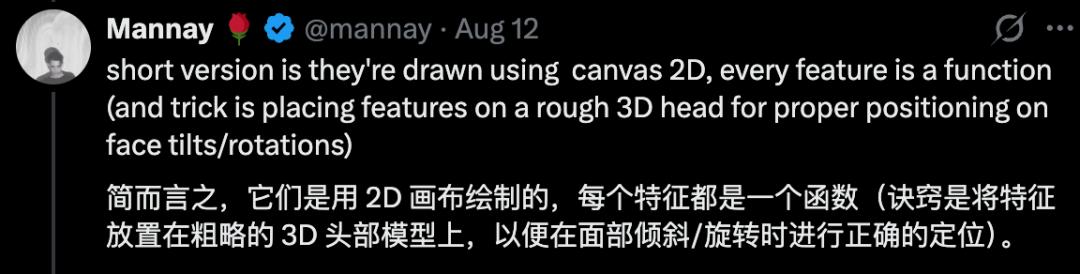
According to the creator, these face doodles are drawn with Canvas 2D, with each facial feature corresponding to a dedicated function. The key technique is to map these features onto a rough 3D head model, so that the facial features can be positioned correctly when the face tilts or rotates.
AI-powered Medical Image Viewer
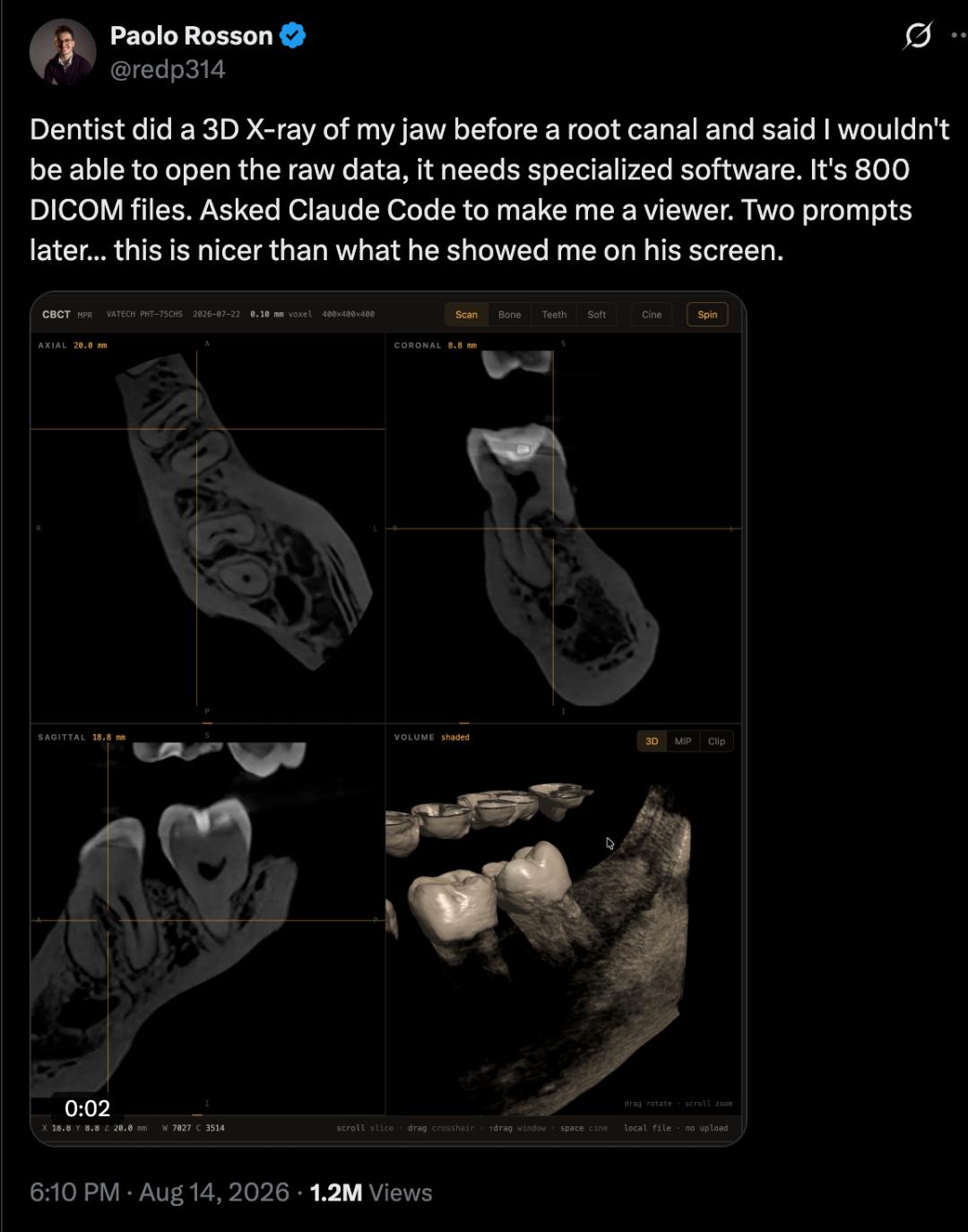
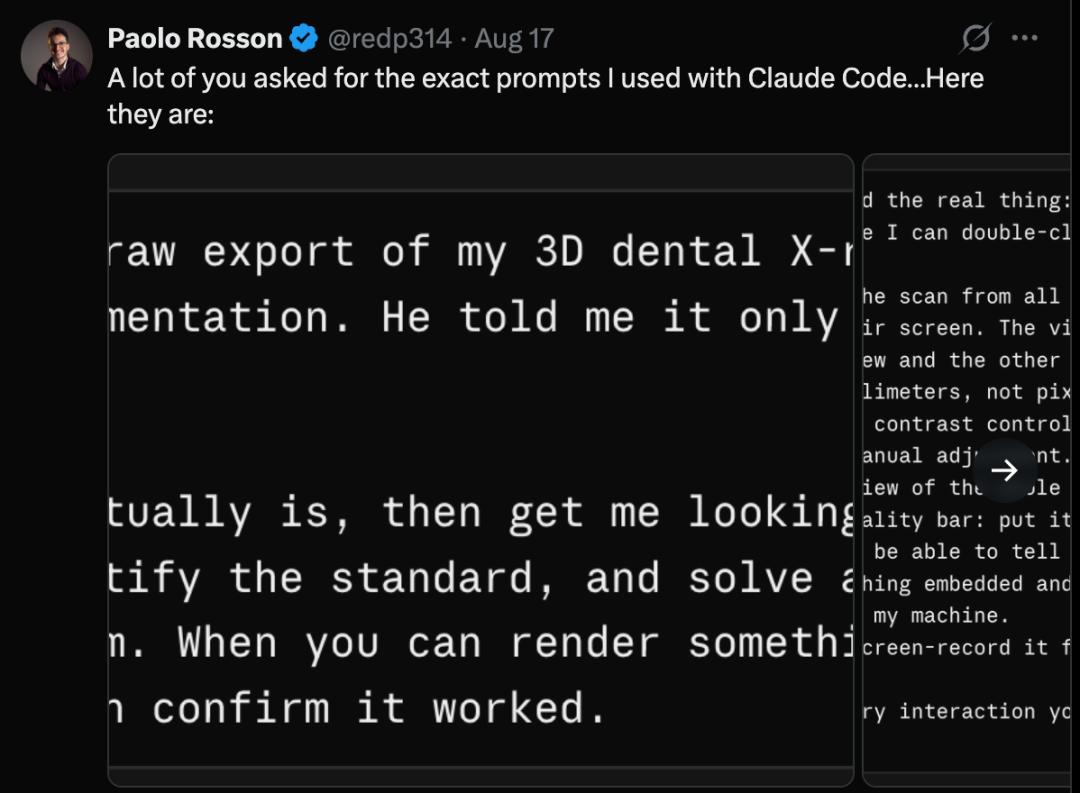
X blogger Paolo Rosson used Claude Code with two rounds of prompts to build a 3D jaw DICOM viewer that works better than dedicated dental software.
https://x.com/redp314/status/2088206627954405400?s=20
Before root canal treatment, dentists usually take a set of 3D X-ray images of the patient's jaw. These medical images are stored in DICOM format, which requires dedicated software to view, and cannot be opened directly by ordinary users.
The blogger obtained his own raw data, totaling 800 files, then submitted the files to Claude Code and asked it to write a viewer. After two rounds of conversation, the program generated by Claude Code successfully loaded and presented these medical images, with a more intuitive interface than the existing software in dental clinics.
He also made the prompts he used public.
In the first round, he asked the AI to inspect the batch of files, identify their format and data standards, handle the decoding issues on its own, and render several cross-section images to confirm successful reading.
In the second round, he asked the AI to generate a "radiology department-grade" viewer that can be opened with a double-click and is fully encapsulated in a single HTML file. The viewer should support linkage of three orthogonal cross-sections, real-size measurement in millimeters, preset and manual adjustment of contrast between bone tissue and soft tissue, and display a full 3D view of the complete scan next to the cross-section images. The interface quality should be so good that when placed side by side with dental software, it is hard to tell which one is a paid product. All data must be processed locally offline and never uploaded to any server.
Turn Codebase into an Interactive Dynamic Graph
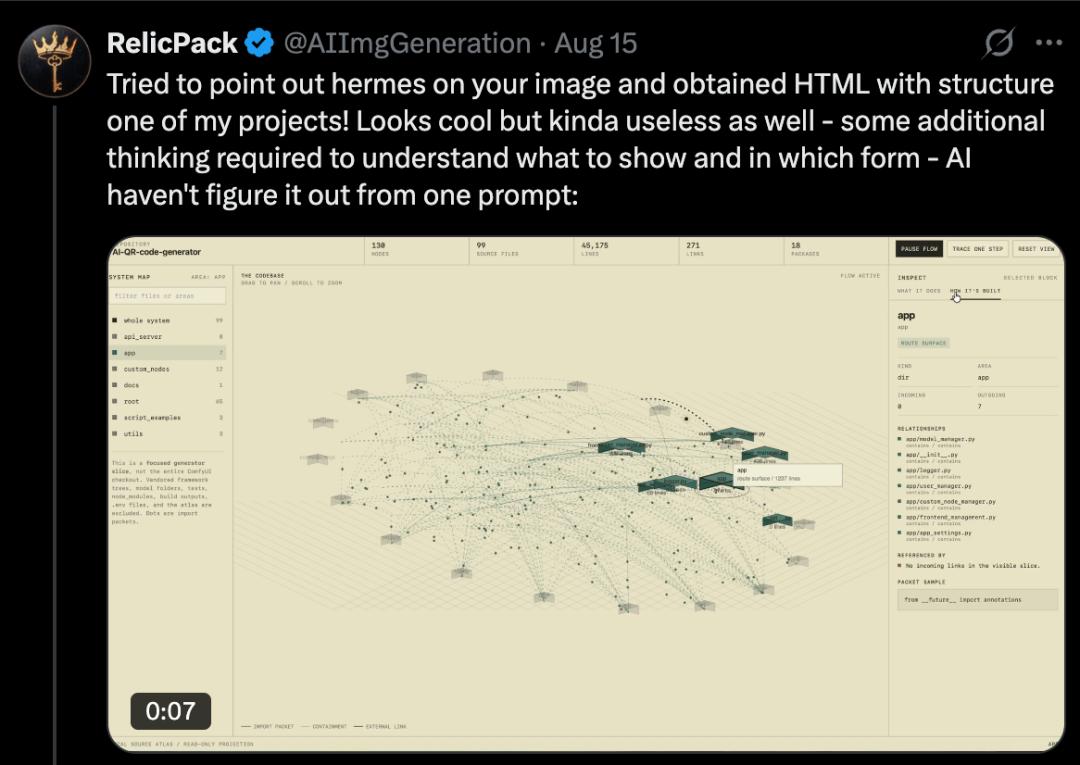
Developer @fleetingbits focuses on the problem of how to understand a codebase more intuitively.
He asked Claude to convert the codebase into a visual chart, making it much easier to discuss the code structure with Claude. The moving dots in the graph represent specific data or code snippets, and users can click to view details.
Code visualization itself is not a new concept. Architecture diagrams in large projects usually require manual maintenance, and static charts can hardly reflect code changes synchronously. Automatically generating interactive charts via Claude can reduce the preliminary sorting work, and provide a new interface for human-AI collaborative code understanding.
Of course, this solution also has its limitations. A netizen commented below that he tried to ask the AI to point out "hermes" on the graph, but it generated an HTML file containing the structure of one of his own projects. It looks very cool, but is actually somewhat useless, as it still requires extra thinking about what content to display and in what form.
https://x.com/fleetingbits/status/2088016749849682120?s=20
AI Builds a Fully Navigable Street Scene Entirely with Code
The project by blogger @prasen extends pure code generation to interactive scenarios.
He asked the AI to build a walkable city street in the browser. The entire scene is generated in real time by code, without relying on any external images, models or asset packs. Users can walk around in it as soon as they open the page.
He later made the project's GitHub repository (project name: night-street) public on social media, along with the prompts used.
He also used a similar method to make a downhill racing game, which also runs entirely on pure code.
The Most "Useless" App
Compared with the previous projects, Carrier Pidge developed by Noah is more like a product creativity experiment.
He spent three weeks developing this SMS app with the core mechanism of "message delivery by carrier pigeon", which is now available on the App Store.
According to the project settings, after a message is sent, it travels at the flying speed of a carrier pigeon. The theoretical flight time from Los Angeles to New York is about 22 hours. Message delivery is not guaranteed: during the flight, there is a small probability that the carrier pigeon will die. Once this random event is triggered, the message will be lost.
This post has received more than 190,000 likes.
A Casual Chinese Calligraphy Learning Tool
Ben Lau used Claude Code to develop a Chinese calligraphy art and learning tool.
This project was initially just a personal interest experiment and was not open to the public immediately. After the demo video was released, it attracted far more attention than expected, so he continued to improve it and officially launched the web version.
The updated version supports Chinese and Japanese kanji, can process multiple words, and adds new writing surface options and export modes. The tool covers both calligraphy creation and kanji learning scenarios: users can observe the writing effect of Chinese characters, adjust the content and export their works. The website currently targets desktop users primarily.
The 6 small projects promoted by Anthropic this time have obvious product promotion attributes, but from another perspective, they also reflect that Claude Code is breaking out of traditional programming scenarios, and more and more people are starting to use natural language to complete the entire process from ideas, code to runnable products.
Reference link: https://x.com/claudeai/status/2090557643974693055?s=20
This article is from the WeChat official account "Machine Heart" (ID: almosthuman2014), edited by Yang Wen, published with authorization from 36Kr.