In the first half of 2026, the non-standard commercial sector has begun to take "small things" seriously.
In the first half of 2026, no new super-large projects were launched in the non-standard commercial market.
But what is more noteworthy than the absence of star projects is that the "model" of non-standard commerce is undergoing changes.
In the past few years, many non-standard projects relied on core locations, strong scenarios and scarce brands to create a destination effect; while a number of new projects emerging this year are adopting smaller scales and penetrating into peripheral spaces such as community streets and urban parks.
This brings about the emergence of another set of operation logic — projects increasingly need to be embedded in specific life radiuses, and build stable relationships with surrounding people through daily business formats, venue design and continuous operation.
Absence of Super-large Projects
Structural Changes Are Taking Place
There are not many benchmark projects entering the non-standard commercial market in the first half of 2026, and this phased gap mainly comes from two factors: on the one hand, the non-standard projects that were launched intensively in the past two years have entered the operation verification stage, and the market is beginning to test whether the opening popularity can be transformed into stable performance; on the other hand, major cities are still in the overlapping period of supply peak and stock adjustment, and commercial rents continue to face pressure.
Even against this background, a number of new samples with different scales and paths still emerged in the first half of 2026:
There are mini projects with light intervention such as aa An'an, FUFU Shanghai, Huangsha Shang'an, localized attempts of mature non-standard commercial brands such as TX Changsha, as well as integrated cultural, business and tourism projects represented by Chaotianmen · Chengli, Jinling Changlefang with local culture as the core narrative.
Among them, there are a large number of small-sized projects with an area of less than 5,000 square meters, and the newly opened projects are no longer densely rooted in popular business districts, breaking the past dependence on "superior geographical location and mature passenger flow base".
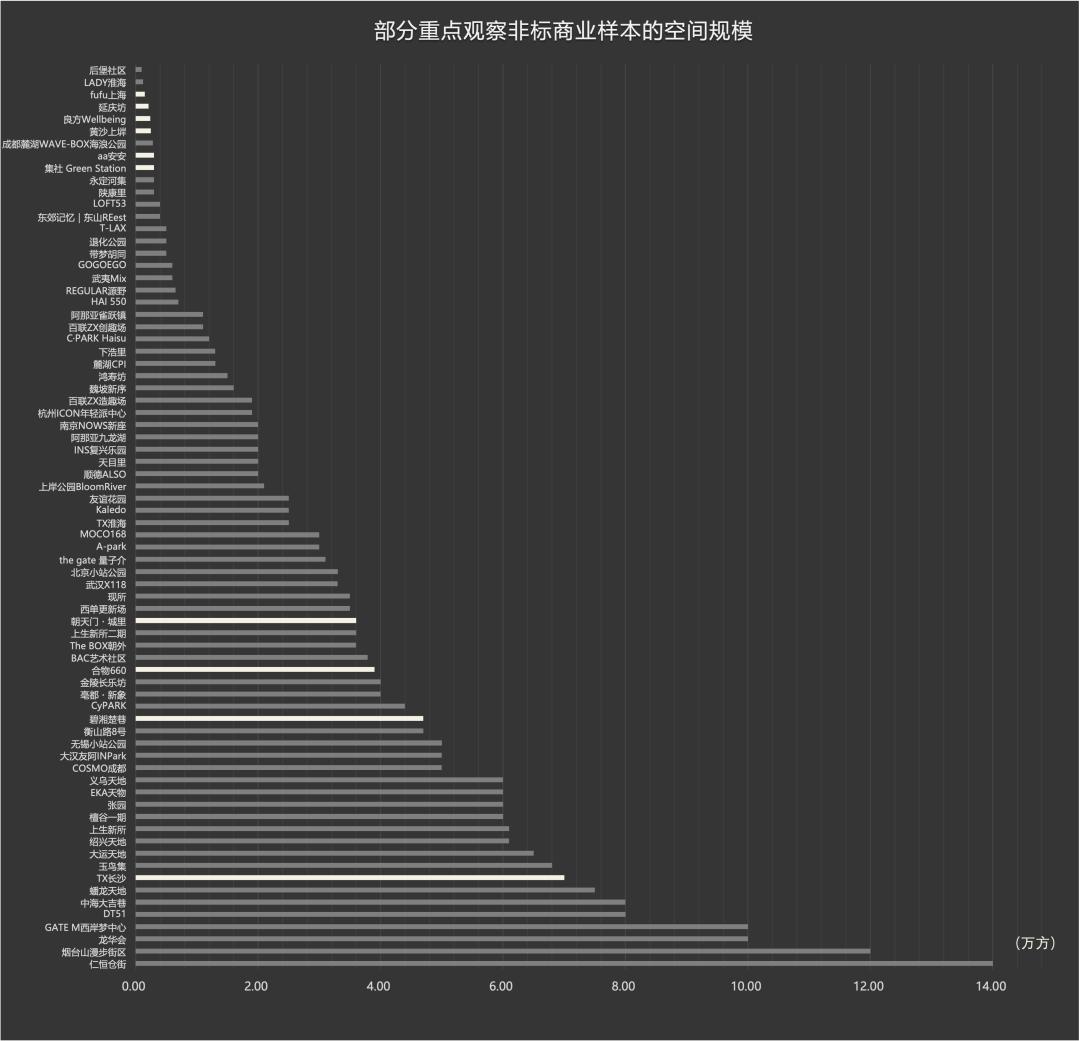
Spatial scale of some key observed non-standard commercial samples (white refers to projects newly launched in the first half of 2026)
With the decrease of shopping mall positioning and adjustment projects and the increase of community service-oriented and cultural tourism destination-oriented projects, the structural changes within the non-standard commercial track have emerged, and the "barbell-shaped" distribution feature of project levels has also begun to appear.
Site Selection
Spreading to the "Golden Corners and Silver Edges" of the City
Focusing on the spatial selection level, non-standard projects have extended their tentacles from core business districts to urban peripheries and golden corners and silver edges — rooftops, urban parks, office parks, old factories and street shops have become new positions for non-standard commercial practice.
Such spaces have relatively low rent costs, higher renovation flexibility, and are easier to establish daily consumption relationships with surrounding residents, thus forming a "sense of place".
1) Rooftop: Breaking through Location Restrictions with a Sense of Place
Chongqing aa An'an and Xiamen's Degraded Park provide practical cases of rooftop space.
Coincidentally, both of these projects are operated by the spatial design team itself, which also shows from the side that design institutions are moving from space service providers to operators, and gradually forming a more mature methodology.
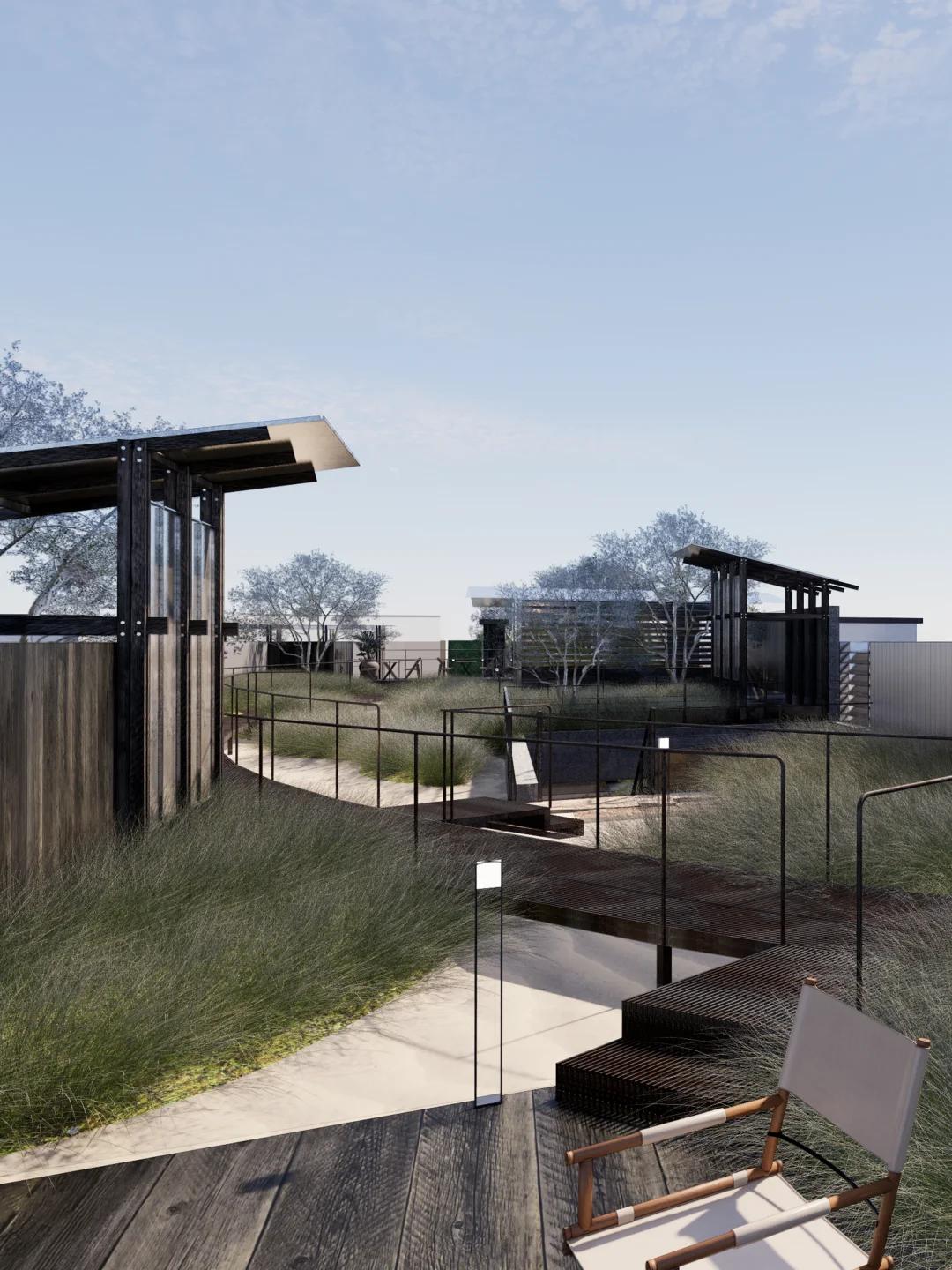
Chongqing aa An'an | Source: Xiaohongshu @aa An'an
However, such projects generally face inherent problems such as weak accessibility, insufficient natural passenger flow and limited visibility.
Therefore, they rely more on precise business format combinations, continuous content production and distinct communication images, transforming the sense of place into a clear reason for visit, and making up for the lack of location passenger flow through purposeful consumption.
2) Urban Parks: From Auxiliary Facilities to Operating Assets
Park-type non-standard commerce was introduced in our previous article "Park Commerce: Where Does It Come From and Where Is It Going?" last year. Judging from the trend this year, they are transforming from auxiliary supporting facilities to an important part of public space operation.
Represented by Shenzhen Bay Park BOX and Yongdinghe Ji, most projects adopt small-sized, light-intervention and detachable space components to activate inefficient assets at low cost; the business formats are developed around the daily wandering needs of tourists and surrounding residents.
Lower rent requirements and open display surfaces provide brands with channels to reach public passenger flow at low cost. The income generated by commercial operation feeds back facility maintenance and public services, which is conducive to promoting parks to shift from single financial investment to a more sustainable operation mode.
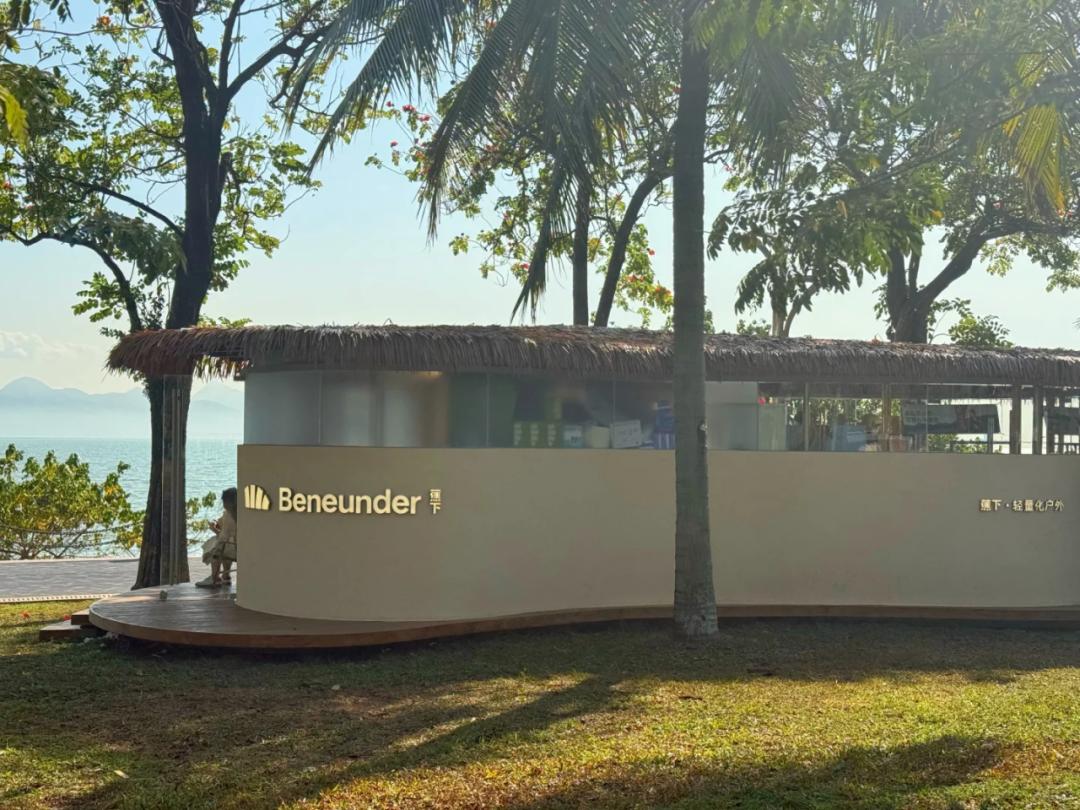
Shenzhen Bay Park BOX | Source: Xiaohongshu @Park BOX
3) Street Patch: Reconnecting Closed Spaces to Community Life
FUFU Shanghai and Xi'an's Liangfang WELLBEING are typical cases of street patch-type non-standard commerce.
Due to the small size and limited natural passenger flow of such projects, their operation relies more on the continuous use of surrounding residents. Therefore, the operation team needs to intervene in advance at the design and transformation stage, follow the logic of pre-operation, first identify community needs and daily use scenarios, and then reversely organize space, investment promotion combinations and public activities.
For example, FUFU Shanghai opened the originally closed Donghu Road plot through "reduction renewal", releasing public spaces to connect courtyards, corridors and rooftops;
Liangfang WELLBEING transformed the old buildings in the community into a 2,400-square-meter life scene, re-embedding coffee, catering, children's activities and shared spaces into residents' daily lives.
4) Office Parks: Internet Enterprises Bring Content Ecosystem Offline
Large internet enterprises have accelerated their layout of offline commerce in recent years, promoting production and office supporting commerce to break away from the logic of traditional office services.
Represented by Ali Qingcheng Park, Beijing 1733 Commercial Space, and the upcoming M80 and Qingcheng Hub, office supporting commerce has been further upgraded to become a carrier for organizing lifestyles, shaping corporate culture and connecting external people.
More importantly, for internet enterprises, park commerce is not only the offline base of local life business, but also a new scene for content production.
Large enterprises can implement online media, content ecosystem and user relationships into real space relying on projects, which also means that such projects are naturally equipped with the ability to update content at high frequency and stable passenger flow support.
From Scarce Brands
To Daily Needs
An obvious feature brought about by the reduction of area and the change of site selection in the business format and brand section is that projects no longer rely on the scarcity of brands to create attractiveness, but instead undertake the daily needs within the community radius.
In terms of business format composition, catering (45.5%) and retail (37.1%) together account for more than 80% of the share; entertainment experience and life services fill the gap after the contraction of cultural formats.
Associated with this trend is that venue design, aesthetic taste and business format combination have become the key to attracting long-distance visits.
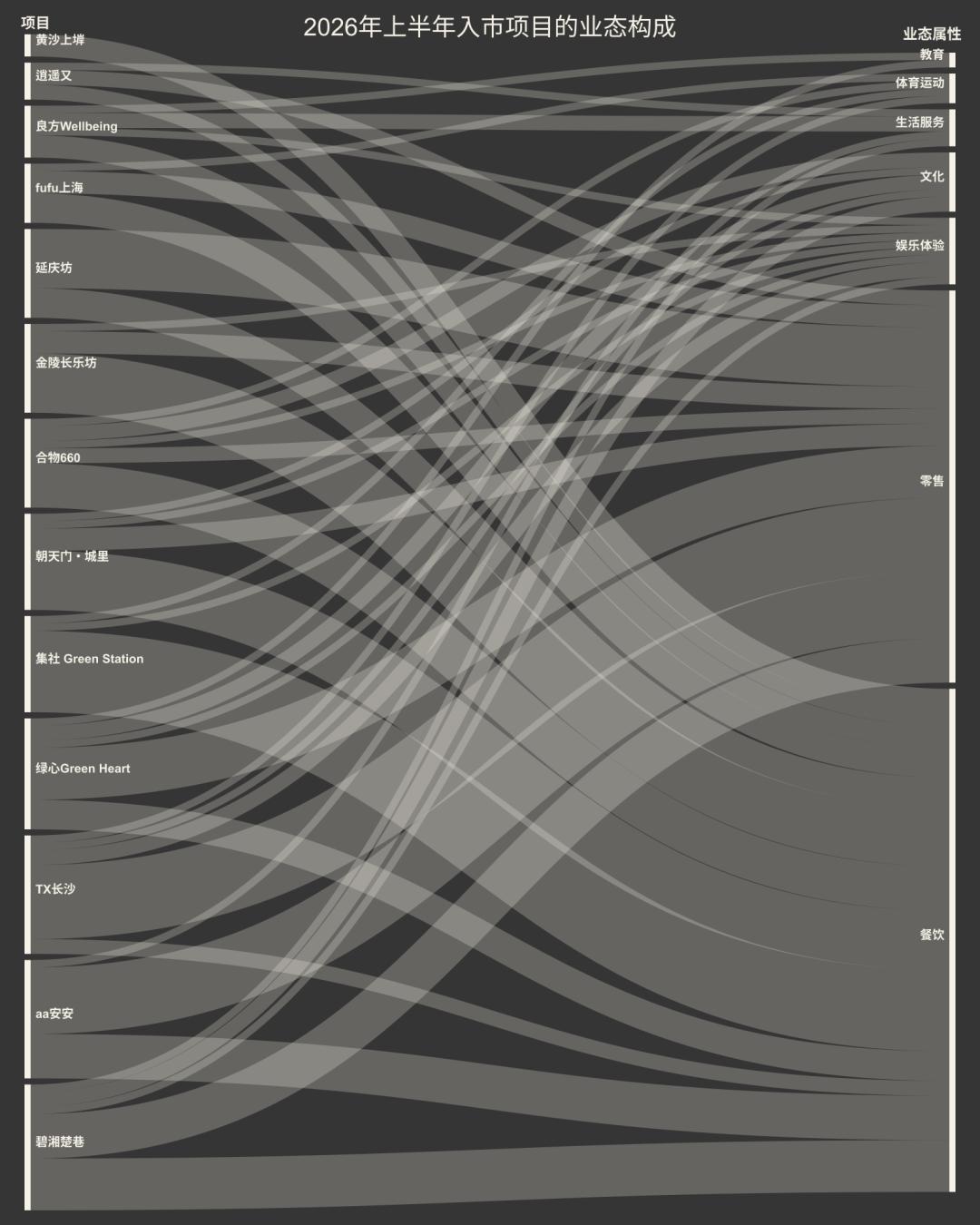
Business format composition of projects launched in the first half of 2026
If we divide the key non-standard commercial projects we track into three stages according to the launch time: embryonic stage (2019-2022, 20 projects), outbreak stage (2023-2024, 45 projects), differentiation stage (2025 to present, 31 projects)
Then from their positioning slogans and self-expression, we can see a trend: non-standard commerce is gradually getting rid of excessive dependence on the "young" label and refocusing on specific life needs.
The new projects launched this year tend to use words with public space attributes such as "settlement", "block" and "habitat" in their positioning, blurring commercial attributes and strengthening the spirit of place.
For example, aa An'an — naturalist lifestyle settlement; Liangfang WELLBEING — a vibrant community origin place; the upcoming Qingcheng Hub — a stylish youth habitat, etc.
In terms of business formats, among the non-standard projects opened before the second half of 2025, retail accounted for 41.6%, slightly higher than 37.6% of catering, making it the largest main business format. However, in the projects launched in the second half of 2025 and later, the priority has reversed, and catering has become a more reliable passenger flow stabilizer.
At the same time, the proportion of cultural formats has declined significantly, becoming the item with the most obvious change among all formats. This to a certain extent shows that cultural content represented by bookstores, theaters and art spaces is facing the realistic pressure of sustainable operation after the concentrated outbreak in the early stage of non-standard commerce.
The proportion of entertainment experience and sports has increased slightly, and their ebb and flow with cultural formats reflects from the side that the connotation of "experience consumption" is shifting from relatively static cultural consumption to more dynamic embodied experience.
Representative cases include Bate Planet Sports Amusement Park of TX Changsha, Quantum Climbing of the gate Quantum, etc.
Operation Dominance
Returning to Local Teams
An interesting phenomenon is that although non-standard projects have also begun to export light assets, the operation dominance of incremental projects is increasingly returning to local teams.
If large-scale projects are still mainly operated by professional commercial management institutions or self-built project teams, the transformation and operation of small and medium-sized projects have become the key focus for local state-owned enterprises and urban investment companies to explore intervention.
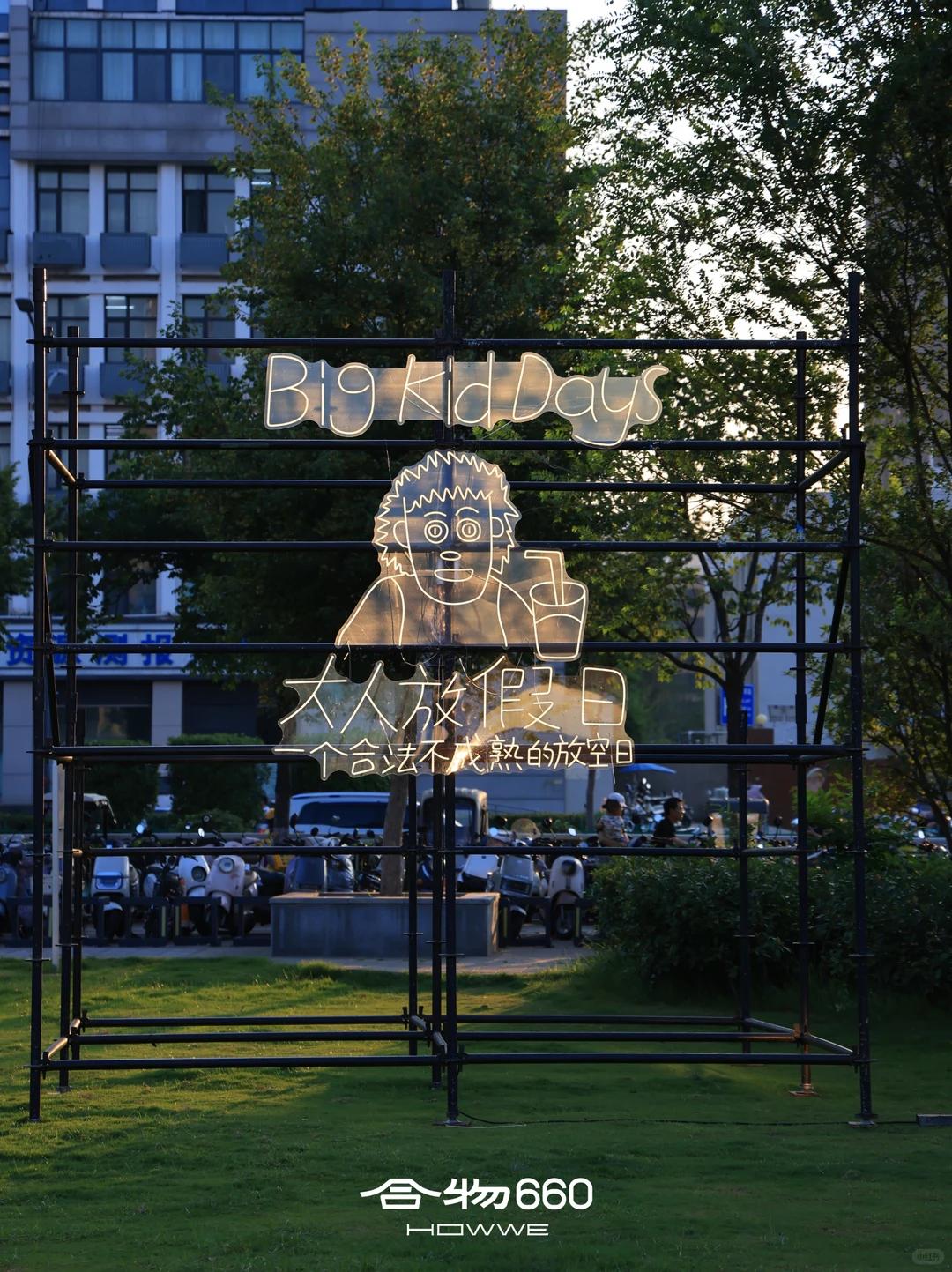
Zhengzhou Hewu 660 | Source: Xiaohongshu @Hewu 660 - Little Horn
Among them, small-sized projects test the ability of the operator to consider positioning, design, investment promotion and operation in parallel.
With the increase of urban renewal projects, this overall planning capability is becoming the basic skill of non-standard commercial operation teams, and it is also a breakthrough for non-traditional players to enter the market.
For design teams and cultural institutions as operators, their roles need to further shift from Party B that provides creative, space or curatorial services to Party A or semi-Party A that directly takes responsibility for investment promotion, tenancy management, cash flow and organizational efficiency.
For local state-owned enterprises and urban investment companies, targetedly improving the investment promotion level of main brand operators and content production awareness is the current capability short board that needs to be urgently supplemented.
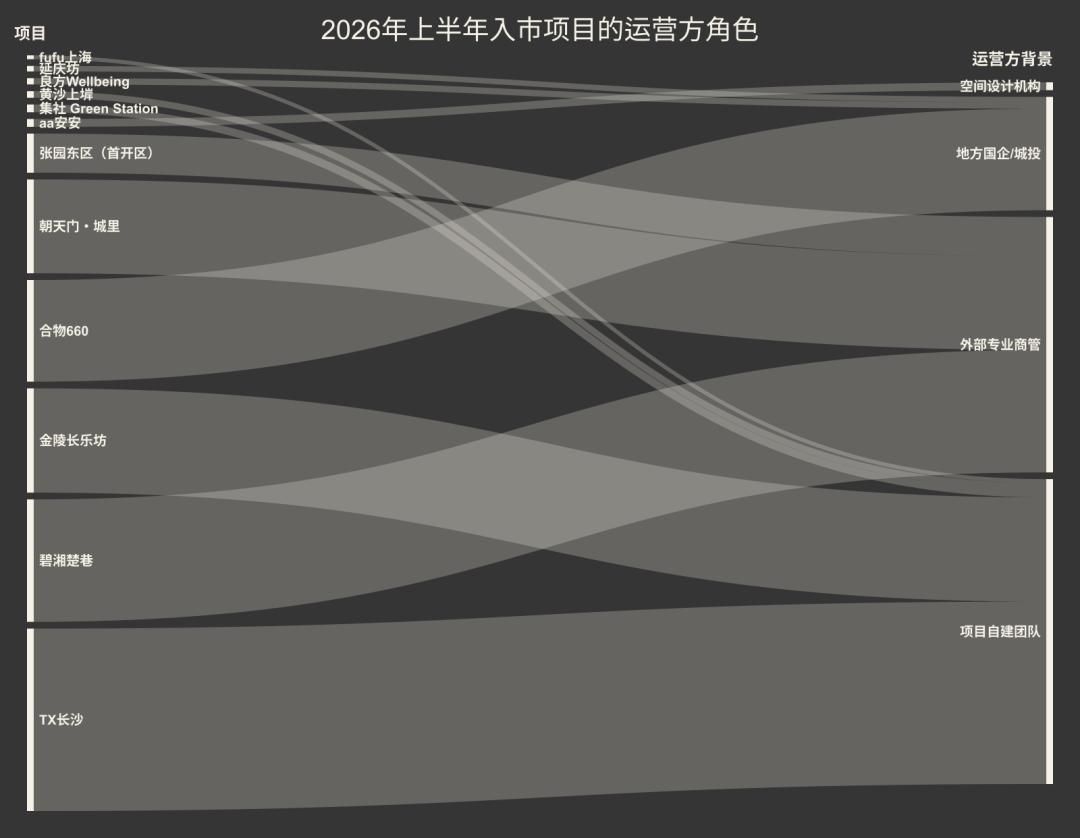
Background of operators of newly launched projects in the first half of 2026
Newly Launched Projects
Are Returning to Life Scenes
Looking back at the article "From Lifestyle to Infrastructure — 2024 Non-Standard Commerce Observation", "infrastructureization" was more of a value judgment at that time, but now it has been further verified by facts.
More and more non-standard projects are penetrating into unconventional commercial spaces, which also promotes the method of non-standard commerce to break away from the logic of creating destinations, and turn to small-scale renovation of specific life scenarios.
Small size does not mean easier operation. On the contrary, when no longer relying on mature business districts, projects need to accurately identify the needs of surrounding people, and establish stable revisit through venue design, business format combination and content update.
The so-called "small but beautiful" texture is not only a change in spatial scale, but also represents that the operation logic is shifting to "maintaining specific and continuous local relationships".
From the incremental projects in the first half of the year, we can find that non-standard commerce is creating a series of new practical methodologies for urban renewal, so how should we judge and look forward to their prospects?
I think that the long-term value of commerce depends on whether the project can truly identify, improve and respond to the real issues of local development —
From improving the walking environment and incubating community relationships at a small level, to activating idle spaces and rebuilding local awareness at a large level.
Only when public value and commercial value support each other, can the so-called "non-standard" be transformed from a marketing concept into a sustainable renewal method.
This article is from WeChat Official Account "Mr. Mall", author: Zhu Yannan, published with authorization from 36Kr.