Apple's foldable iPhone, Huawei's straight Pura X: Two distinct choices point to the same answer.
Huawei and Apple are highly similar in many strategic directions. However, for their next-generation flagship smartphones, the two will make opposite choices.
At the new product launch event held on August 20, 2026, Richard Yu, Executive Director of Huawei, Director of the Product Investment Review Committee, and Chairman of the Terminal BG, released the world's first wide flat smartphone Pura X View in the form of "One More Thing".
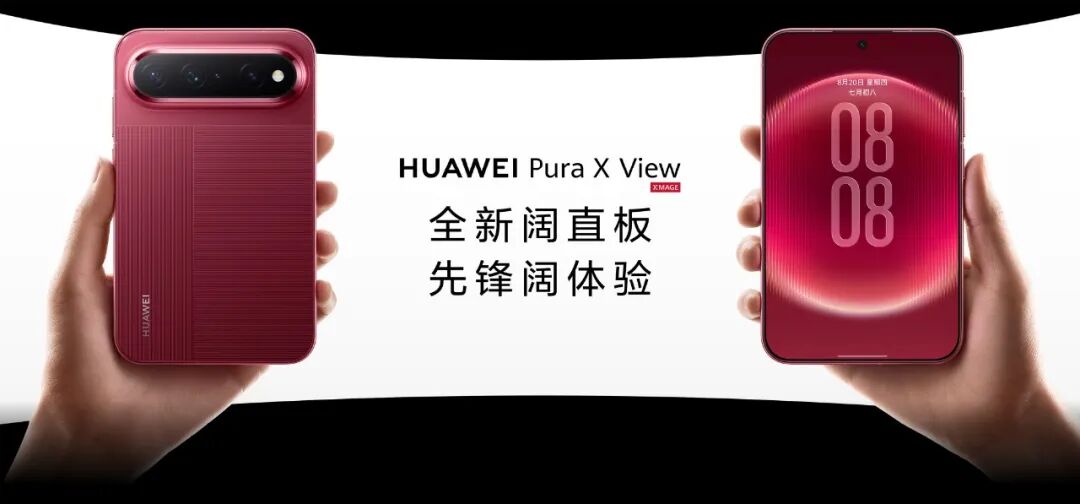
Image Source: Huawei
It is reported that the Huawei Pura X View is equipped with a 16:9.5 wide screen, which is close to the unfolded form of the Pura X. However, by removing the folding-related components, the Pura X View is thinner, has a higher screen-to-body ratio, and a larger battery capacity. It can be said that the Huawei Pura X View is very much like the flat version of the Pura X.
Different from Huawei's development of flat smartphones based on folding products, Apple is planning to extend from flat smartphones to the foldable screen track. According to Mark Gurman, a reporter from Bloomberg, Apple will launch its first foldable iPhone in September 2026, adopting a horizontal folding design, with a 7.8-inch inner screen, a 5.5-inch outer screen, and support for Face ID.
On the surface, the product strategies of Huawei and Apple are quite different, but tracing back to the origin, the core strategic demands of the two are highly similar. Today, affected by factors such as excess performance and rising memory prices, the mobile phone industry is facing huge downward pressure. Huawei and Apple hope to broaden the boundary of smartphone forms through full-stack self-developed capabilities of core software and hardware, and then attract the attention of consumers.
Horizontal Folding and Wide Flat Phones Both Point to Large Screens
In previous years, the focus of competition in the foldable smartphone market mainly revolved around hardware. The successive launch of the Huawei Pura X View and the foldable iPhone largely marks that industry competition has begun to shift from simply pursuing hardware breakthroughs to exploring the experience value behind the form.
The reason why Apple did not launch a foldable iPhone at the birth of foldable smartphones in 2019 is largely because such products were not mature at that time.
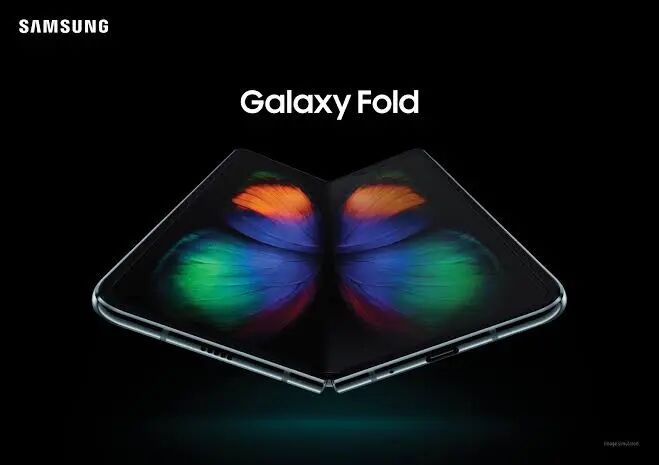
Image Source: Samsung
Take the Samsung Galaxy Fold released by Samsung in February 2019 as an example. The product's outer screen is only 4.6 inches, with an aspect ratio of 21:9, and the thickness in the folded state is as high as 17.1mm. The one-handed use experience is far inferior to that of flat smartphones. In this regard, Pete Lau, Chief Product Officer of OPPO, said, "For foldable phones, no matter how strong the configuration is, being thick is the original sin."
Although the hardware is full of compromises, the Samsung Galaxy Fold is still not a perfect product. The product was originally scheduled for release in April 2019, but it was delayed due to frequent screen flickering, screen breakage, black screen and other problems during media tests, and it was officially launched half a year later.
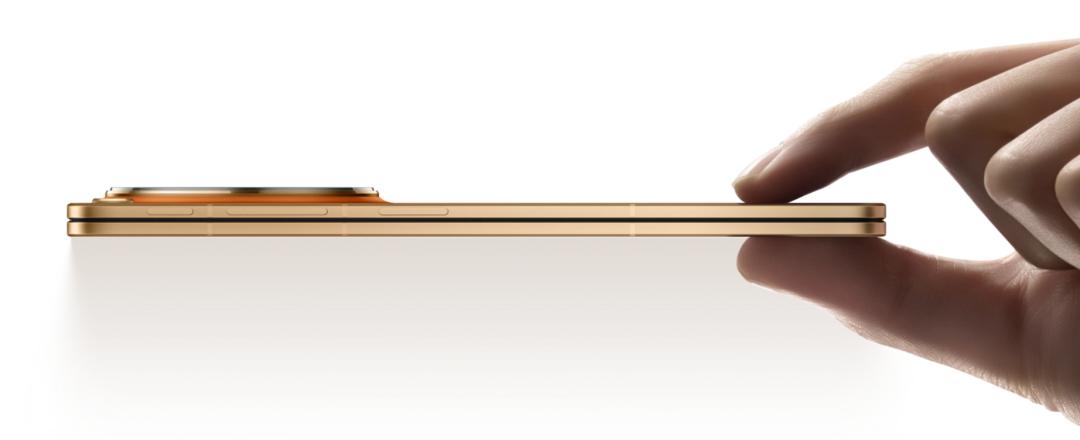
Image Source: OPPO
After years of development, the hardware gap between today's foldable smartphones and flat phones has been significantly narrowed. For example, the OPPO Find N6, which came out in March 2026, has a folding thickness of 8.93mm and a weight of 225g. In comparison, the OPPO Find N, which came out in December 2021, has a folding thickness of up to 15.9mm and a weight of 275g.
Precisely because foldable smartphones already have a grip experience comparable to that of flat phones, when Apple builds the foldable iPhone, it can focus more on exploring the value of the large screen. According to Bloomberg, the foldable iPhone will be equipped with a deeply customized iOS system, which can realize an interface layout and split-screen functions similar to iPad, with stronger multitasking capabilities.
Similar to the underlying logic of Apple's increased investment in the foldable iPhone, Huawei's development of the Pura X View is also to follow the successful path of the Pura X, providing flat phone users with a highly differentiated wide-screen experience.

Image Source: Huawei
A senior media review editor who got the Huawei Pura X View test machine in advance told Farsight, "Huawei's public relations team specifically told us not to test the performance and camera of the Pura X View, but to focus on introducing the distinctive performance of the phone's wide screen in reading, watching dramas, working and other scenarios."
Overall, although the forms are different, the Huawei Pura X View and the foldable iPhone have a strong internal connection. The successive launch of the two marks that the development of the mobile phone industry has reached a new inflection point: from simply pursuing form innovation to deeply exploring the unique experience value of large screens.
Apple Pursues Higher Prices, Huawei Hopes to Amortize R&D Costs
Although from the market perspective, both the foldable iPhone and the Huawei Pura X View are committed to creating a more outstanding large-screen use experience, the commercial connotations of these two products are different for Apple and Huawei.
Since there has been no disruptive innovation in the iPhone form for many years, in the era of rising memory prices, Apple did not rashly increase the price of its smartphone products, but instead repeatedly cut prices for promotions.

Image Source: Apple
For example, in early 2026, Apple launched a New Year promotion, and the iPhone Air was reduced by 2000 yuan. During the 618 shopping festival, the entire iPhone 17 series was discounted, among which the standard iPhone 17 was directly reduced by 200 yuan, and the iPhone 17 Pro series was reduced by 1000 yuan.
Although against the background of competitors raising prices one after another, the iPhone 17 series with price advantages has greatly expanded its market share, Apple's profits have also been negatively affected to a certain extent.
In the third fiscal quarter of fiscal year 2026 (ended June 27, 2026), Apple's gross margin for hardware products was 40.1%. After excluding the impact of tariffs of about 2.5%, it was about 37.6%, down 0.1 percentage points quarter-on-quarter. According to Bank of America's estimates, in the next fiscal quarter, the downward pressure on Apple's hardware product gross margin will further intensify, and it may drop by 2.8 percentage points quarter-on-quarter.
In view of this, Apple urgently needs to launch innovative products that can greatly raise the price ceiling to expand the profit margin of hardware products. Mark Gurman revealed that the starting price of the foldable iPhone is "at least 2000 US dollars (about 13,400 yuan), and may even be higher".
Different from Apple's attempt to climb to a new price peak by launching the foldable iPhone, Huawei's core strategic demand at this stage is to balance the high upstream innovation costs through economies of scale.
Financial reports show that in 2025, Huawei's R&D investment reached 192.3 billion yuan, a year-on-year increase of 7.01%, accounting for 21.83% of sales revenue. With the support of hundreds of billions of yuan in R&D expenses every year, Huawei has been able to launch distinctive innovative products such as the Pura X and Pura X Max.
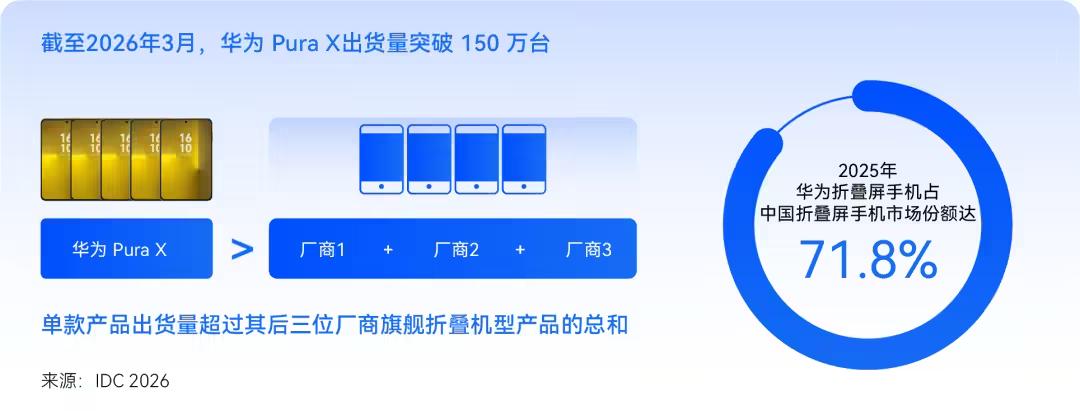
Image Source: IDC
However, due to high prices and limited durability, the user acceptance of foldable smartphones is not high. Data disclosed by IDC shows that as of one year after its launch in March 2026, the shipment volume of Huawei Pura X series was only about 1.5 million units, far less than the flat flagship Huawei Pura 80 series launched in the same period.
Due to limited sales, innovative products have not become a driving force for the growth of Huawei's consumer business performance. In 2025, Huawei's terminal business sales revenue was 344.473 billion yuan, a year-on-year increase of only 1.6%, lower than the growth rate of R&D investment.
Therefore, from the perspective of amortizing the R&D costs of innovative products, it is indeed necessary for Huawei to launch the Pura X View. Adopting the wide screen ratio verified by the Pura X and Pura X Max, and eliminating the high cost defect brought by the folding form, the Pura X View is expected to achieve higher sales with the flat form that is more accepted by the market.
Foldable Screens Are Not the End Point, But a Test Field for Next-Generation Smartphones
Many people believe that with the maturity of flexible screen technology and falling prices, foldable smartphones will replace flat phones and become the mainstream form of smartphones.
However, combined with the layout of leading smartphone manufacturers such as Huawei and Apple, foldable smartphones are more like a test field for the mobile phone industry to explore innovative technologies. They will not simply replace flat phones, but coexist with flat phones in different price ranges and scenarios for a long time.
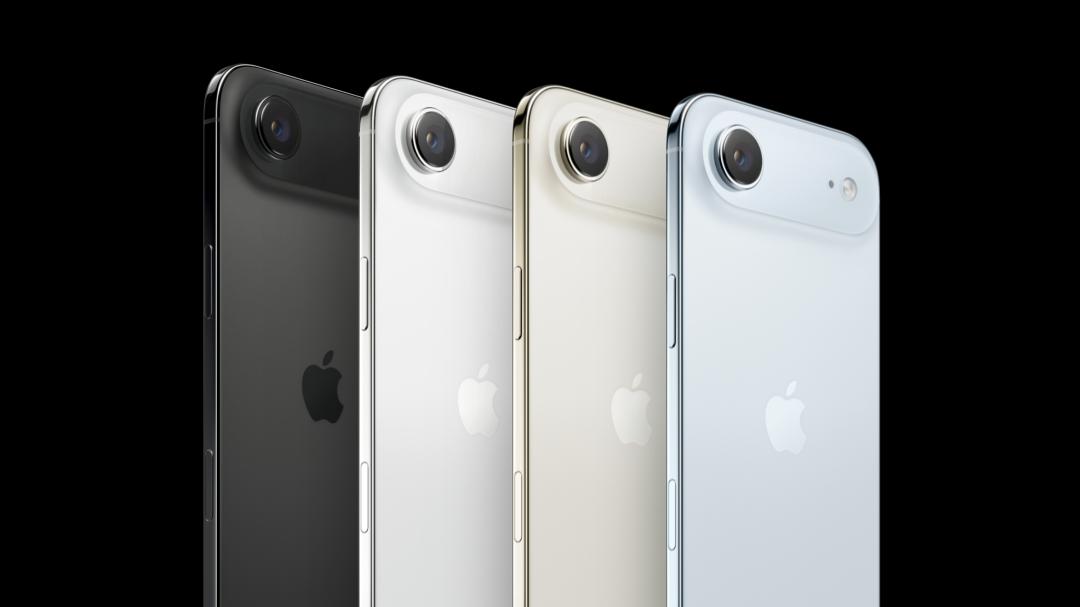
Image Source: Apple
In order to create a thin and light foldable iPhone, Apple first tested the waters and launched the iPhone Air in September 2025. This product is equipped with eSIM technology, with a thickness of only 5.6mm and a weight of only 165g, which is called "the thinnest iPhone ever".
According to Mark Gurman's revelation, after the launch of the foldable iPhone, Apple will not abandon the iPhone Air product line, but will launch the second-generation iPhone Air in the spring of 2027, which still adopts a thin and light design, with greatly upgraded configurations, increased battery capacity, and dual cameras.
Similarly, due to the extremely limited internal space of foldable smartphones, smartphone manufacturers are exploring silicon-carbon negative batteries one after another to ensure battery life experience.
For example, the Honor Magic V, which came out in January 2022, is only equipped with a 4750mAh battery. The Honor Magic V6 (16GB+1TB version), which came out four years later, is equipped with a new generation of Qinghai Lake blade battery, with the silicon content increased to 32%, the energy density of 985Wh/L, and the capacity of 7150mAh.
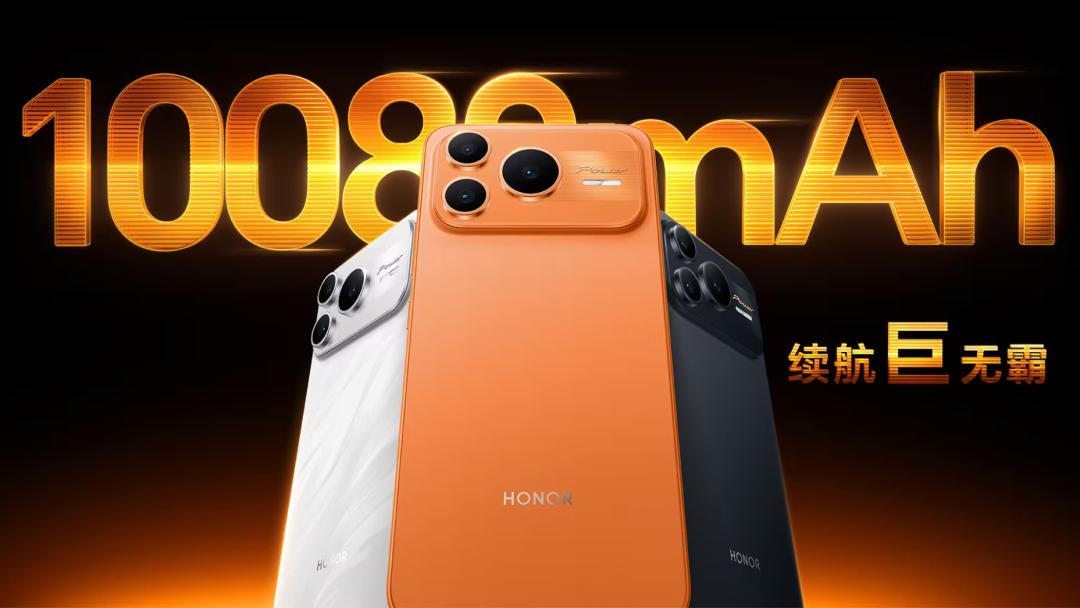
Image Source: Honor
Driven by the Magic V series, the battery capacity of Honor's terminal products has been greatly increased. Among them, the Honor Power2 is equipped with a 10080mAh Qinghai Lake battery, and the official claims that the product can be used for 20.3 hours of continuous screen-on time.
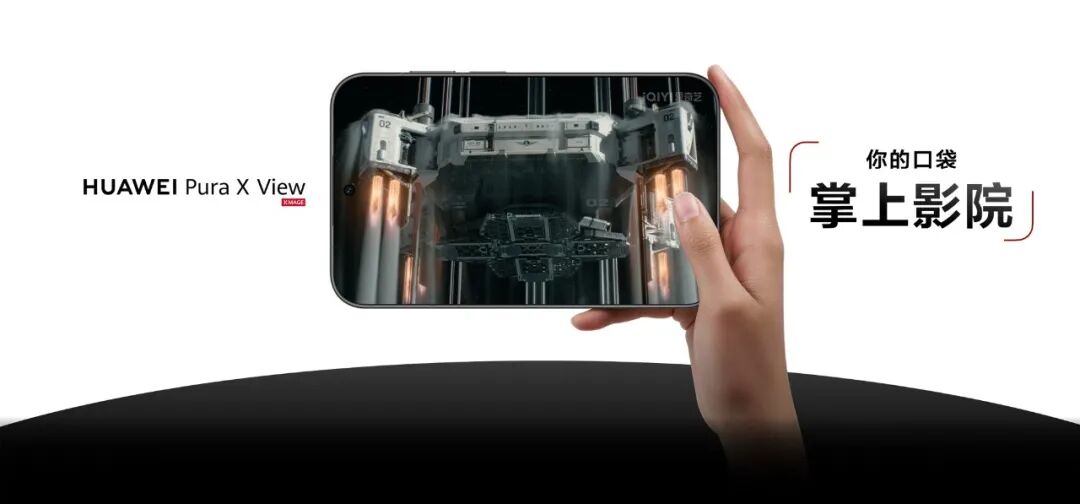
Image Source: Huawei
Similarly, the birth of the Huawei Pura X View is directly related to the successful market entry of wide foldable phones such as the Pura X and Pura X Max.
Although compared with flat phones, the sales scale of the Huawei Pura X series is not very eye-catching, it can be said to be a popular product in the foldable screen track.
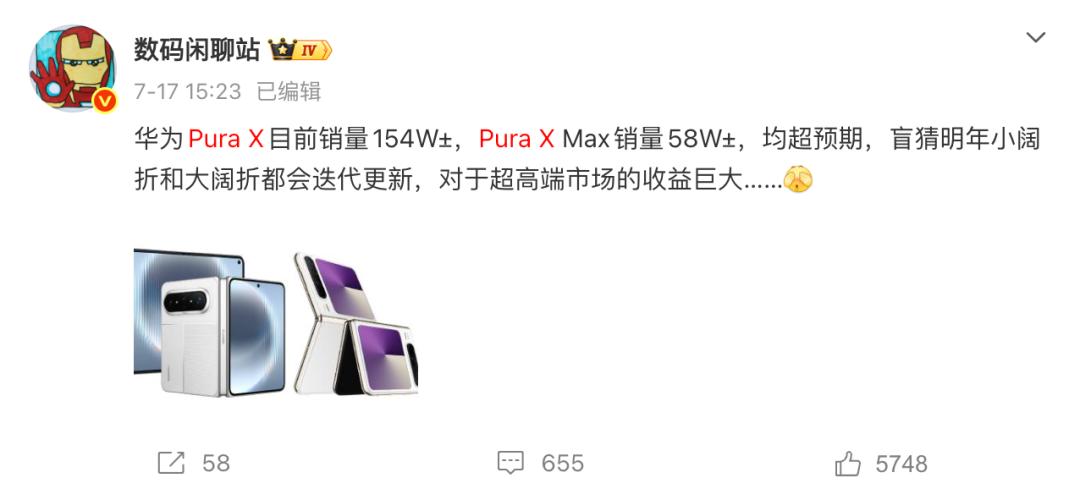
Image Source: Huawei
According to the revelation of digital blogger "Digital Chat Station", as of the 28th week of 2026 (July 6 to July 12), the cumulative activated sales of Huawei Pura X was about 1.54 million units, and the cumulative activated sales of Pura X Max was about 580,000 units, totaling about 2.12 million units, exceeding expectations.
Statistics from CounterPoint Research show that in the first quarter of 2026, Huawei's share in China's foldable smartphone market reached 60%, exceeding the sum of the shares from the second to fourth place.
With