Anthropic's new model was caught scraping public gossip content, the previously hailed top-tier Fable 5 suffered an unexpected upset.
Anthropic has two new "cards" that have been exposed ahead of schedule!
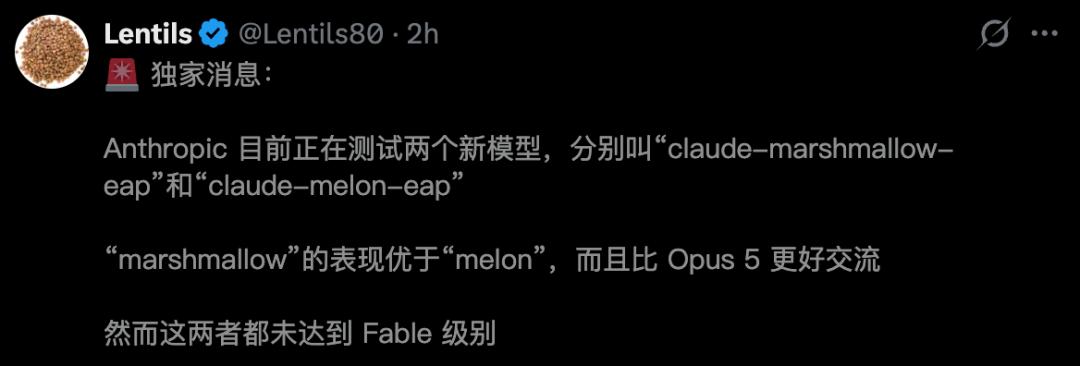
Today, two unfamiliar model IDs have appeared one after another in third-party developer applications and Discord communities —
- claude-mashmallow-eap (Marshmallow)
- claude-melon-eap (Melon)
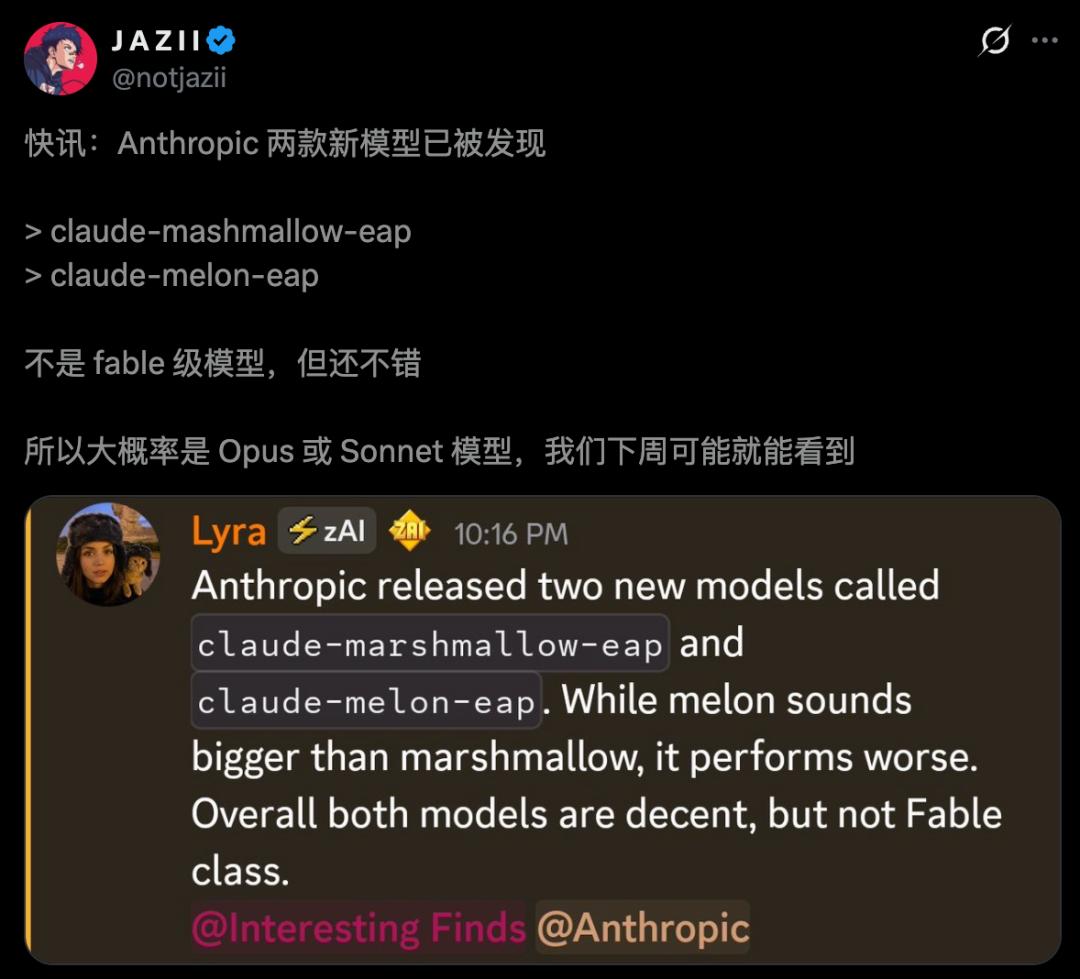
Early leaked real-world test results show that Marshmallow delivers stronger performance, with more natural conversations that outperform Opus 5, while Melon is slightly less capable.
However, neither of them reaches the "Fable level" in overall capability, and they are expected to be launched as soon as next week.
While the whole internet is discussing the new updates, an unexpected problem has emerged inside Anthropic —
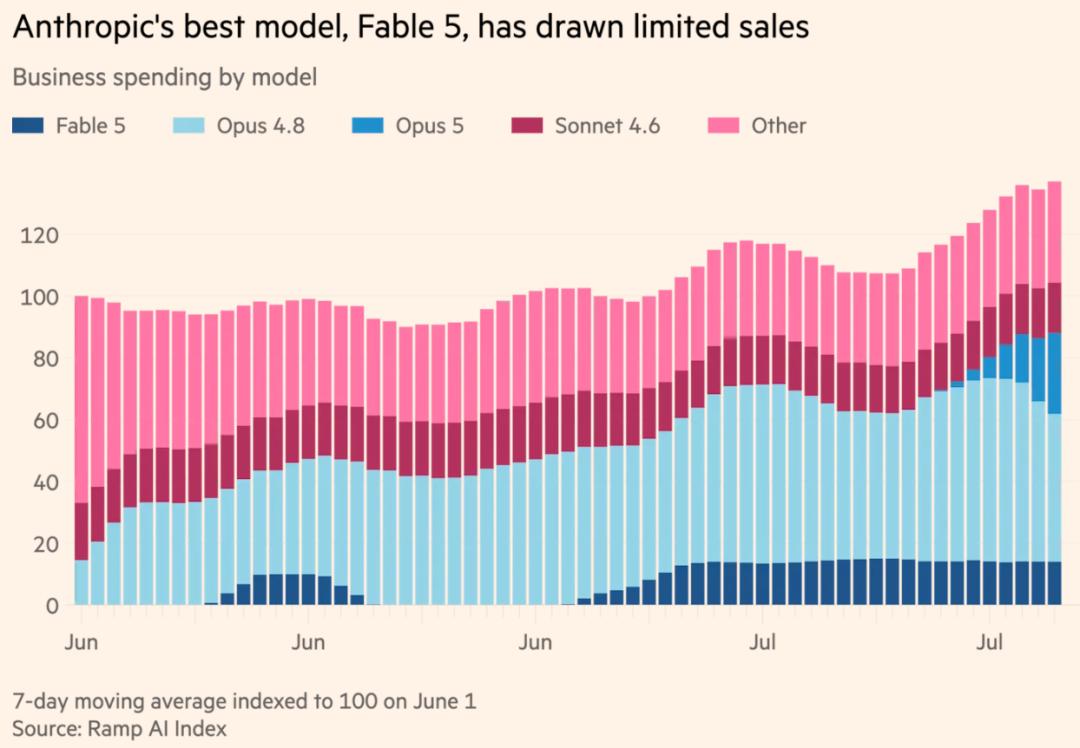
More than two months after Fable 5 was launched, it has encountered almost collective cold shoulder from users.
Anthropic Rushes to Roll Out New Models
New Claude Models Exposed
This round of updates seems to be launched more urgently than ever before.
Industry leaders in the AI circle speculate that Marshmallow is most likely an iterative upgrade at the Opus level, which may be Opus 5.1.
While Melon is more aligned with the Sonnet level.
An SVG real-test result released by a user further widens the capability gap between the two models.
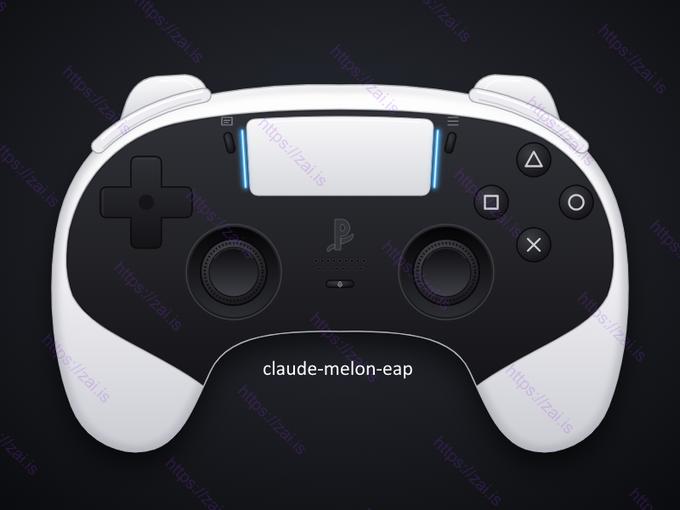
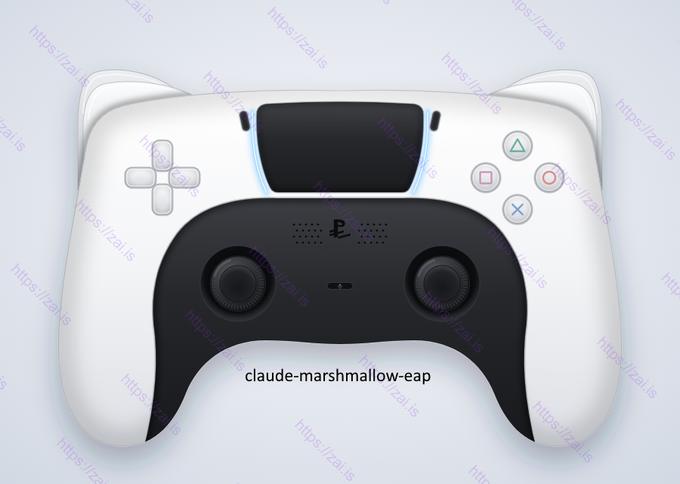
Anthropic has not given an official response so far, but various clues have begun to converge.

If this is just a normal upgrade, this incident itself is not surprising.
The really subtle point is, why right now?
After all, just over two months ago, Anthropic just put its strongest and most expensive model on the market.
It is Fable 5, which stands at the top of the Claude product pyramid.
The Top-tier Fable 5 Turns Out to Be a Surprising Flop
Two months ago, Fable 5 made its debut with the aura of Anthropic's "strongest flagship".
It has the strongest capability, the highest price, and is the most top-tier AI across the entire Claude product line.
According to industry conventions, once a new flagship is released, large enterprises usually migrate to it quickly and tilt their budget to the latest and most powerful model.
This time, the rule no longer applies to Fable 5!

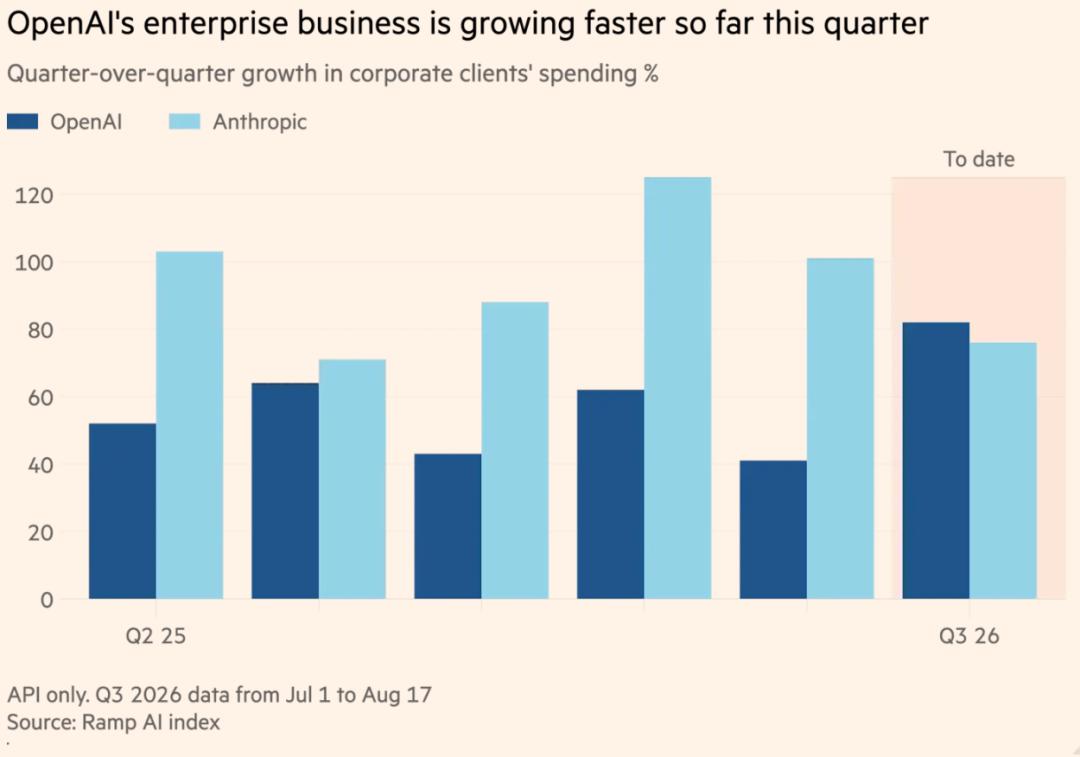
Payment platform Ramp tracked the token consumption data of more than 70,000 enterprises in the United States, and the results show that:
One month after Fable 5 was launched, it only accounted for 6% of the total token calls that enterprises made on Anthropic, and took up 11.4% of their expenditure.
Now, more than two months have passed, according to the latest data obtained by FT, this expenditure share still hovers at around 11%.
In other words, very few developers and large enterprises are willing to switch their models to Fable 5.
Its rival OpenAI's flagship GPT-5.6 Sol has taken 25% of the total tokens and 23% of the expenditure share in the same period.
In the same market, Anthropic's top-tier model only has a quarter of the market share of its competitor.
What is more awkward is that the total revenue contribution of Fable 5 is only about 75% of that of GPT-5.6 Sol, even though each token of Fable 5 costs twice as much.
How expensive is it?
The unit price of Fable 5 is twice that of Anthropic's own Opus 4.8, and 10 times that of Haiku 4.5.
Although it is very powerful, most enterprises do not need that level of capability in their daily scenarios at all.
Anthropic's Own Opus 5 Overtakes Its Higher-tier Counterpart
Another model from Anthropic dealt a direct heavy blow to Fable 5.
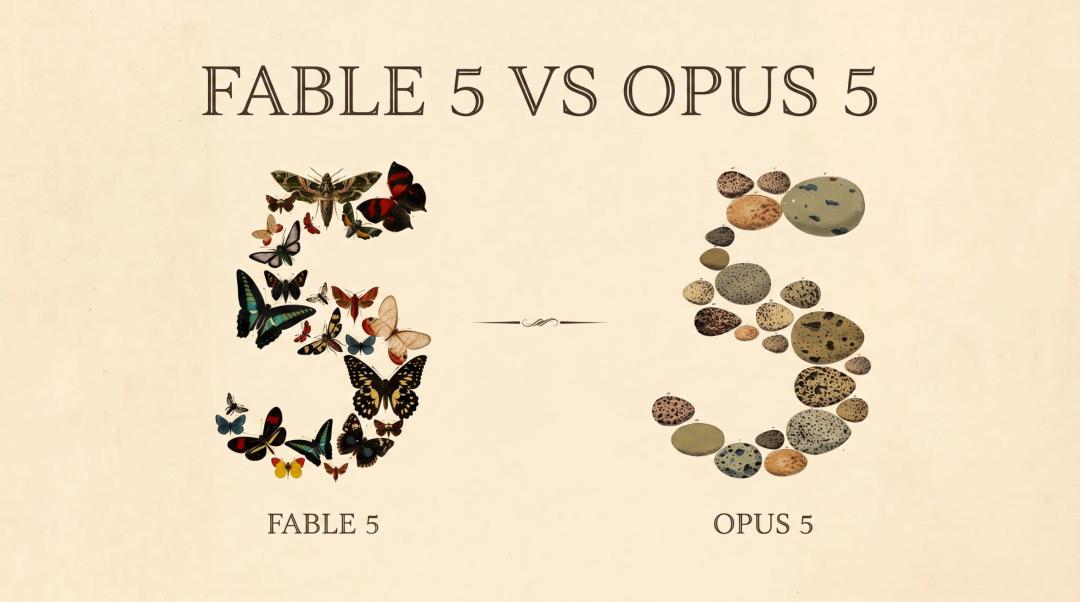
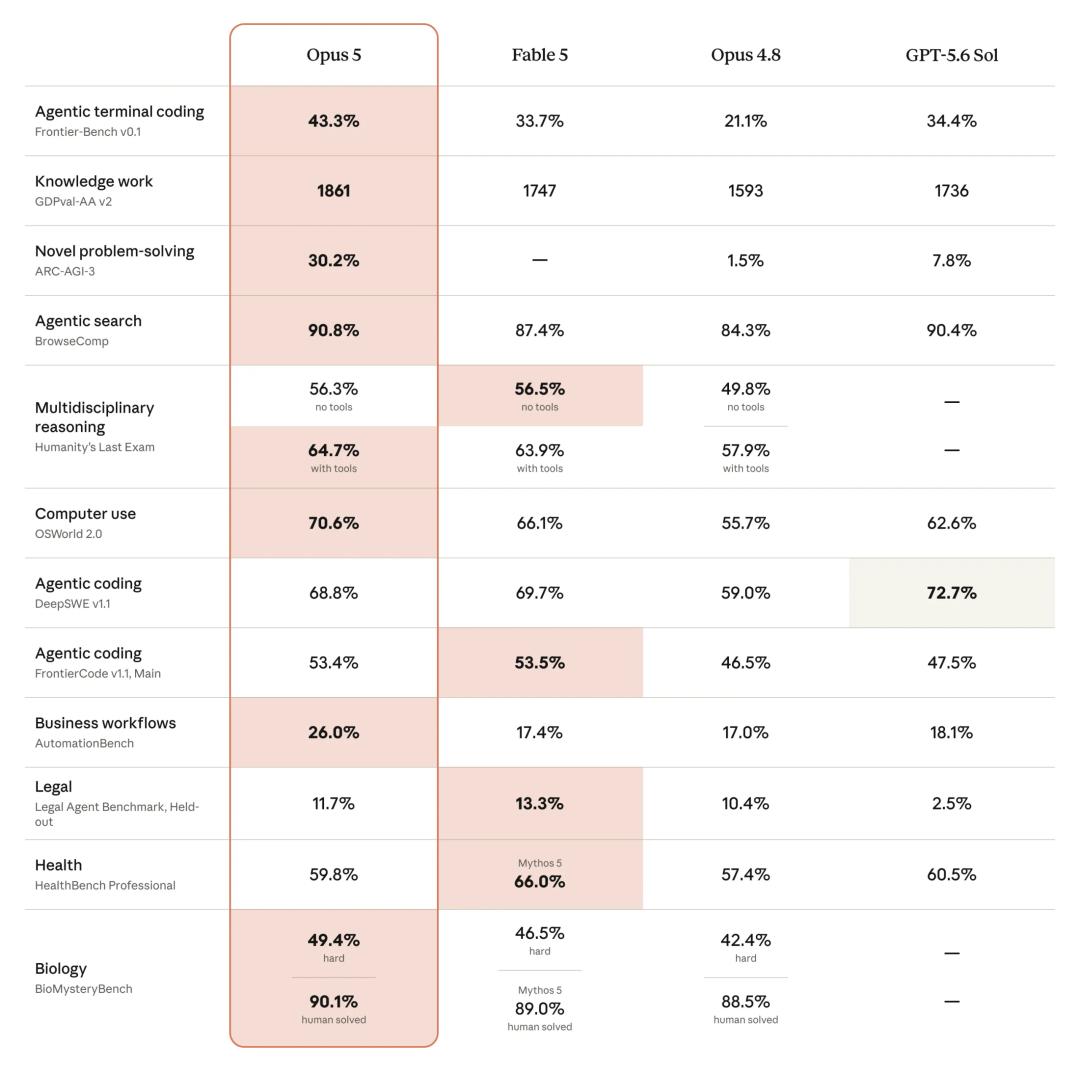
At the end of July, Opus 5 was officially launched, priced at only half of Fable 5, but it delivered better results in programming and knowledge work benchmarks.
The test results of CursorBench 3.2 are more straightforward —
Opus 5 scores 70% at maximum computing power, with a cost of $8.23 per task. Fable 5 scores 70.5%, 0.5 percentage points higher, but costs $17.32.
This means that users have to spend twice as much money for only 0.5% higher performance.
The result of enterprises voting with their wallets is not unexpected. Ramp's data shows that after Opus 5 went online, its expenditure share quickly surpassed that of Fable 5.
But the problem is, if the flagship model is only a "showcase", why would the market give Anthropic a valuation of 2 trillion US dollars?
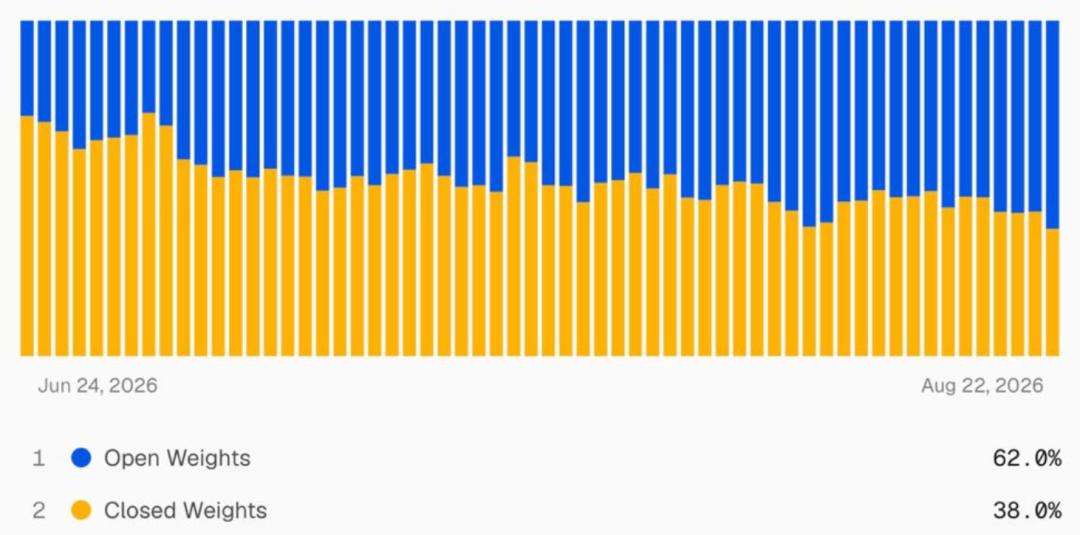
Open-source AI Share Surges from 11% to 62% in Only Four Months
Moreover, the crazy expansion of open-source AI has also put huge pressure on Anthropic.
Statistics from Vercel AI Gateway show that —
In April, the token share of open-source models was only 11%. By June, this figure skyrocketed to 29%. The latest data in August directly hit 62%.
In just two months, the share surged from less than 30% to over 60%. And the money they spent accounts for less than 4% of the total enterprise expenditure.
In other words, the models that do most of the work cost almost nothing.
This makes Fable 5's position more and more awkward.
Looking inward, Opus 5, which costs only half the price, has already caught up right behind it; looking outward, open-source models are continuously driving the price down.
Of course Fable 5 can continue to take responsibility for pushing the upper limit of model capability.
But what Anthropic lacks most at the moment is a model that enterprises are truly willing to use long-term and deploy at scale.
In this context, the sudden emergence of Marshmallow and Melon is not that surprising.
What they are going to supplement is probably the most critical missing piece in the entire Claude product family —
It needs to be powerful enough, and also affordable enough; it can demonstrate top-tier capabilities, and more importantly, it can win paying users.
References:
https://x.com/kimmonismus/status/2091599817084412221?s=20
https://www.ft.com/content/5ee49718-c258-4f01-aa32-7e5b76ae5245?syn-25a6b1a6=1
This article is from the WeChat official account "AI Era", written by ASI Revelation, edited by Taozi, and published with authorization from 36Kr.