Leaking rainfall overhead showers: how many hotels' fig leaves have been torn off?
01
Recently, I was planning a business trip to Chengdu. I casually searched for hotels online, and was amused by the room type names.
At one Atour Hotel in Chengdu Taikoo Li, all room types are prominently marked with "rain shower overhead spray". Scrolling further down, the Intercity Hotel near Kuanzhai Alley shows a similar pattern, with "rain shower overhead spray" and "Sealy mattress" noted after the room type names, which have apparently become core selling points that must be communicated to guests.
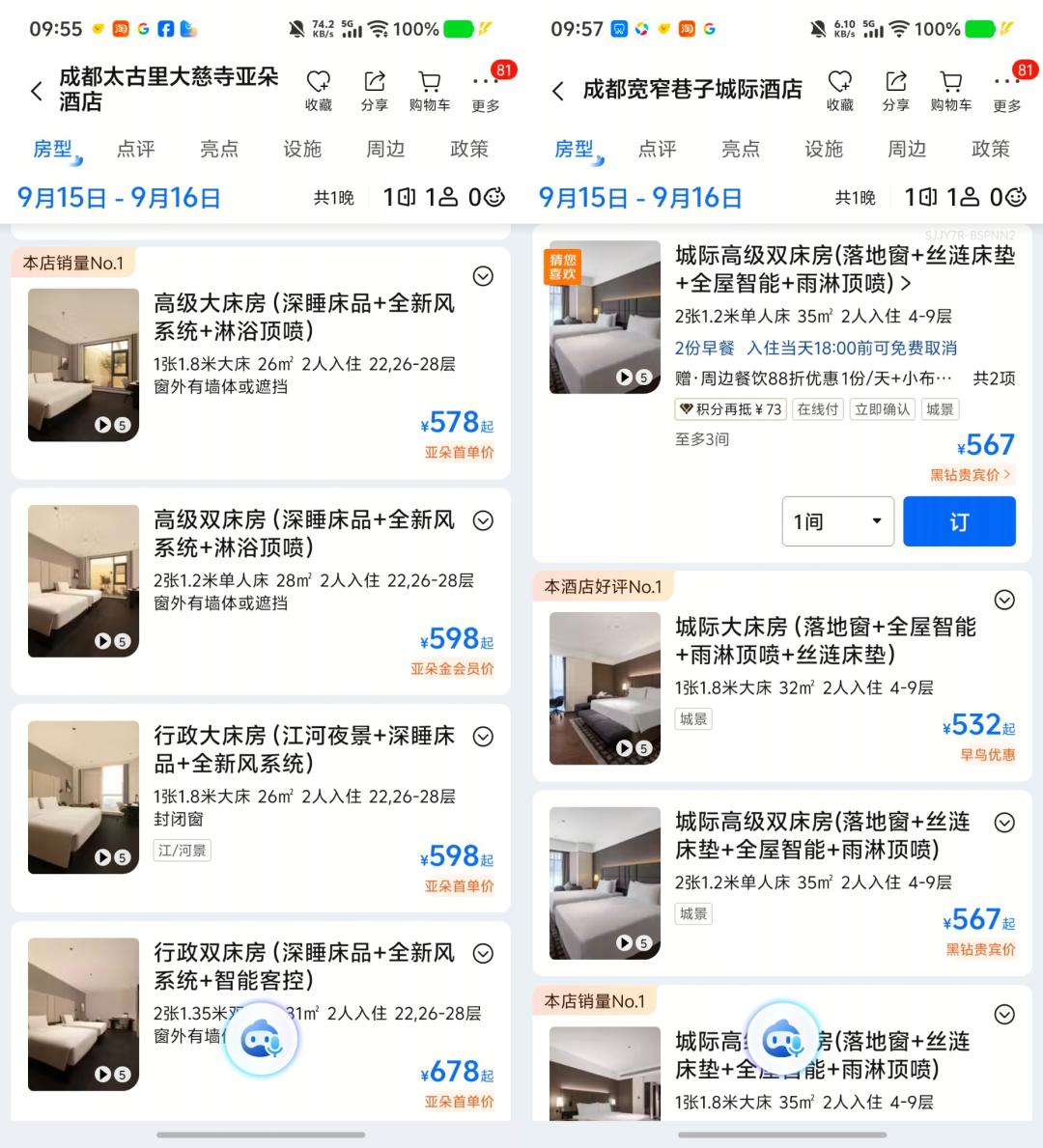
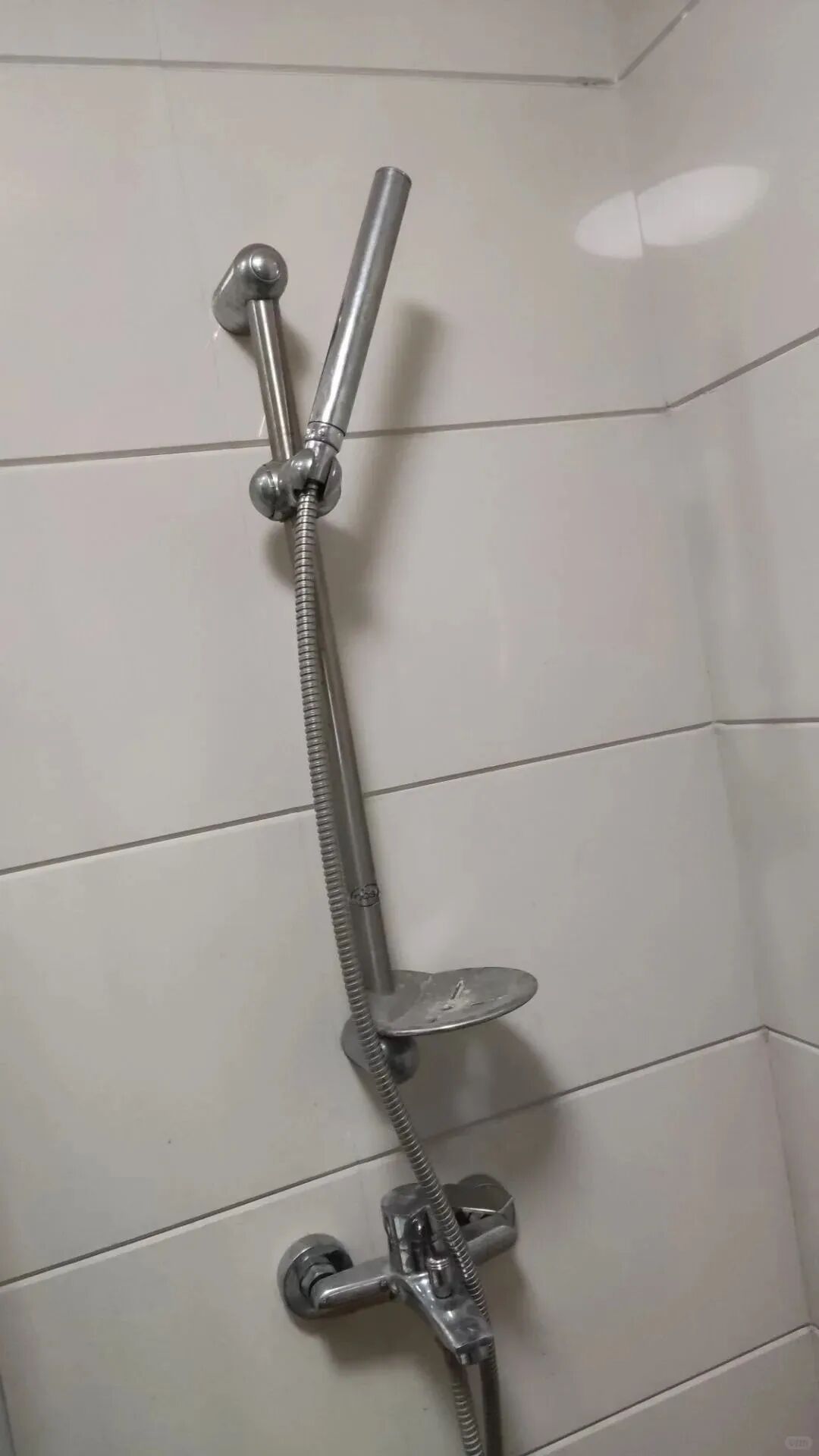
At first, I really couldn't understand it. To put it plainly, a rain shower overhead spray is just a shower head fixed above the shower area, which is not rare in mid-range chain hotels that cost hundreds of yuan per night nowadays, and its bathing experience is not necessarily much better than that of a handheld shower head.
After years of intense competition in China's hotel industry, I have seen room introductions that emphasize comfortable mattresses and pillows, sleep-related black technologies, or highlight the screen-casting function of TVs. Even the brand of hair dryer, whether Dyson or Laifen, has become a selling point for many hotels.
But putting an ordinary overhead shower head directly into the room type name still feels a bit overly cautious.
So I casually searched for two other outlets of the same hotel brand in other cities.
The Atour Hotel at Wuhan Plaza Hankou Financial Center mainly promotes its Jimu City View Room, whose introduction lists the floor, area and bed type, with no mention of the overhead spray. The Intercity Hotel near Shanghai Hongqiao Airport National Exhibition and Convention Center is roughly the same, with regular room type names, and no need to specially explain what kind of shower head is installed in the bathroom.
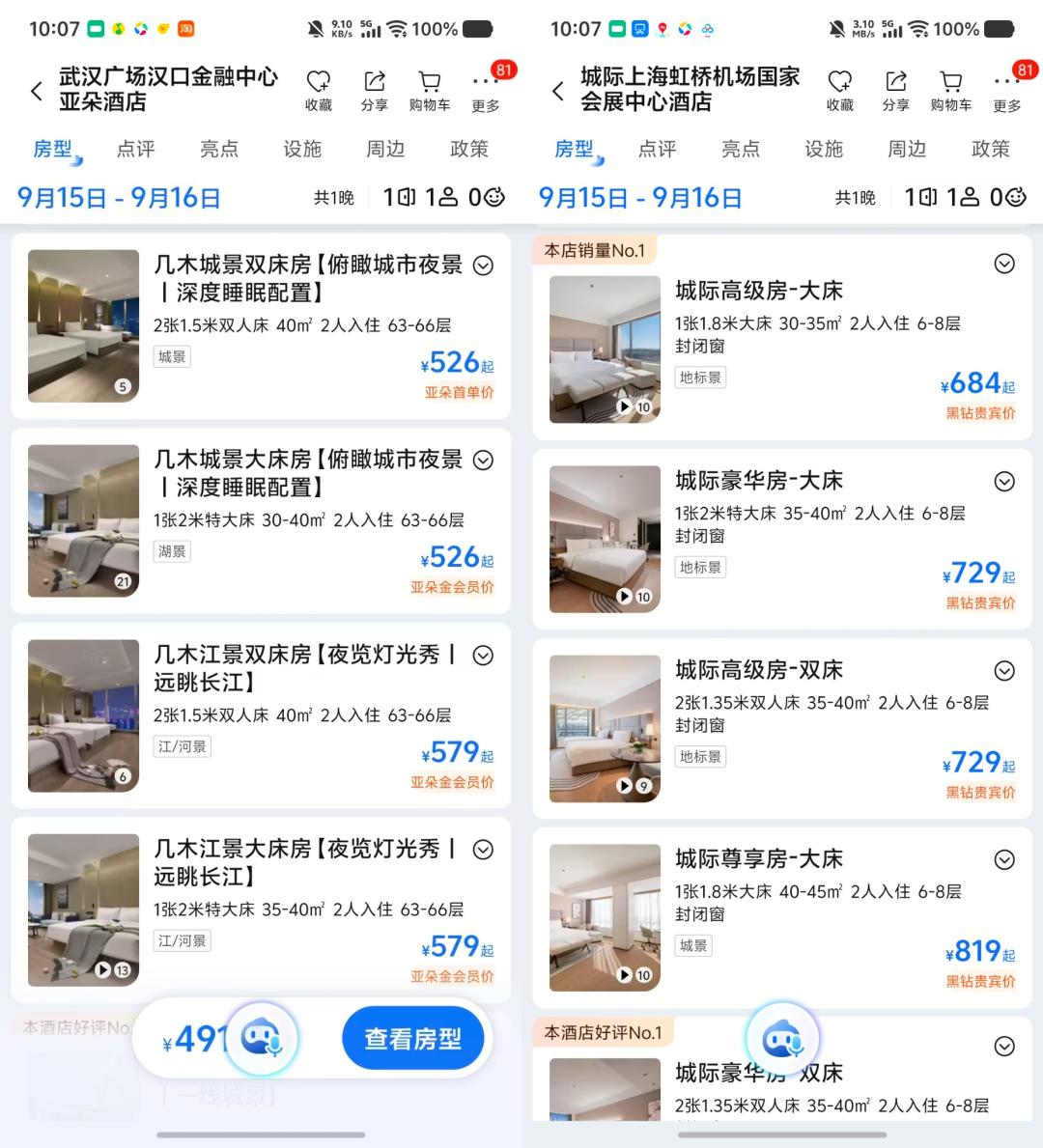
The search was done on the same date, and the hotel grades are also close to each other. Only in Chengdu, the rain shower overhead spray has changed from a common facility to information that needs to be publicly advertised.
What's more interesting is that in the algorithm era, I soon came across a post on social media whose author had almost the same confusion as me.
He said he rarely travels and asked for advice: why do all hotels in Chengdu mark the rain shower overhead spray? Soon more than 5,000 comments flooded in under the post.
Many people were reluctant to spell it out directly, but the Chinese language is profound, and a series of witty, pun-like memes were enough to make people suddenly realize the truth.
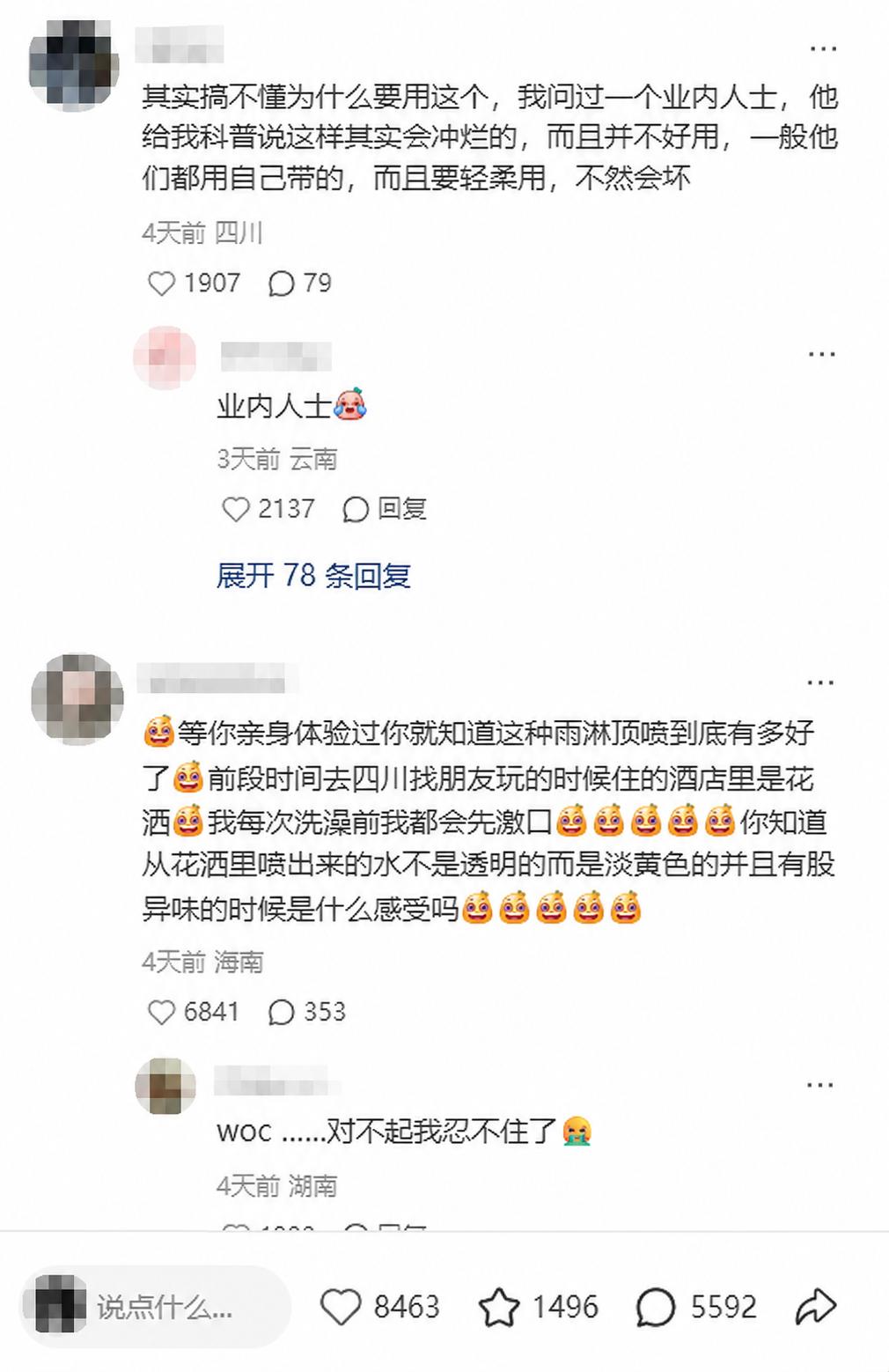
In fact, similar discussions on social media emerged earlier than people expected.
Back in 2023, there was a very straightforward article on Zhihu that specifically discussed the issue of a small number of guests misusing hotel shower heads. It received more than 15,000 likes, with comments from guests expressing concerns and hotel practitioners describing troubles they encountered during cleaning.
Later, similar incidents frequently made headlines.
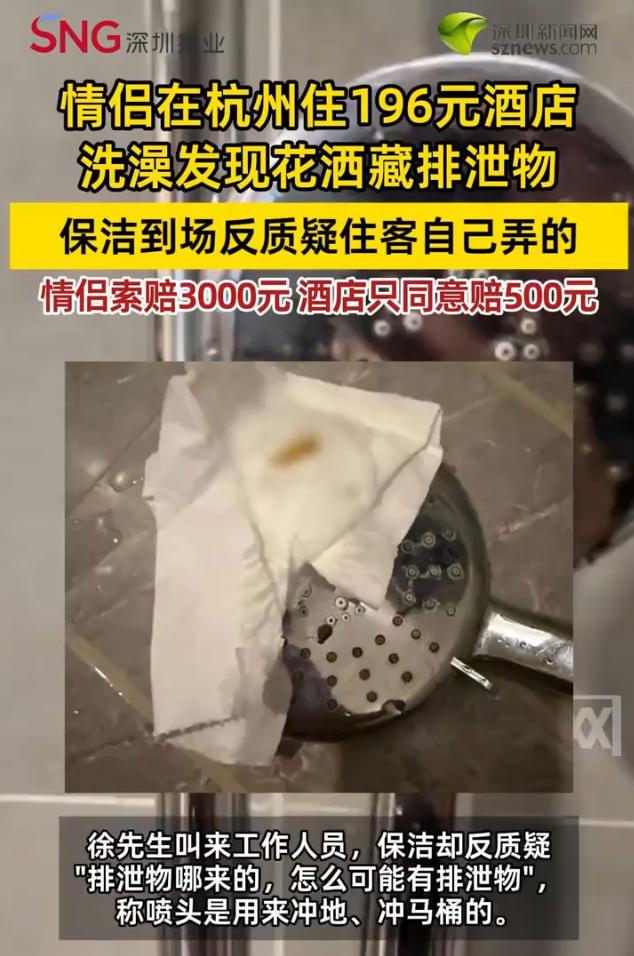
At the end of May this year, a guest reported that after taking a shower at the Time Manju Hotel in Hangzhou, they found suspected excrement on the surface of the shower head. The hotel claimed that the room had been cleaned before check-in and was willing to compensate 500 yuan, but the two sides failed to reach an agreement.
During the May Day holiday in 2024, a chain hotel in Guiyang also sparked controversy due to suspected dirt on the shower head. The involved hotel stated that the source of the foreign matter could not be confirmed for the time being, and the guest room had been cleaned in accordance with standard procedures.
The final responsibilities were assigned differently across hotels and the handling results varied, but the highly disturbing photos were enough to make more guests start checking the shower head connections, and even actively avoid using handheld shower heads.
02
Behind the forced labeling of rain shower overhead spray in room type names, hotels are also victims.
Because before the successive outbreaks of shower head hygiene controversies, the vast majority of hotels could not have anticipated that guests would use shower facilities for purposes other than bathing.
Especially in cities like Chengdu with a more open lifestyle, hotels brought up the unspoken concern among peers earlier, and eventually wrote it into the room type names.
Even if the dirt was left by the previous guest, once the door is reopened, the guest room becomes a product delivered by the hotel, and subsequent guests will only hold the hotel accountable.
However, according to the daily cleaning procedures of most hotels, as long as the surface of the handheld shower head is free of stains and the water flows normally, few service staff will unscrew the interface after the guest checks out to check if there is any residue deep in the hose.
If such standards were strictly followed, cleaning a room would take much longer, and frequent disassembly and assembly might also damage the equipment.
In fact, mid-range hotels have a large number of rooms to turnover every day. During peak check-in periods, the front desk is even waiting for the housekeeping staff to return the cleaned rooms.
Rewriting the entire hotel cleaning process for the abnormal behavior of a tiny number of people would impose unbearable additional labor and time costs on hotel outlets, which would inevitably hurt the guest experience.
But the hygiene risks of handheld shower heads have already spread widely among the public, and pretending not to notice is even more dangerous.
It should be noted that in the social media era, a single uncomfortable photo spreads far more widely than the cleaning records provided by hotels, and public opinion and regulatory penalties will not leave hotels time to investigate slowly.
Source: Xiaohongshu user
When an incident actually happens, the hotel outlet often has to swallow the bitter pill, paying compensation while getting scolded.
If a hygiene controversy at a single outlet continues to ferment in the media and eventually drags down other outlets under the same hotel group's brand, the loss will obviously be even more not worth the candle.
Therefore, the best way to solve the problem is to eliminate hidden dangers in advance.
As a result, some economy and mid-range hotels have successively replaced their shower heads with fixed overhead sprays, and some have added screws to the handheld shower head interfaces. On the booking pages, they also specifically mark "rain shower overhead spray" in the room type names.
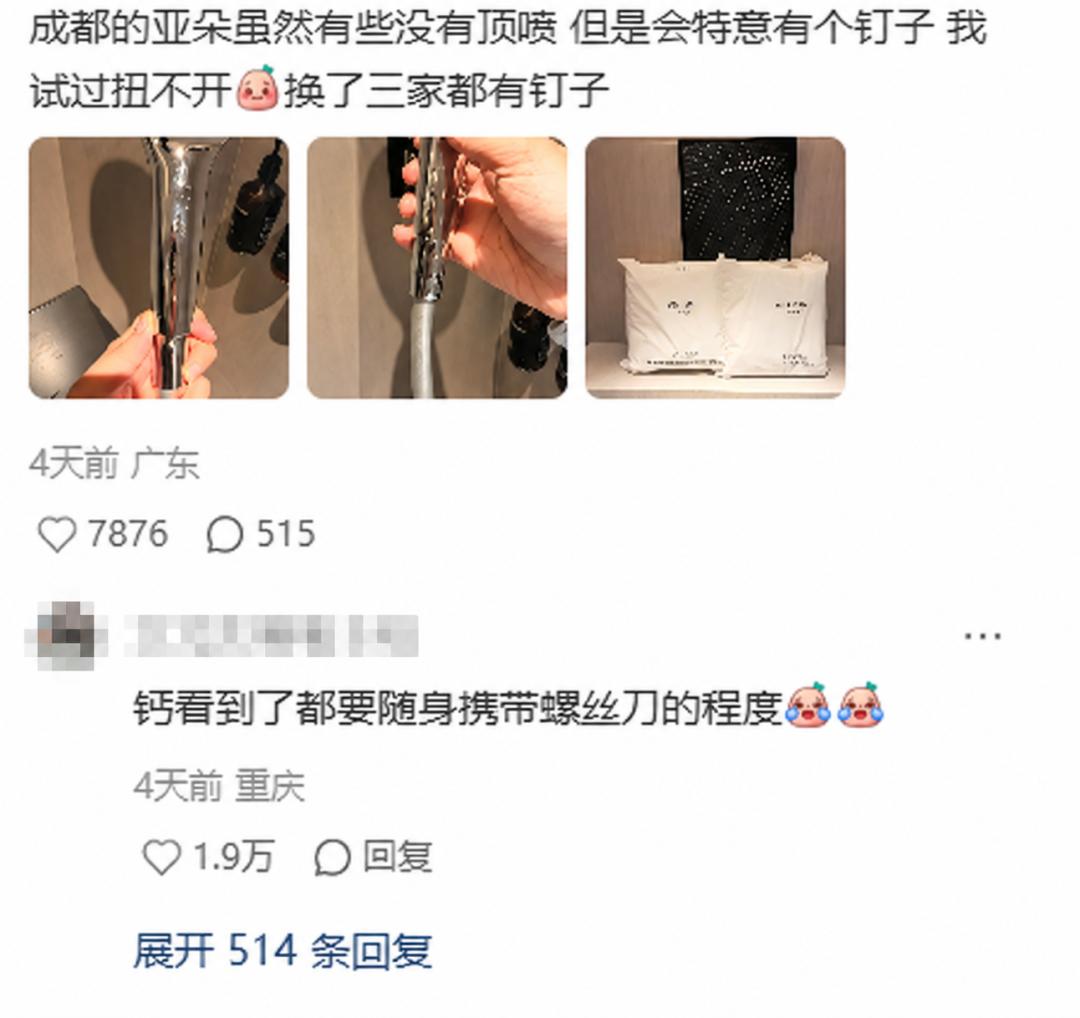
This adjustment is not complicated, but against the background of frequent shower head controversies, it shows that the hygiene concerns that used to be easily ignored have become a rigid demand in current hotel product design.
Public information shows that by the end of 2025, the 3.6 version of Atour's product has been partially implemented in some outlets with added fixed overhead sprays, and many brands under different hotel groups have also begun to highlight this facility one after another.
With all this context in mind, looking back at the room type pages of Chengdu hotels, the four words "rain shower overhead spray" are no longer hard to understand. This seemingly funny introduction of basic facilities is actually a roundabout way for hotels to express the hygiene guarantee that they cannot write out explicitly.
After all, the profit behind a few hundred yuan of room rate cannot afford the reputation loss brought by nationwide public attention online.
03
The fact that rain shower overhead spray can become a selling point more or less reveals the awkward reality of China's hotel industry.
Nowadays, from budget hotels costing hundreds of yuan to luxury hotels charging thousands of yuan per night, China's accommodation market has formed a complete product line.
Local and foreign chain brands are constantly segmenting customer groups, and their hardware facilities are iterating rapidly. However, the most likely source of unease for guests remains the most basic hygiene and privacy of the guest rooms.
In May this year, reporters from Nanfang+ conducted undercover investigations on multiple chain hotels across Guangdong Province, using water-soluble highlighters to leave marks on bedding, towels and tableware, and then another reporter checked into the same rooms after check-out for re-inspection.
Under ultraviolet light, some of the guest room supplies still retained the previous marks, indicating that the hotel's promise of replacing supplies after each guest did not get implemented in every cleaning step. In some individual outlets, there were even cases where bed sheets were moved to another bed for continued use.
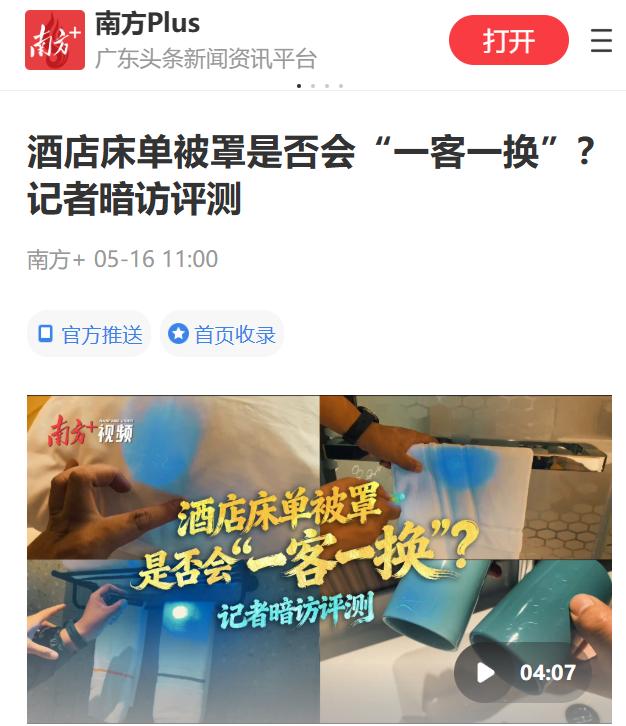
After the report was released, the regulatory authority in Huizhou verified that the involved local outlets violated the requirement of "one replacement and one disinfection per guest", and immediately filed an investigation and ordered rectification. Relevant departments in Guangzhou also went to the involved hotels to conduct on-site inspections and collect evidence.
Similar incidents have existed for a long time. Hotels can spend a lot of money upgrading their guest rooms, but it is difficult to eliminate guests' doubts about hygiene just by fancy decoration. Especially when similar news emerges every once in a while, consumers' vigilance will spread from the involved outlets to the entire industry.
Some time ago, Travel Daily published an article titled "The Car Camping Army Starts to Use Hotel Facilities for Free". The article originally discussed car camping tourists borrowing hotel parking lots and facilities, but many unexpected voices appeared in the comment section.
One of the top comments said that staying in his own car means he doesn't have to worry about hidden cameras, and he knows exactly who has used the bedding before. This comment received a lot of follow-up replies. Compared with the car with limited comfort, the space completely controlled by themselves makes some travelers sleep more peacefully.
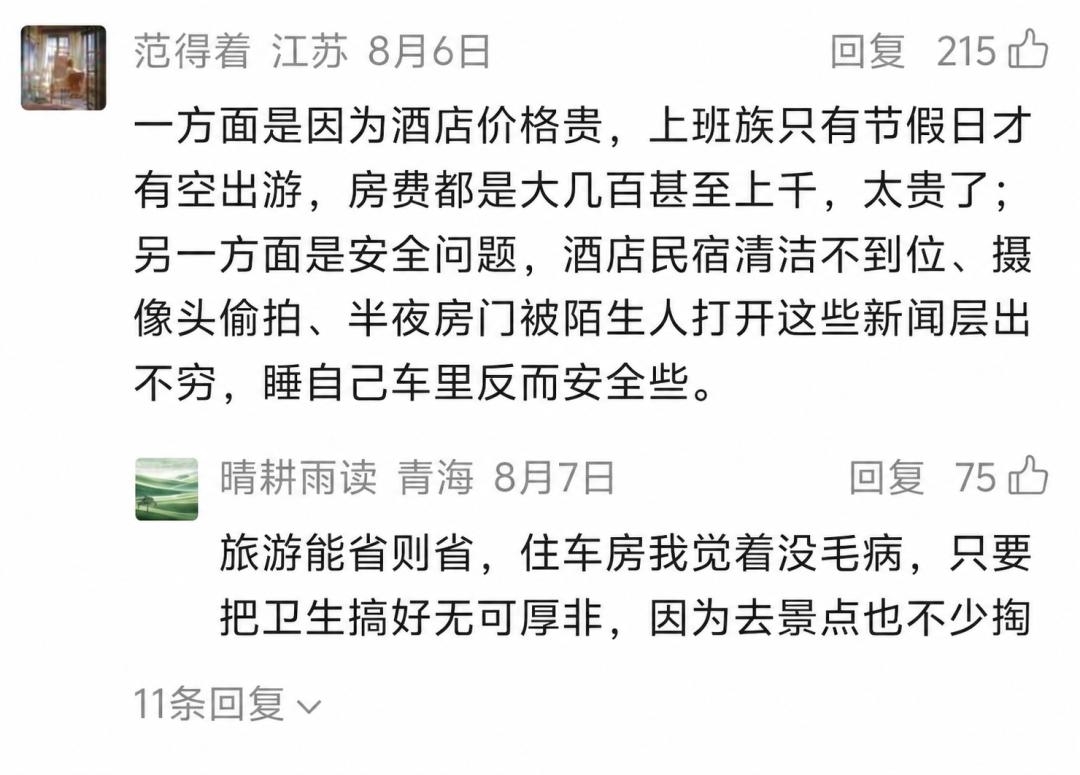
Behind these comments, it is not hard to see that the competition faced by domestic hotels now no longer only comes from peers across the street.
When some consumers would rather give up spacious rooms in exchange for a sense of control over their surrounding environment, the mattresses, bathroom facilities and services that hotels are proud of no longer have inherent advantages.
Domestic hotel groups have also begun to respond to this change.
Based on my actual stay experience this year, Atour Light Living outlets have started to individually seal bath towels in plastic bags, which guests can only use after tearing open the package. Some Atour outlets also lend hidden camera detectors to guests for free, which can be applied for through the in-room delivery service entrance.
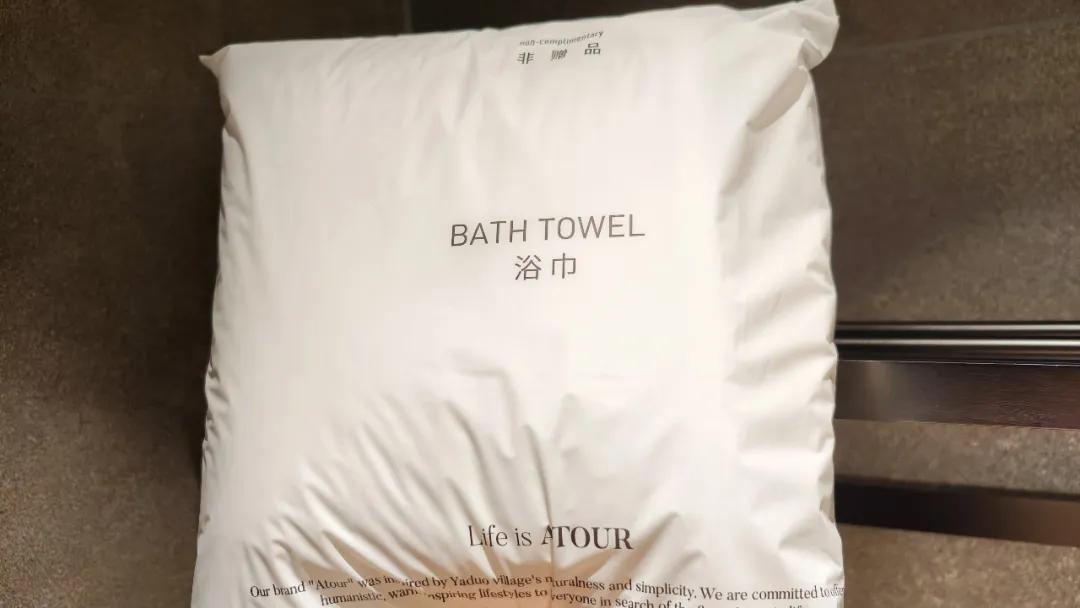
Unused bath towels at Atour Light Living are wrapped in plastic covers / Photo by Travel Daily
In July this year, Huazhu also upgraded its Anxin 360 system, incorporating linen traceability and anti-pinhole detection into its management, while further refining the guest room cleaning procedures.
Objectively speaking, even the most comprehensive measures may not block all safety loopholes, but they reveal the drastic shift that is taking place in China's hotel industry.
In the future, what hotels need to deliver besides clean guest rooms is sufficient evidence to convince guests that the rooms are absolutely clean.
This article is from the WeChat official account "Travel Daily", author: theodore Xishao, authorized for release by 36Kr.