After the launch of Black Whale, OpenAI has opened up Harness to compete for dominance in the "Agent runtime" space.
On August 20 Beijing time, OpenAI released *Codex as a platform: build on the open agent harness*, introducing how developers can build their own Agent applications based on the open-source Codex Harness.
The Codex App, CLI and IDE extensions all adopt the same underlying Harness, which is responsible for managing session states, contexts, tool calls, sandboxes and human approvals. Developers can integrate these capabilities into enterprises' existing consoles, customer service systems, security tools and internal applications via codex exec, SDK or app-server.
Five days ago, on August 14 Beijing time, DeepSeek just open-sourced DeepSeek Harness, abbreviated as DSH. DeepSeek also launched a separate WeChat Official Account for it, using a black whale as its logo to distinguish it from the blue whale adopted for its model product lines.
As of August 20, DSH has received approximately 173,700 Stars and 18,800 Forks on GitHub. Related posts landed on Hacker News, gaining 744 points and 310 comments. DSH is still in the Preview stage, but has obtained far more attention than ordinary development tools within just a few days.
Why has a not-yet-mature Harness attracted so many developers? This time OpenAI further defines Codex as a "platform" and "open Agent Harness" — what exactly has been added compared with the access methods it provided in the past? Harness used to mainly serve the Agent products of model companies themselves. Why are leading model companies starting to open up Harness proactively?
Behind these questions, one of the core battlefields of AI has also begun to extend to the "Agent runtime".
01
What Capabilities Has OpenAI Opened Up
On October 6, 2025, when OpenAI announced the official GA of Codex, it launched the Codex SDK simultaneously. Developers can embed the Agent behind the CLI into their own tools and workflows. codex exec was later used for scripts and CI tasks, and app-server further opened up threads, turns, event streams and approval protocols, enabling third-party applications to maintain long-term sessions.
In January 2026, OpenAI also specifically disassembled Codex's Agent Loop, including how the model receives instructions, calls tools, reads execution results, and then enters the next round of reasoning. These capabilities already existed before DeepSeek released DSH.
In its latest blog post, OpenAI summarizes all these capabilities uniformly as Codex Harness, and explicitly encourages developers to use it to build their own products. Codex's positioning has continued to extend from a programming Agent in App, CLI and IDE to the underlying execution system for enterprise applications.
Yash Thakker, author of the developer media ExplainX, used a vivid metaphor: the App, CLI and IDE extensions are like three entrances to the same building, and this time OpenAI wants developers to focus on the entire building. He believes this positioning also makes Codex start to enter more direct competition with Claude Agent SDK.
OpenAI also released a set of data to illustrate how Harness will affect the actual performance of the same model.
In the ARC-AGI-3 test, GPT-5.6 Sol scored 13.3% when running alone. After adding Codex Harness's continuous reasoning and context compression capabilities, the score rose to 38.3%, and the output Token was reduced to about 1/6 of the original volume.
OpenAI listed several publicly available applications in its blog post: Cisco uses the Codex SDK for App Builder in Cisco Cloud Control; GitHub and JetBrains integrate Codex into existing IDE workflows; Thrive Holdings and Crete use Codex for tax preparation, and one pilot processed 7,000 tax returns, cutting the tax preparation time by about 1/3.
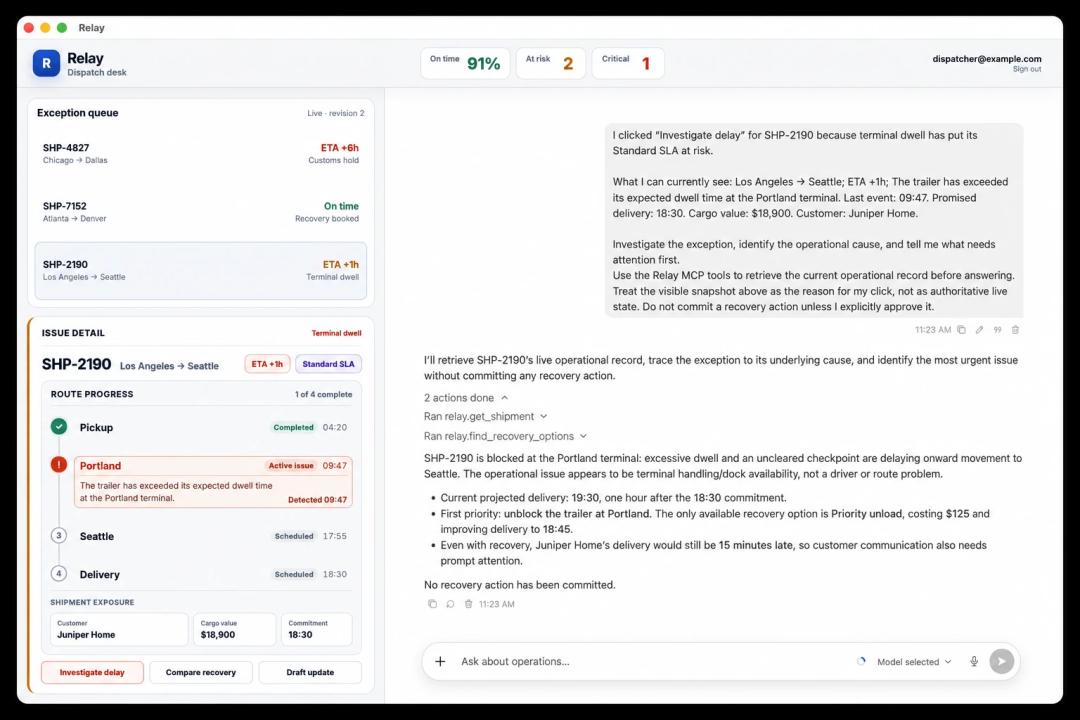
Figure: The logistics operation scenario demonstrated by OpenAI. Codex is embedded in the business console to help investigate abnormal orders.
In these cases, the enterprise's code, customer data, internal tools, approval and task records will all pass through the same set of "runtime". If Codex becomes the default Agent infrastructure, OpenAI will be closer to real workflows, and closer to the model calls generated by these workflows.
02
The Challenge From the Black Whale
DSH is opened up more thoroughly: it makes models, tools, skills, sessions, sandboxes, storage, Agent Loop, scheduling and UI all into plugins, with the underlying Cordis managing mounting, uninstallation and dependency relationships, realizing the design concept of "everything is a plugin".
The main difference between the two lies in the degree of openness. If we use the metaphor of manufacturing a car: Codex has tuned the core engine well, you can access other non-core components, but they need to be adapted to this engine; while DSH allows developers to even assemble the engine by themselves.
But DSH is not the first Harness with such a high degree of openness.
For example, Pi Harness adopts the MIT license, and also provides Agent Loop, tool calls, status management and multi-model interfaces. Its core is smaller, and many peripheral capabilities are delegated to extensions.
In the view of some developers, the technical modifiability is not enough to explain the unique value of DSH. Startups can certainly start from DSH, replace it with their own models, interfaces, tools and permission systems, and build a product similar to Codex or Claude Code. But the same thing can also start from Pi, OpenCode or other open source projects.
The feature of DSH is that it implements a unified plugin structure. Model adapters, Session, storage, sandboxes and Loop all follow the same Cordis mechanism. When developers replace underlying components, they basically do not need to maintain a source code that forks from the upstream for a long time.
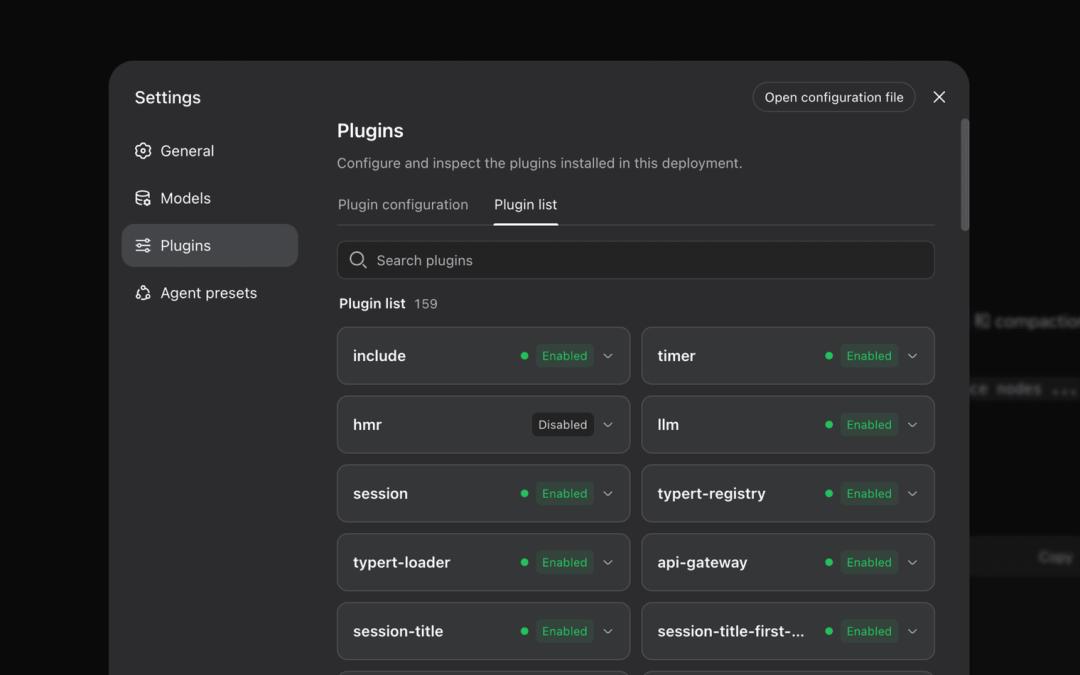
Figure: DeepSeek Harness organizes execution capabilities into plugins, allowing developers to view, replace and recombine different components
Armin Ronacher, the main developer of Pi Agent and author of Flask, said that DSH is not perfect, but this is the first time after seeing a new project in this field that he has had the idea of re-examining some of Pi's design choices.
This architecture is very innovative, but there is still a gap from the production environment. Tianyi Cui, one of the DSH authors, reminded on Hacker News that the current version is only an early preview, which has many rough edges, and modifications that break compatibility may still occur.
But developers' actual evaluations are clearly divided. One developer estimated after checking the code that DSH contains about 453,000 lines of code and 219 packages. He affirmed its execution log and sandbox design, but also criticized that the first public version only has one compressed Git commit, and the Benchmark materials are insufficient, which is not conducive to external developers understanding the evolution of the project.
Trial feedback on Reddit focuses on performance and cost: some people think DSH can give full play to the capabilities of DeepSeek models, but it runs slowly, consumes high Token, and its product descriptions and plugin uses are not clear enough. These are personal test results and cannot be extrapolated as general conclusions, but they illustrate that modifiability does not automatically solve the problems of usage cost and maturity.
Developers participating in the internal test in the Chinese community said that about 300 testers completed more than 200 plugins within two weeks; two days after the official release, the curated list sorted out by the community already included 270 plugins, and then Web UI, mobile control, model adaptation, quota monitoring and plugin market emerged one after another.
Controversy also arose: some people questioned that a large number of plugins only have simple descriptions and lack real user ratings, leading to uneven quality; others reminded that once compatibility issues occur in UI and remote connection plugins, users must have the ability to roll back and troubleshoot. The expansion speed of the domestic community is very fast at present, but quality screening, version compatibility and security review have not kept up.
Tens of thousands of Stars prove that developers are willing to study this "new thing", but it is still difficult to prove that in the enterprise production scenario, real users are willing to entrust their critical work to it.
03
Why Do Model Manufacturers Have to Build Harness?
DSH allows developers to "plug and play arbitrarily", but a large model developer does not recommend that companies easily invest in underlying modification in production scenarios.
"Except for the optimization of the interaction process, don't touch Harness in other directions at all," he said.
His reason is that it is very difficult for Harness to form a long-term stable optimal solution. Models are still evolving rapidly, and different models require different execution strategies. Some models are suitable for completing planning first and then calling tools; some models need to be corrected while executing. When the same set of tools is handed over to different models, the stability may also show significant differences: one model can handle dozens of tools at the same time, while another model may quickly lose control as the number of tools increases.
Model companies have natural advantages in this regard. "The good part of Codex is that it advances at the speed of light," this developer said, "it is built on OpenAI's model capabilities, and the models are more powerful. DSH is difficult to surpass in a short time. Harness is actually meaningless without model capabilities. The key for DeepSeek is still to improve its model capabilities."
Since Harness is difficult to form an independent barrier, why does DeepSeek still open source it separately and build a separate brand for it?
"For model manufacturers, of course it is necessary," the answer given by a large model developer forms a closed loop: "Model companies can use the data fed back by Harness to optimize their models."
The data here needs to be understood accurately. Whether users allow task records to be used for training depends on the privacy policy. But model manufacturers can obtain another very valuable feedback: at what tasks do users fail, where do tool calls get stuck, how many retries does a task go through, and which context strategy consumes the least Token.
In the past, when DeepSeek only provided APIs, tasks ran in external Harness such as Claude Code and Codex. DeepSeek could see the model requests, but it was difficult to fully understand what happened before the requests were sent, and whether the tasks were actually completed after the model output was generated.
DSH allows DeepSeek to observe both the model and the operation process at the same time, and allows the model team to adjust tool calls, reasoning strategies and the next version of Harness around real tasks. For model manufacturers, Harness forms a closed loop of products and capabilities.
Traffic is another layer of benefit.
DeepSeek has not yet launched an official Token Plan, and mainly charges through APIs. Third-party platforms such as OpenCode Go and Cola repackage the DeepSeek API into monthly subscription packages, which control the user entry and also take the risk that heavy users will break through the package cost.
With DSH, DeepSeek can calculate more accurately how many rounds a Session runs, what the cache hit rate is, how many Tokens are consumed by invalid retries, which steps use Flash, and which steps call Pro. As a bold guess, if it launches a hosted DSH or subscription package in the future, the billing unit may shift from API Token to, for example, quota per five hours, number of tasks, concurrency and Pro model usage. But there is no evidence at present that DeepSeek has decided to do so.
04
The Battle of Runtime
Before DSH was released, Chinese model companies had already started building their own Agent execution systems.
The product of Moonshot AI was originally named Kimi CLI. The official change records show that the 0.8.0 version released on September 14, 2025 already included Shell tools, basic system prompts, context statistics and Agent Loop; on October 31, Moonshot AI officially released the Kimi CLI technical preview. After that, this product was gradually upgraded to the current Kimi Code.
Kimi Code is a programming Agent running in the terminal. It is responsible for managing contexts, calling tools, reading and writing files, executing commands, and continuing to plan the next step according to the execution results. From the perspective of functional definition, it already has a complete Harness; the current code adopts the MIT license, and also supports accessing other compatible models. Developers can continue to modify it based on the source code, SDK and custom Agent mechanism.
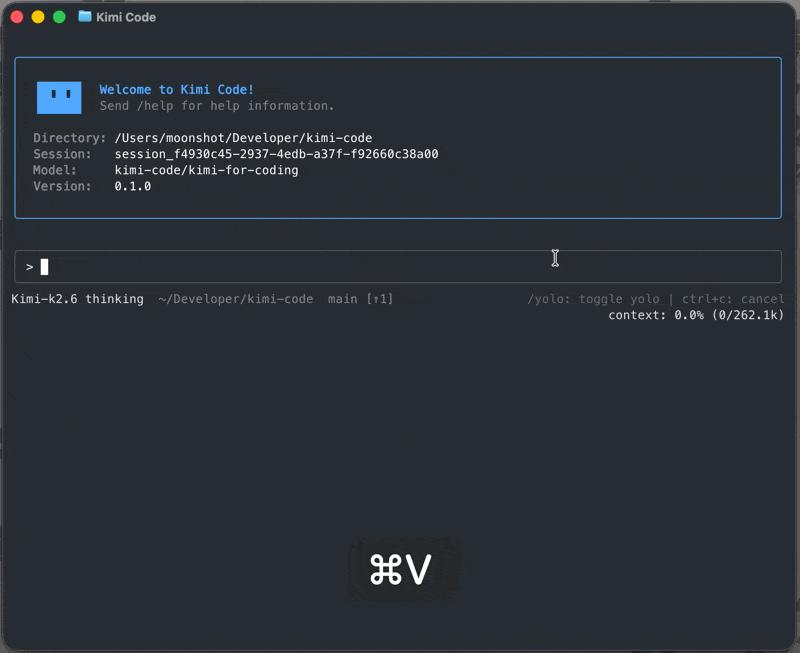
Figure: Kimi Code is an open source programming Agent that can manage contexts, call tools and execute tasks continuously in the terminal
The difference between it and DSH mainly lies in the architectural goal. Kimi Code first provides a set of ready-to-use programming Agent, and opens the source code for developers to modify the existing product. DSH defines models, tools, sessions, storage, sandboxes and Agent Loop as independent plugins, hoping developers will recombine the runtime along this set of interfaces. Both can be Forked and can become the foundation of dedicated Agents; DSH provides finer component boundaries, which is suitable for developers who need to modify execution strategies frequently.
On June 16, 2026, Zhipu first introduced ZCode in the GLM-5.2 release article; on July 1, ZCode was officially released to the public, about six weeks earlier than DSH.
ZCode is an Agentic Development Environment developed around the GLM model, that is, a development environment with autonomous execution capabilities. It has a self-developed ZCode Agent, which is responsible for managing tasks, contexts, terminals, files, permissions and code review. Functionally, ZCode also runs a set of Harness internally; but according to public information, Zhipu has not opened the source code of this core runtime. It provides plugins, Skill and MCP extension capabilities, allowing developers to add tools and workflows, but cannot rewrite the underlying Agent Loop like modifying DSH.
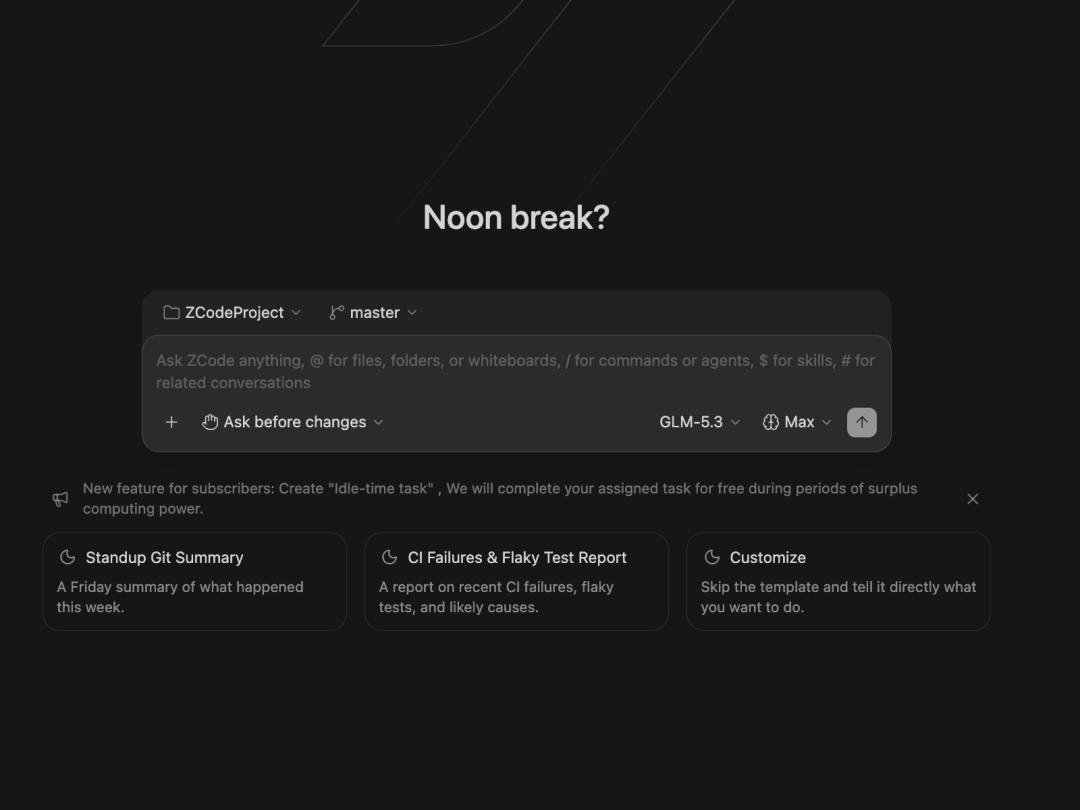
Figure: Zhipu's ZCode is an Agentic Development Environment optimized around GLM, with a self-developed ZCode Agent running internally
Therefore, both Kimi Code and ZCode can be broadly called Harness, because they are both responsible for driving the model to complete continuous tasks. If "Harness in the true sense" is defined as a general runtime that can be embedded independently, can replace models, and can modify the execution loop, the three have obvious differences in the degree of openness: ZCode is closer to GLM's official execution environment; Kimi Code is an open source programming Agent and its operating system; DSH directly takes the detachable and recombinable Harness as the main product body.
In this sense, the extension of model companies to the execution layer has long happened, and DSH is the latest one instead. The new variable brought by DSH is the depth of openness. In the Agent era, the competition for "runtime" is as important as the competition for entry points.
This article is from the WeChat Official Account "Tencent Tech", author: Xiao Jing, editor: Xu Qingyang, published with authorization from 36Kr.