Why are the audience so restless after Qi Wei authorized the production of AI short dramas?
When every industry is rushing to redefine value with AI, those who dare to "go with the trend" first are certainly admirable, but those who have concerns and hesitations about it do not necessarily act out of envy of others "making easy money without effort". Swaying between embracing and resisting, trusting while being wary, this is the real situation of the vast majority of ordinary people in the AI era.
If we count the unique pastimes of young people in the AI era, curling up in bed after work to watch a post-apocalyptic AI short drama definitely ranks among the top three.
From the early version Your Zodiac Sign Decides Your Shelter, to the "Rebirth: I Stockpile Supplies in the Extreme Cold Apocalypse" that perfectly satisfies the hoarding hobby, and then to the action-focused story "My Bestie and I Awoke an Overpowered Combo Skill in the Zombie Apocalypse", the post-apocalyptic theme has been developed in countless creative ways.
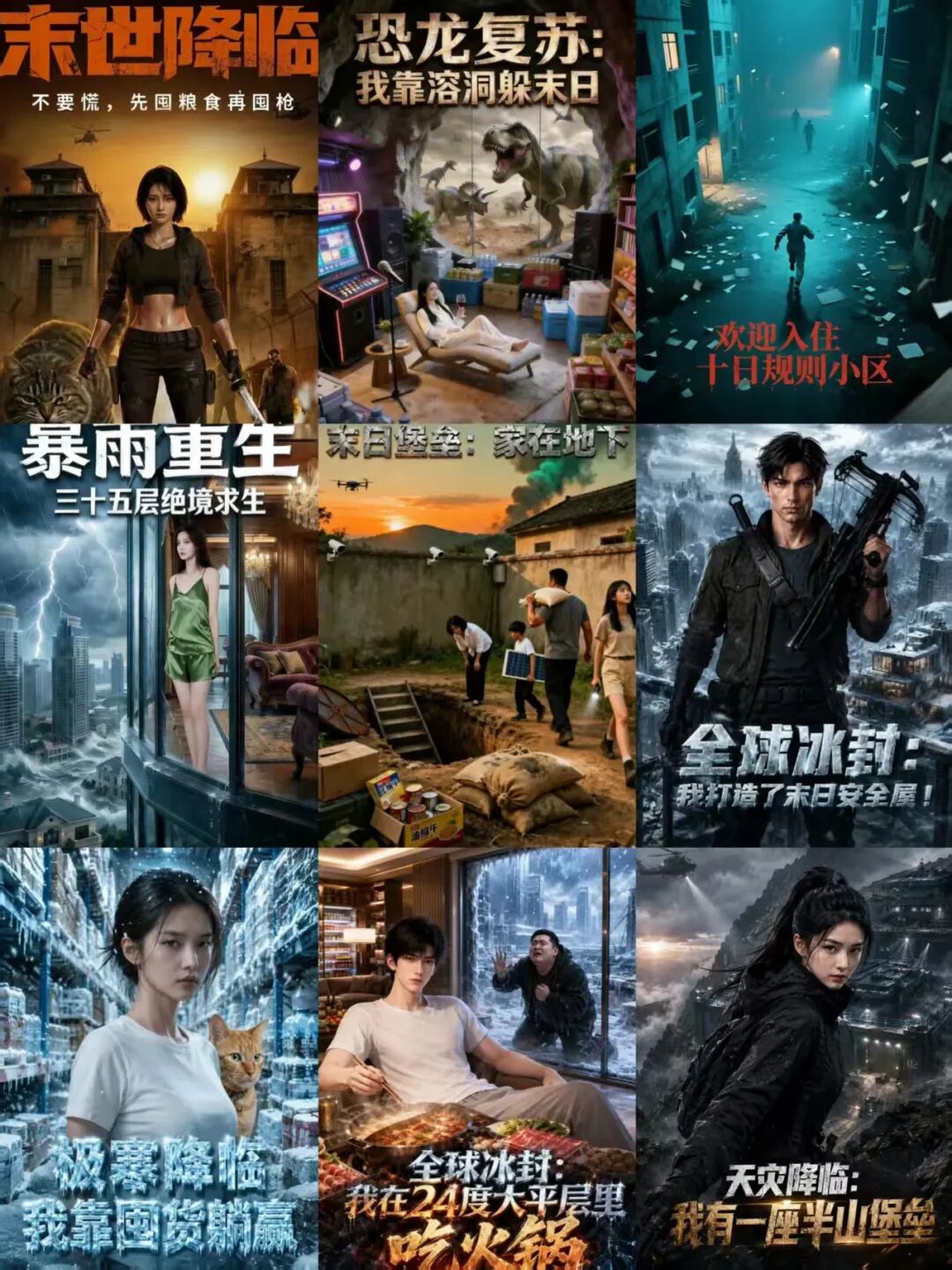
(Photo / Hongguo Short Drama)
No matter the stylized flat art style or the exquisite 3D character portraits, people can hardly look away once they start watching. They keep saying that AI short dramas are not interesting at all, but their fingers honestly swipe to the next episode.
However, a recent live-action AI short film has sparked rare heated discussions. In the footage, as the camera zooms in from a close-up of combat costumes, cool armor gradually fills the screen. Just when you are sighing that the AI art style has reached a new level, the frame suddenly freezes on a familiar face.
This character that looks extremely similar to Qi Wei is named "Han Qingxia". On August 6, Qi Wei released the demo of this post-apocalyptic AI short drama on social platforms, announcing the launch of her official personal digital avatar and opening standardized authorization for her own image.
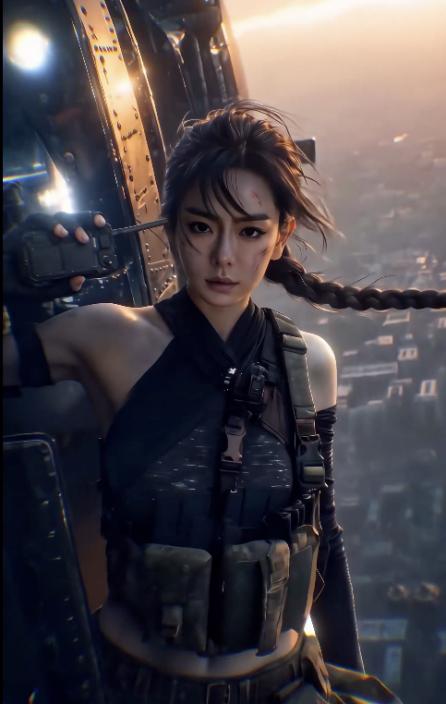
Qi Wei's digital avatar character "Han Qingxia". (Photo / Xiaohongshu @Qi Wei 7V)
The comment section immediately exploded. Some people complained about the protagonist's costume design: wearing shorts and a crop top in the post-apocalyptic environment, as if she was "afraid that the enemy would not see her weaknesses"; some were dissatisfied with the camera language, as the picture focus shifted from legs to hips and then to the waist and abdomen, making the gaze at the character's body feel uncomfortable...
But most of the discussions eventually pointed to a more important question unanimously: "If I'm already watching AI short dramas, why would I want to see a real celebrity's face?" At a time when generative AI creation seems to be commonplace, why are audiences unwilling to buy into celebrity portrait authorization?
01
Not an Isolated Case
Qi Wei, who triggered widespread discussion, is not the first person to try this. Many veteran stars who have left deep memories for audiences have already tested the waters by authorizing their portraits for AI production.
In July this year, NetEase's PC game World announced that Joey Wong is its brand spokesperson, and released the AI-produced promotional short film Shadow of the Fairy across all platforms. From "the white fox taking human form" to "borrowing an umbrella at the Broken Bridge", the two-minute short video awakened the classic impressions of Nie Xiaoqian and Bai Suzhen in countless audiences' hearts.
Although the short film was criticized for the fact that the aesthetic of the large company ruined the Xianxia vibe, and the overly clear picture also weakened the unique temperament of the golden age of Hong Kong films; most audiences do not seem to be so disgusted, after all, it is a rare thing to see 20-something Joey Wong "make a comeback".
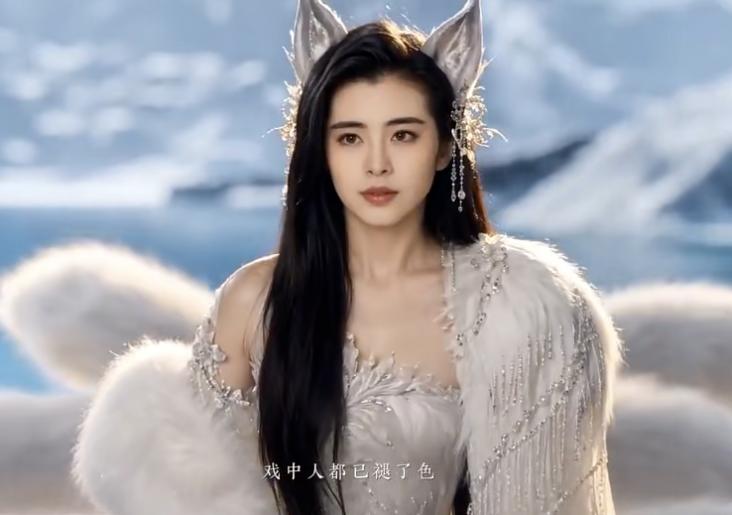
Joey Wong's AI image in Shadow of the Fairy. (Photo / Internet)
Earlier, Hong Kong, China actor Lawrence Ng Kai Wah also announced that he authorized his 20-year-old image to an AI short film production team.
As he grew older, this actor who has created many classic roles such as Ching Chi Mei in The Healing Hands and Fong Tong Kan in Hail the Judge no longer has so much time and energy to cope with high-intensity shooting. The 62-year-old frankly said that the pay offered by the other party is really good, and AI also helped him relive the feeling of being a leading actor.
You Benchang, the 92-year-old "veteran master", also embraced AI. He not only authorized his digital image to the AI micro-short drama Jigong: The Fake Dragon Subduing Arhat, but also personally served as the art director, participated in script review, and moved the image of Jigong, who is crazy but kind and compassionate, from the TV screen to the mobile phone screen.
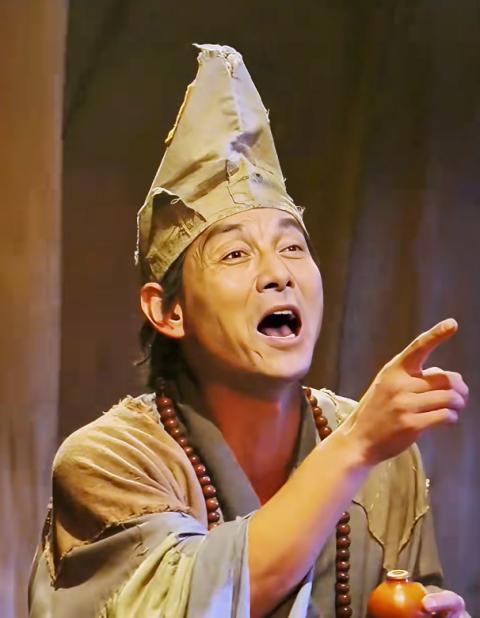
You Benchang's authorized AI image in the short drama. (Photo / Jigong: The Fake Dragon Subduing Arhat)
The portrait authorization behavior of the older generation of actors is certainly accompanied by controversies, but the audience generally holds a tacit understanding. Their active period on the screen has passed, and the familiar faces generated after AI authorization will not impact the existing film and television market. It is more like a gentle review of the past, as if seeing an old friend come back for a cameo.
But when the same behavior is done by artists in their prime, the audience will not be so tolerant.
Even though everyone knows clearly that part of a celebrity's commercial value is purely attached to their own image, if they rush to cash out through digital avatars by bypassing actual performance before presenting sufficiently convincing works, it will inevitably arouse subtle resistance.
02
A Kind of "Going with the Trend"
On the other hand, the choices of artists like Qi Wei are just moves to conform to the trend. With the rapid development of AI film and television, "whether to sell their image" is no longer a decision that artists can make unilaterally.
This summer, a live-action AI short drama called The Laid-off Girl became a smash hit. This story about a small-town girl venturing into a big city, being maliciously squeezed out by her peers but finally achieving a comeback, has accumulated nearly 400 million views in total less than three months since its release.
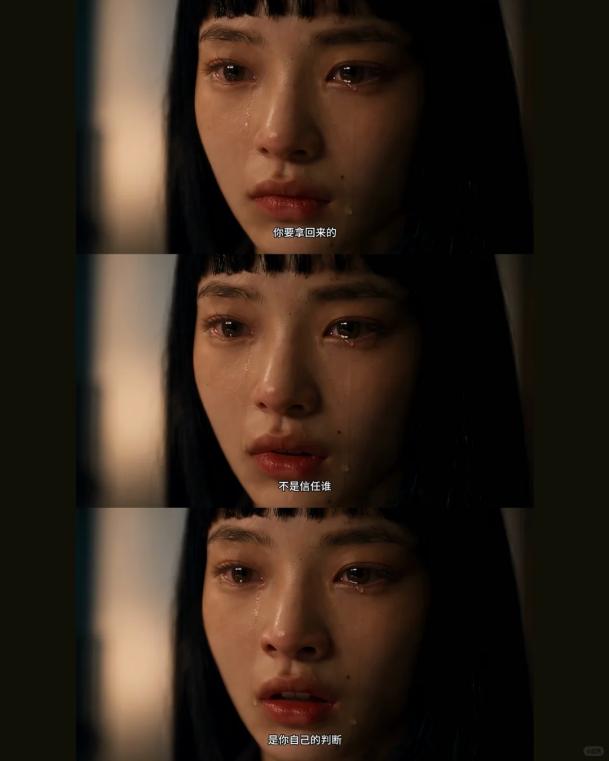
Close-up of the female lead "Fang Taozi" in the drama when she faces public opinion. (Photo / The Laid-off Girl)
What makes people sigh is that whether it is the shaking effect of the camera when the character is walking or the switching of depth of field, The Laid-off Girl has almost achieved the same texture as real live-action shooting. Even audiences who have watched many live-action AI short dramas can hardly avoid being dazed when seeing such high-quality pictures.
Apart from the plot, this female lead "Fang Taozi" constructed by lines of code even registered a personal account on Douyin.
Just like all celebrities and even ordinary users, Fang Taozi uses videos and photos to share every bit of her life: bangs soaked in sweat during outdoor shooting, legs full of mosquito bites, eating boxed meals while squatting on the set, leaning against the wall to review the script... Fang Taozi even keeps a puppy, sometimes she makes bacon and egg sandwiches with it at home, and makes appointments with friends to play tennis outside.
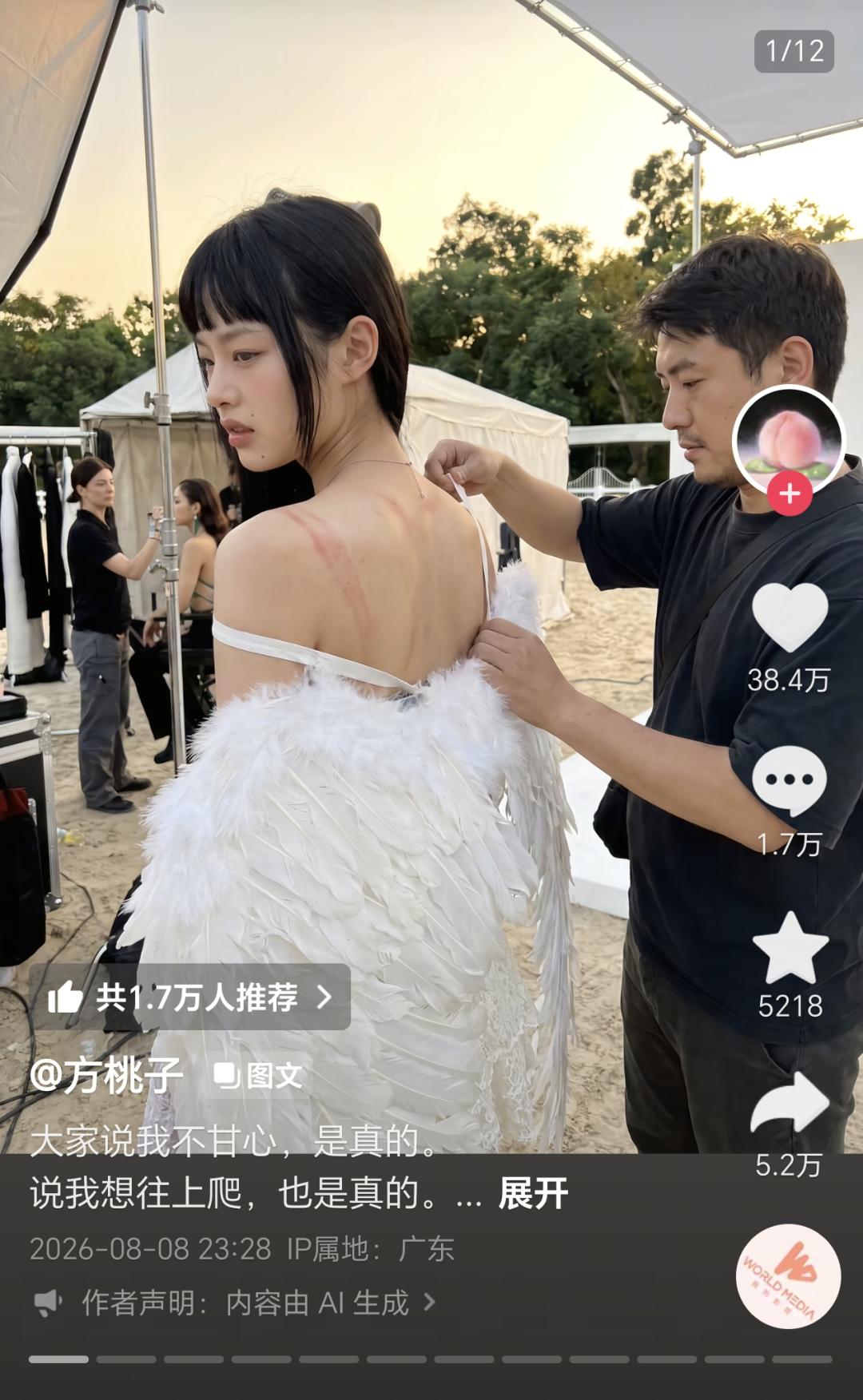
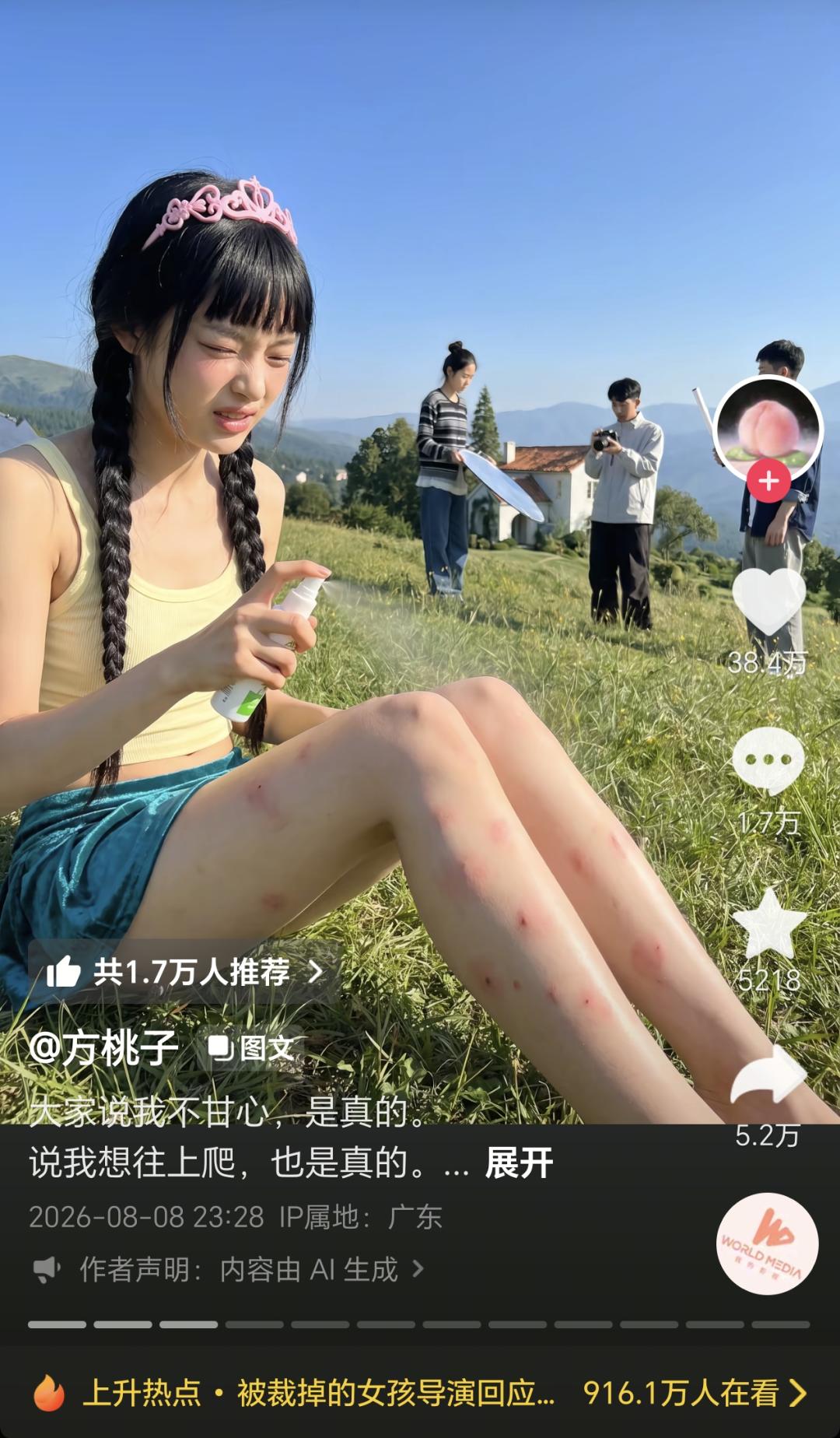
Fang Taozi shares "work photos" on her Douyin account. (Photo / Douyin @Fang Taozi)
Netizens have sighed in the comment section that this time they finally believe what Tang Guoqiang said.
In September 2025, on the variety show Ace vs Ace, Tang Guoqiang took the pro side in the debate topic "Will AI actors replace human actors", fought against seven opponents alone, and firmly believed that human actors will be replaced. His point is that the performance logic of both AI and human actors is to "achieve the effect of making the fake seem real" and simulate real emotions, and humans have no advantage over AI in this regard.
He cited the example of Stanislavski as evidence: "Why did Stanislavski form the physical action performance method in his later years? Because he felt that human emotions are erratic and difficult to capture, so he fixed them through physical action rehearsal methods, and continuously made actors achieve relative reality through performances and interactions with the audience."
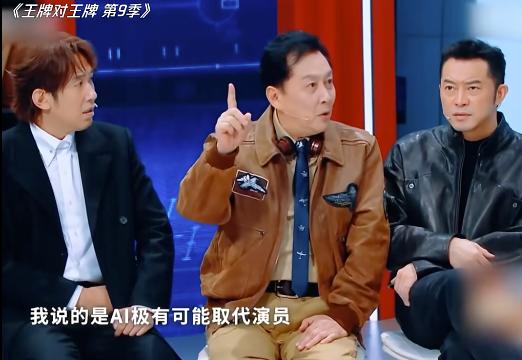
Tang Guoqiang's debate on Ace vs Ace. (Photo / Internet)
But no matter how vividly Fang Taozi lives, the AI-generated face is still questioned for looking "excessively generic".
The bangs above the eyebrows and the mole at the corner of the mouth make people think of Nana Komatsu at first glance; the raised angle of the eyebrows and eyes is similar to the cold temperament of Minji, a member of the Korean girl group NewJeans; in a close-up shot taken from a top-down angle, the shape of the nose and mouth reminds people of the actress Ren Min...
But this kind of face that "looks like everyone and no one at the same time" has gained nearly 500,000 fans since its debut. The latest information from Douyin's Xingtu platform shows that the quotation for an embedded advertisement video on Fang Taozi's personal account is 238,000 RMB, and the quotation for a customized video is 258,000 RMB. According to reliable sources, the investment promotion competition for the currently airing second season of The Laid-off Girl is also extremely fierce.
However, behind the skyrocketing commercial value of virtual artists, many "real people" are trapped in the predicament of rights protection.
A large number of creators have long become free material libraries for large AI models because they frequently show their faces online. In March this year, creator @QihaiChrist released a video saying that the AI short drama Peach Blossom Hairpin misappropriated and distorted her portrait to generate the role "Shopkeeper He" in the drama.
As a female model, Qihai has released many videos encouraging women to pursue self-development, and has participated in stray animal rescue many times in her life. Now, her face is tied to a villain who bullies small animals and is keen on infighting among women without being notified, which is almost a devastating blow to her who also makes a living by her appearance.
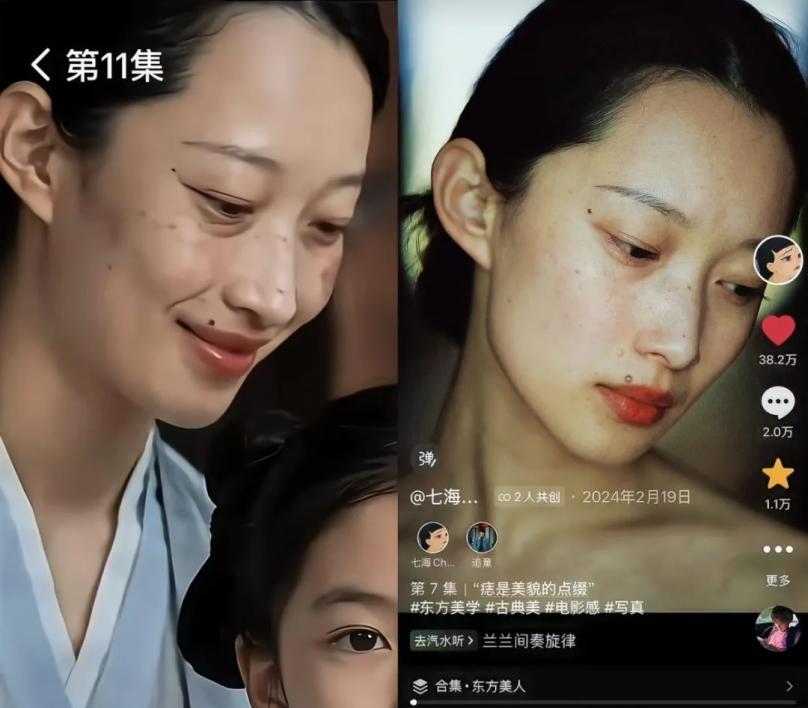
Comparison between @QihaiChrist herself and the face of "Shopkeeper He" in the drama. (Photo / Internet)
What is even more eerie to think about is that after Peach Blossom Hairpin, Qihai's face is suspected to have been "refined" by the large model material library.
Her face has appeared in more and more AI short dramas one after another. These faces have Qihai's typical features — clear jawline and a mole at the corner of the mouth — but they look different because they are mixed with other faces, which directly makes the subsequent rights protection process more and more difficult.
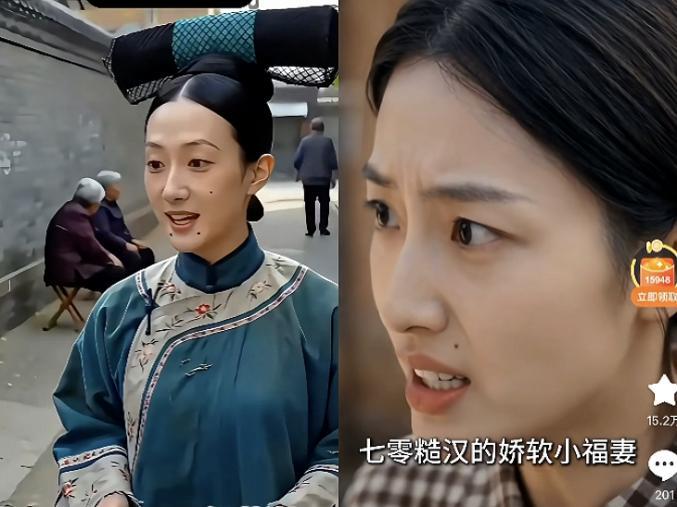
More and more faces that look like "Qihai" emerge in short dramas. (Photo / Internet)
Perhaps for such considerations, instead of passively suffering losses, some celebrities and artists have decided to embrace the reality.
Putting the commercial value of portraits on the table clearly, even if they may face ridicule such as "being too greedy for money", can also turn potential risks into possible opportunities.
03
People Who Cannot Embrace AI
In fact, AI digital avatars are by no means far away from ordinary people.
Open any app on your phone, and the algorithm pushes all kinds of tutorials about embracing AI every day, "Being able to use AI is the greatest luck for your career", "How to use AI to generate side income"... Similar titles appear in various forms, declaring that AI is closely related to everyone.
Many companies directly include the AI usage rate in the weekly meeting report indicators to improve efficiency. In just a few months, new concepts such as Agent, M