After BlackBerry stopped selling mobile phones, it has become even more profitable.
Hearing news about BlackBerry again feels like a total throwback to a bygone era.
Many readers probably share the same first thought as I do: This brand hasn't gone under yet?
Even more surprisingly, this company now boasts a higher gross margin than it did at its peak, and its business is increasingly thriving.
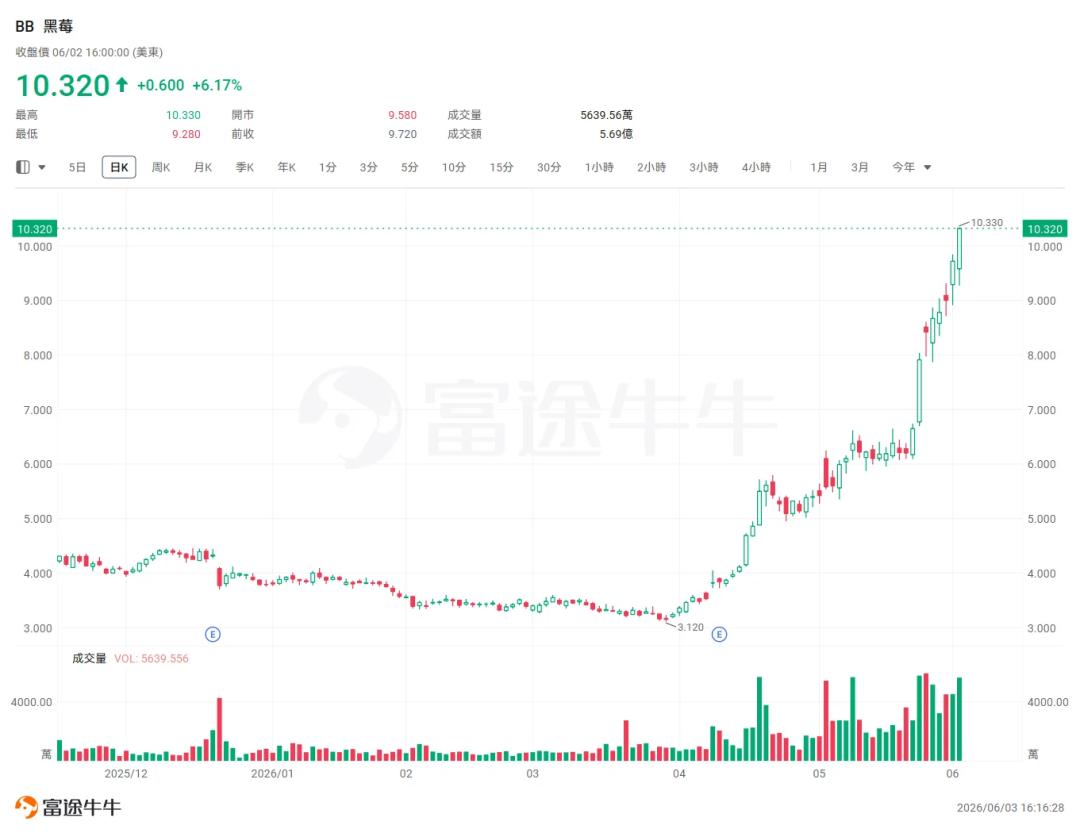
Over the past year, BlackBerry's stock price has surged 150%, pushing its market cap to $5.2 billion.
After its financial report was released in June this year, its stock price jumped 20% immediately, and the cumulative increase in two months once exceeded 200%.
So here comes the question: How does a company that can't sell a single mobile phone make money?
The answer is: selling operating systems.
Only this system is no longer a mobile phone system, but an in-vehicle infotainment system, a robot system, and a security system.
Your Mercedes-Benz, BMW, or Volvo may be running BlackBerry's code under the dashboard.
No one expected that BlackBerry phones are long gone, but the company has quietly become a hidden champion in the automotive and AI sectors.
Today we'll talk about how this outdated mobile phone giant made a strong comeback by "being the behind-the-scenes leader".
01
The former king of mobile phones: from iconic status to exit
People born after 2000 may not be able to imagine how popular BlackBerry phones were back in the day.
To put it simply: it was the first luxury product in the smartphone industry.
In the era when the iPhone had not yet become a household name, BlackBerry, Nokia and Motorola divided the entire mobile phone market between them.
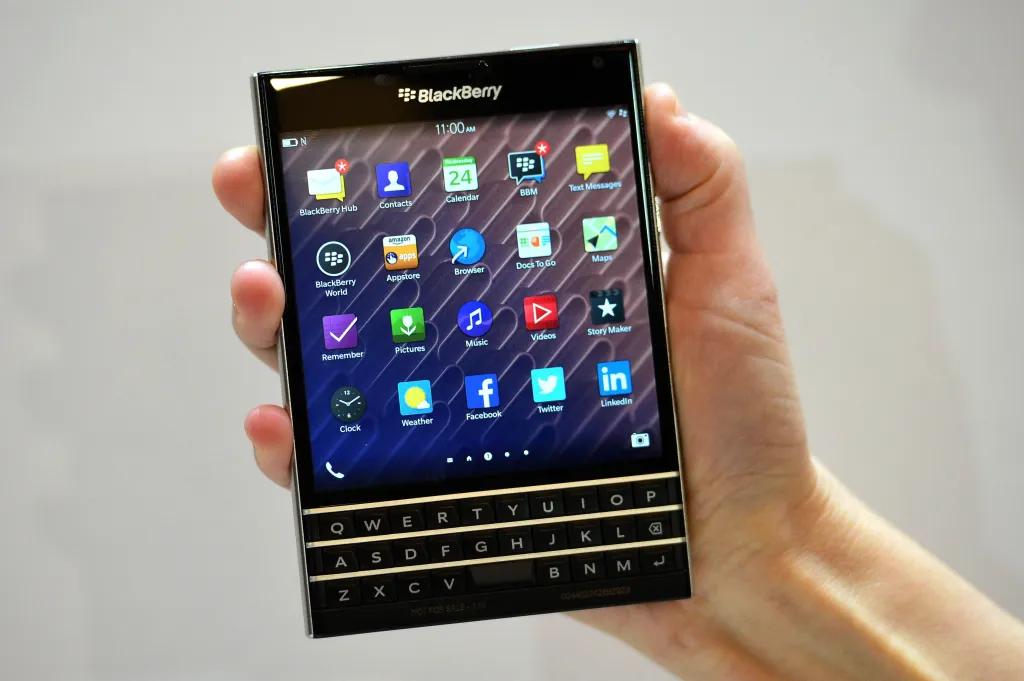
The difference is that BlackBerry had a unique "elite vibe". Its full keyboard design and encrypted email system perfectly matched the core demands of business people.
Before BlackBerry, sending and receiving emails on mobile phones was an extremely frustrating experience: the screen was tiny, typing was slow, and emails were often compressed into unreadable messes.
BlackBerry solved all these problems at once: real-time push, end-to-end encryption, and super fast typing on the physical keyboard.
With this productivity magic tool, Wall Street traders, law firm partners and government officials felt like they had divine assistance.
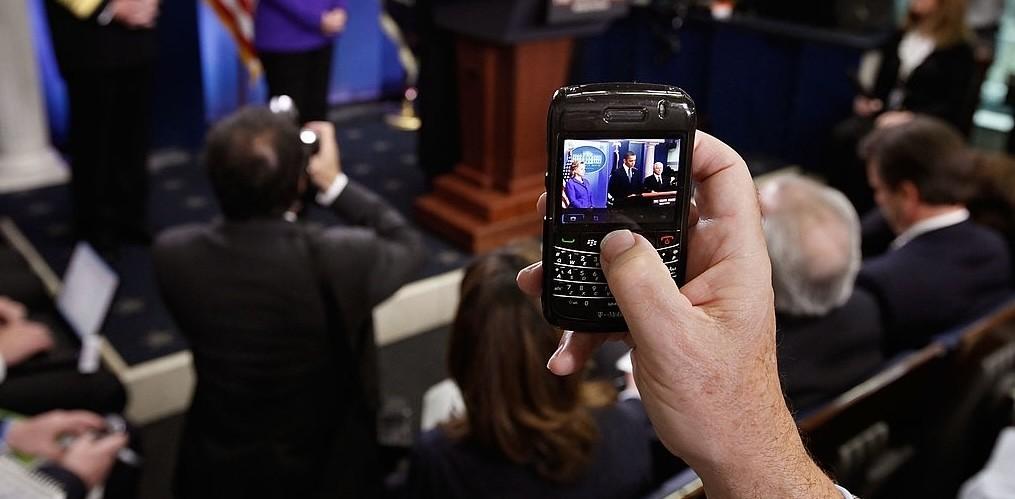
Soon, BlackBerry quickly became the standard device for business people. Back in that era, if you looked around in the first-class cabin of a plane, eight out of ten people would pull out a BlackBerry.
Celebrities carried it for street snapshots, politicians used it to send emails, and even Barack Obama was a big fan of it.
When he moved into the White House in 2009, he refused to replace his BlackBerry no matter what, and in the end the Secret Service had to customize a super-encrypted presidential exclusive phone for him.
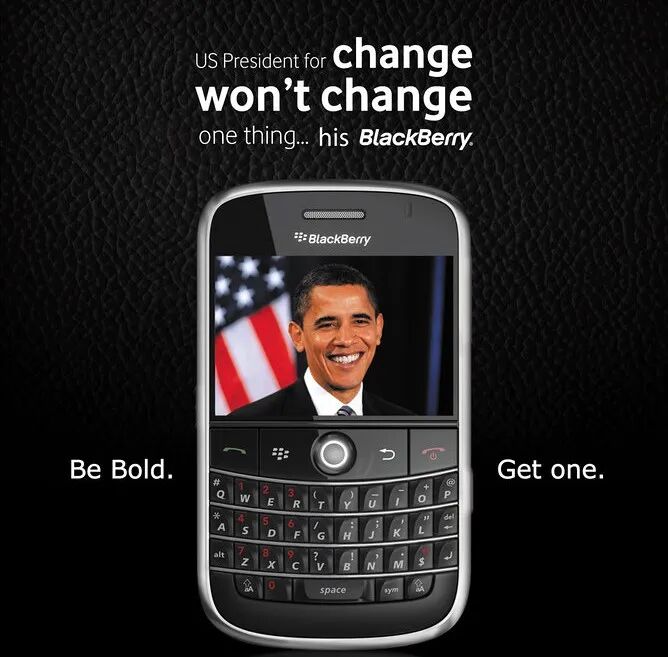
That was the most glorious era for BlackBerry.
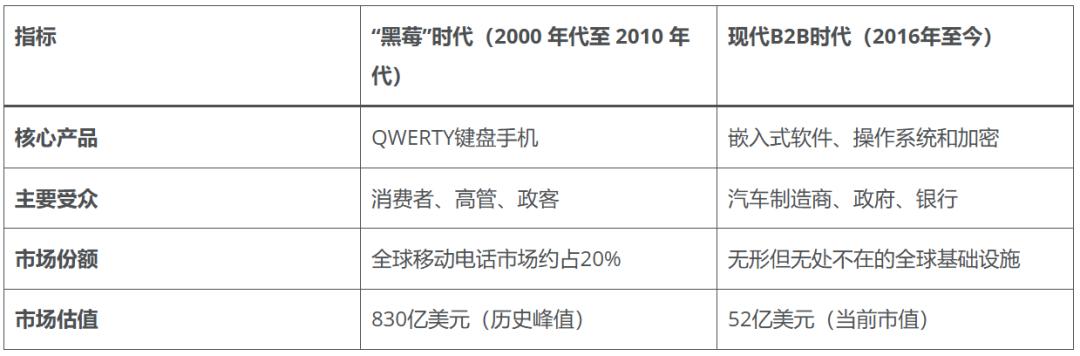
In 2008, BlackBerry's market cap hit its peak of $83 billion, with more than 85 million global users.
In China, although operator services were restricted, BlackBerry still sold extremely well in the parallel import market.
Students would save up money to buy one, and pulling out its full keyboard was the ultimate status symbol back then.
But that kind of status symbol is the most vulnerable to market disruption.
In 2007, Steve Jobs released the first generation iPhone. The combination of touch screen, app store and large-screen internet access directly overturned BlackBerry's entire market.
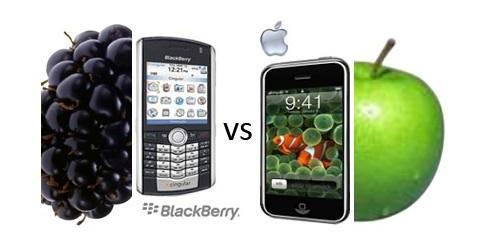
What was BlackBerry's reaction at that time? Arrogance.
Mike Lazaridis, then co-CEO, glanced at the iPhone and said dismissively: "You take the keyboard off a computer and replace it with a touch screen? How could that work? Business people won't like it."
As we all know what happened later, Apple grew at a blazing pace, and the Android camp rose rapidly.
Touch screens became the new industry standard, and BlackBerry's proud physical keyboard suddenly became an "antique".
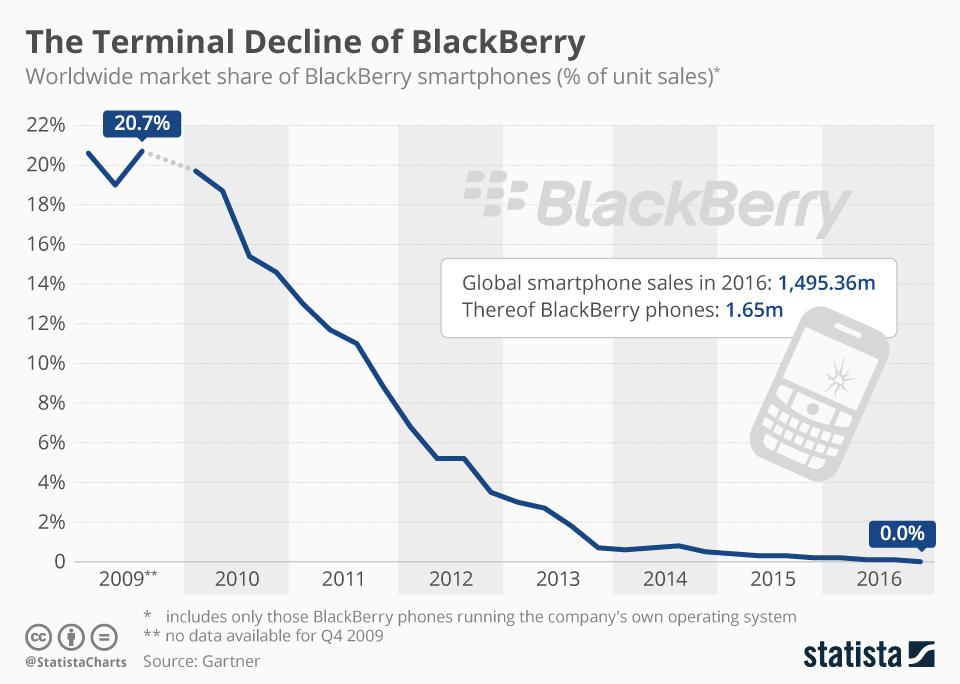
By the time BlackBerry realized the problem and rushed to develop touch-screen phones, the market opportunity was long gone.
In 2016, BlackBerry announced it would stop developing and selling smartphones. The former king of mobile phones officially exited the consumer phone market.
02
An unintended move that saved BlackBerry
At that time, everyone thought that once the phone business was gone, the company would collapse too, but the story did not end there.
Back in 2010, when its mobile phone business was still at its peak, BlackBerry made an acquisition that no one paid much attention to at the time: it spent $200 million to buy a software company called QNX.
The original purpose was very simple: to build a better operating system for its own mobile phones.
But the result? The phone business failed, yet this operating system shined brilliantly in another track. By sheer accident, it saved the entire company.
What is QNX? You can think of it as the "nervous system" for electronic devices: it is responsible for scheduling hardware resources to make software run properly.
Windows, Linux and Android all do the same kind of work, but the biggest difference between QNX and them is security.
It adopts a microkernel architecture, with extremely small core code. Even if a certain module crashes, the entire system will not go down with it.
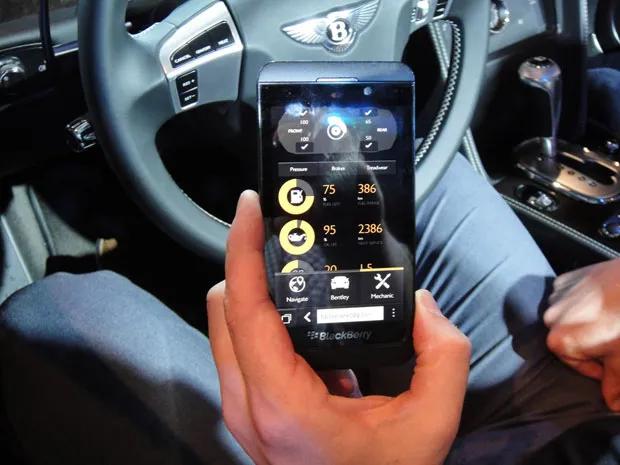
In the automotive safety field, this is a "god-tier configuration": dashboards, advanced driver assistance systems, and autonomous driving are all parts that must never fail.
When BlackBerry bought QNX, the entire company was still immersed in the carnival of selling mobile phones, and did not realize that they were holding a trump card in their hands.
It was not until the mobile phone business collapsed that the management suddenly looked back: Wait a minute, QNX seems to be doing pretty well in the automotive industry?
Today, the QNX system is already installed on more than 275 million vehicles worldwide.
Mercedes-Benz, BMW, Volvo, Ford, General Motors, Volkswagen... Almost all well-known car manufacturers are its customers.

In addition to QNX, BlackBerry has another ace up its sleeve.
In 2014, BlackBerry acquired the German encryption software company Secusmart. This company develops NATO-grade encrypted communication technologies that prevent eavesdropping and hacking.
Merkel has used it, NATO has used it, and governments of 20 countries around the world are using it now, as are some large multinational banks.
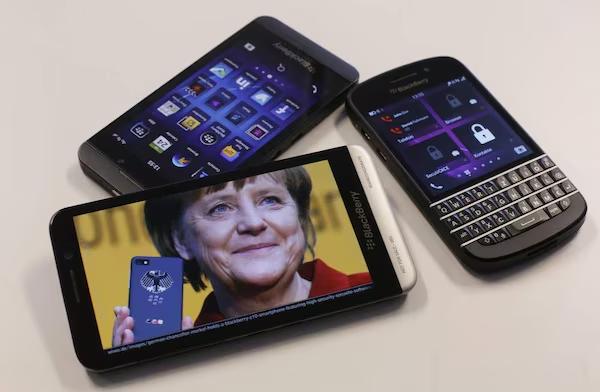
These two businesses, one covering "vehicle brain" and the other guarding "encrypted communication", are all businesses with high barriers, high gross margins and high user stickiness.
No wonder its gross margin has reached an astonishing 86%. You know, when BlackBerry's mobile phones were extremely popular back then, its gross margin was only just over 40%.
Now that the mobile phone business is gone, its profit margin has doubled, which is exactly the saying: "A loss may turn out to be a blessing."
03
BlackBerry's ambition for "Physical AI"
After QNX established a firm foothold in the automotive field, BlackBerry set its sights on a larger track — Physical AI.
Simply put, it means letting AI step out of the screen and work in the real world. Autonomous driving and humanoid robots are typical applications of this direction.
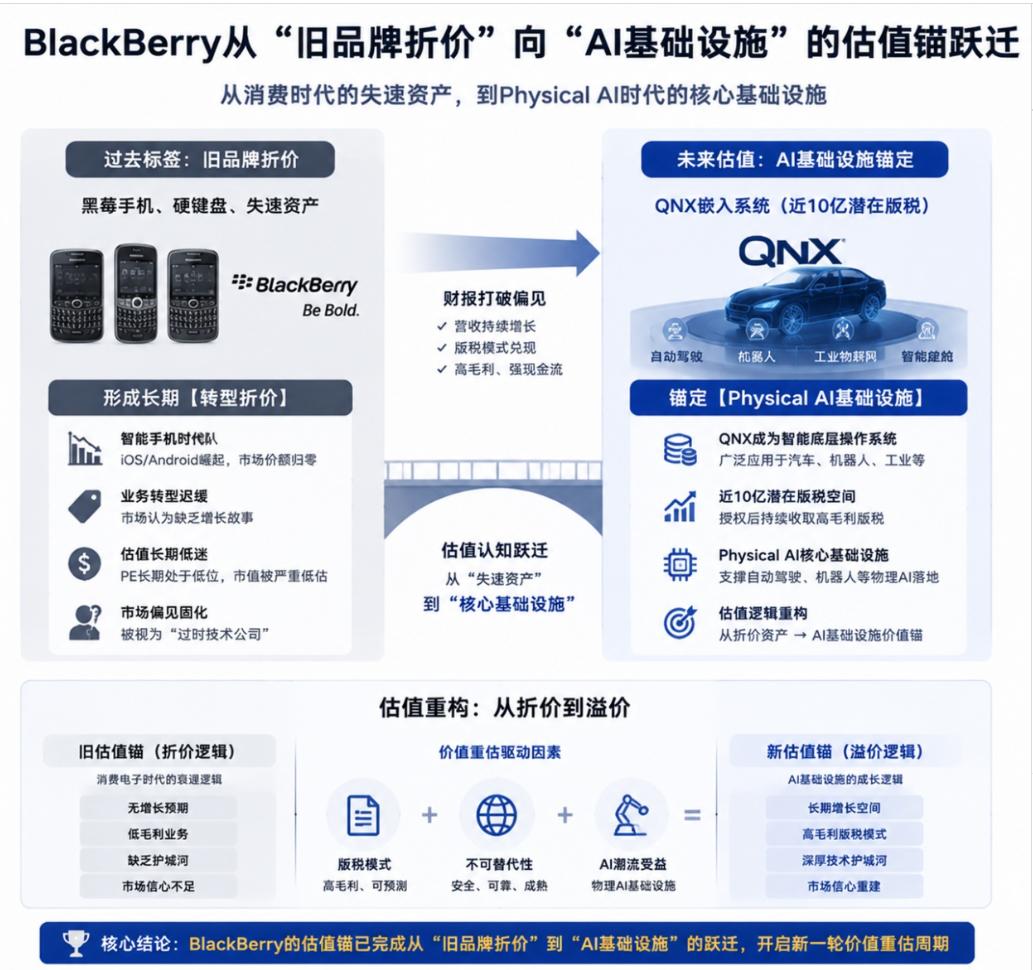
Such scenarios require operating systems that are absolutely safe and absolutely reliable, just like in the automotive industry, and this is exactly where QNX's opportunity lies.
BlackBerry announced in April this year that it would deepen its cooperation with NVIDIA, integrating QNX into NVIDIA's robot chip platform.
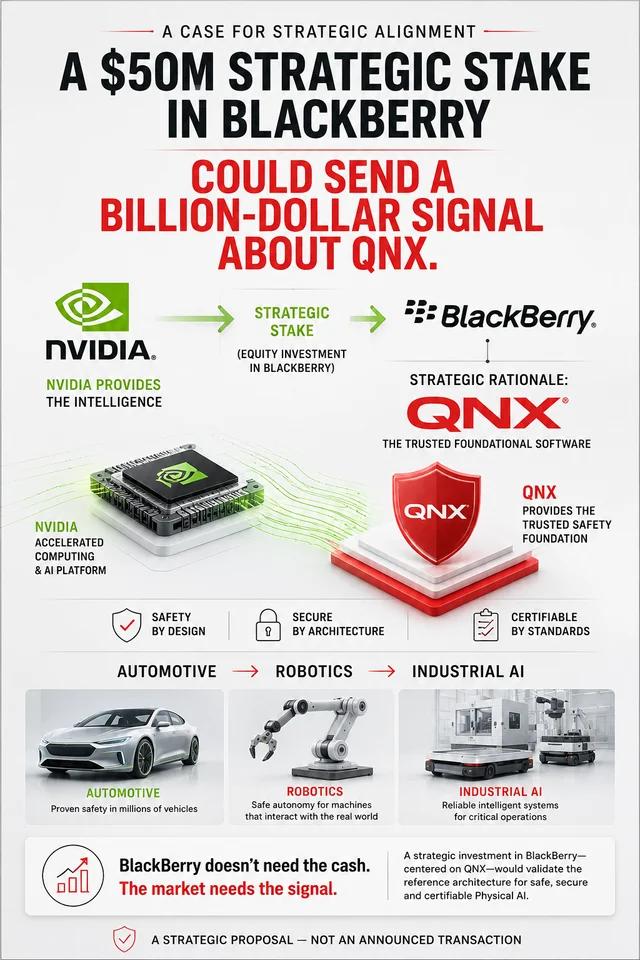
Boston Dynamics' humanoid robot and Agility Robotics' Digit robot are both using the QNX system.
Not just robots, medical devices also use it. The da Vinci surgical robot is also a customer of QNX.
QNX can also be found in industrial automation, drones, and even the security systems of naval submarines.
With its business expanding, it is natural that the company can make good profits.
In fiscal year 2026, BlackBerry's full-year net profit reached $53.2 million, while it still lost $79 million the year before.
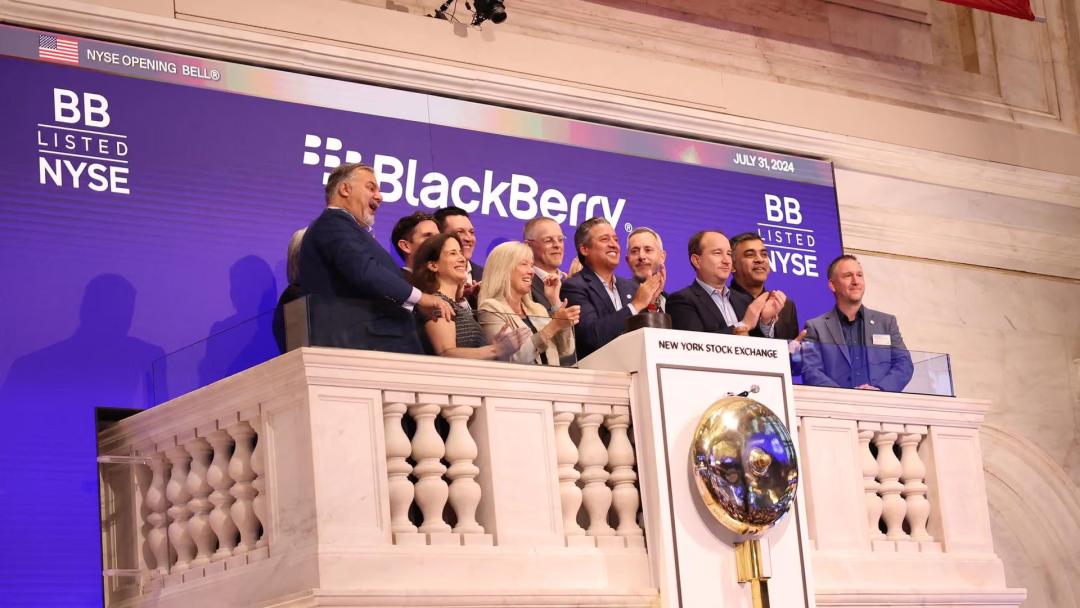
More importantly, it achieved positive operating cash flow for the first time since 2017 in the first quarter of this year. It no longer burns cash and can generate profits on its own.
This made CEO John Giamatteo so happy that he stated publicly: "The transformation is complete. We have moved from the transformation phase to the growth phase."
Looking back, I think BlackBerry's story is quite interesting.
A company that made mobile phones no longer sells mobile phones. But the company didn't die, instead it lives a better life by selling automotive software.
In fact, it's not just BlackBerry. Nokia, the former mobile phone giant, also lost its mobile phone business, but now it