Flip stunts are out, industrial robots show off their real practical skills at WRC, and their working scenarios are no longer limited to factory floors.
On August 19, 2026, the WRC 2026 World Robot Conference officially opened in Beijing. From the on-site visit experience of the Lei Technology WRC reporting team, there is a very clear keynote at this year's WRC: getting robots out of PPTs and onto the front lines.
Of course, the so-called "front line" has different definitions for different categories of robots. For household robots, the housework scenarios in daily home life are their front lines of work; for large industrial robots, scenarios such as factories and mines, which are far from most people's daily lives, also belong to the front lines.
However, since the latter has been developing in industrial scenarios for many years with relatively mature technologies and is far from consumers, most consumers pay little attention to the industrial robots displayed at WRC except industry practitioners.
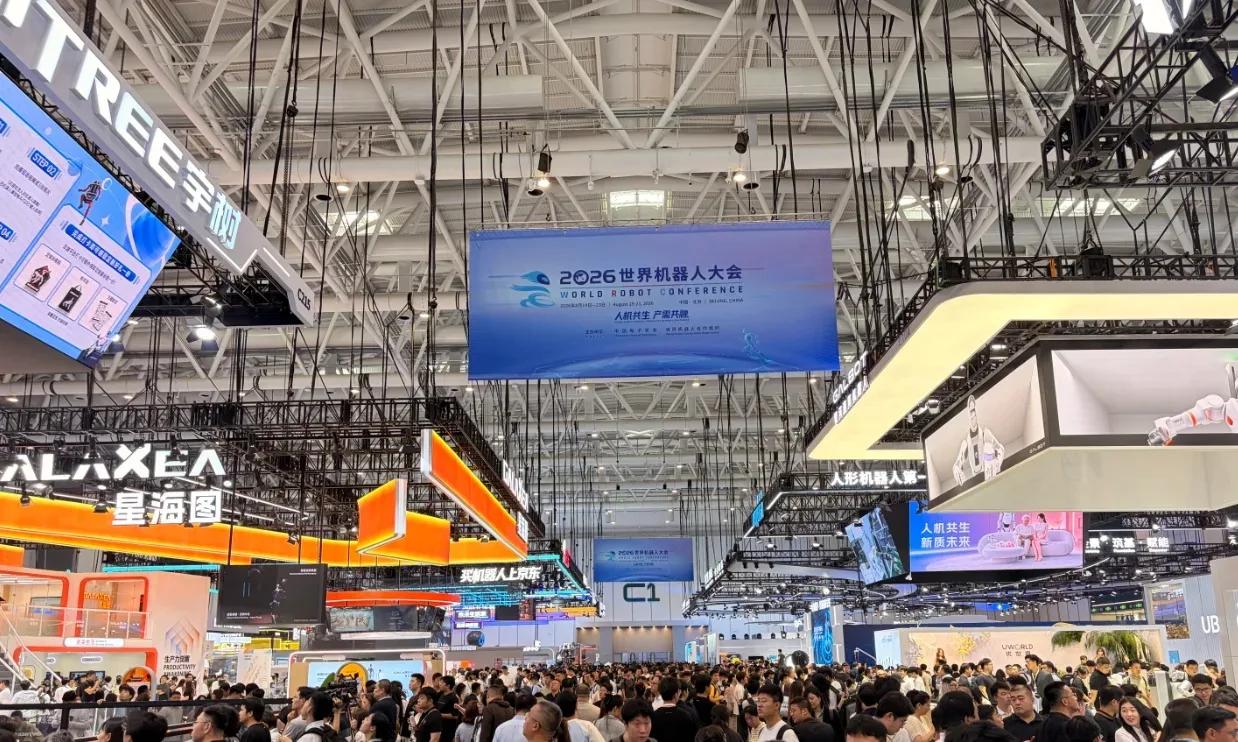
Image source: Lei Technology
So what new changes have taken place for industrial robots at this WRC?
Traditional Industrial Robots Are Undergoing "Embodied Intelligence Transformation"
Just like other machinery and AI exhibitions, the most eye-catching robots at this year's WRC are still humanoid robots. Driven by embodied intelligence, physical AI and world models, humanoid robots that used to only be used for entertainment performances finally have the ability to perform practical work such as tightening screws.
However, according to the observations of Lei Technology at WRC, it is not only humanoid robots that are stepping into the era of "embodied intelligence". Those large industrial robots that do not have human-like appearances or intelligent features, and only work according to pre-programmed instructions, have also started the process of "embodied intelligence transformation".
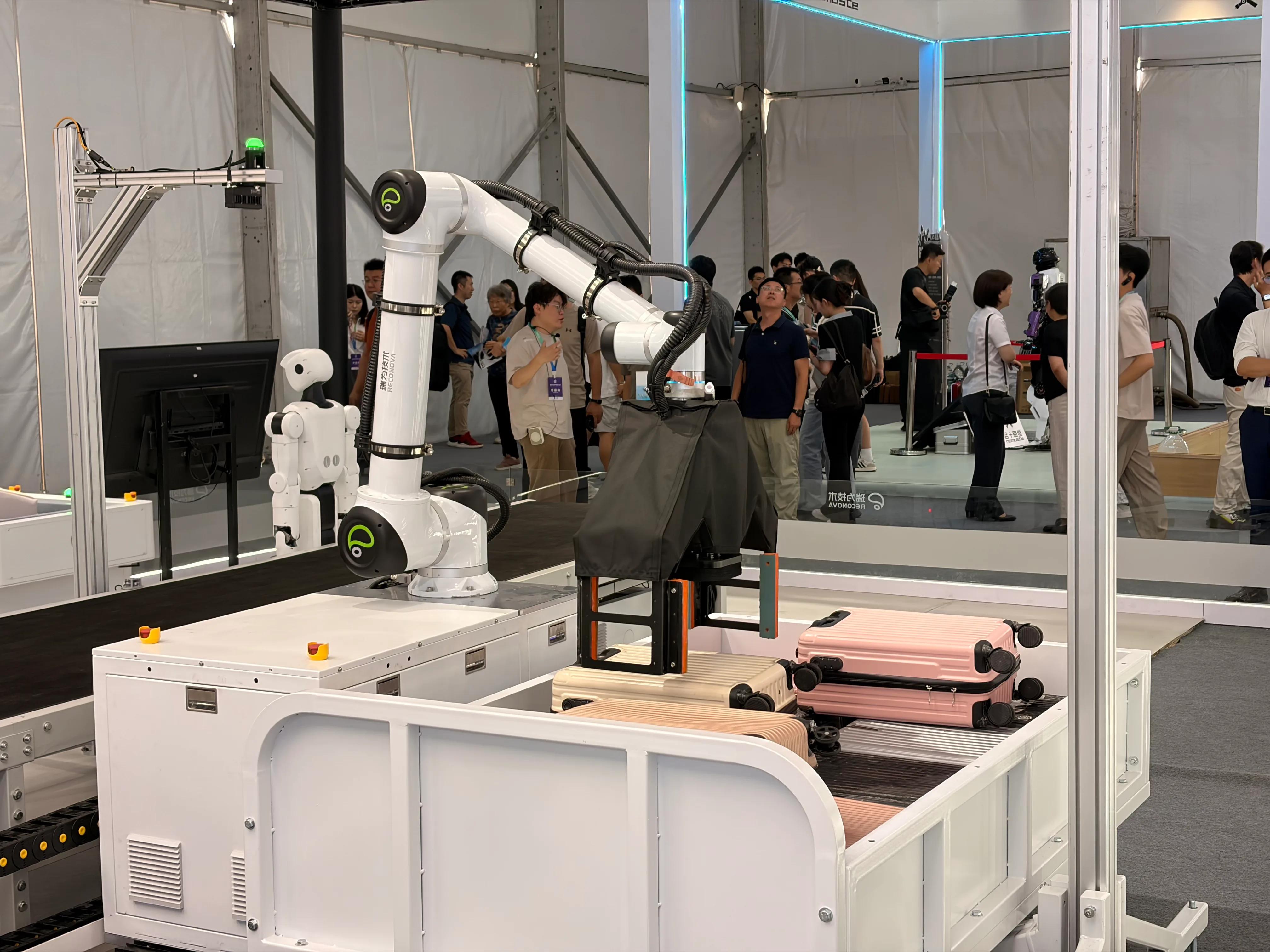
Image source: Lei Technology
For example, Yaskawa has installed adaptive AI on its own robots, which can actively adapt to different work tasks and eliminate the process of manual adjustment. Galaxy General Intelligence showcased its Galaxy Star Brain, which allows robotic arms and humanoid robots to share the same "brain". Domestic manufacturers Peitian and Luoshi are also adding intelligent control systems to their robots.
In the view of Lei Technology, building embodied intelligence based on robotic arms has its unique advantages. To put it plainly, the embodied intelligent robotic arm is an "old employee with a smart brain". Before the concept of embodied intelligence was proposed, these robotic arms had been working on production lines for more than ten years. Although there are many "preparatory steps" for installation and use, once the production line is started, both the hardware performance and work efficiency of these robotic arms are far better than those of "humanoid embodied robots".
From this perspective, what these robotic arms lacked in the past was never the "hand" (actuator), but the "brain". Equipping robotic arms with vision systems and AI models has a far lower marginal cost than building a humanoid robot from scratch. After all, compared with humanoid robots that are still working on bipedal balance, whole-body coordination and open environment perception, the working environment and tasks of embodied intelligent robotic arms are more stable.
From the perspective of model training, industrial scenarios are inherently ideal places to "feed AI with data": the workpieces and processes in factories have standardized workflows, and concepts such as "digital twin factories" have already prepared relevant training materials before the emergence of embodied intelligent robotic arms. In the view of Lei Technology, industrial applications such as smart factories are very likely to become the first large-scale application scenario for embodied intelligent robots.
Industrial Robots Are Moving Towards Modularization
Modularization has also become one of the core topics in this year's industrial robot track — this WRC has for the first time seen independent large-scale exhibition booths of upstream component enterprises: Wolong Electric Drive, Paxini, Lingxin Qiaoshou, as well as Luoyang Hongyuan, which supplies bearings for the joint modules of Unitree and DeepRob, all appeared as independent exhibitors.
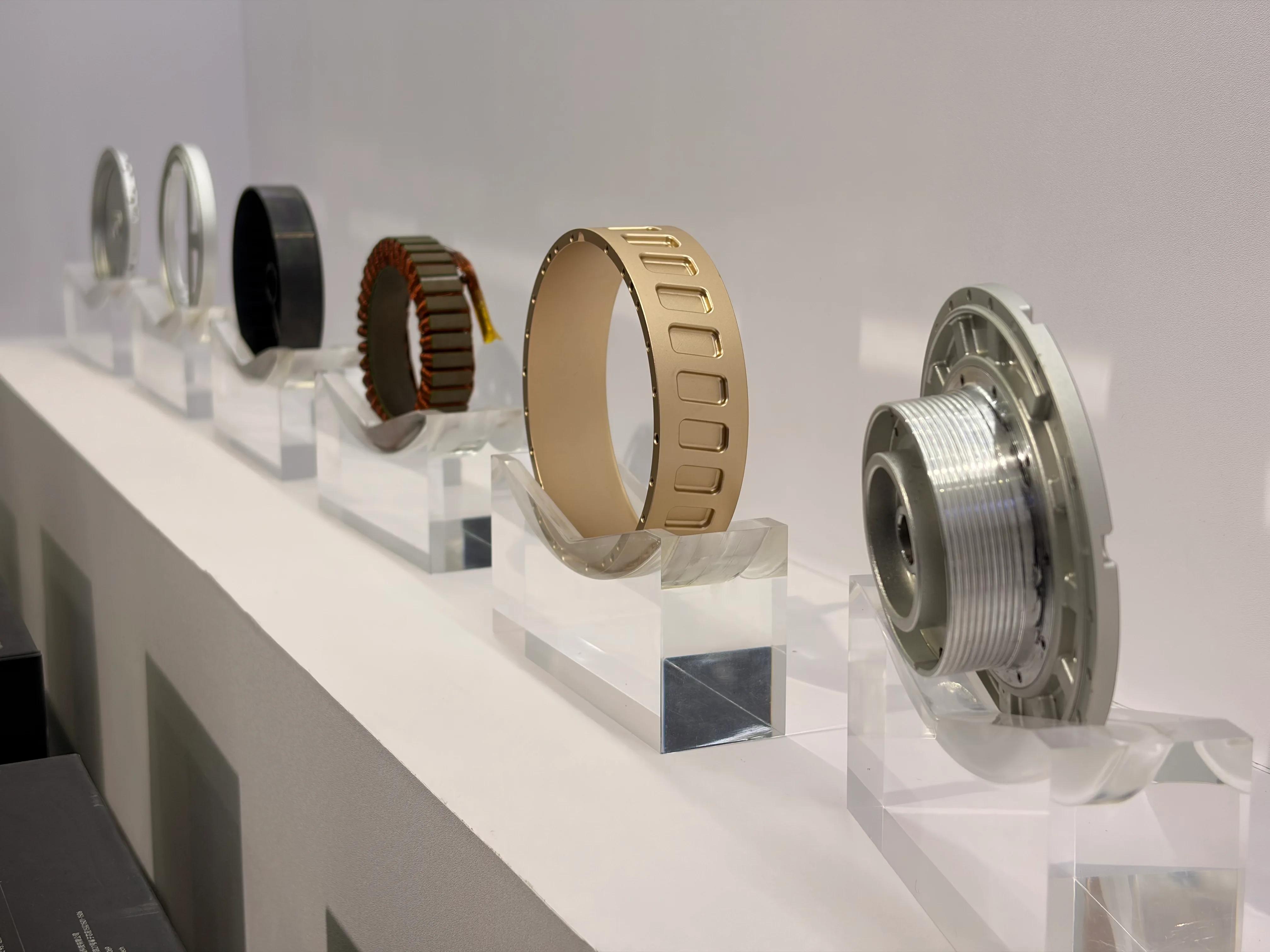
Image source: Lei Technology
In the view of Lei Technology, the emergence of these booths is more noteworthy than the products they display. Over the past decade, the industrial robot industry has always followed the "complete machine" logic. But this batch of suppliers that have come to the forefront this year focus on "dismantling robots into separate modules":
Paxini develops tactile sensors, Lingxin Qiaoshou dexterous hands, Wolong Electric Drive motors, and Luoyang Hongyuan joint bearings — these are no longer exclusive parts for a specific robot, but "standard parts" that can be used by all robots. Complete machine manufacturers no longer need to manufacture joints from scratch, and startup companies do not need to build an entire supply chain just to produce a prototype; they can directly assemble whatever modules they need.
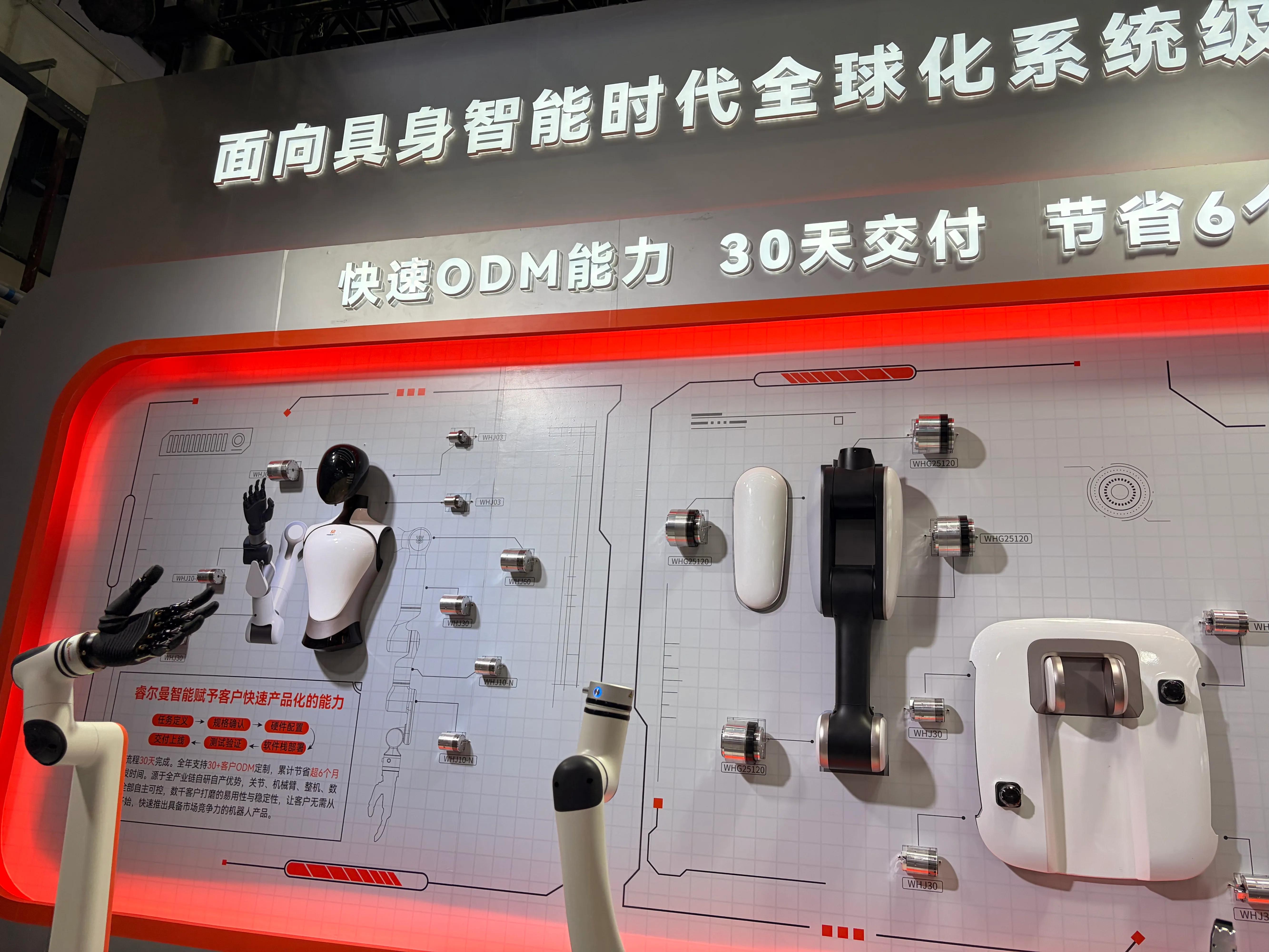
Image source: Lei Technology
This DIY-style change has a far greater impact on the industry than it seems. On the one hand, it has greatly lowered the threshold for robot manufacturing: in the past, to build a functional robot, you had to form a team that mastered motor technology, control systems and robot ontology design; now that the modules are mature, factories only need to "purchase modules, complete integration, and run test scenarios".
On the other hand, it also provides an opportunity for the domestic robot industry to achieve overtaking — brands do not need to compete head-on with overseas brands such as ABB, and as long as they take the lead in module performance, they also have the opportunity to prove their strength on the global stage.
Working Scenarios Are No Longer Limited to Factories
In addition, there is another interesting point at this WRC: industrial robots are stepping out of the traditional "factories" and moving to places where large robots could not be used in the past.
For example, in the past, only high-end and large manufacturing enterprises such as automobile factories would use industrial robots, because only these factories had sufficient capital, space and production volume to support the high cost of industrial robots.
As for those "fragmented and non-standard" tasks such as power inspection, mine handling, hazardous chemical workshop operation and warehouse sorting, for a long time they could only be completed manually, with at most a few drones for assistance, and industrial robots were never in the selection list of enterprises.
However, at this year's WRC, these "tough jobs" have become the most natural test scenarios for embodied intelligence. The sorting robotic arm from Starry Age continuously grabs disordered stacked express packages into the compartment at the exhibition booth; U-Cloud Intelligence starts to use quadruped robots for outdoor inspection. More and more industrial robots are being applied in places beyond factories, serving users from a brand new perspective.
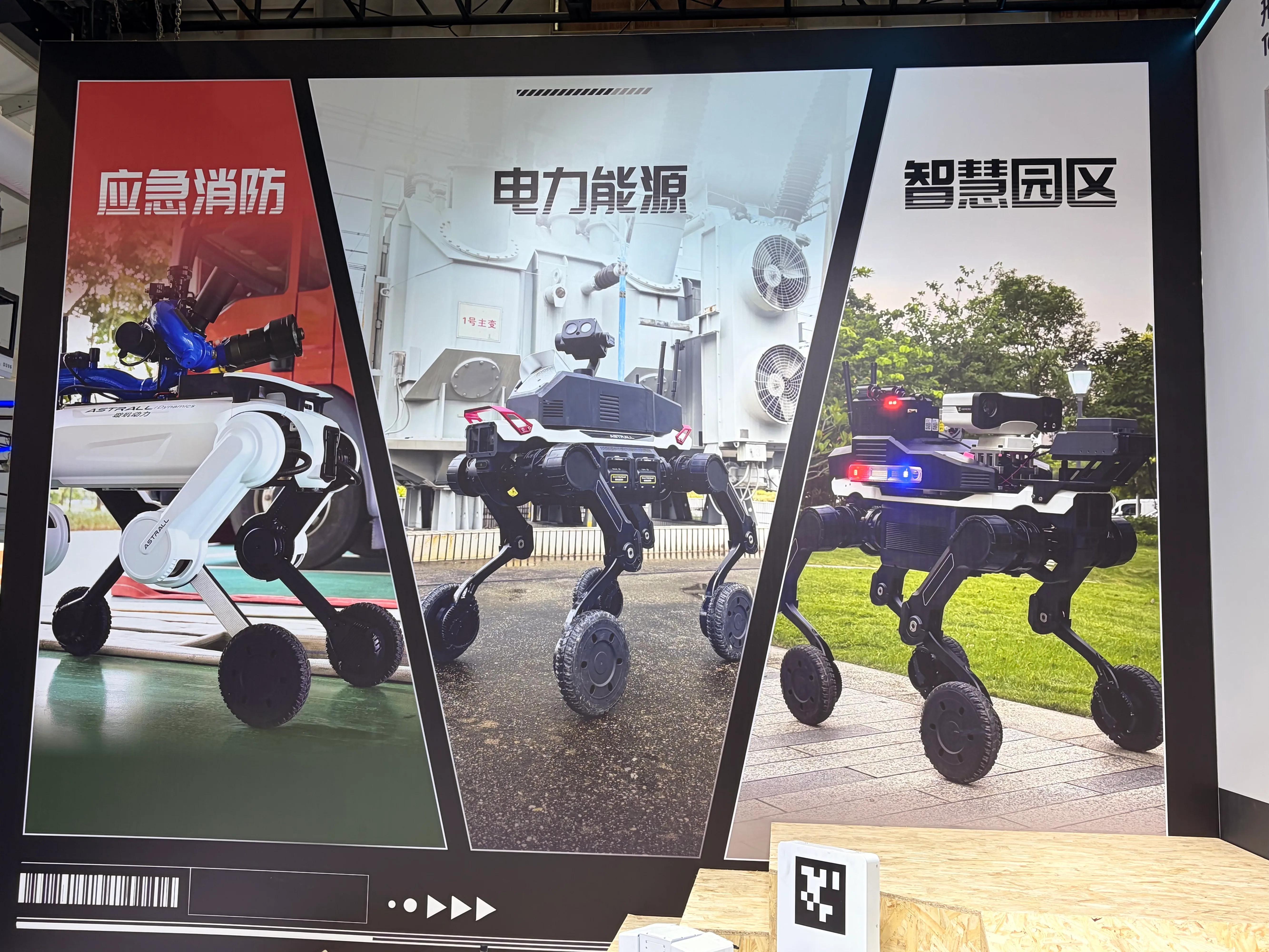
Image source: Lei Technology
Embodied Intelligence Reshapes the Industrial Robot Industry
In fact, in the view of Lei Technology, there is a very contrasting phenomenon at every WRC: the humanoid robots always attract the most attention, but the robots that have been "tightening screws" in factories one step earlier are those low-profile robotic arms, quadruped robots or more industry-customized robots.
However, at this year's WRC, the industrial robot industry has finally found its own breakthrough point: embodied intelligence endows industrial robots with "brains", modularization allows industrial robots to be "customized" according to actual conditions, and serves scenarios outside factories with lower technical thresholds.
In the view of Lei Technology, these three changes also mark that the industrial robot industry has reached the stage of industrial transformation. It is certain that future industrial robots will definitely move to richer front-line scenarios with lower usage thresholds, even break away from the traditional stereotype of "industrial manufacturing", and enter non-industrial scenarios in advance before humanoid embodied intelligence matures.
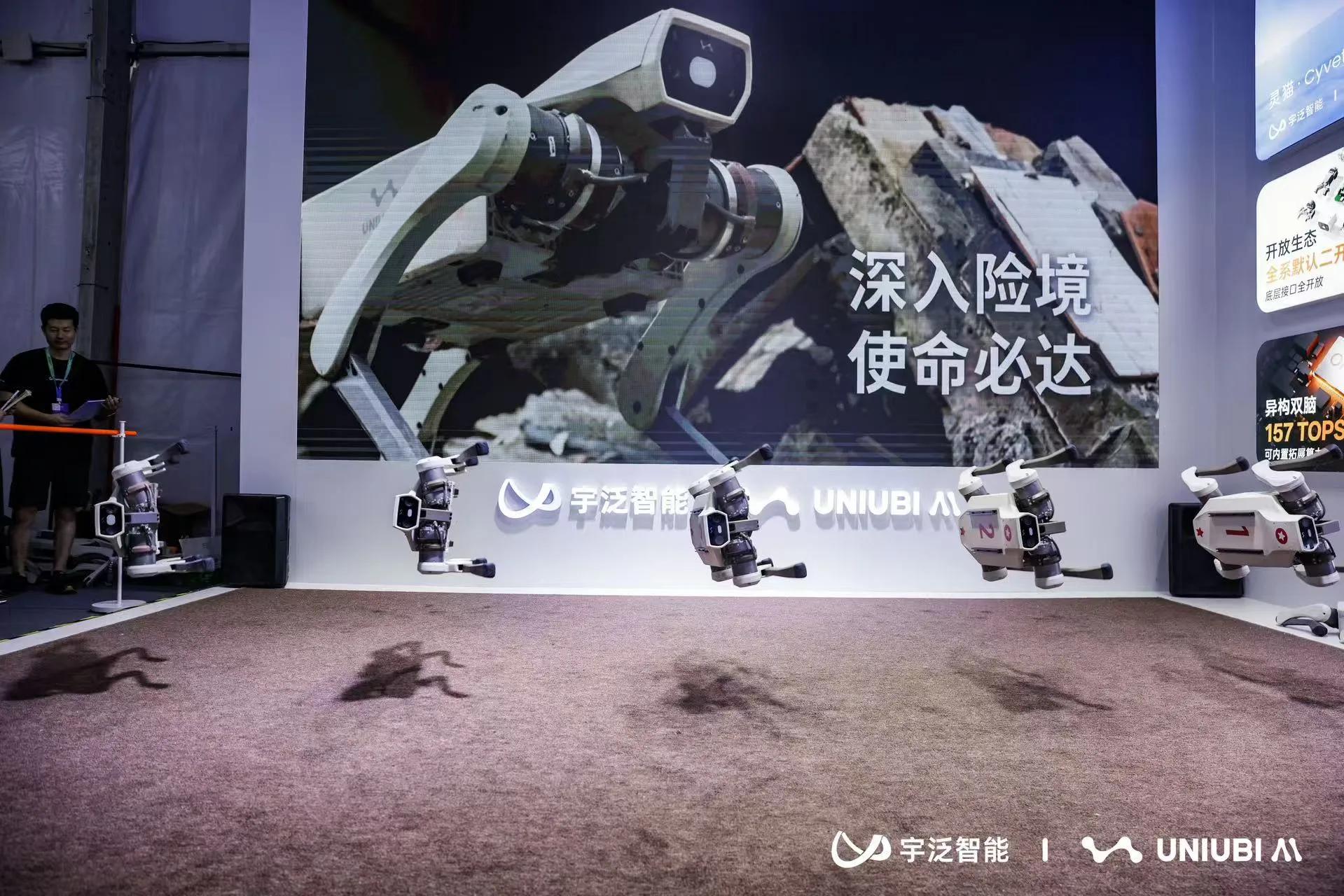
Image source: U-Cloud Intelligence
Of course, it is not difficult to bring robots out of factories, but allowing robots to maintain the same accuracy and efficiency in the complex "open world" as they do in factories poses huge technical challenges. Different from the fully controllable factory environment, real scenarios are full of uncertainties: light changes caused by sun exposure may affect the visual perception ability of robots, outdoor dust and rain may also interfere with the grasping performance of robots, not to mention restrictive conditions such as energy consumption, noise and limited activity space.
But just as Lei Technology has always said, challenges mean opportunities: allowing industrial robots to enter non-industrial scenarios actually provides an overtaking opportunity for the domestic robot industry. After all, compared with overseas brands, domestic enterprises have a better understanding of the usage habits and scenarios of domestic customers, and the huge domestic manufacturing ecosystem also provides these brands with the best "practice" opportunities.
Back to the sentence at the beginning, the core topic of this WRC is "getting robots out of PPTs and onto the front lines". Judging from this year's exhibition booths, this is no longer just a slogan. Compared with the uniform performances and demonstrations in previous years, we have finally seen the "real working equipment" that can be used on the "production front line" at this year's WRC.
However, judging from the trends of various brands, the second half of the industrial robot transformation has just begun, and there are still many detailed problems to be solved in the robot industry. But all beginnings are hard. The domestic humanoid robot industry has been able to catch up with or even lead overseas peers in just a few years, so for the larger-scale and larger-market Chinese industrial robot industry, it is only a matter of time to get through this development path.
This article is from Lei Technology, authorized for release by 36Kr.