Shocking, OpenAI has fully open-sourced Codex Harness
Just yesterday, OpenAI rolled out another major upgrade.
This is not a brand new model release, but its impact on developers even exceeds the iteration of the model itself.
OpenAI officially announced that it will fully open-source the famous underlying core framework of Codex, Harness, as a platform!
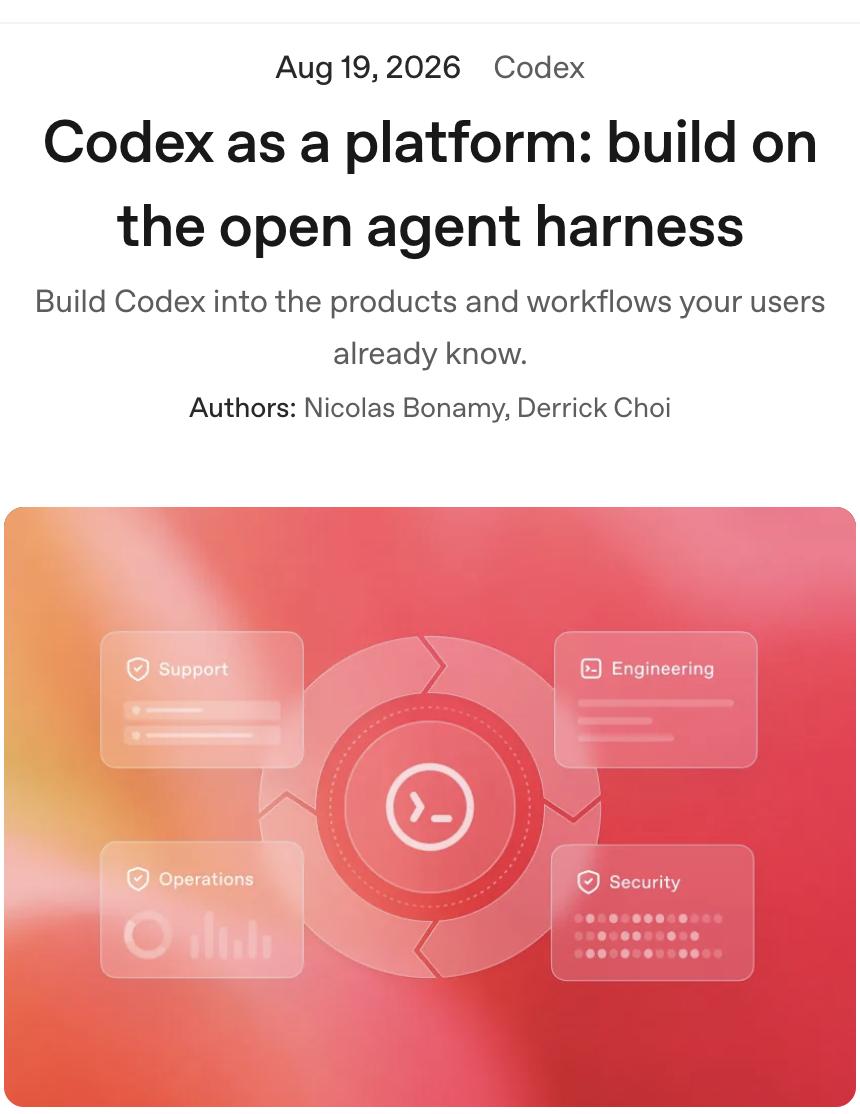
In other words, OpenAI is giving away the "engine" that powers its top-tier AI agents to everyone for free.
Developers no longer need to force their business workflows into a generic chat box!
You can seamlessly embed the most powerful AI agent loop directly into your own products, engineering tools, operation dashboards, and even the most tedious financial reporting software.
Greg Brockman, President of OpenAI, excitedly reposted on X saying: 「Codex can power far more than programming tools!」
You can build your own products directly on Codex Harness.
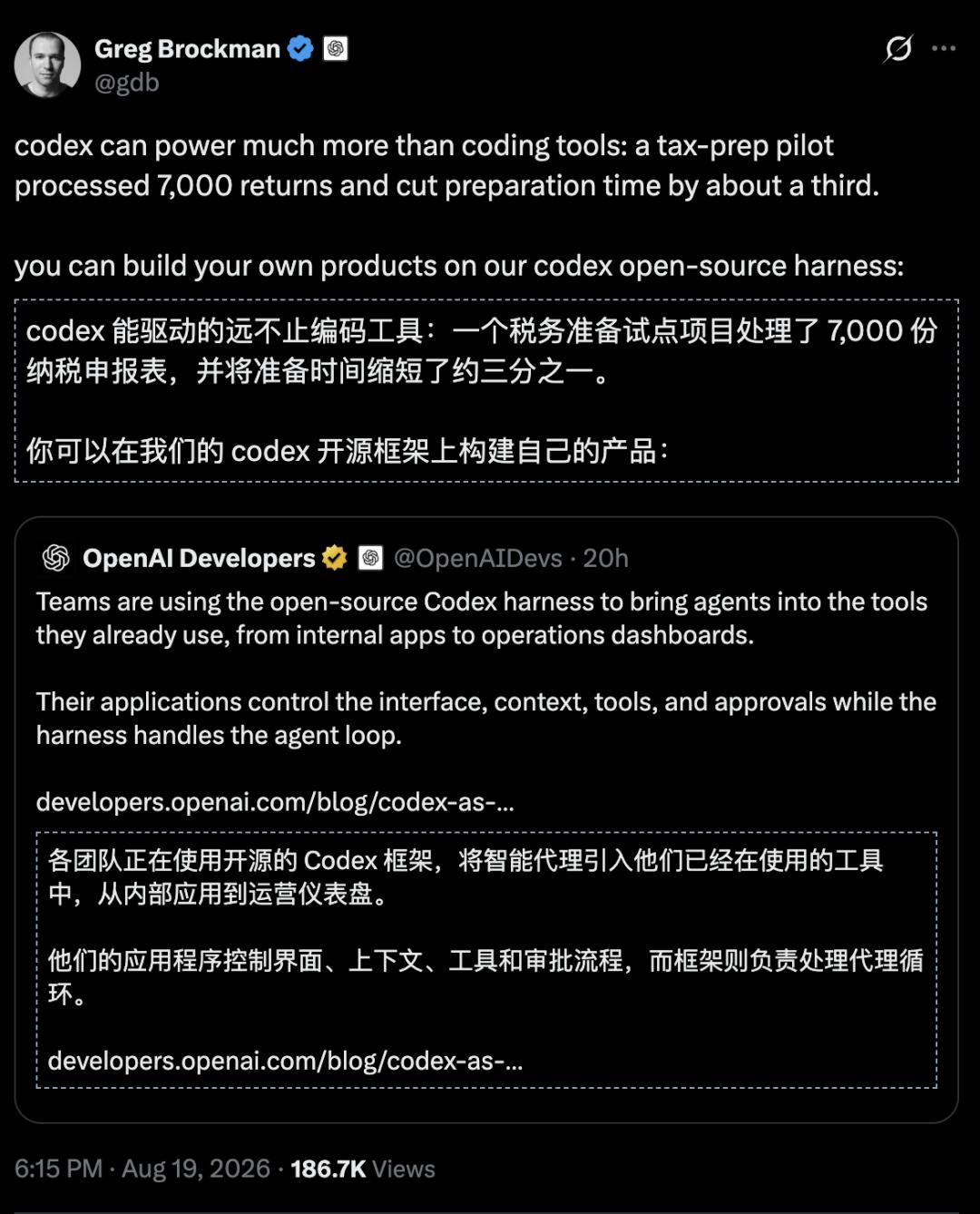
From now on, you are in full control of your own domain: the interface, data, permission approvals all belong to you, and AI only works tirelessly at the underlying layer.
How will this major open-source move from OpenAI completely subvert the future paradigm of software development?
The industry has long been fed up with the "generic chat box"
Think back, how do we use AI right now?
No matter you are writing code, doing data analysis, or handling customer complaints, the standard workflow seems to be: open a web page / sidebar, face a monotonous chat input box, type a paragraph of background description, and then expect AI to give a perfect answer.
If the answer is not correct, you will keep "tugging back and forth" in the chat box.
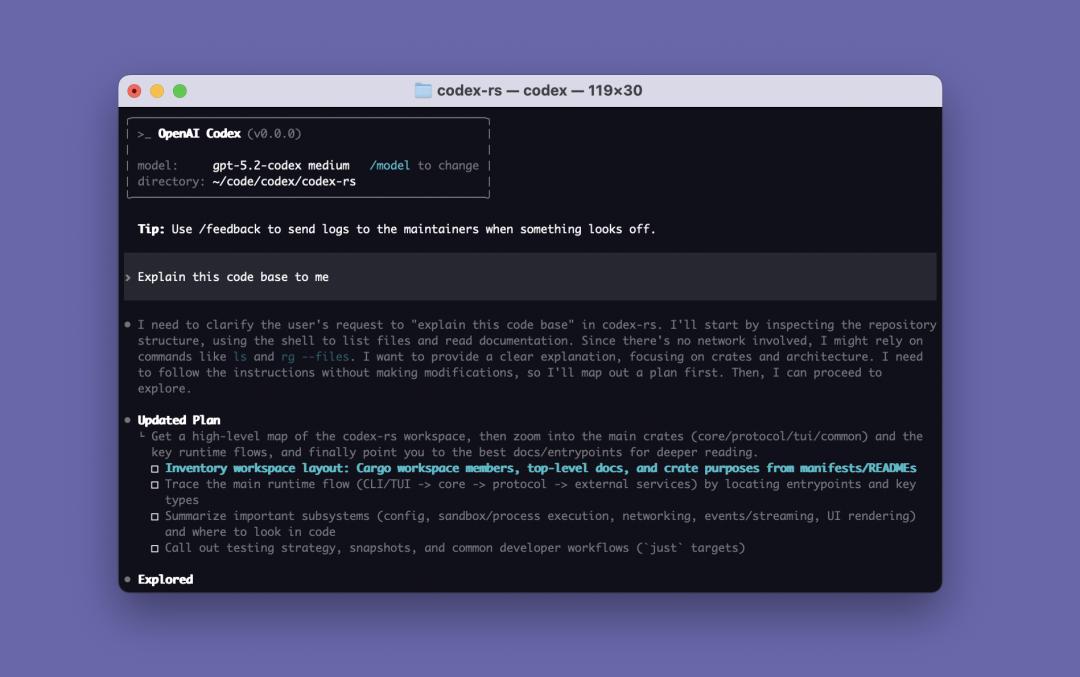
Most people know Codex through apps, command-line interfaces (CLI) or IDE extensions.
But in OpenAI's view, this single interaction experience is far too narrow!
OpenAI pointed out sharply in its official blog:
Rather than requiring every team to forcibly move their familiar workflows to a generic code assistant, it is better to bring agents directly into the software designed around actual work.
After all, security analysts face alert queues and affected service status; customer service engineers face account history and product logs; product managers face requirement dashboards.
For these real frontline workers, what matters is not the "chat box", but the business dashboard in front of them. The existence of the interface is meaningful, and it itself is the most critical "context".
Now, with the open-sourcing of Codex Harness, this "anti-shell-wrapping" revolution has officially kicked off.
Unveiling Harness: The "Strongest Exoskeleton" for AI Agents
So, what exactly is Harness, the protagonist of this open source release?
Many people mistakenly believe that a powerful AI agent = good model + good prompt.
That is completely wrong!
An agent that can actually run in business scenarios requires an extremely complex underlying execution system.
It needs to understand tasks, maintain memory across long conversations, review relevant information, skillfully call various tools, display progress externally, handle crashes and failures, pause at critical moments to request human approval, and finally return useful results.
This "execution system" and "agent loop" that takes care of all the tedious and heavy work is exactly Harness.
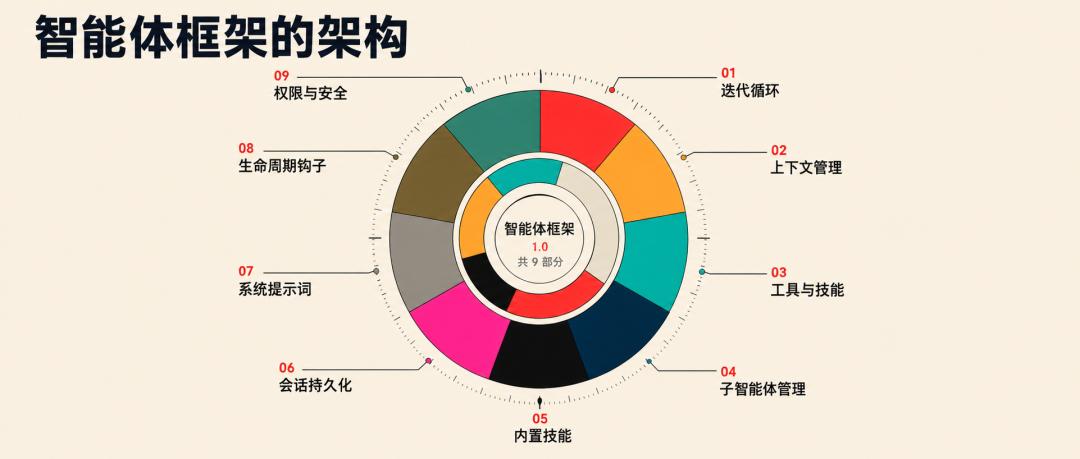
With this open source release, OpenAI has proved one thing to the outside world: A well-designed Harness can even make the model perform at a completely different level.
OpenAI released very convincing data to prove how critical the design of Harness is.
In the extremely difficult ARC-AGI-3 benchmark test, they only made two key adjustments to Harness: retaining reasoning and compressing context.
As a result, the score of the GPT-5.6 Sol model skyrocketed from 13.3% to 38.3% instantly! Even more surprisingly, the number of output tokens was reduced by six times!
In other words, with the support of Harness, AI has not only become three times smarter, but also saved you a huge amount of API call costs.
Facts have proved that while model capability is important, how to manage the model, that is the design of Harness, is the key that determines the final performance of the agent.
Three Open Source Components for Zero-threshold Integration
To enable developers to truly "use it out of the box", OpenAI has released three complete open source components under the Apache-2.0 license in one go.
You can unlock this powerful arsenal by accessing the openai/codex repository on GitHub.
https://github.com/openai/codex
The first one is the CLI tool codex exec, which can run automated pipelines.
If you only need AI to run a script, execute a CI (Continuous Integration) task, or run a one-off background task, just use the CLI directly.
It can run a bounded agent workflow and return structured output results. It is simple, straightforward and highly efficient.
The second one is the official Codex SDK, which is the ultimate control lever for programmers.
If you are writing an application and need to start, resume or stream Codex tasks with code, the official SDK (supporting TypeScript / Python) provides a direct programmatic interface.
You can precisely control the lifecycle of threads and tasks with code.
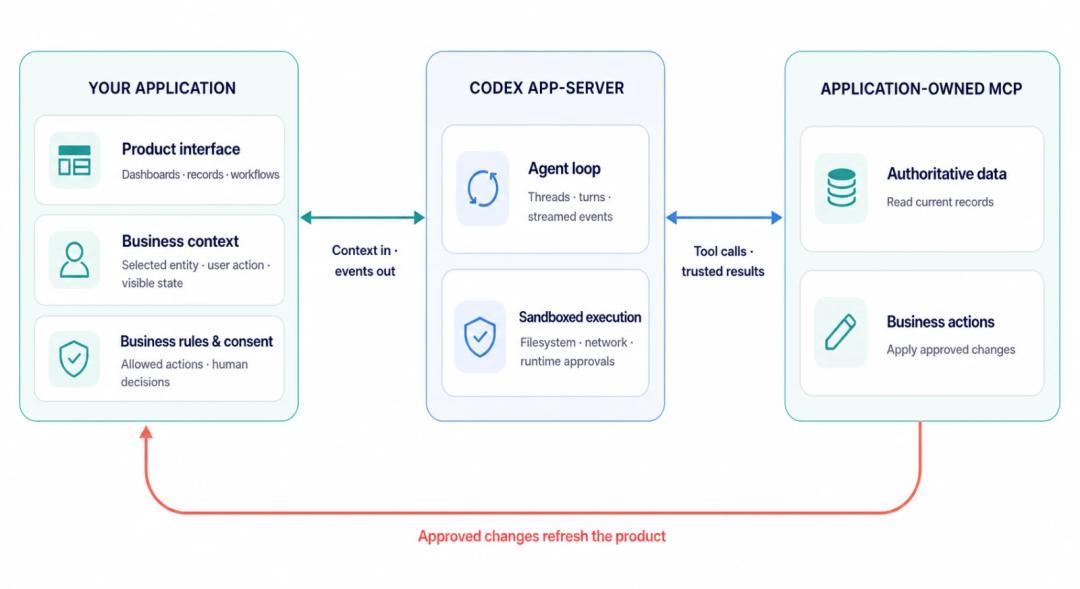
The third, and the most dazzling star in this open source release, is Codex app-server. It is the core engine that can be fully integrated into products.
When the agent needs to become part of your product, app-server is the best choice. By recording detailed client protocols (JSON-RPC), it allows your application to connect to the local Codex process.
You can use it to:
Maintain persistent conversation state;
Stream events (see what AI is doing in real time);
Interrupt AI's work midway;
Expose the tools of your own application to AI for use;
Process human approval requests (Human-in-the-loop).
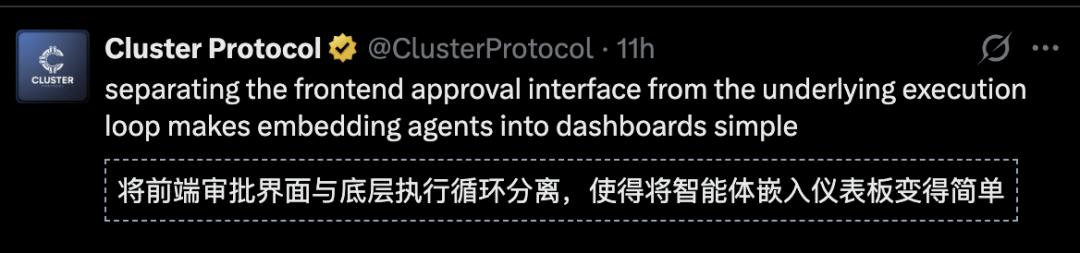
As the well-known developer @ClusterProtocol exclaimed:
Separating the front-end approval interface from the underlying execution loop makes embedding agents into business dashboards easier than ever before!
Far more than coding! The "Nuclear Efficiency Boost Weapon" for all walks of life
If you think Codex is only used for writing code, you are making a big mistake.
As Brockman said, Codex can power far more than programming tools.
Let's take a look at what miracles those first groups of early adopters are creating with it:
Case 1: "God-tier Assistant" for Tax Declaration
Can you imagine AI filing tax returns? The financial work has an extremely low fault tolerance rate, and people fear making mistakes most.
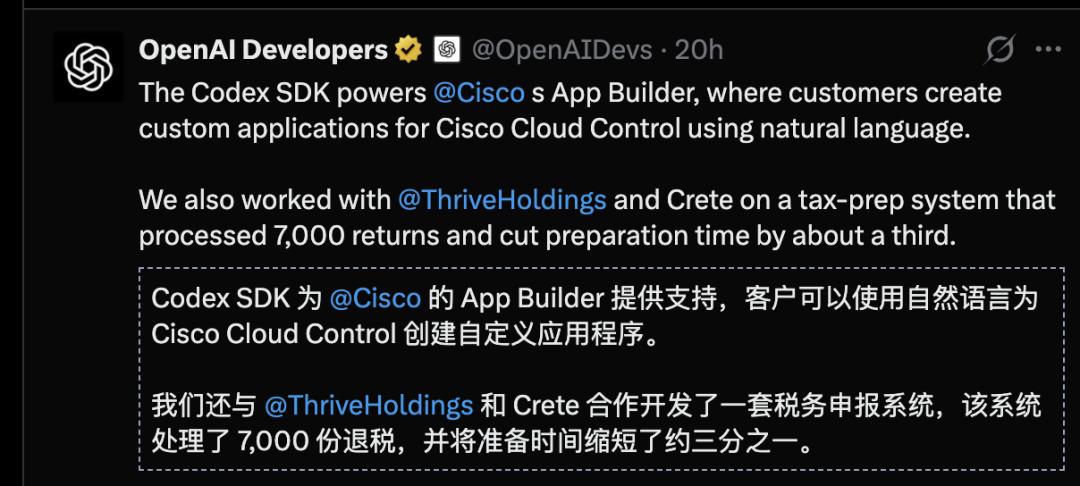
Partners Thrive Holdings and Crete used this open source Harness and embedded it into their professional tax preparation workflow.
The system can not only handle complex tax logic, but also perfectly integrate the feedback from tax consultants.
The result is very impressive: this pilot project successfully processed as many as 7,000 declaration forms, and shortened the tax preparation time by roughly one third!
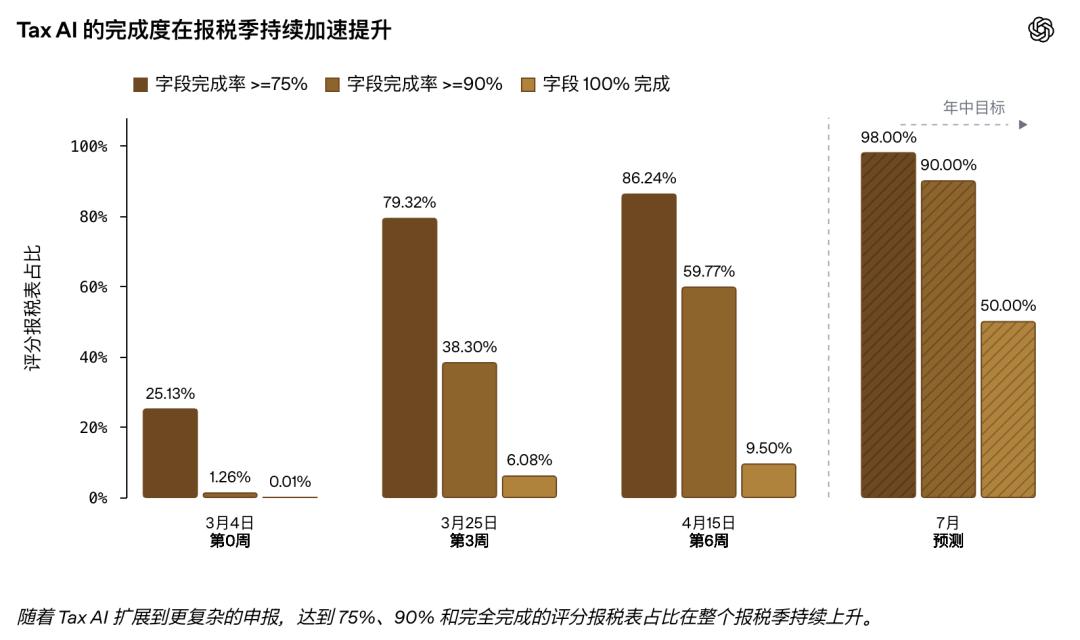
This is the huge power of embedding AI into vertical professional tools.
Case 2: The Cloud Steward for Tech Giant Cisco
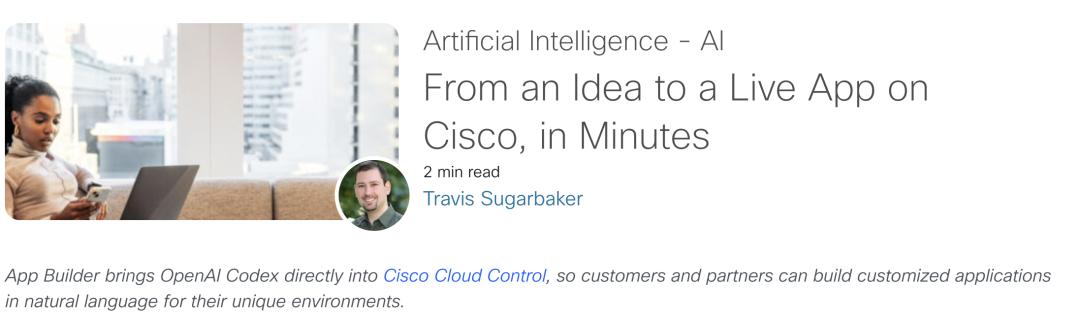
Tech giant Cisco used the Codex SDK to build App Builder within its cloud control platform.
Now Cisco's customers can directly use natural language to create custom applications, while all the complex underlying logic flow is handled silently by Codex Harness in the background.
Official Demo Template: Logistics Dashboard "Relay"
To help everyone understand more intuitively, OpenAI officially demonstrated a virtual logistics operation dashboard application named Relay.
In this dashboard, there is no out-of-place "ChatGPT chat box" at all.
1. Huge Interaction Change: Users do not need to write prompts from scratch. They only need to select a delayed waybill and click "Compare Recovery Plans".
2. Seamless Context Connection: The application will automatically feed the waybill details and logistics data on the current interface to AI as context.
3. MCP Integration: Codex will automatically call the application's own MCP tools to obtain the latest real-time operation data.
4. Human Gatekeeping: After the agent analyzes the optimal re-booking solution, an approval box must pop up. AI will not perform writing operations until the business staff clicks "Agree".
5. Status Synchronization: After the operation is completed, the business dashboard refreshes automatically.
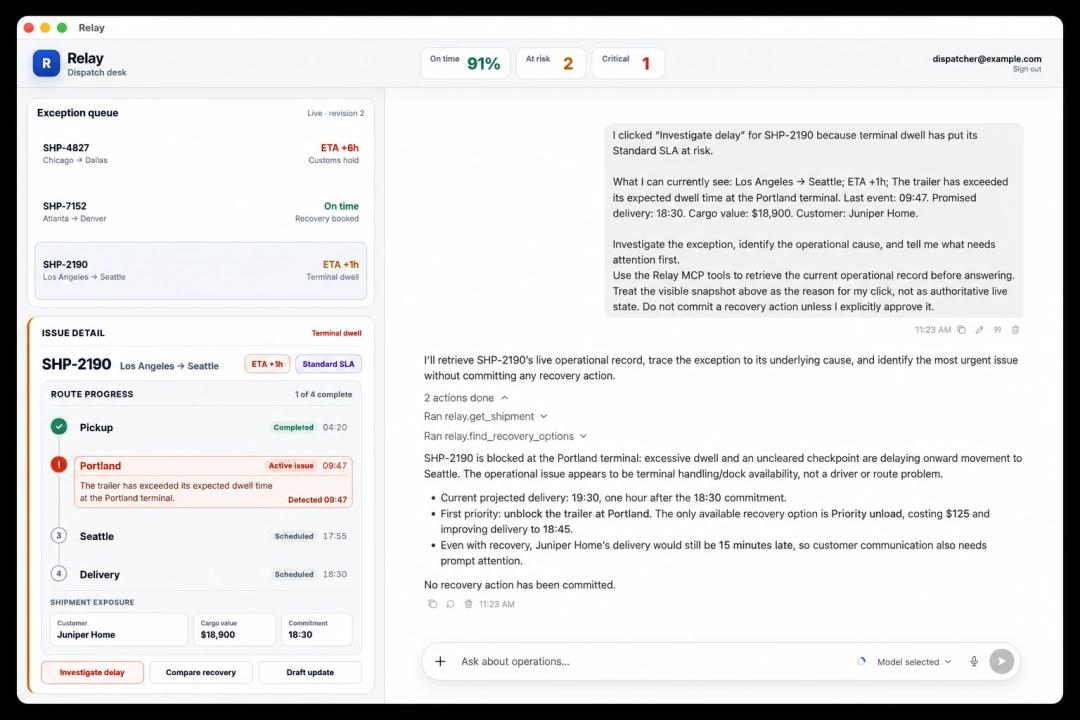
In this process, Harness takes charge of the agent loop, memory maintenance, tool interaction and real-time feedback; while your product still keeps full control over its own dashboard, data records and permissions. This is the real "human-machine collaboration".
Redefine Boundaries, Return Power and Soul to Application Developers
Why do we say this open source release has changed the paradigm of software construction?
Because in the past year, many developers have fallen into the weird cycle of "shell wrapping". Everyone is developing chatbots, products are becoming more and more similar, and the moat is getting shallower and shallower.
The opening of Codex as a platform gives developers three dimensions of "highest control":
Codex gives users absolute control over the interface, and you no longer need to force users to adapt to the chat box!
Let your users continue to use their familiar dashboards, editors, maps and lists. AI should be an invisible helper, not a protagonist that occupies the entire screen.
Absolute control over context and tools allows you to safely open the company's most core systems, confidential documents and internal APIs directly to the agent through MCP services.
AI is no longer an outsider who "does not know the company's rules and regulations", but an expert who is fully proficient in your business system.
Finally, the absolute control over operation boundaries and security is critical for enterprise-level applications. The host application can decide where the agent runs and which files it can access.
Most importantly, you can set which dangerous actions (such as modifying the database, sending emails to customers) must be approved by human clicks before execution.
This mode of "front-end business rules belong to you, underlying agent loops belong to OpenAI" has completely cleared the last mile for AI to land in enterprise-level scenarios.
The Apache-2.0 license of Codex Harness means that anyone can modify it and use it for commercial purposes.
The real test is: how many developers will give up the comfortable chat box, and disassemble the agent into components to embed into their own products.
Behind Codex Harness, this product philosophy is deeply reflected —
What we want to do is by no means to eliminate all professional interfaces with a universal chat box, but to install a smart brain for these interfaces.
When generic chat boxes disappear, native AI applications will flourish.
The zero-threshold era of AI agents has arrived.
References:
https://x.com/gdb/status/2090246288478814281?s=20https://developers.openai.com/blog/codex-as-a-platform