Three star products nicknamed "The Three Musketeers" have emerged in the AI wearable market, but why are they glasses, rings and pendants?
In the past few years, AI wearable hardware has been tested on almost every part of our bodies, from wrists and ears to chests. The latest report on the consumer wearable market released by market research firm Counterpoint predicts that the cumulative global revenue of consumer wearable products will exceed 1 trillion US dollars from 2026 to 2032.
Among them, smart glasses, smart rings and smart pendants will be the fastest-growing categories, with their cumulative revenue over the seven-year period expected to reach 168 billion, 44 billion and 24 billion US dollars respectively.
Rapid growth does not mean the products are already mature. Smart glasses account for more than 70% of the three categories' projected total revenue, smart rings have just entered the stage of millions of units in annual shipments, while smart pendants lack comparable public sales and user retention data. The common opportunity for the three products is that they are close enough to human vision, the body and the surrounding environment to continuously collect information that is difficult for mobile phones to gather.
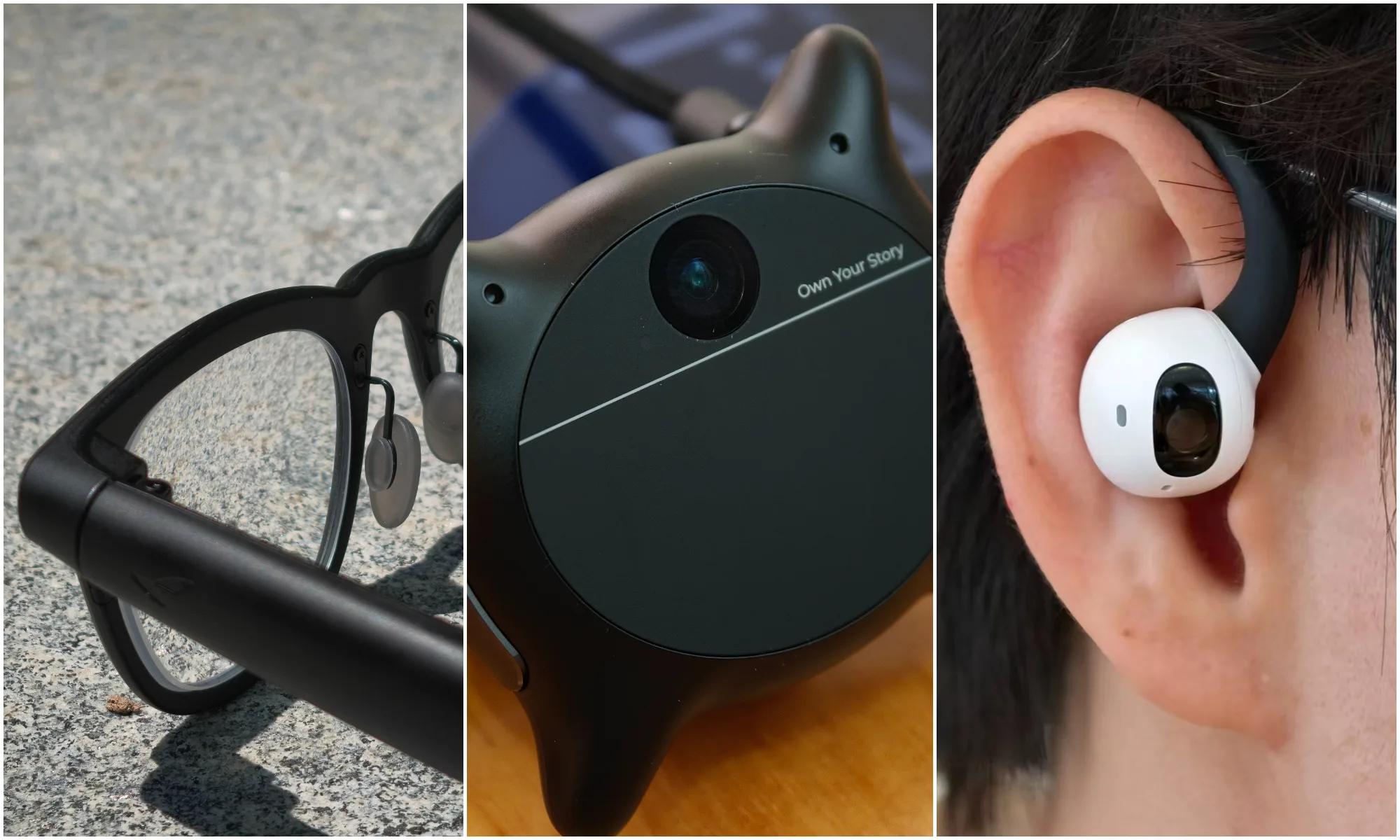
Figure / Leitech
The position on the body only creates opportunities, and cannot guarantee the success of the product.
In the past two or three years, Leitech (ID: leitech) has tested a large number of AI wearable products, including many smart glasses, smart rings and various chest-worn devices. The wearing position first determines what the device can see and hear, but there are three issues that all AI wearables have to face all the time:
Why do users need to wear it all the time, how the device gives feedback, and whether this usage can be accepted by the users themselves and people around them?
Capable of seeing, listening and displaying, AI glasses are the most promising to become personal portable terminals
Among the three categories of products, smart glasses have the largest market opportunities and the most diverse development paths. Their cameras are close to the user's line of sight, which can capture images from a nearly first-person perspective; their speakers are close to the ears, enabling open audio playback; the display function can present navigation, subtitles and translation results directly in front of users.
Of course, not every pair of smart glasses needs to integrate all these capabilities, so they are divided into multiple tracks, including but not limited to AI audio glasses, AI camera glasses, AI display glasses and all-in-one AI glasses.
As for other lightweight wearable devices, it is almost impossible to integrate visual input, voice interaction and instant display at the same time.
Mobile phones can also take photos, translate and navigate, but users need to take out the phone, unlock it, lift it up or look down first. Smart glasses can shorten this whole series of actions to a sentence, a tap or a glance, making input and output extremely close to the user. More practically, glasses are already daily necessities, so there is no need for AI to invent a new wearing position.
The wearing position of glasses is really ideal, which is also a point that other wearable products can hardly replace.
More importantly, glasses are already daily consumer goods. AI does not need to create a new wearing position, but only needs to be integrated into a pair of ordinary glasses.
However, the appearance of a daily necessity does not mean it already has the user experience of a daily necessity. Last year, editors of Leitech used RayNeo V3 as their primary pair of glasses, wearing it for nearly 18 hours a day for three consecutive months. That generation of products needed to be charged at least three times a day, and in the end they often had to be turned off, being used only as a heavier pair of ordinary glasses.
Even to ensure there is still power left when they need to take photos, in the later period they had to turn off the device actively most of the time, and go back to using AirPods for music playback.
But by 2026, the actual user experience of RayNeo V4 has extended the battery life to one charge per day, and the factory weight has been reduced to 38 grams. However, after being fitted with myopia lenses, the actual measured weight is still close to 49 grams, and there is still obvious wearing pressure after wearing it for eight or nine consecutive hours.
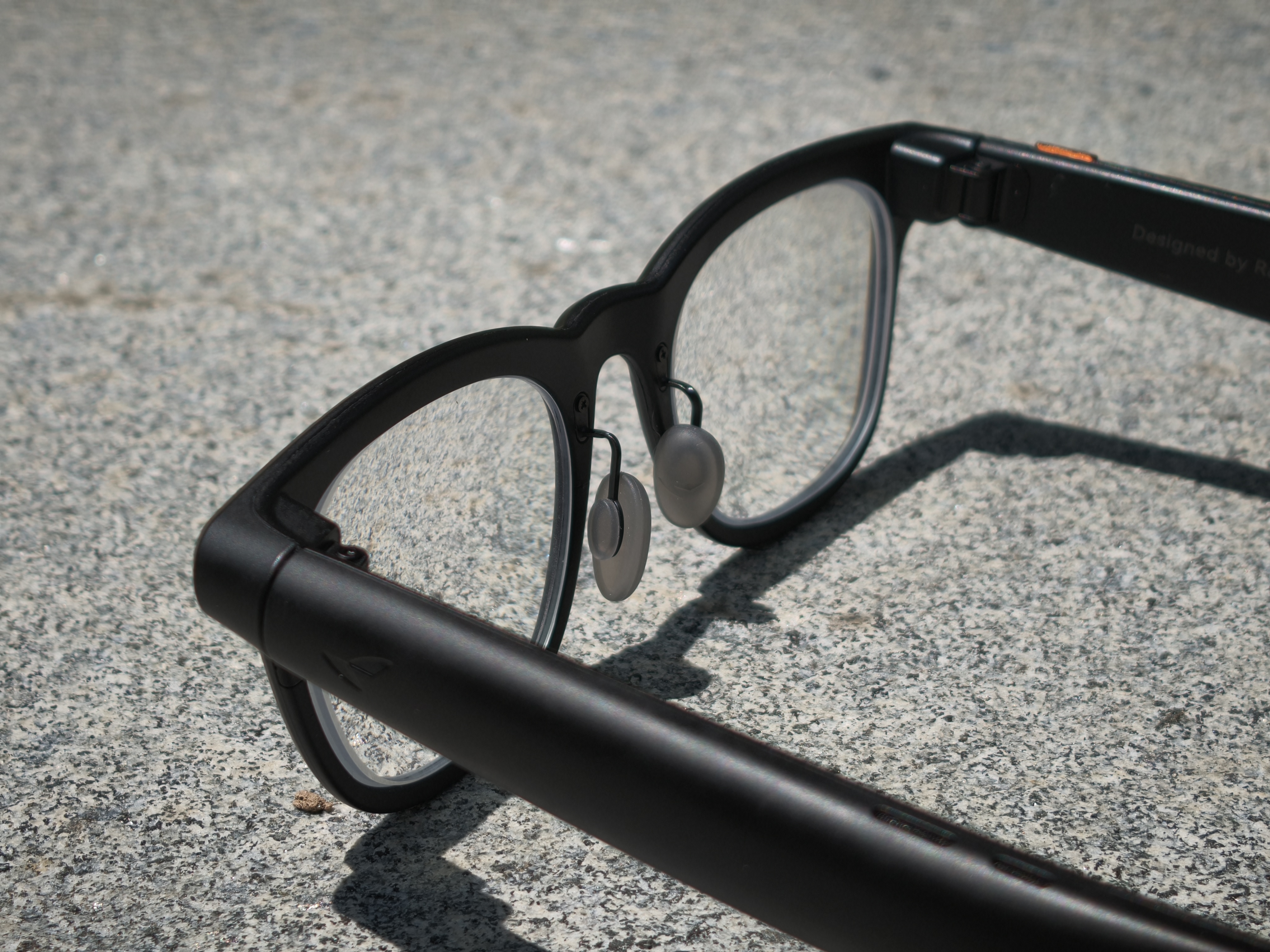
Figure / Leitech
After the battery life problem is alleviated, wearing burden, reliable wake-up performance, and timely and accurate response have begun to determine whether users will use AI functions repeatedly.
The Quark S1 with a display makes up for the shortcomings of pure voice interaction, but its 51-gram weight, customized lenses and offline optometry requirements have created new thresholds for users. The smart glasses' positional advantage is very complete, on the premise that it is still a pair of comfortable glasses to wear when powered off, and can stably complete tasks that are less natural to perform on mobile phones when powered on.
Both pursuing "unnoticeable wearing experience", smart rings and smart pendants develop in two completely different directions
Smart rings take a different path. They give up the screen and instant interaction, in exchange for lighter weight, longer battery life and lower sense of existence.
Fingers have rich blood flow signals, and smart rings are lighter than smart watches, making them more suitable for wearing during sleep. They cannot reply to messages or display navigation, but long-term wearing can continuously collect baseline data of resting heart rate, skin temperature, sleep status and recovery level.
The RingConn Gen 3 that Leitech tested before weighs only 3.4 grams, can last for nearly a week on a single charge even with sleep apnea monitoring enabled, and can also capture data during daytime naps.
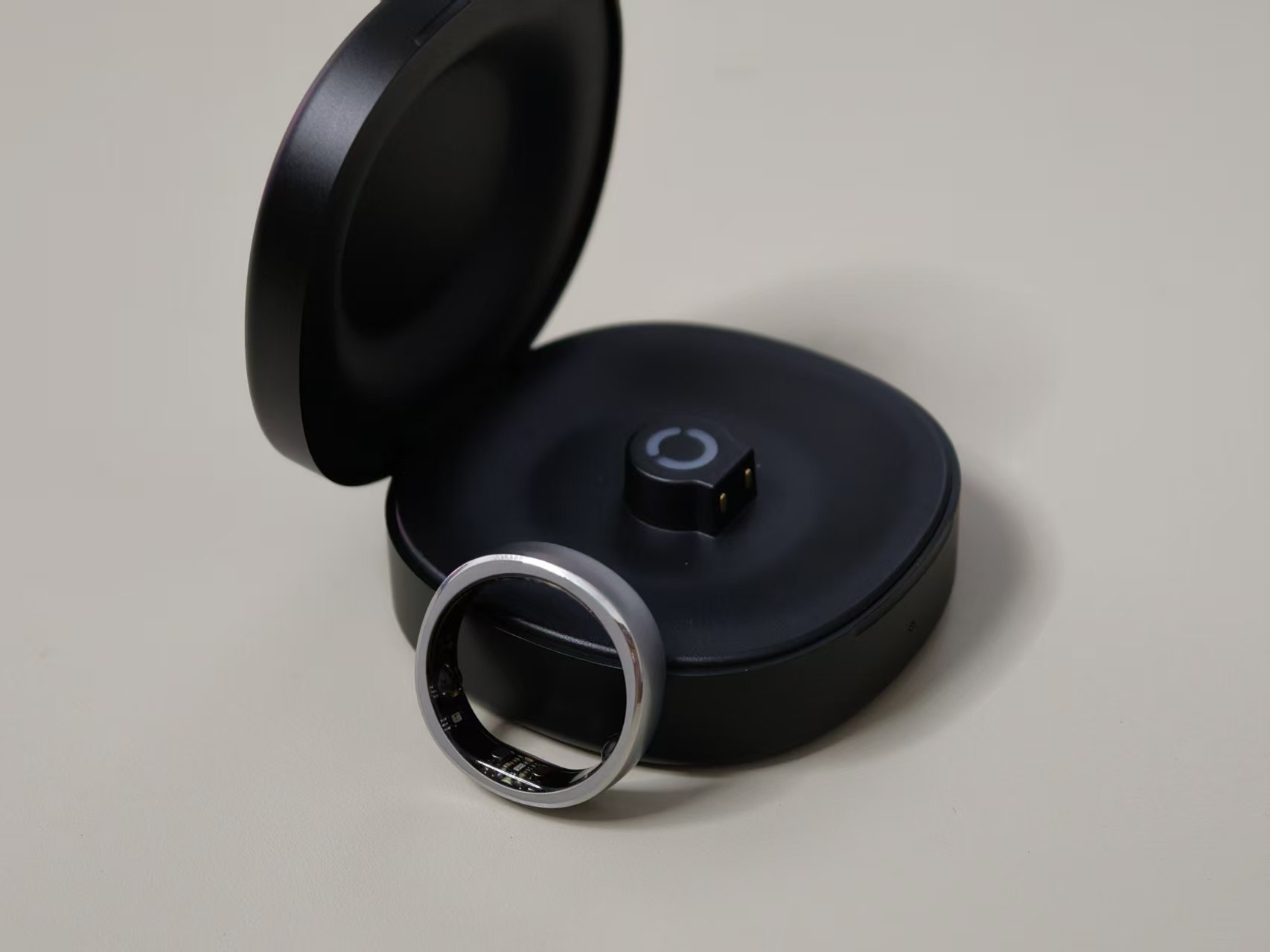
Figure / Leitech
A study involving 107 research papers and about 100,000 participants shows that smart rings have achieved good results in heart rate and sleep recognition, but a large number of studies rely on closed algorithms, and there is a moderate to high risk of bias. In short, smart rings can indeed be used to monitor health changes, but obviously cannot provide completely accurate health data.
The unnoticeable wearing experience of smart rings helps users forget the device, while the unnoticeable wearing experience of smart pendants may make people around them also forget that they are being recorded.
Smart pendants also pursue a low sense of existence, but what they obtain is ambient sound. The chest position frees the user's hands, and audio consumes less power than video, which is easier to be transcribed and organized by AI models.
The Looki L1 that Leitech tested this year is strictly closer to a chest-worn camera, but it makes the advantages and disadvantages of the chest position very specific. The device can already organize daily memories and select video clips, but the chest perspective is not equal to the user's first-person perspective, and continuous recording will inevitably involve the privacy of other people around.
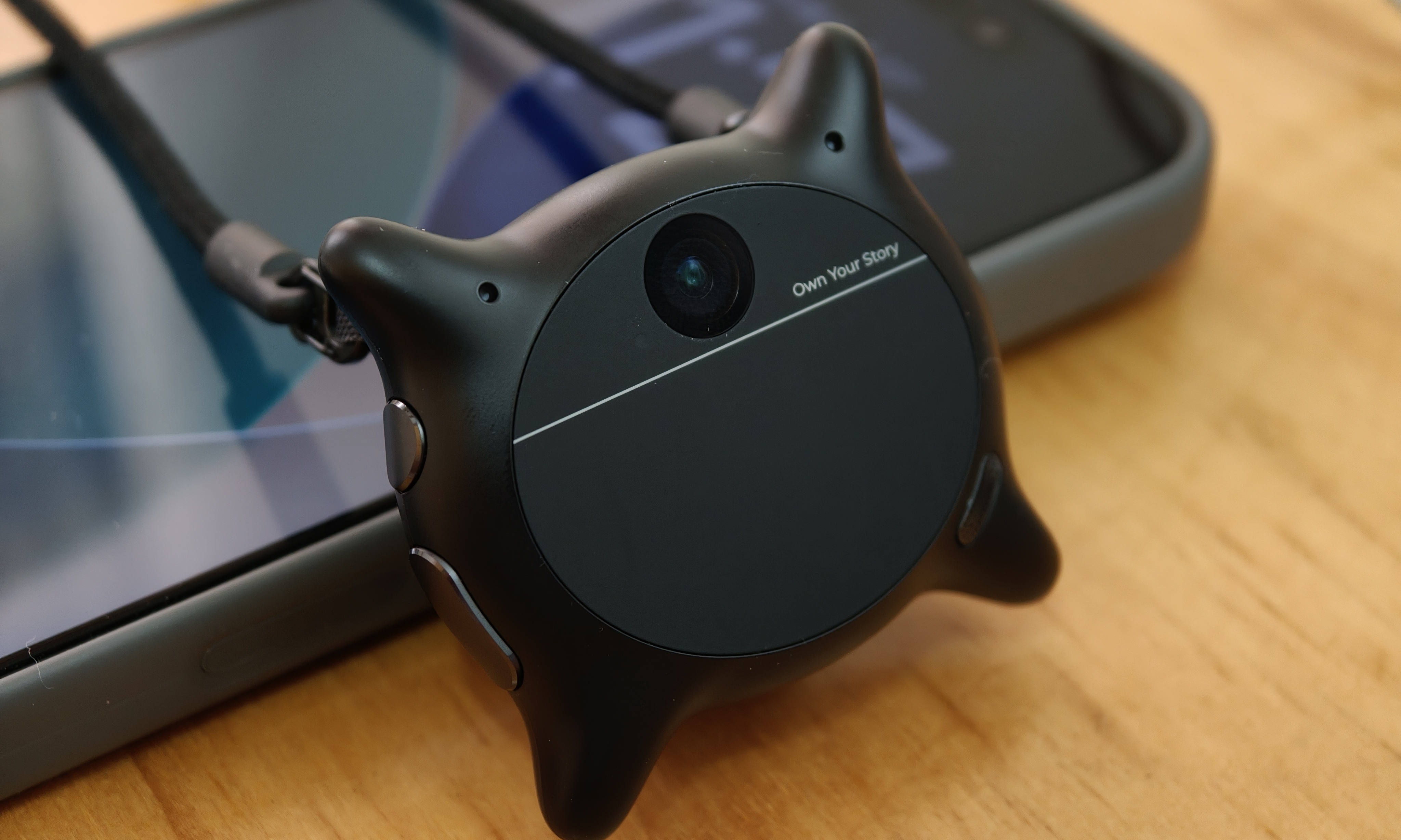
Figure / Leitech
As for magnetic detachment, connection disconnection and device locating, these are basic functions that this product has not done well yet.
If we only look at the recording function, smart pendants also have to face competition from mobile phones, earphones, voice recorders and lapel microphones. The chest position is easily affected by clothing friction and orientation, and the recording quality is not necessarily more balanced than that of desktop devices during meetings. The fact that smart pendants can move with users and record at any time proves the demand for ambient memory, but it does not prove that smart pendants are the best form:
Being close to information does provide more context for AI. But without a natural reason for wearing, direct feedback and sufficient social acceptance, the positional advantage may only stay on paper.
Wrists, ears and clothes: why haven't they become the core positions for AI wearables?
Watches and earphones are not unsuitable for AI functions. They already have a huge market base, so AI functions are more likely to be absorbed as functional upgrades, rather than growing into a completely new product category independently. The growth forecast of the three new product categories is also affected by their relatively low current market base.
Wrists are equipped with screens, batteries, payment functions and mature sales channels, but smart watches are already overloaded with functions, and the optical signals at the wrist are easily affected by movements and the tightness of wearing. Smart rings avoid head-on competition, and choose sleep monitoring, recovery tracking and low-interference health monitoring as their core scenarios.
Ears are the most direct competitors of smart glasses and smart pendants. Smart earphones already have inherent demand for music playback, calls and noise cancellation, and the sound output is more private.
The LightSail AI earphones that Leitech tested this year even added a camera and eSIM, trying to obtain the visual context that smart glasses have. However, the recognition accuracy, network speed, 115-gram charging case and mobile phone dependency also show that integrating all capabilities into earphones will easily make people lose the original lightweight advantage of earphones.
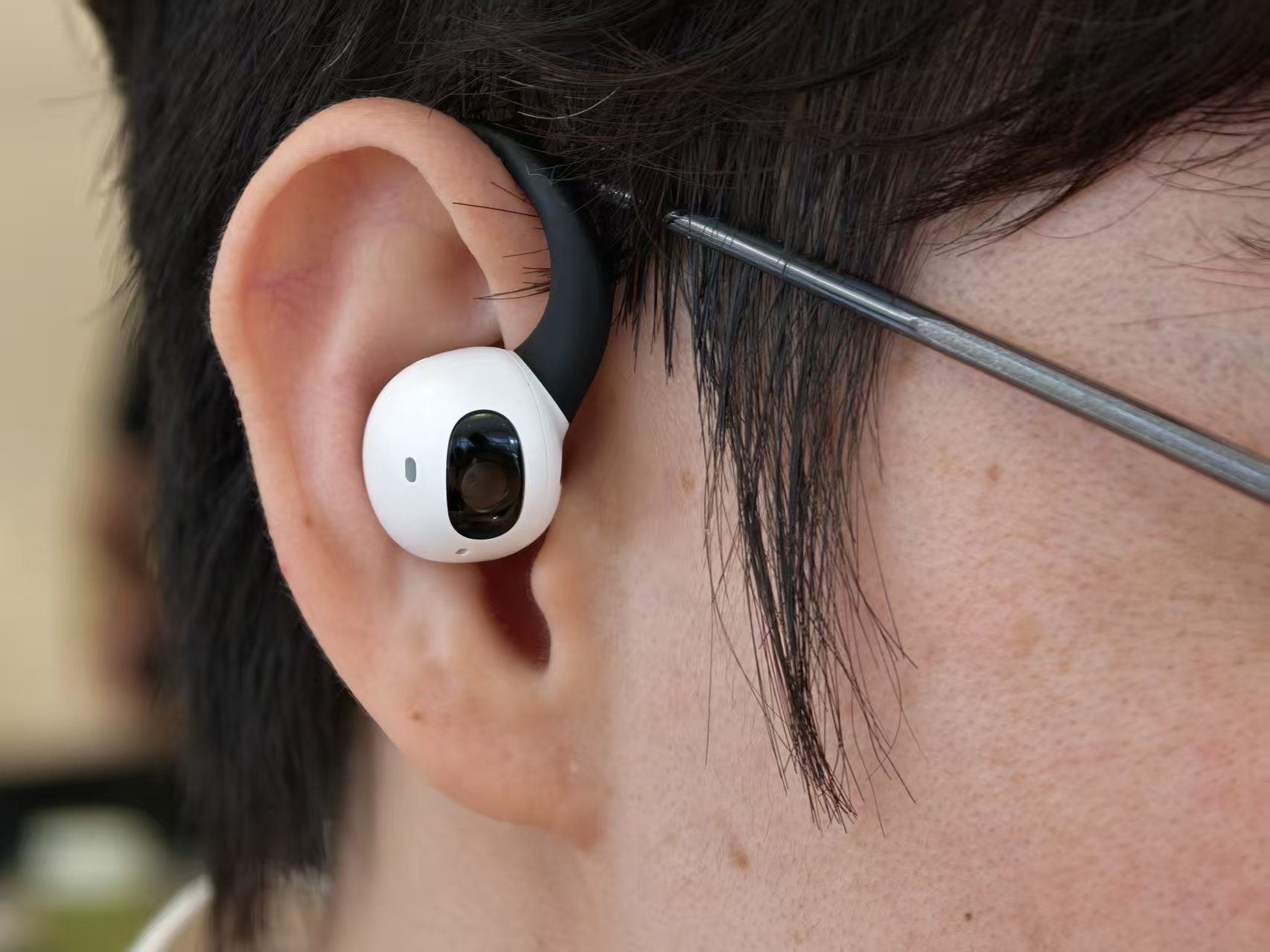
Figure / Leitech
Apple has also been repeatedly exposed to be developing AirPods with cameras to perceive the surrounding environment and provide visual information to Siri. This shows that the idea of obtaining the visual context owned by smart glasses from earphones is not just a concept from a single company.
This is also an advantage that more professional devices can hardly match. Chest straps and skin patches can obtain more stable physiological data, but they are more suitable for medical and professional scenarios, and also face problems such as consumables, skin irritation and compliance requirements. Smart clothing and footwear can capture full-body movement data, but they are inevitably restricted by sizes, sweat, cleaning and charging.
More sensors and more accurate data do not necessarily make products more suitable for ordinary users. The advantage of smart glasses and smart rings is that they integrate visual and physical data into objects that already have a daily identity. Smart pendants are also close to the appearance of daily accessories, but they collect the voices of people around, so they still need to re-explain why users should wear them.
What else is missing for AI wearables to be truly widely used by ordinary users?
Battery life is certainly important, but many problems encountered by AI wearable products cannot be solved only by the next generation of battery technology.
For smart glasses, the more difficult thing is to confirm whether the applications are worth using every day, and whether optometry services, lenses, face shape adaptation, after-sales support and offline trial experience can keep up. Products with cameras also need to clearly inform users when they are recording. It must first be a good pair of glasses, and then prove that AI is worth the extra weight, price and maintenance cost that users pay.
Smart rings need to solve the problems of data credibility, size adaptation and service value. Fingers change with temperature and movement, and choosing the wrong size will affect both wearing comfort and data quality. Whether users are willing to pay for a long time, and whether the algorithm can convert scores into actionable suggestions, are more practical than adding one more sensor.
Smart pendants need to prove that they are easier to use for recording than mobile phones, earphones and voice recorders, and also make people around clearly know when the recording starts, how to stop it, and where the data goes. They are more dependent on cloud services. Once the transcription, summarization and personal memory library services stop running, the hardware may immediately lose most of its value.
Smart glasses are competing for the entry of personal information, smart rings are accumulating health data, and smart pendants are exploring ambient memory. They get opportunities because they are close enough to people and information. But whether they can become mass-market products depends on the reasons for long-term wearing, effective feedback and sufficient social acceptance.
When the novelty of AI fades, why is this device still worth wearing on the body every day? To get more people to wear AI hardware, this is a very simple question that every manufacturer has to answer.