The era when robots go job-hunting may be just around the corner.
No one expected that this Qixi Festival, Chapingjun spent it with robots...

That's right, we traveled to Beijing again these days and visited this year's World Robot Conference (WRC).
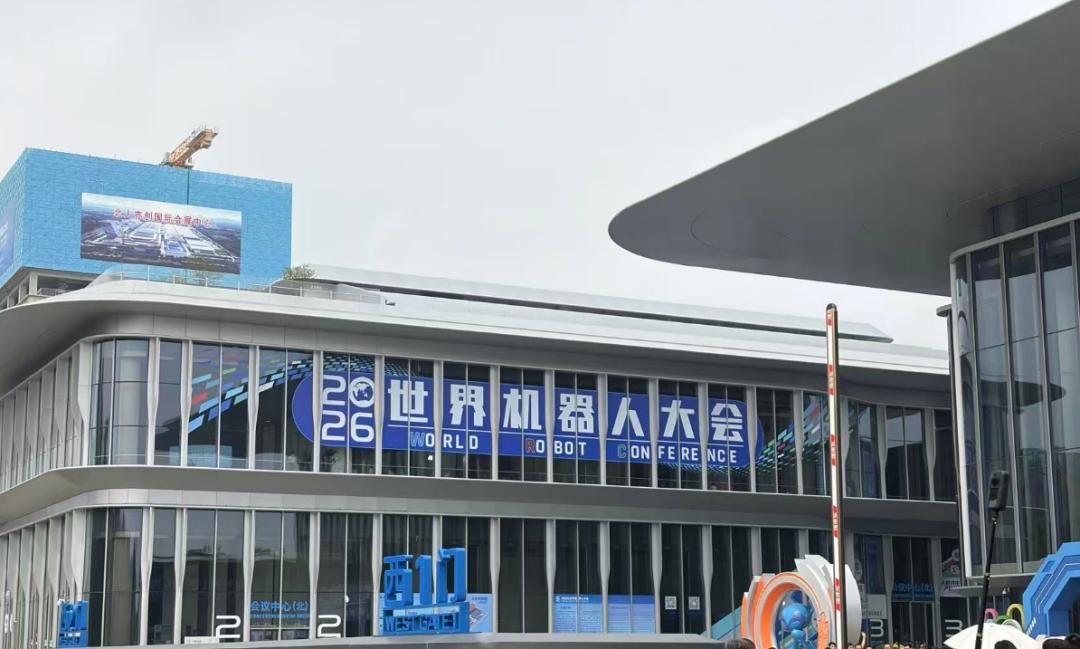
I have to say, Beijing has far more advantages than Shanghai when it comes to hosting robot conferences.
For example, the weather is much cooler here.
We won't see robots get heatstroke directly because of the sweltering heat and collapse on the roadside.
OK, that's off topic. After wandering around this year's overcrowded WRC,

the biggest feeling Chapingjun has is that
This time, robots are really going to start working for a living.
We won't go into details about the relatively old-school robots that make Chinese pancakes, brew coffee, or pick goods in convenience stores. After all, these scenarios are already commonplace in many places now.
Even when Chapingjun was shopping in the supermarket, I ran into a robot giving out free yogurt samples to children... It can be said that robots have changed from performance guests on exhibition booths to ubiquitous workers in our daily lives.
And this year at the exhibition, Chapingjun found that a large army of working robots are hidden in places we cannot see.
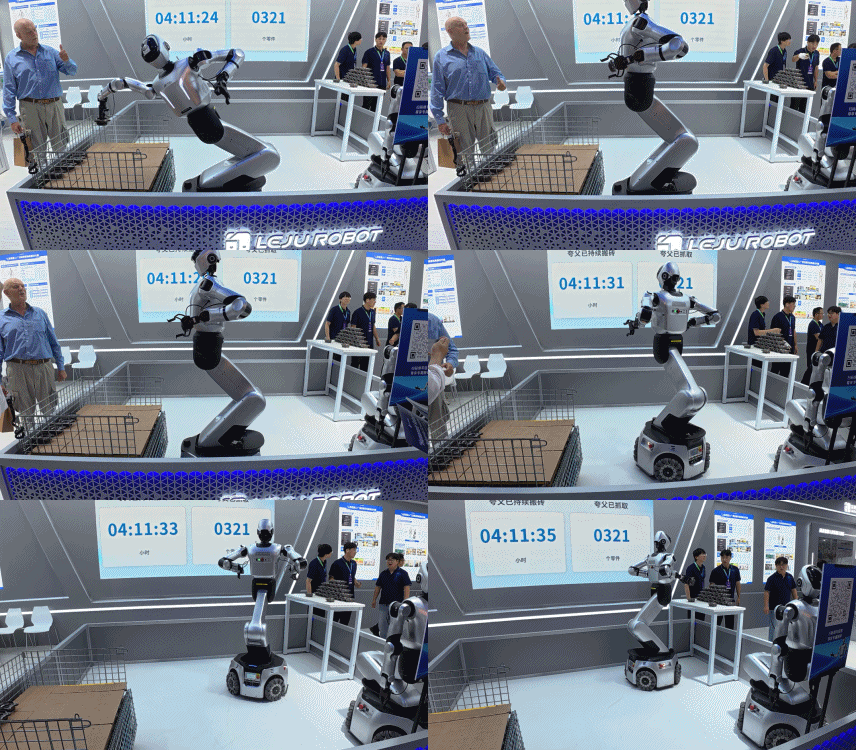
Such as those moving goods on factory assembly lines:
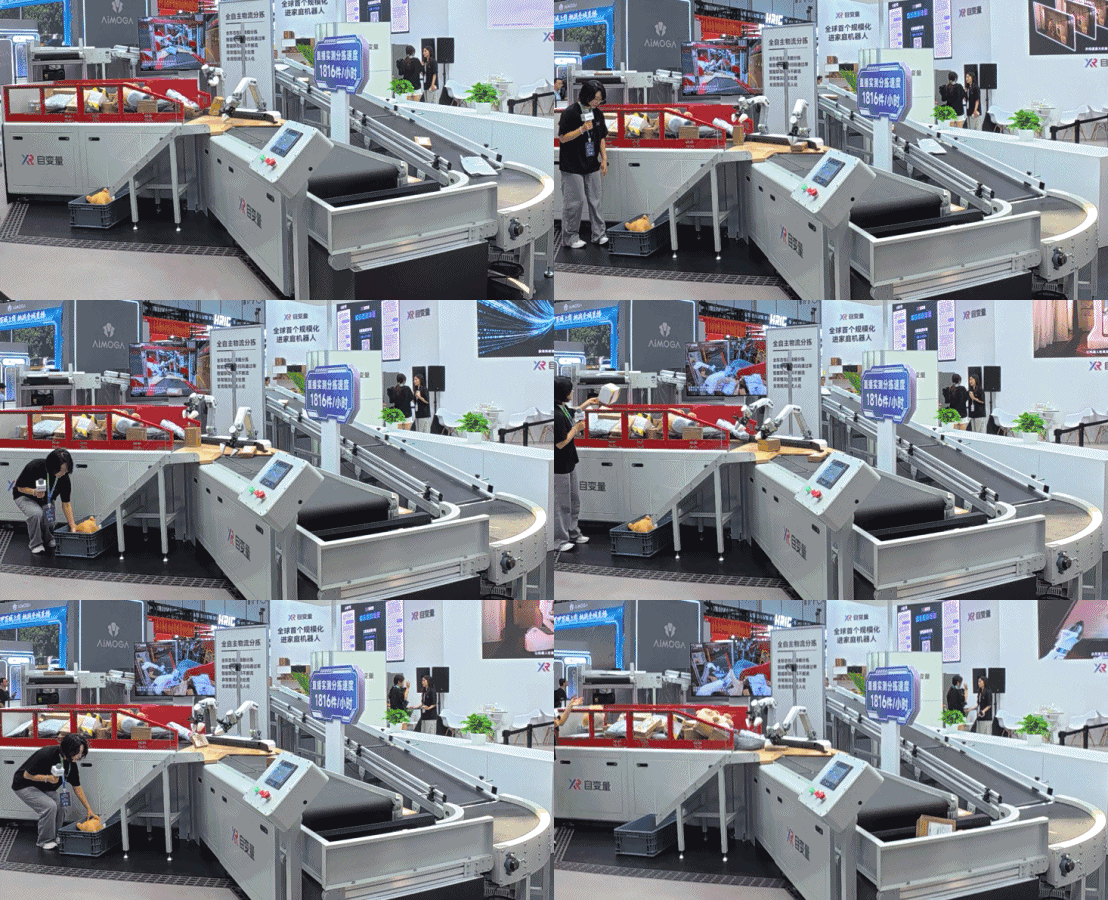
There are also robots responsible for sorting express parcels for us:
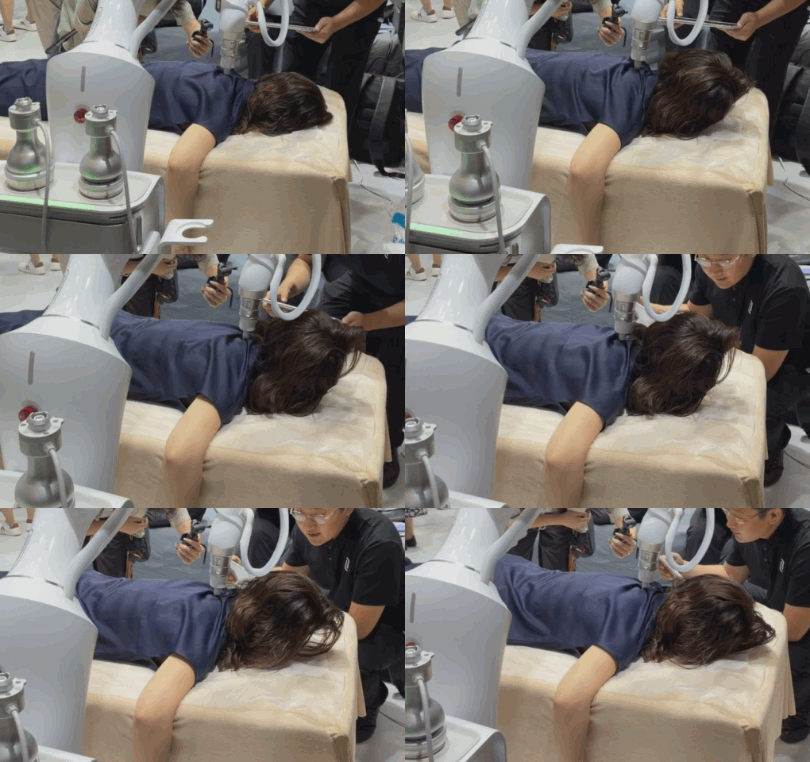
Robots that can give people massages directly:
Robots that can even perform orthopedic surgeries:
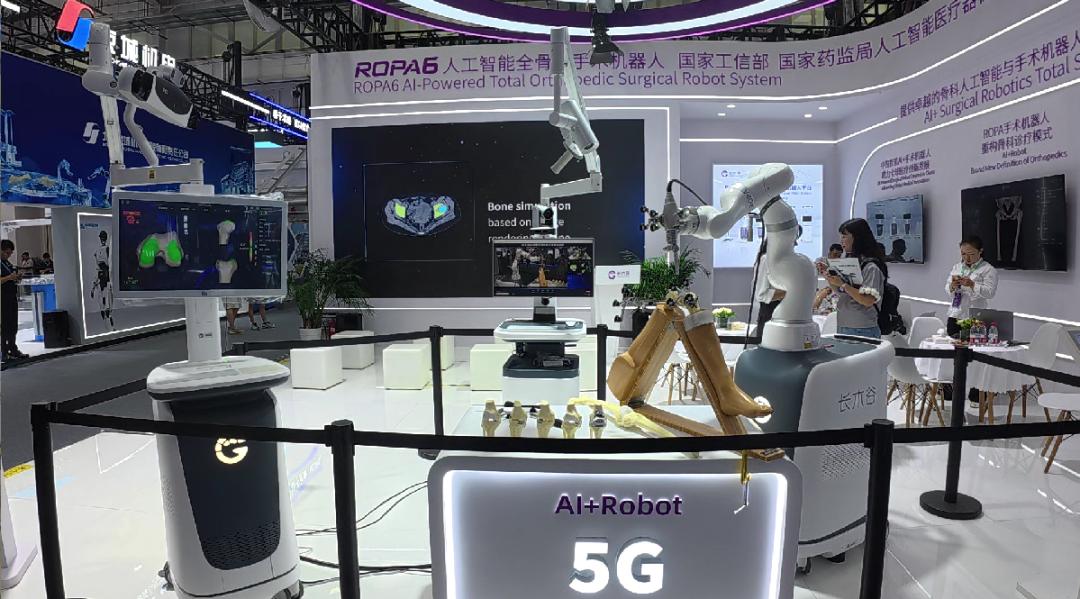
Even tasks such as sorting luggage at airports and cleaning garbage on the ground in scenic spots have begun to be handled by robots.
What's more interesting is that although robots are getting closer and closer to our production and daily lives, people are no longer pursuing fancy stunts as they did at the very beginning.
The forms of robots are becoming more and more diverse, and people seem to have become disenchanted with humanoid robots.
Of course, this doesn't mean that humanoid robots have fallen from their pedestal. They are still the protagonists of the conference venue.
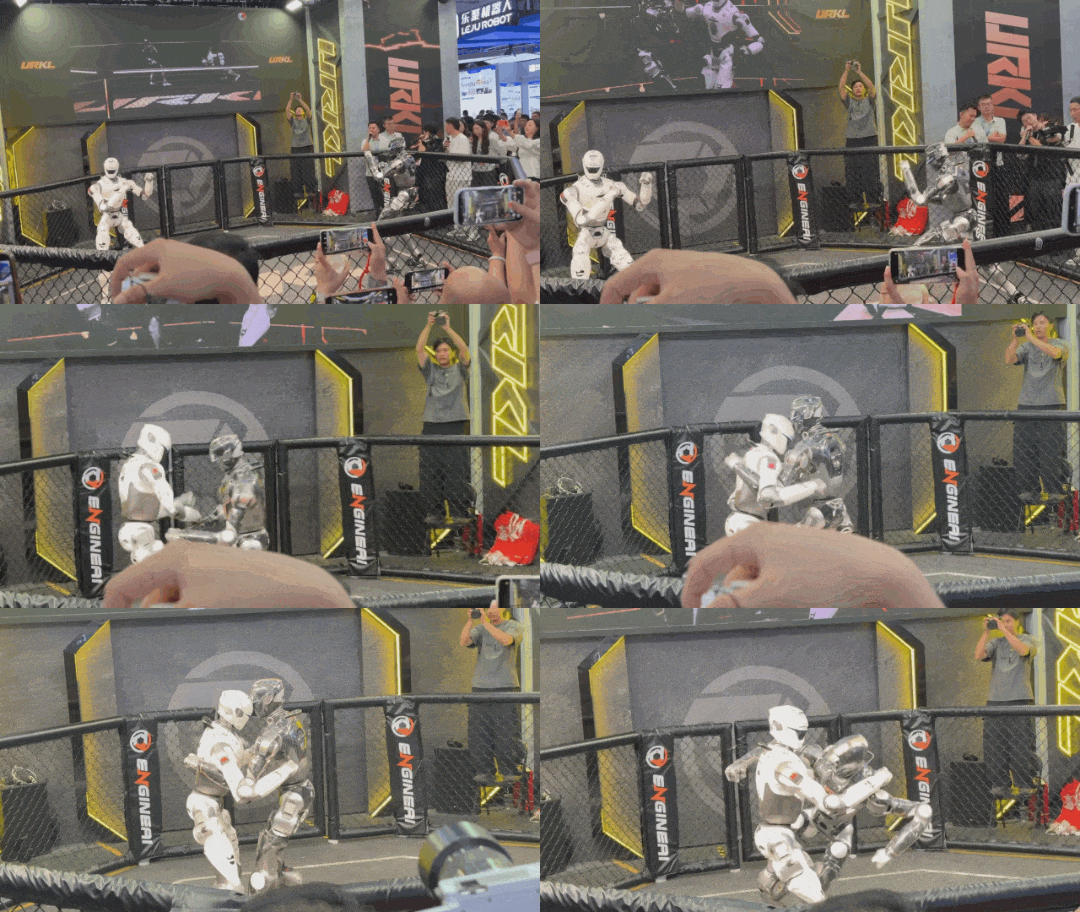
It's just that at this year's WRC venue, humanoid form is no longer the only solution.
We saw robots with a centaur-shaped chassis at the site.
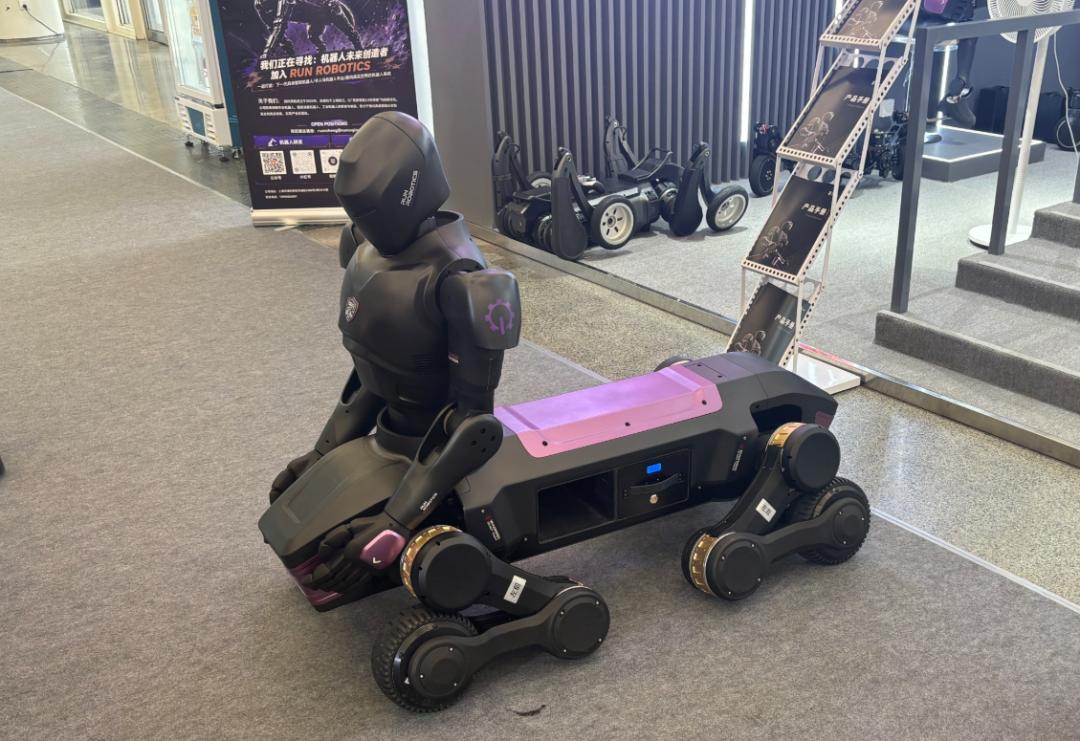
We also saw many pure working robots with tracked lower bodies and robotic arms on their upper bodies.
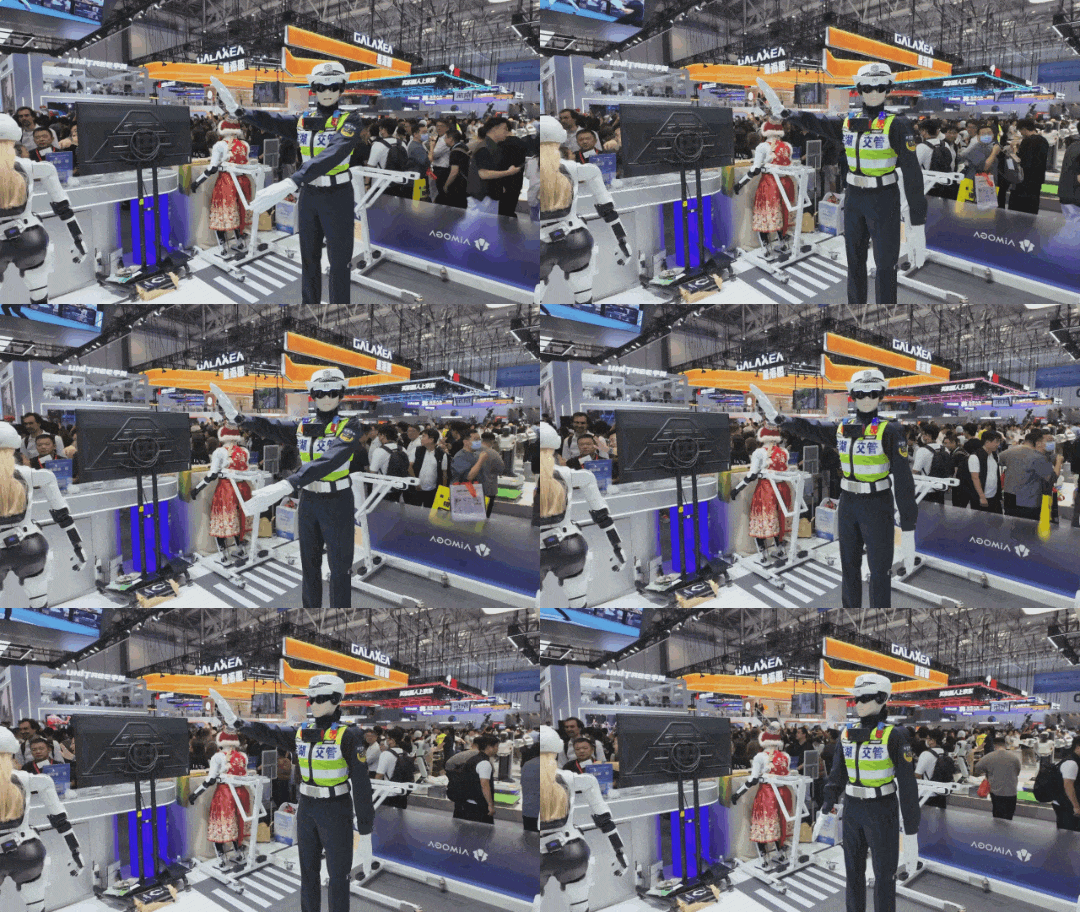
All manufacturers are inferring the design of robots based on actual deployment requirements.
And they can really turn these varied ideas into finished products that can operate normally.
To a certain extent, this is precisely an important sign that China's domestic embodied intelligence industry chain is becoming increasingly mature.
However, we also found that for most of the actual deployment tasks displayed in the exhibition hall, robots can only perform them very slowly. The tasks are completed in the end, but Chapingjun who was watching beside felt extremely anxious.
Moreover, the vast majority of robots are not versatile enough. One robot can only be equipped with one set of algorithms to perform one task, which is far from the all-capable robots we imagined.
So here comes the question: robots that already have physical bodies and have learned to complete various tasks, what exactly are they still lacking to work as well as humans?
After wandering around WRC, Chapingjun found that as the physical structure of robots has gradually matured, training and cultivating a smart "brain" has become increasingly important.
In the past few years, research on robot brains has been focused on three major links: perception, decision-making and control, with the goal of enabling robots to understand the environment, plan movements independently, and finally complete tasks accurately.
But in reality, to turn theory into practice, robots still face a huge data gap of several orders of magnitude.
A person may take less than a few minutes to learn to tidy up a desk. However, robots need actual operation trajectories in various scenarios with different tables, different items, different placement methods and so on to learn.
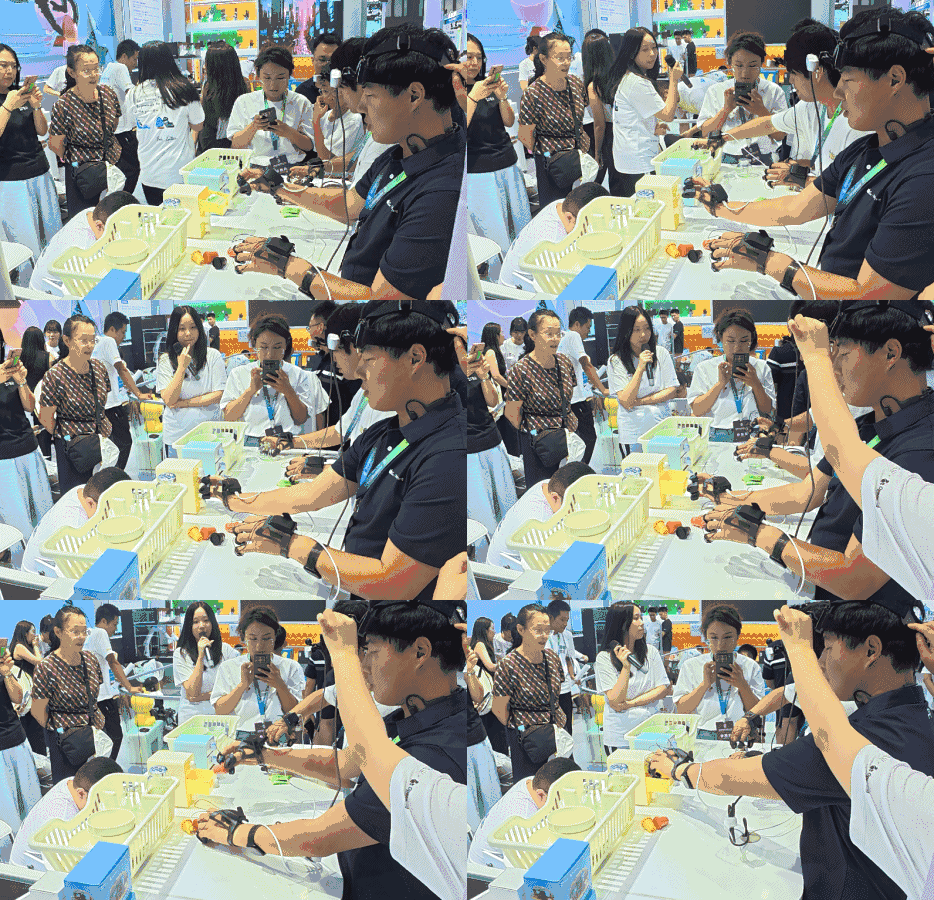
But limited by current data collection equipment, it is not easy to obtain high-quality training data for robots.
For example, the camera frame rate and sensor synchronization frequency of data collection equipment have upper limits. Humans cannot move too fast or with too large amplitude when collecting actions. Otherwise, the movements between two frames will be too fast to be distinguished in the robot's view, which may lead to the loss of key information and reduce the training effect.
This actually answers why robots move so slowly when working now. Because humans can only collect data slowly, the robots trained with such "slow teachers" naturally cannot move fast.
What's more troublesome is that robot data is very complex. It often requires simultaneous collection of multi-dimensional information such as vision, joint movement, force, tactile sensation, and even environmental changes. It is far more refined than the text and image data consumed by large models.
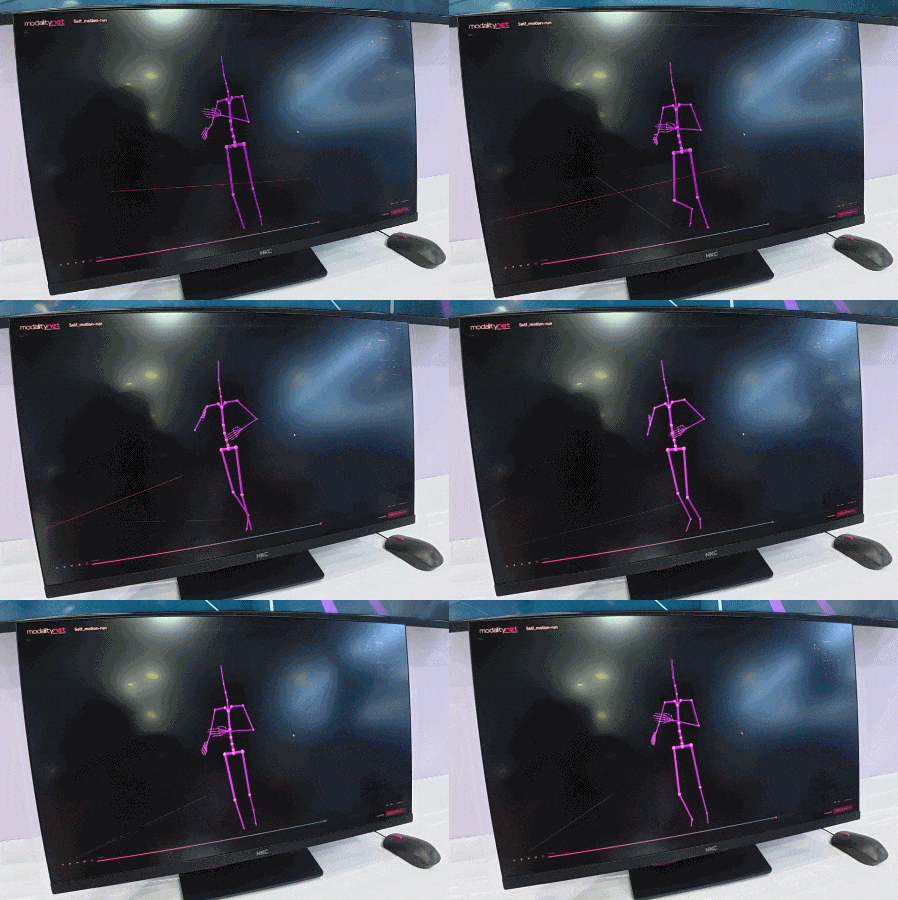
This has also caused the cost of robot data collection to rise sharply. For one hour of high-quality robot operation data, many people are willing to pay hundreds of yuan.
Of course, practitioners are not idle. Since data collection is insufficient, the methods of collecting data will naturally change.
In the past, the mainstream collection solution only required a VR headset + controller. The obvious advantage of this method is that it is cheap and convenient, the hardware is off-the-shelf, and you only need to modify a program to use it.
But its shortcomings are also obvious: the dimensions of data that can be collected are far too limited.
In the past, many robots originally used two-finger grippers, with very few control variables. For teleoperation scenarios, the trigger button on a VR controller is enough to control it to open or close.
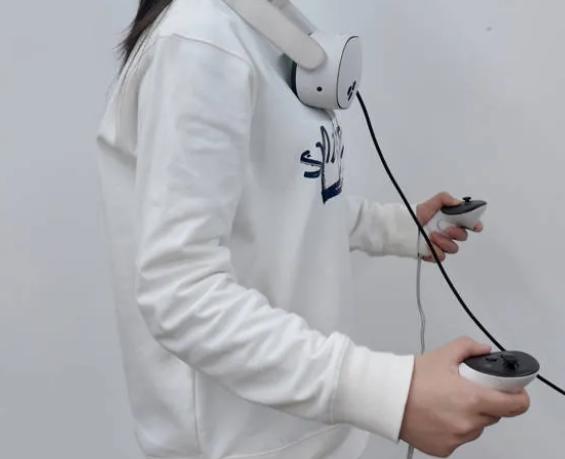
However, once the end effector is replaced with a dexterous hand with more than 20 degrees of freedom, one trigger button is obviously not enough. If a camera + hand recognition solution is used, the accuracy will be greatly reduced.
Therefore, to let robots learn how to move properly, we may need better data collection methods. At the exhibition site, we saw many companies starting to compete in this field.
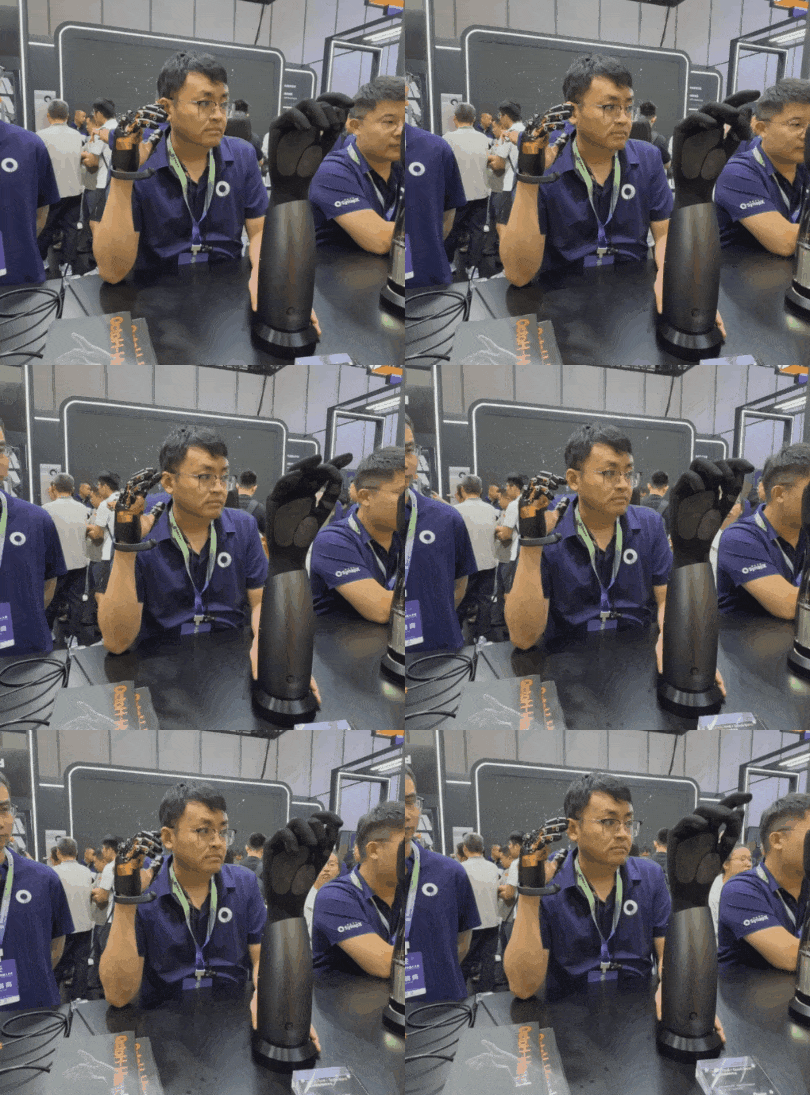
For example, some companies have previously developed a mechanical glove specially used for data collection. As long as you put on this glove, it can record the movement posture of almost all joints on your hand.
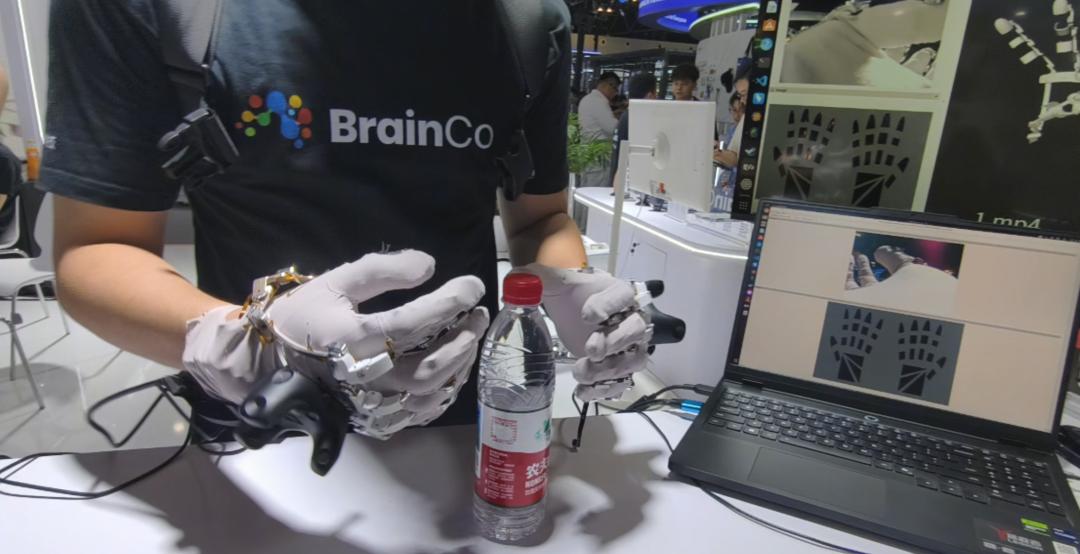
It can be regarded as teaching robots hand in hand how humans exert force.
Another company doubled the dimensions of data collection. In addition to the exoskeleton data collection glove, it also replaced the traditional bulky and heavy VR headset.
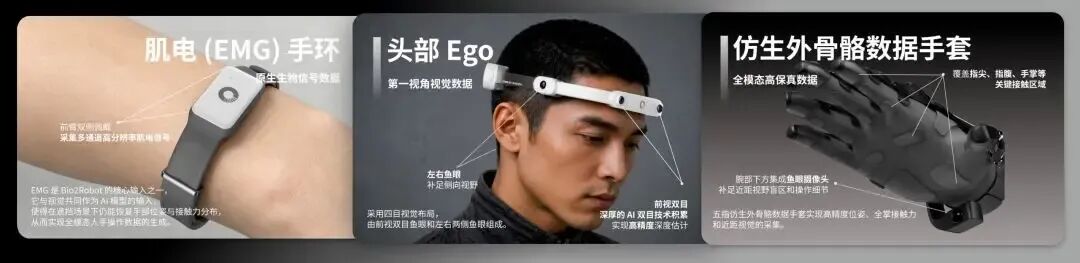
It is replaced by a headband equipped with binocular cameras. In this way, it can not only collect plane videos, but also directly obtain spatial depth information, making the data fed to robots more sufficient and comprehensive.
All in all, after visiting this year's WRC, Chapingjun's biggest feeling is that robots are entering a period of rapid development with constant changes.
Last year at WRC, most of the robots people saw were just dancing or performing fighting on the exhibition booths.
This year is obviously different. All segmented tracks are crowded with players, and everyone has begun to focus on real scenarios to seriously explore what else robots can do.
Once robots truly enter actual environments such as factories, logistics and medical care, it means that they can continuously access the real world, obtain a large amount of operation data, further feed back to robots, and optimize algorithms and models. To a certain extent, this may become an important node for the accelerated evolution of robots in the future.
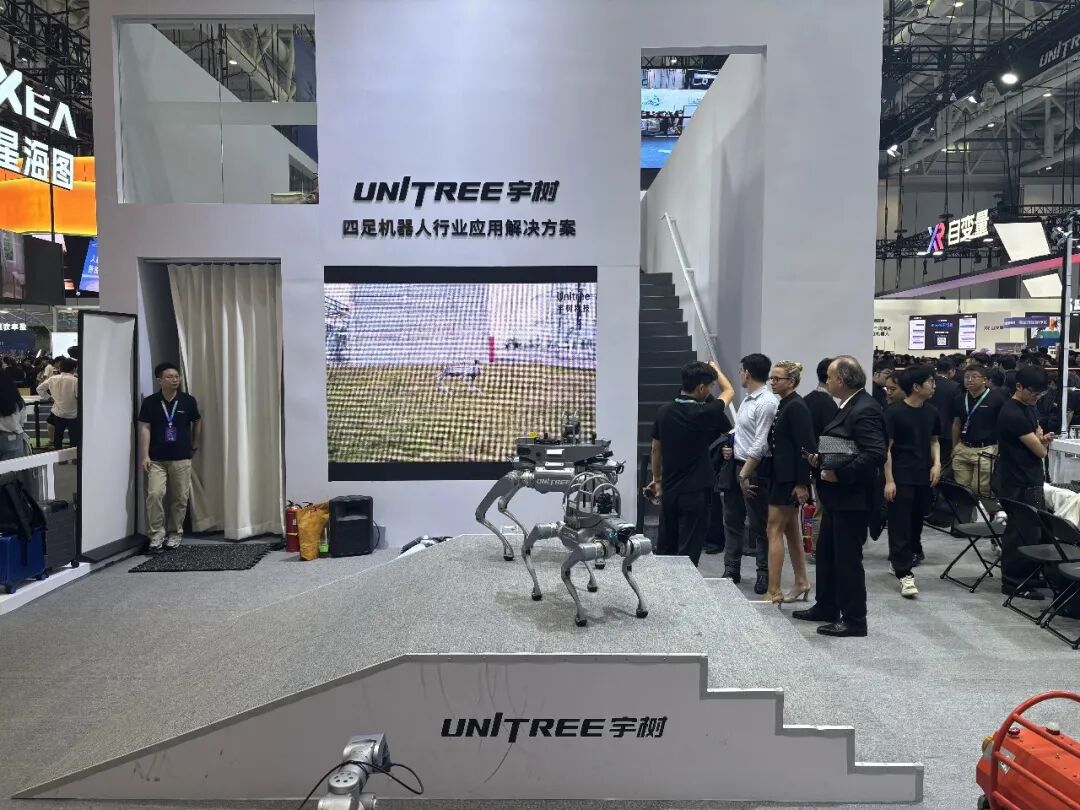
Of course, in this process, we have also seen some practical problems. For example, the current deployment scenarios of many robots are still relatively concentrated. For the same logistics parcel sorting scenario, three or four companies at the site are developing similar solutions.
But from another perspective, this is not necessarily a bad thing. Different models of robots entering different environments will accumulate richer real data, helping future robots improve their adaptability and generalization level.
When the physical form of robots has moved into the real world, this competition around robot brains may have only just begun.
This article is from WeChat Official Account "X.PIN", author: Zaoqi & Momo Motiantian, editor: Jiangjiang & Mianxian, 36Kr published this with authorization.