Led by "Love Actually Season 5" and "Heart Signal Season 9", is the second half of the romance reality show genre no longer competing on offering audiences sweet, heart-fluttering couple moments to fawn over?
Audience's demand for "romance substitutes" has escalated further.
Over there, AI CP characters like Duan Yanrong and Ji Qiao are supplying audiences with "pure industrial saccharine for romance", with top-tier appearance, ever-flawless character settings, unlimited after-sales content, and all conceivable romantic fantasies, ranging from leaked behind-the-scenes footage to matching bracelets, drawing fans of original novels and appearance-focused audiences all under their spell.
Over here, real-person romance variety shows are taking a completely different path. As virtual relationships become increasingly perfect, some romance variety shows have taken the initiative to embrace imperfection, inviting people with illness experiences, complex pasts, and people at different stages of life into the narrative of romance shows.
Overseas romance variety shows first turned their attention to groups that rarely appeared in romance narratives in the past. South Korea previously launched *My Remaining Love* and *Enchanted Love*, which centered on special groups looking for love. The former focused on young people who had been diagnosed with terminal illnesses, with guests including blood cancer survivors in stable condition and patients still undergoing treatment; the latter directly gathered young metaphysics practitioners such as wizards, diviners, and I Ching scholars, letting "fate calculation" collide head-on with "worldly romantic crushes".
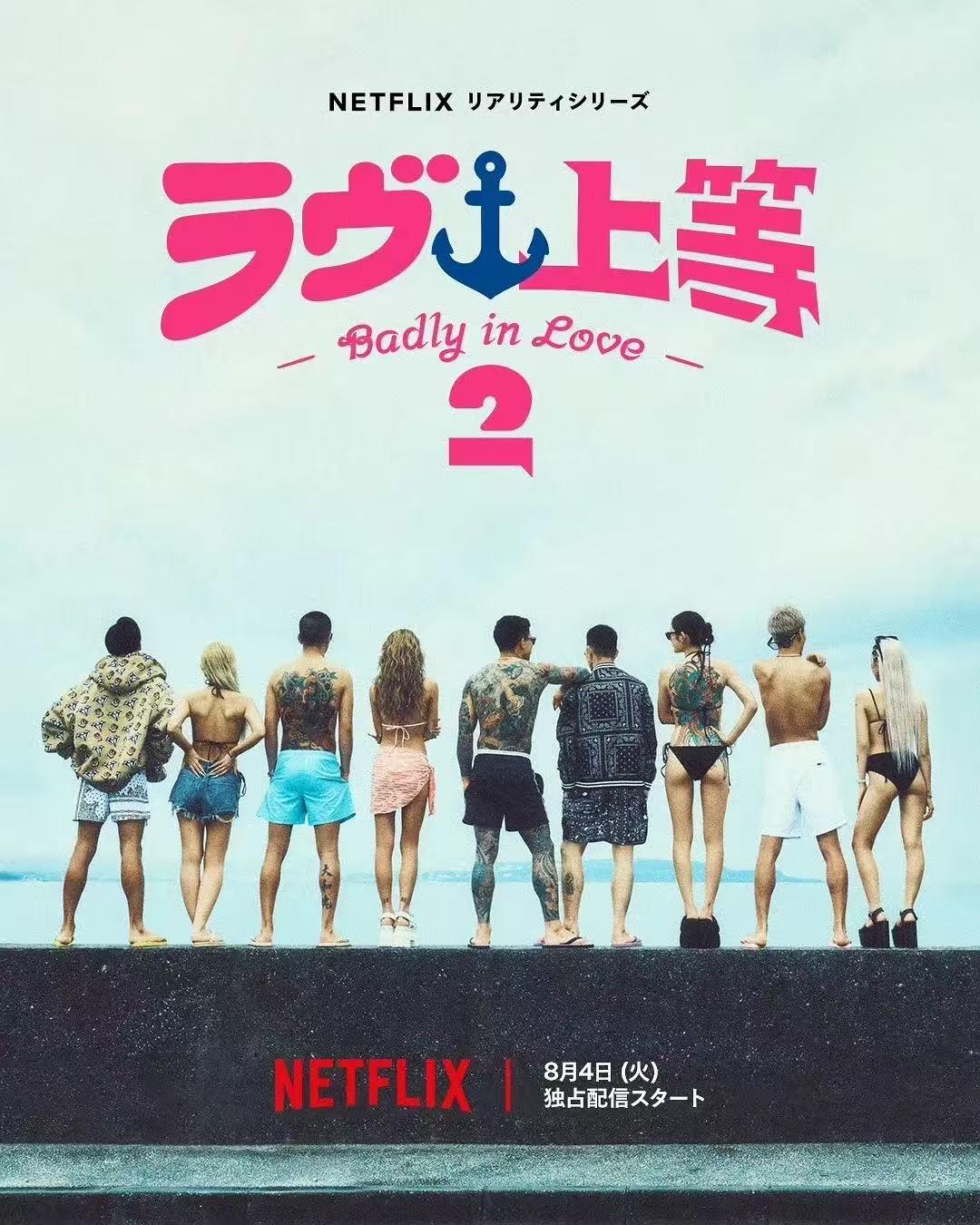
The Japanese romance variety show *Delinquent Clan's Love Hunt*, made for former delinquent boys and girls, has aired two seasons, which can be regarded as a romance show version of *The X-Change*, trying to break the definition of individuals by social labels. The backgrounds of the guests cover bosozoku biker gangs, host club workers, and even people with juvenile detention records. The program team set the school rule of "no violence", and guests who violate the rule will be dismissed. Out of prudence, the program team also specially introduced drug testing before the recording of the second season.
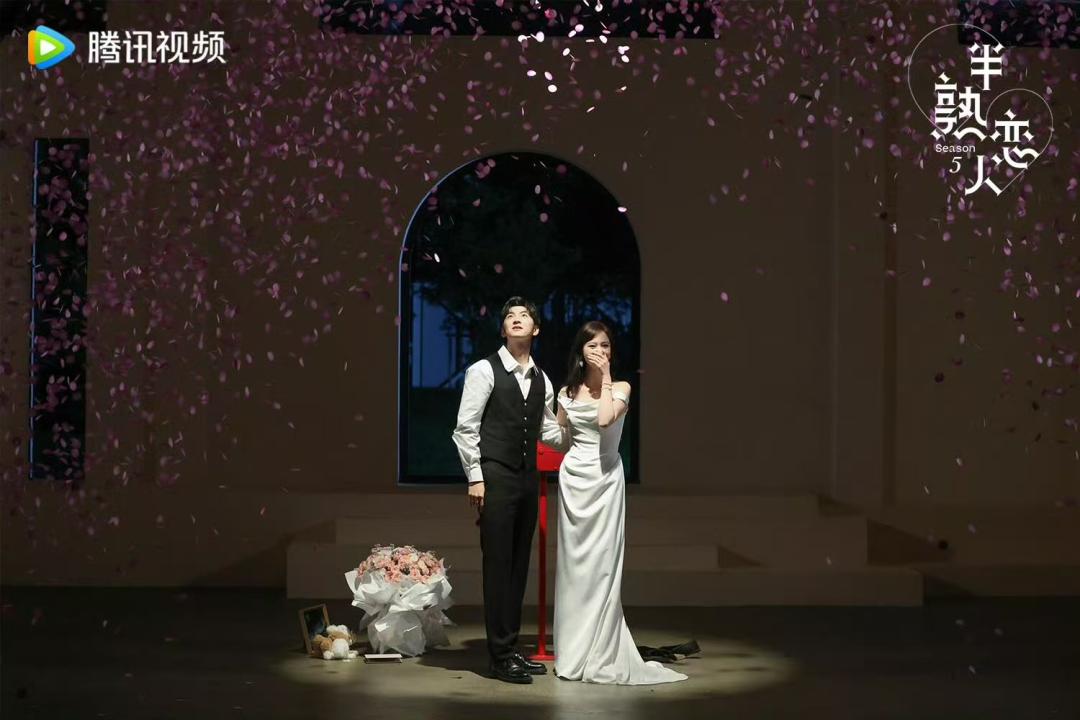
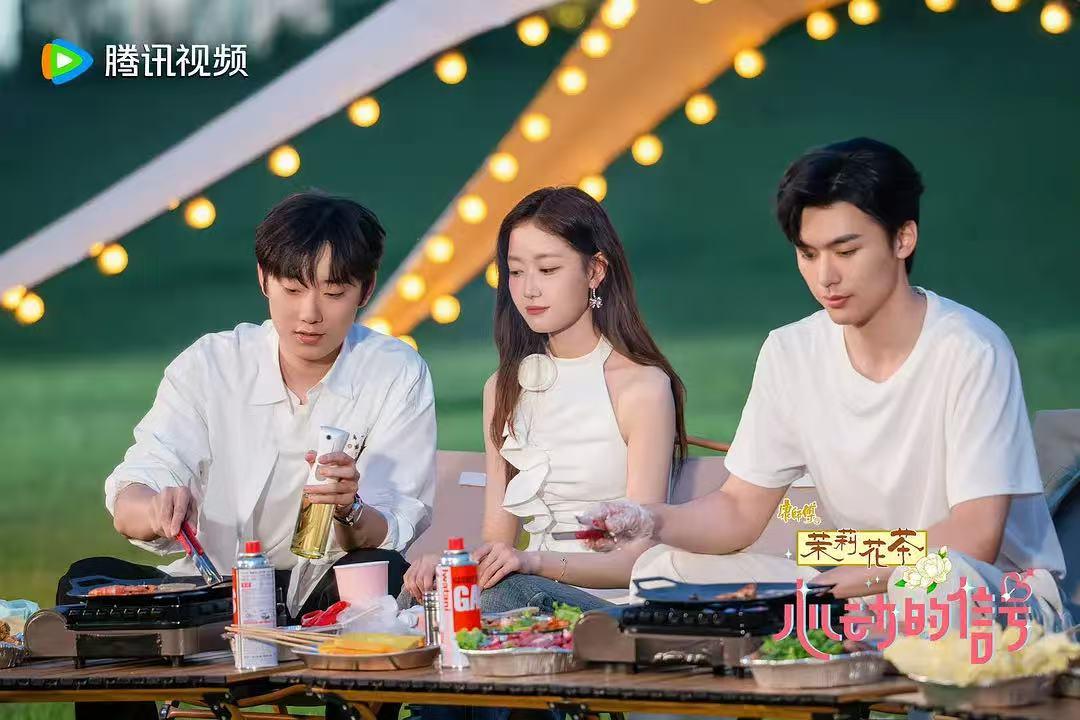
Turning our gaze back to China, *Semi-Sweet Love Season 5* just concluded not long ago, successfully pairing up 4 pairs of guests, and spawning highly popular CP such as "Liu Zhou". *Heart Signal Season 9* added the "full disclosure" gameplay, weakening the information gap in traditional romance variety shows, and trying to let guests build connections in a more real social environment. The romance variety show *Love You at Sunset*, which previously focused on groups over 50 years old, also helped several middle-aged couples find their destined relationships successfully.
Sorting out these changes, no matter the ever-changing supply of content for fans to ship CP outside, or the romance variety shows that have already entered the deep water zone of content, what will be the core competitiveness in the second half of the track?
Compared with shipping sweet CP, do audiences prefer to "read" people now?
Romance variety shows were once a romantic "reasoning game" that audiences enjoyed savoring. Young men and women with good looks and decent social identities are placed in specific scenarios, interacting freely within a limited time, and pushed to make choices under established program rules, while audiences only need to sit tight, and judge whether a CP is worth shipping through details of dates, eye contacts, conversations, and differences in attitudes towards different guests.
Who develops a crush on someone first? Who will end up pairing up successfully? Which CP can stay together till the end? This was once the core viewing pleasure of romance variety shows in the past, and program teams are well aware of this, using editing, soundtracks and slow-motion effects, all serving the purpose of "creating suspense". But the main storylines of romance variety shows are too similar, and audiences' focus has shifted. Compared with whether a relationship can be established, more and more audiences have begun to observe the personalities in romance shows.
But now, audiences no longer care that much about the ending. For example, in *Semi-Sweet Love Season 5*, female guest Chen Danqi sat in a car driving in the rain, watching the wipers scraping water off the window, and spoke her mind directly, saying the raindrops in this process looked like ocean waves. The bullet comments were flooded with remarks like "too abstract", "the male guest cannot catch up with her train of thought at all", "these two people are not on the same frequency". In previous seasons, audiences might only say "so beautiful" "so romantic", but the reaction of audiences in this season shows that this detail reveals that the spiritual worlds of the two people are not on the same channel.
It can be seen that this generation of audiences is no longer satisfied with judging whether the romance is sweet, and has begun to care about whether the two people are a good match, and "whether they are a good match" is far more complicated than "whether they like each other". It requires in-depth observation of a person's expression style, way of thinking, and emotional needs, and then judging whether he can truly connect with the other person.
Another example: female guest Liu Liu was invited by several male guests at the same time. In the past, this was just a part of the plot on the way for the hero and heroine to get together. But now, netizens have begun to analyze the flow of her emotions in different dates frame by frame: who does she smile more naturally at? Whose invitation makes her obviously hesitate? Does she avoid eye contact when rejecting someone? The bullet comments are full of remarks like "this smile of hers is very formal", "she is obviously more relaxed with one male guest than the other". The good dating scene was treated by audiences as a public lesson on micro-expression psychology, which was interpreted and judged frame by frame.
Audiences are no longer satisfied with "who likes whom", what they care about is "whether these two people are really a good match". And "whether they are a good match" is far more complicated than "whether they like each other". It requires you to observe a person's expression style, way of thinking, and emotional needs, and then judge whether he can truly connect with the other person. Love has retreated to become a high-pressure reagent, and the process of holding breath to "identify human nature" is the core path for contemporary audiences to get deep resonance.
On this basis, moments that can show the shining points of real personality or dramatic collisions are more likely to spark public opinion. In *Heart Signal Season 9*, guests quickly built connections because they both like the professional League of Legends player Bin. What was originally an ordinary chat triggered a lot of discussions because it showed the moment of "finding a kindred spirit" between two strangers. The moments when romance variety shows truly go viral are increasingly coming from unscripted collisions between people. For another example, twin sisters joined the show one after another, and the male guest did not notice the identity difference during the date, which was teased by netizens as the real-life version of "stand-in trope".
The hit logic of AI CP and the "romance substitute" essence of romance variety shows are almost homologous. When audiences ship Duan Yanrong and Ji Qiao, they are shipping the "perpetual motion machine CP" that will never collapse, never break up, and can even quickly reunite for new content. This imagination of perfect relationship in turn forces real-person romance variety shows to figure out one thing: instead of manufacturing sweet romance moments, it is better to focus on reading people.
Tearing off the "elite template", romance variety shows begin to target non-standard life experiences
For a long time in the past, romance variety shows had a hidden "standard answer". The templated "middle-class elite" character setting was once regarded by the industry as the golden rule to create romantic imagination, and it is naturally suitable for creating romantic imagination.
Now, this reform on "character setting formula" has finally been promoted. Romance variety shows are actively tearing off the coat of meritocracy, trying to broaden the samples of love, and dig deep into the emotional truth of "marginalized groups" and "non-standard life experiences". South Korea's *My Remaining Love* focuses on groups that have experienced major illnesses. The show does not focus on the illness itself, but on how a person rebuilds their imagination for the future after experiencing the uncertainty of life. For these guests, dating is not just about finding a partner, but also about confirming that they still have the possibility to love and be loved after going through the trough of life.
The Japanese romance variety show *Delinquent Clan's Love Hunt* is committed to dismantling another heavy social label. In the traditional social context, these groups with complex pasts are often labeled with some non-mainstream tags, excluded from the mainstream romantic love narrative, and to some extent, they have also become an introduction to attract audiences to explore another kind of culture.
However, under these "delinquent" labels, what the camera records is often contrast. The female guest with full-arm tattoos was not rebellious since childhood, but an excellent student with good grades and good conduct, who once served as the president of the student union; the former gang member showed everyone his little finger that he cut off to get out of the organization.
Whether it is the silver-haired generation's resistance to loneliness in an aging society, or the pursuit of emotional life by patient groups and former delinquent teenagers, these programs are conveying the same core concept through non-standard life samples: love never picks on identity and resume. Even if you are at the trough of life, have a complex past, or are not favored by mainstream aesthetics, individuals still have the right to have a crush and the possibility to build deep connections.

At the beginning of its birth, romance variety shows were originally closer to a kind of "human observation". Looking back at the development path of domestic romance variety shows, they once relied more on character labels and dramatic conflicts to promote relationship development. But with the change of audience aesthetics, the model that only relies on character packaging and CP creation is facing new challenges.
When audiences start shipping the sweet content of AI CP, it in turn forces real-person romance variety shows to completely get rid of the burden of "dream making". Because AI can create perfect relationships, it cannot replace the complexity in real relationships. AI is responsible for pushing human's imagination of perfection to the extreme, creating an everlasting illusion, while the second half of real-person romance variety shows must take root in the soil of the real world.
The future competition of romance variety shows will no longer depend on who can create a more exquisite "romance fairy tale", but on who can record the real appearance of individuals on different life trajectories trying to get close to each other with a more inclusive and sharper perspective.
This article is from the WeChat Official Account "Entertainment Unicorn" (ID: yuledujiaoshou), Author: Akagi Bottle, Editor: Mia, released with authorization from 36Kr.