Development of Intelligent Agents and Restructuring of Financial Infrastructure
Supported by the combined efforts of technology and policy, the application of Agents in the financial industry has evolved from concept to practice since 2025, with deployments already rolled out in sectors including credit approval, investment research, risk management, customer service, payment and settlement.
As the application of Agents in the financial sector continues to expand and deepen, future financial infrastructure needs to shift from being human-user-oriented to human-AI collaboration-oriented, and undergo systematic reconstruction based on a five-layer architecture: "foundation layer, trust layer, algorithm governance layer, interconnection layer, and regulatory mechanism layer".
Taking the lead in improving financial infrastructure will be a key link for China's fintech and digital finance to maintain its leading edge. It is recommended to accelerate reform and improvement in the following aspects: establishing a unified standard system for Agent identity authentication, building payment and clearing infrastructure adapted to Agents, improving the penetrating supervision and responsibility identification mechanism for Agents, setting up an algorithm trustworthiness and safety assessment and governance system, and upgrading data infrastructure for the human-AI collaboration model.
Source of the article: Zhu Taihui, Reflections on the Development of Agents and the Reconstruction of Financial Infrastructure, Financial Times, August 20, 2026 Edition.
In recent years, artificial intelligence (AI), especially Agent technology, has iterated rapidly: the emergence of multimodal large models endows Agents with stronger information understanding and processing capabilities; the maturity of technologies such as function calling and structured output has significantly improved the controllability and accuracy of Agents in financial businesses; the improvement of long-term memory mechanism and multi-turn interaction capabilities enables Agents to handle more complex financial scenarios.
At the same time, China's policy authorities attach great importance to the development of "AI + Finance". The outline of the 15th Five-Year Plan clearly puts forward the full implementation of the "AI+" initiative, strengthening the integration of artificial intelligence with scientific and technological innovation, industrial development, cultural construction, people's livelihood security and social governance, seizing the commanding heights of industrial AI application, and empowering all industries in an all-round way. In March 2026, the Science and Technology Work Conference of the People's Bank of China required to "promote the application of artificial intelligence in the financial field in a proactive, prudent, safe and orderly manner, and release the driving force of digital and intelligent development". In May 2026, the Cyberspace Administration of China and other departments jointly issued the Implementation Opinions on the Standardized Application and Innovative Development of Agents, proposing to develop financial risk control Agents, improve the risk identification capability in links such as credit approval, transaction monitoring and account security, and promote AI Agents to move from pilot exploration to institutionalized application in the core financial risk control field. In June 2026, the State Administration of Financial Regulation issued the Guiding Opinions on the Safe Development and Application of Artificial Intelligence in the Banking and Insurance Industries, clarifying the governance framework for the development and application of artificial intelligence in the banking and insurance sectors.
Supported by the combined efforts of technology and policy, the application of Agents in the financial industry has evolved from concept to practice since 2025, with deployments already rolled out in sectors including credit approval, investment research, risk management, customer service, payment and settlement. In the future, as the application of Agents in the financial sector continues to expand and deepen, traditional financial infrastructure needs to undergo systematic reconstruction from human-user orientation to human-AI collaboration orientation, carrying out in-depth reforms in identity authentication, algorithm governance, data interaction, payment and settlement, regulatory traceability and other aspects.
I. New Requirements for Financial Infrastructure in the Agent Era
Based on the understanding, generation and reasoning capabilities of large AI models, Agents enhance the capabilities of environmental interaction, long-term memory and task closed-loop, and can complete the full chain of "perceiving the environment → planning tasks → making decisions and taking actions → executing and feeding back". Different from simple AI tools, Agents have three core characteristics: autonomy, continuity and adaptability.
(I) Multiple types of Agent application scenarios have emerged in the financial sector
In the field of credit approval, Agents can independently retrieve corporate financial data, credit information and industry data, make preliminary approval decisions after comprehensive analysis, and compress the traditional approval cycle of 7 to 10 working days to less than 24 hours. Some banks have explored and launched credit approval Agents covering loans for small and medium-sized enterprises. By using AI to read corporate annual reports, analyze industrial chain information, verify operating conditions and other methods, the efficiency of credit approval has been increased by several times, while the consistency rate with the approval of human experts exceeds 90%.
In the field of investment research, investment research Agents can automatically read multi-dimensional financial data including real-time market quotes, financial indicators, industry data, listed company announcements and market information, automatically parse and structurally process these information, and automatically generate research report summaries and investment suggestions, greatly improving the production efficiency of research reports. Many leading securities firms have deployed investment research assistant Agents, supporting the daily processing of thousands of announcements and research documents.
In the field of payment and transaction, technology companies, card organizations, payment institutions and other parties have carried out diverse explorations around AI Agent payment. Since the second half of 2025, Google has successively released the Agent Payment Protocol (AP2) and the Universal Commerce Protocol (UCP), the Coinbase exchange has launched the x402 protocol and Agentic Wallets, Visa has launched the TAP protocol, and OpenAI and Stripe have jointly released the Agent Commercial Protocol (ACP).
In China, China UnionPay has released the Agent Payment Open Protocol (APOP), JD Technology has released the first domestic Agent Autonomous Payment Protocol (A2P2), and some payment institutions and technology companies have also launched exploratory schemes such as the Agent Commercial Trust Protocol (ACT Protocol) and AI-native access Skill, to support interoperability between AI Agents and payment infrastructure. Research from the International Monetary Fund points out that commercial activities intermediated by Agents may generate huge economic scale in the next ten years, fundamentally changing the way consumers, enterprises and financial institutions interact with the payment system.
In the field of customer service, the application of Agents has penetrated into all links of financial customer service. In business processing, Agents can directly handle services such as transfer, financial consultation and information query for customers through natural language interaction. In customer service scenarios, Agents are used to empower human customer service, integrating complex business queries and other contents into automated processes, significantly improving service quality and efficiency. In marketing, Agents can analyze customer data, actively identify demands and provide personalized services, effectively improving the marketing conversion rate. In debt collection, Agents can automatically generate personalized repayment plans and realize dynamic strategy adjustment, greatly improving the collection efficiency.
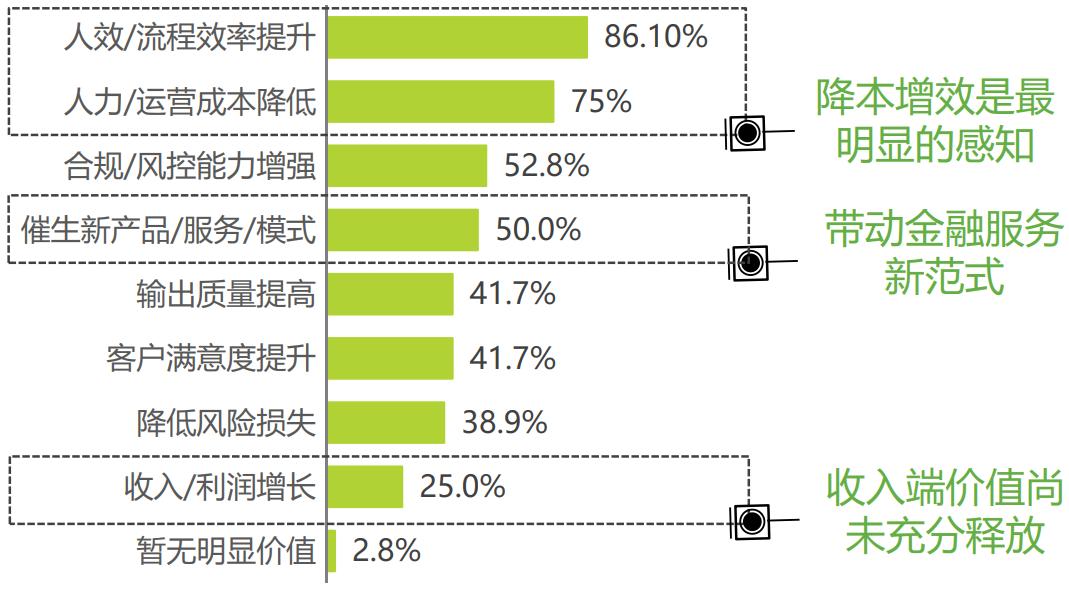
Figure 1: Value brought by AI tools to financial institutions
(II) Four major requirements of Agent application for financial infrastructure
Although Agents are widely used in the financial field, the overall transformation involves the shift from "human control" to "machine control", which puts forward common requirements for financial infrastructure behind it:
The first is the extension requirement of identity authentication and authorization management. When a credit approval Agent independently retrieves corporate transaction flows, an investment research Agent automatically captures unstructured data, and a payment Agent initiates a transaction, the traditional KYC (Know Your Customer) system cannot identify and manage these "digital agents". This requires the establishment of an Agent-oriented identity authentication mechanism — KYA (Know Your Agent), issuing a verifiable digital identity identifier for each Agent, clarifying its permission scope (which data can be accessed and which operations can be performed), validity period and behavioral constraints. Since 2026, domestic and foreign payment institutions and technology enterprises have been exploring and launching AI Agent governance protocol frameworks for financial businesses. Different from the manual review of traditional KYC, the KYA system requires machine-readable identity credentials, automated permission verification and real-time permission revocation mechanisms.
The second is the high concurrency requirement for interaction and processing capabilities. Agent applications are characterized by high concurrency. For example, in the payment field, current financial transactions are mainly settled several times during the day, but Agent payment may generate demands for second-level settlement and real-time reconciliation; in the credit reporting field, traditional personal and corporate credit inquiries are mainly at the level of ten thousand per day, while deployed credit approval Agents may generate millions of inquiry requests per day during peak periods. Traditional batch processing mechanisms and human-user-oriented interface designs cannot support such a scale leap. This requires infrastructure to provide: standardized real-time application programming interfaces (APIs), millisecond-level response capabilities, elastically scalable data processing architecture, intelligent routing and load balancing mechanisms.
The third is the traceability requirement for behavior recording and responsibility attribution. In the Agent era, the initiators of financial transactions extend from humans to AI, and the transaction logic evolves from manual operation to direct intent delivery. Once a credit approval Agent makes wrong credit granting, an investment research Agent quotes false information, or a transaction Agent performs illegal operations, there must be a clear chain to locate the problem: is it a design defect of the developer, improper permission configuration of the deployer, or a wrong decision made by the Agent itself? This requires financial infrastructure to establish a full-process behavior recording mechanism: from the initiation of the instruction to the completion of execution, each step should leave tamper-proof logs, including input parameters, intermediate reasoning processes, output decisions, execution feedback, etc., and support automated auditing.
The fourth is the requirement of pre-embedded risk control and algorithm governance. The endogenous risks introduced by Agents go beyond traditional credit risks and market risks, including false decisions caused by large model hallucinations, discriminatory results caused by algorithm black boxes, and unauthorized operation risks of autonomous execution Agents. These risks cannot be controlled by quarterly reviews or static rules. The key is to embed risk control logic into the decision-making link of Agents in real time, and build algorithm governance infrastructure. For small and medium-sized financial institutions, the necessity of model capability output and public algorithm governance infrastructure is more prominent, to avoid the "model divide" — large financial institutions build their own Agent ecosystems, while small and medium-sized institutions are unable to keep up, leading to further differentiation in the development of financial institutions.
II. New Framework for Financial Infrastructure Development in the Agent Era
In response to the above changes and requirements, financial infrastructure needs to build a new five-layer architecture of "foundation layer, trust layer, algorithm governance layer, interconnection layer, and regulatory mechanism layer".
The first is the foundation layer: Agent identity and data governance platform.
Build a unified Agent identity identification system, issue a verifiable distributed digital identity identifier (Agent ID) for each Agent, and associate it with the legal entity; adopt technologies similar to decentralized identity (DID) to support full-lifecycle dynamic management, including identity registration and authentication, permission label system, dynamic authorization mechanism, on-chain records, etc. At the same time, establish an Agent data governance mechanism, and formulate standards for data collection, storage and use. Clarify the compliance requirements that Agents need to meet when acquiring data, such as data classification and grading, desensitization processing, and the principle of minimum necessity. On March 11, 2026, the People's Bank of China held a science and technology work conference, which clearly put forward the requirements of "strengthening the system concept" and "deepening the integration of business and technology", providing policy guidance for this direction.
The second is the trust layer: Agent payment protocol and KYA governance system.
On the basis of the existing Agent intelligent payment protocols and KYA practice frameworks, construct a unified standard system for Agent identity management and responsibility attribution. From the perspective of practical exploration, the core content of the KYA framework should include mechanisms for identity identification, authorization control, behavior monitoring, responsibility attribution and other aspects. Agent payment protocols have been verified at home and abroad, supporting Agent identity authentication and transaction authorization between institutions, millisecond-level payment instruction response, real-time reconciliation and abnormal alarms during the transaction process, and automatic delivery, clearing and settlement after payment. This governance system needs to be open to financial institutions, regulators and network partners in the future, which is the core breakthrough for building the trust layer of Agent financial infrastructure.
The third is the algorithm governance layer: algorithm trustworthiness verification and audit system.
In view of the fundamental risks of large model hallucinations and algorithm black boxes, it is necessary to build a special algorithm governance infrastructure. The core challenges currently faced include model accuracy risk, bias risk, controllability risk, security risk and other aspects. Financial large models need to be interpretable and integrated with economic theoretical knowledge, while ensuring data security and complying with AI ethical norms. In the future, it is necessary to build a three-in-one governance system: algorithm filing, all large models and Agents used in financial businesses need to file with the regulatory authorities, including key information such as model structure, training data and decision logic; model evaluation, authoritative third parties evaluate the accuracy, stability and fairness of financial large models, to provide reference for the decision-making of using institutions; behavior auditing, monitor the decision-making process of Agents in real time and trigger audit alarms, automatically identify potential risks and start model retrospective analysis.
The fourth is the interconnection layer: cross-platform interoperability and cross-border payment standards.
Promote the formulation of interoperability standards for Agent payment protocols to realize interconnection between different platforms and different ecosystems. The Agent interconnection system includes: unified API standards, formulate unified Agent API calling specifications to avoid private protocol barriers; mutual identity recognition, Agent IDs issued by different financial institutions can be recognized and verified in other institutions; data format standards, standardize the data format of Agent interaction to reduce conversion costs; cross-border payment infrastructure, build a clearing system supporting cross-border Agent transactions to reduce cross-border transaction costs. Internationally, the Bank for International Settlements (BIS) has set up the Payment Interoperability and Expansion (PIE) working group, which aims to improve the access to payment systems, extend the operation time, and establish connections between different payment systems, including linking APIs and message transmission.
The fifth is the regulatory mechanism layer: penetrating supervision and intelligent governance system.
All financial businesses must be included in supervision. The application of Agents in the financial field requires the digital and intelligent transformation of supervision and the follow-up of penetrating supervision, clarifying the regulatory boundary of Agent financial activities, and constructing regulatory innovation mechanisms such as Agent financial risk early warning mechanism, blockchain-based audit system, algorithm model evaluation and filing mechanism, and regulatory sandbox. A recent study by IMF proposes a three-layer model of Agent payment "Intention and Orchestration — Control and Authorization — Settlement", which establishes a clear boundary between AI-driven decision-making and actual payment execution, and organizes the unpredictability of probabilistic decision-making and the predictability of payment execution into different layers. In March 2026, the Hong Kong Monetary Authority, the Securities and Futures Commission, the Insurance Authority and the Mandatory Provident Fund Schemes Authority jointly launched the GenA.I. Sandbox ++, focusing on risk management, anti-fraud and customer experience, and continuously promoting the "A.I. against A.I." strategy — using AI to manage the risks of AI applications. This innovative model embodies a dynamic and inclusive regulatory concept, which is worthy of reference.
Figure 2: The three-layer model of Agent payment proposed by IMF research
III. Policy Suggestions for Improving Financial Infrastructure in the Agent Era
The in-depth application of Agents in the financial field is an inevitable trend. Taking the lead in improving financial infrastructure will be a key link for China's fintech innovation to maintain its leading edge. Although China's current financial infrastructure construction has made considerable progress, in the face of the application and development of Agents in the financial industry, targeted improvements still need to be made in the following aspects.
The first is to establish a unified standard system for Agent identity authentication.
In the Agent era, it is necessary to establish a dual identity verification system of "KYC + KYA", hold the bottom line of safety from the source, and fill the institutional gap in responsibility attribution. Next, on the basis of the KYC framework, combined with the exploration of industry practice, formulate a standard system covering Agent identity authentication (KYA) and responsibility attribution; clarify the technical specifications and security requirements of Agents in the whole process, and draw a clear boundary for Agent application; formulate regulatory policies for financial Agents, clarify access conditions, permission scope, supervision mechanisms, etc.; establish an authoritative financial Agent evaluation system, connect with the access of financial Agents, and provide eligible Agents with convenient access permissions.
