The explosive moment: the pharmaceutical company with the highest market value in human history has emerged.
At 4 p.m. ET on August 19, the New York stock market closed. Eli Lilly's share price stood at $1,280.34, up 4.46% for the day.
A more striking figure was then fixed on the screen: $1.21 trillion.
This is a market capitalization level that the pharmaceutical industry has never reached before.
What is more striking is that the combined market value of Johnson & Johnson (about $658.9 billion) and AbbVie (about $470 billion) is around $1.129 trillion, which is still lower than that of Eli Lilly.
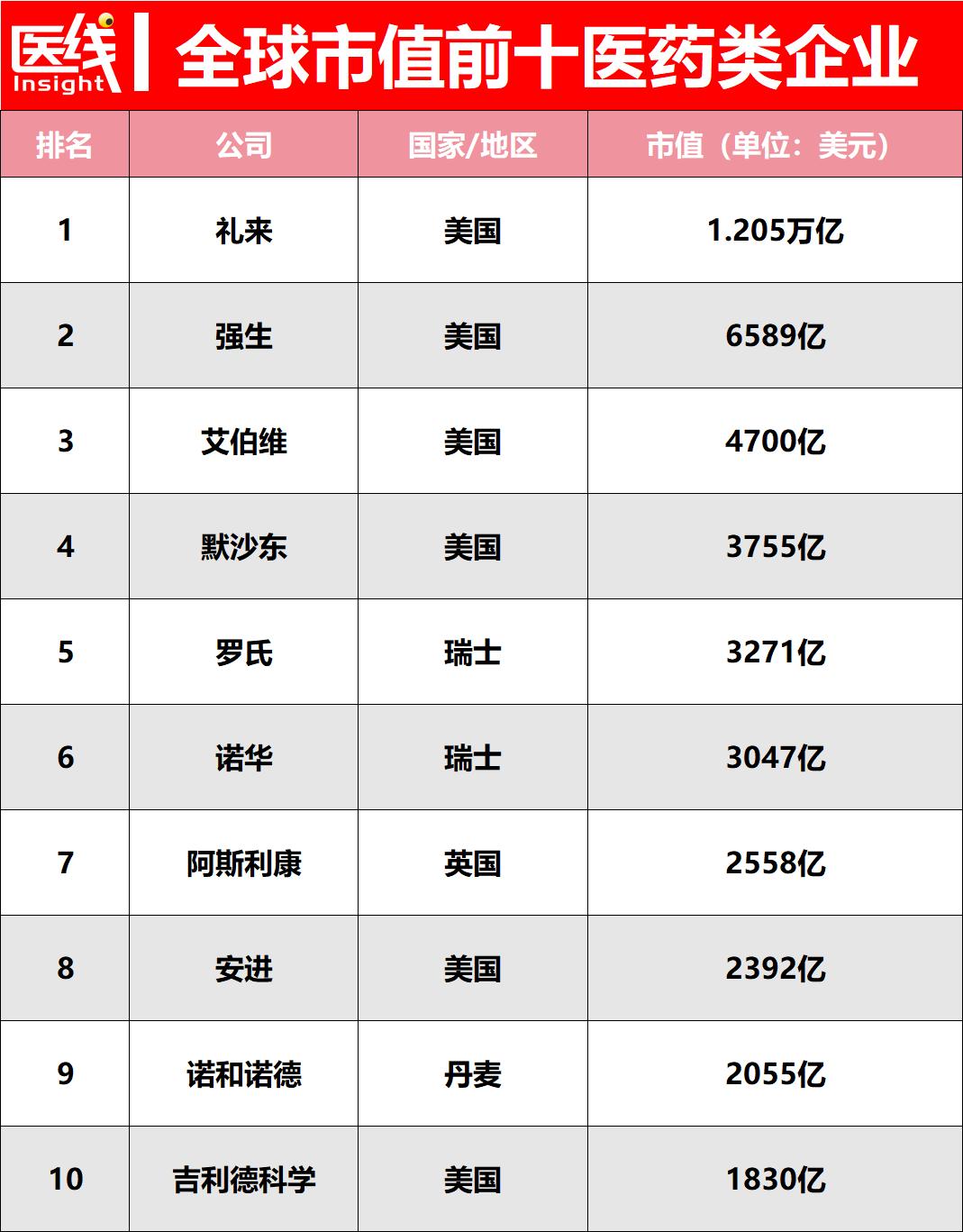
Data source: Eastmoney
It should be noted that Eli Lilly does not have an operating system like Apple, nor a search entry like Google. It is a 150-year-old pharmaceutical company that sells drugs, a set of molecules that can change appetite, weight and metabolism.
But the capital market is re-pricing this capability.
When a drug targets a sufficiently large population, can be used for long-term treatment, and keeps iterating to cover more indications, more convenient dosage forms and stronger efficacy, pharmaceutical companies can also obtain the valuation that was previously more commonly seen in technology platform companies.
What exactly is the 1.2 trillion dollar market value of Eli Lilly betting on?
A super single product, a chronic disease market, or a new pharmaceutical industry model that is taking shape?
01 Century-long Accumulation: One Molecule Drives Trillions in Market Value
On May 10, 2026, Eli Lilly just celebrated its 150th birthday.
Its history dates back to the 19th century. In 1923, Eli Lilly launched Iletin, the world's first commercial insulin product; in 1982, it launched Humulin, the world's first human health product produced using recombinant DNA technology.
Diabetes and metabolic diseases have run through the company's 100-year product history.
The core molecule that has truly pushed Eli Lilly to the trillion-dollar level is tirzepatide.
The same molecule has two brand names in the United States: Mounjaro for the treatment of type 2 diabetes, and Zepbound for obesity.
The latest financial report shows that in the second quarter of 2026, Mounjaro achieved single-quarter sales of $9.94 billion, a year-on-year increase of 91%; Zepbound contributed $4.93 billion.
The two drugs sold a total of $14.87 billion in one quarter, accounting for 64.7% of Eli Lilly's total revenue in the quarter.
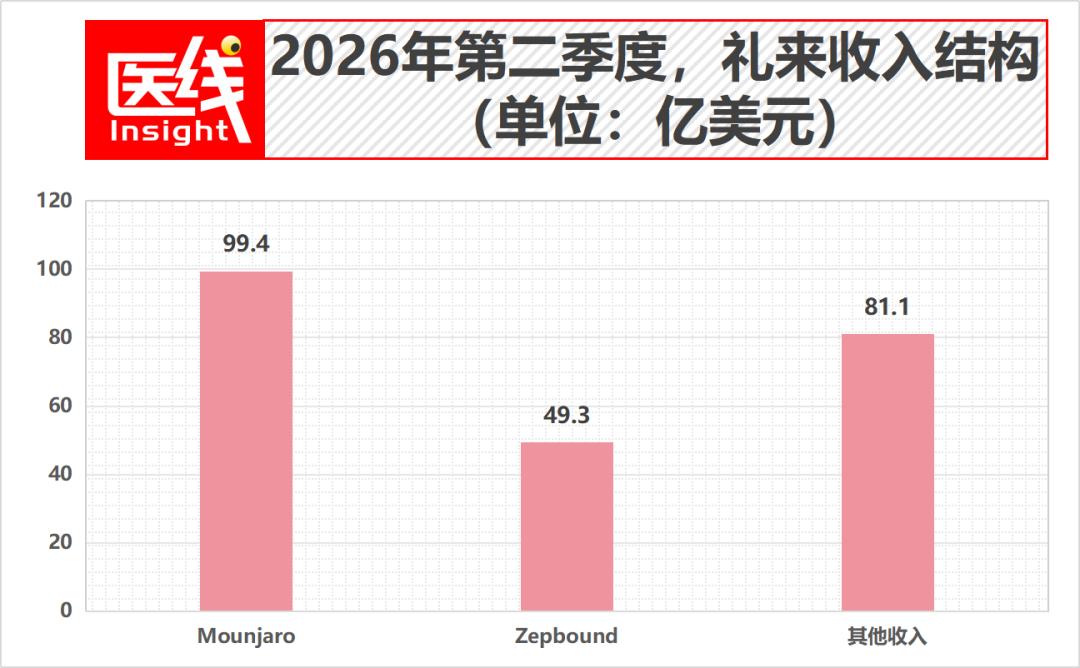
Data source: Eli Lilly financial report
Eli Lilly then raised its full-year 2026 revenue guidance to $85-87 billion.
One core molecule has already supported nearly two-thirds of the quarterly revenue of this trillion-dollar company.
For traditional pharmaceutical companies, this level of concentration usually means risks; for today's Eli Lilly, it also amplifies the imagination of the capital market.
The reason is that behind tirzepatide is a huge population that has almost no boundaries.
Data from the World Health Organization shows that 2.5 billion adults worldwide were overweight in 2022, of which 890 million adults suffered from obesity; the global adult obesity rate has more than doubled since 1990.
The WHO now clearly defines obesity as a chronic, relapsing disease caused by multiple factors including genetics, neurobiology, behavior and the environment.
This change in definition has directly changed the boundaries of the market.
When obesity was long classified as a lifestyle issue, the industries surrounding it were gyms, meal replacements, weight loss camps and willpower management.
After being classified as a chronic disease, diagnosis, prescription, follow-up visit, medical insurance, long-term medication, and decades of continuous drug innovation have all become new industrial links.
The commercial imagination of GLP-1 has also expanded from this point.
A huge group of people is beginning to have the opportunity to move from the lifestyle consumer market to the long-term chronic disease drug market.
In 2025, the global weight loss drug market reached $66 billion; Reuters reports that by 2030, the annual sales of the US weight loss drug market alone may exceed $100 billion.
Eli Lilly's $1.2 trillion valuation has already priced in this population-scale market shift in advance.
02 From Hit Product to Platform: How Eli Lilly Crosses the Patent Cliff
Relying solely on the hot sales of Zepbound is not enough to explain the $1.2 trillion market value.
After all, the traditional pharmaceutical industry has a cruel growth curve.
Drug R&D takes ten years, hit products sell for several years, then patents expire, generic drugs or biosimilars enter the market, and revenue declines rapidly. "Patent cliff" has therefore become one of the most feared terms for large pharmaceutical companies.
Eli Lilly is trying to stretch this curve.
It has built a continuously upgrading product echelon around metabolic diseases, allowing a hit product to gradually take the form of a platform.
The first layer is Mounjaro and Zepbound, which have completed commercial verification.
The second layer is to turn injections into tablets.
On April 1, 2026, the US FDA approved Eli Lilly's oral GLP-1 weight loss drug Foundayo (orforglipron).
The ATTAIN-1 clinical study released by Eli Lilly shows that participants in the highest dose group lost an average of about 27 pounds.
Its commercial significance is straightforward: one tablet a day, no need to coordinate with eating or drinking time, further lowering the threshold for medication.
The third layer is to continue to push efficacy to a higher level.
Retatrutide, which Eli Lilly is developing, acts on three receptors: GIP, GLP-1 and glucagon, so it is often called a "triple-target" metabolic drug.
The Phase III TRIUMPH-1 results released in May 2026 show that after 80 weeks of treatment, participants in the 12mg group had an average weight loss of 28.3%, and 45.3% of participants had at least 30% weight loss; for participants with a baseline BMI of no less than 35 who continued to receive extended treatment, the highest dose group had an average weight loss of 30.3% at 104 weeks.
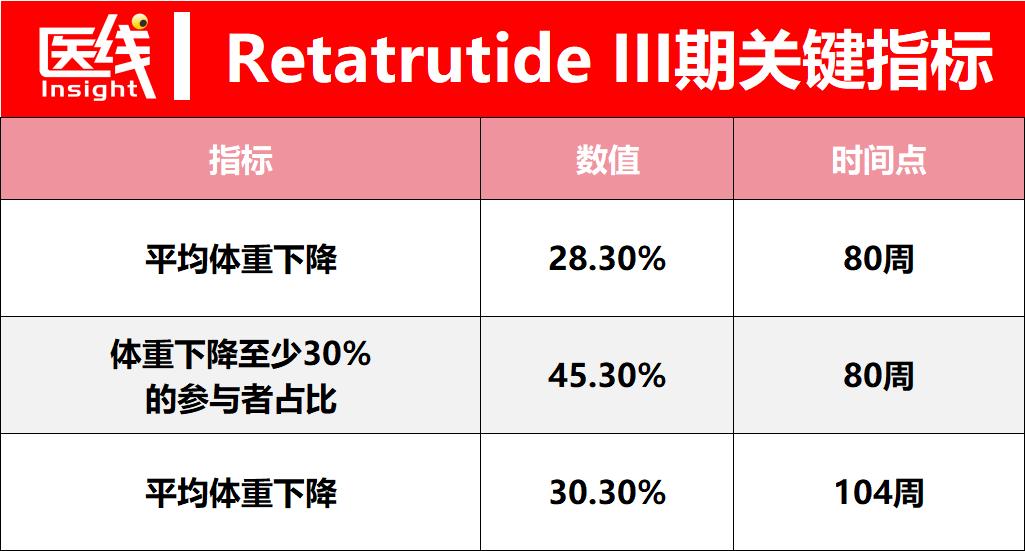
Data source: Eli Lilly financial report
Retatrutide is still an investigational drug, and the clinical trial results still need to be tested by real-world performance in the future.
Putting these three layers of products together, Eli Lilly's iteration path is very clear.
Zepbound proves weight loss capacity, Foundayo lowers the administration threshold, and retatrutide continues to pursue higher efficacy. In the future, different dosage forms, different mechanisms, different indications may be derived, and further address issues such as muscle loss, cardiovascular risk, and sleep apnea.
Indication expansion has already taken place.
In 2024, Zepbound received US regulatory approval for adult patients with obesity and moderate to severe obstructive sleep apnea.
A product that was originally publicly called a "weight loss drug" is entering more specialized disease fields.
The outline of Eli Lilly building a disease platform around "metabolism" is becoming clearer and clearer.
In the past, large pharmaceutical companies often relied on "one drug for one market"; Eli Lilly's new path is to allow one metabolic platform to enter more and more disease markets.
Drugs still face clinical failure, regulatory, patent and safety risks, but from the perspective of product iteration, large pharmaceutical companies have for the first time had a certain imagination space close to the generational upgrading of technology products.
That is, the first generation opens up the market, and the next generation continues to expand the boundary.
03 Manufacturing as Barrier: $50 Billion Rewrites the Moat of Pharmaceutical Companies
There is another often overlooked essence in the GLP-1 battle: this is also a manufacturing battle.
When AI technology companies add 10 million users, they mainly need servers and computing power.
For every 10 million additional long-term medication patients of Eli Lilly, the company needs to add active pharmaceutical ingredients, reaction equipment, purification systems, filling lines, quality systems, packaging capabilities, and a modern pharmaceutical factory verified by regulatory agencies in the real world.
No matter how good the efficacy is, if the supply cannot keep up, the commercial value cannot be realized.
Novo Nordisk's early expansion of Wegovy was affected by supply shortages. One of the important factors why Eli Lilly was able to overtake later was its rapid expansion of production and distribution capabilities.
Eli Lilly has also invested capital in the production capacity side.
In May this year, the company announced an additional $4.5 billion investment in two manufacturing sites in Indiana to support the future possible production of Foundayo and retatrutide.
Since 2020, Eli Lilly's total committed capital expansion investment in the United States has exceeded $50 billion; among them, the Lebanon API base under construction is expected to be put into use in 2027.
The significance of $50 billion has long gone far beyond adding a few production lines for hit drugs.
Eli Lilly is rebuilding its industrial infrastructure around next-generation metabolic drugs.
This will change the ranking of pharmaceutical companies' moats.
In the past, investors first cared about molecular quality and patent term.
When the patient scale reaches tens of millions or even hundreds of millions, another issue comes to the forefront: how many doses can be stably produced in a year? Advanced manufacturing has changed from a back-end capability of pharmaceutical companies to a front-end variable that affects the competitive landscape.
As a result, the world's most valuable pharmaceutical company presents a rare corporate form.
It is both like a biotechnology company and increasingly like an advanced manufacturing enterprise operating super factories.
04 Competitors Are Still in the Game: Novo Nordisk and the Stratification of the Hundred-Billion-Dollar Market
To understand Eli Lilly's valuation, we also need to put Novo Nordisk into the same comparison framework.
The first large-scale commercial success of the GLP-1 revolution came from this Danish company. Wegovy entered the US weight loss market earlier than Zepbound, and Ozempic once became the most representative symbol in the GLP-1 era.
By August 19, Novo Nordisk had a market value of about $205.5 billion, which is less than one-fifth of Eli Lilly's.
The core reasons why the capital market is currently willing to give Eli Lilly a higher price are concentrated in several variables: efficacy, product iteration, capacity expansion, and commercialization pace.
On August 13, Novo Nordisk CEO Mike Doustdar said in an interview with Reuters that the weight loss drug market will not eventually move towards a zero-sum pattern where two companies fight to the death. Differences in dosage forms and patient needs will drive continuous market stratification.
Novo Nordisk's oral Wegovy still occupies about 90% of the oral GLP-1 market, and the company is also continuing to advance its next-generation drug CagriSema.
This precisely reveals the greater possibility behind Eli Lilly's valuation: the weight loss drug market does not necessarily require the winner to take all.
As long as a large market of more than $100 billion is eventually formed globally, a mature disease market that can accommodate multiple giants and dozens of drugs, it may even be more important to Eli Lilly's long-term value than short-term monopoly.
At the same time, the $1.2 trillion market value has already priced in a lot of optimistic expectations in advance.
The higher the valuation, the longer time, larger market and more stable profitability are needed to fulfill it.
05 The Cost of High Valuation: The $1.2 Trillion Bet on Six Premises
Eli Lilly's current share price essentially bets on six things at the same time.
First, patients are willing to use GLP-1 for a long time.
Second, medical insurance and government payment systems continue to expand coverage.
Third, price reductions can be offset by sales growth.
Fourth, the next generation of drugs continues to succeed.
Fifth, there will be no long-term safety issues sufficient to change clinical practice.
Sixth, competitors cannot significantly reduce Eli Lilly's profit margin.
As long as a few of these premises change, the valuation logic may be rewritten.
Price pressure has already emerged. In the second quarter of 2026, Eli Lilly acknowledged that sales of Mounjaro and Zepbound continued to grow rapidly, but the actual realized price declined, and larger sales volume temporarily covered the price pressure.
Long-term market forecasts are also cooling down.
Some consulting agencies once predicted that the weight loss drug market could reach $1500 billion or even $2000 billion by the early 2030s; as GLP-1 prices fell and competition intensified, some forecasts in 2026 have shrunk to about $1000 billion around 2030.
Goldman Sachs' global market forecast for 2030 is about $1050 billion.
Eli Lilly's paradox is emerging here. The larger the market, the less likely the price is to be determined unilaterally by pharmaceutical companies.
If only hundreds of thousands of people use an expensive drug, the problem mainly lies in the commercial dimension; if tens of millions or even hundreds of millions of people need to take the drug for a long time in the future, it will simultaneously become a medical insurance issue, a fiscal issue, and a people's livelihood issue.
Pharmaceutical companies want patients to use it longer, payers want the drug to be cheaper, patients want better efficacy and fewer side effects, and the government needs to ensure that total medical expenditure is affordable. These four forces will pull for a long time.
Therefore, one of the biggest constraints faced by Eli Lilly's $1.2 trillion market value comes from payment capacity.
GPU can justify its price by improving production efficiency, but a long-term drug related to the health of tens of millions of people must ultimately answer a more direct question: who will pay?
06 Re-evaluating the Pharmaceutical Industry: Why the Capital Market Was So Excited on August 19
August 19, the day when Eli Lilly set a new record, was itself an unusually exciting day for the pharmaceutical industry.
On that day, Moderna and Merck & Co announced positive data from the first late-stage clinical trial of their personalized mRNA cancer vaccine, driving the US healthcare sector to rise