Just after spending 60 billion to acquire Cursor, Elon Musk is poised to make his next move on Devin.
Elon Musk, who just spent $60 billion acquiring Cursor, has now set his sights on Devin.
On August 19, Bloomberg exclusively revealed that SpaceX had approached AI programming startup Cognition to discuss a potential acquisition. Cognition is the developer of Devin, the autonomous AI software engineer.

Musk is on the move again.
The outcome is rather awkward. Scott Wu, founder and CEO of Cognition, immediately posted a response on X the same day —
"This is not true. We have great respect for the SpaceX team, but Cognition is not for sale, and we have not conducted any related negotiations."
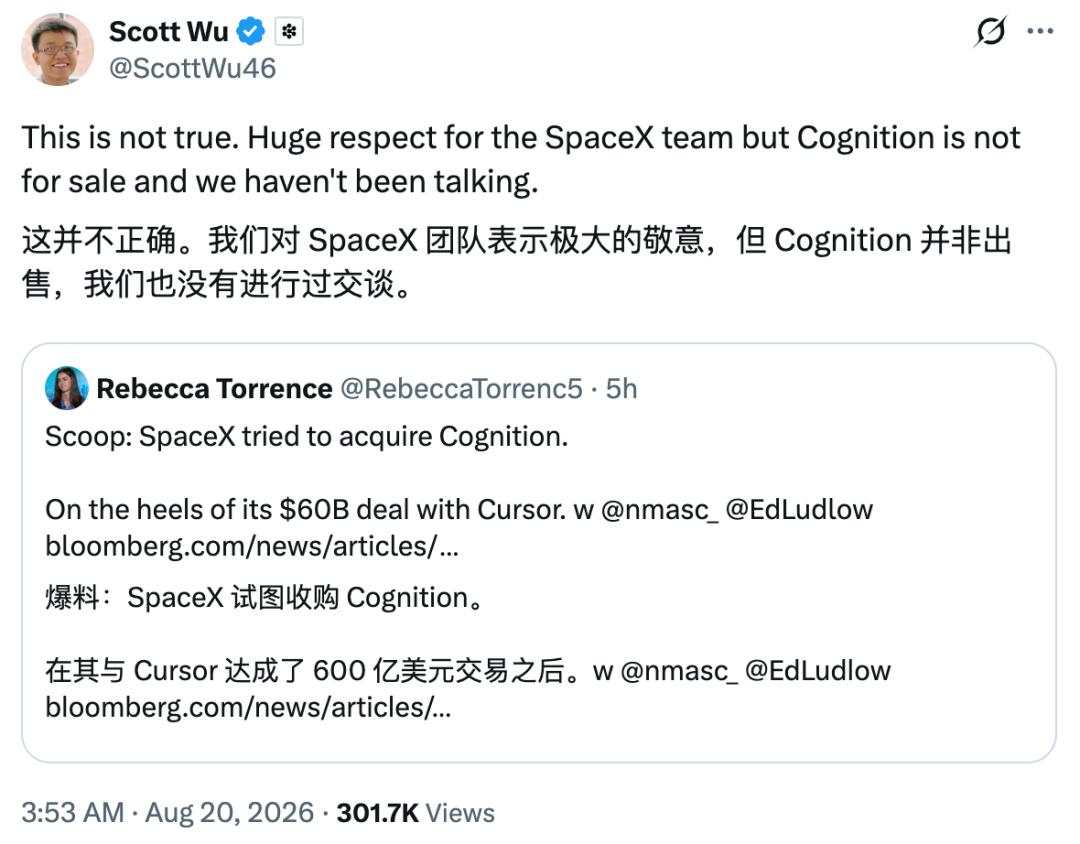
Bloomberg's Account
Bloomberg's statement is more convoluted. According to people familiar with the matter, SpaceX did take the initiative to propose an acquisition to Cognition, but Cognition rejected the offer.
However, the two sides are still negotiating on another matter — allowing Cognition to access SpaceX's computing power resources. It is worth noting that Musk currently controls Colossus, a single cluster equipped with more than 220,000 NVIDIA GPUs.
More importantly, these machines are no longer for exclusive internal use. Back in May this year, even Anthropic was connected to Colossus's computing power.
Here is a key detail: Just a week ago, Musk followed Cognition's official X account.
Who Is Scott Wu?
Scott Wu, born in 1997, is a Chinese-American who grew up in Louisiana. His parents are chemical engineers who immigrated to the United States from Shanghai.
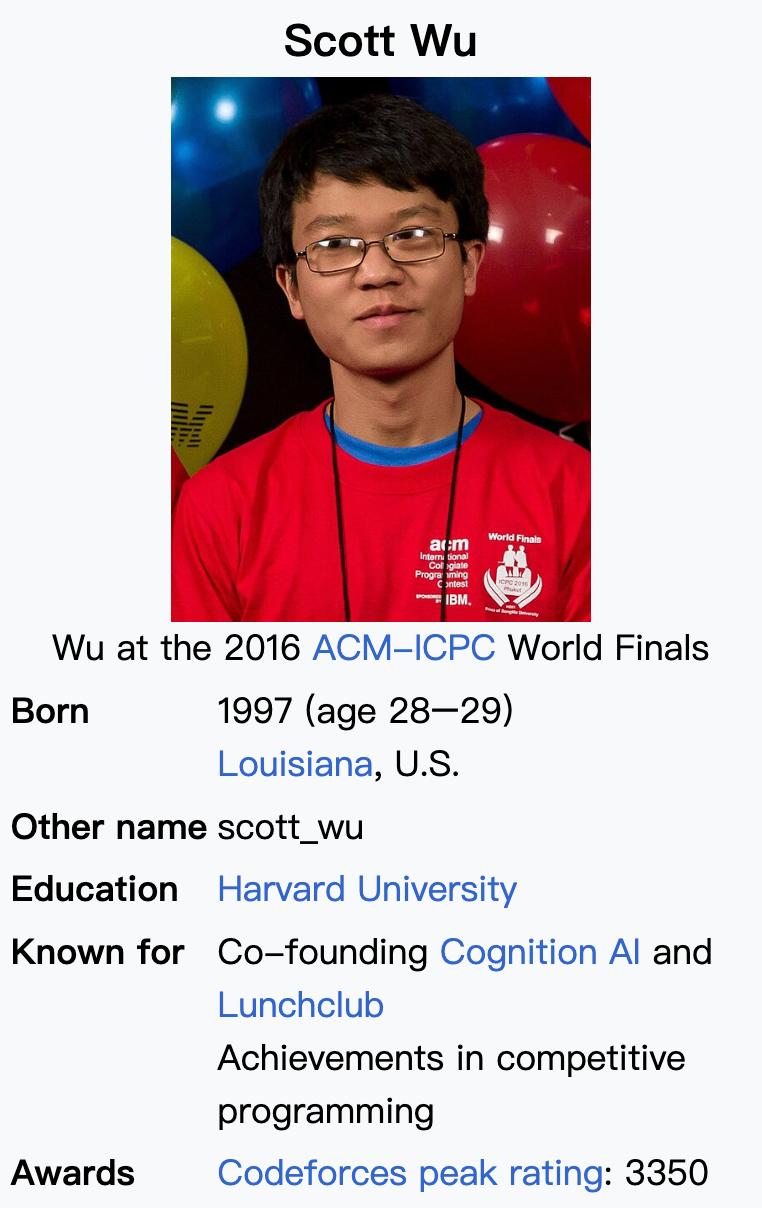
He started writing code at the age of 12. In 2011, he won the U.S. National MathCounts Championship. From 2012 to 2014, he won gold medals for three consecutive years at the International Olympiad in Informatics (IOI), and took the global first place in the last year.
On Codeforces, the most hardcore rating system in the programming circle, he is a "Legendary Grandmaster" with a peak rating of 3350.
After graduating from Harvard University with a bachelor's degree, Wu co-founded AI social platform Lunchclub and served as CTO, and was selected to the 2020 Forbes 30 Under 30 list.
In 2023, together with two former teammates who are also IOI gold medalists, Steven Hao and Walden Yan, he founded Cognition in an apartment in New York. The three founders hold a total of 5 IOI gold medals, and the early core team of the company has 10 IOI gold medals in total.
Interestingly, Cognition originally focused on cryptocurrency business.
It was not until the launch of ChatGPT triggered a general shift in Silicon Valley that they made a decisive pivot and dived into the AI programming track. In Wu's own words, "The essence of getting AI to write code is a deep algorithm problem," which is exactly what they are best at.
In March 2024, Devin was officially launched, billed as "the world's first AI software engineer", and became an instant hit. Up to now, 89% of the code in Cognition's own code repository is written by Devin itself.
How Explosive Is Its Growth?
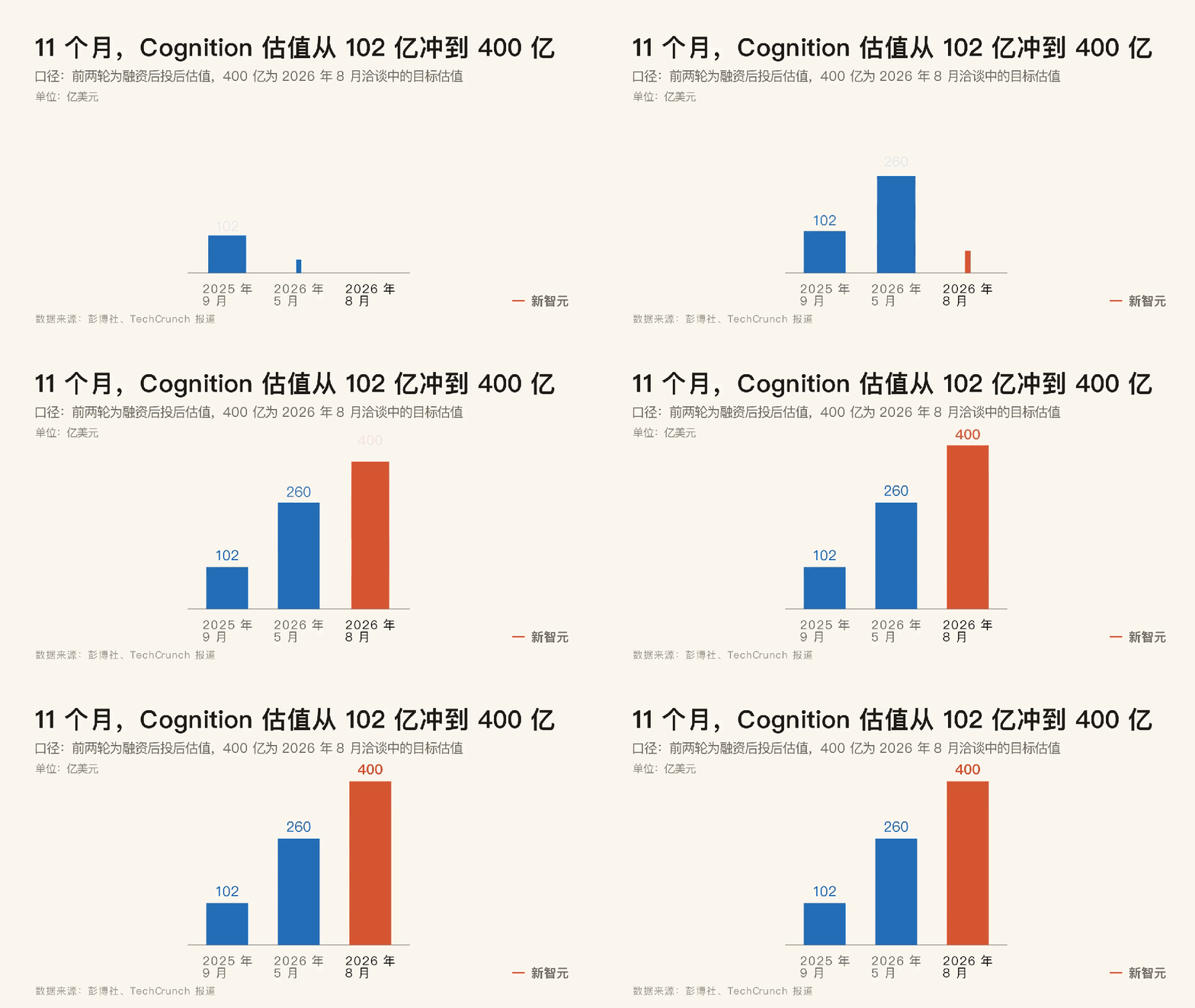
Cognition was founded in 2023. In September 2025, it raised $400 million in a funding round at a post-money valuation of $10.2 billion. Eight months later, in May 2026, it secured more than $1 billion in additional financing at a post-money valuation of $26 billion, led by Lux Capital, General Catalyst and 8VC, with participation from Founders Fund, Elad Gil and other investors.
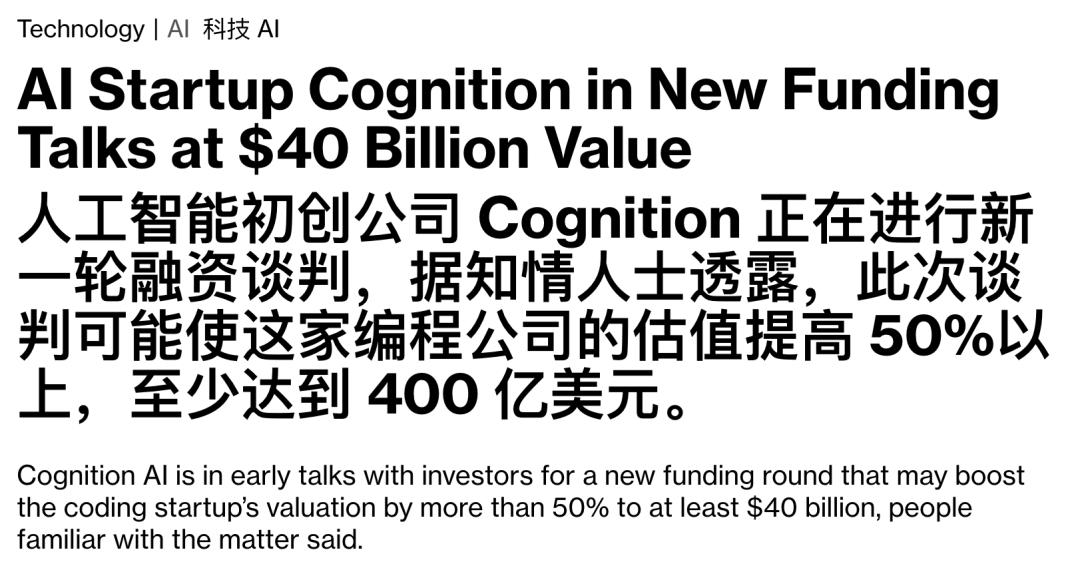
Now it is negotiating a new round of financing, with a target valuation of at least $40 billion, representing a more than 50% increase from the previous round.
Its revenue growth is even more staggering. The ARR disclosed in May was $492 million, which has now approached the $1 billion mark, doubling in three months. Enterprise usage has maintained a 50% month-on-month growth for 6 consecutive months. Its customer list includes Mercedes-Benz, Goldman Sachs, Citi, NASA, the U.S. Army and the U.S. Navy.
In July, after Google poached the core team of Windsurf, Cognition quickly took over the remaining IP, products and 250-person team of Windsurf.
After integrating the IDE and Agent product lines, it is now the largest independent AI programming company in the world, bar none.
It Is Fundamentally Different From Cursor
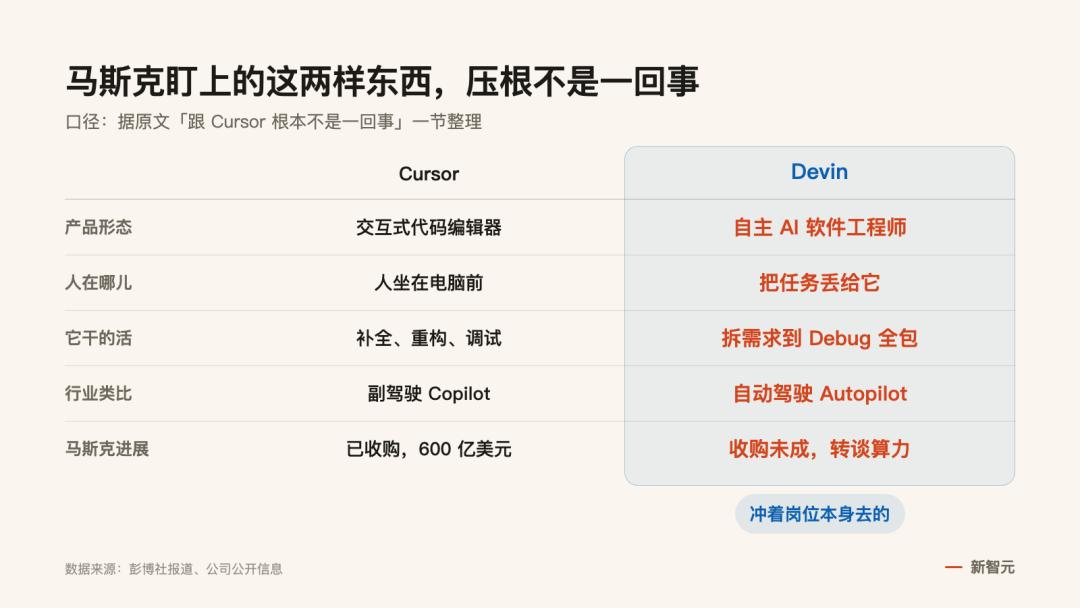
Musk's move to acquire Cursor first and then target Devin stems from the fact that the two products follow completely different paths.
Cursor is an interactive code editor that helps users complete, refactor and debug code. It is essentially a tool to improve programmers' work efficiency.
Devin takes a different approach: you assign a complete software engineering task to it, and it will break down requirements, write code, run tests and debug on its own, finishing the entire work end-to-end.
To put it bluntly, Devin is designed to replace the programmer position itself.
In industry terms, Cursor is a "Copilot", while Devin is an "Autopilot".
The Company Is Not For Sale, But Computing Power Can Be Rented
Of course, as of now, the acquisition talks appear to have collapsed, but the computing power cooperation is still on the table.
In other words, we will not give you equity, but we can use your machines.
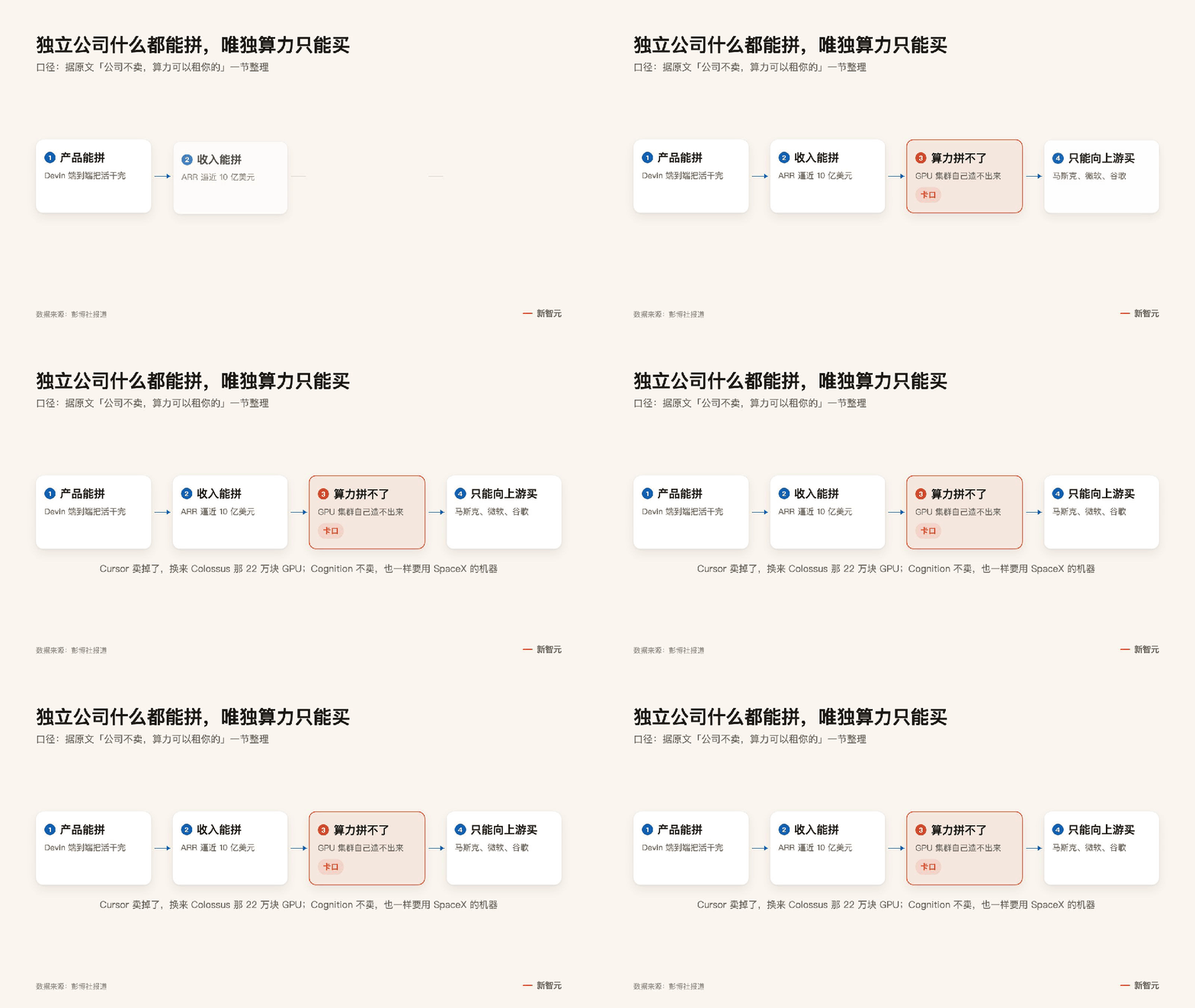
This is interesting. Independent companies can still gain an edge in product development and revenue growth, but they cannot support their own computing power needs, and can only purchase computing resources from players like Musk, Microsoft and Google.
Cursor was sold in exchange for access to the 220,000 GPUs in Colossus. Cognition is not for sale, but it also needs to use SpaceX's machines.
At the end of both paths, the same group of players still control the upstream computing power resources. All roads lead to Rome.
AI programming is evolving from assisting humans to write code, to enabling Agents to complete the entire software engineering process independently. The further this track develops, the greater the demand for computing power will be, and the narrower the path left for independent companies will become.
Scott Wu said the company is not for sale this time. But the next time a $60 billion offer is put on the table, no one knows if the answer will remain the same.
References:
https://www.bloomberg.com/news/articles/2026-08-19/spacex-attempted-to-acquire-ai-coding-startup-cognition
https://x.com/ScottWu46/status/2090165234921296030?s=20
This article is from the WeChat official account "AIspeech", written by Solomon, and is republished with authorization from 36Kr.