The iPhone X has been completely "discontinued", but we have not yet stepped out of the era it defined.
On the quietly updated list on Apple's official website, a familiar name was added last week.
iPhone X has been officially included in the global "Obsolete Products" list. According to Apple's convention, when a device stops being supplied to the global sales network for 7 full years, both official and authorized service providers will completely stop hardware repairs and no longer supply original parts.
Although it was removed from Apple's official website as early as the fall of 2018 and added to the "Vintage" list in 2024, due to the long-tail distribution of global carriers and authorized channels, the "obsolete and supply-discontinued" node officially recognized by Apple has been postponed until today. For this epoch-making product launched in 2017, this marks that it has officially ushered in a complete "retirement" in the official sense.
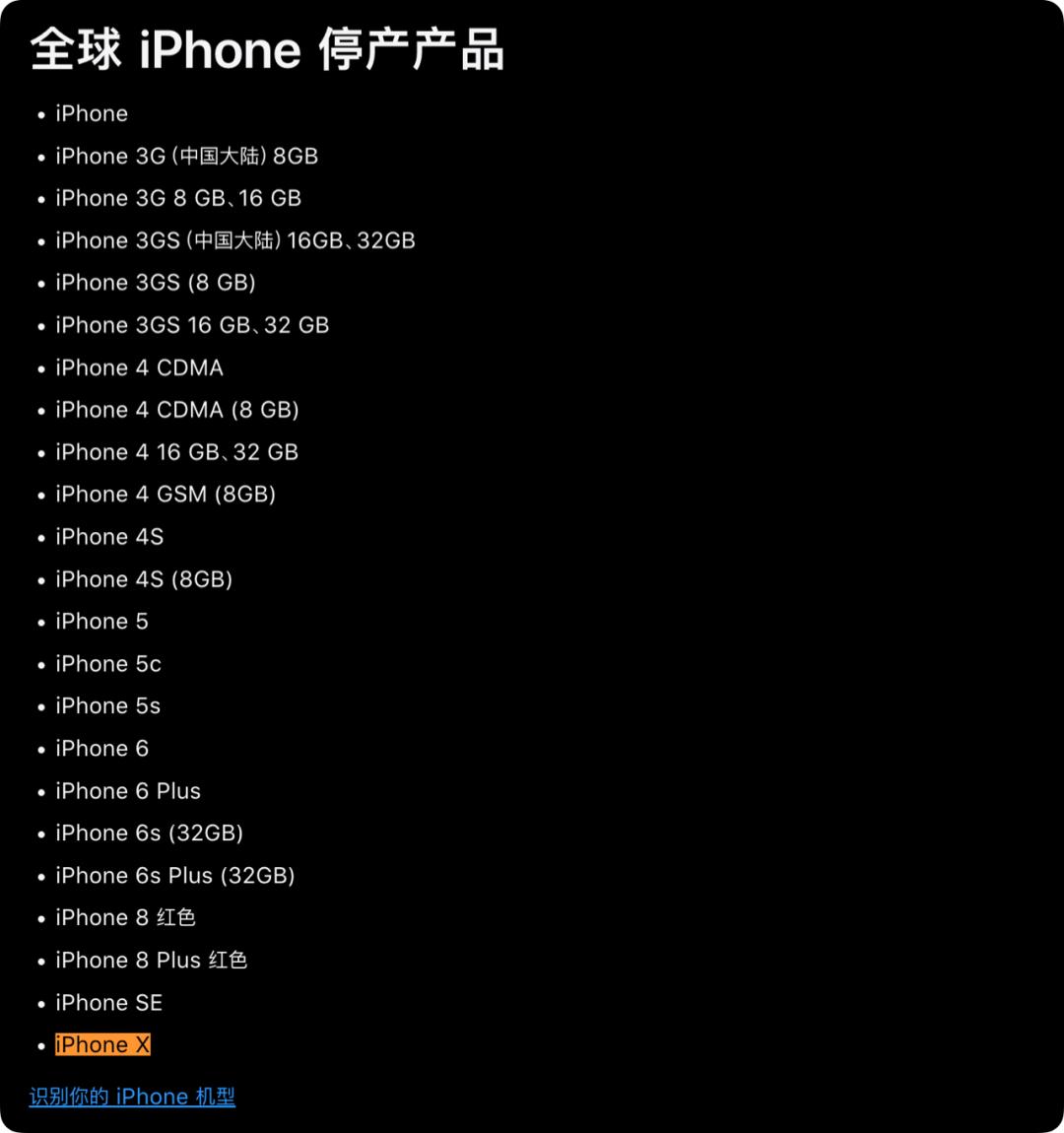
Photo | Apple Official Website 🔗 support.apple.com/zh-cn/102772
A mobile phone released in 2017 completed the last stop of its life cycle in 2026. Coincidentally, its exit just falls at a very special point in time.
In 2017, exactly ten years after the release of the first-generation iPhone, Apple chose to launch the iPhone X at this node; now, on the eve of the 20th anniversary of the iPhone, this 10th-anniversary iPhone has been officially added to Apple's "Obsolete Products" list.
Looking back this way, the iPhone X stands exactly at the midpoint of the first 20 years of iPhone history: the first decade opened by the first-generation iPhone lies before it, and the second decade that it helped define lies after it.
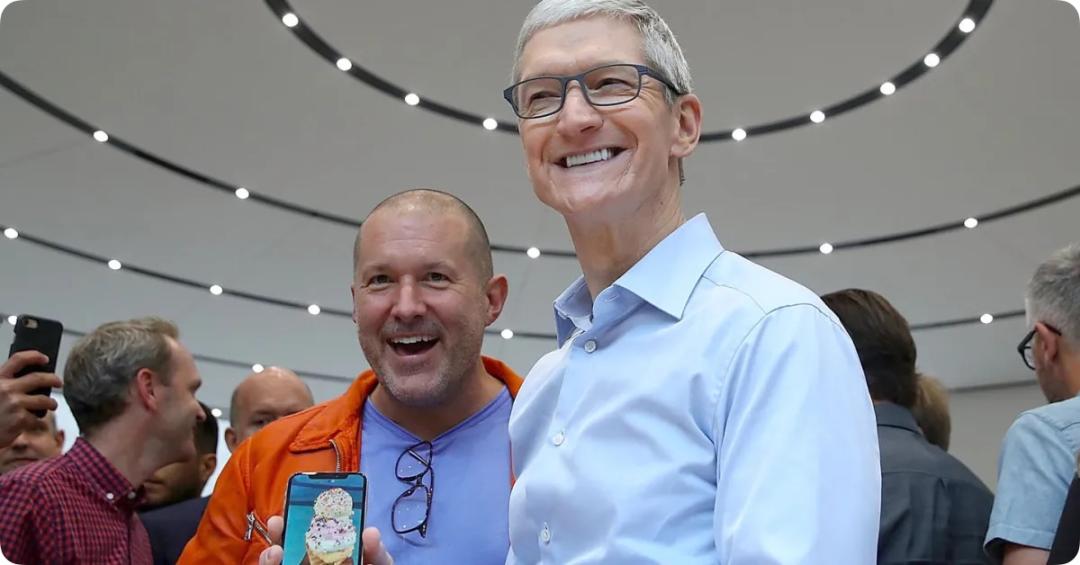
Photo | 9to5Mac
Looking back at Apple's fall 2017 launch event, Tim Cook stood on the stage and said that iPhone X would "lay the route for technology in the next decade";
In the voiceover of the promotional video, Chief Design Officer Jony Ive gave the iPhone X a rather romantic definition in his iconic tone:
For over a decade, our goal has been to create an iPhone that is entirely screen. A physical object that disappears into the experience.

At that moment, many people thought this was just another regular promotional phrase; at this moment, looking back at the node where the product's life cycle draws a physical full stop, the former was fulfilled without a single deviation, while the latter has become the ultimate obsession that the entire industry has been quietly approaching for the whole ten years that followed and has not yet completed.
The iPhone X is such a clear watershed: it personally closed the first decade of smartphones, and drew an early template for the next decade.
The end of the first decade: the history of the disappearance of front buttons
One of the most radical features of the first-generation iPhone is that it directly removed the physical keyboard on the front of the phone.
Before that, physical keys such as number keys, direction keys, answer and hang up keys filled the front of mobile phones, and BlackBerry even made the full QWERTY keyboard a symbol of business mobile phones. However, Apple replaced these keys with a whole multi-touch screen, so that the keyboard only appears on the screen when input is needed.
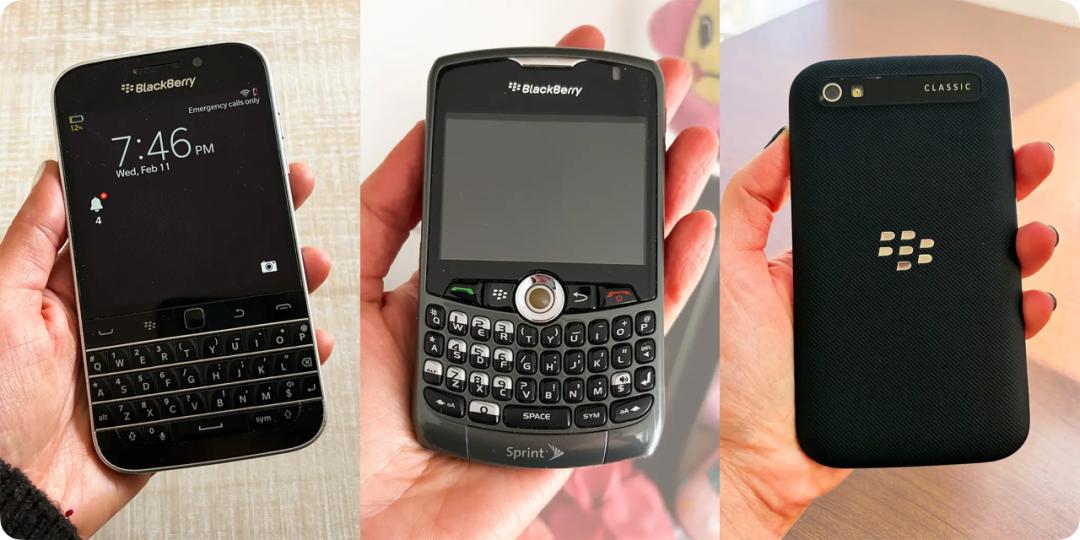
Photo | NYT Wirecutter
This decision seems obvious today, but it was far from easy to accept in 2007.
Shortly after the iPhone was released, then Microsoft CEO Steve Ballmer publicly mocked the phone. He thought the $500 price was ridiculously expensive, and more importantly, the iPhone without a physical keyboard would hardly attract business users because it "wasn't a very good email machine".
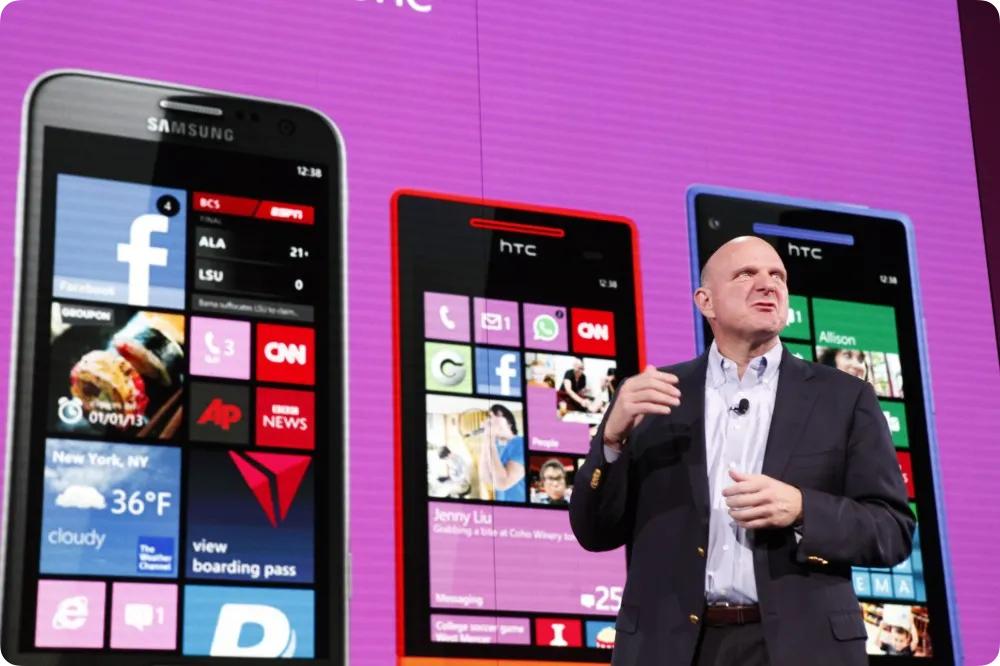
Photo | Steve Ballmer at the 2012 Windows Phone 8 launch event | Wired
From the perspective of that time, this judgment actually had its practical basis. Email and SMS were still one of the most important productivity scenarios for mobile phones, and the QWERTY keyboard of BlackBerry that allowed fast blind typing was exactly the habit that many business users had already formed.
Apple essentially asked them to abandon the tangible keys and trust a piece of glass without any tactile feedback. Fortunately, the later market soon proved that Apple's radical choice was valid.
Users gradually adapted to the on-screen keyboard, and physical QWERTY keyboards began to withdraw from mainstream smartphones. After removing the keyboard that permanently occupied the front of the device, it can pop up from the screen at any time when input is needed; when not needed, the entire screen can be fully reserved for web pages, photos and apps.
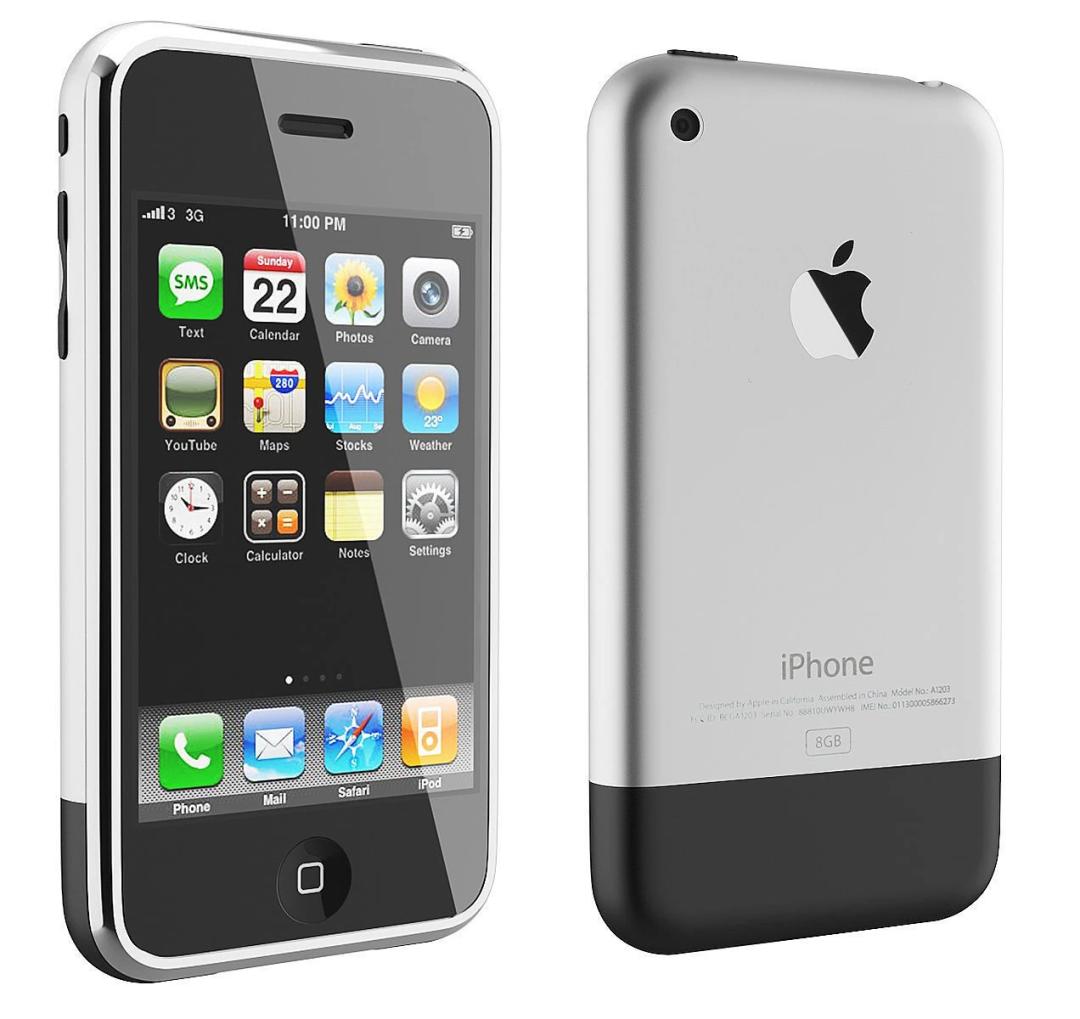
Photo | iPhone 2G
Android phone manufacturers later embarked on a similar path, but for a long time, the "three major navigation keys" of back, home and multitasking were still retained under the screen.
Samsung even kept its iconic oval physical Home key until the Galaxy S7 era in 2016. Physical buttons, capacitive touch controls and the screen above together constituted the front face of smartphones that could be recognized at a glance in that era.
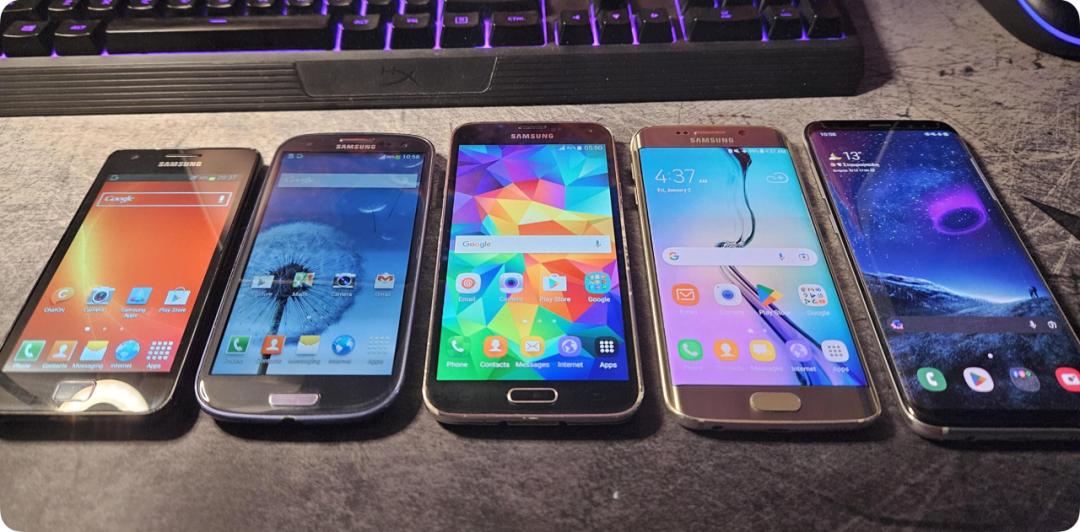
Photo | Galaxy S II to Galaxy S6 Edge, S8 | Reddit @justsomeone330
Over the decade, keyboards disappeared, navigation keys became fewer and fewer, and mobile phone screens got larger and larger.
By 2017, the smartphone market had become extremely mature. Global smartphone shipments reached a peak of about 1.55 billion units that year, the size of flagship models from various manufacturers gradually converged at around 5.5 to 6 inches, and the Galaxy S8 also removed the physical Home key on the front half a year before the iPhone X.
All manufacturers were making the bezels narrower and narrower, but few people answered a question: when there is really nothing left on the front, how should people operate the mobile phone?
The answer given by iPhone X is so familiar to most people today that it is almost not worth mentioning.
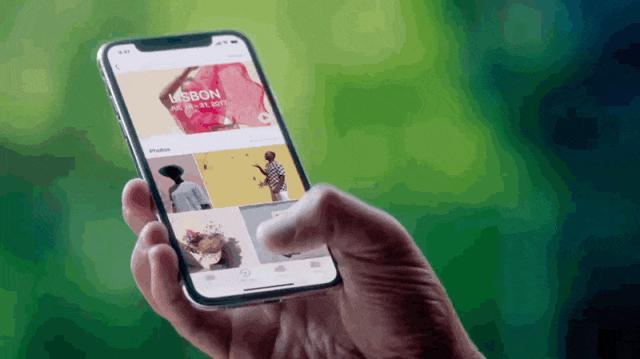
Swipe up from the bottom to return to the home screen, hover to enter multitasking, and swipe horizontally along the edge to switch apps — several core actions that originally relied on buttons became a set of smooth, intuitive gesture interactions on the iPhone X.
And it is exactly this set of operation logic written with a tough meaning back then that unknowingly became the "standard answer" commonly used by the entire mobile phone industry in the following years.
Facing the disappearance of this key that accompanied users for ten years, Apple only half-jokingly asked the question for users in that year's official advertisement:
Where is the Home button?
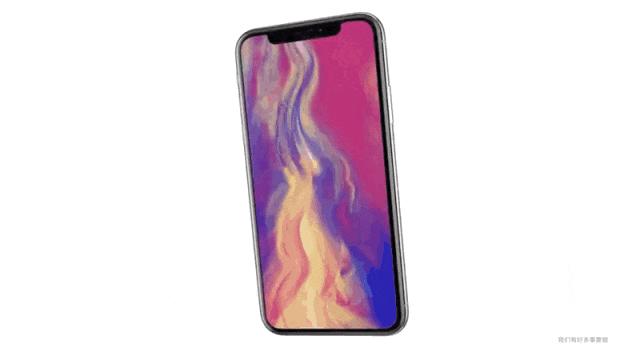
Photo | iPhone X official promotional video
This copy expressed the first reaction of countless people in 2017. That round Home key was too familiar to users: it accompanied users for a full ten years, one tap to return to the home screen, two taps to enter the background, long press to wake up Siri, and after Touch ID was added, unlocking and payment also relied on it.
Its logic is extremely simple: even the elders who are using smartphones for the first time, no matter what unknown interface they enter, can return to the familiar home screen as long as they press the circle at the bottom.
After the iPhone X was launched, this simple and crude sense of certainty suddenly disappeared. All operating habits were suddenly broken and reorganized —
To enter multitasking, you need to master the short pause when swiping up, the Control Center was moved from the bottom of the screen to the upper right corner, and the key combinations for screenshots and shutdown were completely changed. People who just switched to the new phone would often subconsciously press their thumbs on the empty chin area.
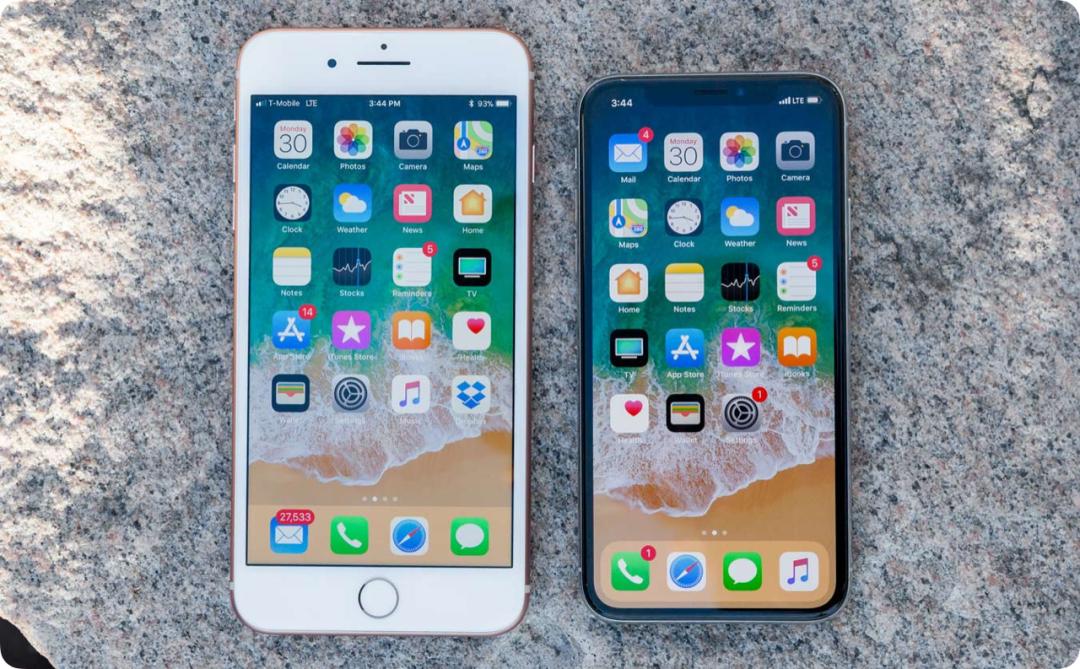
Photo | iPhone 8 Plus and iPhone X | Tom's Guide
In order to make up for the sense of uncertainty caused by the lack of physical buttons, Apple for the first time increased the touch sampling rate to 120 Hz on the iPhone X.
Although the screen refresh rate is still 60 Hz, the higher sampling rate allows the system to capture the finger's movements in real time. With the cooperation of the underlying non-linear animation, the pushing, hovering and horizontal switching of the interface for the first time have an intuitive following feel.
Before long, the Android camp also fully followed up on this set of gestures, and the virtual navigation keys at the bottom of the screen gradually exited. Today, when you hand an iPhone 8 to a new generation of users, the wide upper and lower bezels and that round button have become an "antique" design that needs special explanation.
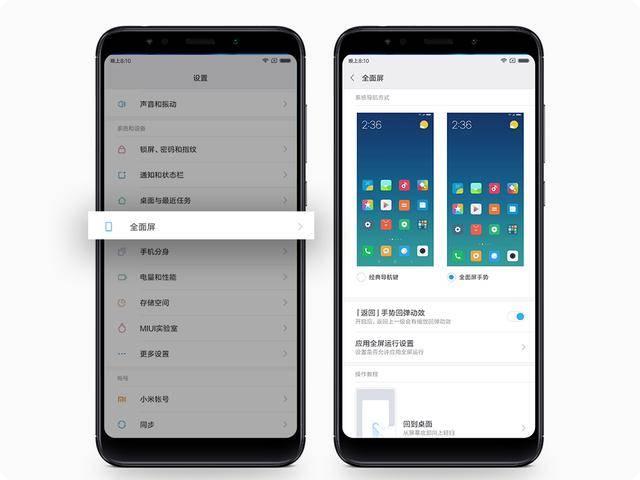
Photo | Full-screen gestures of MIUI at the end of 2017 | Sohu.com
From the first-generation iPhone removing the physical keyboard in 2007 to the iPhone X removing the Home key in 2017, it took a full ten years for the physical buttons on the front of the mobile phone to completely disappear. The front finally left only a whole screen.
The much-maligned notch hides an entire era behind it
Apart from defining the interaction for the next decade, the most eye-catching part released along with the iPhone X is undoubtedly the special-shaped "notch" at the top of the screen.
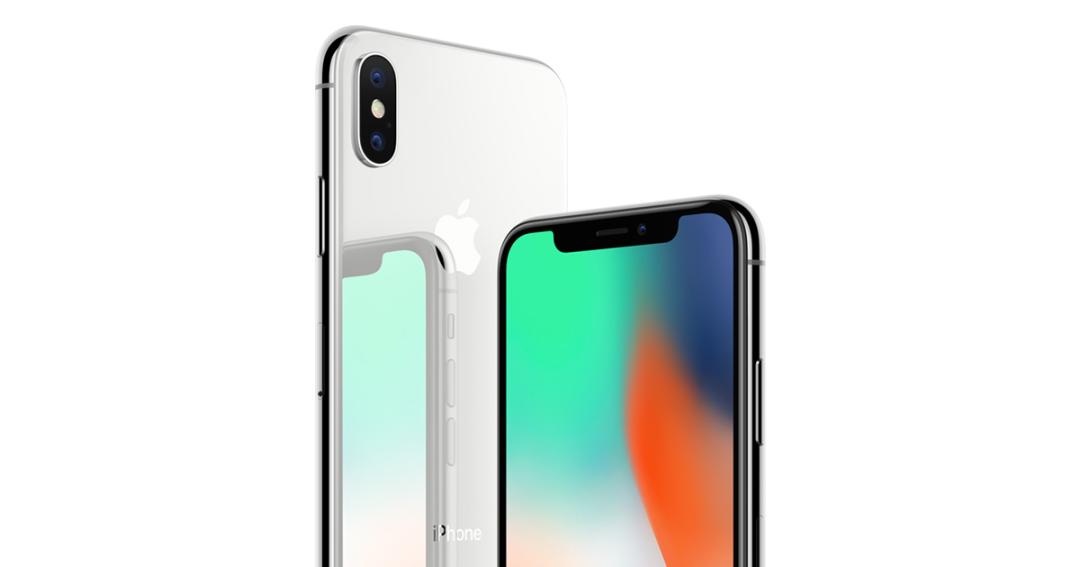
Photo | Apple
In various concept drawings circulated before, people expected the future to be a seamless piece of black glass, but when the real device was unveiled, the top looked like it had been "bitten off" by force.
Old rival Samsung did not let Apple go either. It produced a series of comparative advertisements called "Growing Up", in which queuing users buying iPhone X wore funny "notch hairstyles". Even without lines, the biggest complaint about iPhone X back then was written on their foreheads.

Photo | Samsung
This abrupt notch is actually a helpless compromise. Apple's difficulties came from the brand new biometric recognition scheme after the Home key disappeared — Face ID.
After Touch ID disappeared along with the Home key, Apple did not move the fingerprint recognition to the back like many Android phones at that time, but directly replaced it with Face ID.
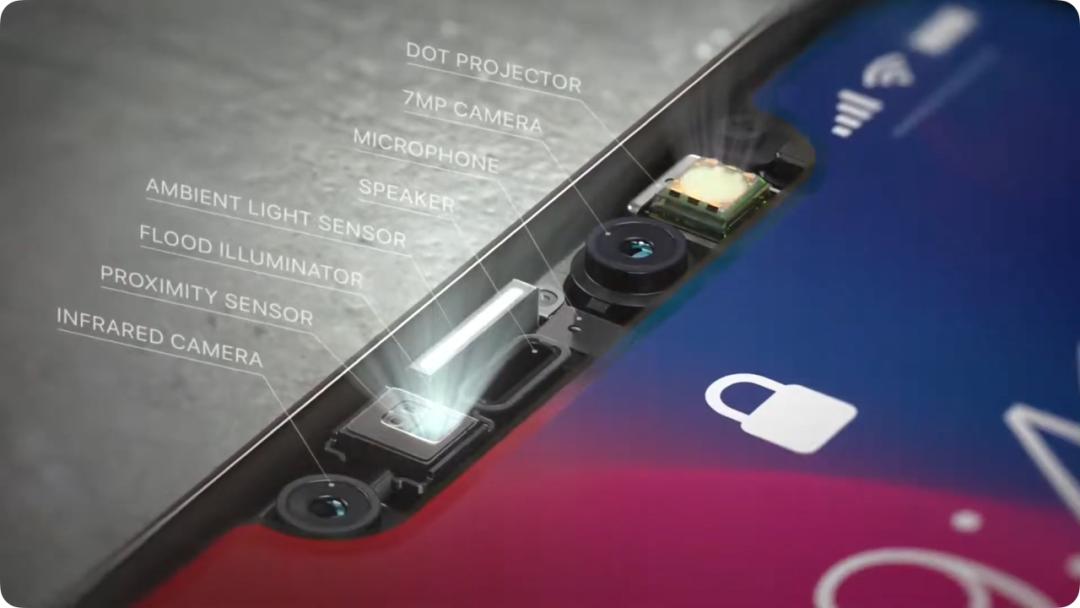
Photo | Apple
For