What are the leading companies in the AI comic drama industry?
If 2025 was the "entry year" for AI manhua dramas, then in 2026, this industry has entered a real industrialized competition.
In the past, when a company produced a manhua drama, it first had to solve problems related to illustrators, animators, voice actors, and post-production; now, it needs to address a different set of issues: where to obtain market-proven novel copyrights, how to split a long web novel into hundreds of high-tension plot units, how to generate consistent characters and shots stably, and who will distribute the works to traffic platforms such as Douyin and Hongguo.

Therefore, when discussing "AI manhua drama companies" today, we can no longer only focus on who masters AI technology. An industrial chain composed of distribution platforms, copyright holders, producers, and production parties is taking shape around each AI manhua drama. Companies including Fanqie, Jiuzhou, and Hippo control traffic entrances; institutions such as China Literature, Yanyan Stories, and Shuqi Novels hold IP resources; producers including Lingju Animation, Magic Cube, and Ai Kan Interactive are responsible for project evaluation; production companies such as Yingmi Technology, Hangzhou Yunfan, and Wuhan Yunjing turn content into products that can be delivered in batches.
A seemingly AI-driven content revolution ultimately still competes on the synergy efficiency among IP, production capacity, and traffic.
The real entry barriers for AI manhua dramas are rising
AI manhua dramas do not simply make comics "move", but use large language models, image models, and video models to quickly convert novels into scripts, character settings, storyboards, dynamic frames, voiceovers, and finished films. Compared with traditional animation, its production cycle and cost are greatly reduced, and it is more suitable for short video dissemination with episodes of one to three minutes.
Reports released by third-party institutions DataEye and Huidong Chuangxiang predict that the domestic AI manhua drama market size will reach 400 billion yuan in 2026, with more than 220,000 new works added in the first half of the year. However, this set of data also reveals the other side of the industry: the hit rate of new works with over 100 million views is only about 0.48%, and only about 1.3% of new dramas reach the break-even line calculated by the institutions. In other words, AI has lowered the production threshold, but not the threshold for creating blockbusters.
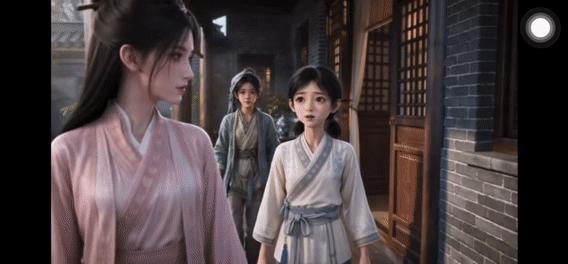
The data of top-tier works is already quite staggering. In the first half of 2026, *Exiled to the Borderlands, My Convict Wife Tames a War God While Reclaiming Wasteland* gained an incremental view count of 2.127 billion; AI hyper-realistic human drama *The God of Wealth Descends to Earth and Lifts Me to the Clouds* produced by Xi'an Lingxi Pictures reached 1.274 billion views; *The Sincere Guardian of the Fishing Village* reached 1.18 billion views. Top works on the Hongguo platform are almost all occupied by 3D manhua, and works such as the *Record of Ten Thousand Demons* series and *The Mixed Spiritual Root is the Real BOSS in the Magic Basin of Wealth* are continuously developed into multiple seasons.
This shows that AI manhua dramas have already formed two distinct product lines.
One line focuses on AI hyper-realistic human dramas and down-to-earth themes targeting native traffic on Douyin, with rebirth, counterattack, family ethics, era life, and getting rich through farming as the mainstream themes. It pursues a fast opening, dense conflicts, and direct emotional expression, essentially using AI characters to re-interpret the mature narrative logic of short dramas.

The other line is 3D Xianxia manhua dramas on the Hongguo platform. The worldviews of immortal cultivation, spiritual roots, game systems, otherworlds, and demon beasts can fully give play to the advantages of AI in scenes, special effects, and virtual characters. From April to June 2026, the proportion of 3D manhua in relevant rankings rebounded significantly, and the view count in June increased by more than 16 times compared with that in January. It is evolving from the early low-cost "silly comedies" to lightweight animations that place more emphasis on picture completeness and consistent worldviews.
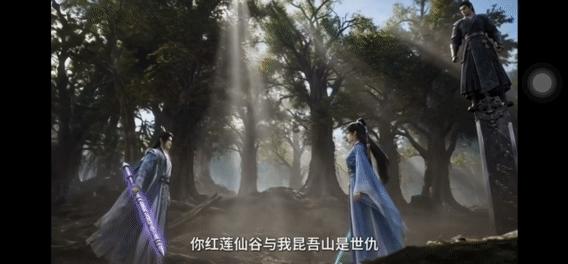
It is precisely in this process that the industry has begun to shift from "everyone can make it" to "who can make it stably". Inaccurate script disassembly, constantly changing character images in each shot, incoherent movements that cause audiences to exit quickly, and no payment hooks formed in the first few episodes will make it impossible to recover costs no matter how low they are. AI solves the problem of single-shot generation, but enterprises need to solve the industrial management problem of a full-length drama.
Four types of companies gather: who is mastering the AI manhua drama industrial chain
AI manhua drama companies can be roughly divided into four layers, but this division of labor is not completely clear-cut. More and more enterprises are entering the copyright, production, manufacturing, and distribution links at the same time, hoping to obtain higher profit margins and avoid being constrained by upstream and downstream parties.
The distribution platforms are closest to users.
In the first half of 2026, in the relevant statistics of native AI manhua dramas on the Douyin platform, Fanqie ranked first with an incremental view count of 229.7 billion, accounting for about 67.9% of the total of the top 15 platforms; Jiuzhou reached 668.74 billion, Hippo reached 228.06 billion, and Zhangyue, Maiya, Zhuyun, Huasheng and Shanhai are also at the forefront.

Although this set of data includes a broader caliber such as AI hyper-realistic human dramas, it is enough to illustrate the traffic concentration: Fanqie has formed a closed loop of "web novel - adaptation - distribution - feedback" relying on the Hongguo Free Short Drama, Fanqie Novels and Douyin ecosystem; Jiuzhou, Hippo, and Maiya originally had experience in the field of live-action short drama distribution and traffic investment, and can transfer their capabilities in topic selection, material testing and account operation to AI manhua dramas; in addition to digital reading, Zhangyue has launched businesses such as Paoman, trying to connect IP, creation and distribution at the same time.


Zhuyun, Huasheng, Shanhai, Judian and Jiangyou form a more flexible distribution force. They may not all have the traffic entrances of super platforms, but they can rely on short drama distribution experience, creator matrices, traffic investment capabilities or vertical accounts to operate works through multiple channels. After the surge in AI manhua drama supply, what is truly scarce is no longer "accounts that can upload works", but distribution teams that can judge whether a drama is suitable for paid traffic investment, natural traffic or platform revenue sharing.


The second layer of the industrial chain is the copyright holders.
At present, the most advantageous enterprises are those that already have web novel content pools. Yanyan Stories, backed by the Zhihu story ecosystem, publicly claims to have 100,000-level copyright resources and has incubated more than 100 manhua dramas on the ranking lists; Shuqi Novels and China Literature have large-scale web novel inventories with relatively complete themes, author and user data. China Literature has also announced the opening of 100,000 high-quality IPs and the establishment of a 100 million yuan creation fund, which shows that leading web novel platforms no longer regard AI manhua dramas as a marginal copyright business, but as a new outlet for IP development.


Another type of copyright holder comes from short drama and new content institutions, including Ai Kan Interactive, Xiyao Digital, Shuocai, Lingju Animation, Youhe, Magic Cube, Chenke Culture and Xinghuo. Their advantage is not necessarily the total amount of copyright, but being closer to the market: they know which books are suitable for adaptation, which character relationships can quickly generate emotions, and which themes have been verified by the platforms.

In the relevant statistics on the Douyin platform, Yanyan Stories, Ai Kan Interactive and Shuqi Novels rank among the top copyright holders; under the Hongguo statistical caliber, China Literature, Lingju Animation, Yanyan Stories, Magic Cube and Ai Kan Interactive form another group of top camps. The differences in platform rankings mean that copyright value cannot only be measured by the number of works, but also by the matching degree between IP and users of specific platforms.
The third layer of the industrial chain is the producers.
Lingju Animation, Magic Cube, Ai Kan Interactive and Jiangyou have shown a tendency to extend to the whole industrial chain: they can not only participate in copyright acquisition, but also organize production and distribution. Yunsuo Film, Yunhao, Guangyu, Daduoduo, Chenke Culture, Huoxing Animation, Mansen Manju and Haiyu Starry Sky together form an active professional production camp.
Producers actually take the role of "project manager plus investor": selecting IP, determining art style, controlling budget, organizing production, determining the launch rhythm, and deciding whether to continue shooting based on data. In the first half of 2026, Daduoduo Animation and Chenke Culture respectively had 6 works entering the top 100 list related to Hongguo; Guangyu and Ai Kan Interactive had 4 works each, and Lingju Animation had 3 works. The interval between the launch of the third season and the fourth season of *The Mixed Spiritual Root is the Real BOSS in the Magic Basin of Wealth* produced by Chenke Culture is only 20 days, which reflects the serialized production and rapid seasonal renewal capability.
Jiangyou represents another large-scale path. Public reports show that it can produce 60 to 70 manhua dramas per month, and explore traffic investment, natural traffic and long video platform revenue sharing at the same time. It proves that AI manhua drama companies can not only bet on a single blockbuster, but also spread risks through content portfolio operation.
The fourth layer of the industrial chain is the production companies.
Yingmi Technology, Hangzhou Yunfan, Wuhan Yunjing, Xi'an Lingxi Pictures, Anhui Yige Jindou and Xiaoniu Film constitute a group of noteworthy companies in the current AI manhua drama production link. Third-party