Global top-tier wealthy families are investing in a former Alibaba employee
A rare scene.
On August 20, Tec-Do announced the completion of a new round of financing. This round of financing was led by Huatai-General Atlantic, with Kunpeng Guangyuan, GAC Capital, Junsheng Investment and other institutions participating in the follow-on investment.
Exclusive sources from PE Daily reveal that the entire process from initiation to closing of this financing took only two months, with investment intentions far exceeding the allocable quota, leaving some institutions unable to secure their share in the end.
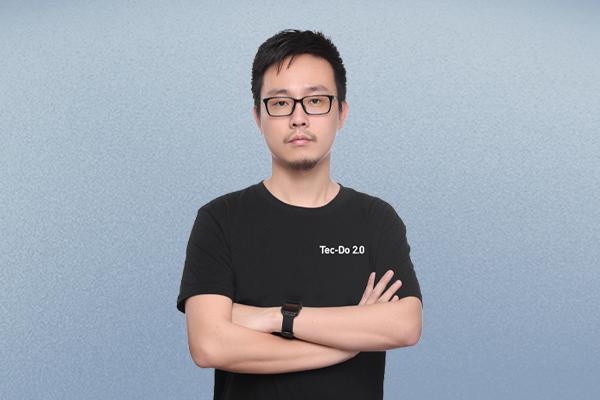
Headquartered in Guangzhou, the founder standing behind Tec-Do, Li Shuhao, started his career at Huawei and later accumulated years of experience at Alibaba. He is known in China as "the person who best understands global traffic". Over nearly a decade, he has brought Tec-Do to the global stage of the AI industry, with business covering more than 200 countries and regions around the world. He also took the lead in partnering with OpenAI to seize the trillion-dollar blue ocean of Agentic Commerce. Today, he is leading the team to sprint for the IPO.
In this context, a grand narrative is faintly emerging: AI-driven Chinese globalization enterprises are moving to the center of the world stage.
Top Global VCs Step In, A Vane Emerges
The line-up of this round of financing is impressive.
Different from ordinary financial investments in the past, the investor line-up of this round combines top global growth capital, leading industrial capital and first-tier venture capital institutions. The collective entry of such a diverse capital structure precisely confirms Tec-Do's scarce investment value, and also outlines the main investment line of the next stage of the AI industry.
Among them, the most noteworthy move is from Huatai-General Atlantic. This fund is jointly initiated by General Atlantic, a globally renowned investment institution, and Huatai Baoli Investment Management Co., Ltd., a private equity management institution under Huatai Insurance Group, integrating local industrial resources, long-term capital vision and global investment experience.
The global venture capital circle is no stranger to General Atlantic. General Atlantic currently has an overall AUM of over 1 trillion US dollars and is a benchmark institution in the global growth investment field. In its past investment portfolio, it has accurately bet on globally phenomenal technology enterprises such as Alibaba, Meituan, ByteDance, Anthropic, and SHEIN, with extremely strong judgment on cutting-edge industries and global resource integration capabilities.
General Atlantic made its first bet on ByteDance in 2017, when the latter was valued at about 20 billion US dollars. Today, that valuation has soared to over 500 billion US dollars. It can be said that General Atlantic accompanied ByteDance through the entire transition from a "Chinese startup" to a "global technology giant", and this investment also proved its judgment on "globalized Chinese AI enterprises".
It is understood that leading the new round of financing for Tec-Do is the first direct equity investment made by Huatai-General Atlantic since its establishment. This investment giant has placed its first RMB fund lead investment project in Tec-Do. The significance behind this choice may far exceed the investment amount itself, faintly sending a signal to the market: the next generation of Chinese AI enterprises with global competitiveness has entered the scope of top international capital.
This is also a milestone moment for Tec-Do: being heavily invested by top international capital means that the Useful AI route (the "AI that delivers real value", originating from Jensen Huang's viewpoint) that focuses on vertical business scenarios and is result-oriented is one of the most certain growth tracks in the eyes of capital, and it is the most intuitive recognition of its global development prospects.
Looking at the follow-on investors this time, Kunpeng Guangyuan and GAC Capital are both well-known industrial institutions. Among them, Guangyuan Capital has invested in star companies such as GDS Services and Softcom Power, while GAC Capital has backed super IPOs such as ChangXin Memory Technologies and Horizon Robotics. The joint participation of the two will undoubtedly bring profound industrial resources and cross-border synergy capabilities to Tec-Do, helping the enterprise expand the boundary of commercial applications.
As the person in charge of Kunpeng Guangyuan said, they are long-term optimistic about the development opportunities of the overseas expansion track, and highly recognize Tec-Do's technical strength, mature product system and global implementation capabilities in the field of AI cross-border marketing. "In the future, Kunpeng Guangyuan will give full play to its advantages in industrial resources, promote in-depth connection and cooperation between enterprises in the ecosystem and Tec-Do, and empower domestic brands to expand to global markets."
GAC Capital is also optimistic about Tec-Do's technical capabilities and global operation experience in the field of cross-border marketing. With its global network covering key markets such as Europe, America and Southeast Asia and mature operation experience, Tec-Do's capabilities highly match GAC Group's accelerating demand for overseas expansion. The person in charge of GAC Capital said, "GAC Capital will leverage its own industrial resources to promote the in-depth integration of AI intelligent marketing technology and the auto overseas expansion scenario, support Tec-Do to expand high-unit-price vertical industries and achieve two-way synergy."
The re-investment from old shareholder Junsheng Investment further reflects its continuous optimism towards Tec-Do. In the primary market where information is asymmetric, the additional investment from old shareholders is often more convincing than the entry of new investors.
From a global perspective, as AI conversations begin to reshape information discovery and consumption decisions, a new wave of Agentic Commerce is sweeping in, and Tec-Do is exactly the leader of this trend.
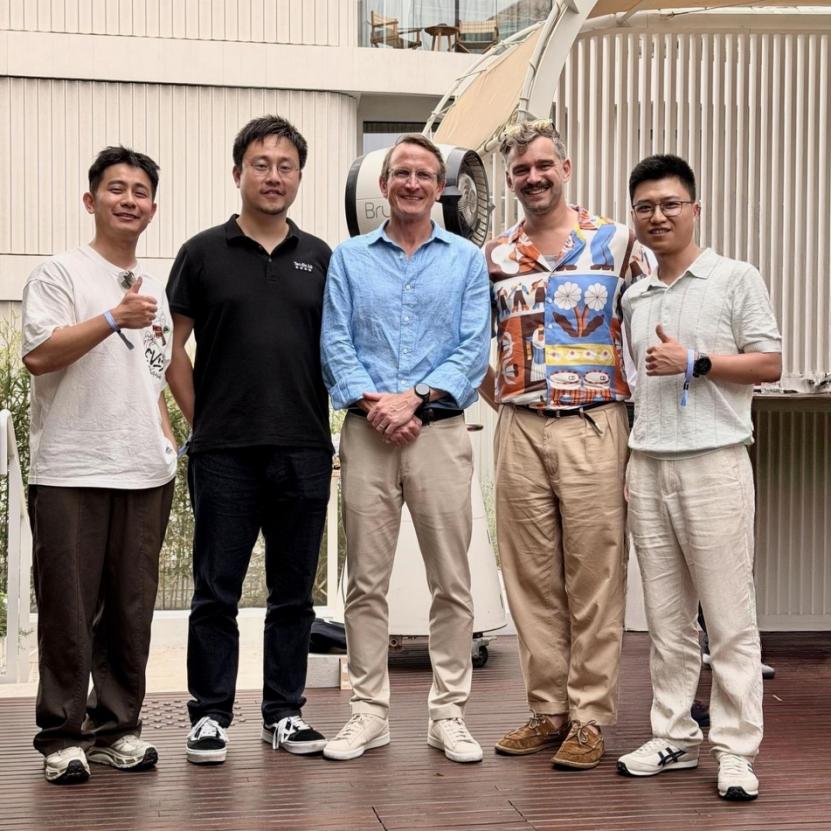
Li Shuhao (second from left), Founder and CEO of Tec-Do, meets with the Global Head of Advertising of OpenAI (third from left)
In July this year, Tec-Do became one of the first batch of official technical partners of ChatGPT Ads worldwide. In the first batch of customer tests, the marketing cost of a certain overseas brand decreased significantly, and the ROI increased to 2.5 times the original level. This means that Tec-Do has extended its global growth capabilities to the AI business entrance — when users have conversations with ChatGPT, brand information can accurately reach target consumers in the form of agentic advertisements, so as to achieve efficient conversion and complete the upgrade from "being seen" to "being chosen".
This scene just interprets more details of the investment. According to insiders, this round of financing took only two months from initiation to completion; in contrast, the conventional financing cycle usually takes 6 months or even longer. The efficient financing process not only benefits from the enterprise's sound governance system, clear business layout and steady operation status, but also stems from its verified business model and predictable growth prospects, which allows investors to make investment decisions quickly.
It is reported that the total investment intention of this round far exceeds the allocable quota, resulting in some institutions failing to obtain investment shares in the end. This situation of "investors chasing high-quality targets" is particularly rare in the current market environment where valuation differentiation in the AI industry is prominent and capital is becoming more rational.
Former Alibaba Employee Leads the Team, Advancing to Hong Kong IPO
The growth foundation of any enterprise usually starts with its founder.
Li Shuhao, born in 1989, studied Electronic Science and Technology at Tianjin University for his bachelor's degree. After graduating at the age of 22, Huawei became the first stop of his career. Later, he joined UC to be responsible for exploring new overseas markets. In 2014, Alibaba completed the acquisition of UC, and Li Shuhao was transferred to the Traffic Business Development Department of the International Business Division of the Mobile Business Group, still focusing on overseas market expansion.
Before the arrival of the global AI boom, Li Shuhao was already one of the earliest operators of China's digital overseas expansion. He understands both globalization and overseas marketing, and this deep understanding of the "overseas expansion" track prompted him to come up with the idea of starting a business.
So in 2017, Li Shuhao resolutely left Alibaba and started his entrepreneurial journey. In his view, Alibaba's strategic focus at that time was not on the overseas expansion track, and he firmly believed that internationalization was the upper limit of business. However, the beginning of any undertaking is difficult. Li Shuhao once confessed that he tried seven or eight projects in the early stage of starting a business, but none of them went very smoothly.
Later, Li Shuhao decided to focus his entrepreneurial direction on building an AI technology company that empowers enterprise growth, focusing on providing result-oriented AI solutions for the business growth of global enterprises. That was how Tec-Do came into being.
Talking about the meaning behind "Tec-Do", Li Shuhao, a rock music fan, once revealed that the name comes from the song "Twisted Transistor" by the American metal band Korn, which has a lyric that goes "Lonely life where no one understands you/But don't give up because the music do".
"Tec-Do represents the courage to run towards the light in the dark, the boldness to break through shackles and create miracles, and most importantly, the attitude of moving forward even when thousands of people stand in your way."
Why did he finally choose to start a business in the AI marketing field? Li Shuhao's answer is: On the one hand, from the technical perspective, "AI is not rigid". The breakthrough speed of AI in creative fields such as painting, writing, and video production has far exceeded expectations, with amazing progress.
On the other hand, from the scenario perspective, "Chinese enterprises' overseas expansion is still in its early stage". He pointed out that a large number of excellent enterprises that focus on product development urgently need to "launch advertisements, demonstrate their strengths, and capture consumers' minds" overseas. More importantly, he has a sense of patriotism: "We need to represent the Chinese team to develop business globally, use AI technology to combine massive fragmented information, and empower brand globalization."
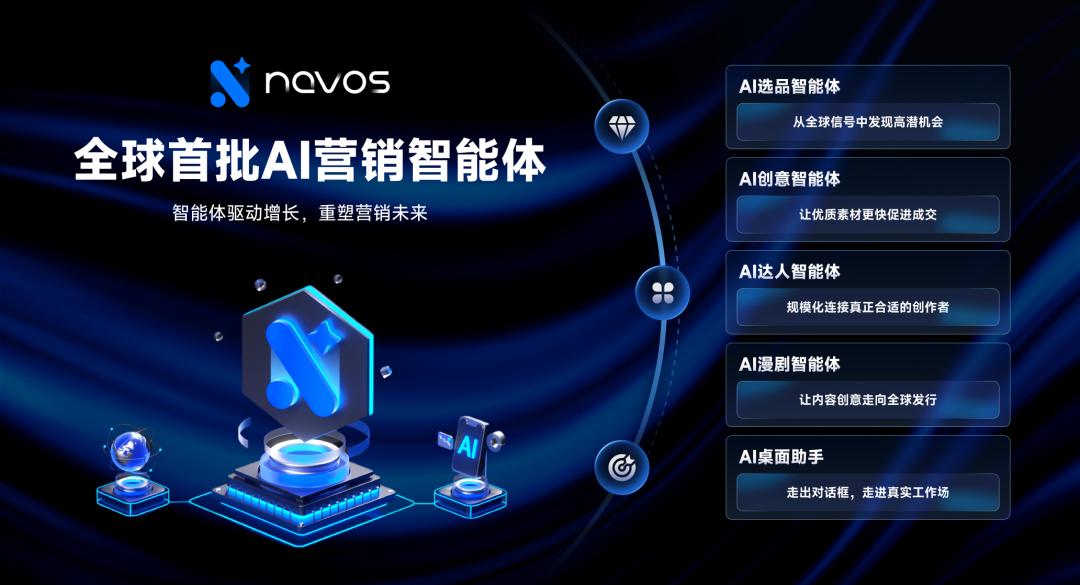
After nearly a decade of deep cultivation, Tec-Do takes its self-developed Taiji professional large model as the technical base, builds an AI-native, result-driven product matrix with the Navos marketing multi-agent as the core, and reconstructs the entire process of global overseas marketing.
As the core technical cornerstone of Tec-Do, Taiji adopts a native Mixture-of-Experts (MoE) architecture. Relying on the enterprise's nearly 10 years of overseas expansion experience, it has accumulated practical data from more than 100,000 advertisers around the world, managed more than 400 million advertising strategies and 14 million SPU data in total, and built a full-dimensional marketing knowledge graph covering user analysis, cross-cultural creativity, media strategy and risk control knowledge.
In January this year, the Taiji Q&A reasoning model ranked first in the world in the SuperCLUE professional large model evaluation for advertising marketing; in July, the Taiji content understanding model and Alibaba's Qwen model tied for the runner-up position on the SuperCLUE-AdsVU "Overseas Marketing Video Understanding" professional list. The value behind this is not only the ranking itself, but also the proof that "professional models" that are vertical to business scenarios can outperform general large models in specific fields — this is exactly the core logic for AI application startups to outperform large manufacturers.
At the same time, Tec-Do launched Navos, one of the world's first marketing multi-agents, as early as 2025. During this year's WAIC, it released Navos 2.0, which can schedule multiple models, multiple tools and professional agents on demand according to enterprise goals, promoting AI from providing suggestions to collaborative execution and result delivery.
As Li Shuhao emphasized, valuable AI does not only make technology stronger, but also goes deep into the real business of enterprises and continuously creates measurable commercial value, which is exactly the Useful AI route that Tec-Do adheres to.
The General Trend of Chinese Enterprises Going Global Hides a Trillion-Dollar Business
The global business landscape is ushering in a disruptive transformation.
Let's look at a set of data first — according to McKinsey's prediction, AI agents will participate in USD 3 trillion to 5 trillion of global B2C commodity transactions in 2030; Gartner data points out that 60% of brands will rely on agentic AI to carry out one-on-one user interactions by 2028.
These numbers together present a forming "Agentic Commerce" era — agents will gradually participate in information search, product recommendation, consumption decision-making and payment transactions, reconstruct the full-link logic of global brand marketing and user connection, and completely rewrite the traditional business growth model.
Obviously, Tec-Do has a clear forward-looking understanding of this transformation: every change of business entrance means a reshuffle. From search to social media, from short videos to AI conversations — whoever can take a position in the new traffic entrance in advance can seize the opportunity in the next round of competition.
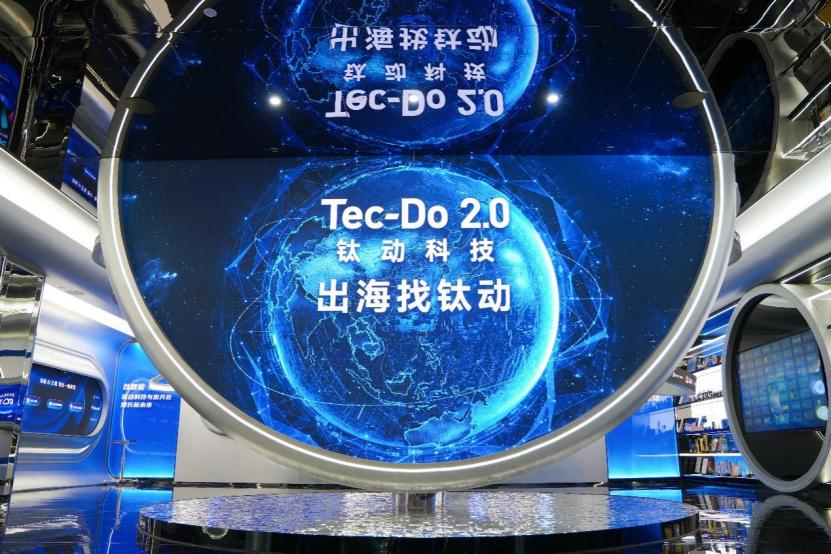
Just as Tec-Do's rise path shows: in the second year after its establishment, it was listed in the official partner lineup of Google Ads and TikTok; in 2020, it obtained the Meta official partner qualification; in 2023, it became a Snap official partner; in 2026, it became an Apple Ads official partner...
Up to now, Tec-Do has entered mainstream global business ecosystems such as Meta, Google, TikTok, and OpenAI, with business covering more than 200 countries and regions around the world. In 2025, it served more than 100,000 overseas brands, including many well-known international clients such as SHEIN, Amazon, miHoYo, Tencent Games, Huawei, DJI, Pop Mart, and Meituan.
Not long ago, Tec-Do also reached an ecological cooperation with Tencent WorkBuddy, realizing the strong combination of vertical professional Skills and general agent platforms. Moreover, Tec-Do is continuing to make layouts around Agentic Commerce and A2A (Agent-to-Agent) collaboration.
In other words, what Tec-Do aims to do is to become a key node connecting brands and global consumers in this new business network. At the same time, this Useful AI route is also being converted into sustainable cash flow, which is particularly valuable.
In February this year, Tec-Do officially submitted its IPO application to the Hong Kong Stock Exchange. According to the prospectus disclosure: from 2023 to 2024, the company's revenue increased from 73 million US dollars to 102 million US dollars; the revenue in the first three quarters of 2025 reached 130 million US dollars, a year-on-year increase of 74.5%; correspondingly, the adjusted net profit in 2024 was 52.599 million US dollars, and the adjusted net profit in the first three quarters of 2025 has climbed to 55.679 million US dollars, with the gross profit margin remaining above 82% for three consecutive years.
In an era when AI startups generally burn cash for growth, Tec-Do has proved that "AI applications can be a good business" with continuous profitability, fully confirming the commercial feasibility and large-scale monetization capability of the Useful AI model.
This also echoes Jensen Huang's judgment in his 2026 GTC keynote speech — Useful AI has arrived, and it is profitable. AI is moving from generating content to reasoning, planning and executing work, and its value begins to be tested by business outcomes.
A fact that cannot be ignored at present is that the differentiation trend in China's AI industry is becoming more and more obvious. Most general AI enterprises rely on financing for blood transfusion, with blurred profit models and gradually clearing valuation bubbles; while Useful AI enterprises that focus on vertical scenarios, have mature business models and quantifiable profitability have become core targets that capital cannot ignore. Tec-Do is undoubtedly the most representative sample